The Ultimate Guide to Desensitization Training for Dog Nail Trims & Grooming
Transform grooming from a battleground to a bonding experience. Learn step-by-step desensitization training for stress-free dog nail trims & grooming.
The Ultimate Guide to Desensitization Training for Dog Nail Trims & Grooming
For many dog owners, grooming day is less of a relaxing spa retreat and more of an exhausting wrestling match. If your dog tucks their tail, hides under the bed, or outright panics at the mere sight of a nail clipper or a buzzing trimmer, you are not alone. Nail trims and general grooming are among the most common stressors for dogs and their humans alike. However, forcing your dog through a grooming session can damage your bond, increase their anxiety, and even lead to fear-based aggression.
The secret to transforming grooming from a battleground into a peaceful, cooperative routine lies in desensitization and counterconditioning. By changing how your dog feels about grooming tools and handling, you can turn a dreaded chore into an opportunity for trust-building. In this comprehensive guide, we will explore the psychology behind grooming fear, outline a step-by-step desensitization protocol for nail trims, and provide actionable tips to help your dog tolerate full grooming sessions with confidence.
Understanding Why Dogs Fear Nail Trims & Grooming
Before diving into training, it is crucial to understand why so many dogs exhibit extreme fear during grooming. Dogs experience the world primarily through their senses, and grooming environments can easily trigger sensory overload. When dealing with nail trims, the fear is often rooted in both anatomy and past experiences.
The Anatomy of the Paw
A dog's paw is highly sensitive, packed with nerve endings that help them navigate their environment. Inside each nail is the 'quick,' a vascular structure containing blood vessels and nerves. If a nail is trimmed too short and the quick is cut, it causes sharp, immediate pain and significant bleeding. Even if you have never cut your dog's quick, the pressure of the clippers squeezing the nail can feel uncomfortable or alarming to a dog with sensitive paws.
Sensory Overload & Past Trauma
Beyond the physical sensation of a nail trim, the sounds and vibrations associated with grooming are major triggers. The loud 'snap' of guillotine or scissor-style clippers, the high-pitched whine of a rotary grinder, and the roaring wind of a high-velocity dryer can be terrifying to canine ears. Furthermore, dogs that were forced through grooming sessions as puppies, or who experienced a painful accidental nick in the past, often develop a conditioned emotional response of panic. To learn more about reading your dog's subtle stress signals before they escalate, check out our guide on understanding dog body language.
The Core Principles of Desensitization & Counterconditioning
To successfully train your dog to accept nail trims and grooming, we rely on two scientifically backed behavioral modification techniques: Desensitization and Counterconditioning (often abbreviated as D&CC).
- Desensitization involves exposing your dog to a fear-inducing stimulus (like a nail clipper) at such a low intensity or distance that it does not trigger a fearful response. You gradually increase the intensity only when the dog remains completely relaxed.
- Counterconditioning changes the dog's underlying emotional response to the stimulus. By pairing the presence of the clippers with something the dog absolutely loves (like high-value food), you rewire their brain to associate the tool with positive outcomes rather than fear.
These techniques require patience. You are not just teaching a behavior; you are changing an emotion. If you are new to reward-based training, reviewing our positive reinforcement basics guide will help you master the timing and treat delivery required for this protocol.
Step-by-Step Desensitization for Nail Trims
Rushing the process is the most common reason desensitization fails. Break the nail trimming process down into micro-steps. Only move to the next step when your dog is showing relaxed body language—soft eyes, loose wagging, and eager engagement with treats.
Step 1: Introducing the Tools
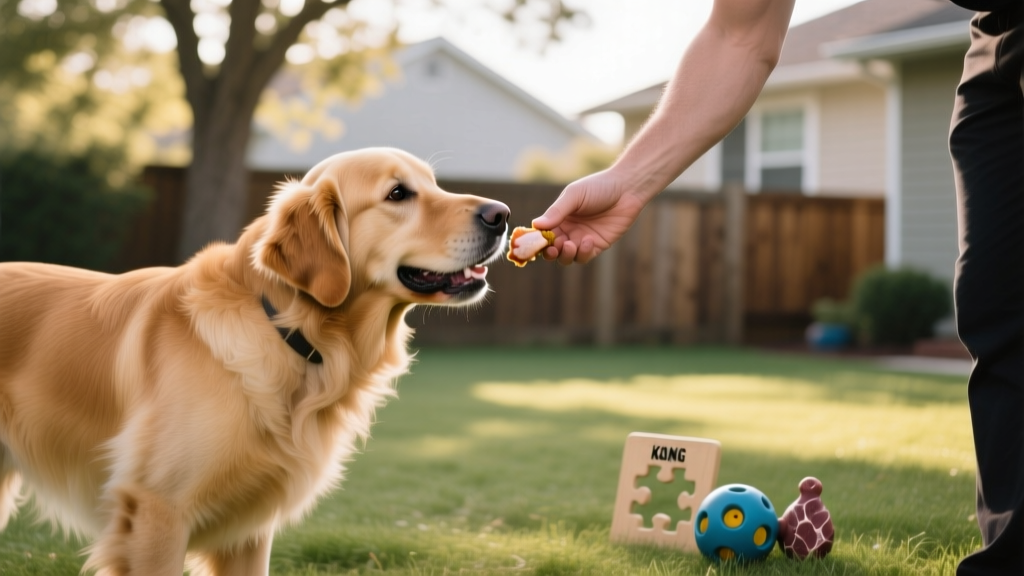
Start by simply placing the nail clippers or grinder on the floor in a room where your dog likes to relax. Do not attempt to touch your dog with the tool. Every time your dog looks at the tool, sniffs it, or walks near it, mark the behavior with a cheerful 'Yes!' and toss a high-value treat. You can find excellent options in our list of high-value training treats. The goal is for the dog to think, 'When the clippers appear, chicken appears.' Do this for several short sessions over a few days until your dog shows visible excitement when you bring the tools out.
Step 2: Paw Handling & Touch
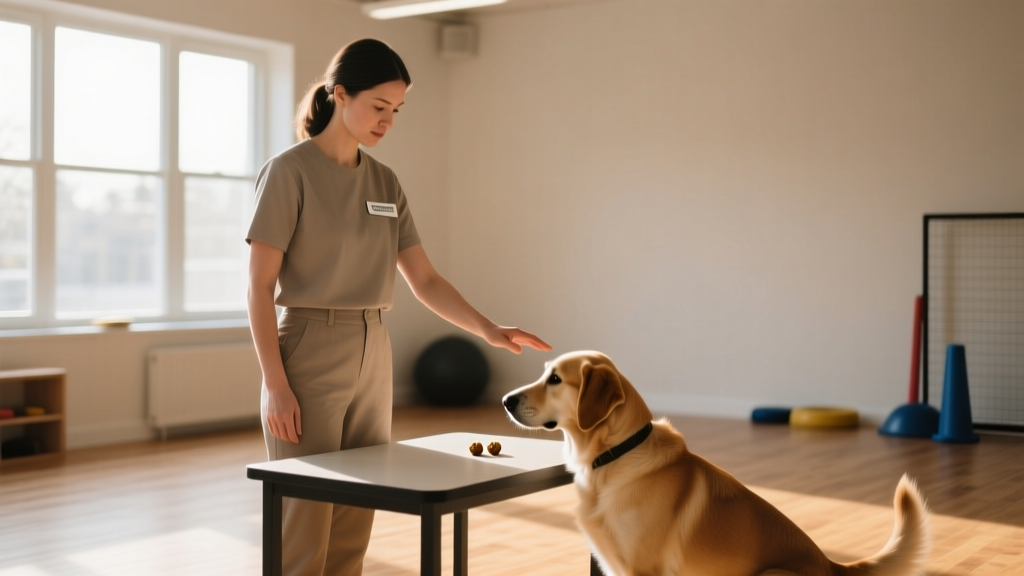
Many dogs are sensitive about their paws being handled. Begin by touching a neutral area, like your dog's shoulder, and immediately giving a treat. Gradually work your way down the leg to the elbow, the wrist, and finally the paw. If your dog pulls their paw away, you have moved too fast. Return to the last successful step. Once your dog is comfortable with you holding their paw, introduce the 'cooperative care' concept: teach them to rest their chin on a mat or your hand, signaling they are ready for handling. Early handling is best started young, as outlined in our puppy socialization checklist, but adult dogs can learn this too.
Step 3: Tool Interaction Without Cutting
Now, combine the tool and the paw. Hold the clippers in one hand and offer a treat with the other. Gently tap the back of the clippers against your dog's nail. Do not squeeze. Do not cut. Just tap, then treat. Repeat this on multiple nails over several sessions. If you are using a rotary grinder, turn it on in another room with the door closed, feed treats, and turn it off. Gradually bring the running grinder closer over multiple sessions, always keeping it below your dog's fear threshold.
Step 4: The First Snip or Grind
When your dog is entirely relaxed with the tool touching their nails, you are ready for the first trim. Position the clippers and take off the absolute tiniest tip of one single nail. Immediately reward with a 'jackpot' of treats and praise. End the session right there. The next day, try two nails. By keeping the initial sessions incredibly short and positive, you prevent the dog from reaching their limit and panicking.
Expanding Desensitization to Full Grooming Routines
While nail trims are a major hurdle, full grooming routines present their own unique challenges. Breeds that require extensive coat maintenance, such as the Poodle or the Shih Tzu, must learn to tolerate brushing, bathing, and drying.
Brushing & Mat Removal
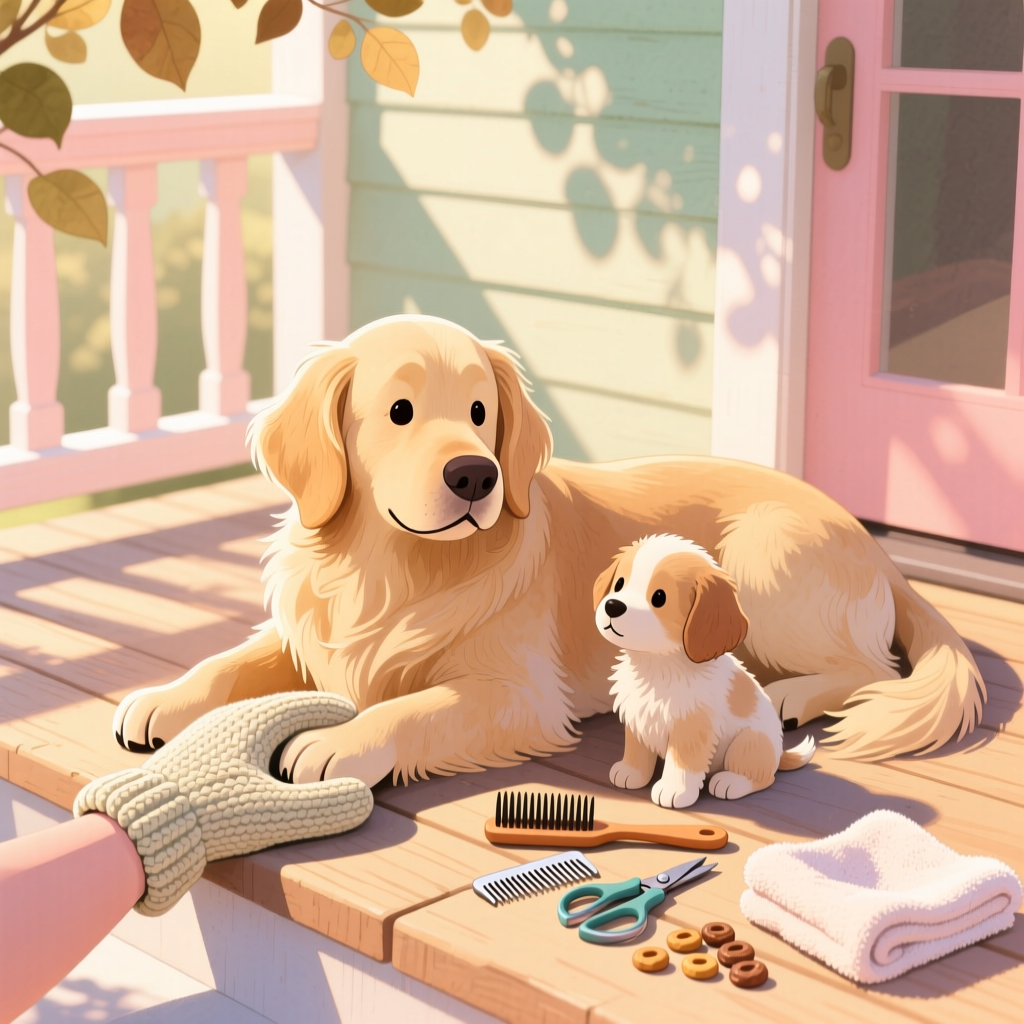
Dogs with long or double coats, like the Golden Retriever, can develop painful mats if not brushed regularly. Desensitize your dog to the brush by letting them sniff it, then gently stroking their back (where they enjoy being petted) with the brush for one second, followed by a treat. Gradually increase the duration and move to more sensitive areas like the ears, tail, and belly. Never yank on a mat; use a detangling spray and work it out gently with your fingers or a specialized dematting tool to avoid causing pain.
Bathing & High-Velocity Dryers
The bathtub can be a slippery, echoing chamber of fear. Place a non-slip mat in the tub to give your dog secure footing. Introduce the water slowly, using a gentle hose attachment or a pitcher, starting at their paws and working upward. The high-velocity dryer is often the most terrifying part of the grooming process due to the noise and wind pressure. Desensitize the dryer exactly like the nail grinder: start it in another room, pair the sound with treats, and slowly bring it into the same room over the course of weeks. Never point the dryer directly at the dog's face or ears.
Pro Tips & Common Mistakes to Avoid
Desensitization is a delicate dance of patience and observation. Here are some expert tips to ensure success, along with common pitfalls that can set your training back.
Pro Tips for Success
- Use a Lick Mat: Spreading peanut butter or plain yogurt on a silicone lick mat and freezing it can provide a long-lasting, soothing distraction during minor grooming tasks. Licking releases endorphins in a dog's brain, naturally lowering their heart rate.
- Implement an 'Opt-Out' Cue: Teach your dog that they can pause the session. If they pull away or look at you, stop immediately and remove the tool. Giving them agency reduces feelings of helplessness and actually speeds up the training process.
- Know the Threshold: If your dog refuses a high-value treat like boiled chicken or freeze-dried liver, they are over their fear threshold. Their brain is in 'fight or flight' mode, and learning cannot happen. Back up, increase the distance from the tool, and try again later.
- Keep Sessions Short: Three 5-minute sessions per week are vastly superior to one grueling 45-minute session. End every session on a positive note, even if it means you only touched the clippers to the floor.
Common Mistakes to Avoid
- Flooding: This occurs when an owner forces the dog to endure the grooming process until they 'give up' or stop fighting. This is not calmness; it is learned helplessness, and it severely damages the dog's trust and mental well-being.
- Punishing Fear: Never scold, yell at, or physically correct a dog for growling, snapping, or pulling away during grooming. Growling is a warning system. If you punish the growl, the dog may learn to skip the warning and go straight to biting next time they feel trapped.
- Using Low-Value Treats: Dry kibble or standard biscuits are rarely motivating enough to override the fear of a nail clipper. You must use 'premium currency' like real meat, cheese, or specialized training pastes.
- Skipping the Cool-Down: After a successful session, engage your dog in a relaxing activity, like a sniffari walk or a chew session, to help their nervous system return to baseline.
Frequently Asked Questions (FAQ)
How long does desensitization training take?
There is no set timeline for desensitization, as it depends entirely on the dog's history, genetics, and the severity of their fear. For a puppy or a mildly hesitant dog, you might see full cooperation in a few weeks. For an adult dog with a history of traumatic grooming experiences or severe anxiety, the process can take several months of consistent, low-pressure work. The key is to let the dog's body language dictate the pace, not the calendar.
What if my dog already has severe grooming anxiety?
If your dog exhibits extreme panic, aggression, or shuts down completely at the sight of grooming tools, it is highly recommended to consult a certified professional dog trainer or a veterinary behaviorist. They can help you create a customized behavior modification plan and ensure safety. In some cases, working with a professional groomer who specializes in fear-free, low-stress handling techniques is the best route to keep your dog's coat and nails healthy while you work on training at home.
Are nail grinders better than clippers for anxious dogs?
It depends on the individual dog. Nail grinders (rotary tools) eliminate the painful 'pinch' and the loud 'snap' of traditional clippers, and they reduce the risk of cutting the quick because you remove the nail in tiny increments. However, the vibration and high-pitched buzzing noise of a grinder can be highly aversive to dogs with noise sensitivities. Some dogs prefer the quick snip of a scissor-style clipper, while others tolerate the grinder better. You may need to desensitize your dog to both tools to see which one they ultimately prefer.
Can I use sedatives or calming treats for grooming?
Over-the-counter calming treats, chews containing L-theanine or hemp, and pheromone sprays can provide mild support for dogs with low-level anxiety. However, they are rarely effective for severe panic. For dogs with intense phobias, your veterinarian may prescribe short-acting anti-anxiety medication (often referred to as 'grooming meds' or situational anxiety medication). When used correctly under veterinary supervision, medication lowers the dog's panic response enough to allow desensitization training to actually work.
How often should I practice desensitization exercises?
Consistency is more important than duration. Aim for brief, 3-to-5-minute desensitization sessions two to three times a week. You can easily incorporate these micro-sessions into your daily routine—for example, leaving the clippers on the coffee table during the evening and rewarding your dog for calm behavior around them, or practicing paw handling while watching television. Frequent, low-stress exposure builds a solid foundation of trust over time.
Final Thoughts on Cooperative Grooming
Desensitization training for nail trims and grooming is an investment in your dog's long-term health and your relationship. By replacing force with patience, and fear with positive associations, you empower your dog to become a willing participant in their own care. Remember that setbacks are a normal part of the journey. If you have a bad day, simply take a step back, lower your criteria, and try again tomorrow. With time, empathy, and plenty of high-value treats, you and your dog can conquer the grooming routine together.
Priya Sutaria
All our authors care for dogs every day — read more of their work on the authors page.