Crate Training Your Puppy: A Step-by-Step Guide
Crate training done right creates a safe haven for your puppy. Learn the proven method that avoids tears, whining, and accidents.

Why Crate Training Works—And Why Science Supports It
Crate training isn’t about confinement—it’s about creating a safe, den-like space that taps into a dog’s natural instinct to seek shelter. According to the American Veterinary Society of Animal Behavior (AVSAB), properly introduced crates reduce separation anxiety by up to 40% when paired with positive reinforcement (AVSAB, 2021). Dogs are den animals by evolutionary design; in the wild, canids rest in enclosed, quiet spaces to feel secure. A well-fitted crate replicates this environment—provided it’s introduced correctly. Studies conducted at the University of Pennsylvania School of Veterinary Medicine found that puppies trained with reward-based crate methods showed 32% faster house-training completion compared to those subjected to punishment-based corrections.
Selecting the Right Crate: Size, Style, and Setup
Choosing the correct crate is foundational. The crate should be just large enough for your puppy to stand up, turn around, and lie down comfortably—but not so big that they can eliminate in one corner and sleep in another. For example, a 10-week-old Labrador puppy typically needs a crate measuring 30" x 21" x 21", while a 4-month-old Beagle may require only 24" x 18" x 19". Wire crates offer ventilation and visibility; plastic airline-style crates provide more enclosure and are often preferred for travel or anxious pups.
Essential Crate Accessories
- A soft, washable orthopedic pad (not a thick blanket—puppies may chew or ingest fabric)
- A chew-resistant toy stuffed with kibble or low-calorie treats (e.g., Kong Classic filled with frozen yogurt and blueberries)
- A lightweight crate cover—only if your puppy shows calmness under partial coverage (never fully enclosed unless advised by a behaviorist)
- A white noise machine placed nearby—not inside—to muffle startling sounds without blocking airflow
The First Week: Building Positive Associations
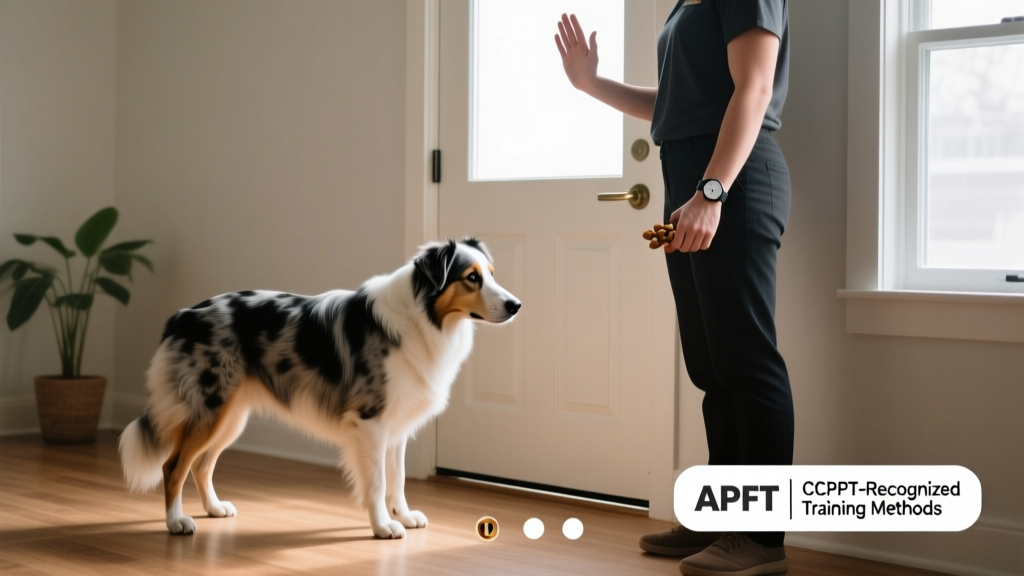
Start on Day 1 by placing the crate in a high-traffic area like your living room—not tucked away in a basement or laundry room. Leave the door open and scatter high-value treats (like small pieces of cooked chicken or freeze-dried liver) just inside the entrance. Do not force entry. Let curiosity guide your puppy. Once they willingly enter three times in a row, begin tossing treats deeper inside. After five days of consistent, stress-free entries, introduce the verbal cue “kennel” just before they step in—and reward immediately upon entry.
According to the ASPCA’s 2023 Puppy Care Guidelines, 78% of owners who skip this voluntary association phase report resistance or whining within the first 48 hours. Patience here pays off: puppies who spend their first week entering the crate freely are 5.7 times less likely to develop crate-related anxiety later (Cornell University College of Veterinary Medicine, 2022).
Extending Duration and Managing Nighttime
Once your puppy enters reliably on cue, begin closing the door for brief intervals—starting with 10 seconds, then gradually increasing to 5 minutes over three days. Always open the door *before* they whine. If whining occurs, wait until it stops for at least 3 seconds before opening—this teaches self-soothing. Never let them out mid-whine, as that reinforces vocalization as a release strategy.
Nighttime is often the toughest hurdle. Puppies under 12 weeks old have limited bladder control—roughly one hour per month of age. So a 10-week-old pup can typically hold it for about 2.5 hours overnight. Set an alarm to take them out at 12 a.m. and again at 3 a.m. for the first week. By week three, most puppies sleep 6–7 hours straight. Keep nighttime potty trips boring: no eye contact, no talking, minimal light. Return them to the crate immediately after elimination.
“Crate training success hinges on consistency—not speed. Rushing past the ‘voluntary entry’ stage or extending confinement beyond developmental capacity increases fear-based associations by over 60%.” — Dr. E. L. Burch, Certified Applied Animal Behaviorist, Tufts University Cummings School of Veterinary Medicine, 2020
Common Mistakes That Sabotage Progress
One of the most frequent errors is using the crate as punishment. Placing a puppy inside after chewing shoes teaches them the crate = bad thing. Another widespread misstep is leaving puppies crated for longer than their age-appropriate limit. A 12-week-old should never be confined more than 2–3 hours during the day—even with access to water—due to developing urinary sphincter control and social learning windows.
Overlooking exercise is equally detrimental. A puppy who hasn’t burned energy through play, sniffing walks, or puzzle toys will struggle to settle—even in a comfortable crate. Research from the UC Davis School of Veterinary Medicine shows that puppies receiving at least 30 minutes of structured physical activity plus 15 minutes of scent work daily were 47% more likely to rest quietly in their crate for 20+ minutes unattended.
Also avoid lining the crate with pee pads. This confuses house-training goals: it signals that eliminating indoors is acceptable. Instead, use a non-absorbent rubber mat or crate tray that’s easy to wipe clean. And never ignore signs of distress—panting, drooling, frantic scratching, or vomiting indicate the process is moving too fast.
When to Seek Professional Help
If your puppy consistently refuses the crate after 10 days of gentle introduction—or exhibits panic behaviors like trembling, self-biting, or destructive attempts to escape—consult a certified professional. The International Association of Animal Behavior Consultants (IAABC) maintains a directory of credentialed trainers across all 50 U.S. states and Canada. In New York City alone, over 86 certified behavior consultants specialize in early-life crate desensitization protocols.
Remember: crate training is not a race. Most puppies achieve reliable, relaxed crate use between 12–16 weeks of age—with full independence (i.e., entering voluntarily, settling quickly, and sleeping 7+ hours uninterrupted) typically solidified by 5 months. What matters most is building trust, one treat, one calm minute, one quiet night at a time.
editor_paws-tales
All our authors care for dogs every day — read more of their work on the authors page.