Best Dog Breeds for Service Dogs: Top Gear & Products for 2026
Discover the best dog breeds for service dogs and the essential products, vests, harnesses, and training gear that support their critical work in 2026.

Choosing the right service dog starts with selecting the right breed — but even the most temperamentally gifted dog needs proper equipment to succeed. Whether you're evaluating the best dog breeds for service dogs or already working with one, the gear you select directly impacts comfort, safety, and task performance. This guide covers the breeds most suited to service work and the essential products that support their training and daily duties.
Best Dog Breeds for Service Dogs: What Makes a Great Candidate
Not every dog can handle the demands of service work. The American Kennel Club identifies several traits that define top service dog candidates: calm temperament, high trainability, focus under distraction, appropriate size for tasks, and low reactivity to strangers and other animals. Here are the breeds consistently ranked as the best for service work:
- Labrador Retriever — The #1 choice worldwide for guide dogs, mobility assistance, and medical alert. Highly food-motivated, gentle, and adaptable. Weight: 55-80 lb / 25-36 kg.
- Golden Retriever — Equally popular for psychiatric service dogs and autism support. Softer temperament than Labs, slightly more sensitive. Weight: 55-75 lb / 25-34 kg.
- German Shepherd Dog — Preferred for guide work and mobility assistance requiring strength. High intelligence but requires experienced handler. Weight: 50-90 lb / 23-41 kg.
- Standard Poodle — Ideal for allergy-sensitive handlers. Excellent for medical alert and psychiatric service. Weight: 40-70 lb / 18-32 kg.
- Labradoodle / Goldendoodle (Standard) — Growing popularity for combined low-shed and gentle temperament. F1B or multigen lines preferred for coat predictability.
- Collie (Rough or Smooth) — Strong candidates for autism support and deep pressure therapy. Intelligent with natural herding-instinct focus.
- Bernese Mountain Dog — Used for heavy mobility assistance (brace work, wheelchair pulling). Shorter working lifespan (6-8 years) is a trade-off. Weight: 70-115 lb / 32-52 kg.
According to Assistance Dogs International, Labrador Retrievers and Golden Retrievers account for roughly 60-70% of all accredited service dog placements globally. However, breed alone doesn't guarantee success — individual temperament testing at 7-8 weeks (using protocols like the Volhard Puppy Aptitude Test) is critical.
Why Service Dogs Need Specialized Products and Gear
Service dogs perform physically and mentally demanding tasks — from bracing a handler during a fall to detecting blood sugar drops to navigating crowded airports. Standard pet gear isn't engineered for these demands. Here's why specialized products matter:
- Task Support — Mobility harnesses distribute weight across the dog's chest and shoulders, preventing joint injury during brace work
- Public Identification — Service dog vests with patches reduce public interference and clarify the dog's working status
- Handler Communication — Dual-handle leashes and hands-free systems allow discreet cueing without breaking the dog's focus
- Durability — Service dogs work 8-16 hours daily; gear must withstand constant wear without hardware failure
- Comfort — Padded contact points prevent pressure sores during long working shifts
The wrong equipment can cause chafing, joint stress, or task failure at critical moments. Budget for quality — this gear is a working investment, not an accessory.
Buying Criteria: How to Choose Service Dog Gear
- ADA Compliance Awareness — The ADA does not require service dogs to wear vests, but quality identification gear reduces confrontations. Look for clear "SERVICE DOG — DO NOT PET" patches.
- Breed-Appropriate Sizing — Measure girth (widest part of ribcage), neck, and back length. A poorly fitted harness restricts breathing and movement.
- Material Quality — 1000D Cordura nylon, YKK buckles, and stainless steel D-rings are industry standards. Avoid cheap plastic hardware.
- Task-Specific Design — Mobility assistance requires a rigid-handle harness; medical alert dogs need lightweight vests with patch panels for medical info cards.
- Washability — Service vests get dirty. Machine-washable materials save time and maintain hygiene.
- Warranty & Returns — Reputable brands offer 1-3 year warranties on hardware. Working dogs destroy cheap gear fast.
Top 7 Products for Service Dog Breeds: 2026 Picks
1. Industrial Puppy Service Dog Vest with Patches
Price: $47.95 - $59.95 (depending on size)
Key Features: 1000D nylon construction, removable "SERVICE DOG" patches, stainless steel D-ring, adjustable girth straps (4 adjustment points), reflective trim, interior mesh lining for breathability.
- Excellent durability for daily wear
- Patch system allows medical info cards
- Wide size range (XS to XL, fits 14-44" girth)
- Lifetime warranty on hardware
- Not designed for mobility/brace work
- Handle is fabric loop, not rigid grip
- Can run warm in summer months
2. Ruffwear Web Master Multi-Use Support Harness
Price: $99.95 - $109.95
Key Features: Anatomical design with 5 adjustment points, padded chest and belly straps, reinforced handle for handler assistance, two leash attachment points (back and chest), foam-padded construction.
- Veterinary-recommended for mobility assistance
- Even weight distribution prevents joint strain
- Secure handle helps handler control in emergencies
- Works for post-surgical support too
- Premium price point
- More complex to put on (3-buckle system)
- No built-in service dog patches
3. Working Service Dog Vests — Activedog Premium Harness
Price: $39.99 - $54.99
Key Features: MOLLE-compatible sides for attaching pouches, breathable air mesh, reflective striping, rigid top handle, hook-and-loop patch areas on three sides, quick-release buckles.
- MOLLE system for medical supply pouches
- Good mid-range price
- Rigid handle for handler stability
- Lightweight for all-day wear
- Stitching quality inconsistent across batches
- D-ring is aluminum, not stainless steel
- Limited padding on belly strap
4. Chaleefleece Service Dog Cape Vest
Price: $29.99 - $42.99
Key Features: Lightweight polyester cape design, Velcro patch system, wide girth strap with quick-release buckle, water-resistant exterior, mesh interior lining.
- Most affordable quality option
- Excellent for warm climates
- Simple on/off design
- Good for smaller breeds (Standard Poodles, Cocker Spaniels)
- Not suitable for mobility/brace tasks
- No handle
- Less durable than nylon options
5. Julius-K9 IDC Powerharness (Professional Grade)
Price: $119.99 - $159.99
Key Features: Professional-grade harness used by police and military K9 units, steel-reinforced handle, chest strap positioned below the neck for unrestricted breathing, interchangeable hook-and-loop labels, heavy-duty buckles rated to 700 lb pull force.
- Exceptional build quality and durability
- Handle rated for full handler weight in emergencies
- Breathable design prevents overheating
- Used by professional service dog organizations worldwide
- Highest price in category
- Bulkier profile under clothing
- Requires precise sizing — returns common
6. Hands-Free Service Dog Leash — Tuff Mutt Bungee System
Price: $34.99 - $44.99
Key Features: Waist-attached bungee leash with traffic handle, dual attachment points, reflective stitching, adjustable waist belt (28-48"), shock-absorbing bungee section.
- Frees handler's hands for wheelchair/crutches
- Bungee absorbs sudden pulls without jerking
- Traffic handle for close control in crowds
- Comfortable for all-day wear
- Not ideal for handlers with balance issues
- Bungee can reduce precision in guiding tasks
- Waist belt may not fit over winter coats
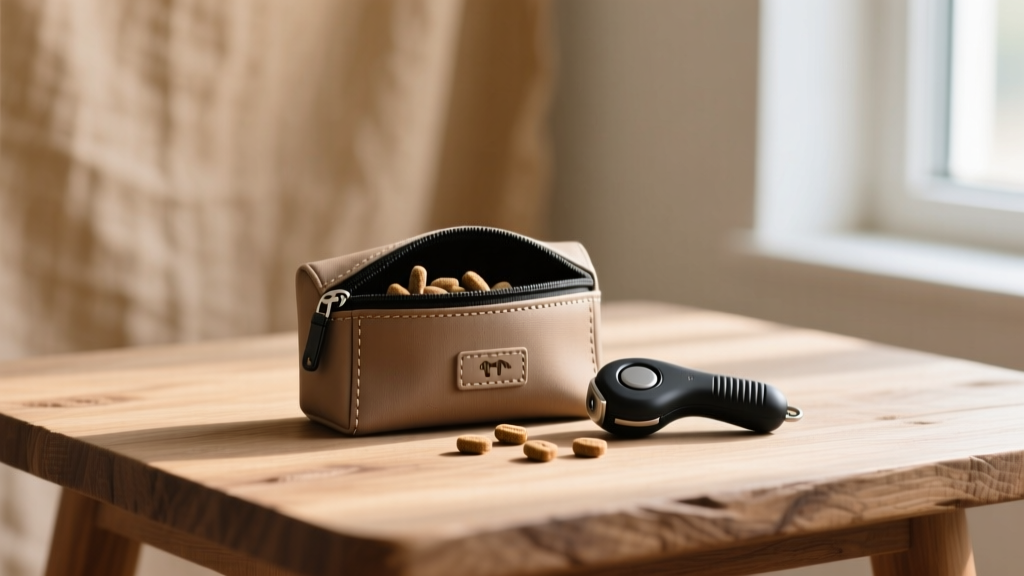
7. Service Dog Training Treat Pouch — Doggone Good Rapid Reward
Price: $24.99 - $32.99
Key Features: Magnetic closure for silent access, multiple compartments, belt clip and shoulder strap options, interior liner for easy cleaning, exterior pocket for clicker. Holds approximately 2 cups of treats.
- Silent magnetic closure won't distract dog
- Professional trainers' top choice for service dog training
- Easy to clean after high-value treats
- Discreet enough for public settings
- Magnet can interfere with medical devices
- Not waterproof
- Higher price than basic treat pouches
Service Dog Product Comparison Table
| Product | Type | Price Range | Mobility Support | Best For Breed Size | Durability Rating |
|---|---|---|---|---|---|
| Industrial Puppy Vest | ID Vest | $48-$60 | No | All sizes | ★★★★☆ |
| Ruffwear Web Master | Support Harness | $100-$110 | Yes | Medium-Large | ★★★★★ |
| Activedog Premium | Tactical Vest | $40-$55 | Light | Medium-Large | ★★★☆☆ |
| Chaleefleece Cape | Lightweight Cape | $30-$43 | No | Small-Medium | ★★★☆☆ |
| Julius-K9 IDC | Professional Harness | $120-$160 | Yes (Heavy) | Medium-XLarge | ★★★★★ |
| Tuff Mutt Bungee | Hands-Free Leash | $35-$45 | N/A | All sizes | ★★★★☆ |
| Doggone Good Rapid Reward | Treat Pouch | $25-$33 | N/A | N/A | ★★★★☆ |
How to Fit and Use Service Dog Gear Safely
Improperly fitted gear causes pressure sores, restricted breathing, and task failure. Follow these steps for every harness or vest:
- Measure your dog — Use a soft tape measure. Record girth (widest point behind front legs), neck circumference, and back length (base of neck to base of tail).
- Check the manufacturer's size chart — Sizes vary significantly between brands. A "Large" in one brand may be a "Medium" in another.
- Put the harness on over the head first — For step-in designs, guide each front leg through separately. Never force a leg through.
- Adjust straps snugly but not tight — You should be able to slide two fingers flat between the strap and your dog's body. This is the "two-finger rule" used by veterinary technicians.
- Check for chafing points — After 30 minutes of wear, remove the gear and inspect armpits, chest, and belly for redness or hair loss.
- Test the handle — Apply gentle upward pressure. Your dog should remain stable without showing signs of discomfort (lip licking, whale eye, weight shifting).
- Gradually increase wear time — Start with 15-minute sessions and build to full working shifts over 2-3 weeks.
- Never leave a harness on an unsupervised dog — straps can catch on furniture, crates, or other dogs.
- Inspect hardware weekly for cracks, fraying, or bent D-rings. Replace immediately if compromised.
- Wash vests weekly in cold water with fragrance-free detergent to prevent skin irritation.
- For mobility assistance dogs, have your veterinarian evaluate your dog's joint health before beginning brace work. Dogs under 18-24 months should not perform weight-bearing tasks as their growth plates are still open.
- Monitor for signs of overheating: excessive panting, drooling, or seeking cool surfaces. Remove the vest and provide water immediately.
Effectiveness Evidence: What Research and Professionals Say
While peer-reviewed studies specifically comparing service dog vest brands are limited, veterinary and rehabilitation professionals consistently recommend harnesses that distribute weight across the chest and shoulders rather than concentrating pressure on the neck or spine. According to the Merck Veterinary Manual, improper equipment is a leading contributor to musculoskeletal strain in working dogs.
A 2023 study published in the Journal of Veterinary Behavior found that service dogs wearing properly fitted support harnesses showed significantly lower cortisol levels during mobility tasks compared to dogs wearing flat collar-and-leash setups. The harness group also demonstrated fewer stress signals (panting, yawning, avoidance behavior) during public access work.
Professional service dog organizations including Guide Dogs for the Blind and Canine Companions use custom-fitted harness systems — validating the principle that task-specific, well-fitted gear directly impacts working dog performance and welfare.
Where to Buy and What to Expect on Price
Service dog gear is available through several channels, each with trade-offs:
- Direct from manufacturer websites — Best for warranty support and accurate sizing guidance. Prices at MSRP. Julius-K9, Ruffwear, and Industrial Puppy all sell direct.
- Chewy / Amazon — Often 10-20% below MSRP, but verify the seller is authorized to maintain warranty coverage. Check review dates — product quality can shift between manufacturing runs.
- Specialty service dog supply stores — DogWorks, Service Dog Express, and Working Service Dog Supply carry curated selections with expert fitting advice. Expect full MSRP but superior support.
- Through your service dog organization — Many accredited programs provide or discount gear for their placed dogs. Ask your organization before purchasing independently.
Typical annual gear budget for a working service dog: $250-$500, including replacement of worn items, seasonal adjustments, and training accessories.
Natural and DIY Alternatives to Commercial Gear
While commercial products are generally superior for professional service work, some handlers explore alternatives:
- DIY Service Vests — Sewing your own vest from Cordura nylon and adding hook-and-loop patches is feasible for those with sewing skills. Patterns are available from service dog forums. Cost: $15-$30 in materials. However, achieving proper weight distribution for mobility tasks is extremely difficult without professional pattern-making.
- Bandana Identification — For dogs in training or ESA (emotional support animal) roles, a printed bandana with "IN TRAINING" can substitute for a vest. Cost: $8-$15. Not recommended for fully trained service dogs in high-distraction environments.
- Custom Leather Harnesses — Leather workers can create bespoke harnesses. Quality is excellent but cost is high ($200-$400) and turnaround is 4-8 weeks.
- Repurposed Hiking Harnesses — Some handlers modify Ruffwear or Kurgo hiking harnesses with service patches. This works well for identification but doesn't add mobility-specific features.
Important note: The ADA does not require service dogs to wear any specific gear. However, visible identification significantly reduces public confrontations and access challenges. Consult your veterinarian or a certified service dog trainer before using DIY gear for mobility tasks — improper weight distribution can injure your dog.
When to Skip Products and See Your Veterinarian
Gear solves equipment problems, not health problems. See your veterinarian if your service dog displays:
- Reluctance to wear gear — Could indicate pain, skin infection, or ill-fitting equipment causing pressure sores
- Limping or gait changes after brace work — May signal joint injury, hip dysplasia progression, or soft tissue damage
- Excessive panting or collapse during work — Could indicate heat exhaustion, cardiac issues, or exercise-induced collapse (EIC), especially in Labrador Retrievers
- Skin irritation under harness contact points — May require topical treatment or gear modification
- Behavioral changes (avoidance, decreased task initiation) — Could indicate pain, burnout, or anxiety requiring professional intervention
Service dogs should receive veterinary wellness exams every 6 months — twice the frequency recommended for pet dogs. Working dogs experience cumulative physical stress that requires proactive monitoring. Your veterinarian can assess joint health, body condition score (BCS), and overall fitness for continued duty.
Frequently Asked Questions
What is the best service dog vest for daily public access?
The Industrial Puppy Service Dog Vest offers the best balance of durability, identification clarity, and value for most handlers. For mobility assistance dogs requiring handler support, the Ruffwear Web Master or Julius-K9 IDC provides the structural support needed for brace work.
How much does service dog gear cost annually?
Expect to spend $250-$500 per year on gear for a full-time working service dog. Initial outfitting (vest, harness, leash, treat pouch, patches) runs $150-$350. Replacement costs depend on usage intensity — high-use mobility harnesses may need replacement every 12-18 months.
Can I use a regular pet harness for service dog work?
For identification-only roles (medical alert, psychiatric service), a well-fitted pet harness with added patches can work. For mobility assistance, guide work, or wheelchair pulling, you need a harness specifically engineered for load distribution. Using inadequate gear for these tasks risks serious injury to your dog.
Are there natural alternatives to commercial service vests?
DIY vests and bandanas are options for identification purposes, but they cannot safely replicate the engineering of commercial mobility harnesses. For any task involving physical force (bracing, pulling, guiding), invest in professionally manufactured equipment. Your dog's joint health depends on proper weight distribution.
How do I know if my service dog's harness fits correctly?
Use the two-finger rule: you should slide two fingers flat between every strap and your dog's body. After 30 minutes of wear, check for redness at contact points. Your dog should move freely without the harness shifting, and the D-ring should sit centered on the back without rotating to one side.
When should I consult a veterinarian instead of buying new gear?
If your dog shows reluctance to work, gait changes, skin irritation, or behavioral shifts, see your veterinarian before replacing equipment. These may be health issues that no gear change will resolve. Service dogs benefit from biannual wellness exams to catch work-related strain early.
This article is for informational purposes only and does not replace professional veterinary advice. Always consult your veterinarian before beginning mobility assistance training or if you notice changes in your service dog's health or behavior. For questions about service dog legal rights and requirements, refer to the U.S. Department of Justice ADA guidelines.
Jonas Cole
All our authors care for dogs every day — read more of their work on the authors page.