Best Security Dogs for Families: Top Breeds & Essential Gear Guide
Discover the best security dogs for families, including top protective breeds, essential training gear, costs, and safety tips for households with children.
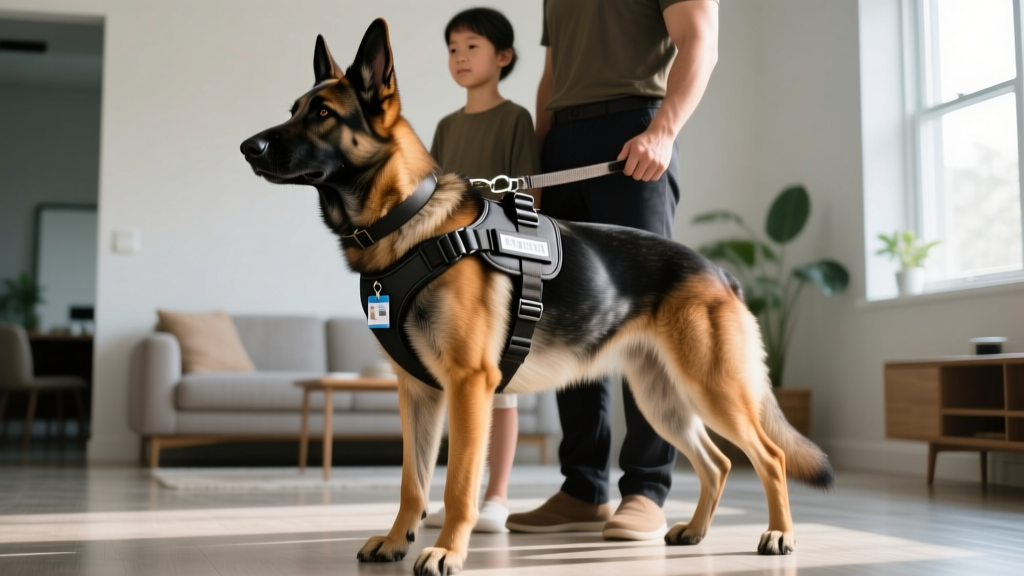
Choosing a dog that can protect your home while remaining gentle with your children is one of the most nuanced decisions a dog owner can make. The best security dogs for families aren't aggressive attack dogs — they're confident, alert, deeply bonded companions who deter threats through presence, intelligence, and loyalty. But the right breed is only half the equation. Equipping yourself with proper training gear, containment systems, and safety products determines whether your family protection dog becomes a well-mannered household member or a liability.
This guide covers the top breeds suited for family security roles and reviews the essential products you'll need to raise, train, and manage a protection-capable dog safely in a family environment. All training recommendations follow positive reinforcement and LIMA (Least Intrusive, Minimally Aversive) principles.
What Makes a Good Family Security Dog?
A family security dog balances two seemingly opposing traits: protective instinct and household gentleness. According to the American Kennel Club, the distinction matters enormously:
- Watchdogs alert you to unusual activity through barking — they deter by noise but don't engage physically.
- Guard dogs are trained to physically intervene against threats — this requires professional training and is generally not recommended for family pets.
- Family protection dogs occupy the ideal middle ground: they're naturally alert, imposing in size, loyal to their pack, and inherently wary of strangers without being aggressive.
The traits that matter most for family security dogs include:
- Confidence without aggression: A stable temperament that doesn't default to fear-biting or reactivity.
- Trainability: The ability to learn and obey commands reliably, even under distraction.
- Bonding depth: Strong attachment to family members, especially children.
- Size and presence: Dogs over 60 lb (27 kg) provide visual deterrence alone.
- Low prey drive toward children: Critical for households with toddlers or running/playful kids.
Top 5 Breeds That Excel as Family Security Dogs
These breeds consistently rank among the best security dogs for families based on temperament testing, trainability, and documented family compatibility. This is not an endorsement to purchase — adopting from breed-specific rescues is equally valid and often provides dogs with known temperaments.
1. German Shepherd Dog
Weight: 50–90 lb (23–41 kg) | Lifespan: 7–10 years | Origin: Germany, 1899
The German Shepherd remains the benchmark for family protection dogs. Bred for herding and guarding livestock, GSDs possess an innate protective instinct that extends naturally to their human family. They're exceptionally trainable — ranking 3rd in Stanley Coren's intelligence rankings — and typically bond deeply with children they're raised alongside. Key concern: hip and elbow dysplasia affect approximately 19% of the breed, so health testing (OFA/PennHIP) is non-negotiable.
2. Boxer
Weight: 50–80 lb (23–36 kg) | Lifespan: 10–12 years | Origin: Germany, late 1800s
Boxers are the quintessential "nanny dog" — playful, patient with children, and deceptively protective. Their muscular build and alert expression provide natural deterrence, while their goofy temperament keeps them firmly in the family companion category. They're watchdogs first, responding to threats with alarm barking rather than physical engagement. Watch for breed-specific cardiac conditions (aortic stenosis, boxer cardiomyopathy) and request echocardiogram clearances.
3. Bullmastiff
Weight: 100–130 lb (45–59 kg) | Lifespan: 7–9 years | Origin: England, 1860s
Originally bred to silently track poachers on English estates, Bullmastiffs are natural guardians with a calm, steady disposition indoors. Their sheer size (100+ lb) is a powerful deterrent, and they tend to be gentle and tolerant with family children. They're less active than GSDs, making them suitable for families with moderate exercise capacity. Bloat (GDV) risk is significant — prophylactic gastropexy should be discussed with your veterinarian.
4. Rottweiler
Weight: 80–135 lb (36–61 kg) | Lifespan: 9–10 years | Origin: Germany, Roman era
Rottweilers are powerful, confident dogs with strong guarding instincts. Well-socialized Rottweilers are devoted family members who are naturally reserved with strangers — providing excellent security through presence and alertness. They require firm, positive-reinforcement-based training from puppyhood and extensive early socialization (minimum 100 positive stranger encounters before 16 weeks). Note: Rottweilers are commonly affected by BSL — check your local jurisdiction before committing.
5. Giant Schnauzer
Weight: 55–85 lb (25–39 kg) | Lifespan: 12–15 years | Origin: Germany, 17th century
Less common but outstanding, Giant Schnauzers combine high intelligence with a natural territorial instinct. They're deeply loyal, athletic, and longer-lived than many large breeds. Their wiry coat is low-shedding (beneficial for allergy-sensitive families). They require significant mental stimulation — at least 60 minutes of structured activity daily — or they develop destructive behaviors.
| Attribute | German Shepherd | Boxer | Bullmastiff | Rottweiler | Giant Schnauzer |
|---|---|---|---|---|---|
| Family Friendliness | ★★★★★ | ★★★★★ | ★★★★☆ | ★★★★☆ | ★★★★☆ |
| Deterrence Factor | High | Medium | Very High | Very High | High |
| Exercise Needs | 90–120 min/day | 60–90 min/day | 30–45 min/day | 60–90 min/day | 60–90 min/day |
| Training Difficulty | Moderate | Moderate | Easy–Moderate | Moderate–Hard | Moderate–Hard |
| Child Tolerance | Excellent | Excellent | Very Good | Good (with socialization) | Good (with socialization) |
| Puppy Cost (Responsible Breeder) | $1,500–$3,500 | $1,200–$2,500 | $1,800–$3,000 | $1,500–$4,000 | $1,500–$2,800 |
Essential Products for Training and Managing a Family Security Dog
The best security dogs for families don't happen by accident. Beyond selecting the right breed, you need the right gear to build reliable obedience, ensure safe containment, and manage your dog's behavior around visitors and children. Below are the product categories and top picks we recommend based on veterinary behaviorist guidance and professional trainer input.
1. Freedom No-Pull Harness by 2 Hounds Design
Price: $34–$42 | Best for: Leash walking and basic obedience with strong pullers
This front-clip harness redirects pulling force without choking or causing tracheal damage. The dual-clip design (front and back) gives you steering control over dogs up to 250 lb. The velvet-lined chest strap prevents chafing on short-coated breeds like Boxers and Bullmastiffs. Widely recommended by veterinary behaviorists for dogs with leash reactivity.
- No tracheal pressure
- Dual-clip versatility
- Durable nylon (rated 3,800 lb break strength)
- Made in USA
- Sizing can be tricky — measure carefully
- Not escape-proof for determined Houdini dogs
- Limited color options
2. Ruffwear Front Range Harness
Price: $40–$50 | Best for: Active families who hike and train outdoors
Ruffwear's Front Range features four adjustment points, reflective trim for low-light visibility, and a padded chest plate for all-day comfort. The aluminum V-ring on the back handles strong dogs reliably. It's the go-to harness among outdoor-focused families with German Shepherds and Giant Schnauzers who need secure control on trails.
- Excellent build quality
- Four-point adjustment
- Reflective trim for safety
- ID tag pocket
- Front clip can twist on barrel-chested breeds
- Higher price point
- Not ideal for extreme pullers without additional training
3. High Tail Hitches Original Hands-Free Dog Leash
Price: $55–$70 | Best for: Hands-free walking while supervising children
For families managing toddlers and a large protection breed simultaneously, this waist-mounted leash system distributes pulling force across your hips rather than your shoulder. The bungee section absorbs sudden lunges, and the traffic handle provides quick close-control when visitors approach. Rated for dogs up to 150 lb.
- Frees hands for child supervision
- Shock-absorbing bungee
- Traffic handle for close control
- Adjustable waist belt
- Not suitable for dogs over 150 lb
- Can cause back strain if dog pulls constantly
- Premium price
4. PetSafe UltraSmart In-Ground Fence System (PIG00-13661)
Price: $320–$400 | Best for: Secure yard containment without visible fencing
For families in HOAs that restrict visible fencing, in-ground boundary systems provide containment for protection breeds. The UltraSmart collar features tone-only training mode (no correction needed for well-trained dogs), adjustable correction levels, and a rechargeable battery lasting up to 3 months. Covers up to 25 acres with additional wire. Note: This system contains your dog but does not prevent intruders or other animals from entering your yard.
- Invisible boundary — HOA-friendly
- Tone-only mode available
- Rechargeable collar
- Covers large properties
- Does not prevent intruders/animals from entering
- Requires 2–4 weeks boundary training
- Power outages disable the system
- Not suitable for dogs with high prey drive who will breach boundary
5. ProSelect Empire Dog Crate (Zinger Winger-style)
Price: $550–$750 | Best for: Heavy-duty indoor containment for powerful breeds
Standard wire crates buckle under the force of a 100 lb Bullmastiff or determined Rottweiler. The ProSelect Empire is constructed from 20-gauge steel with reinforced welds, dual slam-lock latches, and a removable steel tray. It's the crate used by professional trainers and K9 handlers for powerful breeds. Sized at 42"L × 30"W × 36"H, it accommodates most large breeds comfortably.
- Virtually escape-proof
- 20-gauge steel construction
- Dual locking mechanism
- Lifetime durability
- Very heavy (75+ lb empty)
- Expensive upfront investment
- Industrial appearance may not suit all home décor
6. Furbo 360° Dog Camera with Treat Tossing
Price: $170–$210 | Best for: Remote monitoring of your security dog's behavior when home alone
Understanding how your protection dog behaves when you're away is critical. The Furbo 360° provides rotating camera coverage, bark alerts sent to your phone, and two-way audio so you can issue commands remotely. The treat-tossing feature supports reinforcement of calm behavior. Barking alerts help you distinguish between normal vocalization and alert barking triggered by actual threats.
- 360° rotating view
- Bark alerts to smartphone
- Two-way audio
- 1080p HD night vision
- Requires stable WiFi
- Subscription needed for cloud recording ($6.99/month)
- Treat capacity limited (~30 treats)
7. Baskerville Ultra Muzzle
Price: $20–$30 | Best for: Vet visits, grooming, and emergency safety
Every family security dog should be muzzle-trained from puppyhood — not because they're dangerous, but because injured or frightened dogs may bite even beloved family members. The Baskerville Ultra allows panting, drinking, and treat-taking while preventing bites. Its heat-moldable design ensures a custom fit for brachycephalic and dolichocephalic breeds alike. Muzzle training is a responsible safety measure, not a punishment.
- Allows panting and drinking
- Heat-moldable custom fit
- Lightweight neoprene padding
- Treat-accessible for positive reinforcement
- Sizing requires careful measurement
- Some dogs initially resist wearing
- Not designed for extended wear (2+ hours)
Product Comparison Table
| Product | Category | Price Range | Max Dog Weight | Force-Free | Best For |
|---|---|---|---|---|---|
| Freedom No-Pull Harness | Harness | $34–$42 | 250 lb | Yes | Strong pullers |
| Ruffwear Front Range | Harness | $40–$50 | 150 lb | Yes | Active/outdoor families |
| High Tail Hitches | Leash System | $55–$70 | 150 lb | Yes | Families with small children |
| PetSafe UltraSmart Fence | Containment | $320–$400 | Any | Tone mode available | HOA-restricted yards |
| ProSelect Empire Crate | Crate | $550–$750 | 150+ lb | Yes (management tool) | Powerful/escape-prone breeds |
| Furbo 360° Camera | Monitoring | $170–$210 | N/A | Yes | Remote behavior monitoring |
| Baskerville Ultra Muzzle | Safety | $20–$30 | Any | Yes | Vet visits, emergencies |
How to Train and Use These Products Safely
Having the right gear means nothing without proper implementation. Here's a step-by-step framework for integrating these products into your family security dog's routine:
- Week 1–4: Foundation bonding. Focus on relationship-building with all family members. Use the harness for short, positive walks (5–10 minutes for puppies, 20 minutes for adults). Reward calm behavior with high-value treats (freeze-dried liver, chicken).
- Week 5–8: Leash manners. Practice loose-leash walking with the front-clip harness. Stop and redirect every time the leash goes tight. Goal: dog walks beside you without pulling for 10+ consecutive steps.
- Week 9–12: Crate conditioning. Introduce the heavy-duty crate as a positive space. Feed meals inside, provide long-lasting chews (bully sticks, frozen Kongs), and gradually increase closed-door time from 1 minute to 2+ hours.
- Week 13–16: Socialization blitz. Expose your puppy to 5+ new people, environments, and sounds per week. The goal is a dog who is confident and discerning — not fearful. Fearful dogs are more likely to bite inappropriately.
- Week 17–20: Boundary training. If using an in-ground fence, follow the manufacturer's 2–4 week flag-training protocol. Start with tone-only mode. Never leave your dog unsupervised in the yard during training.
- Week 21+: Muzzle conditioning. Introduce the Baskerville muzzle using a treat-through-the-basket protocol. Goal: dog voluntarily puts nose into muzzle for treats. This takes 2–4 weeks of daily 5-minute sessions.
- Ongoing: Camera monitoring. Use the Furbo to observe your dog's behavior when alone. Note alert barking patterns, separation anxiety signs, and calm resting behavior. Adjust training accordingly.
- Your dog growls, snaps, or bites at family members — especially children.
- Your dog shows fear-based reactivity (cowering, tail-tucking, lunging) toward strangers.
- Your dog resource-guards food, toys, or spaces aggressively.
- You feel afraid of or unable to control your dog in public.
- Your dog has bitten anyone — consult a veterinary behaviorist (DACVB) immediately.
Products manage behavior; they don't fix underlying temperament issues. A certified veterinary behaviorist can assess whether your dog's protective instincts are healthy or problematic.
How Much Does It Cost to Own a Family Security Dog?
Budgeting realistically prevents surrender and ensures your dog receives proper care. Here's a first-year cost breakdown for a typical family protection breed:
| Expense Category | Low Estimate | Typical | High Estimate |
|---|---|---|---|
| Puppy purchase (responsible breeder) | $1,200 | $2,200 | $4,000 |
| OR adoption/rescue fee | $200 | $400 | $600 |
| Veterinary (vaccines, spay/neuter, wellness) | $600 | $1,000 | $1,800 |
| Professional training (group + private) | $400 | $800 | $2,500 |
| Gear (harness, crate, leash, muzzle, camera) | $200 | $500 | $1,100 |
| Food (large-breed premium kibble) | $600 | $900 | $1,400 |
| Pet insurance (annual premium) | $600 | $900 | $1,500 |
| First-Year Total (with puppy purchase) | $3,600 | $6,300 | $12,300 |
Alternatives to Product-Based Security
Not every family needs gear-heavy solutions. Consider these alternatives depending on your situation:
Natural Deterrence Through Breed Presence
For many families, simply having a large, alert breed is sufficient security. A well-socialized German Shepherd or Bullmastiff barking at the door deters the vast majority of potential intruders without any specialized equipment. According to a study cited by the AKC, homes with large dogs experience significantly fewer burglary attempts.
Professional Protection Dog Training Programs
If you need trained personal protection beyond natural deterrence, professional programs (such as those from CCPDT-certified protection trainers) cost $8,000–$25,000 and produce dogs trained to specific threat-response protocols. These programs typically take 12–16 weeks and include handler training for the family. This is not DIY territory.
Home Security Systems as a Complement
Pairing a family dog with a monitored home security system (Ring, SimpliSafe, ADT) provides layered protection. The dog handles presence and alert; the system handles detection, recording, and emergency dispatch. Monthly monitoring costs $20–$60.
DIY Training Resources
For budget-conscious families, the following free or low-cost resources support positive-reinforcement training:
- Fenway Farms K9 Training YouTube Channel: Free force-free tutorials for basic through advanced obedience.
- Karen Pryor Clicker Training (clickertraining.com): Structured online courses ($49–$199) based on operant conditioning science.
- Local AKC Canine Good Citizen (CGC) classes: Typically $150–$300 for 6–8 week courses — the CGC title is foundational for any family security dog.
Frequently Asked Questions
What is the best security dog breed for families with small children?
The Boxer and German Shepherd consistently rank highest for families with young children. Boxers are notably patient and playful, while German Shepherds are protective yet gentle with children they're raised alongside. Bullmastiffs are also excellent but their sheer size (100+ lb) requires supervision around toddlers to prevent accidental bumps.
How do I choose the right security dog for my family?
Start by honestly assessing your experience level, available exercise time, property size, and local breed restrictions. First-time owners should lean toward Boxers or well-bred German Shepherds from breeders who temperament-test puppies. Experienced owners may consider Rottweilers or Giant Schnauzers. Always meet the puppy's parents, request OFA health clearances, and observe the litter's socialization environment before committing.
How much does a family security dog cost in total?
Expect $3,600–$12,300 in the first year (including puppy purchase, veterinary care, training, gear, food, and insurance). Ongoing annual costs settle to $2,000–$4,500 per year for food, veterinary care, insurance, and training maintenance. Adoption from a breed-specific rescue significantly reduces the initial investment to $2,000–$7,000 total first-year.
Are there natural alternatives to training gear?
Yes — the most effective "natural alternative" is consistent positive-reinforcement training using food rewards, play, and environmental management. A well-trained dog who responds reliably to verbal cues doesn't always need specialized equipment. However, management tools (harnesses, crates, muzzles) provide safety nets during the training process and in unpredictable situations. Never substitute training with punishment-based tools.
When should I skip products and see a veterinary behaviorist?
Consult your veterinarian or a board-certified veterinary behaviorist (DACVB) immediately if your dog displays any of the following: unprovoked aggression toward family members, fear-based biting, resource guarding that escalates beyond growling, inability to settle or constant hypervigilance, or any bite incident involving broken skin. These are temperament and behavioral health issues that products alone cannot resolve. Early intervention dramatically improves outcomes — the AVMA recommends professional assessment at the first sign of concerning behavior.
Can I train a protection dog myself without professional help?
Basic obedience and watchdog alertness — yes, most owners can handle this with quality resources and group classes. Formal protection training (bite work, controlled engagement, threat discrimination) — no. This requires professional instruction to avoid creating a dangerously unpredictable dog. The line between a confident protector and an aggressive liability is drawn by training quality, not breed alone.
This article provides educational guidance and does not replace professional veterinary or behavioral consultation. Always consult your veterinarian before making decisions about your dog's health, training, or management. Breed-specific legislation varies by jurisdiction — check your local laws before acquiring any breed discussed in this article.
Tom Renshaw
All our authors care for dogs every day — read more of their work on the authors page.