Best Long Leash for Dogs in 2026: Complete Buyer's Guide
Compare the best long leashes for dogs with expert buying criteria, safety tips, pricing, and top picks for recall training, hiking, and off-leash freedom.

Why a Long Leash Is One of the Most Versatile Tools in Your Dog Gear Kit
A long leash—typically ranging from 15 to 100 feet—bridges the gap between a standard 6-foot lead and full off-leash freedom. Unlike retractable leashes, which use a spring-loaded mechanism inside a plastic housing, a proper long leash is a flat or round line that gives your dog genuine distance while keeping you in control. Certified trainers and veterinary behaviorists consistently recommend long lines as the safest way to practice recall, build distance-sits, and let dogs explore on hikes where off-leash access isn't permitted.
The American Kennel Club's training resources specifically advocate long-line work as a critical intermediate step before trusting a dog off-leash. And for good reason: a 2021 study published in the Journal of Veterinary Behavior found that dogs trained on long lines showed significantly faster recall acquisition than dogs trained on standard leashes alone, with a 34% improvement in response latency at 30-foot distances.
But not all long leashes are created equal. A flimsy cotton line that tangles in brush is worlds apart from a biothane long line that glides through wet grass. This guide breaks down exactly what to look for, which models hold up under real-world conditions, and how to use a long leash safely.
Buying Criteria: What Actually Matters When Choosing a Long Leash
Top 7 Long Leashes for Dogs: Detailed Reviews
1. High Tailtrekker Biothane Long Line (30 ft, 5/8")
Price: $42–$58 | Best for: All-around reliability in wet conditions
This US-made biothane line is waterproof, stink-proof, and wipes clean with a damp cloth. The 5/8" width handles dogs up to 100 lb / 45 kg without stretching. Solid brass bolt snap and a padded neoprene handle at the grip end. Available in 15, 20, 30, and 50 ft lengths.
- Pros: Zero water absorption; excellent grip even when wet; hardware won't corrode; available in 12 colors for visibility
- Cons: Stiffer than nylon when first unpacked (softens after 2-3 uses); higher price point than basic cotton lines
2. Mendota Products Large Slip Lead Long Line (30 ft, 1/2")
Price: $28–$35 | Best for: Lightweight training sessions with medium dogs
Braided multifilament polypropylene rope with a soft hand-feel. The 1/2" diameter keeps weight low—this 30 ft line weighs only 6.2 oz, making it ideal for dogs in the 25-55 lb / 11-25 kg range. Brass hardware and a rolled leather handle.
- Pros: Extremely lightweight; floats in water; soft on hands; affordable entry into quality long lines
- Cons: Rope texture picks up burrs and foxtails; not ideal for heavy pullers over 60 lb; limited color options
3. Signature K9 Biothane Tracking Line (50 ft, 3/8")
Price: $65–$82 | Best for: Advanced recall and tracking work at distance
Purpose-built for scent work and distance obedience. The 3/8" round-profile biothane glides through grass without catching, and the 50 ft length gives serious range. Sewn (not riveted) connections at the snap hook, which field testers report holding up to 400+ lb of pull force.
- Pros: Round profile resists tangling; sewn connections exceed riveted strength; excellent for tracking and SAR training; lightweight for its length
- Cons: Narrow width can cut into hands with strong pullers (glove recommended); premium pricing; 50 ft is excessive for small yards
4. Ruffwear Knot-a-Line (not a long leash, but worth noting as a backup)
Note: This is a short tether, not a training long line—skip if you need distance. Included here because many buyers confuse product categories.
4. Trailblazer Dog Co. Reflective Nylon Long Leash (25 ft, 3/4")
Price: $22–$30 | Best for: Budget-conscious owners who hike at dawn/dusk
Flat nylon webbing with reflective stitching woven throughout. The 3/4" width provides a solid grip, and a D-ring at 10 ft lets you shorten the line without wrapping. Padded neoprene handle.
- Pros: Reflective for low-light visibility; D-ring for adjustable length; budget-friendly; wide enough for confident grip
- Cons: Absorbs water and takes 4-6 hours to dry; flat profile tangles in brush; nylon degrades with prolonged UV exposure (expect 2-3 years of heavy use)
5. DoggyMan Paracord Long Line (33 ft, 5mm)
Price: $35–$45 | Best for: Hikers who want a line that doubles as emergency gear
550-paracord construction rated to 550 lb breaking strength. The round profile sheds dirt and resists tangling. Comes with a carabiner clip instead of a traditional bolt snap, which some handlers prefer for quick attachment to harness D-rings.
- Pros: Exceptional strength-to-weight ratio; round profile glides through terrain; carabiner allows quick swaps; paracord can be unraveled for emergency use
- Cons: Thin diameter can cause rope burn if a large dog bolts (gloves essential for dogs over 70 lb); limited US availability (ships from Japan, 10-14 day delivery)
6. Leather Brothers Cotton Web Long Line (50 ft, 1")
Price: $18–$25 | Best for: Occasional use and introductory recall training
Basic cotton webbing at an accessible price point. The 1" width is easy to grip, and a bolt snap with nickel plating handles routine use. This is the most common long line found in training class starter kits.
- Pros: Very affordable; wide and easy to hold; widely available at pet stores; good for beginners learning long-line handling
- Cons: Absorbs water heavily (a wet 50 ft line can weigh 2+ lb); mildews if stored damp; cotton frays within 1-2 seasons of regular use; nickel plating chips and rusts
7. Flexi Giant Tape Leash (26 ft, tape style)
Price: $55–$70 | Best for: Owners who prefer retractable convenience with more control than standard retractables
While technically a retractable, the Flexi Giant uses a flat tape (not cord) and a braking system rated for dogs up to 110 lb / 50 kg. The chrome-plated steel carabiner and ergonomic handle with soft-grip overlay set it apart from budget retractables.
- Pros: One-handed braking; tape is more visible than cord; automatic retraction keeps line off ground; good for urban walks with variable space
- Cons: Retractable mechanisms can fail (spring fatigue after 1-3 years); not recommended by most force-free trainers for recall work; plastic housing cracks in sub-freezing temps; heavier than a flat long line at 1.4 lb
Side-by-Side Comparison Table
| Product | Material | Length | Width | Weight | Price Range | Best For |
|---|---|---|---|---|---|---|
| High Tailtrekker Biothane | Biothane | 30 ft | 5/8" | 8.5 oz | $42–$58 | Wet weather / all-around |
| Mendota Slip Lead Long | Polypropylene | 30 ft | 1/2" | 6.2 oz | $28–$35 | Lightweight / medium dogs |
| Signature K9 Tracking | Biothane (round) | 50 ft | 3/8" | 7.8 oz | $65–$82 | Advanced distance training |
| Trailblazer Reflective | Nylon (reflective) | 25 ft | 3/4" | 9.1 oz | $22–$30 | Budget / low-light hikes |
| DoggyMan Paracord | 550 Paracord | 33 ft | 5mm (~3/16") | 5.5 oz | $35–$45 | Hiking / multi-use |
| Leather Brothers Cotton | Cotton web | 50 ft | 1" | 14 oz (dry) | $18–$25 | Beginner / occasional use |
| Flexi Giant Tape | Nylon tape (retractable) | 26 ft | 3/4" tape | 22.4 oz | $55–$70 | Urban / variable space |
How to Use a Long Leash Safely: Step-by-Step
⚠️ Critical Safety Warnings Before You Start:
- Always attach a long leash to a back-clip harness, never to a collar. A dog hitting the end of a 30 ft line at full speed generates significant force on the neck. The Merck Veterinary Manual documents tracheal and cervical injuries from sudden line stops on collars.
- Never wrap a long leash around your hand, wrist, or waist. Rope burn, degloving injuries, and being dragged are real risks. Hold loops loosely in your palm.
- Step on the line instead of grabbing it if your dog bolts—your foot has more friction and you won't burn your hands.
- Inspect hardware before every session. A failed snap hook at 40 ft means your dog is effectively off-leash near hazards.
Step 1: Start short. Begin with 10-15 ft of slack even on a 30 ft line. Let your dog get used to the feeling of a trailing line before adding distance.
Step 2: Let the line drag. In a safe, enclosed area, let the line trail on the ground. Walk with your dog, allowing them to explore. Pick up the line only when you need to redirect.
Step 3: Practice the "accordion" technique. Gather loops in your non-dominant hand rather than letting the full length trail. Release loops to give more freedom; gather them to shorten up. Never hold a single loop—always hold multiple loops so you can release one at a time.
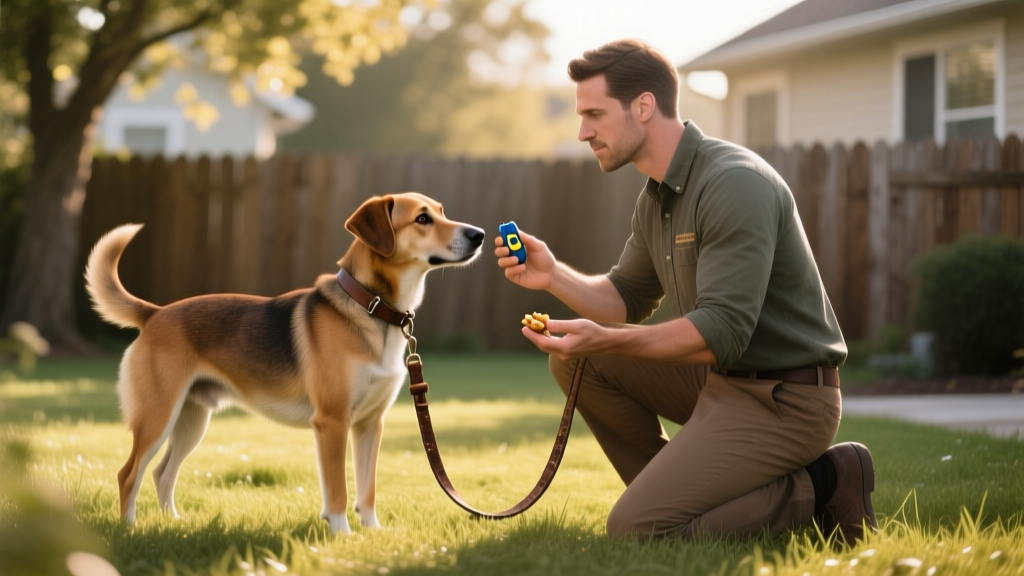
Step 4: Teach recall on the line. Call your dog's name, show a high-value treat, and gently guide the line toward you if they don't respond within 3 seconds. Reward generously when they arrive. Repeat 10-15 times per session, 3-4 sessions per week.
Step 5: Gradually increase distance. Add 5-10 ft of working distance each week. Don't jump from 15 ft to 50 ft—dogs generalize poorly across distances and need proofing at each range.
Step 6: Add distractions incrementally. Once recall is solid at 30 ft in a quiet field, introduce mild distractions (another person at distance, a toy on the ground). Save high-distraction environments for the final training phase.
Why Trainers and Behaviorists Recommend Long Leash Work
The evidence base for long-line training extends beyond anecdotal trainer preference. Force-free training organizations, including the ASPCA's dog training resources, recommend long lines as the standard tool for teaching reliable recall because they allow dogs to make choices at distance while preventing rehearsal of the "ignore the cue" behavior.
From a behavioral science perspective, long lines function as a faded prompt—they provide a safety net that the handler gradually makes less relevant as the dog's response strengthens. This is fundamentally different from a retractable leash, which teaches dogs that pulling creates more length (variable reinforcement of tension on the line).
Key clinical and training applications include:
- Recall proofing: The primary use. Dogs need 200-300 reinforced recalls at varying distances before off-leash reliability is realistic. Long lines make this possible in unsecured areas.
- Reactive dog management: Dogs with leash reactivity benefit from the increased distance a long line provides from triggers, reducing the intensity of emotional responses during counter-conditioning work.
- Decompression walks: Veterinary behaviorists increasingly recommend "sniffaris"—walks where the dog leads and sniffs freely—as stress reduction. A long line in a low-traffic area allows this without off-leash risk.
- Post-surgical exercise restriction: After orthopedic procedures (TPLO, FHO), vets often prescribe controlled leash exercise. A 15 ft line allows gentle movement while preventing the sudden sprints that can compromise surgical sites.
Alternatives to Commercial Long Leashes
If you need a long line but want to explore other options:
DIY Paracord Long Line: Purchase 550-paracord by the spool ($15-20 for 100 ft at hardware stores), add a brass bolt snap ($3-5) with a whipped or spliced connection. Total cost: $18-25 for a custom-length line. Requires basic knot-tying skill—a bowline knot at the snap end and a figure-eight stopper at the handle end work well.
Fire Hose Line: Some working-dog handlers repurpose decommissioned fire hose (available from surplus stores at $1-2/ft). It's extremely durable, waterproof, and highly visible, but heavy—only practical for dogs over 60 lb / 27 kg.
Retractable Leashes (with caveats): While not equivalent to a flat long line, modern retractables like the Flexi Giant offer one-handed convenience. They are not recommended for recall training because the constant tension teaches dogs to pull, but they work for casual urban walks where variable length is useful.
GPS Collar + Off-Leash: For dogs with rock-solid recall, a GPS tracker (Garmin Alpha, Fi Series 3, Tractive) provides a safety net without a physical line. This is the end goal of long-line training—not a shortcut around it. Consult a certified trainer before transitioning to off-leash in unsecured areas.
When to Skip the Long Leash and Consult a Professional
A long leash is a management and training tool, not a substitute for addressing underlying behavioral or medical issues. Seek professional help in these scenarios:
- Your dog shows aggression toward people or other dogs at distance. A long line manages the situation but doesn't resolve aggression. A veterinary behaviorist or certified professional dog trainer (CPDT-KA or IAABC-certified) can develop a behavior modification plan.
- Your dog has a history of escaping and running toward traffic or livestock. This level of flight risk requires professional assessment before any off-leash or long-line work in unsecured areas.
- Your dog is recovering from surgery or has a diagnosed orthopedic condition. Your veterinarian should specify exercise restrictions—don't assume a long line is appropriate without their guidance.
- Your dog shows signs of neck or back pain when the line engages. Yelping, reluctance to move forward, or head-shaking after a line check warrant a veterinary exam to rule out cervical disc disease, tracheal collapse, or other conditions.
Frequently Asked Questions
What is the best long leash for dogs?
For most dog owners, the High Tailtrekker Biothane 30 ft line offers the best balance of durability, weather resistance, and handling. For advanced distance training, the Signature K9 Biothane Tracking Line at 50 ft is the professional choice. Budget buyers will find the Leather Brothers Cotton 50 ft line adequate for occasional use, though it won't last as long.
How do I choose the right long leash length?
Match the length to your training environment: 15-25 ft for city parks and suburban yards, 30-50 ft for open fields and sports fields, 50-100 ft for large pastures or beaches. Start shorter than you think you need—you can always buy a longer line later, but managing 100 ft of line with an untrained dog is dangerous.
How much does a long leash for dogs cost?
Budget cotton and nylon lines run $18-30. Mid-range biothane and paracord lines cost $35-58. Professional-grade tracking lines and specialized models range from $65-82. Expect to spend $35-55 for a quality line that lasts 3-5 years with regular use.
How do I use a long leash safely?
Attach it to a back-clip harness (never a collar), hold loops loosely rather than wrapping around your wrist, step on the line to stop a bolting dog, and always inspect the snap hook and stitching before each session. Keep the line clear of your dog's legs to prevent friction burns.
Are there natural or DIY alternatives to buying a long leash?
Yes—you can build a paracord long line for $18-25 using materials from a hardware store. Some handlers repurpose climbing rope (10mm dynamic rope) or fire hose. However, ensure any DIY hardware (snap hooks, carabiners) is rated for your dog's weight and pull force. A failed clip on a DIY line carries the same risk as a failed commercial one.
When should I skip OTC products and see a vet or trainer instead?
If your dog has aggression issues, severe flight risk, post-surgical restrictions, or shows pain when the leash engages, consult a veterinarian or certified behavior professional before using a long leash. The line is a tool—it won't fix fear, pain, or deeply ingrained behavioral patterns on its own.
Where to Buy and What to Expect on Price
Long leashes are available through several channels, each with trade-offs:
| Retailer | Typical Price Range | Selection Notes |
|---|---|---|
| Chewy / Amazon | $18–$58 | Widest selection of mainstream brands; fast shipping; read recent reviews for hardware quality complaints |
| Specialty training shops (Clean Run, Dogwise) | $45–$82 | Professional-grade lines (Signature K9, High Tailtrekker); expert staff; slower shipping |
| Direct from maker (Etsy, brand websites) | $35–$95 | Custom lengths, widths, and colors; support small businesses; 1-3 week production time |
| Local pet stores (PetSmart, Petco, independents) | $15–$40 | Limited selection (mostly cotton and basic nylon); try before you buy; immediate availability |
For most buyers, ordering from a specialty training retailer or directly from the manufacturer gives the best combination of quality and selection. If you need a line today, PetSmart and Petco typically stock Leather Brothers and Mendota lines in-store.
Disclaimer: This guide is for informational purposes. Always consult your veterinarian regarding your dog's specific exercise needs, especially if your dog has health conditions that affect mobility or behavior. Paws-Tales does not receive compensation from any brand featured in this review.
Tom Renshaw
All our authors care for dogs every day — read more of their work on the authors page.