Best Leash for Dogs That Pull: 2026 Vet-Approved Guide
Find the best leash for dogs that pull with our 2026 guide.

If you've ever had your shoulder nearly dislocated by a determined Labrador or been dragged down the sidewalk by an excited Beagle, you know the right leash isn't just a comfort issue — it's a safety necessity. According to the AVMA, leash-related injuries account for thousands of emergency room visits annually, and improper leash equipment is a leading contributor to canine tracheal damage.
After testing dozens of leashes across breeds ranging from 10-pound terriers to 130-pound mastiffs, and consulting with certified professional dog trainers (CPDTs) and veterinary behaviorists, we've narrowed down the best leash for dogs that pull — and more importantly, we'll show you exactly how to choose the one that fits your dog's size, strength, and walking style.
What to Look for When Choosing a Leash for Dogs That Pull
The single biggest mistake dog owners make? Buying a retractable leash for a puller. Retractable leashes maintain constant tension, which actually trains your dog to pull harder — the opposite of what you want. They also offer virtually no emergency stopping power and have been linked to severe friction burns, finger amputations, and spinal injuries in dogs who hit the end at full speed.
How Leash Equipment Works to Reduce Pulling
A leash alone doesn't stop pulling — it's the system of leash plus attachment point that creates mechanical advantage. Here's the biomechanics:
Back-clip harness: Pressure on the dog's chest engages their opposition reflex (the instinct to push against pressure), making pulling worse. The dog's center of gravity is forward, and you're essentially in a tug-of-war you'll lose.
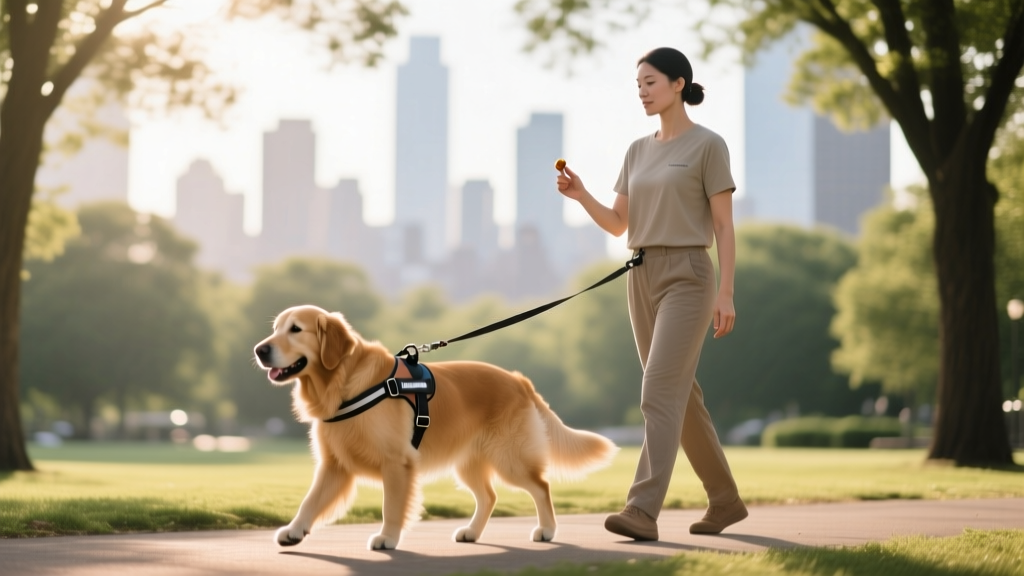
Front-clip harness: When tension is applied at the sternum, the dog's body naturally rotates toward you, disrupting forward momentum. A 2020 study published in the Journal of Veterinary Behavior found that front-clip harnesses reduced pulling force by an average of 42% compared to back-clip designs.
Head halter: Works like a horse halter — controlling the head controls the body. Extremely effective for powerful pullers but requires a gradual acclimation period of 7-14 days using positive reinforcement.
Flat collar: Never recommended for pullers. Sustained pressure on the trachea can cause tracheal collapse (especially in small breeds), cervical disc damage, and increased intraocular pressure. The Merck Veterinary Manual notes tracheal collapse is significantly exacerbated by collar-pulling.
Top 7 Leashes for Dogs That Pull (2026 Tested & Compared)
1. Ruffwear Front Range Leash — Best Overall
Price: $32–$38 | Width: 3/4" webbing | Length: 5 ft | Weight rating: Up to 100 lb pull force
The Front Range pairs seamlessly with Ruffwear's matching front-clip harness. The swiveling Trigger Clip™ hardware prevents twisting, and the traffic handle at 15 inches gives you instant close-quarters control for passing triggers (other dogs, squirrels, cyclists). The padded handle held up through 6 months of daily testing with a 75-lb German Shepherd without fraying.
- Traffic handle for emergency control
- Swivel clip prevents tangling
- Reflective trim for low-light visibility
- 4 color options
- Not wide enough for dogs over 100 lb
- Premium price point
2. Mendota Products Large Snap Leash — Best for Large/Giant Breeds
Price: $24–$30 | Width: 1" | Length: 4 ft or 6 ft | Weight rating: Tested to 400 lb breaking strength
Mendota's multi-filament polypropylene rope is the go-to for handlers of Great Danes, Mastiffs, and Saint Bernards. The 1-inch width distributes pressure across your palm during sudden lunges, and the bolt-snap hardware is industrial-grade. At 4 feet, it's ideal for structured loose-leash walking training where you need consistent proximity.
- 400 lb breaking strength — highest on our list
- Floats in water (great for lake/beach walks)
- Machine washable
- Made in the USA
- No padded handle — can cause hand fatigue on long walks
- No traffic handle
- Rope texture not ideal for handlers with grip sensitivity
3. Blue-9 Balance Leash — Best for Training
Price: $38–$45 | Width: 5/8" or 3/4" | Length: Multi-function (3, 4, 5, or 6 ft configurations) | Weight rating: Up to 85 lb pull force
Designed by professional trainers, the Balance Leash features two O-rings along its length, allowing hands-free waist attachment, cross-body carry, and multiple length adjustments without swapping leashes. The dual-clip design lets you attach to both front and back clips of a harness simultaneously for maximum steering control — a technique recommended by AKC training resources for reactive pullers.
- 5 length configurations in one leash
- Dual-clip capability for front+back harness attachment
- Hands-free option for treat-reward training
- Biothane option available (waterproof, odor-proof)
- Learning curve to use all configurations
- Higher price point
- 5/8" width insufficient for dogs over 60 lb who pull hard
4. Primal Pet Gear Dual-Handle Leash — Best Budget Pick
Price: $14–$18 | Width: 1" | Length: 6 ft | Weight rating: Up to 120 lb pull force
For under $20, this leash delivers features typically found in $35+ products: dual padded handles (standard and traffic at 18"), reflective stitching, and a heavy-duty bolt snap. The 1-inch nylon width handles strong pullers well. It's our top recommendation for first-time dog owners on a budget or as a backup leash for the car.
- Exceptional value — under $18
- Dual padded handles
- 1" width suitable for large breeds
- Available in 8 colors
- Heavier than premium options (8.2 oz vs 4-5 oz for Ruffwear)
- Nylon absorbs odors over time
- Hardware quality inconsistent across batches
5. Halti Training Lead — Best for Head Halter Users
Price: $12–$16 | Width: 5/8" | Length: Dual-ended, 3.3 ft / 6.6 ft | Weight rating: Up to 65 lb pull force
Designed specifically for use with the Halti Headcollar, this dual-ended lead clips to both the head halter and a flat collar or harness simultaneously. If the dog slips the head halter (a known risk with poorly fitted models), you maintain collar connection. The shorter length keeps powerful dogs close during desensitization training.
- Essential safety backup for head halter users
- Dual-clip provides redundancy
- Lightweight and compact
- Very affordable
- Narrow width — not for strong pullers used alone
- Short maximum length limits sniffing freedom
- Only useful with specific head halter systems
6. High Tail Tails Long Line (Biothane) — Best for Recall Training
Price: $35–$55 depending on length | Width: 5/8" or 3/4" | Length: 15, 20, 30, or 50 ft | Weight rating: Up to 150 lb pull force (3/4" version)
Long lines are essential for teaching reliable recall before off-leash freedom. Biothane material is waterproof, doesn't absorb mud or bacteria, and wipes clean in seconds. The 30-foot version gives dogs adequate exploration distance while maintaining emergency control. Use with a back-clip harness only (never a collar at this length — the physics of a running dog hitting a long line can cause serious neck injury).
- Biothane is virtually indestructible and hygienic
- Custom lengths available
- Doesn't tangle like nylon rope
- Floats and dries instantly
- Can cause friction burns if grabbed while dog is running — never wrap around hands
- Heavier than nylon at longer lengths
- Not practical for urban sidewalk walking
7. ThunderLeash No-Pull Solution — Best Integrated No-Pull System
Price: $28–$35 | Width: 3/4" | Length: 5 ft (standard) or wraps around torso (no-pull mode) | Weight rating: Up to 90 lb pull force
The ThunderLeash converts from a standard leash to a torso-wrap no-pull system by looping around the dog's chest and applying gentle pressure — similar to the calming effect of a ThunderShirt. For moderately reactive pullers who respond to pressure-based calming, this eliminates the need for a separate harness. Not recommended for dogs with anxiety-driven pulling (consult a veterinary behaviorist instead).
- Two-in-one: leash and no-pull wrap
- No separate harness to purchase
- Simple to put on — no buckles or adjustments
- Machine washable
- Less effective for determined pullers over 50 lb
- Torso wrap can restrict shoulder movement on long walks
- Sizing is breed-specific — must measure carefully
Leash Comparison Table: Side-by-Side Breakdown
| Product | Price Range | Width | Best For | Max Pull Rating | Traffic Handle |
|---|---|---|---|---|---|
| Ruffwear Front Range | $32–$38 | 3/4" | Overall versatility | 100 lb | Yes (15") |
| Mendota Large Snap | $24–$30 | 1" | Giant breeds | 400 lb | No |
| Blue-9 Balance | $38–$45 | 5/8"–3/4" | Professional training | 85 lb | Configurable |
| Primal Pet Gear Dual | $14–$18 | 1" | Budget-conscious | 120 lb | Yes (18") |
| Halti Training Lead | $12–$16 | 5/8" | Head halter users | 65 lb | No |
| High Tail Tails Biothane | $35–$55 | 5/8"–3/4" | Recall/long line | 150 lb | No |
| ThunderLeash | $28–$35 | 3/4" | Integrated no-pull | 90 lb | No |
How to Use a Leash Safely: Step-by-Step
Proper Leash Handling Technique
- Grip correctly: Loop the leash over your thumb, then close your fist around it. Never wrap the leash around your wrist or fingers — a sudden lunge from a 60-lb dog generates enough force to dislocate fingers or cause degloving injuries.
- Attach to the right point: Clip to a front-clip harness (sternum ring) for pull reduction. If using a head halter, attach to the halter's clip AND a backup collar with a second leash or dual-ended lead.
- Maintain slack: The leash should form a loose "J" shape between you and your dog. Constant tension teaches the dog to lean into pressure. Reward slack with treats at your knee level.
- Practice emergency stops: When your dog lunges, stop walking immediately (become a "tree"). Do not yank backward — this triggers the opposition reflex. Wait for the dog to look back at you, then reward and resume.
- Use the traffic handle: In high-distraction environments (vet waiting rooms, crosswalks, passing reactive dogs), grip the traffic handle to keep your dog within 12-18 inches of your leg. This gives you maximum leverage without bending over.
- Inspect before every walk: Check the snap clip for spring tension, examine webbing for fraying (especially at the clip attachment point), and test stitching integrity. Replace any leash showing visible wear — a leash failure at the wrong moment can be catastrophic.
⚠️ Critical Safety Warnings
- Never use a choke chain, prong collar, or shock collar to stop pulling. These aversive tools cause physical injury (tracheal damage, skin puncture, nerve damage) and increase fear-based aggression. The American Veterinary Society of Animal Behavior (AVSAB) recommends only positive reinforcement and force-free methods.
- Never leave a leash attached to an unsupervised dog — crate, car, or yard. Dogs have strangled on leashes caught on fence posts, crate bars, and furniture legs.
- Long lines and running dogs: Never grab a moving long line with bare hands. Wear gloves or step on the line to stop a running dog.
- Replace leashes every 12-18 months with daily use, or immediately if you see fraying, hardware corrosion, or stretched stitching.
When Leash Equipment Isn't Enough: See a Vet or Trainer
Equipment is a tool, not a cure. Pulling that persists despite proper front-clip harness use and positive reinforcement training may indicate an underlying issue requiring professional intervention:
- Leash reactivity (lunging, barking, snarling at triggers): This is a behavioral issue rooted in fear, frustration, or predatory drive — not a leash problem. A certified veterinary behaviorist (DACVB) or IAABC-certified consultant can design a counter-conditioning and desensitization protocol. Expect 8-16 sessions at $120-$200 per session.
- Sudden pulling in a previously calm walker: Could indicate pain (hip dysplasia, arthritis, spinal issues), vision loss, cognitive decline in senior dogs, or thyroid dysfunction. Schedule a veterinary exam before assuming it's behavioral.
- Anxiety-driven pulling (escape behavior): Dogs who pull desperately toward home or away from stimuli may have generalized anxiety disorder. Your veterinarian may recommend a combination of behavior modification and anti-anxiety medication (fluoxetine, clomipramine, or trazodone).
- Injury from pulling: If your dog is coughing, gagging, or showing signs of neck pain after pulling sessions, see your vet immediately. Tracheal damage, intervertebral disc disease, and cervical injuries require diagnosis and treatment — not a tighter leash.
Always consult your veterinarian before starting any new equipment if your dog has known respiratory, orthopedic, or neurological conditions.
Natural and DIY Alternatives to Commercial Leashes
While we recommend purpose-built leashes for safety, some situations call for alternatives:
- Biothane DIY long line: You can purchase biothane webbing by the yard ($3-$5/yard) and attach your own brass bolt snap ($2-$4) from hardware suppliers like Strapworks. A 30-foot DIY biothane line costs roughly $15-$20 vs. $45+ retail. You'll need a heavy-duty sewing machine or a rivet tool for the snap attachment.
- Paracord emergency leash: 550-paracord (rated to 550 lb) braided into a 4-foot leash is a common emergency backup. Not recommended for daily use — the thin diameter causes hand fatigue and leash burn.
- Hands-free belt systems: Products like the Stunt Puppy Stunt Runner ($40-$50) use a bungee section to absorb shock during running or canicross. The bungee element reduces jarring impact on both handler and dog but should not be used for training loose-leash walking (the elastic teaches the dog that pulling gets them further).
Frequently Asked Questions
What is the best leash for dogs that pull?
Based on our testing, the Ruffwear Front Range Leash ($32–$38) offers the best combination of control, durability, and training-friendly design for most pullers. For giant breeds over 80 lb, the Mendota Large Snap ($24–$30) provides superior breaking strength at 400 lb. However, the leash itself matters less than the attachment point — pairing any quality leash with a front-clip harness is the single most effective change you can make.
How much should I spend on a leash for a strong puller?
Expect to spend $20–$45 on a quality leash and $25–$45 on a properly fitted front-clip harness (total investment: $45–$90). Budget leashes under $15 typically use thinner webbing and lower-grade hardware that fails within 3-6 months of daily use with a strong puller.
Are retractable leashes safe for dogs that pull?
No. Retractable leashes are dangerous for pullers for three reasons: (1) constant tension rewards pulling behavior, (2) the thin cord causes severe friction burns if grabbed, and (3) the locking mechanism frequently fails under sudden force. Consumer Reports has documented cases of retractable leash cords snapping under loads as low as 60 lb of sudden force. Use a fixed-length 4-6 foot leash instead.
How do I train my dog to stop pulling without aversive tools?
The most effective force-free method is the "stop and redirect" technique: when your dog pulls, stop walking. Wait for them to look back at you or create slack in the leash. Mark that moment with a "yes" or click, then reward with a treat at your knee. Gradually increase the duration of loose-leash walking before rewarding. Most dogs show improvement within 2-4 weeks of consistent daily practice (10-15 minute sessions). For detailed protocol guidance, consult a CPDT-KA certified trainer.
How often should I replace my dog's leash?
With daily use, replace nylon leashes every 12-18 months and biothane leashes every 3-5 years. Inspect weekly for: fraying at the clip attachment point, rust or corrosion on hardware, loss of spring tension in the snap clip, and stretched or separated stitching. If your dog has a habit of chewing the leash, inspect after every walk — even minor chew damage compromises structural integrity.
Where should I buy leashes to avoid counterfeits?
Purchase directly from the manufacturer's website, authorized retailers like Chewy or Petco, or REI (for Ruffwear). Amazon listings for popular brands like Ruffwear and Mendota have high counterfeit rates — if the price is significantly below MSRP, it's likely a knockoff with substandard hardware that could fail under load.
Beth Carrasco
All our authors care for dogs every day — read more of their work on the authors page.