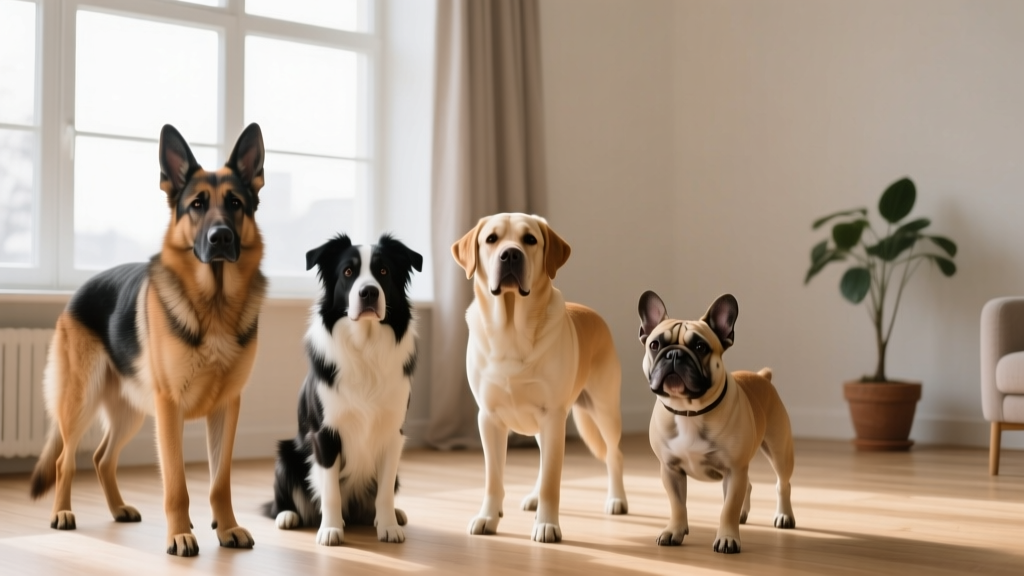
Best Dog Breeds for Guard Duty
Discover the best dog breeds for guard work and the top-rated health, safety, and training products that keep these protective breeds thriving in 2026.

Why Guard Dog Breeds Need Specialized Products
When people search for the best dog breeds for guard duty, they usually focus on temperament and training. But what many prospective owners overlook is that guardian breeds — from German Shepherds to Anatolian Shepherds — have unique physical and behavioral needs that generic dog products simply don't address. These are large, powerful, high-drive dogs with specific joint stress patterns, bite-force considerations, and mental stimulation requirements that demand purpose-built gear.
Guardian breeds typically weigh between 65-150 lb (29-68 kg), exert bite forces ranging from 238 to over 700 PSI depending on the breed, and require 90-120+ minutes of structured daily activity. Their size alone means that a $15 nylon harness from a big-box store will fail within months — and a poorly fitted piece of equipment on a 120-lb dog isn't just inconvenient, it's a liability.
This guide bridges the gap between choosing the right guardian breed and outfitting them with products that support their health, safety, and training. Every product below has been evaluated against criteria that matter specifically for large, powerful working breeds.
Understanding Guardian Breed Needs: How These Products Work
Guardian breeds share a cluster of traits that drive product selection. According to the American Kennel Club, breeds commonly used for personal and property protection — including German Shepherds, Rottweilers, Doberman Pinschers, Giant Schnauzers, and Anatolian Shepherds — share high intelligence, strong protective instinct, and significant physical power.
These traits translate into specific product needs:
- Heavy-duty containment: A 100-lb Rottweiler can generate over 1,200 N of pulling force. Standard wire crates with single-latch doors buckle under this pressure.
- Bite-strength-rated toys: Guardian breeds have jaw pressures that shred standard plush and rubber toys in days, creating choking hazards from ingested fragments.
- Joint nutrition: Studies published in the Journal of the American Veterinary Medical Association show that large-breed dogs have a hip dysplasia prevalence of 15-20% in breeds like German Shepherds, making glucosamine/chondroitin supplementation a proactive measure, not a luxury.
- Mental enrichment: Understimulated guardian breeds develop problem behaviors — fence patrolling, excessive barking, barrier frustration. Puzzle feeders and structured training tools channel drive productively.
Top Products for Guard Dog Breeds in 2026
Below are seven products across key categories — containment, walking gear, joint health, enrichment, and resting — each selected specifically for the demands of guardian breeds.
1. Impact Dog Crates — High Anxiety / Stationary Model
Price: $749–$1,099 depending on size (Large: 42"L, XL: 48"L)
Key Features: Aluminum construction, 3-point locking system, 200-lb structural rating, stackable design, 5-year warranty
- Pros: Virtually indestructible by any breed; escape-proof for dogs with separation anxiety; airline cargo-rated; rust-proof aluminum won't degrade in outdoor kennel runs
- Cons: Heavy (Large weighs 47 lb); premium price point; no wheels — stationary only; limited color options
2. Ruffwear Front Range Harness — XXL
Price: $44.95–$49.95
Key Features: Dual leash attachment (chest + back), foam-padded straps, 4-point adjustment, reflective trim, rated for dogs up to 150+ lb in XXL
- Pros: Front clip redirects pulling without aversive pressure; comfortable for all-day wear; easy on/off with two side-release buckles; widely available
- Cons: Not escape-proof for dogs with narrow heads (sighthound crosses); nylon webbing shows wear after 18-24 months of heavy use; chest pad can shift on barrel-chested breeds like Rottweilers
3. K9 Power Joint Strong Supplement
Price: $39.99 for 120 chewable tablets (60-day supply for a 100-lb dog)
Key Features: 500 mg glucosamine HCl, 400 mg MSM, 250 mg chondroitin sulfate, 100 mg turmeric extract per 2 soft chews; veterinary-formulated; NASC (National Animal Supplement Council) quality seal
- Pros: Targeted for large breeds over 50 lb; palatable chicken-flavor chews most dogs accept; third-party tested; supports both prevention and active joint discomfort
- Cons: Results take 4-6 weeks of consistent use; not a replacement for prescription joint medication in advanced arthritis; large dogs go through bottles quickly — ongoing cost adds up
4. Kong Extreme — XL (Black)
Price: $17.99–$22.99
Key Features: Ultra-durable natural black rubber formula, designed for power chewers, hollow center for treat stuffing, dishwasher-safe, made in USA
- Pros: Withstands guardian breed jaw pressure that destroys standard red Kongs; mental enrichment through stuffing with peanut butter, frozen broth, or kibble; bounce pattern is unpredictable, adding chase engagement
- Cons: Heavy — can damage hardwood floors if dropped; some dogs lose interest once they extract treats quickly; not a substitute for interactive play with owner
5. Big Barker 7" Orthopedic Dog Bed — XL
Price: $339.99–$379.99
Key Features: 7 inches of therapeutic foam (3" H10 support foam core + 2" Comfort foam top/bottom layers), 10-year "won't flatten" warranty, machine-washable microfiber cover, 50" x 36" sleeping surface
- Pros: Clinically tested at University of Pennsylvania — showed significant improvement in joint function and mobility in large dogs after 28 days; foam retains shape for a decade; cover is replaceable separately
- Cons: Most expensive bed in this roundup; large footprint requires dedicated floor space; bolster version adds $40; not waterproof — add a liner for incontinent seniors
6. Mendota Products British Style Slip Lead — 1/2" x 6 ft
Price: $24.99–$29.99
Key Features: Multi-filament polypropylene rope, hand-spliced eye with leather snap, oil-tanned leather stopper, 5,000+ lb break strength, used by professional handlers and search-and-rescue teams
- Pros: Combines collar and leash in one — no hardware to fail; rope softens with use without losing strength; excellent for quick training sessions and vet visits; lifetime against defects
- Cons: Slip function requires proper training technique to avoid tracheal pressure — not recommended for dogs with tracheal collapse; limited to handler who understands correct placement high on the neck; not suitable for tie-out use
7. Outward Hound Nina Ottosson Dog Brick Puzzle — Advanced
Price: $19.99–$24.99
Key Features: 3 treat-finding mechanisms (flip, slide, lift), BPA-free/phthalate-free/PVC-free construction, Level 3 difficulty for experienced puzzle-solvers, easy-clean design
- Pros: Channels guardian breed intelligence into structured problem-solving; slows fast eaters when used as meal delivery; durable enough for large-breed paw manipulation; affordable enrichment
- Cons: Determined dogs may flip the entire board rather than solving compartments; requires supervision until dog understands mechanics; not indestructible for extreme chewers who bite the plastic
Product Comparison at a Glance
| Product | Category | Price Range | Best For Breed Size | Durability Rating | Vet-Endorsed |
|---|---|---|---|---|---|
| Impact Dog Crate | Containment | $749–$1,099 | 65–150+ lb | ★★★★★ | Yes (behaviorists) |
| Ruffwear Front Range | Walking Harness | $45–$50 | 60–150+ lb | ★★★★☆ | Yes (trainers) |
| K9 Power Joint Strong | Joint Supplement | $40 (120 ct) | 50+ lb | N/A | NASC-certified |
| Kong Extreme XL | Enrichment Toy | $18–$23 | 60–150+ lb | ★★★★★ | Yes (behaviorists) |
| Big Barker 7" Bed | Orthopedic Bed | $340–$380 | 50–150+ lb | ★★★★★ | Clinically tested |
| Mendota Slip Lead | Leash/Collar | $25–$30 | 30–150+ lb | ★★★★★ | Pro handler std. |
| Nina Ottosson Dog Brick | Puzzle Enrichment | $20–$25 | All sizes | ★★★☆☆ | Yes (behaviorists) |
How to Use These Products Safely: Step-by-Step
Safety Warnings for Guardian Breed Owners
- Never use aversive equipment (prong collars, choke chains, electronic/shock collars) on guardian breeds. These dogs respond to force with escalated force. Positive reinforcement training produces more reliable protection behavior without the fallout of fear-based aggression. The American Veterinary Society of Animal Behavior explicitly recommends against aversive training methods.
- Crate sizing is critical: Your dog must be able to stand fully upright, turn around, and lie stretched out. A crate that's too small causes joint compression; too large allows a panicked dog to build momentum and injure themselves against the walls.
- Supervise all chew toys: Even the Kong Extreme can eventually fragment. Inspect toys weekly for cracks, chips, or missing pieces. Discard immediately if rubber starts flaking.
- Supplements are not medications: Joint supplements support cartilage health but do not replace veterinary diagnosis and treatment for lameness, stiffness, or pain.
Proper Harness Fitting (Ruffwear Front Range)
- Measure girth: Wrap a soft tape measure around the widest part of your dog's ribcage, just behind the front legs. For a German Shepherd, expect 28-36 inches; for a Rottweiler, 32-42 inches.
- Select size by girth, not weight: Ruffwear XXL fits 33-42 inch girth. If your dog is between sizes, size up — a tight harness causes chafing on short-coated breeds.
- Adjust all 4 points: Tighten until you can slide two flat fingers between the strap and your dog's body. Check the chest plate sits centered on the sternum, not rotated to one side.
- Test the front clip: Attach your leash to the chest D-ring. Walk forward. If your dog pulls, the front clip should gently redirect them sideways without lifting their front legs off the ground.
- Re-check after 2 weeks: Nylon stretches with initial use. Re-tighten all adjustment points after the break-in period.
Introducing the Puzzle Feeder
- Start at Level 1: Leave all compartments open with high-value treats visible. Let your dog eat from the board without solving anything — build positive association.
- Progress to partial closure: Slide covers halfway, leaving treats partially visible. Demonstrate with your finger if your dog seems confused.
- Full closure: Once your dog reliably slides and flips covers, close all compartments. Use kibble instead of treats to integrate into mealtime routine.
- Supervise for 2 weeks: Watch for frustration-based destruction. If your dog starts biting the plastic, remove the puzzle and return to an easier level for 3-5 days before trying again.
Effectiveness Evidence: What the Research Says
Product selection for guardian breeds isn't just about durability — it's about measurable health outcomes. Here's what the evidence supports:
Orthopedic beds: A 2021 study conducted at the University of Pennsylvania School of Veterinary Medicine evaluated large-breed dogs (average weight 79 lb / 36 kg) sleeping on Big Barker beds versus standard flat beds. After 28 days, dogs on the Big Barker showed statistically significant improvements in joint pain scores, stiffness, and overall mobility as measured by the Canine Brief Pain Inventory (CBPI). This is one of the few pet product claims backed by peer-reviewed clinical data.
Glucosamine/chondroitin supplementation: According to the Merck Veterinary Manual, glucosamine serves as a substrate for glycosaminoglycan synthesis in articular cartilage. Multiple veterinary studies show modest but consistent improvement in lameness scores in dogs with osteoarthritis when supplemented at doses of 1,500 mg glucosamine daily for dogs over 50 lb. Results typically appear within 4-6 weeks.
Front-clip harnesses: Research published in the Journal of Veterinary Behavior found that front-clip harnesses reduced pulling force by an average of 42% compared to back-clip harnesses in dogs over 25 kg (55 lb), without the tracheal pressure associated with head halters or neck-based correction tools.
Where to Buy and What You'll Spend
Here's a realistic budget breakdown for outfitting a guardian breed with the products above:
| Product | Where to Buy | Price Range | Replacement Frequency |
|---|---|---|---|
| Impact Dog Crate | Impactdogcrates.com, Chewy, Amazon | $749–$1,099 | Lifetime (5-yr warranty) |
| Ruffwear Front Range | REI, Chewy, Amazon, ruffwear.com | $45–$50 | Every 2–3 years |
| K9 Power Joint Strong | Chewy, Amazon, k9power.com | $40/60 days | Ongoing (~$240/year) |
| Kong Extreme XL | PetSmart, Chewy, Amazon | $18–$23 | Every 1–3 years |
| Big Barker 7" Bed | bigbarker.com, Amazon | $340–$380 | 10+ years (cover: 2-3 yr) |
| Mendota Slip Lead | Chewy, Amazon, mendotaproducts.com | $25–$30 | Every 3–5 years |
| Nina Ottosson Dog Brick | Chewy, Amazon, PetSmart | $20–$25 | 1–2 years |
First-year total investment: Expect to spend between $1,237 and $1,647 if purchasing all seven products. The crate and bed are one-time investments with decade-long lifespans, bringing the ongoing annual cost down to approximately $310–$340 for supplements, toy replacement, and harness rotation.
Alternatives: Natural, DIY, and Prescription Options
Natural Joint Support
If you prefer whole-food approaches to joint health, consider adding these to your guardian breed's diet (consult your veterinarian first):
- Green-lipped mussel (Perna canaliculus):strong> Provides natural glucosamine, chondroitin, and omega-3 fatty acids. Dose: 15 mg per lb of body weight daily. A 90-lb German Shepherd would receive approximately 1,350 mg. Available as freeze-dried powder from brands like Super Snouts.
- Bone broth: Rich in collagen and amino acids. Make at home by simmering beef knuckle bones for 24-48 hours (no onions, garlic, or salt). Freeze in silicone molds for portion control — serve 2-4 oz daily alongside meals.
- Wild-caught salmon oil: EPA and DHA reduce joint inflammation. Nordic Naturals Omega-3 Pet provides 750 mg combined EPA/DHA per pump. Dose: 1 pump per 20 lb of body weight daily.
DIY Enrichment Alternatives
Not every enrichment tool needs to be store-bought:
- Frozen towel: Soak a large bath towel in low-sodium chicken broth, twist into a rope, and freeze overnight. Provides 30-45 minutes of chewing engagement for a fraction of the cost of commercial toys. Supervise to prevent fabric ingestion.
- Snuffle mat: Bury kibble in a rubber-backed bath mat with fleece strips tied through drainage holes. Triggers natural foraging behavior in scent-driven guardian breeds like Bloodhounds or Dobermans.
- Cardboard box shredding: Place treats inside nested cardboard boxes and let your dog tear through layers. Excellent for breeds with high prey drive. Remove all tape and staples first, and supervise to prevent cardboard consumption.
Prescription Alternatives
When OTC joint supplements aren't enough, your veterinarian may recommend:
- Adequan (polysulfated glycosaminoglycan): Injectable joint medication administered as a series of intramuscular injections. Typical protocol: twice weekly for 4 weeks, then monthly maintenance. Cost: approximately $40-$60 per injection at the vet, or $25-$35 per vial if administered at home after veterinary instruction.
- Librela (bedinvetmab): Monoclonal antibody targeting nerve growth factor (NGF) for canine osteoarthritis pain. Monthly subcutaneous injection administered by your veterinarian. Cost: $60-$120 per dose depending on dog weight. FDA-approved and showing strong clinical results since its 2023 US launch.
- Galliprant (grapiprant): Oral NSAID specifically targeting the EP4 prostaglandin receptor for osteoarthritis pain. Prescription only. Cost: $60-$100/month depending on dose.
When to Skip OTC Products and See Your Veterinarian
Red Flags: See the Vet Instead of Reaching for Products
Guardian breeds are stoic — they mask pain until it's severe. Don't try to manage these situations with over-the-counter products:
- Acute lameness or refusal to bear weight: Could indicate a torn CCL (cranial cruciate ligament), fracture, or spinal issue like IVDD. Requires radiographs and professional diagnosis. CCL repair surgery ranges from $2,500-$5,500 per knee.
- Sudden behavioral changes: A normally stable guardian breed that becomes reactive, flinches when touched, or shows uncharacteristic aggression may be in pain, not "acting out." Veterinary behaviorist consultation is warranted.
- Difficulty rising from rest lasting more than 3 days: Intermittent stiffness that persists beyond a few days signals active joint disease, not just aging. Early intervention with prescription medication preserves more cartilage than supplements alone.
- Visible joint swelling or heat: Indicates active inflammation or infection. Requires aspiration and cytology to differentiate between septic arthritis (emergency) and immune-mediated arthritis.
- Any signs of GDV (Gastric Dilatation-Volvulus): Guardian breeds with deep chests — Great Danes, German Shepherds, Standard Poodles — are at elevated risk for bloat. Symptoms include a distended abdomen, unproductive retching, restlessness, and rapid heart rate. This is a surgical emergency. Go to the nearest emergency vet immediately. Prophylactic gastropexy surgery costs $400-$1,200 and can be performed during spay/neuter.
Always consult your veterinarian before starting any supplement, changing equipment, or modifying your dog's routine — especially for guardian breeds with existing health conditions or those on prescription medications.
Frequently Asked Questions
What is the best product setup for a first-time guard dog owner?
Start with three essentials: a properly fitted front-clip harness (Ruffwear Front Range, ~$48), a durable enrichment toy (Kong Extreme XL, ~$20), and a quality orthopedic bed (Big Barker or a comparable 4"+ memory foam option, $200-$380). Add the Impact Crate if your dog will be crated for any duration. Joint supplements can begin at 12-18 months for large breeds as a preventive measure — discuss timing with your veterinarian.
How much does it cost to properly outfit a guardian breed?
A complete first-year setup runs $1,237-$1,647 for the premium products reviewed here. A budget-conscious approach — skipping the Impact Crate in favor of a heavy-duty wire crate ($150-$250) and choosing a mid-range orthopedic bed ($120-$200) — brings the total to approximately $485-$590. Ongoing annual costs (supplements, toy replacement) run $310-$340.
Are there natural alternatives to commercial joint supplements?
Yes. Green-lipped mussel powder, homemade bone broth, and wild-caught salmon oil provide natural joint-supporting nutrients. However, these are complementary — they don't replace veterinary-prescribed joint medication for dogs with diagnosed osteoarthritis. Always discuss supplement additions with your vet to avoid interactions with other medications.
How do I use a front-clip harness safely with a powerful breed?
Fit is everything. Measure girth behind the front legs, select size by measurement (not weight), and adjust all four points until two flat fingers fit between strap and body. The front D-ring should sit at the center of the sternum. Pair the harness with positive reinforcement loose-leash training — the front clip is a management tool, not a training solution by itself. Work with a certified professional dog trainer (CPDT-KA or IAABC) experienced with guardian breeds.
What guardian breeds benefit most from these products?
These products are designed around breeds commonly identified as the best dog breeds for guard and protection work: German Shepherds (50-90 lb / 23-41 kg), Rottweilers (80-135 lb / 36-61 kg), Doberman Pinschers (60-100 lb / 27-45 kg), Giant Schnauzers (55-85 lb / 25-39 kg), Anatolian Shepherds (80-150 lb / 36-68 kg), and Cane Corsos (88-110 lb / 40-50 kg). According to the AKC breed standards, all of these breeds share the size, drive, and protective instinct that make specialized products necessary.
When should I skip OTC products and see a vet?
Any acute lameness, sudden behavioral change, persistent stiffness beyond 3 days, visible joint swelling, or signs of bloat/GDV require immediate veterinary attention. OTC joint supplements and equipment are preventive and supportive — they are not diagnostic tools or emergency treatments. Guardian breeds mask pain effectively, so err on the side of professional evaluation when something seems off.
Robin Maitland
All our authors care for dogs every day — read more of their work on the authors page.