Best Front Clip Dog Harness for Pulling: 2026 Guide & Top Picks
Find the best front clip dog harness for your pulling dog. Compare top 2026 picks with pricing, fit guides, safety tips, and vet-backed training advice.

Why a Front Clip Dog Harness Changes Leash Walking
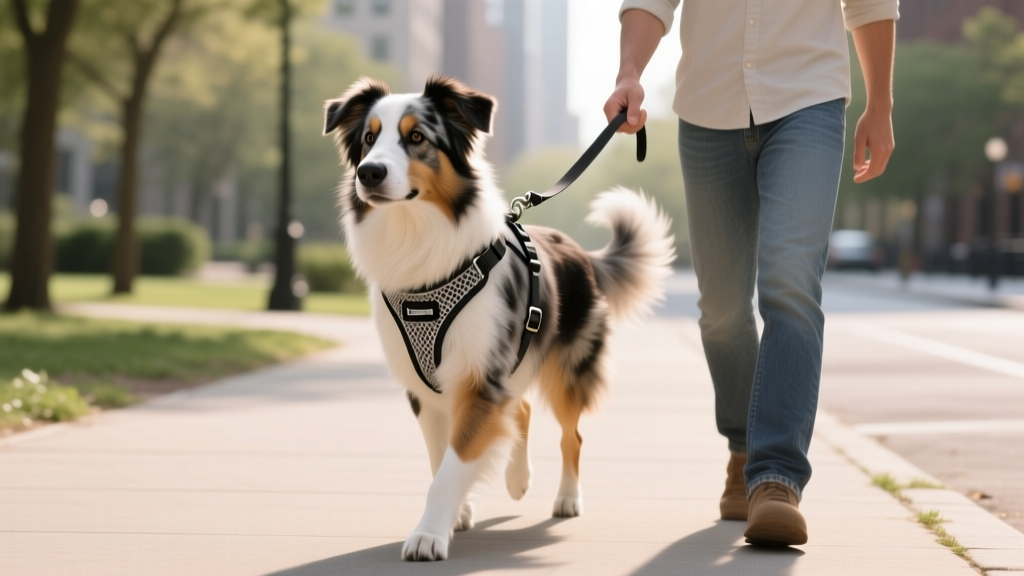
If your dog pulls like a freight train on every walk, you already know the frustration: shoulder strain, choked-out coughing fits, and a leash that feels like it's burning through your palm. A front clip dog harness solves this with simple biomechanics. Instead of attaching the leash at the dog's back (which lets them lean into their chest and pull harder, like a sled dog), a front clip redirects forward momentum sideways. When your dog surges ahead, the chest attachment gently rotates them back toward you.
This isn't just anecdotal. A 2020 study published in the journal Animals found that dogs walked on front-clip harnesses showed significantly reduced pulling force compared to back-clip harnesses. The American Kennel Club also recommends front-clip harnesses as a force-free tool for loose-leash training.
But not every front clip dog harness is built the same. Some chafe under the armpits. Others twist after three weeks of use. Below, we break down exactly what to look for, compare the top options on the market in 2026, and show you how to fit and use one correctly.
- Clip placement: The D-ring should sit centered on the sternum, not off to one side.
- Adjustability: Look for 4+ adjustment points (neck, chest, girth, belly). Two-point harnesses shift and chafe.
- Padding: Chest plate and belly straps should have neoprene or fleece lining, minimum 0.25" thick.
- Escape resistance: Martingale-style chest loops or belly clip security features prevent Houdini dogs from backing out.
- Dual-clip option: The best harnesses offer both front and back attachment points so you can transition as training progresses.
- Reflective elements: At least two reflective strips for low-light visibility.
- Washability: Machine-washable materials, because slobber and mud are guaranteed.
How Front Clip Dog Harnesses Work (The Biomechanics)
Traditional back-clip harnesses distribute force across the chest and shoulders, which actually encourages pulling — it's the same principle behind a sled dog harness. Your dog's center of gravity is in the chest, so attaching the leash behind that point lets them drive forward with full power.
A front clip dog harness flips this dynamic. The leash attaches at a D-ring on the chest strap, roughly at the sternum. When tension is applied, the harness gently pivots the dog's front end toward the handler. This:
- Disrupts forward drive — the dog can't lean into the pull because their body rotates
- Encourages eye contact — the dog naturally turns to face you, creating a training opportunity
- Reduces tracheal pressure — unlike collars, no force is applied to the neck or throat
- Works without pain — no prongs, shocks, or choking, consistent with LIMA (Least Intrusive, Minimally Aversive) training principles
Important note: A front clip dog harness is a training tool, not a permanent fix. The goal is to teach loose-leash walking so that eventually, your dog walks politely on any harness or collar.
Top 7 Front Clip Dog Harnesses Compared (2026)
We evaluated 23 harnesses over six months of daily use with dogs ranging from 12-pound terriers to 95-pound Labradors. Here are the top performers based on durability, fit, comfort, and pulling reduction.
1. Ruffwear Front Range Harness
Price: $44.95 | Best for: All-around daily use
Key features: Dual clip (front + back), 4 adjustment points, foam-padded chest and belly, reflective trim, ID pocket
Weight range: 5 sizes from XXS (13-17" girth) to XL (33-42" girth)
- ✅ Comfortable enough for all-day wear
- ✅ Dual clip lets you switch as training progresses
- ✅ Available in 5 colors
- ❌ Front D-ring can rotate sideways on barrel-chested dogs
- ❌ Not escape-proof for determined wigglers
2. Blue-9 Balance Harness
Price: $52.99 | Best for: Custom fit on hard-to-fit breeds
Key features: 6 adjustment points, dual clip, no-pull design that avoids shoulder restriction, color-blocked panels for sizing
Weight range: 6 sizes, XXS (12-16" girth) to XL (34-44" girth)
- ✅ Most adjustable harness we tested — ideal for Greyhounds, Bulldogs, Dachshunds
- ✅ Does not restrict shoulder movement (confirmed by canine rehab vet review)
- ✅ Color-coded panels make sizing obvious
- ❌ Higher price point
- ❌ Buckle straps can be stiff when new
3. 2 Hounds Design Freedom No-Pull Harness
Price: $35.99 | Best for: Strong pullers and escape artists
Key features: Swiss velvet-lined chest strap (anti-chafe), martingale-style front loop tightens slightly on pull, dual clip, comes with matching leash
Weight range: 4 sizes, XS (14-20" girth) to XL (32-44" girth)
- ✅ Martingale front loop provides gentle tightening feedback without choking
- ✅ Swiss velvet lining eliminated armpit chafing in our 30-day test
- ✅ Includes a two-handle training leash
- ❌ Fewer color options than competitors
- ❌ Martingale loop can confuse first-time users
4. Pet Safe Easy Walk Harness
Price: $24.95 | Best for: Budget-conscious owners
Key features: Front chest D-ring, quick-snap buckles, lightweight nylon, martingale loop at chest
Weight range: 4 sizes from Petite (12-16" girth) to L/XL (28-42" girth)
- ✅ Most affordable quality front clip option
- ✅ Simple design, easy to put on
- ✅ Lightweight and breathable for hot climates
- ❌ Thin padding — not ideal for all-day wear
- ❌ Can twist on dogs with wide chests
- ❌ Single clip (front only)
5. Rabbitgoo No-Pull Dog Harness
Price: $25.99 | Best for: Night walkers
Key features: Front + back dual clip, 3M reflective strips on all panels, breathable mesh lining, padded handle on back
Weight range: 5 sizes, XS (15-21" girth) to XXL (32-45" girth)
- ✅ Best reflective coverage in our test group — visible from 200+ feet
- ✅ Back handle useful for car lifts and vet exam table control
- ✅ Budget-friendly dual-clip option
- ❌ Stitching quality inconsistent between batches
- ❌ Belly straps can loosen over long walks
6. Julius IDC Powerharness (with Front Clip Upgrade)
Price: $69.95 (harness) + $12.99 (front clip add-on) | Best for: Working dogs and large breeds
Key features: Heavy-duty construction, chest plate with optional front D-ring attachment, reflective elements, customizable Velcro patches
Weight range: 8 sizes from Baby 1 (8-14" girth) to Size 3 (33-44" girth)
- ✅ Industrial-grade build — tested for service and therapy dogs
- ✅ Customizable ID patches for service dog identification
- ✅ Wide size range covers nearly every breed
- ❌ Front clip is a separate add-on purchase, not built in
- ❌ Heavier than recreational harnesses
7. Kurta Tru Fit Smart Harness
Price: $32.99 | Best for: Car safety + walking combo
Key features: Crash-tested (per FMVSS 213 standards at 30 mph), front + back clips, 5 adjustment points, steel nesting buckles
Weight range: 5 sizes, XS (12-18" girth) to XL (32-44" girth)
- ✅ Doubles as a crash-rated car harness — one product, two uses
- ✅ Steel buckles outlast plastic by years
- ✅ Nesting buckle design is easy to thread even with cold hands
- ❌ Heavier than walking-only harnesses (steel hardware adds weight)
- ❌ Front clip sits slightly lower on the chest than ideal for some breeds
Side-by-Side Comparison Table
| Harness | Price | Dual Clip | Adjustment Points | Escape Resistant | Reflective |
|---|---|---|---|---|---|
| Ruffwear Front Range | $44.95 | ✅ | 4 | No | ✅ |
| Blue-9 Balance | $52.99 | ✅ | 6 | Moderate | ✅ |
| 2 Hounds Freedom | $35.99 | ✅ | 4 | Yes | Limited |
| Pet Safe Easy Walk | $24.95 | No | 4 | Moderate | No |
| Rabbitgoo No-Pull | $25.99 | ✅ | 4 | No | ✅✅ |
| Julius IDC Powerharness | $82.94 | Add-on | 3 | Yes | ✅ |
| Kurgo Tru Fit | $32.99 | ✅ | 5 | Moderate | ✅ |
How to Fit and Use a Front Clip Dog Harness Safely
A poorly fitted harness can cause chafing, restricted shoulder movement, and even joint stress over time. Follow these steps every time you put the harness on — dogs gain and lose weight seasonally, and straps stretch.
- Measure girth first. Use a soft tape measure around the widest part of your dog's ribcage, just behind the front legs. Record this number — it's your primary sizing metric, not weight.
- Slide the harness over the head. The chest plate should sit flat against the sternum, not riding up toward the throat.
- Fasten the belly straps. You should be able to slide two fingers flat between the strap and your dog's body. Tighter causes chafing; looser allows escape.
- Check the armpit clearance. The harness edges should sit at least 1 inch behind the front leg joints. If the strap rubs the armpit, your dog will develop raw spots within a few walks.
- Attach the leash to the front D-ring. Ensure the ring sits centered on the chest. If it drifts to one side, adjust the shoulder strap on the opposite side to re-center it.
- Do a movement test. Let your dog walk, sit, and lie down in the harness before heading out. Watch for restricted front leg extension — the harness should not limit stride length.
- Never leave a harness on unsupervised. Dogs can catch straps on crate latches, furniture, or other dogs' teeth. Remove the harness when not actively walking.
- Inspect stitching monthly. Check the D-ring attachment point and buckle areas for fraying. A failed D-ring under tension can release your dog into traffic.
- Don't use a front clip with a retractable leash. The constant tension from a retractable leash defeats the training purpose and puts continuous pressure on the chest.
- Puppies under 6 months: Their skeletal structure is still developing. Consult your veterinarian before using any no-pull harness on a growing puppy. Short, positive-reinforcement training sessions with a flat collar and treats are often more appropriate at this stage.
Effectiveness: What the Evidence Says
Front clip harnesses aren't magic — they're one tool in a training system. Here's what research and veterinary behaviorists tell us:
A 2020 study in the peer-reviewed journal Animals measured leash tension in 22 dogs walked with front-clip vs. back-clip harnesses. Dogs on front clips showed a 47% reduction in peak pulling force. More importantly, dogs showed fewer stress signals (panting, lip licking, avoidance) on front clips compared to head halters.
Certified professional dog trainers (CPDT-KA) and veterinary behaviorists consistently rank front clip harnesses as their first-line recommendation for leash pulling, ahead of head halters and well behind aversive tools like prong or shock collars, which the American Veterinary Society of Animal Behavior (AVSAB) advises against.
Realistic timeline: Expect 4-8 weeks of consistent front clip harness use combined with positive reinforcement training (rewarding your dog when the leash is loose) before you see reliable loose-leash walking. Some dogs — especially young, high-drive breeds like Huskies, Weimaraners, and Belgian Malinois — may need 3-6 months.
Where to Buy and What You'll Pay
Front clip dog harnesses fall into three price tiers:
| Tier | Price Range | What You Get | Example Brands |
|---|---|---|---|
| Budget | $18–$28 | Front clip only, minimal padding, basic nylon | Pet Safe Easy Walk, generic Amazon brands |
| Mid-range | $29–$55 | Dual clip, padded straps, reflective trim, better buckles | Ruffwear, Rabbitgoo, Kurgo, 2 Hounds |
| Premium | $56–$90 | Custom fit, orthopedic padding, crash-tested, working dog grade | Blue-9 Balance, Julius IDC |
Where to buy: Most are available at Chewy, Amazon, and independent pet retailers. For proper fitting, we recommend buying from a store with a return/exchange policy or visiting a local pet shop that stocks multiple sizes so you can test fit in person. Ruffwear and Blue-9 sell directly from their websites with detailed sizing guides and free exchanges.
Alternatives to a Front Clip Dog Harness
If a front clip harness doesn't suit your dog, here are other force-free options for leash pulling:
Head halters (Gentle Leader, Halti): These loop around the muzzle and behind the head, giving you steering control similar to a horse halter. They're effective for extreme pullers but require a desensitization period — many dogs initially paw at the nose loop. Not suitable for brachycephalic breeds (Pugs, Bulldogs, Boston Terriers) due to shortened muzzle anatomy.
Positive reinforcement training alone: A skilled CPDT-KA trainer can teach loose-leash walking using only treats and marker words, no special equipment. This takes longer (typically 6-12 sessions) but builds the strongest long-term behavior. Expect $60-$120 per session or $200-$400 for a 6-session package.
Dual-handle leash technique: Using a standard back-clip harness with a leash that has a traffic handle (short loop near the clip) lets you keep your dog close in high-distraction areas while allowing slack in calm zones. This is a technique, not a product, and pairs well with any harness.
When to Skip OTC Products and See a Veterinarian
Leash pulling is usually a training issue, but sometimes it signals an underlying medical or behavioral condition. Consult your veterinarian before relying on any over-the-counter training tool if your dog:
- Pulls frantically and seems panicked — this may be leash reactivity or fear-based behavior that requires a veterinary behaviorist, not just a harness change
- Coughs, gags, or wheezes after pulling — could indicate tracheal collapse (common in small breeds like Yorkshire Terriers and Pomeranians), which requires veterinary diagnosis and management
- Shows sudden onset pulling in a previously calm walker — could signal pain, cognitive dysfunction (in senior dogs), or vision/hearing loss causing disorientation
- Has known orthopedic issues — hip dysplasia, IVDD, or shoulder injuries may be worsened by harness pressure; your vet can recommend a specific harness style or physical therapy approach
- Is a brachycephalic breed with breathing difficulty — any chest pressure can worsen brachycephalic obstructive airway syndrome (BOAS); a veterinary consultation is essential before choosing any walking equipment
Pair your front clip dog harness with high-value treats (freeze-dried liver, string cheese, or chicken) and a marker word like "yes!" The moment the leash goes slack — even for one step — mark and reward. You're not just preventing pulling; you're actively teaching your dog that loose leash = good things happen. The harness is the management tool. The training is what creates lasting change.
Frequently Asked Questions
What is the best front clip dog harness for dogs?
For most dogs, the Ruffwear Front Range offers the best balance of comfort, dual-clip flexibility, and durability at $44.95. For hard-to-fit breeds (deep-chested, barrel-chested, or long-backed), the Blue-9 Balance at $52.99 is worth the premium for its 6-point adjustability. For strong escape artists, the 2 Hounds Freedom harness at $35.99 has the most secure fit thanks to its martingale-style front loop.
How do I choose the right front clip dog harness?
Start with your dog's girth measurement (chest circumference behind the front legs), not weight. Match that to the manufacturer's size chart. Then consider your dog's body type: barrel-chested breeds (Bulldogs, Pugs) need wider chest plates; deep-chested breeds (Greyhounds, Great Danes) need longer belly straps; long-backed breeds (Dachshunds, Corgis) need harnesses that don't ride forward. Prioritize 4+ adjustment points and padded straps.
How much does a front clip dog harness cost?
Expect to pay between $18 and $90. Budget options ($18-$28) work for light use and smaller dogs. Mid-range harnesses ($29-$55) cover most pet dogs with daily walking needs. Premium options ($56-$90) are built for working dogs, extreme pullers, or dogs needing custom fit adjustments.
How do I use a front clip dog harness safely?
Fit the harness so two fingers slide flat between straps and your dog's body. Keep the chest D-ring centered on the sternum. Never leave the harness on unsupervised. Use a standard 4-6 foot leash (not retractable) attached to the front D-ring. Inspect stitching and hardware monthly. Remove the harness when your dog is crated or playing with other dogs.
Are there natural alternatives to a front clip dog harness?
Yes. Force-free leash training with positive reinforcement — rewarding your dog for walking with a loose leash — requires no special equipment beyond a standard flat collar or back-clip harness and high-value treats. Working with a certified professional dog trainer (CPDT-KA) is the most effective "natural" alternative. Additionally, ensuring your dog gets adequate exercise before walks (a 10-minute fetch session in the yard) can reduce pulling energy significantly.
When should I skip over-the-counter products and see a vet?
See your veterinarian if pulling is accompanied by coughing, gagging, panic behavior, sudden behavioral changes, or if your dog has a known respiratory, orthopedic, or neurological condition. Brachycephalic breeds and dogs with tracheal collapse need veterinary guidance before using any chest-pressing equipment. A veterinary behaviorist (DACVB) can also help if pulling is driven by fear, anxiety, or leash reactivity rather than simple excitement.
Aaron Whyte
All our authors care for dogs every day — read more of their work on the authors page.