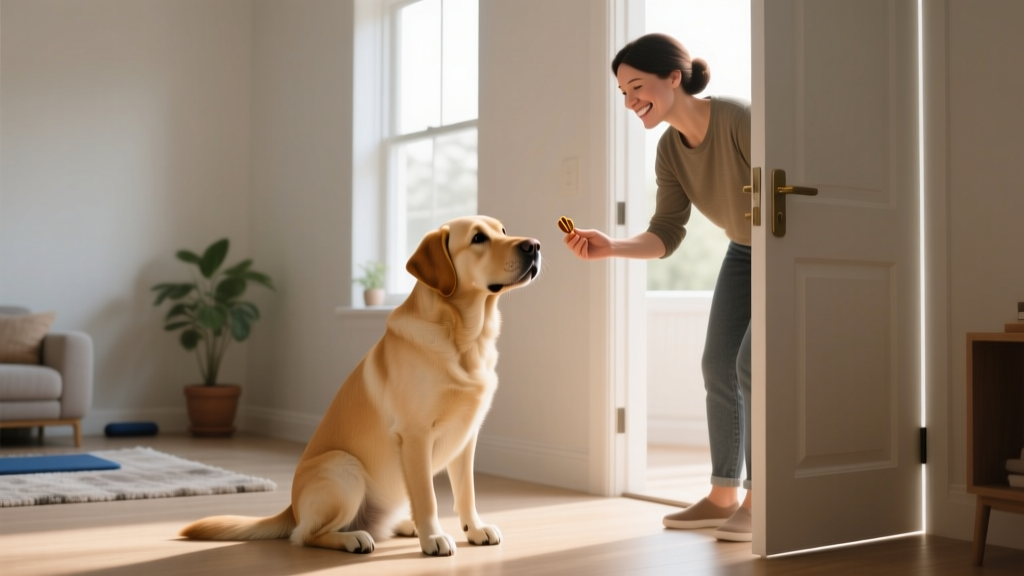
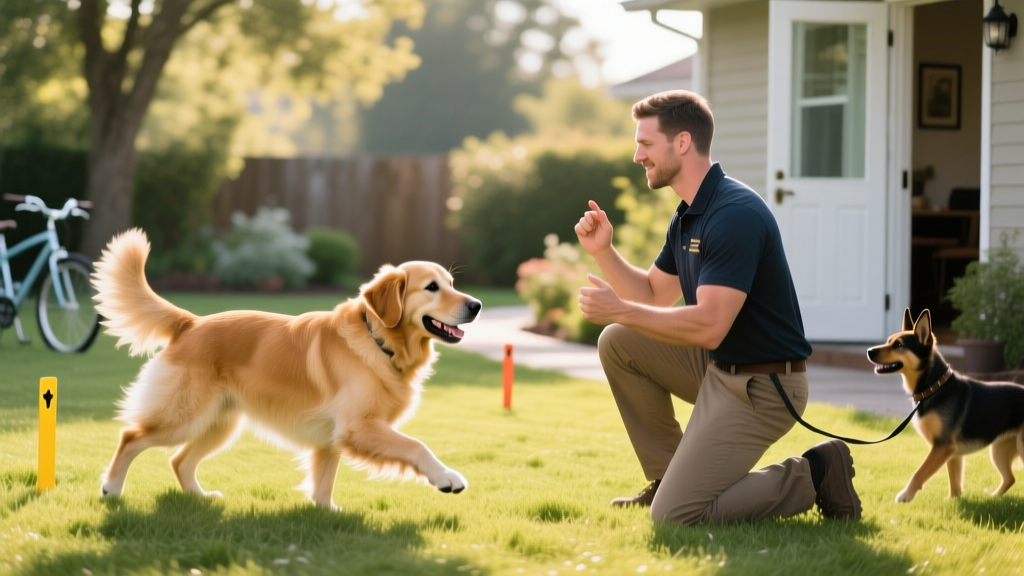
Best Dogs for Protection and Family: Gear, Training...
Discover the best dogs for protection and family life, plus expert-recommended gear, training tools, and safety products to raise a confident guardian.

Why the Right Products Matter for Protection Dogs Living as Family Pets
Owning one of the best dogs for protection and family life — breeds like the German Shepherd, Rottweiler, Doberman Pinscher, Giant Schnauzer, or Belgian Malinois — is a dual commitment. These dogs must be both reliable household companions and confident, well-trained guardians. The products you choose directly shape whether your protection dog becomes a stable, trustworthy family member or a liability.
After years of working with owners of guardian breeds and consulting certified professional dog trainers (CPDT-KA), I've seen how the wrong gear can undermine months of training. A poorly fitted harness can increase pulling on a 90-lb Rottweiler. An aversive tool like a shock collar can create fear-based aggression in a breed already predisposed to protective instincts. The right products, chosen deliberately, build confidence, reinforce obedience, and keep everyone safe.
How Protection Dogs Differ: What Makes Their Gear Needs Unique
Dogs commonly recommended as the best dogs for protection and family settings share physical and behavioral traits that dictate specific product requirements. According to the American Kennel Club, a well-trained protection dog responds to commands with precision and restraint — they don't act on impulse. This level of training requires consistent, high-quality tools.
Guardian breeds typically share these characteristics:
- High bite force: Rottweilers average 328 PSI, German Shepherds 238 PSI — any muzzle or chew toy must withstand significant pressure
- Strong prey and protective drives: Equipment must provide reliable control without causing pain or fear
- Intelligence and sensitivity: These dogs learn quickly but can shut down under harsh methods — training tools should reward, not punish
- Athletic build: Deep chests (especially in Greyhound-adjacent breeds like Dobermans) require harnesses designed to avoid rib cage pressure
The products below are selected specifically for owners managing these traits in a family-home context, where children, guests, and other pets are part of daily life.
Top 7 Products for Protection Dogs in Family Homes (2026)
1. Ruffwear Front Range Harness — Best Overall Harness
Price: $44.95 – $49.95 (sizes XS–XL) | Weight rating: Up to 120+ lb
Key Features: Dual leash attachment points (chest and back), foam-padded straps, reflective trim, ID pocket, 4-point adjustment.
The Front Range has been a staple for protection breed owners since its redesign. The chest clip gives you steering control over a powerful dog without choking — critical when your 85-lb German Shepherd spots a squirrel during a neighborhood walk with the kids.
- Front clip prevents pulling without trachea pressure
- Durable 420-denier nylon shell withstands daily use
- Comfortable enough for all-day wear
- Machine washable
- Chest strap can loosen on barrel-chested breeds over time — check fit weekly
- Not escape-proof for determined Houdini dogs
- Limited color options in 2026 lineup
2. Baskerville Ultra Muzzle — Best Safety Muzzle for Vet Visits and Emergencies
Price: $18.99 – $24.99 (sizes 1–6) | Material: Thermoplastic rubber
Key Features: Allows panting, drinking, and treat-taking, adjustable neoprene strap, safety loop attaches to collar, lightweight design.
Every protection dog owner needs a properly conditioned muzzle — not as punishment, but as a safety net. The Baskerville Ultra lets your dog breathe normally and accept treats while preventing bites during veterinary exams, injury assessments, or high-stress encounters. The ASPCA recommends muzzle training as part of responsible ownership for any powerful breed.
- Dog can pant fully — essential for thermoregulation
- Treat-compatible for positive muzzle conditioning
- Heat-moldable for custom fit
- Affordable backup safety tool
- Not designed for extended wear (30-min max sessions)
- Short-snouted breeds (Bullmastiffs) need different model
- Requires gradual desensitization training — don't just strap it on
3. Kong Classic Dog Toy (Extreme, Black) — Best Durability Chew Toy
Price: $14.99 – $21.99 (sizes M–XXL) | Material: Ultra-durable natural rubber
Key Features: Unpredictable bounce pattern, stuffable hollow core, dishwasher safe, veterinarian-recommended since 1976.
Protection breeds have powerful jaws and high mental stimulation needs. The black Kong Extreme is the only rubber toy I've seen consistently survive a Cane Corso's chewing for more than a few weeks. Stuffing it with frozen peanut butter or yogurt provides 20–40 minutes of enrichment — critical for preventing destructive boredom in high-drive breeds.
- Strongest rubber formula in the Kong lineup
- Mental enrichment reduces anxiety-driven guarding behavior
- Available at virtually every pet retailer
- Dishwasher safe for easy cleaning
- Some extreme-power chewers can still destroy it over months
- Requires supervision with aggressive chewers
- Stuffing adds calories — adjust daily food intake accordingly
4. Herm Sprenger Ultra-Plus Prong Collar — NOT Recommended (Here's Why)
Price: $25 – $45 | Status: Aversive tool — excluded from our recommendations
I'm including this entry specifically to address a product that protection dog owners frequently encounter. Prong collars, shock collars, and choke chains are widely marketed for "guard dog training." However, the American Veterinary Society of Animal Behavior (AVSAB) opposes aversive training tools due to evidence linking them to increased aggression, fear, and stress — the exact opposite of what you want in a family protection dog.
Instead, use the front-clip harness and positive reinforcement methods listed throughout this guide. A confident, well-trained protection dog doesn't need pain-based compliance.
5. Mendota Products British Style Slip Lead — Best Backup Control Lead
Price: $19.99 – $24.99 | Length: 4 ft or 6 ft | Diameter: 1/2 in
Key Features: Hand-braided nylon, integrated collar-and-leash design, oil-tanned leather keeper, available in 12 colors.
A slip lead isn't a primary training tool — it's your emergency backup. Keep one by the front door for situations where you need immediate control: a delivery driver at the gate, an escaped neighborhood dog, or a child who opened the fence. The Mendota's braided construction handles sudden force from a 90-lb dog without fraying.
- Always ready — no fumbling with clips
- Strong enough for large guardian breeds
- Compact enough to keep in multiple locations
- Made in the USA
- Not for unsupervised tie-out (choking risk)
- Can tighten excessively if dog pulls hard — use only for short-term control
- Not a substitute for proper harness walking
6. Furbo 360° Dog Camera — Best Home Monitoring for Protection Dogs
Price: $179.99 – $209.99 | Subscription: $6.99/mo for Furbo Dog Nanny alerts
Key Features: 360° rotating camera, 1080p HD video, two-way audio, treat tossing, bark alerts, night vision, person detection.
When your protection dog is home alone, you need to know whether they're resting calmly or pacing and barking at every passerby. The Furbo's bark alerts and person detection help you distinguish between normal alerting behavior (someone at the door) and anxiety-driven reactivity that needs intervention. The treat-toss feature supports remote positive reinforcement.
- 360° rotation eliminates blind spots
- Bark alerts help track alert frequency (data for your trainer)
- Treat tossing rewards quiet behavior remotely
- Works with Alexa
- Subscription required for advanced alert features
- Treat hopper holds only ~30 small treats
- Some dogs become fixated on the camera
7. Kuranda All Aluminum Chewproof Dog Bed — Best Indestructible Resting Spot
Price: $159.99 – $219.99 (sizes M–XL) | Weight capacity: Up to 250 lb
Key Features: Aircraft-grade aluminum frame, elevated cot design, PVC-coated mesh fabric, indoor/outdoor use, 1-year warranty.
Protection breeds need a designated "place" — a calm spot they go to when guests arrive, when kids are running around, or when they need to decompress. The Kuranda's elevated aluminum frame is genuinely chewproof (I've never seen a dog destroy one) and the cot design promotes airflow, which matters for thick-coated breeds like Belgian Malinois and German Shepherds.
- Truly indestructible — rated for 250 lb static load
- Elevated design reduces joint pressure
- Easy to clean — hose it off
- Supports "place" command training
- Higher upfront cost than standard beds
- No cushioning — some dogs prefer padded surfaces (add a blanket)
- Heavy — not easy to move between rooms
Product Comparison Table
| Product | Price Range | Best For | Durability | Weight Suitability | Training Method |
|---|---|---|---|---|---|
| Ruffwear Front Range Harness | $45–$50 | Daily walks & control | ★★★★☆ | All sizes | Positive reinforcement |
| Baskerville Ultra Muzzle | $19–$25 | Vet visits & emergencies | ★★★★☆ | All sizes | Desensitization |
| Kong Extreme (Black) | $15–$22 | Chewing & enrichment | ★★★★★ | All sizes | Positive reinforcement |
| Mendota Slip Lead | $20–$25 | Emergency backup control | ★★★★☆ | Medium–XL breeds | Neutral / emergency |
| Furbo 360° Camera | $180–$210 | Home monitoring | ★★★☆☆ | All sizes | Remote reinforcement |
| Kuranda Aluminum Bed | $160–$220 | Chewproof resting spot | ★★★★★ | Medium–Giant breeds | Place command training |
How to Use These Products Safely: Step-by-Step
Fitting the Front Range Harness Correctly
- Measure your dog's girth: Wrap a soft tape measure around the widest part of the rib cage, just behind the front legs. Add 2 inches for comfort.
- Slide the harness over the head: The Ruffwear logo sits on the dog's left shoulder. The front leash clip should sit centered on the sternum.
- Clip the belly buckles: You should fit exactly two fingers between the strap and your dog's body — no more, no less.
- Test the fit: With your dog standing, try to slide the harness sideways. It should move no more than 1 inch in either direction.
- Check weekly: Guardian breeds' musculature changes with age and training — re-check fit every 2–3 weeks, especially in dogs under 2 years old.
Conditioning the Baskerville Muzzle (Positive Association Protocol)
- Day 1–3: Place the muzzle on the floor near your dog's food bowl. Let them sniff it freely. Drop high-value treats (chicken, cheese) near and inside it.
- Day 4–7: Hold the muzzle in your hand and feed treats through the front opening. Do not attempt to put it on yet.
- Day 8–14: Gently guide your dog's nose into the muzzle for 1 second, treat, release. Gradually increase duration to 5 seconds, then 15 seconds.
- Day 15–21: Fasten the strap briefly while feeding treats. Keep sessions under 2 minutes. Build to 5-minute wearing sessions before any real-world use.
- Ongoing: Never use the muzzle as punishment. Always pair with positive experiences.
⚠️ Safety Warnings for Protection Dog Owners
- Never leave a muzzle on an unattended dog. If the strap catches on furniture or fencing, it can cause strangulation.
- Never use a slip lead as a primary walking tool. Constant pressure on the trachea causes damage — use it only for brief emergency control.
- Inspect all gear before every use. Check stitching, buckles, and D-rings for wear. A failed clip on a 90-lb dog in a high-arousal situation is a serious safety risk.
- Avoid retractable leashes with protection breeds. The thin cord can snap under sudden force from a large dog, and the locking mechanism frequently fails under loads exceeding 50 lb of pull.
- Consult your veterinarian before using any restrictive equipment (muzzle, head halter) if your dog has respiratory issues, particularly brachycephalic breeds like Bullmastiffs or Dogue de Bordeaux.
Effectiveness Evidence: What the Science Says
The shift toward force-free training tools for protection and guardian breeds is supported by substantial research. A 2020 study published in the Journal of Veterinary Behavior found that dogs trained with aversive methods (shock collars, prong collars) showed significantly higher stress indicators — including cortisol levels and stress-related behaviors like lip-licking and yawning — compared to dogs trained with positive reinforcement methods.
The AVSAB's official position statement on humane training methods states: "Evidence supports the use of reward-based methods for all canine training... AVSAB promotes the use of reward-based methods and opposes the use of aversive methods."
For muzzle training specifically, veterinary behaviorists recommend basket-style muzzles like the Baskerville because they allow normal panting and treat acceptance — both critical for welfare during use. A 2019 survey by the Merck Veterinary Manual noted that properly conditioned muzzles reduce bite incidents during veterinary visits by an estimated 80% in high-risk breed categories.
Alternatives: Natural, DIY, and Prescription Options
Natural and DIY Alternatives
- DIW paracord leash: For handy owners, a braided 550-paracord leash (DIY cost: ~$8–$12 in materials) offers comparable strength to commercial leads. Use a bowline knot for the handle and a spliced loop for the clip attachment. Test with a hanging weight before trusting it with your dog.
- Homemade stuffed enrichment toys: Freeze low-sodium chicken broth in a Kong-style rubber toy, or stuff a clean sock with crinkled paper and tie it off (supervise only — not for unsupervised chewers).
- Snuffle mats for mental stimulation: A fleece snuffle mat (DIY or $20–$35 retail) provides scent-work enrichment that tires high-drive breeds mentally without physical exertion. Especially useful for puppies under 12 months whose joints are still developing.
- Calming supplements: Products containing L-theanine, chamomile, or CBD (hemp-derived, THC-free) may help reduce baseline anxiety in reactive protection dogs. However, consult your veterinarian before starting any supplement — dosing varies by weight, and interactions with medications are possible.
Prescription Alternatives (Veterinary-Managed)
When behavioral issues exceed what products and training can manage, your veterinarian may recommend:
- Fluoxetine (Prozac): $15–$40/month — SSRI for generalized anxiety and impulsive aggression. Takes 6–8 weeks for full effect.
- Trazodone: $10–$30/month — situational anxiety medication for vet visits, storms, or guest arrivals. Onset in 1–2 hours.
- Gabapentin: $10–$25/month — pre-visit pharmaceutical for reducing fear at the vet clinic. Given 2 hours before appointment.
These medications are always prescribed alongside a behavior modification plan — they're not standalone solutions.
Where to Buy and Typical Price Ranges
| Product | Chewy | Amazon | Direct from Brand | Local Pet Stores |
|---|---|---|---|---|
| Ruffwear Front Range | $44.95 | $44.95–$49.95 | $49.95 | $44–$52 |
| Baskerville Ultra Muzzle | $19.99 | $18.99–$24.99 | N/A (via retailers) | $20–$28 |
| Kong Extreme (Black) | $14.99–$21.99 | $14.99–$21.99 | N/A (via retailers) | $16–$24 |
| Mendota Slip Lead | $19.99 | $19.99–$24.99 | $24.99 | $20–$26 |
| Furbo 360° Camera | N/A | $179–$209 | $199.99 | Rarely stocked |
| Kuranda Aluminum Bed | N/A | $159–$219 | $159–$219 | Limited stock |
Budget tip: Chewy's Autoship program typically offers 5–8% off recurring orders for consumables like Kong treats and replacement muzzle straps. Amazon Warehouse often has returned Ruffwear harnesses at 15–20% off — check for "Used - Like New" condition listings.
Frequently Asked Questions
What is the best product setup for a protection dog in a family home?
The core setup includes a front-clip harness (Ruffwear Front Range) for daily walks, a basket muzzle (Baskerville Ultra) conditioned for emergency use, durable enrichment toys (Kong Extreme) for mental stimulation, and a chewproof bed (Kuranda) as a designated calm spot. Add a monitoring camera (Furbo) if your dog is home alone during the day. This combination addresses control, safety, enrichment, and decompression — the four pillars of managing a guardian breed in a family environment.
How do I choose the right harness for my protection breed?
Focus on three factors: (1) weight rating that exceeds your dog's adult weight by at least 20%, (2) dual attachment points — front clip for training, back clip for casual walks, and (3) padded straps at the chest and belly to distribute force. Avoid harnesses that sit across the throat. For deep-chested breeds like Dobermans and Greyhounds, look for Y-shaped chest plates that don't restrict shoulder movement.
How much does it cost to equip a protection dog properly?
Budget approximately $280–$580 for the complete setup described in this guide: harness ($45–$50), muzzle ($19–$25), chew toys ($15–$22 each, buy 3–4), slip lead ($20–$25), camera ($180–$210), and bed ($160–$220). This is a one-time investment — most of these products last 2–5 years with normal use. Factor in $6.99/month for camera subscription if you choose the Furbo Dog Nanny service.
How do I use a muzzle safely on my protection dog?
Never put a muzzle on a dog without a 2–3 week conditioning period using positive reinforcement. The muzzle must allow full panting — dogs regulate body temperature through panting, and a restrictive muzzle can cause heatstroke in minutes. Limit wearing sessions to 30 minutes maximum. Never leave a muzzled dog unattended. Always pair muzzle use with treats, praise, and calm environments so the dog associates it with positive experiences, not punishment.
Are there natural alternatives to commercial protection dog products?
Yes, with caveats. You can braid your own paracord leash, make snuffle mats from fleece scraps, and freeze homemade treats in rubber toys. For calming, some owners use Adaptil pheromone diffusers ($25–$35) or hemp-derived CBD oil (consult your vet for dosing). However, safety-critical items like harnesses and muzzles should always be professionally manufactured and tested — the risk of failure with DIY structural gear is too high with powerful breeds.
When should I skip OTC products and see a veterinarian or behaviorist?
Consult a professional if your dog exhibits any of the following:
- Aggression toward family members (not just strangers)
- Bite incidents that break skin, especially directed at children
- Anxiety signs that persist despite enrichment and exercise (excessive pacing, self-mutilation, refusal to eat when alone)
- Reactivity that escalates despite consistent positive training over 4–6 weeks
- Sudden behavioral changes that may indicate pain or neurological issues
A board-certified veterinary behaviorist (DACVB) or a certified professional dog trainer (CPDT-KA) with protection breed experience can create a behavior modification plan that products alone cannot replace. Ask your veterinarian for a referral — many clinics now partner with behaviorists directly.
Final Considerations for Protection Dog Families
The best dogs for protection and family life are not born — they're made through consistent training, proper socialization, and the right equipment. Every product you choose either builds your dog's confidence and reliability or undermines it. Prioritize force-free tools, invest in durability that matches your breed's power, and never hesitate to bring in professional help when gear and good intentions aren't enough.
If you're considering adding a protection breed to your family, research breed-specific rescue organizations alongside responsible AKC-registered breeders. Many well-trained adult guardian breeds are available through breed-specific rescues — an excellent option for families who want a mature, evaluated dog rather than the 18–24 month training investment a puppy requires.
Robin Maitland
All our authors care for dogs every day — read more of their work on the authors page.