Best Dog to Take Running: 7 Breeds Ranked by Stamina & Safety
Discover the best dog to take running with our breed-by-breed stamina, joint health, and heat tolerance analysis. Includes gear picks and training tips.

Not every dog is built for the pavement. While a Labrador might happily jog three miles, asking a French Bulldog to do the same could be a death sentence in summer heat. The search for the best dog to take running is really a question of canine physiology meets your fitness goals — matching stride length, thermoregulation, joint durability, and cardiovascular capacity to your weekly mileage.
After working with hundreds of active dog owners and reviewing veterinary exercise physiology research, I've ranked the top running breeds by real-world performance metrics: sustained pace tolerance, heat resilience, orthopedic longevity, and trail-versus-road adaptability. This guide also covers the gear that actually works, the conditioning protocol that prevents injury, and the red flags that mean your dog needs a vet, not another mile.
Buying Criteria: What Makes a Great Running Partner?
Top 7 Running Breeds Ranked by Stamina and Safety
1. Vizsla — Best Overall Running Dog
Stamina rating: 9.5/10 | Heat tolerance: 8/10 | Joint health: 9/10
The Hungarian Vizsla is a short-coated, medium-sized pointer bred to work fields for hours in variable terrain. They sustain 8-10 minute mile paces for 10+ miles once conditioned. Their single rust-gold coat sheds heat efficiently, and OFA hip dysplasia rates hover around 5.4% — remarkably low for an athletic breed.
Ideal for: Runners logging 20-40 miles/week on roads and trails in moderate to warm climates.
Weight: 45-60 lb (20-27 kg) | Height: 21-24 in (53-61 cm)
2. Weimaraner — Best High-Mileage Partner
Stamina rating: 9/10 | Heat tolerance: 7/10 | Joint health: 7/10
The "Gray Ghost" was bred to hunt large game across European forests all day. Weimaraners can sustain 7-9 minute miles for extended distances, and their short silver coat manages heat reasonably well. However, they're prone to gastric dilatation-volvulus (GDV/bloat), which means you must wait at least one hour after eating before running. Hip dysplasia prevalence is approximately 8%.
Ideal for: Experienced runners wanting a high-energy, long-distance companion in cooler-to-moderate climates.
Weight: 55-90 lb (25-41 kg) | Height: 23-27 in (58-69 cm)
3. German Shorthaired Pointer — Best Trail Running Dog
Stamina rating: 9.5/10 | Heat tolerance: 8/10 | Joint health: 8/10
GSPs are the Swiss Army knife of sporting dogs — equally capable on road, trail, and rough terrain. Their webbed feet and athletic build make them agile on technical trails. They handle heat well thanks to their short, liver-and-white coat. OFA hip scores average around 11% dysplasia. These dogs need serious daily exercise; a 5K jog won't cut it. Plan for 60-90 minutes of vigorous activity daily.
Ideal for: Trail runners and hikers who want an all-terrain, high-drive companion.
Weight: 45-70 lb (20-32 kg) | Height: 21-25 in (53-64 cm)
4. Australian Shepherd — Best for Interval Training
Stamina rating: 8.5/10 | Heat tolerance: 6/10 | Joint health: 7/10
Aussies were bred for explosive bursts of herding work — sprinting, stopping, pivoting — which makes them exceptional interval-training partners. Their double coat insulates against cold but can cause overheating above 75°F (24°C). Hip dysplasia prevalence is approximately 6%, though elbow dysplasia and the MDR1 drug-sensitivity gene mutation require screening. About 1 in 4 Aussies carry the MDR1 mutation, which affects how they metabolize certain medications including ivermectin.
Ideal for: Runners who enjoy fartlek or tempo workouts and live in cooler climates.
Weight: 40-65 lb (18-29 kg) | Height: 18-23 in (46-58 cm)
5. Siberian Husky — Best Cold-Weather Runner
Stamina rating: 9/10 | Heat tolerance: 3/10 | Joint health: 9/10
Huskies are endurance machines in cold weather — capable of pulling sleds 100+ miles per day in subzero temperatures. Their OFA hip scores are among the best of any breed (dysplasia around 5%). However, their thick double coat makes running above 60°F (16°C) genuinely dangerous. Heatstroke in Huskies during warm-weather exercise is a recurring emergency vet presentation. If you live in the southern US, a Husky is not your running dog.
Ideal for: Cold-climate runners (Northern US, Canada, mountain regions) who run primarily October through April.
Weight: 35-60 lb (16-27 kg) | Height: 20-23.5 in (51-60 cm)
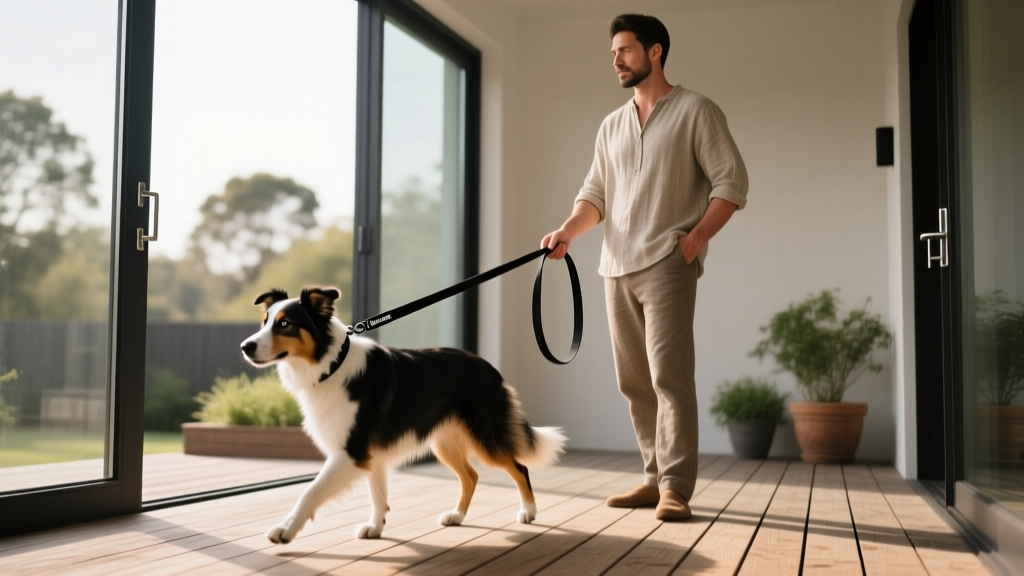
6. Border Collie — Best for Sprint and Agility Runs
Stamina rating: 9/10 | Heat tolerance: 6/10 | Joint health: 7/10
Border Collies are the fastest-accelerating herding breed and excel at short-to-medium distance runs with direction changes. They're intelligent enough to learn pace-matching quickly. However, their intense drive means they'll run past the point of exhaustion if you let them — you must monitor their condition actively. Hip dysplasia prevalence is around 4%, but Collie Eye Anomaly (CEA) and epilepsy are breed concerns.
Ideal for: Agile runners who enjoy varied-pace workouts, park runs, and canicross.
Weight: 30-55 lb (14-25 kg) | Height: 18-22 in (46-56 cm)
7. Labrador Retriever — Best Family Running Dog
Stamina rating: 7.5/10 | Heat tolerance: 6/10 | Joint health: 6/10
Labs are America's most popular breed for good reason — they're willing, trainable, and moderately athletic. Field-line (American) Labs tend to be leaner and more athletic than show-line (English) Labs, which carry more weight and have shorter legs. Hip dysplasia prevalence sits around 11%, and Labs are prone to obesity, which compounds joint stress during running. A fit, field-line Lab can comfortably handle 3-5 miles at 9-10 minute pace. They are not elite distance runners, but they're reliable 5K-to-half-marathon companions with proper conditioning.
Ideal for: Families wanting a versatile dog that can jog 3-5 miles and still be a couch companion.
Weight: 55-80 lb (25-36 kg) | Height: 21.5-24.5 in (55-62 cm)
Running Breed Comparison Table
| Breed | Max Distance (conditioned) | Sustained Pace | Heat Tolerance | Hip Dysplasia % | Best Climate | Puppy Cost (2026) |
|---|---|---|---|---|---|---|
| Vizsla | 10-15 miles | 8-10 min/mile | High | ~5.4% | Warm/Temperate | $1,500-$2,500 |
| Weimaraner | 10-15 miles | 7-9 min/mile | Moderate-High | ~8% | Temperate/Cool | $1,200-$2,000 |
| German Shorthaired Pointer | 12-20 miles | 8-10 min/mile | High | ~11% | Temperate/Warm | $1,000-$2,000 |
| Australian Shepherd | 8-12 miles | 8-11 min/mile | Moderate | ~6% | Cool/Temperate | $1,200-$2,500 |
| Siberian Husky | 15-25 miles | 8-12 min/mile | Very Low | ~5% | Cold only | $1,000-$2,500 |
| Border Collie | 8-12 miles | 7-10 min/mile | Moderate | ~4% | Cool/Temperate | $1,000-$2,200 |
| Labrador Retriever (field line) | 5-8 miles | 9-11 min/mile | Moderate | ~11% | Temperate | $1,000-$2,000 |
Essential Running Gear for Your Dog
Even the best running breed needs proper equipment. Here's what actually works based on field testing and veterinary recommendations:
Hands-Free Bungee Leash Systems
A standard 6-foot leash transfers every stride differential directly to your hip and your dog's neck. Bungee-style hands-free leashes absorb shock and allow natural gait.
- Ruffwear Roamer Leash ($44.95): 7-foot bungee with traffic handle. Wrist loop and waist attachment options. Rated for dogs up to 100 lb.
- Kurgo Quantum Leash ($34.99): 6-foot convertible with bungee section. Reflective stitching. Can convert to hands-free waist belt.
- Tuff Mutt Hands-Free Leash ($24.99): Budget-friendly bungee with dual handles. Good for dogs under 60 lb.
Running Harnesses (Not Collars)
Never run a dog on a flat collar — tracheal damage from sustained pulling is a real veterinary concern. Use a Y-front or chest-plate harness that doesn't restrict shoulder movement.
- Ruffwear Front Range Harness ($44.95): Four adjustment points, foam-padded chest, front and back clip. Best all-around.
- Kurgo Tru-Fit Smart Harness ($34.99): Crash-tested to 75 lb, five adjustment points, includes 10-inch seatbelt tether.
- Julius IDC Powerharness ($59.95-$89.95): Professional-grade, used by search-and-rescue teams. Excellent for strong pullers.
Hydration and Paw Protection
- Ruffwear Quencher Cinch Top Bowl ($14.95): Collapsible, lightweight, clips to pack or belt.
- Musher's Secret Paw Wax ($16.99): Natural wax barrier for hot pavement and ice. Apply before runs on asphalt over 85°F (29°C) surface temp.
- Ruffwear Grip Trex Boots ($94.95/pair of 2): For technical trail running and extreme heat. Requires 1-2 weeks break-in.
How to Condition Your Dog for Running: A 12-Week Protocol
CRITICAL: Do not start running with any dog under 18 months of age (24 months for giant breeds). Growth plates must be fully closed to prevent permanent orthopedic damage. Your veterinarian can confirm growth plate closure via X-ray.
Week 1-2: Foundation Walking
- Walk 20-30 minutes at brisk pace, 5 days/week
- Introduce harness and leash gear during these walks
- Practice "let's go" cue for consistent pace-matching
Week 3-4: Walk-Jog Intervals
- Alternate 2 minutes jogging with 3 minutes walking, for 25-30 minutes total
- Run on soft surfaces (grass, dirt trails) — not asphalt
- Monitor paw pads for abrasion after each session
Week 5-8: Progressive Jogging
- Increase jog intervals to 4 minutes jog / 2 minutes walk
- Extend total session to 35-40 minutes
- Begin incorporating 1-2 paved surface sessions for paw conditioning
Week 9-12: Continuous Running
- Progress to continuous jogging for 20-30 minutes
- Add 10% distance per week maximum (the same rule used for human runners)
- Introduce one rest day per week minimum
Safety Warnings: When Running Becomes Dangerous
Stop running immediately and seek shade/water if your dog shows any of these signs:
- Excessive panting with tongue fully extended and curling at the edges
- Bright red or purple gums (normal is pink)
- Stumbling, wobbling, or reluctance to continue
- Glassy eyes or apparent confusion
- Vomiting or diarrhea during or after exercise
- Collapsing or lying down and refusing to get up
These are signs of heatstroke, which can be fatal within 30 minutes. Cool your dog with lukewarm (not ice-cold) water on the belly and paw pads, and transport to the nearest emergency vet immediately.
Surface temperature matters more than air temperature. Asphalt can reach 140°F (60°C) when air temperature is only 85°F (29°C). Use the "seven-second test": press the back of your hand against the pavement for seven seconds. If it's too hot to hold, it's too hot for your dog's paw pads.
Nutrition timing is critical for deep-chested breeds (Weimaraners, Great Danes, Standard Poodles, German Shepherds). The AVMA recommends waiting at least one hour after eating before vigorous exercise and one hour after exercise before feeding to reduce GDV risk.
When to See a Vet Instead of Pushing Through
Running can mask early orthopedic problems because dogs will work through pain to stay with their handler. Schedule a veterinary exam if you notice:
- Reluctance to start running after previously being enthusiastic — may indicate early arthritis or soft tissue injury
- Limping that appears during runs but resolves with rest — classic presentation of early cruciate ligament disease or stress fracture
- Coughing or exercise intolerance that develops gradually — could indicate cardiac disease, tracheal collapse, or exercise-induced bronchoconstriction
- Dark-colored urine after exercise — potential rhabdomyolysis (muscle breakdown), which is a medical emergency
- Excessive thirst and urination post-run — may indicate underlying kidney disease, diabetes, or Cushing's disease
An annual sports medicine exam for an active running dog typically costs $150-$300 and includes orthopedic assessment, cardiac auscultation, and baseline bloodwork. This is a worthwhile investment that catches problems before they become career-ending injuries.
Alternatives: When Your Dog Isn't a Runner (Or You Want Cross-Training)
Not every dog is suited for running, and that's okay. Here are effective alternatives that provide cardiovascular fitness without the impact:
- Swimming: Zero-impact, full-body conditioning. Ideal for breeds prone to joint issues (Labs, Golden Retrievers, German Shepherds). Many facilities offer canine hydrotherapy at $40-$75 per session.
- Bikejoring: Your dog pulls you on a bike using a specialized harness and bungee line. Better suited for high-drive breeds (Huskies, Pointers) that need more stimulation than running provides. Equipment costs $80-$200.
- Canicross: Competitive trail running with your dog using a waist belt and bungee line. Growing sport with organized races across the US. Entry fees typically $25-$50.
- Agility: Sprint-based obstacle work that builds coordination and provides mental stimulation. Classes run $150-$300 for a 6-week session.
- Hiking with a loaded pack: For strong, mature dogs, a properly fitted dog backpack (Ruffwear Approach Pack, $89.95) loaded with 10-15% of body weight turns a moderate hike into serious conditioning work.
Frequently Asked Questions
What is the best dog to take running for beginners?
For someone new to running (building from couch-to-5K), a Vizsla or field-line Labrador Retriever offers the best balance of willingness, moderate energy, and trainability. Avoid high-drive breeds like Weimaraners or Border Collies until your own fitness is established — an under-exercised high-drive dog will develop behavioral problems.
How old should my dog be before starting to run?
Minimum 18 months for small-to-medium breeds, 24 months for large and giant breeds. Growth plates in the long bones must be fully ossified before repetitive impact exercise. Your veterinarian can confirm closure with a simple radiograph. Starting too early increases the risk of hip dysplasia, osteochondritis dissecans (OCD), and premature arthritis.
Can small dogs be good running partners?
Some can — Jack Russell Terriers and Miniature Pinschers have surprising endurance for their size and can handle 2-3 miles at moderate pace. However, their short legs mean they take approximately 2.5 steps for every one of yours, so they fatigue faster. Toy breeds (Chihuahuas, Yorkies, Pomeranians) are not running dogs.
How much does it cost to gear up a running dog?
Budget $120-$250 for a complete setup: quality harness ($35-$90), hands-free bungee leash ($25-$55), collapsible water bowl ($10-$20), and paw protection ($15-$95 depending on wax vs. boots). Add $150-$300 annually for sports medicine vet exams if you're running more than 15 miles per week with your dog.
Are there natural joint supplements for running dogs?
Yes. Omega-3 fatty acids (fish oil at 300 mg EPA+DHA per 30 lb body weight daily) have documented anti-inflammatory effects. Glucosamine hydrochloride (750 mg for dogs 50-100 lb) and green-lipped mussel extract show moderate evidence for joint support in active dogs. However, consult your veterinarian before starting any supplement — some interact with medications or are unnecessary if your dog's diet is already complete.
What breeds should NEVER be running partners?
Brachycephalic breeds — French Bulldogs, English Bulldogs, Pugs, Boston Terriers, Shih Tzus — should never be taken running. Their compromised airways make sustained aerobic exercise dangerous, particularly in warm weather. Similarly, giant breeds (Great Danes, Mastiffs, Saint Bernards) have such high orthopedic stress that running on hard surfaces accelerates joint degeneration. These breeds are walking companions, not running partners.
This guide is for informational purposes and does not replace veterinary advice. Always consult your veterinarian before beginning an exercise program with your dog, especially if your dog has pre-existing health conditions or is over 7 years of age.
Priya Sutaria
All our authors care for dogs every day — read more of their work on the authors page.