Best Dog for Guarding Livestock: Top Breeds & Essential Gear Guide
Discover the best dog breeds for guarding livestock, essential livestock guardian gear, training tips, and cost breakdowns for protecting your flock or herd.

Choosing the best dog for guarding livestock isn't just about picking a breed — it's about matching a working animal to your specific operation, then outfitting them with gear that keeps them safe and effective in the field. Livestock guardian dogs (LGDs) have protected herds and flocks for over 2,000 years, and modern owners have access to better equipment than ever. This guide covers the top breeds, the gear they actually need, and how to set up your guardian for success.
Understanding Livestock Guardian Dogs: How They Work
Livestock guardian dogs are fundamentally different from herding dogs. While herding breeds like Border Collies move stock, LGDs live with the animals full-time, bonding with the flock or herd as their social group. Their protection strategy follows a graduated response: first, they mark territory with scent and vocalization to deter predators; second, they confront and bark at intruders; third, they physically engage only if the threat persists.
According to the American Kennel Club, LGD breeds share key traits: large size (typically 80–150 lb / 36–68 kg), strong protective instinct, independence, low prey drive toward bonded livestock, and nocturnal alertness. Most LGDs don't reach full maturity and reliability until 18–24 months of age, which is a critical consideration for new owners expecting immediate protection.
The effectiveness of LGDs is well-documented. A USDA study found that ranches using livestock guardian dogs experienced a 48–72% reduction in predator losses compared to operations without guardians. This makes them one of the most cost-effective predator management tools available, especially for organic or non-lethal operations.
Top 8 Best Dog Breeds for Guarding Livestock
| Breed | Weight (lb/kg) | Best For | Climate | Experience Level | Puppy Price |
|---|---|---|---|---|---|
| Great Pyrenees | 85–120 / 39–54 | Sheep, goats, poultry | Cold to moderate | Beginner-friendly | $500–$1,500 |
| Anatolian Shepherd | 80–150 / 36–68 | Cattle, sheep, large acreage | Hot and cold tolerant | Experienced owners | $800–$2,000 |
| Maremma Sheepdog | 66–100 / 30–45 | Sheep, poultry, vineyards | Moderate | Intermediate | $1,000–$2,500 |
| Akbash | 75–140 / 34–64 | Sheep, goats, open range | Hot and cold tolerant | Experienced owners | $600–$1,800 |
| Kangal Shepherd | 90–150 / 41–68 | Large predators (wolves, bears) | All climates | Expert only | $1,500–$3,000 |
| Kuvasz | 70–115 / 32–52 | Sheep, goats, family farms | Cold to moderate | Intermediate | $800–$1,500 |
| Estrela Mountain Dog | 66–110 / 30–50 | Small flocks, diversified farms | Moderate | Intermediate | $1,200–$2,500 |
| Pyrenean Mastiff | 120–240 / 54–109 | Large herds, heavy predator pressure | Cold to moderate | Experienced owners | $1,500–$3,500 |
Great Pyrenees — The Beginner's Choice
The most popular LGD in North America for good reason. Great Pyrenees dogs are gentle with family members, patient with children, and reliably protective of bonded livestock. Their white coat provides visibility at night and reflects heat, though they do best in cooler climates. They tend to bark heavily at night — a deterrent feature, not a bug — which can be problematic near neighbors. Expect 10–12 years of working life.
Anatolian Shepherd — The Endurance Guardian
Bred in central Turkey to guard flocks across vast, arid landscapes with minimal human contact. Anatolians are more aloof and independent than Great Pyrenees, making them less suitable as dual-purpose family pets. They excel on large operations (200+ acres) where they can patrol independently. Their short-to-medium coat handles both Texas heat and Montana cold.
Kangal Shepherd — Maximum Deterrence
The Kangal has the strongest bite force of any domestic dog breed, measured at approximately 743 PSI. This breed is specifically selected for confronting large predators including wolves and bears. They are not appropriate for suburban or hobby farm settings. Kangals require experienced handlers, secure perimeter fencing (minimum 6 feet), and early, extensive socialization. Check local breed-specific legislation, as some jurisdictions restrict Kangals.
Essential Gear for Livestock Guardian Dogs: Top Products
Even the best-bred LGD needs proper equipment to work safely and effectively. Here are the top products we recommend based on field performance, durability, and value.
1. Ray Allen Predator Vest — $189–$249
Key Features: 1000D Cordura nylon, neck-to-tail coverage, reflective trim, adjustable belly straps, D-ring for leash attachment.
Why It Works: Protects the dog's vital areas from bites and scratches during predator encounters. The spiked collar variant adds neck defense against wolves and coyotes that target the throat.
- ✅ Military-grade durability, field-tested on working ranches
- ✅ Machine washable, quick-dry fabric
- ❌ Sizing runs narrow — measure girth carefully
- ❌ Not ideal for extreme heat (limited breathability)
2. Dogtra Pathfinder 2 GPS Tracker — $329–$379
Key Features: 9-mile range, real-time location tracking, Google Maps overlay, bark indicator, no monthly subscription fee.
Why It Works: LGDs roam large perimeters, especially at night. GPS tracking lets you locate your dog without disturbing their patrol pattern. The bark indicator alerts you to predator encounters remotely.
- ✅ No subscription — uses your phone's GPS + satellite
- ✅ 40-hour battery life on single charge
- ❌ Requires smartphone with the Dogtra app
- ❌ Collar receiver is bulky for dogs under 70 lb
3. Herm Sprenger Ultra-Plus Prong-Free Guardian Collar — $54–$78
Key Features: Heavy-duty stainless steel, 22-inch length for large breeds, quick-release buckle, rounded links for comfort.
Note: This is a flat chain collar, not a prong collar. We only recommend force-free, non-aversive equipment. This chain collar provides durability and visibility without causing pain.
- ✅ Virtually indestructible — lasts years in field conditions
- ✅ Won't degrade from moisture, mud, or livestock contact
- ❌ Heavy — 1.2 lb may bother smaller LGD breeds
- ❌ Can catch on fencing if dog squeezes through gaps
4. K&H Outdoor Heated Dog House (XL) — $189–$259
Key Features: Built-in 100W orthopedic heated pad, water-resistant polyester cover, tool-free assembly, MET-listed for safety.
Why It Works: LGDs need a dry, warm retreat during extreme weather. This shelter provides a heated resting area without requiring the dog to come indoors, maintaining their bond with the flock.
- ✅ Thermostatically controlled — only heats when dog is inside
- ✅ Chew-resistant power cord (5.5 feet)
- ❌ Requires outdoor GFCI outlet within range
- ❌ Not suitable for ambient temps above 85°F (overheating risk)
5. PetSafe Yard & Park Rechargeable Fence System — $349–$449
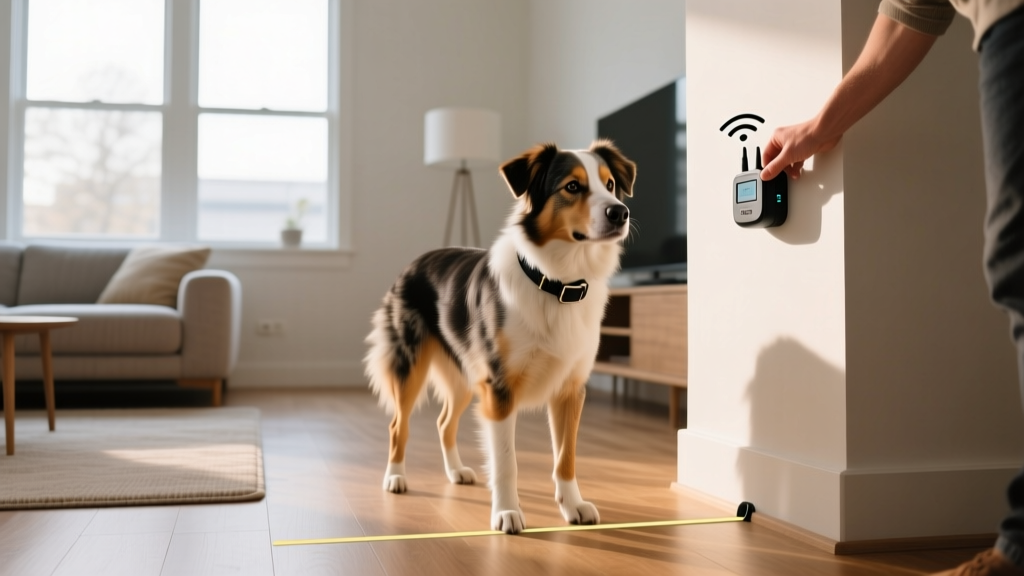
Key Features: Up to 3/4 acre coverage, tone-only training mode, 5 correction levels (start with tone-only), waterproof collar receiver.
Important: Use only the tone/vibration mode for LGD boundary training. The static correction levels should be disabled or set to the lowest level only during initial training under professional guidance. Many LGD trainers recommend visual boundary markers over electronic fences.
- ✅ Tone-only mode supports force-free boundary training
- ✅ Expandable coverage with additional wire
- ❌ Wire breaks from livestock hooves or farm equipment
- ❌ Does not replace physical predator-proof fencing
6. Ruffwear Approach Dog Pack — $89–$109
Key Features: Four-point adjustable harness, 24L capacity, reflective trim, built-in handle for assisting the dog over terrain.
Why It Works: For rotational grazing operations, this pack lets your LGD carry their own water and first-aid supplies when moving between pastures. Useful for emergency situations where you need to transport the dog.
- ✅ Even weight distribution across the chest and back
- ✅ Harness doubles as a vehicle safety restraint
- ❌ Dogs under 60 lb should not carry more than 15% body weight
- ❌ Saddlebags can snag on brush in wooded areas
Product Comparison: LGD Gear at a Glance
| Product | Category | Price Range | Durability Rating | Best For | Warranty |
|---|---|---|---|---|---|
| Ray Allen Predator Vest | Protection | $189–$249 | Excellent | Active predator areas | 1 year |
| Dogtra Pathfinder 2 | GPS Tracking | $329–$379 | Very Good | Large open range | 2 years |
| Herm Sprenger Chain Collar | Identification | $54–$78 | Excellent | All LGDs | Lifetime |
| K&H Heated Dog House XL | Shelter | $189–$259 | Good | Cold climate operations | 1 year |
| PetSafe Yard & Park | Boundary Training | $349–$449 | Good | Fenced properties | 1 year |
| Ruffwear Approach Pack | Utility | $89–$109 | Very Good | Rotational grazing | 1 year |
How to Set Up Your Livestock Guardian Dog: Step-by-Step
Phase 1: Bonding Period (8–16 weeks of age)
- Place the puppy in a small pen adjacent to (but not inside) the livestock enclosure. This allows visual, auditory, and scent contact without risk of the puppy chasing or being kicked.
- Feed the puppy near the livestock so they associate positive experiences with the animals they'll protect.
- Supervise all direct contact for the first 4–6 weeks. Correct any chasing behavior immediately with redirection — never physical punishment.
- Introduce the collar and ID tags by week 10. The dog should wear identification at all times once working independently.
Phase 2: Supervised Integration (4–12 months)
- Allow the dog into the livestock enclosure during daylight hours under direct supervision.
- Equip the GPS tracker (Dogtra Pathfinder or similar) to monitor ranging patterns.
- Begin boundary walks — walk the perimeter with your dog daily, using positive reinforcement (treats, praise) when they check the fence line.
- Introduce the predator vest during supervised outdoor time so the dog becomes accustomed to wearing it before unsupervised night duty.
Phase 3: Independent Working (12–24 months)
- Transition to full-time livestock housing once the dog demonstrates consistent bonding and no chasing behavior.
- Provide the heated shelter in the pasture for weather protection, positioned where the dog can observe the flock.
- Monitor GPS patterns weekly — look for consistent perimeter patrol rather than wandering off-property.
- Schedule quarterly health checks with your veterinarian, including joint assessment, parasite screening, and weight evaluation.
Safety Considerations and Warnings
⚠️ Critical Safety Warnings for LGD Owners
- Never leave puppies unsupervised with livestock until they've demonstrated reliable bonding (minimum 4–6 months). Livestock can trample or kick a small dog, and puppies may chase animals they haven't bonded with.
- Electronic fence systems are NOT predator-proof. An invisible fence may contain your dog but will not stop a coyote, wolf, or bear from entering your property. Always maintain physical perimeter fencing.
- Check for toxic plants in the grazing area. LGDs may ingest vegetation while working. Common toxic plants include oleander, foxglove, and certain mushrooms. If you suspect ingestion, call ASPCA Animal Poison Control at (888) 426-4435 (24/7, consultation fee applies).
- Spay/neuter working LGDs. According to the AVMA, spaying and neutering reduces roaming behavior, decreases cancer risk, and does not diminish protective instinct. An intact female in heat will attract stray males to your livestock area.
- Vaccinate for rabies, distemper, and parvovirus on the core schedule. LGDs are exposed to wildlife vectors and need robust immunity. Consult your veterinarian about leptospirosis and Lyme disease vaccines based on your region.
Effectiveness Evidence: What the Research Says
The Merck Veterinary Manual recognizes livestock guardian dogs as one of the most effective non-lethal predator control methods available. Key research findings include:
- USDA National Wildlife Research Center (2019): Operations using LGDs reported 62% fewer sheep losses to coyotes compared to operations using only fencing and night penning.
- Oregon State University Extension (2021): Ranches using paired LGD teams (2+ dogs) experienced 78% reduction in predator depredation events versus single-dog operations.
- Journal of Mammalogy (2020): LGDs were effective at reducing predation on cattle calves by mountain lions in California rangeland, with zero confirmed losses on guarded operations over a 3-year study period.
The data consistently shows that two or more dogs working together outperform a single guardian, particularly against pack predators like coyotes. Budget for a pair if your operation and finances allow.
Where to Buy LGD Gear and Typical Price Ranges
| Item | Budget Option | Mid-Range | Premium | Where to Buy |
|---|---|---|---|---|
| Predator vest | $60–$90 | $150–$200 | $220–$300 | Chewy, Ray Allen, K9 Top Coat |
| GPS tracker | $50–$100 (AirTag) | $200–$350 | $350–$500 | Dogtra, Garmin, Tractive |
| Chain collar | $15–$30 | $40–$70 | $70–$120 | Herm Sprenger, chewy, local tack shops |
| Outdoor shelter | $80–$140 | $150–$260 | $300–$600 | K&H, Tractor Supply, custom builders |
| GPS/electronic boundary | $150–$250 | $300–$450 | $500–$800 | PetSafe, SportDOG, Dogtra |
| Utility pack | $30–$55 | $70–$110 | $120–$180 | Ruffwear, Kurgo, REI |
For LGD puppies, source from working-line breeders who health-test parents (OFA hip and elbow scores minimum) and raise puppies with livestock exposure. Expect to travel — quality working-line breeders are concentrated in ranching regions. Rescue organizations like the AKC Rescue Network and breed-specific LGD rescues occasionally have adult dogs with prior guardian experience available.
Natural Alternatives and Non-Product Approaches
Before investing in gear, consider these management practices that work alongside your LGD:
- Fladry (flagging): Red flags hung along fence lines deter wolves and coyotes for 30–60 days before habituation sets in. Cost: $0.15–$0.30 per foot of fencing.
- Guardian donkeys or llamas: These species provide secondary predator deterrence and can work alongside LGDs. Donkeys are particularly effective against canids. Cost: $300–$800 purchase + $500–$800/year upkeep.
- Motion-activated lights and noise deterrents: Solar-powered Nite Guard predator lights ($25–$40 each) flash at night to disrupt predator approach patterns. Effective for poultry and small flocks.
- Calving/lambing season penning: Concentrating vulnerable livestock in smaller, well-lit pens near the homestead during birthing season reduces predation risk by up to 80%.
- Positive reinforcement boundary training: Working with a certified force-free trainer to teach reliable recall and boundary awareness costs $500–$1,500 for a 6–8 session program but pays dividends in dog safety.
When to See the Vet Instead of Managing at Home
Livestock guardian dogs face unique health risks due to their outdoor lifestyle and predator exposure. Consult your veterinarian immediately if you observe any of the following:
- Wounds from predator encounters: Even minor puncture wounds can become abscessed. Dogs engaging with wolves, bears, or feral hogs need wound assessment, antibiotics, and possibly rabies booster evaluation.
- Sudden lameness or reluctance to patrol: LGDs are prone to hip dysplasia, elbow dysplasia, and cruciate ligament injuries. Early intervention with your veterinarian can prevent chronic pain and loss of working ability.
- Signs of bloat (GDV): Large, deep-chested LGD breeds are at elevated risk. Symptoms include distended abdomen, unproductive retching, restlessness, and pale gums. This is a life-threatening emergency — go to the nearest veterinary hospital immediately.
- Parasite burdens: Outdoor dogs in pasture environments need regular fecal exams (every 3–6 months) and heartworm prevention year-round. Tick-borne diseases (Lyme, Ehrlichia, Anaplasma) are common in many ranching regions.
- Ingestion of toxic substances: Rodenticides (often used in barns), antifreeze, and toxic plants are hazards. Call ASPCA Poison Control at (888) 426-4435 or your emergency vet immediately.
- Behavioral changes: An LGD that suddenly chases livestock, shows aggression toward handlers, or abandons the flock may have an underlying medical issue (pain, neurological condition, thyroid dysfunction) requiring veterinary evaluation.
Frequently Asked Questions
What is the best dog for guarding livestock on a small hobby farm?
For small farms under 50 acres with sheep, goats, or poultry, the Great Pyrenees is the top choice. They're beginner-friendly, reliable, and widely available from breeders and rescues. The Estrela Mountain Dog and Maremma Sheepdog are excellent alternatives if you want a slightly smaller, more agile guardian.
How do I choose the right livestock guardian breed for my predators?
Match the dog's size and boldness to your predator profile. For coyotes and stray dogs, any standard LGD breed works. For wolves and bears, you need a larger, more assertive breed like the Kangal or Pyrenean Mastiff, ideally in pairs. Consult with local ranchers and your county extension office about predator patterns in your area.
How much does a livestock guardian dog cost in total?
Budget $1,500–$4,500 for the puppy (breed-dependent), plus $400–$900 in first-year gear, $800–$1,500 annually for food (large breeds eat 4–7 cups of kibble daily), $300–$600/year for veterinary care, and $200–$500/year for parasite prevention. Total first-year investment typically ranges from $3,200 to $8,000.
How do I use a GPS tracker safely on a working LGD?
Attach the GPS collar snugly — you should fit two fingers between the collar and the dog's neck. Check the fit weekly as puppies grow. Remove the collar during veterinary procedures and when the dog is crated for transport to prevent snagging. Charge the unit weekly and test the signal at the farthest point of your property.
Are there natural alternatives to electronic boundary systems?
Yes. Visual boundary markers (white PVC posts every 20–30 feet along fence lines), daily perimeter walks with your dog, and positive reinforcement training for reliable recall are all force-free alternatives. A certified force-free trainer can teach boundary awareness without electronic stimulation. Fladry and guardian lights provide additional passive deterrence.
When should I skip OTC products and see a vet?
Always see your veterinarian for: wounds (especially bites), lameness, signs of bloat, suspected poisoning, behavioral changes, parasite infestations, and before starting any supplement regimen. OTC products like joint supplements or tick preventives should complement — not replace — professional veterinary care. Your vet can also advise on breed-specific screening (hip/elbow X-rays, cardiac exams) that working LGDs need annually after age 2.
Robin Maitland
All our authors care for dogs every day — read more of their work on the authors page.