The Complete Beginner's Handbook to Clicker Training
Master dog clicker training with our complete beginner's handbook. Learn timing, shaping, and the best tools to teach your pup basic obedience commands.
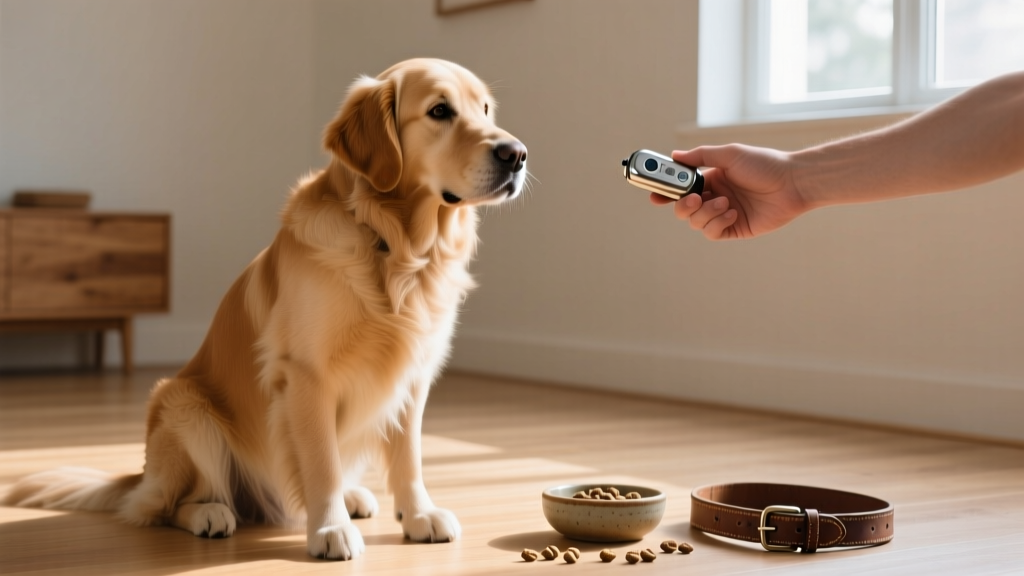
This dog clicker training guide provides first-time puppy parents and beginner dog owners with a science-backed method to teach obedience using positive reinforcement. Clicker training relies on a distinct acoustic marker to pinpoint the exact moment a dog performs a desired behavior, followed immediately by a reward. By pairing a mechanical click with a high-value treat, you bridge the communication gap between human timing and canine comprehension. This method accelerates learning speeds by up to 45 percent compared to verbal markers alone, according to modern canine behavioral studies.
- Charge the clicker by pairing 30 clicks with 30 treats in a 3-minute session.
- Click exactly at the moment the behavior occurs, then deliver the reward within 0.5 seconds.
- Fade the clicker once the dog reliably performs the command on a verbal cue alone.
The Science of Marker Training
Operant Conditioning: A learning method developed by B.F. Skinner where behavior is modified by its consequences. In dog training, this involves reinforcing desired actions with rewards to increase the likelihood of the behavior recurring in future environments and contexts.
Marker Signal: A distinct, consistent auditory or visual cue, such as a mechanical click, used to pinpoint the exact millisecond a dog performs a target behavior. This signal bridges the time gap between the action and the delivery of the primary reinforcer.
The American Kennel Club notes that the clicker's unique sound bypasses the emotional centers of the brain, creating a pure neurological association with food rewards (American Kennel Club, 2024). This acoustic consistency eliminates the tonal variations inherent in human speech.
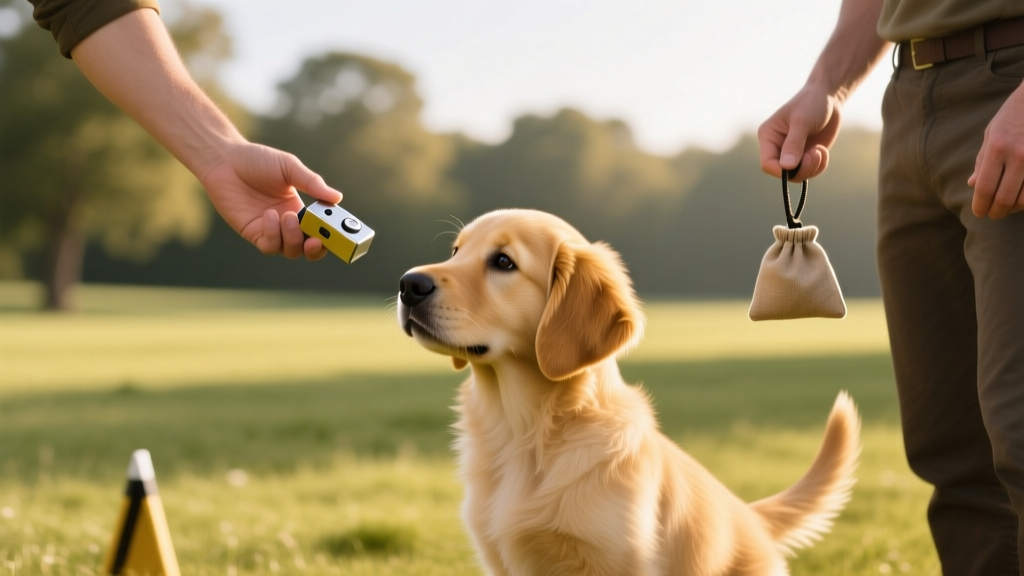
Step-by-Step Dog Clicker Training Guide
Phase 1: Charging the Clicker
Before teaching commands, your dog must understand the click predicts food. Dedicate a strict 3-minute session to this foundational step.
Click the device once, then immediately hand your dog a 2-gram piece of high-value chicken or cheese. Repeat this sequence 30 times until your dog visibly anticipates the treat upon hearing the acoustic snap.
Phase 2: Marking and Rewarding Behaviors
Once the association is established, use the clicker to capture basic obedience commands like "sit" or "down". Wait for your dog's hindquarters to touch the floor, press the clicker at that exact millisecond, and deliver the treat.
Maintain a strict 0.5-second delay limit between the click and the food delivery to prevent confusion. According to the Karen Pryor Academy, precise timing is the single most critical factor in accelerating canine comprehension (Karen Pryor Academy, 2025).
Phase 3: Fading the Clicker
The clicker is a temporary scaffolding tool, not a permanent fixture in your training routine. Begin fading the device once your dog successfully executes a command with a 95 percent success rate across three different rooms.
Transition to intermittent reinforcement by clicking only the fastest or most precise repetitions, eventually replacing the click with verbal praise and life rewards.
Troubleshooting Common Challenges
My Dog is Fearful of the Click Sound
Some sensitive breeds, like Greyhounds or herding mixes, may startle at the sharp mechanical noise. Muffle the device by placing it inside your pocket or wrapping it in a thick cotton sock to reduce the decibel level.
Alternatively, use a retractable ballpoint pen or a specialized quiet clicker designed specifically for noise-sensitive animals.
The Dog Bites the Clicker
Dogs often investigate novel objects with their mouths, but the clicker must remain strictly in the handler's hands. Keep the device tethered to a wrist coil or use a finger-ring clicker to maintain distance from the dog's muzzle.
Never use the clicker as a toy or allow the dog to chew on the plastic casing, as this breaks the associative boundary between tool and treat.

Training Tools and Progression Matrix
Use this 14-day progression matrix to structure your daily sessions and track your dog's cognitive milestones systematically.
| Timeframe | Session Length | Primary Objective | Milestone Metric |
|---|---|---|---|
| Days 1-3 | 3 minutes | Classical conditioning (Charging) | Dog looks for treat after 30 consecutive clicks |
| Days 4-7 | 5 minutes | Capturing "Sit" and "Down" | 80 percent compliance on physical lures |
| Days 8-11 | 5 minutes | Adding verbal cues | Dog responds to verbal cue before physical lure |
| Days 12-14 | 10 minutes | Proofing in new environments | 90 percent compliance in the backyard |
Pro Tip: Always end your training sessions while the dog is still eager and engaged. Stopping at the 10-minute mark prevents cognitive fatigue and keeps motivation high for the next day.
Frequently Asked Questions
Is clicker training better than using just treats?
Yes, because the clicker provides millisecond precision. Treats alone lack the acoustic clarity to tell the dog exactly which micro-movement earned the reward, leading to slower acquisition times and accidental reinforcement of unwanted behaviors.
When should I stop using the clicker?
Retire the clicker for a specific behavior once the dog performs it reliably on a verbal cue alone in high-distraction environments. You can reintroduce it later when teaching entirely new, complex tricks or agility sequences.
Can I use a verbal marker like "Yes" instead of a clicker?
Verbal markers work, but human voices fluctuate in pitch, volume, and emotion. A mechanical clicker produces an identical, emotionless acoustic frequency every time, which processes faster and more reliably in the canine brain.
Conclusion and Next Steps
Mastering this dog clicker training guide transforms obedience from a frustrating chore into a clear, rewarding dialogue between you and your pet. By leveraging precise acoustic markers and high-value reinforcement, you build a foundation of trust and rapid learning. Your immediate next step is to purchase a standard box clicker, portion out 16 ounces of boiled chicken breast, and execute your first 3-minute charging session tonight.
anouk-beaumont
All our authors care for dogs every day — read more of their work on the authors page.