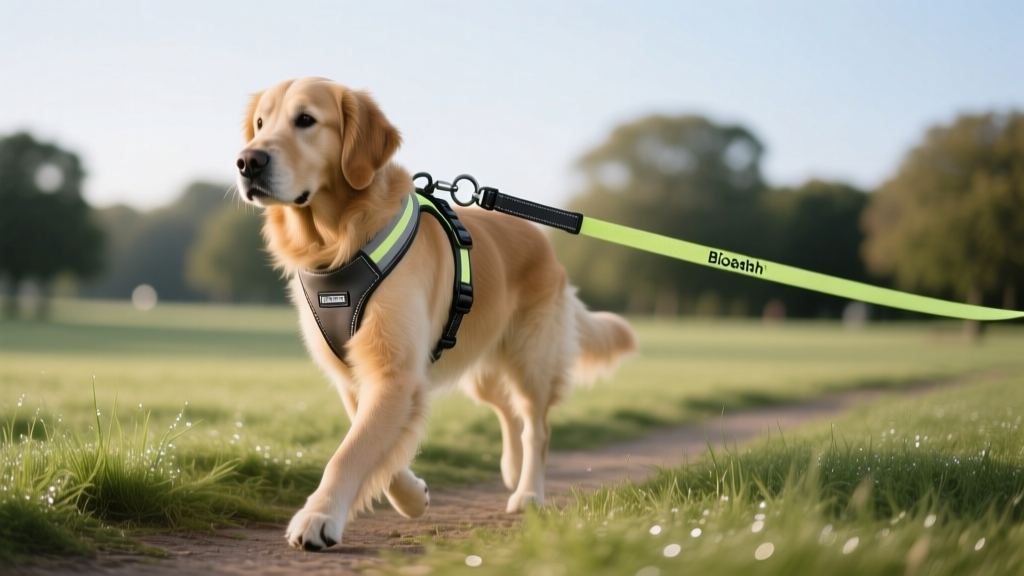
Anxiety Service Dogs: Training, Costs & Finding the Right Match in 2026
Everything about anxiety service dogs: qualifying conditions, training protocols, costs, legal rights, and how to find or train a psychiatric service dog.

For people living with diagnosed anxiety disorders, an anxiety service dog can be life-changing. Unlike emotional support animals (ESAs), psychiatric service dogs (PSDs) are trained to perform specific tasks that mitigate their handler's disability — and they carry full public access rights under the Americans with Disabilities Act (ADA). But the path from recognizing you need one to actually having a fully trained partner at your side is complex, expensive, and frequently misunderstood.
This guide breaks down exactly what anxiety service dogs do, how they're trained, what they cost, and how to navigate the process whether you pursue a program-trained dog or an owner-trained route.
What Qualifies Someone for an Anxiety Service Dog?
Not everyone who experiences anxiety qualifies for a service dog. The ADA requires that you have a disability — defined as a physical or mental impairment that substantially limits one or more major life activities. Your anxiety must be diagnosed by a licensed mental health professional or physician, and it must rise to the level of disability, not merely discomfort.
A dog qualifies as an anxiety service dog only if it is trained to perform at least one specific, observable task that directly mitigates the handler's anxiety disability. Comfort through mere presence does not qualify. The task must be something the dog does on cue or in response to a recognizable symptom that the handler cannot easily do for themselves during an episode.
Conditions That May Qualify
- Generalized Anxiety Disorder (GAD): Persistent, excessive worry that interferes with daily functioning — work, school, relationships, or self-care
- Panic Disorder: Recurrent panic attacks with physical symptoms (racing heart, hyperventilation, dissociation) that impair the ability to navigate public spaces or maintain employment
- Post-Traumatic Stress Disorder (PTSD): Hypervigilance, flashbacks, nightmares, and avoidance behaviors that limit major life activities
- Social Anxiety Disorder: Debilitating fear of social situations that prevents attending work, school, medical appointments, or essential errands
- Agoraphobia: Fear of situations where escape might be difficult, often co-occurring with panic disorder, severely restricting mobility
What a Service Dog Can and Cannot Do Under the ADA
| Legally Protected (ADA) | Not Protected |
|---|---|
| Full public access (stores, restaurants, transit, hotels) | Bypassing "no pets" housing policies without task-trained dog |
| No breed or size restrictions in public accommodations | Entry to sterile medical environments or private clubs |
| No pet fees or deposits in housing (Fair Housing Act) | Emotional comfort alone (no specific trained task) |
| Airline cabin access (Air Carrier Access Act, with DOT forms) | Exemption from local leash/vaccination laws |
What Tasks Do Anxiety Service Dogs Actually Perform?
This is where most confusion lies. A psychiatric service dog must perform trained tasks, not simply provide comfort. The U.S. Department of Justice defines a service animal as a dog individually trained to do work or perform tasks for a person with a disability. "Doing work" is broader than "performing tasks," but both require active, trained behavior — not passive presence.
Common Anxiety Service Dog Tasks
| Task Name | What the Dog Does | Disability It Mitigates |
|---|---|---|
| Deep Pressure Therapy (DPT) | Lies across handler's lap or chest, applying firm, sustained physical pressure | Panic attacks, dissociation, grounding during flashbacks |
| Interrupt/Redirect | Nudges, paws, or licks handler to break focus on escalating anxiety patterns | Rumination cycles, self-harm behaviors, skin picking |
| Room/Space Search | Enters a room ahead of handler, checks corners and behind doors, returns to signal "all clear" | PTSD hypervigilance, agoraphobia, entering unfamiliar spaces |
| Crowd Buffer/Block | Positions body between handler and approaching people, creates physical space | Social anxiety, PTSD triggers in crowded environments |
| Alert to Anxiety Onset | Detects physiological changes (cortisol shifts, heart rate increase, breathing pattern changes) and alerts handler before conscious awareness | Panic attacks, enabling early coping strategy deployment |
| Lead to Exit/Safe Space | On cue, guides handler toward nearest exit or pre-designated calm location | Disorientation during panic episodes, dissociative states |
| Medication/Item Retrieval | Fetches medication bottle, phone, water bottle, or comfort item on cue | Impaired executive function during anxiety episodes |
| Wake from Nightmares | Recognizes sleep disturbance behaviors and wakes handler with physical contact | PTSD-related sleep disruption, night terrors |
Programs like Assistance Dogs International (ADI) require that a service dog perform a minimum of three trained tasks, though the ADA itself requires only one. Most reputable programs train dogs in four to six tasks tailored to the individual handler's needs.
Best Breeds for Anxiety Service Dogs (and Why)
Not every dog can be a service dog. The washout rate — dogs that begin training but don't graduate — ranges from 50% to 70% across major assistance dog organizations. Breed selection matters enormously because temperament traits like biddability, environmental stability, low reactivity, and strong food/toy drive are partly heritable.
Top Breed Candidates
| Breed | Why They Excel | Considerations | Typical Working Weight |
|---|---|---|---|
| Labrador Retriever | Highly biddable, stable temperament, strong food drive, size suitable for DPT | High exercise needs; prone to obesity; hip/elbow dysplasia screening essential | 55–80 lb / 25–36 kg |
| Golden Retriever | Gentle, intuitive, excellent for handler-attuned tasks; strong social buffering | Cancer predisposition; heavy shedding; can be sensitive to handler's emotional state | 55–75 lb / 25–34 kg |
| Standard Poodle | Highly intelligent, low-shedding coat, environmentally stable, size range | Requires professional grooming ($60–$100/session, every 6–8 weeks); can be sensitive | 40–70 lb / 18–32 kg |
| Labradoodle / Goldendoodle | Hybrid vigor potential; combines retriever temperament with lower shedding | F1/F1B generations vary in coat predictability; source from health-tested parents | 50–80 lb / 23–36 kg |
| German Shepherd | Intense handler focus, protective instincts useful for crowd buffering, high trainability | Can be reactive to strangers without proper socialization; degenerative myelopathy risk | 50–90 lb / 23–41 kg |
How to Get an Anxiety Service Dog: Program vs. Owner-Training
You have two legal paths to obtaining a psychiatric service dog. Each has dramatically different timelines, costs, and success rates.
Option 1: Program-Trained Service Dog
ADI-accredited organizations breed, raise, and train dogs for 18–24 months before matching them with a handler. The handler then attends a 1–3 week team training session to learn to work with their new dog.
- Cost: $15,000–$50,000 (many nonprofits offer subsidized placement at $0–$10,000 out of pocket; waitlists are common — often 1–3 years)
- Success rate: High — dogs are professionally temperament-tested and task-trained
- Timeline: 1–3 year waitlist + 2–3 week handler training
- Best for: People who want a reliably trained dog and can manage the wait
Notable ADI-accredited programs that place psychiatric service dogs include Canine Companions, NEADS World Class Service Dogs, and Little Angels Service Dogs. Always verify ADI accreditation at assistancedogsinternational.org.
Option 2: Owner-Trained Service Dog
The ADA explicitly permits individuals to train their own service dogs. There is no legal requirement to use a professional program. However, the training burden falls entirely on you (with the help of a professional trainer if you choose).
- Cost: $3,000–$8,000 over 18–24 months (puppy/dog purchase + training classes + equipment + professional trainer consultations)
- Success rate: Variable — depends heavily on dog selection, handler consistency, and access to skilled guidance
- Timeline: 18–24 months of daily training (minimum 1–2 hours/day)
- Best for: Experienced handlers, people who need a dog sooner, those with specific breed preferences
Step-by-Step Training Protocol for Owner-Trained Anxiety Service Dogs
If you choose the owner-training route, here is a realistic, structured protocol. This assumes you've selected an appropriate candidate dog (ideally 8–16 weeks old, from health-tested parents with stable temperaments).
Phase 1: Foundation (Weeks 1–16)
- Socialization exposure (daily): Introduce puppy to 10+ novel surfaces, sounds, people, and environments per week. Track on a socialization checklist. Goal: neutral, curious responses — not fear or over-excitement.
- Engagement training: Build a reinforcement history for checking in with handler. Use high-value treats (freeze-dried liver, boiled chicken) at 10–15 reps per session, 3–5 sessions daily.
- Basic obedience: Sit, down, stay (30-second duration), recall, loose-leash walking, "leave it," "drop it." All trained with positive reinforcement — marker word or clicker paired with food reward.
- Crate and mat training: Dog must settle on a mat or in a crate for 30+ minutes without vocalizing or pacing. This is the foundation for public access "settle" behavior.
Phase 2: Public Access Foundations (Months 4–8)
- Controlled outings: Begin in low-distraction environments (empty parking lots, quiet stores during off-peak hours). Gradually increase difficulty over weeks.
- Task training begins: Start shaping your first disability task (typically DPT — easiest to shape). Use a chin rest or
Marcus Aldridge
All our authors care for dogs every day — read more of their work on the authors page.