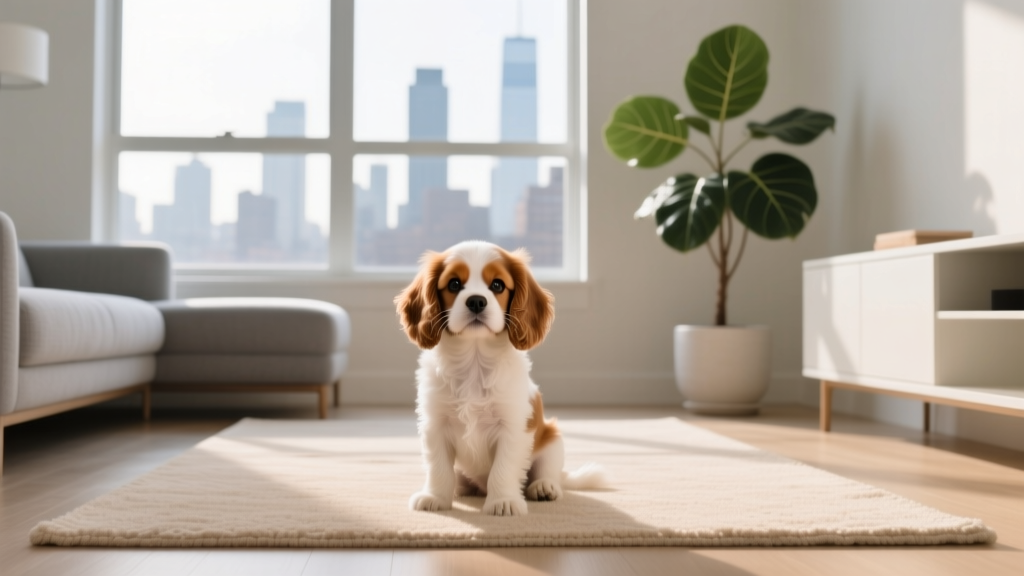
Yorkie Shih Tzu Puppies for Sale in Wilson: Puppy Care Guide
Raising Yorkie Shih Tzu puppies near Wilson? Get breed-specific milestones, feeding schedules, potty training timelines, and first-year cost breakdowns.

Bringing Home a Yorkie Shih Tzu Puppy Near Wilson: What to Expect
If you're searching for Yorkie Shih Tzu puppies for sale in Wilson or the surrounding area, you're likely drawn to this designer cross for good reason. The Yorkie Shih Tzu mix — sometimes called a "Shorkie" — combines the bold personality of the Yorkshire Terrier with the affectionate, outgoing nature of the Shih Tzu. These compact companions typically weigh 7–15 lb (3.2–6.8 kg) at maturity and stand 6–14 inches tall, making them ideal for apartments and smaller homes common in the Wilson, NC region.
But raising a small-breed puppy comes with unique challenges: hypoglycemia risk, tiny bladders that need frequent potty breaks, and a critical socialization window that closes faster than you might think. This guide walks you through every stage — from the day you bring your puppy home through the first year — with breed-specific numbers, schedules, and realistic timelines.
When Should You Bring Your Yorkie Shih Tzu Puppy Home?
The ideal age to bring a Yorkie Shih Tzu puppy home is 10–12 weeks, not the commonly cited 8 weeks. Here's why: small-breed puppies are more vulnerable to hypoglycemia (dangerously low blood sugar), stress-related immune suppression, and incomplete littermate socialization. According to the Merck Veterinary Manual, toy and small breeds benefit from an extra 2–4 weeks with their mother and siblings to learn bite inhibition and build immune resilience.
If a breeder near Wilson is offering puppies at 6 weeks or younger, consider this a red flag. Puppies separated too early often develop heightened anxiety, resource guarding, and difficulty settling — issues that are harder to correct later.
Age-Specific Milestones: Week by Week
| Age Range | Developmental Milestones | What You Should Do |
|---|---|---|
| Weeks 4–8 (With breeder) |
Eyes/ears fully open; first baby teeth erupt; beginning to eat gruel; littermate play teaches bite inhibition; first deworming at 2, 4, 6, 8 weeks | Visit the breeder at least twice; handle the puppy daily; observe temperament; verify deworming records |
| Weeks 8–12 (Home transition) |
Fear imprint period begins (~8–11 weeks); rapid bonding; bladder control lasts 1–2 hours max; sleeping 18–20 hours/day | Establish routine immediately; begin crate training; start potty schedule; avoid overwhelming experiences (no dog parks, loud events) |
| Weeks 12–16 | Second fear period possible (~12–14 weeks); increased curiosity; beginning to test boundaries; baby teeth start loosening | Enroll in positive-reinforcement puppy class; increase socialization exposure; begin name recognition and "sit" training |
| Weeks 16–24 | Adult teeth erupting (teething peak); energy surges; chewing everything; attention span improving to 5–10 minutes per session | Provide appropriate chew outlets; practice recall in fenced areas; introduce grooming handling (ears, paws, mouth) |
| 6–12 Months | Adolescent regression in training; sexual maturity (spay/neuter window); adult coat coming in; near full physical size by 10–12 months | Maintain training consistency; discuss spay/neuter timing with your vet; transition to adult food around 10–12 months |
Feeding Schedule: Exact Portions for Your Yorkie Shih Tzu Puppy
Small-breed puppies have fast metabolisms and tiny stomachs. They need calorie-dense, small-breed-formulated kibble fed in frequent, measured meals. Look for food that meets AAFCO nutrient profiles for growth, with a first-listed protein source (chicken, lamb, or fish) and a guaranteed analysis showing minimum 28% protein and 17% fat for puppies.
| Age | Est. Weight | Meals/Day | Total Daily Kibble | Notes |
|---|---|---|---|---|
| 8–12 weeks | 2–4 lb (0.9–1.8 kg) | 4 meals | ¼ – ⅓ cup/day | Moisten kibble with warm water; watch for hypoglycemia (lethargy, wobbliness — rub Karo syrup on gums and call vet immediately) |
| 12–16 weeks | 3–5 lb (1.4–2.3 kg) | 3–4 meals | ⅓ – ½ cup/day | Transition to dry kibble if not already; reduce to 3 meals by week 16 |
| 4–6 months | 5–8 lb (2.3–3.6 kg) | 3 meals | ½ – ⅔ cup/day | Growth rate slows slightly; adjust if body condition score (BCS) is above 5/9 |
| 6–12 months | 7–12 lb (3.2–5.4 kg) | 2 meals | ½ – ¾ cup/day | Transition to adult small-breed formula at 10–12 months over a 7-day gradual switch |
Pro tip: Free-feeding (leaving food out all day) is tempting with small breeds but leads to picky eating and makes potty training nearly impossible to schedule. Measured meals at consistent times create predictable bathroom patterns.
Vaccination Schedule for Yorkie Shih Tzu Puppies
Your puppy's vaccination protocol should be determined by your veterinarian based on local disease prevalence in the Wilson, NC area. However, the AVMA and the AAHA Canine Vaccination Guidelines recommend the following core schedule:
| Age | Vaccine(s) | Type | Notes |
|---|---|---|---|
| 6–8 weeks | DHPP (Distemper, Hepatitis, Parainfluenza, Parvovirus) #1 | Core | Usually administered by breeder; request records |
| 10–12 weeks | DHPP #2; Bordetella (optional) | Core + Lifestyle | Bordetella recommended if attending puppy classes or grooming salons |
| 14–16 weeks | DHPP #3; Rabies (at 12–16 weeks per NC law) | Core | Rabies is legally required in North Carolina; your vet will provide a certificate |
| 12–16 months | DHPP booster; Rabies booster (1-year or 3-year) | Core | After this, boosters move to every 3 years for DHPP and per local law for Rabies |
Socialization Window: Weeks 3–14 — Don't Miss It
The primary socialization period for puppies closes around 14 weeks of age. This is a biologically fixed window during which positive experiences create lasting confidence. A Yorkie Shih Tzu puppy that isn't exposed to varied stimuli during this period is significantly more likely to develop fear-based reactivity, separation anxiety, and noise phobias later in life.
Because your puppy won't be fully vaccinated until 16 weeks, you need to balance socialization with disease prevention. The AVMA supports controlled, low-risk socialization during this window — meaning you carry your puppy or use a stroller rather than visiting dog parks or high-traffic pet stores.
Your Yorkie Shih Tzu Socialization Checklist (Weeks 8–14)
| Category | Exposure Goals (Aim for 3–5 per category) | How to Do It Safely |
|---|---|---|
| People | Men with beards, children (supervised), people in hats/sunglasses, tall people, people using mobility aids | Invite calm visitors to your home; sit on a bench outside a library or post office |
| Surfaces | Gravel, wet grass, metal grates, tile, carpet, wood floors, tarps | Set up a "surface course" in your yard or carry puppy to varied locations |
| Sounds | Thunderstorms (play recordings at low volume), vacuum cleaner, doorbell, car engines, clapping | Pair sounds with treats; start at very low volume and increase gradually (desensitization) |
| Handling | Paw touching, ear inspection, mouth opening, nail clipping sensation, being held on back | Daily 2-minute handling sessions with treats; critical for grooming-tolerant Yorkie Shih Tzus |
| Other Animals | Vaccinated adult dogs (calm, known), cats (supervised), seeing dogs from a distance | Arrange playdates with known, fully vaccinated dogs; avoid dog parks until 1 week after final DHPP |
| Environments | Car rides, vet clinic waiting room, friend's house, outdoor café patio, pet-friendly store | Short visits (10–15 min); bring a mat and treats; end on a positive note before puppy is overwhelmed |
Potty Training Timeline: Realistic Expectations for a Tiny Bladder
Yorkie Shih Tzu puppies are notoriously challenging to potty train — not because they lack intelligence, but because their bladders are genuinely tiny. A general rule: a puppy can hold it for approximately one hour per month of age, plus one. So a 3-month-old puppy can hold for roughly 4 hours maximum — but that's an absolute ceiling, not a comfortable target.
When Will My Puppy Be Fully Potty Trained?
Most Yorkie Shih Tzu puppies achieve reliable house training between 5–8 months of age. Some may take up to 12 months, particularly males. If your puppy is still having frequent accidents after 8 months of consistent training, consult your veterinarian to rule out urinary tract infections, bladder stones (a breed predisposition in both Yorkies and Shih Tzus), or anatomical issues like an ectopic ureter.
Daily Potty Schedule Template
- 7:00 AM — Out immediately after waking (carry outside; don't let puppy walk through the house)
- 7:30 AM — Breakfast → out again within 15–20 minutes
- 9:30 AM — After nap → out
- 11:30 AM — After play session → out
- 1:00 PM — After lunch → out within 15–20 minutes
- 3:00 PM — After nap → out
- 5:00 PM — After play → out
- 6:30 PM — After dinner → out within 15–20 minutes
- 8:30 PM — Before settling for evening → out
- 10:30 PM — Final outing before bed (set a crate near your bed)
- 2:00–3:00 AM — One overnight break (expect this until ~16 weeks)
Key rule: Always take puppy to the SAME spot. The scent triggers the behavior. Use a cue word like "go potty" as they eliminate, then reward immediately with a high-value treat (small piece of boiled chicken or commercial training treat like Zuke's Mini Naturals).
Accident Troubleshooting
If accidents persist despite a consistent schedule:
- Never punish after the fact. Dogs cannot connect a past action to a present scolding. This creates fear of eliminating in front of you — making the problem worse.
- Clean accidents with enzymatic cleaner (Nature's Miracle or Rocco & Roxie) — regular household cleaners leave residual scent that draws the puppy back.
- Restrict freedom. If your puppy has an accident, reduce their unsupervised area by 50% for the next 48 hours. Use baby gates or an exercise pen.
- Track patterns. Keep a simple log: time of accident, what happened 30 minutes prior, location. You'll usually find a pattern within 3–5 days.
Crate Training Progression and Time Limits
A crate is your puppy's safe den — never a punishment. For a Yorkie Shih Tzu, a small wire crate (18" × 12" × 14") or a soft-sided travel crate works well. Use a divider in a larger crate so the space grows with your puppy; the crate should be just big enough for them to stand, turn around, and lie down.
| Age | Max Daytime Crate Time | Max Overnight Crate Time | Tips |
|---|---|---|---|
| 8–10 weeks | 30–60 minutes | 3–4 hours (then a break) | Keep crate next to your bed; drape a blanket over top for den feel; use a Snuggle Puppy heartbeat toy |
| 10–12 weeks | 1–2 hours | 4–5 hours | Feed meals in crate with door open; practice short departures (leave room for 30 sec, return, reward calm) |
| 3–4 months | 2–3 hours | 5–6 hours | Begin leaving house for short errands; leave a frozen Kong stuffed with peanut butter (xylitol-free) |
| 4–6 months | 3–4 hours | 6–7 hours | If puppy whines at night, wait 2–3 minutes before responding — often they settle on their own |
| 6+ months | 4–5 hours max | 7–8 hours | Transition to leaving crate door open during the day; puppy should choose to nap inside voluntarily |
Teething Timeline and Safe Relief Strategies (3–6 Months)
Your Yorkie Shih Tzu puppy will have 28 baby teeth that begin erupting around 3–4 weeks and are replaced by 42 adult teeth between 3–6 months. Small breeds are especially prone to retained deciduous teeth — where baby teeth don't fall out before adult teeth come in. This is common in Yorkies and Shih Tzus and can cause crowding, misalignment, and periodontal disease. Your vet should check for retained teeth at every visit during this window and may recommend extraction if they don't resolve naturally.
Teething Relief That Actually Works
- Frozen washcloth: Wet a clean washcloth, twist it into a rope, freeze for 2 hours. Supervise chewing and discard if threads unravel.
- KONG Puppy (pink/blue): The softer rubber formula is designed for baby teeth. Fill with plain yogurt and blueberries, then freeze.
- Nylabone Puppy Chew (X-Small): Choose the puppy-specific formula, not the adult Power Chew — the texture is softer for developing jaws.
- Benebone Puppy (XS): The angled shape is easy for small paws to grip. Avoid flavored versions with artificial additives.
Common Yorkie Shih Tzu Puppy Problems and Solutions
Puppy Biting and Nipping
Yorkie Shih Tzu puppies use their mouths to explore, and their needle-sharp baby teeth can be surprising. Biting peaks between 8–16 weeks and again during teething (3–6 months).
Solution: Use the "redirect and reward" method. When teeth touch skin, say "ouch" in a calm, slightly high-pitched voice (mimicking a littermate's yelp), then immediately offer an appropriate chew toy. When they bite the toy instead, praise enthusiastically and give a treat. If biting continues, end the play session by standing up and walking away for 30 seconds — this teaches that biting ends fun, not starts it.
Whining and Crying in the Crate
Some whining is normal for the first 1–2 weeks home. Your puppy is adjusting to separation from littermates.
Solution: Differentiate between "I'm lonely" whining and "I need to potty" whining. If your puppy has been out recently and is simply fussing, wait for 2–3 minutes of quiet before opening the crate — opening it during whining reinforces the behavior. A ticking clock or Snuggle Puppy toy near the crate can reduce anxiety.
Destructive Chewing
Between 4–8 months, chewing intensity peaks as adult teeth settle.
Solution: Puppy-proof your home: use bitter apple spray on baseboards and furniture legs, provide at least 5 appropriate chew options rotated weekly (novelty maintains interest), and never leave your puppy unsupervised in an un-puppy-proofed room. An exercise pen ($35–$55 for a 24" height model) gives them safe space when you can't watch directly.
First-Year Cost Breakdown: Yorkie Shih Tzu Puppy in Wilson, NC
Budgeting accurately prevents surprises. Below is a realistic first-year cost range for a Yorkie Shih Tzu puppy in the Wilson, NC area, based on 2026 regional pricing:
| Category | Low Estimate | Mid Estimate | High Estimate | Details |
|---|---|---|---|---|
| Puppy Purchase/Adoption | $300 (rescue) | $1,200 | $2,500+ | Responsible breeders in NC typically charge $800–$2,500; rescues $200–$500 |
| Initial Vet Visits | $300 | $500 | $750 | 3 puppy visits, vaccines, fecal test, heartworm test, deworming |
| Spay/Neuter | $250 | $450 | $700 | Varies by clinic; low-cost clinics available through NC Spay/Neuter programs |
| Food (12 months) | $180 | $300 | $500 | Small-breed puppy formula; premium brands cost more per bag but last longer for tiny dogs |
| Supplies | $150 | $300 | $500 | Crate, bed, harness (not collar — trachea risk), leash, bowls, grooming tools, puppy pen |
| Training | $0 (DIY) | $200 | $600 | Group puppy class ($100–$200 for 6 weeks); private sessions ($75–$150/hour) |
| Grooming | $0 (home) | $480 | $960 | Professional groom every 6–8 weeks at $60–$80 per session; Yorkie Shih Tzus need regular coat care |
| Pet Insurance | $240/yr | $480/yr | $720/yr | $20–$60/month for small breeds; consider for breed-specific issues like luxating patella or dental disease |
| TOTAL First Year | $1,420 | $3,910 | $7,230 | Excluding emergency vet care; set aside $500–$1,000 as emergency fund |
When Can My Puppy Go Outside and Meet Other Dogs?
Your Yorkie Shih Tzu puppy can go outside in controlled, low-risk environments immediately — your own yard, a friend's vaccinated dog's home, or carried in a sling through your neighborhood. What they should NOT do until 1 week after their final DHPP vaccine (typically around 17 weeks) is visit dog parks, pet store floors, or areas with unknown dog traffic where parvovirus could be present.
Parvovirus survives in soil for up to 7 years and is particularly dangerous for small-breed puppies. The AKC recommends this graduated outdoor access:
- Weeks 8–12: Own yard only; carry puppy in public; supervised playdates with known, vaccinated dogs
- Weeks 12–16: Short leash walks on low-traffic sidewalks; puppy classes (most require proof of at least 2 DHPP shots); avoid grassy areas where unknown dogs relieve themselves
- After 17 weeks: Full outdoor access including dog parks (though for a 10-lb Yorkie Shih Tzu, a small-dog-only area is strongly recommended for safety)
Frequently Asked Questions
How do I know if a Yorkie Shih Tzu breeder near Wilson is reputable?
A responsible breeder will: health-test both parents (not just "vet-checked" — ask for OFA or PennHIP documentation), raise puppies in their home (not a kennel or barn), ask YOU questions about your lifestyle and experience, provide a written contract with a health guarantee and take-back clause, and never have more than 2–3 breeds available. They will also welcome visits and let you meet the mother dog. If a breeder has multiple litters available year-round, offers shipping without a phone conversation, or prices significantly below market ($300–$500 for a "purebred" designer puppy), these are puppy mill indicators.
Should I get pet insurance for my Yorkie Shih Tzu?
Strongly consider it. Both parent breeds are predisposed to conditions that can be expensive: luxating patella ($1,500–$3,500 per knee for surgery), dental disease requiring extractions ($800–$2,500), and tracheal collapse management. Enrolling at 8–10 weeks, before any conditions are documented, ensures the broadest coverage. Companies like Trupanion, Healthy Paws, and Lemonade offer plans starting around $25–$40/month for small breeds in NC.
What's the best harness for a Yorkie Shih Tzu puppy?
Avoid neck collars for walks — both Yorkies and Shih Tzus are prone to tracheal collapse, and collar pressure on the neck accelerates this condition. Use a front-clip or dual-clip harness. The Ruffwear Front Range (XS, $40) and Kurta Tru-Fit Smart Harness (XXS, $25) are well-suited for puppies in the 5–12 lb range. Measure girth (around the widest part of the ribcage) before ordering.
My puppy won't eat — should I worry?
A single skipped meal in an otherwise alert puppy is usually stress-related and not an emergency. However, in Yorkie Shih Tzu puppies under 4 months, skipping two consecutive meals warrants a vet call due to hypoglycemia risk. If your puppy is also lethargic, wobbling, or has pale gums, rub a small amount of Karo syrup or honey on their gums and contact your vet or emergency clinic immediately.
How much exercise does a Yorkie Shih Tzu puppy need?
Follow the "5 minutes per month of age, twice daily" guideline. A 3-month-old gets two 15-minute sessions (walks or active play). A 6-month-old gets two 30-minute sessions. Over-exercising a growing puppy can stress developing joints, particularly given the breed's predisposition to patellar luxation. Mental exercise (puzzle toys, training sessions, snuffle mats) tires them out just as effectively as physical activity.
Dr. Hannah Wickes
All our authors care for dogs every day — read more of their work on the authors page.