Yoga With Puppies: A Calm Puppy Training & Bonding Guide
Learn how yoga with puppies builds calm behavior, strengthens bonding, and supports socialization.

If you've ever tried to hold a downward dog while a 10-pound fluffball attacks your yoga mat, you already know that puppies and stillness don't naturally mix. But yoga with puppies isn't about achieving perfect poses — it's a structured bonding and impulse-control practice that leverages your calm energy to teach your puppy how to settle. When done right, it becomes one of the most effective tools in your puppy-raising toolkit, combining socialization, bite inhibition, and relaxation protocols into a single daily session.
This guide walks you through integrating yoga-based calm training into every developmental stage of your puppy's first year, alongside the concrete milestones, feeding schedules, vaccination timelines, and real costs you need to plan for.
When Should I Bring My Puppy Home?
The American Kennel Club recommends that puppies stay with their littermates and dam until at least 8 weeks of age. For smaller breeds (under 15 lb adult weight), many responsible breeders keep puppies until 10–12 weeks to ensure adequate socialization and physical development.
Bringing your puppy home at 8–10 weeks places you squarely in the middle of the critical socialization window (weeks 3–14), which means your first days together should prioritize exposure and trust-building — not isolation. Yoga with puppies works exceptionally well during this period because floor-level, low-energy movement introduces your puppy to novel body positions, gentle handling, and the concept of settling near a calm human.
Developmental Milestone Timeline
| Age Range | Developmental Stage | What to Expect | Yoga Integration |
|---|---|---|---|
| 4–8 weeks | Transitional / early socialization (with breeder) | Eyes/ears fully open, learning bite inhibition from littermates, first solid foods | Not applicable — puppy should remain with breeder |
| 8–12 weeks | Primary socialization window | Fear imprinting possible; rapid bonding; short attention spans (3–5 min); frequent potty needs | 2–3 minute floor sessions; puppy observes you; gentle handling during your cool-down stretches |
| 12–16 weeks | Socialization window closing; teething begins | Increased confidence; testing boundaries; chewing intensifies; second fear period may begin around 14 weeks | 5–8 minute sessions; puppy practices settling on a designated mat beside you; reward calm behavior with treats |
| 16–24 weeks | Juvenile period | High energy bursts; leash pulling emerges; teething peaks; recall reliability varies | 10–15 minute sessions; incorporate "settle" cue during your holds; puppy learns mat-targeting |
| 6–12 months | Adolescence | Sexual maturity (if intact); independence testing; second chewing phase (7–9 months); growth plate closure varies by breed | 15–20 minute sessions; puppy holds a down-stay on mat for duration of your practice; advanced impulse control |
Feeding Schedule: Exact Portions by Age and Weight
Puppies need frequent, measured meals to support rapid growth without overloading developing joints. The Merck Veterinary Manual emphasizes that portion sizes should be calibrated to expected adult weight, not current appetite — puppies will almost always eat more than they need if free-fed.
Before starting any yoga session, feed your puppy at least 30–45 minutes beforehand and allow a potty break. A full stomach during floor play increases bloat risk in deep-chested breeds and makes potty accidents during your session more likely.
Daily Feeding Guide by Age and Expected Adult Weight
| Age | Meals/Day | Small Breed (10–25 lb adult) | Medium Breed (26–55 lb adult) | Large Breed (56–90 lb adult) |
|---|---|---|---|---|
| 8–12 weeks | 4 | ¼–½ cup per meal (puppy kibble) | ½–¾ cup per meal | ¾–1¼ cups per meal |
| 12–16 weeks | 3 | ⅓–⅔ cup per meal | ¾–1 cup per meal | 1–1½ cups per meal |
| 16–24 weeks | 3 | ½–¾ cup per meal | 1–1½ cups per meal | 1½–2 cups per meal |
| 6–9 months | 2 | ¾–1 cup per meal | 1½–2 cups per meal | 2–3 cups per meal |
| 9–12 months | 2 | Transition to adult food: ½–¾ cup per meal | 1¼–1¾ cups per meal | 2–3 cups per meal (large-breed adult formula) |
Note: Portions assume AAFCO-approved dry kibble with caloric density of ~350–400 kcal/cup. Adjust ±15% based on body condition score. Always consult your veterinarian for breed-specific growth curves.
Vaccination Schedule: What Your Puppy Needs and When
Your puppy arrives with maternal antibodies that gradually wane, leaving gaps in protection. The core vaccination series is timed to close those gaps. According to the American Veterinary Medical Association, the following core vaccines are standard:
| Age | Vaccine | What It Protects Against | Notes |
|---|---|---|---|
| 6–8 weeks | DHPP (1st dose) | Distemper, Hepatitis (Adenovirus-2), Parainfluenza, Parvovirus | Often administered by breeder or rescue before pickup |
| 10–12 weeks | DHPP (2nd dose) | Same as above — booster | Non-core vaccines (Bordetella, Leptospirosis, Lyme) may be added based on risk assessment |
| 14–16 weeks | DHPP (3rd dose) + Rabies | Final puppy DHPP booster; Rabies (required by law in most US states) | Some vets recommend a 4th DHPP at 18–20 weeks for high-risk breeds or environments |
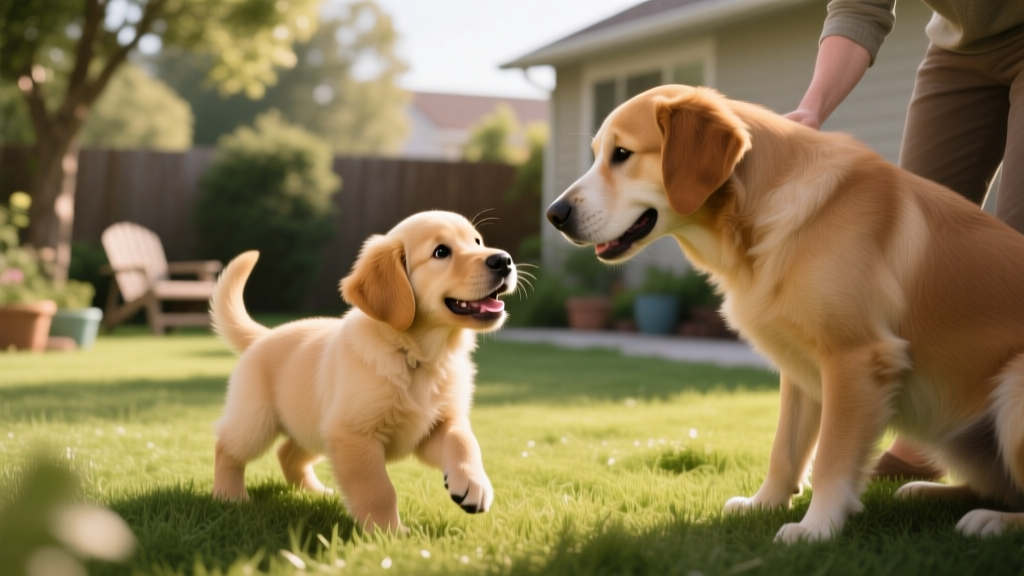
When can my puppy go outside and meet other dogs? Until your puppy has received at least the second DHPP dose (10–12 weeks) and ideally the third (14–16 weeks), avoid high-traffic dog areas like dog parks and pet store floors. Controlled exposure to fully vaccinated, healthy adult dogs in private yards or homes is acceptable and important for socialization. Your yoga sessions at home provide safe, low-risk socialization during this vulnerable window.
The Socialization Window: Weeks 3–14 Exposure Checklist
Behavioral research consistently shows that puppies who don't receive adequate positive exposure before 14 weeks are significantly more likely to develop fear-based reactivity, anxiety, and aggression later in life. Yoga with puppies is uniquely valuable here because your practice naturally introduces many socialization stimuli in a calm, controlled context.
Potty Training Timeline and Realistic Expectations
Potty training is a function of bladder maturity, not intelligence. A puppy can typically hold their bladder for approximately one hour per month of age, plus one — so a 3-month-old puppy has a maximum hold time of roughly 4 hours during the day (less during active play).
When will my puppy be fully potty trained? Most puppies achieve reliable house training between 4 and 6 months of age, though small breeds may take until 8–10 months due to smaller bladder capacity. "Fully trained" means fewer than 2 accidents per month with a consistent routine.
Age-Based Potty Break Schedule
- 8–10 weeks: Every 30–60 minutes during waking hours; immediately after meals, naps, and play; expect 1–2 overnight breaks
- 10–14 weeks: Every 1–2 hours; overnight stretch extends to 3–4 hours
- 14–20 weeks: Every 2–3 hours; most puppies sleep through the night (6–8 hours) by 16 weeks
- 5–6 months: Every 3–4 hours; reliable overnight; occasional accidents after high excitement
Sample Potty Training Log (First 2 Weeks Home)
| Time | Activity | Outcome | Notes |
|---|---|---|---|
| 6:30 AM | Crate wake-up → outside immediately | ✓ Pee + poop | Use same spot each morning |
| 7:15 AM | Post-breakfast (15 min after eating) | ✓ Pee | Feed at 7:00 AM consistently |
| 8:00 AM | Post-yoga session | ✓ Pee | Activity stimulates bladder |
| 9:00 AM | Scheduled break | ✗ Nothing | Normal — not every break produces output |
| 10:00 AM | Post-nap | ✓ Pee | Always take out immediately after waking |
Track accidents with time, location, and what happened 15 minutes before. Patterns reveal trigger points you can manage proactively.
Crate Training Progression and Time Limits
A crate is your puppy's safe den and your management tool for potty training and preventing destructive chewing. Maximum crate time follows the same age-based formula as bladder capacity:
- 8–10 weeks: 30–60 minutes max during the day; overnight 2–3 hours between potty breaks
- 10–14 weeks: 1–2 hours max during the day; overnight 3–4 hours
- 14–16 weeks: 2–3 hours max during the day; overnight 5–6 hours
- 4–6 months: 3–4 hours max during the day; overnight 7–8 hours
- 6–12 months: 4–5 hours max during the day (no dog should be crated longer than 5 hours regularly during waking hours)
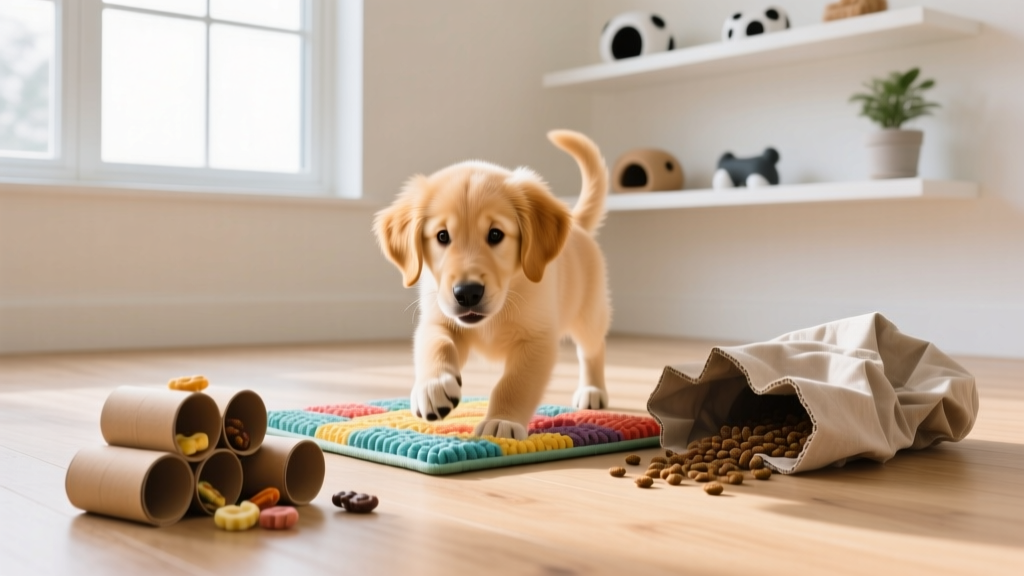
Yoga sessions are an excellent pre-crate activity. A 10–15 minute settle practice physically and mentally tires your puppy, making crate transitions smoother. Place a treat-stuffed Kong (frozen with pumpkin or plain yogurt) in the crate immediately after your session ends.
Teething Timeline and Safe Relief Strategies
Puppy teething follows a predictable sequence. Deciduous (baby) teeth erupt between 3–6 weeks, and adult teeth begin pushing them out around 12–16 weeks. By 6–7 months, all 42 adult teeth should be in place. The peak discomfort period is 3–5 months, which overlaps with the juvenile energy surge — expect intensified chewing and mouthing during this window.
Safe Chew Recommendations by Age
- 8–12 weeks: Soft rubber toys (Kong Classic Puppy, size-appropriate); chilled (not frozen) wet washcloth twisted into a rope; Nylabone Puppy Chew (soft formula)
- 12–16 weeks: Frozen Kong stuffed with softened kibble and water; Benebone Puppy (softer rubber); carrot sticks (supervised, discard small pieces)
- 4–6 months: Standard Kong Classic (red); bully sticks (supervised, remove when <3 inches long to prevent choking); Yak cheese chews (monitor for aggressive chewing that could fracture teeth)
Avoid: Rawhide (choking and blockage risk), cooked bones (splintering), ice cubes (tooth fracture risk in aggressive chewers), and any toy small enough to swallow whole. If your puppy ingests a foreign object, contact ASPCA Animal Poison Control at (888) 426-4435 (24/7, consultation fee applies) or your emergency veterinarian immediately.
Stopping Puppy Biting and Nipping
How do I stop puppy biting? Puppies explore the world with their mouths, and littermates teach bite inhibition through yelping and withdrawing play. You need to replicate this process using positive reinforcement — never physical punishment, which increases fear and can escalate biting.
The Bite Inhibition Protocol (Weeks 8–16)
- Redirect: When puppy teeth touch skin, immediately offer an appropriate chew toy. Reward chewing the toy with calm praise.
- Withdraw attention: If redirection fails, stand up, cross your arms, and become still for 10–15 seconds. No eye contact, no talking. This mimics littermate behavior.
- Time-out: If biting persists after 2–3 redirections, calmly place puppy in their crate or a puppy-proofed pen for 30–60 seconds. Release and resume play. This is not punishment — it's a brief reset.
- Reward soft mouths: When puppy licks or mouths gently without pressure, reward with a treat. You're shaping the behavior you want, not just suppressing the one you don't.
Yoga sessions accelerate this process because your stillness on the mat creates natural opportunities to reward calm, non-mouthy behavior. A puppy who learns that settling beside a prone human earns treats is practicing bite inhibition in real time.
Common Puppy Problems and Solutions
| Problem | Peak Age | Solution |
|---|---|---|
| Whining in crate | 8–14 weeks | Ensure puppy is tired (yoga/play session before crating); cover crate with breathable blanket; place crate near your sleeping area initially; never release puppy while whining (wait for 3 seconds of silence) |
| Destructive chewing | 3–6 months (teething) and 7–9 months (adolescent phase) | Puppy-proof all rooms; provide 5–7 rotating chew toys; use bitter apple spray on furniture legs; supervise or confine when unsupervised |
| Jumping on people | 10 weeks–6 months | Teach "four on the floor" — reward all four paws on ground; turn away from jumping; ask visitors to ignore puppy until calm |
| Leash biting during walks | 12 weeks–5 months | Carry a tug toy on walks; redirect biting to toy; practice loose-leash in low-distraction areas first (your yoga room, then yard) |
First-Year Cost Breakdown
Budgeting accurately prevents surprises. The following ranges reflect 2026 US pricing for a medium-breed puppy (30–55 lb adult weight) in a suburban area. Costs skew 20–40% higher in major metropolitan areas.
| Category | Low Estimate | High Estimate | Details |
|---|---|---|---|
| Puppy purchase/adoption | $250 (rescue) | $3,500 (reputable breeder) | Responsible breeders include first vaccines, deworming, microchip, health guarantee |
| Veterinary (first year) | $800 | $2,200 | Wellness exams (3–4 visits), DHPP series, rabies, fecal tests, heartworm prevention, spay/neuter ($300–$800) |
| Food | $480 | $960 | $40–$80/month for quality AAFCO-approved puppy food |
| Supplies | $350 | $750 | Crate ($50–$120), bed, bowls, leash/harness, puppy gate, enzymatic cleaner, chew toys, grooming tools |
| Training | $0 (self-study) | $600 | Group puppy class: $150–$300 for 6 weeks; private trainer: $75–$150/session |
| Pet insurance (optional) | $360 | $720 | $30–$60/month; recommended for purebred dogs with hereditary condition risk |
| Emergency fund buffer | $500 | $2,000 | Puppies ingest foreign objects, develop GI issues, and suffer injuries at high rates in year one |
| Total first year | $2,740 | $10,730 | Excludes ongoing costs from year 2 onward (~$1,500–$3,000/year) |
Frequently Asked Questions
When should I bring my puppy home?
Between 8 and 12 weeks, depending on breed size and breeder recommendation. Small breeds often benefit from staying until 10–12 weeks. Never take a puppy before 7 weeks — they miss critical littermate socialization that teaches bite inhibition and canine communication.
How often should I feed my puppy?
Four meals daily from 8–12 weeks, three meals from 12 weeks to 6 months, and two meals from 6 months onward. Consistent meal timing (same hours each day) makes potty training dramatically easier because digestion becomes predictable.
When will my puppy be fully potty trained?
Most puppies are reliably house-trained by 4–6 months with a consistent schedule. Small breeds may take 8–10 months. "Reliable" means fewer than 2 accidents per month. If accidents increase after initial success, rule out urinary tract infections with your veterinarian.
What vaccines does my puppy need and when?
Core vaccines: DHPP at 6–8, 10–12, and 14–16 weeks; Rabies at 14–16 weeks. Non-core vaccines (Bordetella, Leptospirosis, Lyme, Canine Influenza) are recommended based on your geographic area and lifestyle. Your veterinarian will tailor the protocol to your puppy's risk profile.
How do I stop puppy biting and nipping?
Redirect to appropriate chew toys, withdraw attention for 10–15 seconds when teeth touch skin, and use brief 30-second crate time-outs if biting escalates. Reward gentle mouthing and licking. Avoid physical punishment, which increases fear-based aggression. Most puppies show significant improvement by 16–20 weeks with consistent application.
When can my puppy go outside and meet other dogs?
Controlled exposure to fully vaccinated dogs in private settings can begin immediately. Avoid public dog parks, pet stores, and high-traffic areas until at least 7 days after the second DHPP dose (typically 11–13 weeks of age). Full public access is safest after the third DHPP at 14–16 weeks. Always consult your veterinarian for guidance specific to your area's disease prevalence.
Is yoga with puppies safe for all breeds?
Yes, with modifications. For brachycephalic breeds (French Bulldogs, Pugs), keep sessions short (5–10 minutes) and in cool rooms to avoid overheating. For giant breeds (Great Danes, Mastiffs), avoid encouraging jumping or rapid position changes near you during growth plate development (up to 18–24 months). The practice is about your calm energy and the puppy's settle behavior — not physical exertion for the dog.
Yoga with puppies isn't a gimmick — it's a daily discipline that teaches your puppy the most valuable skill in modern dog ownership: how to be calm. Pair it with the structured feeding, vaccination, socialization, and training protocols outlined above, and you'll build a confident, well-adjusted dog who genuinely enjoys relaxing by your side.
Priya Sutaria
All our authors care for dogs every day — read more of their work on the authors page.