Why Does My Puppy Pee on My Bed? Potty Training Guide by Age & Breed
Discover why your puppy pees on your bed and how to stop it. Age-specific potty training timelines, crate schedules, and troubleshooting for every stage.

Why Does My Puppy Pee on My Bed? The Real Reasons Behind the Mess
Finding a wet spot on your bed is one of the most frustrating moments in puppy parenthood. If you've been asking yourself "why does my puppy pee on my bed" despite hours of potty training, you're not alone — and it's rarely a behavioral problem. In most cases, bed-wetting stems from a combination of bladder immaturity, scent marking instincts, and timing errors in your training routine.
Puppies under 16 weeks old have virtually no bladder control. A general rule from veterinary behaviorists is that a puppy can hold their bladder for roughly one hour per month of age. That means your 10-week-old puppy maxes out at about 2.5 hours. If they're on your bed during that window, the bed becomes the bathroom.
Puppy Potty Training Timeline: What to Expect Week by Week
Setting realistic expectations is the single most important thing you can do for your sanity. Here's what bladder control and potty training looks like at every developmental stage, based on AKC training guidelines and veterinary developmental milestones.
| Age Range | Bladder Hold Time | Potty Training Expectation | Bed-Peeing Risk Level |
|---|---|---|---|
| 4–8 weeks | 30–60 minutes | No training possible; puppy is with breeder/litter | N/A |
| 8–12 weeks | 1–2 hours | Learning substrate preference; frequent accidents normal | Very High |
| 12–16 weeks | 2–4 hours | Beginning to signal; crate training takes hold | High |
| 16–24 weeks | 4–6 hours | Mostly reliable with schedule; regression possible | Moderate |
| 6–12 months | 6–8+ hours | Fully trained in most dogs; intact dogs may begin marking | Low (unless marking) |
If your puppy is peeing on your bed past 6 months, it's time to evaluate whether you're dealing with incomplete house training, a medical issue like a urinary tract infection, or hormonal marking behavior — all of which require different solutions. Always consult your veterinarian to rule out UTIs, which affect an estimated 14% of dogs annually according to the Merck Veterinary Manual.
Age-Specific Milestones: Development, Behavior & Potty Readiness
Understanding what's happening inside your puppy's brain and body at each stage explains why bed-wetting happens and when it should stop.
Weeks 4–8: The Litter Phase
Your puppy is still with the breeder during this period. They learn substrate preference (what surface feels right for elimination) from their mother and littermates. This is why puppies raised on puppy pads often struggle to transition to grass later. A responsible breeder will introduce outdoor surfaces by week 6 to establish a grass/dirt preference early.
Weeks 8–12: The Homecoming Window
This is when most puppies join their new families. Expect 8–12 potty breaks per 24 hours, including overnight. Your puppy's brain is in a fear imprint period (weeks 8–11), so harsh punishment for accidents can create lasting anxiety. Use positive reinforcement exclusively — treat and praise within 2 seconds of outdoor elimination.
Weeks 12–16: Pattern Formation
Your puppy begins to anticipate routines. They'll start going to the door or whining before needing out. Bladder capacity is increasing but still limited. This is the prime window to establish a rock-solid schedule. Bed accidents at this stage usually mean you're giving too much unsupervised freedom.
Weeks 16–24: Reliability Building
Most puppies can hold it through a 6–7 hour overnight crate session by 16 weeks. Daytime accidents drop significantly. If bed-wetting continues here, it's often because the puppy was given bedroom access too early or there's residual scent from previous accidents triggering repeat behavior.
Months 6–12: Adolescent Challenges
Physical bladder control is mature, but hormonal changes can introduce marking behavior, especially in intact males and females entering their first estrus cycle. Spaying or neutering — which the AVMA recommends discussing with your vet based on breed size and health — typically reduces marking by 50–80%.
Feeding Schedule by Age: How Nutrition Timing Affects Potty Breaks
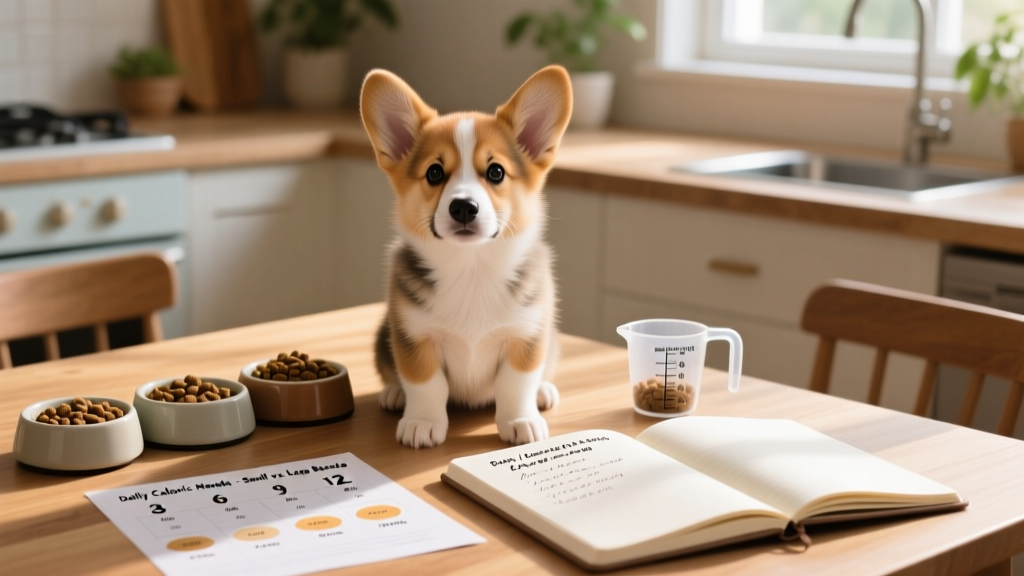
When your puppy eats directly determines when they need to eliminate. Controlling meal timing is one of the most effective tools for stopping bed-wetting. Here's a feeding framework based on a puppy expected to reach 40–50 lb (18–23 kg) at adult weight. Adjust portions based on your specific breed's expected adult weight and the caloric density printed on your food's label.
| Age | Meals Per Day | Portion Per Meal (Dry Kibble) | Last Meal Cutoff | Expected Poops/Day |
|---|---|---|---|---|
| 8–12 weeks | 4 | ¾–1 cup | 5:00 PM | 4–6 |
| 12–16 weeks | 3 | 1–1¼ cups | 5:30 PM | 3–5 |
| 16–24 weeks | 3 → 2 | 1¼–1½ cups | 6:00 PM | 3–4 |
| 6–12 months | 2 | 1½–2 cups | 6:30 PM | 2–3 |
Crate Training Progression: Your Best Defense Against Bed Accidents
The crate is the single most effective tool for preventing bed-wetting because dogs instinctively avoid soiling their sleeping area. But crating only works if you follow time limits appropriate to your puppy's age. Exceeding these limits causes distress, accidents inside the crate, and a broken training association.
| Puppy Age | Maximum Crate Time (Day) | Maximum Crate Time (Night) | Overnight Potty Break Needed? |
|---|---|---|---|
| 8–10 weeks | 30–60 minutes | 2–3 hours | Yes (set alarm for 2 AM) |
| 10–12 weeks | 1–2 hours | 3–4 hours | Yes (set alarm for 3 AM) |
| 12–16 weeks | 2–3 hours | 4–5 hours | Maybe (fade the alarm) |
| 16–20 weeks | 3–4 hours | 5–6 hours | Rarely |
| 20–24 weeks | 4–5 hours | 6–7 hours | No |
When your puppy is not in the crate, they should be under direct supervision or tethered to you with a leash. The #1 reason puppies pee on beds is unsupervised access. If you can't watch them, crate them. There is no middle ground during the first 4 months.
When Can You Allow Bedroom Access?
Most puppies earn free bedroom access between 5–7 months, after they've gone 4+ consecutive weeks without a single indoor accident. Before that milestone, the bed is off-limits. Use baby gates, closed doors, or an exercise pen to physically block access.
Socialization Window (Weeks 3–14): Building Confidence Without Accidents
The critical socialization period closes around 14 weeks. During this window, puppies form lasting associations with environments, surfaces, people, and sounds. How you handle potty breaks during socialization directly impacts whether your puppy generalizes "outside = bathroom" to all locations — or only your backyard.
Here's a socialization exposure checklist that doubles as potty-training reinforcement:
- ☐ Puppy eliminates on grass in front yard (repeat 10+ times)
- ☐ Puppy eliminates on grass in a different yard or park
- ☐ Puppy eliminates on gravel, mulch, or dirt surface
- ☐ Puppy eliminates while on leash (not just off-leash in yard)
- ☐ Puppy eliminates after car ride to new location
- ☐ Puppy eliminates in light rain (with encouragement and treats)
- ☐ Puppy eliminates in evening/dark conditions
- ☐ Puppy eliminates with distractions present (children, other dogs at distance)
- ☐ Puppy eliminates at a friend's house before entering
- ☐ Puppy eliminates on a surface other than what they were raised on
Every new location is a chance for your puppy to "not know" where to go. Take them to the designated potty spot immediately upon arrival anywhere new. Use a consistent cue word like "go potty" and reward with a high-value treat (freeze-dried liver, small pieces of chicken) within 2 seconds of completion.
Vaccination Schedule: When Can Your Puppy Go Outside Safely?
One of the most common reasons puppies pee on beds is that owners restrict outdoor access too long due to vaccination concerns. While parvovirus risk is real, the AVMA and the American Animal Hospital Association (AAHA) recommend controlled outdoor exposure beginning at 8 weeks — not waiting until the full series is complete at 16 weeks.
| Age | Vaccine | What It Protects Against | Outdoor Access Level |
|---|---|---|---|
| 6–8 weeks | DHPP #1 (Distemper, Hepatitis, Parainfluenza, Parvovirus) | Core viral diseases | Own yard only, no unknown dog contact |
| 10–12 weeks | DHPP #2 + Bordetella (optional) | Booster + kennel cough | Leash walks in low-traffic areas; avoid dog parks |
| 14–16 weeks | DHPP #3 + Rabies (12–16 weeks, varies by state) | Final core booster + rabies | Full public access 1 week after final DHPP |
Between 8–16 weeks, carry your puppy to new surfaces for potty breaks, use a stroller or sling for exposure walks, and visit friends' yards where you know the resident dogs are vaccinated. This keeps potty training moving forward without parvo risk.
Teething Timeline (3–6 Months): Why Chewing Leads to Peeing on Beds
Teething and potty regression are directly connected. Between 12–24 weeks, your puppy's 28 baby teeth are replaced by 42 adult teeth. The discomfort drives them to chew, and chewing on your bedding — which smells like you — is deeply soothing. Once they're on the bed chewing, they relax. Once they relax, they pee.
Teething Relief Strategy
- Kong Classic (red or blue puppy version): Fill with wet food and freeze for 2–4 hours. The cold numbs gums and the activity burns 15–20 minutes of energy.
- Benebone Wishbone (puppy size): Nylon chew with bacon infusion. Size it to your puppy's expected adult weight — the 30 lb size works for puppies up to ~25 lb current weight.
- Frozen washcloth: Wet a clean washcloth, twist into a rope, freeze for 1 hour. Supervise to prevent swallowing fabric.
- Yak cheese chews: Hard, long-lasting, and digestible. Choose size appropriate for puppy weight. Not suitable for aggressive chewers under 4 months.
Keep all chew items on the floor or in the crate — never on furniture. This reinforces that the bed is for sleeping, not chewing or eliminating.
Common Puppy Problems: Biting, Whining, and Potty Regression
Stopping Puppy Biting and Nipping
Puppy biting peaks between 8–16 weeks as they explore the world with their mouths and during teething phases. The most effective force-free method is the "redirect and reward" approach:
- When teeth touch skin, say "ouch" in a calm, neutral tone (not a yelp — yelping can excite some puppies more).
- Immediately offer an appropriate chew toy.
- When they bite the toy, praise and continue play.
- If they return to biting skin, stand up and disengage for 10–15 seconds (negative punishment — removing the fun).
Never use alpha rolls, muzzle grabbing, or physical punishment. These methods increase fear-based aggression and are rejected by the American Veterinary Society of Animal Behavior.
Crate Whining at Night
Nighttime whining is usually one of three things: they need to potty, they're lonely, or they're testing boundaries. Here's how to tell:
- Need to potty: Whining starts suddenly after 2–4 hours of quiet. Take them out immediately on leash, no talking or play. If they eliminate, return to crate. If they don't within 5 minutes, return to crate — they were testing.
- Lonely/Anxious: Whining starts within minutes of crating. Place the crate in your bedroom initially, then gradually move it to the desired location over 2–3 weeks.
- Testing: Whining starts after you leave the room but stops when you return. Ignore completely — any response (even scolding) reinforces the behavior.
Potty Regression at 6–9 Months
Adolescent regression affects an estimated 40% of puppies. Hormonal surges, increased independence, and testing boundaries all contribute. Solutions: return to the 12-week schedule for 2 weeks, increase exercise by 10–15 minutes per day, and ensure you're not giving unsupervised freedom too early.
First-Year Cost Breakdown: Budgeting for Puppy Care
Puppy ownership costs more in the first year than any subsequent year. Here's a realistic breakdown based on 2026 pricing for a medium-breed puppy (40–50 lb adult weight) in the United States:
| Category | Low Estimate | Mid Estimate | High Estimate |
|---|---|---|---|
| Vaccinations (full series + rabies) | $200 | $350 | $500 |
| Spay/Neuter | $250 | $500 | $800 |
| Monthly heartworm/flea prevention (12 months) | $180 | $300 | $480 |
| Food (puppy formula, 10 months) | $300 | $500 | $800 |
| Crate, bed, gates, pens | $100 | $200 | $400 |
| Leash, collar, harness, ID tags | $50 | $100 | $200 |
| Chew toys, training treats, puzzle toys | $80 | $150 | $300 |
| Puppy training classes (6–8 week course) | $150 | $250 | $400 |
| Microchip + registration | $40 | $60 | $80 |
| Emergency vet fund (recommended reserve) | $500 | $500 | $500 |
| TOTAL First Year | $1,850 | $2,910 | $4,460 |
Pet insurance premiums for puppies average $35–$65/month depending on breed, location, and coverage level. Enrolling before any conditions are diagnosed ensures pre-existing condition exclusions don't apply later.
Frequently Asked Questions
When should I bring my puppy home?
Between 8–10 weeks of age. Puppies removed before 8 weeks miss critical littermate socialization and bite inhibition learning. Puppies from responsible breeders are typically available at 8 weeks; some breeders of smaller breeds (Chihuahuas, Yorkshire Terriers) hold puppies until 10–12 weeks due to fragility and hypoglycemia risk.
How often should I feed my puppy at 10 weeks old?
Four meals per day, spaced roughly 4 hours apart (e.g., 7 AM, 11 AM, 3 PM, 7 PM — though we recommend the last meal at 5 PM to allow digestion before bed). Portion size depends on the food's caloric density and your puppy's expected adult weight. Check the feeding chart on your specific food bag and divide the daily total into 4 equal meals.
When will my puppy be fully potty trained?
Most puppies are reliably house-trained between 4–6 months of age, though small breeds (under 20 lb) may take until 8–10 months due to smaller bladder capacity. "Fully trained" means zero accidents for 4+ consecutive weeks with normal access to the home. If your puppy is still having frequent accidents past 6 months, consult your veterinarian to rule out medical causes.
What vaccines does my puppy need and when?
Core vaccines follow a 3-dose DHPP series at 6–8, 10–12, and 14–16 weeks, plus a rabies vaccine at 12–16 weeks (timing varies by state law). Non-core vaccines like Bordetella (kennel cough), Leptospirosis, and Lyme disease depend on your geographic area and lifestyle. Your veterinarian will tailor the protocol to your puppy's risk profile.
How do I stop puppy biting and nipping?
Redirect to appropriate chew toys every time teeth touch skin. Disengage from play for 10–15 seconds if biting continues (removing attention is the consequence). Provide 3–5 appropriate chew options at all times. Ensure your puppy gets adequate physical exercise and mental enrichment — overtired, understimulated puppies bite more. Never use physical punishment.
When can my puppy go outside and meet other dogs?
Controlled outdoor exposure should begin at 8 weeks (own yard, known-vaccinated dogs only). Public areas with unknown dog traffic should be avoided until 1 week after the final DHPP booster at 14–16 weeks. Puppy socialization classes that require proof of first vaccination are generally safe from 10 weeks onward and are strongly recommended by veterinary behaviorists to prevent fear-based behavioral problems later in life.
Why does my puppy pee on my bed specifically and not the floor?
Beds are soft, absorbent surfaces that mimic the grass or soil your puppy instinctively prefers for elimination. Additionally, your scent on the bedding makes the area feel like a "core territory" that some puppies mark. If your puppy has peed on the bed even once, residual urine proteins in the mattress (undetectable to humans but obvious to dogs) will draw them back. Use an enzymatic cleaner like Nature's Miracle or Rocco & Roxie on all bedding, and consider a waterproof mattress protector during the training period.
Beth Carrasco
All our authors care for dogs every day — read more of their work on the authors page.