Why Do Puppies Sit on Your Feet? Understanding Puppy Behavior & Care
Discover why puppies sit on your feet and learn essential puppy care milestones, feeding schedules, potty training, vaccination timelines, and first-year costs.
The Science Behind Why Puppies Sit on Your Feet
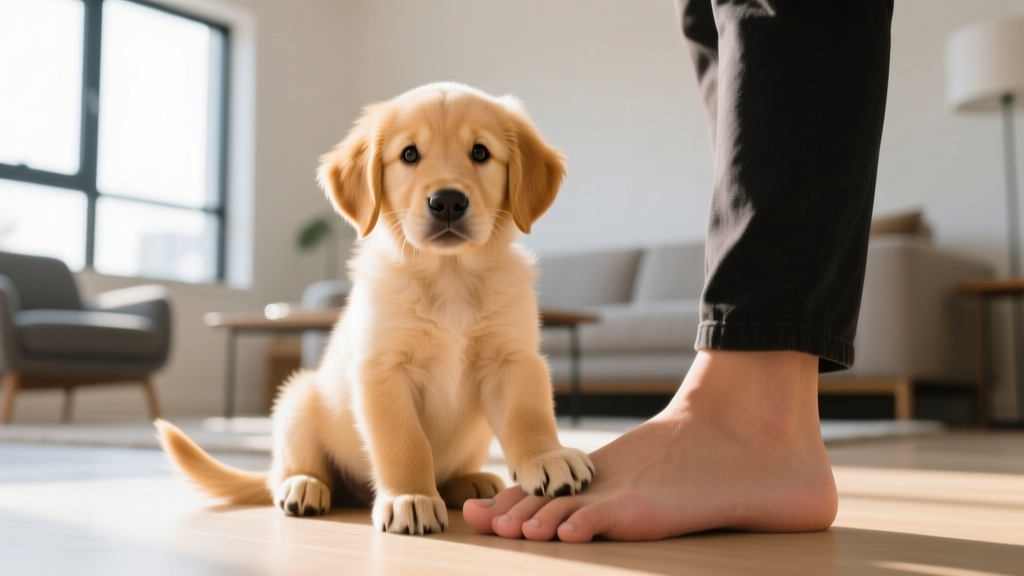
If you've ever tried to walk across the room only to find your puppy planted firmly on your toes, you're not alone. The behavior of puppies sitting on feet is one of the most common — and endearing — quirks new owners report. But understanding why puppies sit on your feet requires looking at canine developmental biology, attachment behavior, and breed-specific temperament traits.
According to the Merck Veterinary Manual, puppies develop a strong attachment bond to their primary caregiver during the critical socialization period (weeks 3–14). Sitting on your feet serves multiple functions simultaneously:
- Thermoregulation: Puppies under 12 weeks struggle to maintain consistent body temperature. Your feet radiate heat through shoes or bare skin, providing a warm anchor point.
- Security-seeking behavior: Physical contact with their attachment figure reduces cortisol (stress hormone) levels. Your feet are the closest body part when you're seated or standing still.
- Scent bonding: Dogs have up to 300 million olfactory receptors (compared to our 6 million). Your feet carry concentrated scent markers that reassure your puppy of your proximity.
- Pack proximity instinct: In wild canids, pups sleep in physical contact with littermates and the dam. This contact-seeking carries over into domestic puppyhood.
- Resource guarding (early stage): In some puppies, particularly herding and guardian breeds, sitting on your feet is an early expression of "you are my resource, and I will stay close to protect access."
Breed significantly influences the intensity and duration of this behavior. Velcro breeds like Vizslas, German Shorthaired Pointers, Weimaraners, and many herding breeds tend to maintain foot-sitting behavior well into adulthood. Independent breeds like Akitas or Shiba Inus may outgrow it by 6 months.
Puppy Development Milestones: Week-by-Week Expectations
Understanding your puppy's developmental timeline helps you anticipate behaviors — including attachment behaviors like foot-sitting — and respond appropriately at each stage.
| Age Range | Developmental Stage | Key Milestones | What to Expect |
|---|---|---|---|
| Weeks 4–8 | Transitional / Early Socialization | Eyes and ears fully open; first steps; littermate play begins; teeth emerge | Puppy learns bite inhibition from siblings. Starts exploring beyond the whelping box. Ideally remains with dam and littermates until week 8. |
| Weeks 8–12 | Primary Socialization Window | Goes to new home; forms human attachment bonds; fear periods begin (weeks 8–11) | Peak foot-sitting and shadowing behavior. Puppy follows you room to room. Highly impressionable — positive exposures are critical. First fear period may cause sudden skittishness. |
| Weeks 12–16 | Secondary Socialization / Ranking Period | Testing boundaries; increased independence spurts; second fear period (weeks 12–14 possible) | May start to venture further from you during exploration. Recall training begins. Foot-sitting may decrease slightly but intensifies when puppy is tired or anxious. |
| Weeks 16–24 | Juvenile Period | Rapid physical growth; teething peaks; increased energy; sexual maturity begins in small breeds | Energy bursts alternate with heavy sleep. Chewing and mouthing peak. May seem to "forget" training temporarily. Foot-sitting often returns during rest periods. |
| 6–12 Months | Adolescence | Sexual maturity; second fear period (6–14 months); adult teeth fully in; growth plates closing | Testing limits, increased independence, potential regression in training. Velcro breeds resume close-contact behaviors. Spay/neuter typically occurs in this window. |
Feeding Schedule: Exact Portions by Age and Weight
Puppies have rapidly changing metabolic demands. Feeding frequency and portion size must shift as they grow. The following table uses an AAFCO-compliant puppy kibble (approximately 400 kcal/cup) as the baseline. Always check your specific food's caloric density and adjust accordingly.
| Puppy Age | Meals Per Day | Small Breed (5–20 lb adult) | Medium Breed (20–50 lb adult) | Large Breed (50–100 lb adult) |
|---|---|---|---|---|
| 8–12 weeks | 4 | ¼–½ cup per meal | ½–¾ cup per meal | ¾–1¼ cups per meal |
| 12–16 weeks | 3 | ⅓–⅔ cup per meal | ¾–1 cup per meal | 1–1¾ cups per meal |
| 16–24 weeks | 3 → 2 | ½–¾ cup per meal | 1–1½ cups per meal | 1½–2½ cups per meal |
| 6–12 months | 2 | ½–1 cup per meal | 1½–2½ cups per meal | 2–4 cups per meal |
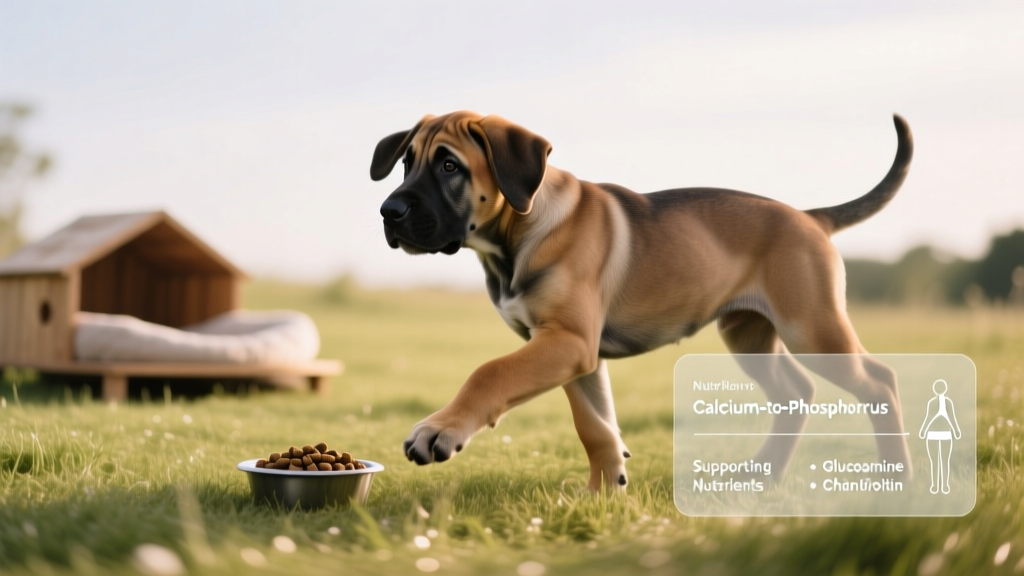
Critical note for large/giant breeds: Use a large-breed puppy formula (calcium-phosphorus ratio between 1.1:1 and 1.4:1, with calcium not exceeding 4.5 g per 1,000 kcal). According to the AKC, rapid growth in large breeds increases the risk of developmental orthopedic diseases like hip dysplasia and osteochondrosis. Feed to maintain a lean body condition score (BCS 4–5 on a 9-point scale) rather than maximizing growth rate.
When to transition to adult food: Small breeds can transition at 9–12 months. Medium breeds at 12 months. Large and giant breeds should remain on puppy food until 18–24 months, as their growth plates close later.
Vaccination Schedule: Protecting Your Puppy's Health
Your puppy arrives with maternal antibodies from colostrum, but these wane unpredictably between 6 and 16 weeks. The vaccination series is designed to "catch" the immune system as maternal antibodies drop below protective levels.
| Age | Vaccines Administered | Notes |
|---|---|---|
| 6–8 weeks | DHPP (Distemper, Hepatitis/Adenovirus, Parainfluenza, Parvovirus) — 1st dose | Often given by the breeder or rescue. Some protocols include Bordetella intranasally at this stage. |
| 10–12 weeks | DHPP — 2nd dose; Bordetella (optional, based on exposure risk); Leptospirosis — 1st dose (recommended for outdoor dogs) | Maternal antibodies are declining. Puppy is still NOT fully protected — avoid dog parks and unknown-dog areas. |
| 14–16 weeks | DHPP — 3rd dose; Rabies (required by law in most US states); Leptospirosis — 2nd dose; Lyme (optional, tick-endemic areas) | The 16-week DHPP is considered the most critical dose, as maternal antibodies have almost certainly waned by this point. |
| 12–16 months | DHPP booster; Rabies booster (1-year or 3-year, depending on product and local law) | After this, your vet may recommend titer testing to check antibody levels before repeating core vaccines. |
Expected cost range for the puppy vaccine series: $75–$200 total, depending on your region and whether you visit a private practice or low-cost clinic. Rabies vaccine alone typically costs $15–$35.
Your puppy can explore your own yard (if no unknown dogs have access) immediately. For public spaces, the AVMA and the American Veterinary Society of Animal Behavior (AVSAB) recommend controlled socialization starting at 7–8 weeks — but only with known, fully-vaccinated dogs in clean environments. Avoid dog parks, pet store floors, and high-traffic areas until 7 days after the final DHPP dose (typically around 16–17 weeks of age). The risk of parvovirus exposure in uncontrolled environments is real and potentially fatal.
Socialization Window: The Critical Weeks 3–14 Exposure Checklist
The primary socialization window closes around 14 weeks. After this, puppies become naturally more cautious about novel stimuli. Missed socialization during this period is the single largest predictor of fear-based behavioral problems in adult dogs, according to peer-reviewed research published in the Journal of Veterinary Behavior.
Below is a structured exposure checklist. Aim for positive, brief (30–90 seconds) exposures — not overwhelming floods. If your puppy shows fear (cowering, tail tuck, refusal to take treats), increase distance from the stimulus and proceed more gradually.
People
- Men with beards, hats, sunglasses
- Children (supervised, calm interactions — never let children chase or grab the puppy)
- People in uniforms (delivery workers, mail carriers)
- People using mobility aids (wheelchairs, crutches, walkers)
- People of different skin tones, heights, and body types
Surfaces and Environments
- Gravel, grass, metal grates, wet floors, stairs
- Car rides (short trips ending in positive experiences)
- Elevator rides, automatic doors
- Veterinary clinic (schedule "happy visits" with no procedures)
Sounds
- Vacuum cleaners (start at distance, pair with treats)
- Thunderstorms, fireworks (use recorded audio at low volume)
- Doorbells, alarms, clapping
- Traffic noise, construction sounds
Other Animals
- Fully-vaccinated, temperament-tested adult dogs
- Puppies of different breeds and sizes (puppy classes after first DHPP)
- Cats (if applicable — supervised, with escape routes for the cat)
Handling Exercises
- Paw handling (prepares for nail trims)
- Ear examination and gentle cleaning
- Mouth opening (prepares for tooth brushing and vet exams)
- Collar grabs paired with treats (prevents collar sensitivity)
- Being gently restrained (simulates vet holds)
Potty Training Timeline and Troubleshooting
Potty training is one of the most common sources of frustration for new puppy owners. Setting realistic expectations prevents unnecessary stress for both you and your puppy.
Realistic Potty Training Timeline
| Age | Bladder Capacity | Expected Accidents Per Week | Milestone |
|---|---|---|---|
| 8–10 weeks | 30–60 minutes | 3–6 per week (normal) | Learning the concept of "outside = potty." Heavy supervision required. |
| 10–14 weeks | 1–2 hours | 1–3 per week | Beginning to signal (sniffing, circling, going to door). Consistency pays off. |
| 14–20 weeks | 2–4 hours | 0–2 per week | Most puppies are reliably house-trained by 16–20 weeks with consistent scheduling. |
| 5–6 months | 4–6 hours | Rare (0–1 per month) | Can hold overnight (7–8 hours). Occasional regression possible during adolescence. |
When will my puppy be fully potty trained? Most puppies achieve reliable house training between 4 and 6 months of age. Small breeds may take longer (up to 8 months) due to smaller bladder capacity and higher metabolic rates. If accidents increase suddenly, rule out a urinary tract infection with your veterinarian before assuming it's behavioral.
Potty Training Troubleshooting
- Puppy pees inside right after coming in from outside: Your puppy didn't associate "outside" with elimination. Go back to basics: take puppy to the same spot, use a consistent cue word ("go potty"), and reward immediately (within 2 seconds) with a high-value treat the moment they finish.
- Submissive/excitement urination: Common in puppies under 6 months. Do not punish — this worsens the behavior. Greet your puppy calmly, crouch sideways rather than looming over them, and take them outside immediately upon entering the home.
- Nighttime accidents: Remove water 1.5–2 hours before bedtime. Set a phone alarm for one nighttime bathroom break (around 2–3 AM) for puppies under 12 weeks. Gradually push this later as bladder capacity increases.
- Crate soiling: The crate may be too large (puppy eliminates in one corner and sleeps in another). Use a divider to size the crate so the puppy can stand, turn around, and lie down — but no more.
Crate Training Progression: Time Limits by Age
A crate is a management tool and a safe den — not a punishment space. The general rule for maximum crate time during the day is puppy's age in months + 1 = hours, but this has important caveats.
| Puppy Age | Maximum Daytime Crate Duration | Overnight Duration | Notes |
|---|---|---|---|
| 8–10 weeks | 30–60 minutes | 3–4 hours (expect to wake for a potty break) | Keep crate in your bedroom. Cover with a light blanket to reduce visual stimulation. |
| 10–14 weeks | 1–2 hours | 4–5 hours | Begin moving crate to a semi-permanent location. Practice short departures from the room. |
| 14–20 weeks | 2–3 hours | 6–7 hours | Start practicing "alone time" in the crate while you're home but in another room. |
| 5–6 months | 3–4 hours | 7–8 hours | Begin transitioning to a puppy-proofed pen or room if crate time exceeds 4 hours regularly. |
Important: No puppy should be crated for more than 4 hours at a time during the day, even at 6 months. Puppies need movement, mental stimulation, and social interaction for healthy development. If your work schedule requires longer absences, arrange a midday dog walker or use an exercise pen in a puppy-proofed room.
Teething Timeline and Relief Strategies
Puppies have 28 deciduous (baby) teeth that begin erupting at 3–4 weeks and are fully in by 6–8 weeks. The transition to 42 adult teeth begins around 3.5 months and is usually complete by 6–7 months.
Teething Milestones
- 3.5–4 months: Incisors (front teeth) begin loosening and falling out. You may find tiny teeth on the floor, but many puppies swallow them — this is harmless.
- 4–5 months: Canine teeth (fangs) shed. This is when chewing intensity peaks. Puppies will gnaw on furniture, shoes, and hands.
- 5–6 months: Premolars and molars erupt. Gum inflammation and mild bleeding are normal. Some puppies eat less during this phase.
- 6–7 months: All 42 adult teeth should be in. Retained deciduous teeth (baby teeth that don't fall out, common in small breeds like Chihuahuas, Yorkies, and Pomeranians) require veterinary extraction to prevent crowding and dental disease.
Safe Chew Recommendations
- Kong Classic (puppy rubber, pink/blue): Stuff with plain yogurt or canned pumpkin and freeze for 2–4 hours. The cold soothes inflamed gums.
- Benebone Wishbone (puppy line): Nylon chew with ridges that massage gums. Choose the puppy-specific version, which is softer than the adult formula.
- Frozen carrot sticks: A low-calorie, edible option. Supervise to prevent choking on large pieces.
- Wet washcloth (twisted and frozen): Soak a clean washcloth in water or low-sodium chicken broth, twist into a rope, and freeze. Supervise use and discard if threads come loose.
Common Puppy Problems: Biting, Whining, and Chewing Solutions
How Do I Stop Puppy Biting and Nipping?
Puppy mouthing is normal developmental behavior — puppies explore the world with their mouths, and they haven't yet learned that human skin is off-limits. Here is a force-free protocol that works for most puppies within 2–4 weeks:
- Redirect: When teeth touch skin, immediately offer an appropriate chew toy. Praise and reward chewing on the toy.
- Withdraw attention: If redirecting doesn't work, stand up, cross your arms, and turn away for 10–15 seconds. No talking, no eye contact. This teaches that biting ends play.
- Time-out (if needed): For persistent biters, calmly place the puppy in their crate or a playpen for 30–60 seconds. This is not punishment — it's a brief reset. Let them out when they're calm.
- Ensure adequate exercise and enrichment: Overtired and understimulated puppies bite more. A 12-week-old puppy needs approximately 15–20 minutes of structured play/exercise twice daily, plus mental enrichment (snuffle mats, training sessions, food puzzles).
Never hold a puppy's mouth shut, yell, or use physical punishment. These methods increase fear and can escalate biting into defensive aggression. The American Veterinary Society of Animal Behavior (AVSAB) recommends against aversive training methods, citing evidence that they increase stress and damage the human-animal bond.
Nighttime Whining in the Crate
Whining during the first 1–2 weeks in a new home is expected. Your puppy has been separated from their littermates and dam for the first time. Strategies that help:
- Place the crate in your bedroom for the first 2–4 weeks. Your breathing and movement are reassuring.
- Use a Snuggle Puppy or similar plush toy with a simulated heartbeat.
- Play white noise or a podcast at low volume near the crate.
- Take the puppy out for a final potty break right before bed. If they whine 2–3 hours later, take them out again on-leash (no play), then return to the crate immediately.
- If you've ruled out a potty need and the whining continues, wait 2–3 minutes before responding. Gradually extend this interval. Responding immediately teaches that whining opens the crate.
Destructive Chewing
Puppies chew to explore, relieve teething discomfort, and expend energy. Management is the key strategy:
- Puppy-proof: Use bitter apple spray on furniture legs, tuck electrical cords behind barriers, and store shoes in closed containers.
- Rotate chew toys: Offer 3–4 toys at a time and rotate weekly to maintain novelty.
- Supervise or confine: When you can't watch your puppy, they should be in their crate or a puppy-proofed exercise pen. Unsupervised access to the house before 6–8 months is the primary cause of destructive chewing incidents.
First-Year Cost Breakdown: Budgeting for Your Puppy
New puppy owners often underestimate the true cost of the first year. Below is a realistic breakdown based on 2026 pricing across low, medium, and high cost-of-living areas in the United States.
| Category | Low-End Estimate | Mid-Range Estimate | High-End Estimate |
|---|---|---|---|
| Puppy purchase/adoption fee | $150 (rescue/adoption) | $1,200 (responsible breeder) | $3,500+ (specialty breed/show) |
| Veterinary care (vaccines, spay/neuter, wellness exams) | $400 | $800 | $1,500 |
| Food (12 months of puppy-formula kibble) | $250 | $500 | $900 |
| Supplies (crate, bed, leash, harness, bowls, toys, gates) | $150 | $350 | $600 |
| Training (group puppy class + basic obedience) | $100 | $300 | $800 |
| Pet insurance (annual premium) | $300 | $500 | $800 |
| Flea/tick/heartworm prevention (12 months) | $120 | $200 | $350 |
| Emergency fund (recommended buffer) | $500 | $1,000 | $2,000 |
| Total First-Year Estimate | $1,970 | $4,850 | $10,450+ |
Where to save: Adoption fees from shelters and breed-specific rescues are significantly lower than breeder prices, and rescue puppies often come with initial vaccines and spay/neuter already included. Low-cost vaccine clinics (often hosted by humane societies or Tractor Supply stores) can reduce veterinary costs by 40–60%.
Where NOT to save: Pet insurance and heartworm prevention. A single emergency surgery (foreign body removal, for example) can cost $3,000–$7,000. Heartworm treatment in an infected dog runs $1,000–$3,000 and carries significant health risks — prevention costs $5–$15 per month.
Frequently Asked Questions
When should I bring my puppy home?
The ideal age to bring a puppy home is 8 to 10 weeks. Puppies should remain with their dam and littermates until at least 8 weeks for proper socialization and bite inhibition learning. Some breeders of smaller breeds (Chihuahuas, Pomeranians, Yorkshire Terriers) prefer to keep puppies until 10–12 weeks due to their fragility and slower development. Avoid bringing home a puppy younger than 7 weeks unless it's a medical necessity — early-weaned puppies show higher rates of behavioral problems including fear, aggression, and difficulty with other dogs.
How often should I feed my puppy at each age?
At 8–12 weeks: 4 meals per day. At 12–16 weeks: 3 meals per day. At 16–24 weeks: transition from 3 to 2 meals per day. From 6 months onward: 2 meals per day, which most dogs maintain for life. Free-feeding (leaving food out all day) is not recommended for most puppies, as it makes house training more difficult and can lead to overeating in food-motivated breeds like Labrador Retrievers and Beagles.
Why does my puppy sit on my feet more when guests are over?
This is a classic security-seeking response. New people represent an unpredictable stimulus, and your puppy gravitates to their primary attachment figure (you) for reassurance. This is normal and typically decreases as your puppy matures and gains confidence through positive socialization experiences. If the behavior escalates to hiding behind you, trembling, or growling at guests, consult a certified positive-reinforcement trainer.
Is it okay to let my puppy sit on my feet, or should I discourage it?
For most puppies, this is a harmless bonding behavior that naturally decreases with maturity. You do not need to discourage it unless it interferes with daily life (tripping hazard, inability to move freely) or is accompanied by anxiety symptoms. If you want to redirect the behavior, teach a "place" cue — send your puppy to a designated mat or bed near you, and reward them generously for staying there. This gives them proximity without the physical contact.
What vaccines does my puppy need and when?
Core vaccines (recommended for all puppies): DHPP at 6–8, 10–12, and 14–16 weeks, with Rabies at 14–16 weeks. Non-core vaccines (based on lifestyle and risk): Bordetella, Leptospirosis, Lyme, and Canine Influenza. Your veterinarian will tailor the protocol based on your geographic location, your puppy's expected lifestyle, and local disease prevalence. Always consult your veterinarian to determine the appropriate vaccination plan for your individual puppy.
When can my puppy meet other dogs outside the household?
Controlled introductions with known, fully-vaccinated, temperament-tested dogs can begin at 8 weeks (after the first DHPP dose). Puppy socialization classes that require proof of first vaccination are generally safe and highly recommended. Avoid dog parks, pet store floors, and areas with unknown dog traffic until 7 days after the final DHPP dose at 14–16 weeks. Parvovirus can survive in the environment for months and is fatal in unvaccinated puppies in up to 91% of untreated cases.
Dr. Hannah Wickes
All our authors care for dogs every day — read more of their work on the authors page.