Why Is My Puppy Throwing Up? A Complete Puppy Health & Care Guide
Why is my puppy throwing up? Learn the common causes of puppy vomiting, when to call the vet, and get a full age-by-age puppy care guide covering...

Why Is My Puppy Throwing Up? Understanding the Most Common Causes
Watching your puppy vomit is alarming, especially when you're a first-time owner trying to decode whether it's a minor stomach upset or something serious. Puppy vomiting is one of the most frequent reasons new owners call veterinary clinics, and the causes range from harmless dietary indiscretion to life-threatening conditions like parvovirus or intestinal blockages.
Before we walk through your puppy's full developmental timeline — including feeding schedules, vaccination windows, and potty training milestones — let's address the immediate question: why is my puppy throwing up?
- Vomiting more than 3 times in 24 hours
- Blood in vomit (red or coffee-ground appearance)
- Vomiting accompanied by diarrhea, lethargy, or fever
- Puppy hasn't eaten or kept water down for 12+ hours
- Swollen or distended abdomen
- Known or suspected ingestion of a foreign object (toys, socks, rocks)
- Puppy is under 12 weeks old and vomiting — dehydration risk is critical
If you suspect toxin ingestion, call the ASPCA Animal Poison Control Center at (888) 426-4435 (24/7, consultation fee applies).
The Most Common Reasons Puppies Vomit
| Cause | Typical Onset | Severity | What to Look For |
|---|---|---|---|
| Dietary indiscretion (eating grass, garbage, table scraps) | 1-6 hours after eating | Mild | Single episode, puppy acts normal afterward |
| Eating too fast | Immediately after meals | Mild | Undigested food regurgitated, tube-shaped |
| Sudden diet change | 1-3 days after switch | Mild-Moderate | Vomiting + soft stool, resolves in 24-48 hrs |
| Intestinal parasites (roundworms, hookworms) | Anytime, common in 6-16 week olds | Moderate | Worms visible in vomit, potbelly, poor growth |
| Parvovirus | 3-7 days post-exposure | Severe/Life-threatening | Profuse vomiting, bloody diarrhea, extreme lethargy |
| Foreign body obstruction | Hours to days after ingestion | Severe | Repeated vomiting, inability to keep water down, abdominal pain |
| Kennel cough / respiratory infection | 2-14 days post-exposure | Moderate | Gagging/hacking that produces foamy vomit, cough |
The key distinction veterinarians make is between regurgitation (passive, undigested food coming up, often tube-shaped, no abdominal heaving) and true vomiting (active abdominal contractions, partially digested food with bile). Regurgitation often points to eating too fast or esophageal issues, while true vomiting suggests stomach or intestinal involvement.
Always consult your veterinarian if vomiting persists beyond 24 hours or is accompanied by other symptoms. Puppies dehydrate rapidly due to their small body mass, and delays in treatment can be dangerous.
Age-Specific Puppy Milestones: What to Expect Week by Week
Puppy Development Timeline
Weeks 4-8 (Still With Breeder/Litter):
- Transitioning from mother's milk to gruel, then softened kibble
- First deworming typically at 2, 4, 6, and 8 weeks (per AAHA vaccination guidelines)
- Learning bite inhibition from littermates — critical social development
- Eyes and ears fully open; motor skills improving rapidly
- Vomiting risk: Weaning transition can cause mild GI upset; frequent small meals essential
Weeks 8-12 (Coming Home — Primary Socialization Window):
- Primary socialization period (peaks around 6-8 weeks, extends to ~14 weeks)
- First DHPP vaccine at 6-8 weeks, booster at 10-12 weeks
- Crate training and house training foundations begin
- Teething begins — baby teeth may start loosening
- Vomiting risk: HIGH — stress of rehoming, new diet, environmental exploration (eating everything), parasite exposure peak
Weeks 12-16 (Building Confidence):
- Second and third DHPP boosters; first rabies vaccine at 14-16 weeks
- Attention span lengthens; short 5-minute training sessions effective
- Potty training consistency should show improvement
- Fear periods may occur (8-11 weeks and again around 6-14 months)
- Vomiting risk: Foreign body ingestion peaks as puppy explores with mouth; vaccination reactions possible (mild vomiting within 24 hours of shots — monitor closely)
Weeks 16-24 (Adolescence Approaching):
- Permanent teeth replacing baby teeth (3-6 months)
- Spay/neuter typically scheduled around 5-6 months (breed-dependent)
- Exercise capacity increases — 5 minutes per month of age per walk is a common guideline
- Testing boundaries; regression in training is normal
- Vomiting risk: Chewing and swallowing non-food items peaks during teething
Months 6-12 (Adolescent to Young Adult):
- Second fear period possible (6-14 months)
- Adult coat replacing puppy coat
- Final DHPP booster at 12 months, then every 3 years per AAHA guidelines
- Transition to adult food typically at 10-12 months (large breeds: 12-18 months)
- Vomiting risk: Decreases significantly if puppy is healthy and fully vaccinated; dietary indiscretion still possible
Feeding Schedule: Exact Portions by Age and Weight
Overfeeding is one of the most common causes of puppy vomiting. Puppies have small stomachs and need frequent, measured meals rather than free-feeding. Here's a practical feeding framework based on the AKC puppy feeding guidelines and typical AAFCO-formulated puppy kibble (approximately 350-400 kcal/cup):
| Puppy Age | Meals Per Day | Estimated Daily Amount (Small Breed 10-25 lb adult) | Estimated Daily Amount (Medium Breed 25-50 lb adult) | Estimated Daily Amount (Large Breed 50-90 lb adult) |
|---|---|---|---|---|
| 8-12 weeks | 4 meals | ½ - ¾ cup | ¾ - 1¼ cups | 1 - 2 cups |
| 3-4 months | 3-4 meals | ½ - 1 cup | 1 - 1¾ cups | 1½ - 3 cups |
| 4-6 months | 3 meals | ¾ - 1¼ cups | 1½ - 2¼ cups | 2 - 4 cups |
| 6-12 months | 2 meals | ¾ - 1¼ cups | 1½ - 2½ cups | 2½ - 5 cups |
Critical feeding rules to prevent vomiting:
- Transition foods over 7-10 days: Day 1-3: 75% old food / 25% new. Day 4-6: 50/50. Day 7-9: 25% old / 75% new. Day 10: 100% new.
- No vigorous exercise 30 minutes before or after meals — especially critical for large/giant breeds prone to gastric dilatation-volvulus (bloat).
- Use slow-feeder bowls (e.g., Outward Hound Fun Feeder, ~$12-18) if your puppy inhales food — regurgitation from eating too fast is extremely common.
- Never feed from the table — fatty human foods (bacon grease, butter, fried food) can trigger pancreatitis, which causes severe vomiting.
Vaccination Schedule: Protecting Against Vomiting-Causing Diseases
Several of the most dangerous causes of puppy vomiting — parvovirus, distemper, and certain bacterial infections — are preventable through vaccination. The AVMA recommends following the AAHA canine life stage vaccination guidelines:
| Age | Vaccine | Notes |
|---|---|---|
| 6-8 weeks | DHPP (Distemper, Hepatitis/Adenovirus, Parainfluenza, Parvovirus) | First dose; maternal antibodies may interfere |
| 10-12 weeks | DHPP booster | Second dose critical for immune priming |
| 12-16 weeks | Rabies | Required by law in most US states; single dose |
| 14-16 weeks | DHPP booster (third dose) | Final puppy series dose; ensures immunity after maternal antibodies wane |
| 12-16 weeks (optional, risk-based) | Bordetella (Kennel Cough) | Recommended if attending puppy classes, boarding, or dog parks |
| 12-16 weeks (optional, risk-based) | Leptospirosis | Recommended in areas with wildlife exposure or standing water |
| 12 months | DHPP booster + Rabies booster | Then every 3 years for DHPP; rabies per local law (1 or 3 year) |
Mild post-vaccination vomiting can occur within 24 hours of shots and is usually not alarming if it's a single episode and your puppy is otherwise acting normally. However, facial swelling, hives, repeated vomiting, or collapse within minutes to hours of vaccination may indicate anaphylaxis — seek emergency veterinary care immediately.
Socialization Window (Weeks 3-14): Your Puppy's Critical Exposure Period
Research published in the Journal of Veterinary Behavior has established that the primary socialization window closes around 12-14 weeks of age. Puppies who don't receive adequate positive exposure during this period are significantly more likely to develop fear-based behavioral problems later. This window overlaps with your puppy's incomplete vaccination status, which creates a tension between disease risk and behavioral development.
The AVMA's position on puppy socialization states that the risk of behavioral euthanasia from poor socialization outweighs the disease risk when exposure is managed carefully.
Socialization Checklist: Weeks 8-14
Safe environments (before full vaccination):
- ✅ Carried in a sling or blanket through parking lots, outdoor shopping areas
- ✅ Inviting vaccinated, healthy adult dogs to your home for playdates
- ✅ Sitting on a bench watching traffic, pedestrians, bicycles from a distance
- ✅ Puppy kindergarten classes (most require first DHPP + Bordetella)
- ✅ Exposure to different floor surfaces: tile, carpet, gravel, grass, metal grates
AVOID until fully vaccinated (1 week after final DHPP at 16+ weeks):
- ❌ Dog parks (high parvo risk from unknown dogs)
- ❌ Pet store floors (high traffic, unknown vaccination status)
- ❌ Areas with visible dog feces
- ❌ Unvaccinated dog playdates
Exposure goals by week 14:
- Met 20+ different people (varying ages, ethnicities, sizes, wearing hats/glasses/masks)
- Experienced 10+ different surfaces and environments
- Heard loud noises: vacuum, thunderstorm recordings, doorbells, car horns (played at low volume, paired with treats)
- Handled: paws touched, ears examined, mouth opened, tail gently lifted — daily
- Positive experiences with nail clippers, brush, collar/harness (treat-paired, no force)
Potty Training Timeline: Realistic Expectations and Troubleshooting
Potty training is one of the most common sources of puppy-owner frustration. Here's the biological reality: puppies generally cannot fully control their bladder until approximately 16-20 weeks of age. The general rule is that a puppy can hold their bladder for roughly one hour per month of age, plus one (so a 3-month-old can hold for about 4 hours maximum — and that's during rest, not active play).
| Age | Maximum Bladder Hold Time | Outings Per Day Needed | What to Expect |
|---|---|---|---|
| 8-10 weeks | 1-2 hours | 12-15 trips outside | Frequent accidents are normal; take out after every meal, nap, and play session |
| 10-14 weeks | 2-3 hours | 8-12 trips outside | Starting to signal (sniffing, circling); accidents still frequent |
| 14-18 weeks | 3-4 hours | 6-8 trips outside | Noticeable improvement; may start going to door |
| 4-6 months | 4-6 hours | 5-6 trips outside | Mostly reliable with supervision; occasional accidents under stress |
| 6-12 months | 6-8 hours | 4-5 trips outside | Fully reliable for most dogs; intact males may begin marking |
When to see the vet about accidents: If your puppy was making progress and suddenly starts having frequent accidents, or if urine appears bloody, cloudy, or has a strong odor, this may indicate a urinary tract infection (UTI) rather than a training issue. UTIs are common in puppies and require veterinary diagnosis and antibiotics.
Crate Training Progression: Age-Appropriate Time Limits
The crate is one of the most effective tools for potty training and preventing destructive chewing — but overuse creates anxiety and can actually worsen house training. Here's a progression based on canine behavioral guidelines:
| Puppy Age | Maximum Crate Time (Daytime) | Overnight | Notes |
|---|---|---|---|
| 8-10 weeks | 30-60 minutes | 3-4 hours (expect one overnight potty break) | Crate should feel like a den; feed meals inside with door open |
| 10-14 weeks | 1-2 hours | 4-5 hours (may still need one break) | Begin short absences from room; don't make departures dramatic |
| 14-18 weeks | 2-3 hours | 6-7 hours | Many puppies sleep through the night by 16 weeks |
| 4-6 months | 3-4 hours | 7-8 hours | Transition to leaving crate door open when home |
| 6+ months | 4-5 hours max | 8 hours | Consider puppy-proofed room or pen for longer daytime absences |
If your puppy vomits in the crate: This could indicate anxiety (especially if accompanied by excessive drooling, pawing, or attempts to escape), motion sickness from being moved while crated, or illness. Clean thoroughly with enzymatic cleaner (Nature's Miracle or Rocco & Roxie, ~$12-18) and evaluate whether crate time is too long or the puppy needs a gradual desensitization protocol.
Teething Timeline and Safe Relief Strategies
Puppies begin losing their 28 baby teeth around 12-16 weeks, with all 42 adult teeth typically in place by 6-7 months. During this period, puppies chew compulsively to relieve gum discomfort — and this is when foreign body ingestion (a leading cause of vomiting and intestinal blockage) peaks.
Safe chew options by age:
- 8-16 weeks: Damp washcloth frozen for 30 minutes, rubber puppy teethers (KONG Puppy, ~$8-12), frozen carrot sticks
- 4-6 months: KONG Classic stuffed with frozen peanut butter (xylitol-free), Nylabone Puppy Chew (~$6-10), frozen blueberries
- 6+ months: Benebone Wishbone (~$14-20), bully sticks (supervised only — choking hazard), dental chews sized appropriately for breed
- Rawhide (especially cheap imports — choking and blockage risk)
- Cooked bones (splinter into sharp fragments)
- Small toys that can be swallowed whole
- Socks, underwear, children's toys (common surgical removal cases — foreign body surgery costs $1,500-$5,000)
- Sticks and rocks (splintering, dental fractures, intestinal perforation)
Common Puppy Problems: Biting, Whining, and Chewing Solutions
Puppy biting/nipping: This is normal littermate behavior that puppies must learn to inhibit. Solutions:
- When teeth touch skin, say "oops" or "ouch" in a calm voice and immediately withdraw attention for 10-15 seconds (negative punishment — removing something the puppy wants)
- Redirect to an appropriate chew toy every time
- End play sessions that escalate to hard biting — overstimulation is the most common trigger
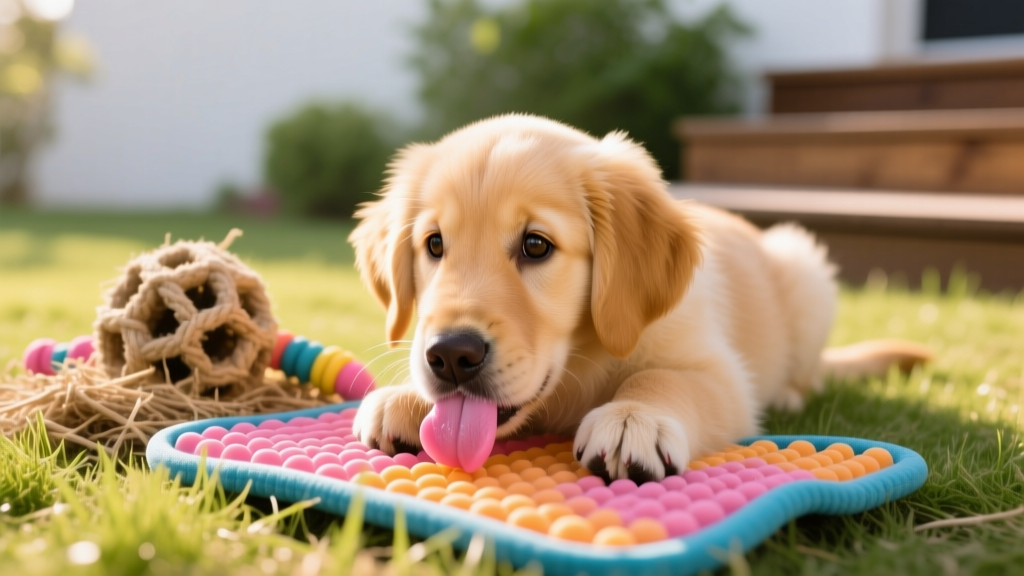
- Provide structured enrichment: snuffle mats (~$15-25), frozen KONGs, lick mats to reduce mouthing from boredom
- Bite inhibition typically improves significantly by 16-20 weeks with consistent feedback
Whining in the crate:
- Ensure potty needs are met before crating
- Cover crate with a breathable blanket to reduce visual stimulation
- Place a warm snuggle puppy toy (Snuggle Puppy with heartbeat, ~$30-40) inside for first weeks
- Do not release puppy from crate while whining — wait for 3-5 seconds of silence, then open (prevents reinforcing the behavior)
- If whining escalates to panic (self-injury, excessive drooling, vomiting), consult a certified professional dog trainer or veterinary behaviorist — separation anxiety requires specialized protocols
Destructive chewing:
- Puppy-proof the home: remove shoes, cords, toxic plants (ASPCA toxic plant list)
- Provide 5-7 rotating chew options — novelty maintains interest
- Use bitter apple spray (~$8-12) on furniture legs as a deterrent (test on fabric first)
- Increase physical exercise and mental enrichment — most destructive chewing is under-stimulation
First-Year Cost Breakdown: Budgeting for Your Puppy
New puppy owners consistently underestimate first-year costs. Here's a realistic breakdown based on 2025-2026 pricing data from veterinary industry sources:
| Category | Budget Range | Details |
|---|---|---|
| Puppy acquisition | $200 - $3,500 | Rescue/adoption: $200-600; Responsible breeder: $1,500-3,500+ |
| Veterinary (first year) | $500 - $1,200 | Initial exam ($60-120), vaccine series ($150-300), spay/neuter ($300-800), deworming ($30-80), microchip ($45-75) |
| Food (12 months) | $300 - $900 | Small breed: $25-40/month; Medium: $35-55/month; Large: $50-75/month (quality AAFCO-formulated kibble) |
| Preventive medications | $200 - $500 | Heartworm (Heartgard Plus ~$80-120/yr), flea/tick (NexGard or Bravecto ~$120-250/yr) |
| Supplies | $200 - $500 | Crate ($40-80), bed ($25-60), leash/harness ($20-45), bowls ($10-25), toys ($30-60), grooming tools ($20-50), enzymatic cleaner ($12-18) |
| Training | $100 - $600 | Puppy kindergarten ($100-200 for 6-8 week course); Private sessions ($75-150/session) if needed |
| Pet insurance (optional) | $300 - $700/yr | Monthly premiums $25-60; covers accidents/illnesses; enroll before pre-existing conditions develop |
| Emergency fund | $500 - $2,000 | Foreign body surgery ($1,500-5,000), parvo treatment ($1,500-5,000), emergency after-hours exam ($150-300) |
Total estimated first-year cost: $2,300 - $9,900+ depending on acquisition source, breed size, geographic location, and whether emergencies occur. Pet insurance enrolled at 8 weeks (before any conditions are documented) provides the best value and coverage.
Frequently Asked Questions
When should I bring my puppy home?
The ideal age to bring a puppy home is 8-10 weeks. Puppies separated before 8 weeks miss critical littermate socialization and bite inhibition learning. Some breeders of smaller breeds prefer to keep puppies until 10-12 weeks for additional maturity. Never acquire a puppy younger than 7 weeks — this is illegal in many US states and associated with significant behavioral and health problems.
How often should I feed my puppy?
At 8-12 weeks: 4 meals per day. At 3-4 months: 3-4 meals per day. At 4-6 months: 3 meals per day. At 6-12 months: 2 meals per day. Consistent meal timing helps regulate digestion and reduces vomiting from bilious stomach (empty stomach vomiting, typically yellow/green bile in the early morning — if this occurs, a small bedtime snack may help, but consult your vet first).
When will my puppy be fully potty trained?
Most puppies achieve reliable house training between 4-6 months of age, though small breeds may take longer (up to 8-12 months) due to smaller bladder capacity. Consistency is the single biggest factor — puppies who are taken out on a strict schedule with positive reinforcement for outdoor elimination learn significantly faster. If your puppy is older than 6 months and still having daily accidents, consult your veterinarian to rule out medical causes before assuming it's a training issue.
What vaccines does my puppy need and when?
Core vaccines (recommended for all puppies): DHPP series at 6-8 weeks, 10-12 weeks, and 14-16 weeks; Rabies at 12-16 weeks. Non-core (risk-based): Bordetella, Leptospirosis, Lyme disease, and Canine Influenza depending on your area and lifestyle. Your veterinarian will customize the schedule based on local disease prevalence and your puppy's exposure risk.
How do I stop puppy biting and nipping?
Puppy biting is normal developmental behavior that typically peaks around 12-16 weeks and diminishes by 5-6 months with consistent management. Use the "redirect and withdraw" method: when teeth contact skin, calmly say "ouch," redirect to a chew toy, and if biting continues, end the play session for 30 seconds. Never hit, hold the mouth shut, or alpha-roll a puppy — these aversive methods increase fear and can escalate biting. Provide adequate chew outlets and ensure your puppy gets 16-20 hours of sleep per day (overtired puppies bite more).
When can my puppy go outside and meet other dogs?
Your puppy can go to controlled, low-risk environments (your own yard, carried through quiet areas) immediately. For high-traffic dog areas (dog parks, pet stores, hiking trails with heavy dog traffic), wait until one week after the final DHPP booster at 14-16 weeks — typically around 17 weeks of age. Puppy socialization classes that require proof of first vaccination are generally safe and strongly recommended starting at 8-10 weeks. The risk of behavioral problems from inadequate socialization during the 3-14 week window is statistically greater than the risk of disease exposure in managed environments, per the AVMA.
Robin Maitland
All our authors care for dogs every day — read more of their work on the authors page.