White Vomit in Puppies: Causes, Risks & Complete Puppy Health Guide
Discover what white vomit in puppies means, when to worry, and get a complete age-by-age puppy care guide covering feeding, vaccines, training, and costs.

What Does White Vomit in Puppies Mean?
Seeing your puppy throw up white foam or liquid is alarming, especially for first-time owners. White vomit in puppies typically indicates stomach acid, mucus, or swallowed air — and while it's often benign, it can sometimes signal something requiring immediate veterinary attention.
Common Causes of White Vomit in Puppies
| Cause | What It Looks Like | Severity | Action |
|---|---|---|---|
| Empty stomach (bilious vomiting syndrome) | White/yellow foam, usually early morning | Low | Add a late-night snack; adjust feeding schedule |
| Eating too fast / gulping air | White frothy bubbles shortly after meals | Low | Use a slow-feeder bowl (e.g., Outward Hound Fun Feeder) |
| Kennel cough (infectious tracheobronchitis) | White foam after coughing fits | Moderate | Vet visit for diagnosis; Bordetella vaccine prevention |
| Intestinal parasites (roundworms, giardia) | White foam, sometimes with visible worms | Moderate | Fecal test and deworming protocol from your vet |
| Dietary indiscretion (ate something wrong) | White liquid or foam with undigested material | Variable | Monitor 12-24 hours; call vet if it continues |
| Parvovirus | White/clear vomit + bloody diarrhea + lethargy | EMERGENCY | Emergency vet immediately — survival depends on rapid treatment |
| Gastric dilatation-volvulus (bloat) | White foam, unproductive retching, swollen abdomen | EMERGENCY | Emergency surgery required — minutes matter |
According to the Merck Veterinary Manual, vomiting in young dogs requires careful assessment because puppies dehydrate rapidly and have limited metabolic reserves compared to adult dogs.
- More than 3 vomiting episodes in 12 hours
- Blood in vomit (red or coffee-ground appearance)
- Lethargy or refusal to drink water
- Distended or painful abdomen
- Diarrhea (especially bloody) accompanying vomiting
- Fever above 103.5°F (39.7°C)
- Known or suspected toxin ingestion — ASPCA Animal Poison Control: (888) 426-4435 (24/7, consultation fee applies)
Puppy Development Milestones: What to Expect at Each Stage
Understanding your puppy's developmental timeline helps you distinguish normal puppy behavior from genuine health concerns — including digestive upsets like white vomit. Here's what to expect during each critical window.
Weeks 4–8: The Transitional Period
At this stage, puppies are typically still with their breeder or foster. They're transitioning from mother's milk to solid food (gruel or softened kibble). Their immune systems are still developing, relying on maternal antibodies that are beginning to wane — a gap that makes them vulnerable to pathogens like parvovirus.
- Weight gain: Expect puppies to double their birth weight by week 5 and continue gaining steadily
- Social development: Littermate play teaches bite inhibition; premature separation (before 8 weeks) correlates with increased behavioral problems
- Digestive note: Weaning can cause temporary loose stools and occasional regurgitation — this is different from true vomiting
Weeks 8–12: The Homecoming Window
This is when most puppies join their new families. The stress of relocation, diet changes, and new environments frequently causes gastrointestinal upset — including white foamy vomit from an empty stomach during the adjustment period.
- Sleep: 18-20 hours per day is normal; puppies this age tire quickly
- Attention span: Training sessions should be 2-5 minutes maximum
- Bladder control: Approximately 1 hour per month of age (so an 8-week puppy needs out every 2 hours)
- Health watch: This is peak vulnerability for stress-induced GI issues; maintain the breeder's diet for at least 7-10 days before any food transitions
Weeks 12–16: Building Confidence
Your puppy's personality is emerging. Fear periods typically occur around 8-11 weeks and again around 6-14 months — during these windows, negative experiences can create lasting phobias. Keep socialization positive and never force interactions.
- Coordination: Markedly improved; puppy can navigate stairs (supervised) and jump onto low furniture
- Teething begins: Deciduous (baby) teeth start loosening around 12-16 weeks
- Vaccine protection: After the second DHPP booster, your puppy has partial protection but is NOT fully immunized yet
Weeks 16–24: The Adolescent Transition
This is the "teenage" phase. Energy increases, testing boundaries intensifies, and some puppies seem to forget everything they learned. Consistency is everything here.
- Adult teeth: All 42 permanent teeth should be in by 6-7 months
- Spay/neuter window: Most veterinarians recommend between 4-6 months for small/medium breeds, 6-12 months for large/giant breeds (to allow growth plate closure)
- Exercise capacity: Follow the "5 minutes per month of age, twice daily" guideline — a 5-month-old gets 25-minute walks
Months 6–12: Approaching Maturity
Large and giant breeds won't reach full physical maturity until 18-24 months, but by 12 months most dogs are transitioning to adult food and settling into their adult temperament patterns.
- Food transition: Switch to adult formula gradually over 7-10 days (small/medium breeds at 10-12 months; large breeds at 12-18 months)
- Second fear period: Typically occurs between 6-14 months; sudden wariness of previously familiar things is normal
- Training consolidation: This is when reliable recall and impulse control either solidify or fall apart — invest in continued training classes
Feeding Schedule: Exact Portions by Age and Weight
Inconsistent feeding schedules are one of the most common causes of white vomit in puppies — specifically bilious vomiting syndrome, where stomach acid builds up during long fasting periods. Here's how to structure meals properly.
| Age | Meals/Day | Small Breed (5-20 lb adult) Cups/Day | Medium Breed (20-50 lb adult) Cups/Day | Large Breed (50-90 lb adult) Cups/Day | Max Time Between Meals |
|---|---|---|---|---|---|
| 8-12 weeks | 4 | ½ – ¾ cup | 1 – 1½ cups | 1½ – 2½ cups | 4 hours |
| 12-16 weeks | 3-4 | ¾ – 1 cup | 1½ – 2 cups | 2½ – 3½ cups | 5 hours |
| 4-6 months | 3 | 1 – 1¼ cups | 2 – 3 cups | 3½ – 5 cups | 6 hours |
| 6-12 months | 2 | ¾ – 1 cup | 2 – 2½ cups | 3½ – 4½ cups | 8 hours |
Important notes: These are starting points based on AAFCO feeding guidelines for puppy-formulated kibble (minimum 22% protein, 8.5% fat for growth). Individual caloric needs vary by metabolism, activity level, and whether your puppy is spayed/neutered. Use body condition scoring — you should feel ribs with light pressure but not see them prominently.
Preventing white vomit from empty stomach: If your puppy vomits white foam in the early morning, offer a small snack (1-2 tablespoons of kibble) right before bed. This keeps stomach acid buffered overnight.
Vaccination Schedule: Protecting Your Puppy from Life-Threatening Disease
Parvovirus — one of the most dangerous causes of vomiting in puppies — is preventable through proper vaccination. The AVMA recommends following your veterinarian's customized schedule, but here is the standard protocol for core vaccines.
| Age | Vaccine(s) | What It Protects Against | Typical Cost |
|---|---|---|---|
| 6-8 weeks | DHPP (1st dose) | Distemper, Hepatitis (Adenovirus), Parainfluenza, Parvovirus | $20-$40 |
| 10-12 weeks | DHPP (2nd dose), Bordetella (optional) | Same as above + kennel cough | $25-$50 |
| 14-16 weeks | DHPP (3rd dose), Rabies | Full core protection + rabies (legally required) | $30-$60 |
| 12-16 months | DHPP booster, Rabies booster | Long-term immunity establishment | $40-$75 |
Non-core vaccines your vet may recommend based on lifestyle: Leptospirosis ($25-$40), Lyme disease ($25-$40), and Canine Influenza ($30-$50). Discuss your puppy's exposure risk — urban dogs attending daycare have different needs than rural dogs with limited contact.
Critical rule: Your puppy is NOT fully protected until 2 weeks after the final DHPP dose at 14-16 weeks. Until then, avoid dog parks, pet store floors, and any area where unvaccinated dogs have been.
Socialization Window: Weeks 3–14 Checklist
The American Veterinary Society of Animal Behavior (AVSAB) identifies weeks 3-14 as the primary socialization period — the window when puppies form lasting impressions about what is safe versus threatening. Missing this window increases the risk of fear-based behavioral problems, which are the leading cause of euthanasia in dogs under 3 years old.
- People: Men, women, children (supervised), people wearing hats/sunglasses/masks, people using wheelchairs or crutches, delivery workers
- Surfaces: Grass, gravel, metal grates, wet pavement, carpet, tile, wooden stairs
- Sounds: Vacuum cleaner, thunder (play recordings at low volume), doorbells, car horns, fireworks recordings, hairdryers
- Objects: Umbrellas opening, plastic bags rustling, bicycles, skateboards, trash cans
- Handling: Paw touching, ear examination, mouth opening, nail clipping practice, being lifted and held
- Environments: Car rides, vet clinic visits (happy visits with treats only), outdoor seating areas, quiet parking lots
- Animals: Fully vaccinated, friendly adult dogs; cats (if applicable); livestock (if rural)
Key principle: Every new experience should be paired with high-value treats (small pieces of boiled chicken or commercial training treats like Zuke's Mini Naturals). If your puppy shows fear, increase distance from the stimulus and let them approach at their own pace. Never force an interaction.
Potty Training: Realistic Timeline and Troubleshooting
Let's set honest expectations: most puppies achieve reliable house training between 4-6 months of age, though some small breeds (with proportionally smaller bladders) may take up to 8-12 months. Claims of "potty trained in 3 days" set owners up for frustration and puppies up for punishment.
Bladder Capacity by Age
- 8-10 weeks: 20-30 minutes between eliminations during active play; 1-2 hours while resting
- 10-14 weeks: 1-2 hours active; 2-3 hours resting
- 3-4 months: 2-3 hours active; 3-4 hours resting or crated
- 4-6 months: 3-4 hours active; 4-6 hours crated or overnight
- 6+ months: 4-6 hours active; 6-8 hours overnight (most dogs)
Potty Training Protocol
- Take puppy out: Immediately upon waking, after every meal (within 15-30 minutes), after play sessions, after crate time, and before bed
- Use a consistent cue: Say "go potty" (or your chosen phrase) while they're eliminating, then reward immediately with a treat and praise AFTER they finish
- Supervise or confine: When not in the crate, puppy should be in your line of sight at all times — use baby gates or a tether leash attached to your waist
- Interrupt accidents calmly: If you catch them mid-act, clap once to interrupt, carry them outside immediately, and reward if they finish there. Never punish after the fact — dogs cannot connect past actions to present consequences
- Enzyme clean accidents: Use a product like Nature's Miracle or Rocco & Roxie to eliminate odor markers that attract repeat eliminations
Crate Training: Time Limits and Progression
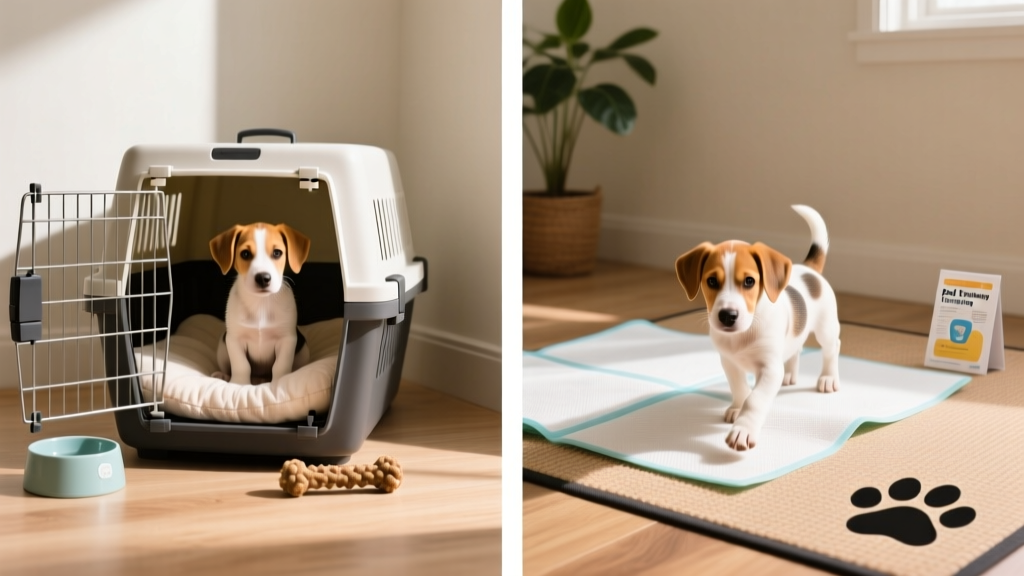
Proper crate training prevents destructive behavior, aids potty training, and gives your puppy a safe den. However, exceeding maximum crate time causes distress, learned helplessness, and can actually worsen house training.
| Puppy Age | Maximum Crate Time (Daytime) | Maximum Overnight | Crate Size Tip |
|---|---|---|---|
| 8-10 weeks | 30-60 minutes | 2-3 hours (set an alarm) | Use divider panel in larger crate |
| 11-14 weeks | 1-2 hours | 3-4 hours | Puppy should stand, turn, lie down comfortably |
| 15-16 weeks | 2-3 hours | 4-5 hours | Remove divider as puppy grows |
| 4-6 months | 3-4 hours | 6-7 hours | Full adult crate size appropriate now |
| 6+ months | 4-5 hours | 7-8 hours | Consider leaving crate door open when home |
Crate training progression: Start by feeding meals in the open crate, then close the door during meals, then add 1-minute intervals with you visible, then leave the room briefly, then gradually extend time away. If your puppy cries, wait for a 3-second pause before releasing — otherwise you're rewarding the crying. Exception: always take a crying puppy out to potty, then return to crate if they don't eliminate.
Teething Timeline: Relief Strategies and Safe Chews
Puppy teething is intense and prolonged. Understanding the timeline helps you prepare appropriate outlets and protect your belongings (and your hands).
- 3-4 weeks: Deciduous (baby) incisors erupt
- 4-6 weeks: Baby canines and premolars emerge
- 12-16 weeks: Baby teeth begin falling out; you may find tiny teeth on the floor or notice increased chewing and drooling
- 4-5 months: Permanent canines erupt — peak chewing intensity
- 5-7 months: All 42 permanent teeth should be in place; chewing gradually decreases
Safe Chew Recommendations by Stage
- 8-12 weeks: Kong Classic (puppy size, filled with softened kibble and frozen), Nylabone Puppy Chew (softer formula), frozen washcloth twisted into a rope (supervised only)
- 3-5 months: Kong Classic (medium, frozen with plain yogurt), Benebone Puppy Wishbone, bully sticks (supervised, remove when small enough to swallow)
- 5-7 months: Standard Kong, yak cheese chews (Himalayan Dog Chew), antler alternatives like EcoKind Moose Antler (avoid real weight-bearing bones — fracture risk)
Avoid: Rawhide (choking and blockage risk), cooked bones (splinter), ice cubes for small breeds (tooth fracture risk), and any chew small enough to be swallowed whole.
Common Puppy Problems: Breed-Stage Solutions
Puppy Biting and Nipping
Mouthing is normal puppy behavior — they explore the world with their mouths and are learning bite inhibition. However, it must be managed proactively.
- Redirect: When teeth touch skin, say "ouch" in a calm tone, withdraw attention for 5-10 seconds, then offer an appropriate chew toy
- Time-outs: If redirecting fails, calmly place puppy in their crate or a pen for 30-60 seconds to reset — this is not punishment, it's a cooldown
- Ensure adequate exercise: Overtired puppies bite MORE, not less — watch for the "zoomies and biting" pattern that signals nap time
- Never: Hold the mouth shut, alpha roll, tap the nose, or use any physical punishment. These damage trust and can create fear-based aggression. The AVSAB strongly recommends against aversive methods
Nighttime Whining
Expect 1-3 weeks of adjustment. Place the crate in your bedroom initially so your puppy can hear and smell you. A Snuggle Puppy (with heartbeat simulator) or a warm water bottle wrapped in a towel can ease the transition. Gradually move the crate to its permanent location over 1-2 weeks.
Destructive Chewing
Manage the environment: puppy-proof rooms by removing shoes, cords, and small objects. Provide 5-7 appropriate chew toys rotated weekly to maintain novelty. Confine to a safe area when unsupervised. If you catch them chewing something inappropriate, redirect to an approved chew and praise enthusiastically.
First-Year Cost Breakdown: Budgeting for Your Puppy
New puppy owners are frequently surprised by first-year expenses. Here's a realistic breakdown based on 2025-2026 pricing data from veterinary practices across the United States.
| Category | Low Estimate | Average | High Estimate | Notes |
|---|---|---|---|---|
| Puppy purchase/adoption | $50 | $1,500 | $4,000+ | Rescue to reputable breeder range |
| Veterinary (vaccines, exams, spay/neuter) | $400 | $800 | $1,500 | Varies significantly by region |
| Food (puppy formula, 10 months) | $250 | $500 | $900 | Small to large breed; premium brands |
| Supplies (crate, bed, bowls, leash, collar, toys) | $150 | $350 | $600 | Quality gear lasts years |
| Training (group classes, 2-3 sessions) | $100 | $300 | $800 | Group vs. private sessions |
| Preventive medications (flea/tick, heartworm) | $150 | $300 | $500 | NexGard, Simparica Trio, etc. |
| Pet insurance (annual premium) | $300 | $600 | $900 | Highly recommended for puppies |
| TOTAL FIRST YEAR | $1,400 | $4,350 | $9,200+ | Excluding emergency vet visits |
Emergency fund recommendation: Set aside $1,000-$2,000 for unexpected illnesses. Puppies are prone to foreign body ingestion, parasites, and infectious diseases — a single emergency visit with diagnostics (bloodwork, X-rays, IV fluids) can cost $500-$3,000.
Frequently Asked Questions
When should I bring my puppy home?
Between 8-10 weeks of age is ideal for most breeds. Some breeders of toy breeds (Chihuahuas, Yorkshire Terriers) keep puppies until 10-12 weeks due to fragility and hypoglycemia risk. Never accept a puppy younger than 8 weeks — early separation from the mother and littermates is linked to increased behavioral problems including separation anxiety, fearfulness, and poor bite inhibition.
How often should I feed my puppy?
At 8-12 weeks: 4 meals daily. At 12-16 weeks: 3-4 meals. At 4-6 months: 3 meals. At 6+ months: 2 meals. Puppies have small stomachs and high metabolic rates — long gaps between meals cause blood sugar dips and stomach acid buildup, which is a primary cause of white vomit in puppies (bilious vomiting syndrome).
When will my puppy be fully potty trained?
Most puppies are reliably house trained by 4-6 months, with small breeds sometimes taking until 8-12 months. "Fully trained" means fewer than 1-2 accidents per month. Consistency in schedule, supervision, and positive reinforcement for outdoor elimination are the three factors that determine speed of training.
What vaccines does my puppy need and when?
Core vaccines include DHPP (Distemper, Hepatitis, Parainfluenza, Parvovirus) at 6-8, 10-12, and 14-16 weeks, plus Rabies at 14-16 weeks. Non-core vaccines like Bordetella, Leptospirosis, and Lyme depend on your puppy's lifestyle and geographic risk. Your veterinarian will tailor the protocol to your puppy's specific needs.
How do I stop puppy biting and nipping?
Redirect to appropriate chews when teeth touch skin, use brief time-outs (30-60 seconds in crate) for persistent biting, and ensure your puppy is getting adequate sleep (overtired puppies bite more). Enroll in a positive reinforcement puppy class where structured play with other puppies naturally teaches bite inhibition. Never use physical punishment.
When can my puppy go outside and meet other dogs?
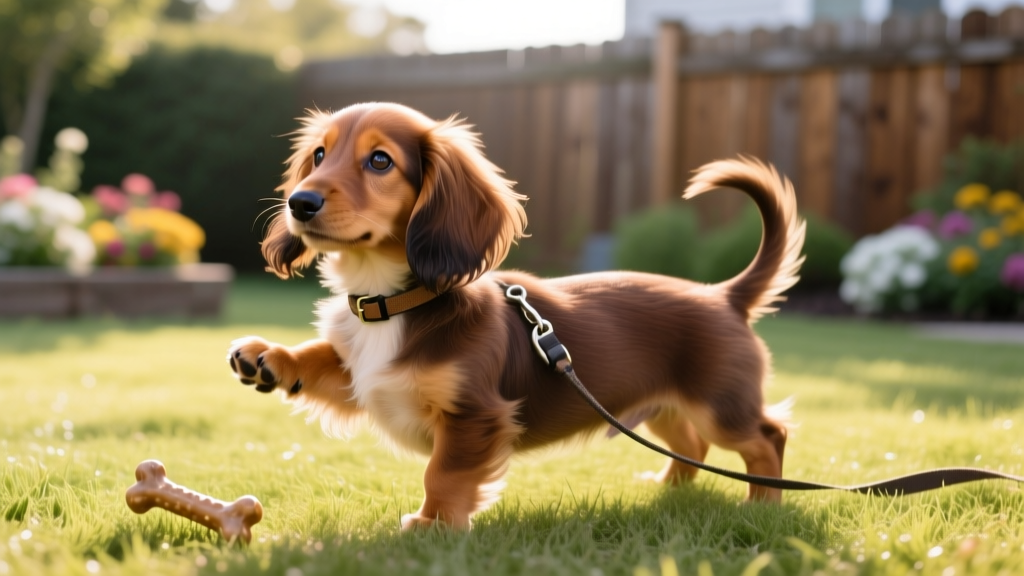
Your puppy can explore your own yard immediately (assuming no parvo risk from previous dog occupants). Public areas (parks, sidewalks with heavy dog traffic) should wait until 2 weeks after the final DHPP vaccine at 14-16 weeks — typically around 18 weeks of age. However, socialization with known, fully vaccinated dogs in controlled environments can begin immediately. Carry your puppy in a sling or carrier for outdoor exposure to sights and sounds before full ground contact is safe.
My puppy keeps vomiting white foam — should I be worried?
If it happens once or twice and your puppy is otherwise energetic, eating, and drinking normally, try feeding smaller meals more frequently and add a bedtime snack. If white vomiting persists beyond 24 hours, occurs multiple times in a day, or is accompanied by lethargy, diarrhea, loss of appetite, or a distended abdomen, consult your veterinarian immediately. Puppies can deteriorate quickly from dehydration.
Always consult your veterinarian for personalized health advice regarding your puppy. This guide provides general educational information and does not replace professional veterinary care.
Aaron Whyte
All our authors care for dogs every day — read more of their work on the authors page.