When Should I Wean Puppies? A Complete Week-by-Week Guide
Learn exactly when to wean puppies with our week-by-week timeline covering nutrition milestones, feeding schedules, and breeder-to-owner transitions.

If you're caring for a litter or preparing to bring home a new puppy, one question rises above the rest: when should I wean puppies from their mother's milk to solid food? The answer isn't a single date on the calendar—it's a gradual process that typically spans weeks 3 through 7 of a puppy's life, with full nutritional independence achieved by week 8.
This guide walks you through the complete weaning timeline, feeding schedules by age, vaccination windows, potty training expectations, and everything else you need from birth through your puppy's first year. Whether you're a breeder managing a litter or a new owner preparing for arrival, you'll find exact numbers, real product recommendations, and realistic timelines grounded in veterinary science.
The Weaning Timeline: When Should I Wean Puppies Step by Step?
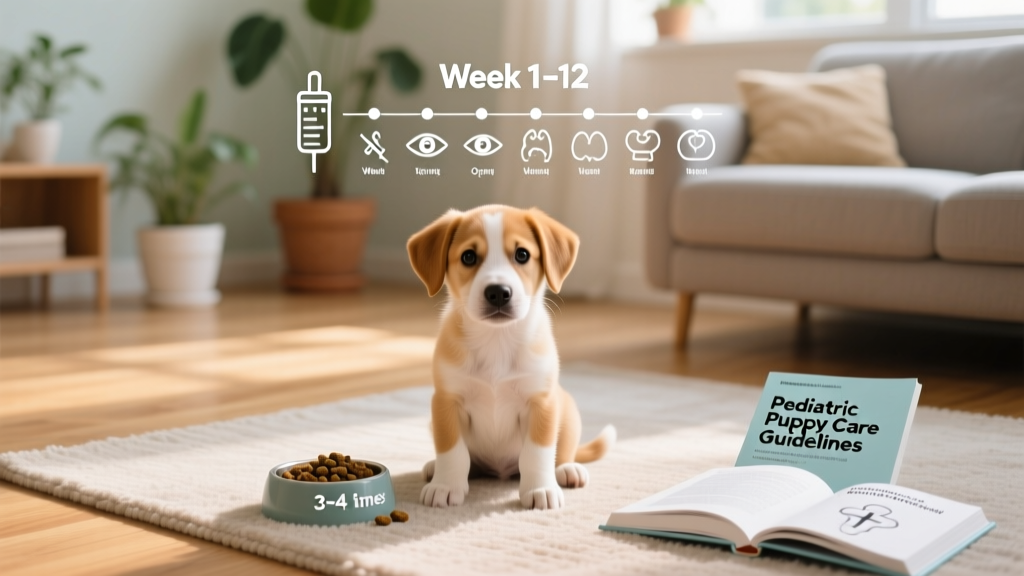
Weaning is not an event—it's a transition. According to the American Kennel Club, puppies begin showing interest in solid food around week 3, but their digestive systems aren't ready for full meals until weeks 5-7. Here's the precise week-by-week breakdown:
Age Milestone Timeline
Weeks 0–3: Nursing Only
Puppies rely entirely on mother's milk (or bottle formula if orphaned). No solid food. Eyes open around days 10-14. Weight should double by day 10. Expected daily weight gain: 5-10% of birth weight.
Weeks 3–4: Introduction Phase
Teeth begin erupting (incisors first). Puppies start licking at mother's food and showing curiosity. Introduce a gruel or "puppy mush" made from high-quality puppy kibble soaked in warm water or puppy milk replacer (such as Esbilac Puppy Milk Replacer, approximately $18-24 for 11 oz). Offer gruel once daily in a shallow dish. Puppies will mostly play in it—this is normal exploratory behavior.
Weeks 4–5: Active Weaning Begins
Increase gruel feedings to 2-3 times daily. Mother naturally begins spending more time away from the litter as puppies' teeth make nursing uncomfortable. Reduce milk replacer ratio in gruel gradually—thicker consistency each day. Puppies should be consuming noticeable amounts of gruel by week 5.
Weeks 5–6: Transition to Solid Food
Introduce moistened kibble (soak for 10-15 minutes in warm water, then drain). Puppies should be eating 3-4 small meals daily. Mother may still allow brief nursing sessions, but puppies derive most calories from solid food. This is the critical answer to "when should I wean puppies"—weeks 5-6 are when the majority of nutritional weaning occurs.
Weeks 6–7: Near-Complete Weaning
Reduce moisture in kibble further. Puppies should be eating mostly dry puppy food by end of week 7. Mother typically refuses nursing entirely. If any puppies are lagging (not gaining weight, refusing solids), consult your veterinarian—this may indicate underlying illness or congenital issues.
Weeks 7–8: Fully Weaned
Puppies are eating dry kibble independently, drinking water from a bowl, and are nutritionally independent. This is the earliest responsible breeders and shelters consider puppies ready for new homes—though many breeders of large/giant breeds prefer to keep puppies until 10-12 weeks for additional socialization.
Feeding Schedule: Exact Portions by Age and Weight
After weaning, feeding frequency and portion size change rapidly as your puppy grows. The table below provides general guidelines based on an expected adult weight of 30-50 lb (medium breed). Small breeds (under 20 lb adult) need more frequent, smaller meals; giant breeds (over 100 lb adult) need carefully controlled growth-rate feeding to prevent orthopedic issues.
| Age | Meals Per Day | Approximate Daily Amount (Dry Kibble) | Food Type |
|---|---|---|---|
| 6–8 weeks | 4 | ¾ – 1 cup total | Moistened puppy kibble |
| 8–12 weeks | 4 | 1 – 1½ cups total | Dry or lightly moistened puppy kibble |
| 12–16 weeks | 3 | 1½ – 2 cups total | Dry puppy kibble |
| 16–24 weeks | 3 | 2 – 2¾ cups total | Dry puppy kibble |
| 6–12 months | 2 | 2½ – 3½ cups total | Puppy or transition to adult formula (breed-dependent) |
Key feeding rules:
- Choose a food with an AAFCO statement confirming it meets nutritional levels for "growth" or "all life stages."
- Use a kitchen scale or measuring cup—eyeballing portions leads to overfeeding. Obesity in puppies accelerates growth and increases hip dysplasia risk in predisposed breeds.
- Remove uneaten food after 15-20 minutes per meal. This establishes routine and lets you monitor appetite changes (a sudden drop in eating warrants a vet call).
- Small/toy breeds (Chihuahuas, Yorkies under 10 lb adult) are prone to hypoglycemia and may need 4 meals daily through 16 weeks, not 12.
- Large/giant breeds (Great Danes, Mastiffs over 70 lb adult) should eat a large-breed puppy formula with controlled calcium:phosphorus ratio (1.1:1 to 1.4:1) to prevent developmental orthopedic disease.
Vaccination Schedule: What Vaccines and When
Your puppy's immune system is immature at birth. Maternal antibodies from colostrum (first milk) provide temporary protection, but these antibodies wane between 6-16 weeks, leaving a vulnerability window. The vaccination series bridges this gap. According to the American Veterinary Medical Association, core vaccines for all puppies include:
| Age | Vaccine | Purpose | Estimated Cost Per Visit |
|---|---|---|---|
| 6–8 weeks | DHPP (1st dose) | Distemper, Hepatitis (Adenovirus), Parainfluenza, Parvovirus | $75–$100 |
| 10–12 weeks | DHPP (2nd dose) + optional Bordetella, Leptospirosis | Booster immunity + kennel cough, leptospirosis protection | $85–$130 |
| 14–16 weeks | DHPP (3rd dose) + Rabies | Final core booster + legally required rabies protection | $90–$150 |
| 12–16 months | DHPP booster + Rabies booster | 1-year booster (subsequent rabies may be 3-year) | $80–$120 |
Non-core vaccines your vet may recommend based on lifestyle: Bordetella (kennel cough, required by most daycares and groomers), Leptospirosis (outdoor/rural dogs), Lyme disease (tick-endemic areas), and Canine Influenza (H3N2/H3N8, for dogs in group settings). Discuss your puppy's specific risk profile with your veterinarian.
Socialization Window: The Critical Weeks 3–14
The primary socialization period for puppies closes between 12-14 weeks of age. What your puppy experiences—or doesn't experience—during this window shapes their lifelong responses to the world. Missed socialization is the leading behavioral reason dogs are surrendered to shelters.
Here's a practical exposure checklist to work through during weeks 3-14. Pair every new experience with high-value treats (small pieces of boiled chicken, freeze-dried liver, or commercial training treats like Zuke's Mini Naturals, ~$6-8 per 6 oz bag). Keep sessions short (5-10 minutes) and positive.
Socialization Exposure Checklist
Surfaces: Grass, gravel, concrete, tile, carpet, metal grates, wet ground, stairs (carpeted and wood)
People: Men with beards, people wearing hats/sunglasses, children (supervised), people in uniforms, people using wheelchairs or crutches, delivery workers
Animals: Calm vaccinated adult dogs, cats (if household has them), livestock (if rural setting)
Sounds: Vacuum cleaner, thunderstorm recordings (play at low volume, increase gradually), doorbell, traffic, construction noise, fireworks recordings, clapping, children laughing/playing
Handling: Paw touching, ear examination, mouth opening, nail clipping simulation, being held on back, collar/harness on and off, being groomed with brush
Environments: Car rides (short trips to fun destinations), parking lots, quiet streets, friend's houses, outdoor patios, veterinary clinic (happy visits with treats, no procedures)
Objects: Umbrellas opening, plastic bags rustling, brooms, bicycles, skateboards, strollers
Rules for socialization:
- Let the puppy approach new things voluntarily—never force interaction.
- If your puppy shows fear (cowering, tail tuck, freezing), increase distance and offer treats. Pushing a frightened puppy closer to the trigger can create lasting phobias.
- Aim for 5-10 new positive experiences per day during peak socialization weeks.
- Enroll in a puppy kindergarten class (typically 8-16 weeks, after first DHPP). Expect to pay $100-$200 for a 6-8 week course. Look for classes that require proof of vaccination and use positive reinforcement methods only.
Potty Training Timeline and Realistic Expectations
Let's address the question everyone wants answered: when will my puppy be fully potty trained? The honest answer is 4-6 months for most puppies, with some smaller breeds taking up to 8-12 months due to smaller bladder capacity. Any program claiming full house training in days is unrealistic.
A puppy's bladder control develops roughly as follows: a puppy can "hold it" for approximately one hour per month of age, plus one. So an 8-week-old (2-month) puppy can hold for roughly 3 hours maximum, and a 4-month-old puppy for about 5 hours. Overnight control typically develops earlier than daytime control because puppies sleep through the night.
Potty Training Progression by Age
8–10 weeks: Take puppy out every 1-2 hours during the day, immediately after meals, naps, and play sessions. Expect 2-3 overnight wake-ups. Accidents are frequent and normal. Use enzymatic cleaner (Nature's Miracle or Rocco & Roxie, $10-15 per bottle) for every accident—ammonia-based cleaners attract puppies back to the same spot.
10–14 weeks: Extend intervals to every 2-3 hours. Puppy begins to show pre-elimination signals (sniffing, circling, heading to door). Overnight: 1-2 wake-ups. Reward immediately with treats and praise when puppy eliminates outside—timing matters (within 2 seconds of finishing).
14–20 weeks: Intervals extend to 3-4 hours. Puppy may begin going to door independently. Overnight: often sleeping through (6-8 hours). Still supervise closely during active play.
5–8 months: Most puppies can hold 5-7 hours during the day. Regression is common around 6 months (adolescent brain development)—return to more frequent outings if accidents resume. Full reliability typically achieved between 6-12 months.
Crate training supports potty training because dogs instinctively avoid soiling their sleeping area. Follow these time limits:
- 8–10 weeks: maximum 1-2 hours crated during the day
- 11–14 weeks: maximum 2-3 hours
- 15–16 weeks: maximum 3-4 hours
- 4–6 months: maximum 4-5 hours
- Never crate a puppy longer than their bladder can hold—this forces them to soil the crate and destroys the instinct that makes crate training work.
Teething Timeline and Puppy Biting Solutions
Puppy teething occurs in two phases. Deciduous (baby) teeth erupt between 3-6 weeks of age and are replaced by adult teeth between 3-6 months. The most intense chewing and nipping behavior occurs during the 3-6 month transition, when adult teeth push through gums.
Teething milestones:
- 3–4 weeks: Deciduous incisors erupt
- 4–6 weeks: Deciduous canines and premolars erupt
- 3–4 months: Deciduous incisors fall out, adult incisors emerge
- 4–5 months: Adult canines and premolars emerge (peak discomfort period)
- 5–7 months: Adult molars emerge; all 42 adult teeth typically in place by 7 months
How do I stop puppy biting and nipping? Puppy mouthing is normal developmental behavior, not aggression. Use these force-free, positive reinforcement strategies:
- Redirect to appropriate chews. When puppy mouths your hand, immediately offer a frozen washcloth (wet, twist, freeze), a KONG Classic stuffed with peanut butter and frozen ($12-18 depending on size), or Nylabone Puppy Chew ($6-10). The cold numbs sore gums.
- Teach bite inhibition. When a puppy bite is too hard, let out a brief high-pitched "ouch" or yelp, then withdraw attention for 10-15 seconds (stand up, turn away, or step behind a baby gate). Resume play and reward gentle mouth contact. This mimics how littermates teach each other.
- Provide sufficient physical and mental exercise. Overtired and under-stimulated puppies bite more. A 12-week-old puppy needs roughly 15-20 minutes of structured exercise twice daily, plus mental enrichment (snuffle mats, training sessions, food puzzles).
- Never punish physically. Holding a puppy's mouth shut, alpha rolling, or tapping the nose increases fear and can escalate biting. The AVSAB recommends only positive reinforcement-based methods for managing puppy mouthing.
8–12 weeks: Soft rubber toys (KONG Puppy), frozen washcloths, soft rope toys
3–6 months: Medium-density rubber (KONG Classic), bully sticks (supervised, 6-inch max for small breeds), frozen carrots
6+ months: Harder rubber, antler alternatives (avoid real antlers—too hard, risk of tooth fractures), dental chews appropriate for size
First-Year Cost Breakdown: What to Budget
New puppy owners consistently underestimate first-year costs. Here's a realistic budget for a medium-breed puppy (30-50 lb adult) in the US based on 2025-2026 pricing:
| Category | Low Estimate | High Estimate | Notes |
|---|---|---|---|
| Puppy purchase/adoption | $200 (rescue) | $3,500+ (breeder) | Varies enormously by breed and source |
| Vaccinations (full series) | $250 | $500 | 3-4 vet visits for puppy series |
| Spay/neuter | $200 | $800 | Varies by size, sex, clinic type |
| Food (12 months) | $300 | $700 | Premium puppy kibble, ~$1.50-$3.50/lb |
| Supplies (crate, bed, bowls, leash, collar, toys) | $200 | $500 | Wire crate ~$50-80, quality harness $25-45 |
| Training classes | $100 | $400 | Puppy kindergarten + basic manners |
| Preventive medications (flea/tick, heartworm) | $200 | $500 | Year-round prevention recommended |
| Microchip | $25 | $60 | One-time, often included with adoption |
| Pet insurance (optional) | $360/yr | $720/yr | $30-$60/month, enroll while young |
| First-Year Total (excluding purchase price) | $1,635 | $4,180 | Emergency vet visits not included |
Set aside an additional $500-$2,000 as an emergency fund. Common puppy emergencies include foreign body ingestion (surgery: $2,000-$5,000), parvovirus treatment ($1,500-$5,000+), and fracture repair ($2,000-$6,000). Pet insurance purchased during puppyhood covers pre-existing condition exclusions and locks in lower premiums.
When Should I Bring My Puppy Home?
The consensus among veterinary behaviorists and responsible breeders is that 8 weeks is the minimum acceptable age for a puppy to leave the litter. Many breeders of toy breeds (Chihuahuas, Pomeranians, Yorkshire Terriers) prefer to keep puppies until 10-12 weeks because smaller puppies are more fragile and prone to hypoglycemia during the stress of transition.
Puppies separated from their mother and littermates before 7-8 weeks show higher rates of:
- Excessive biting and poor bite inhibition (they missed littermate feedback)
- Separation anxiety and fear-based behaviors
- Difficulty learning canine social signals
- Resource guarding tendencies
If you're acquiring a puppy from a breeder, ask to see the mother, observe the litter environment, and confirm the breeder has begun early neurological stimulation (ENS) and early scent introduction (ESI) protocols between days 3-16. Reputable breeders will also provide a health guarantee, documentation of deworming (typically at 2, 4, 6, and 8 weeks), and first vaccination records.
Frequently Asked Questions
When should I wean puppies if the mother rejects them early?
If the mother abandons the litter or cannot produce milk before week 4, you'll need to bottle-feed with a commercial puppy milk replacer (Esbilac or similar) every 2-4 hours around the clock. Begin introducing gruel at week 3 as normal. Consult your veterinarian immediately—orphaned puppies need weight monitoring and may require supplemental warming and hydration support.
How often should I feed my puppy at 10 weeks old?
At 10 weeks, feed 4 meals per day spaced roughly 4-5 hours apart during waking hours (for example: 7 AM, 11 AM, 3 PM, 7 PM). Consistent meal timing aids potty training because puppies typically need to eliminate 15-30 minutes after eating.
My puppy won't eat dry kibble after weaning—what do I do?
Transition gradually. If you received the puppy already weaned onto moistened food, reduce water by 1 tablespoon per meal over 5-7 days until kibble is fully dry. If the puppy still refuses, try warming the kibble with a small amount of warm water or low-sodium chicken broth (no onion or garlic). Persistent food refusal beyond 24 hours in a puppy under 16 weeks warrants a veterinary check—puppies can develop hypoglycemia quickly.
Can I feed my puppy adult dog food?
No. Puppy food is formulated with higher protein (minimum 22% vs. 18% for adult maintenance per AAFCO), higher fat, and specific calcium:phosphorus ratios needed for skeletal development. Feeding adult food to a growing puppy can result in nutritional deficiencies. Transition to adult food between 10-12 months for small/medium breeds, or 18-24 months for large/giant breeds.
What if my puppy is eating their own stool?
Coprophagia (stool eating) is common in puppies and usually resolves with maturity. Ensure you're feeding adequate portions (hunger can drive the behavior), clean up immediately after elimination, and consider adding a commercial deterrent product to food. If the behavior persists past 6 months, discuss with your veterinarian to rule out malabsorption or pancreatic insufficiency.
When can my puppy start walking on a leash?
Introduce a lightweight harness and leash indoors at 8 weeks. Practice in your yard or hallway before venturing to public spaces. Keep walks brief: 5 minutes per month of age, twice daily (so a 4-month-old puppy walks about 20 minutes per session). Avoid forced exercise on hard surfaces until growth plates close (12-18 months for large breeds).
Tom Renshaw
All our authors care for dogs every day — read more of their work on the authors page.