Water Puppy Care Guide: Raising Your Water-Loving Breed from 8 Weeks On
Complete water puppy care guide covering milestones, feeding schedules, potty training, socialization, vaccines, and first-year costs for water-loving breeds.

If you've brought home—or are about to bring home—a water puppy, you're signing up for one of the most rewarding experiences in dog ownership. Breeds like the Labrador Retriever, Golden Retriever, Portuguese Water Dog, Newfoundland, and Chesapeake Bay Retriever share a deep genetic drive for water work, and raising them from puppyhood requires understanding their specific developmental needs. This guide walks you through every critical stage of your water puppy's first year with exact timelines, portions, costs, and troubleshooting strategies.
When Should You Bring Your Water Puppy Home?
The American Kennel Club and most veterinary behaviorists agree: 8 weeks is the earliest acceptable age to bring a puppy home, and for water breeds, many responsible breeders hold puppies until 9–10 weeks. Here's why the extra week matters:
- Weeks 6–8 with littermates: Puppies learn bite inhibition, social hierarchy, and play signaling from their siblings. Removing a puppy before 8 weeks correlates with higher rates of fear-based reactivity and poor bite inhibition later in life.
- Water breed consideration: Retrievers and water dogs tend to be mouthy—carrying, mouthing, and nipping are hardwired behaviors. The extra littermate time gives them critical feedback (a sibling yelps and stops playing) that teaches jaw pressure control.
- First vaccination timing: Most breeders administer the first DHPP (distemper, hepatitis, parainfluenza, parvovirus) vaccine at 6–8 weeks before release.
Practical tip: If your breeder offers a "puppy curriculum"—early neurological stimulation (ENS), introduction to water surfaces, crate exposure, and sound desensitization—this is a strong indicator of a responsible program. Ask for documentation.
Water Puppy Development Milestones: Week by Week
Understanding what's happening neurologically and physically at each stage helps you set realistic expectations and intervene before problems solidify.
Weeks 4–8 (Breeder's Care / Pre-Adoption)
During this period, your water puppy is still with the breeder. Key developments include:
- Deciduous (baby) teeth fully erupted—28 teeth total
- Social play with littermates peaks; bite inhibition learning begins
- Introduction to solid food (high-quality puppy kibble softened with water or puppy formula)
- Fear imprint period begins around week 8—traumatic experiences during this window can create lasting phobias
- Responsible breeders introduce shallow water exposure (a kiddie pool with 1–2 inches of lukewarm water) to build positive associations
Weeks 8–12 (Home Adjustment Period)
This is your primary bonding and foundation-building window:
- Sleep: Expect 18–20 hours of sleep per day. Puppies this age cannot stay awake for more than 1–2 hours between naps.
- Bladder control: Roughly 1 hour per month of age—an 8-week-old puppy can hold it for approximately 2 hours maximum, including overnight (set an alarm for 2–3 AM).
- Learning capacity: Your puppy can learn their name, "sit," and begin leash introduction. Keep sessions under 5 minutes.
- Water breed trait: Expect intense mouthing and carrying behavior. Have at least 10–15 appropriate chew toys rotated daily.
Weeks 12–16 (Confidence Building)
- Second fear imprint period may occur around 12 weeks—avoid forcing your puppy into scary situations; let them approach at their own pace with treats
- Bladder control extends to 3–4 hours
- Can begin short (10–15 minute) structured training sessions
- Water introduction can progress to deeper, controlled environments (a shallow pond edge, a dog-friendly beach with calm water)
- Teething discomfort begins as adult teeth start pushing through gums
Weeks 16–24 (Adolescent Transition)
- Adult teeth fully in by 6 months (42 permanent teeth)
- Energy levels surge; water breeds need 30–60 minutes of structured activity daily
- May test boundaries—"forgetting" previously learned commands is normal
- Spay/neuter typically scheduled around 6 months (discuss timing with your vet; some large water breeds benefit from waiting until 12–18 months for joint development)
Months 6–12 (Adolescence)
- Sexual maturity (if intact); hormonal behaviors emerge
- Water breeds often hit peak mouthiness and jumping behavior during this period
- Can begin more vigorous exercise: swimming sessions of 15–20 minutes, hiking, structured fetch
- Advanced training and dog sports introduction (dock diving basics, introductory obedience trials)
Feeding Schedule: Exact Portions for Your Water Puppy
Water breeds—especially Labs, Goldens, and Newfoundlands—are prone to rapid growth and obesity. Overfeeding during puppyhood increases the risk of hip and elbow dysplasia. The Merck Veterinary Manual recommends feeding large-breed puppies food specifically formulated to control growth rate.
| Puppy Age | Meals Per Day | Small Water Breed (30–50 lb adult) e.g., Cocker Spaniel |
Medium Water Breed (50–75 lb adult) e.g., Lab, Golden |
Large Water Breed (80–150 lb adult) e.g., Newfoundland |
|---|---|---|---|---|
| 8–12 weeks | 4 meals/day | ¾–1 cup/day total | 1½–2 cups/day total | 2–3 cups/day total |
| 12–16 weeks | 3 meals/day | 1–1¼ cups/day total | 2–2½ cups/day total | 3–4 cups/day total |
| 16–24 weeks | 3 meals/day | 1¼–1½ cups/day total | 2½–3 cups/day total | 4–5 cups/day total |
| 6–12 months | 2 meals/day | 1½–2 cups/day total | 3–4 cups/day total | 5–7 cups/day total |
Key feeding rules for water breeds:
- Use a large-breed puppy formula (AAFCO statement confirming growth suitability for large breeds) for any dog expected to exceed 50 lb at maturity. These formulas have controlled calcium:phosphorus ratios (1.1:1 to 1.4:1) and lower caloric density.
- Measure food with an actual measuring cup—eyeballing leads to 20–30% overfeeding in most households.
- Remove food after 15–20 minutes per meal. Free-feeding water breeds almost guarantees obesity.
- Avoid vigorous exercise or swimming for 30 minutes before and after meals to reduce bloat (GDV) risk, especially in deep-chested breeds like Labs and Newfoundlands.
- Treats should never exceed 10% of daily caloric intake.
Potty Training Timeline: Realistic Expectations for Water Puppies
Here's what no one tells first-time puppy owners: most water breed puppies are not reliably house-trained until 5–7 months of age. Any program promising faster results is either using confinement methods that suppress rather than teach, or is working with an unusually fast-maturing individual.
Potty Training Progression
| Age | Expected Bladder Hold Time | Nighttime Expectation | Accident Frequency (with consistent schedule) |
|---|---|---|---|
| 8–10 weeks | 1.5–2 hours | 1–2 wake-up trips needed | 1–3 accidents/day is normal |
| 10–14 weeks | 2–3 hours | 1 wake-up trip (around 3–4 AM) | 0–2 accidents/day |
| 14–20 weeks | 3–4 hours | May sleep through (6–7 hour stretch) | 0–1 accidents/week |
| 5–7 months | 5–6 hours | Reliable overnight (8 hours) | Rare accidents; "fully trained" for most |
Water breed potty training troubleshooting:
- Excitement urination: Common in Labs and Goldens. Don't greet your puppy with high energy. Crouch sideways, speak softly, and let them approach. Take them outside immediately after any stimulating event.
- Submissive urination: Never punish this—it makes it worse. Build confidence through trick training and avoid direct eye contact or leaning over the puppy.
- Surface preference: Water puppies raised on grass may refuse to potty on concrete or gravel. During the first month, take them to the same surface type consistently.
Socialization Window (Weeks 3–14): Your Water Puppy's Critical Period
The American Veterinary Medical Association emphasizes that the primary socialization window closes between 12–14 weeks. After this period, unfamiliar stimuli are more likely to trigger fear than curiosity. For water breeds—who need to be confident around docks, boats, waders, other dogs at beaches, and unusual surfaces—this window is non-negotiable.
Water Puppy Socialization Checklist
Aim for minimum 100 unique positive exposures before 14 weeks. Here's your breed-specific checklist:
| Category | Specific Exposures (Aim for 5+ per category) | Water Breed Priority |
|---|---|---|
| Surfaces | Wet grass, sand, gravel, dock wood, boat deck, slippery tile, metal grate, mud | ★★★★★ |
| Water Types | Shallow puddle, kiddie pool, calm lake edge, sprinkler, hose spray, bathtub, gentle river | ★★★★★ |
| People | Children (supervised), people in waders, people in life jackets, people with fishing rods, bearded individuals, people wearing hats/sunglasses | ★★★★ |
| Other Animals | Fully vaccinated friendly dogs (multiple sizes), cats (controlled), ducks/geese (observe only—teach "leave it"), livestock if rural | ★★★★ |
| Sounds | Boat motor, splashing, thunderstorms (recordings at low volume), gunshots (distant recordings for hunting breeds), car backfire | ★★★★★ |
| Handling | Ear inspection, paw handling, mouth opening, towel drying, wearing a life jacket, being lifted onto a boat/dock | ★★★★★ |
Critical safety rule: Until your puppy has completed their full vaccination series (typically 16–18 weeks), avoid public dog parks, unvaccinated dog areas, and high-traffic pet store floors. Socialize in controlled environments: your yard, friends' homes with known-vaccinated dogs, and structured puppy classes that require proof of vaccination.
Vaccination Schedule for Water Puppies
Your veterinarian will customize this schedule based on your region and your puppy's risk factors, but the AVMA and the AAHA (American Animal Hospital Association) canine vaccination guidelines provide this core framework:
| Age | Core Vaccines | Lifestyle Vaccines (Water Breed Relevant) | Notes |
|---|---|---|---|
| 6–8 weeks | DHPP (1st dose) | Bordetella (if entering group classes) | Usually administered by breeder |
| 10–12 weeks | DHPP (2nd dose) | Leptospirosis (1st dose), Lyme disease (1st dose) | Lepto and Lyme are critical for water breeds exposed to ponds, lakes, and wildlife |
| 14–16 weeks | DHPP (3rd dose), Rabies | Leptospirosis (2nd dose), Lyme disease (2nd dose), Canine influenza (H3N2/H3N8, 1st dose) | Rabies is legally required; timing varies by state |
| 16–18 weeks | DHPP (4th dose — some protocols) | Canine influenza (2nd dose) | Full immunity achieved approximately 2 weeks after final DHPP |
Crate Training Progression and Teething Timeline
Crate Training: Time Limits by Age
A crate is your water puppy's safe den—not a punishment space. Water breeds, being social and active, should never be crated for excessive periods. Here are maximum continuous crate times:
- 8–10 weeks: 1–2 hours maximum (plus overnight with bathroom break)
- 10–14 weeks: 2–3 hours maximum
- 14–16 weeks: 3–4 hours maximum
- 4–6 months: 4–5 hours maximum
- 6+ months: 6 hours maximum during the day (overnight 8 hours is acceptable once bladder control is established)
Water breed crate training tips:
- Use a wire crate with a divider panel—buy the adult-size crate (42-inch for Labs, 48-inch for Newfoundlands) and adjust the divider as they grow. This saves $60–$120 on multiple crate purchases.
- Place a snuggle toy with a heartbeat simulator (e.g., Snuggle Puppy brand, ~$35–$45) in the crate for the first 2 weeks to reduce nighttime whining.
- Feed meals inside the crate with the door open for the first week to build positive association.
- Never use the crate as a timeout for misbehavior—this creates crate aversion.
Teething Timeline (3–6 Months): Relief Strategies
Water puppies are notoriously mouthy, and teething amplifies this trait. Expect the following progression:
- 3–4 months: Incisors begin loosening; you may find tiny teeth on the floor or in chew toys. Drooling increases.
- 4–5 months: Canines and premolars push through. This is peak discomfort—puppies will chew everything. Provide frozen carrots, rubber Kong toys stuffed with peanut butter and frozen, and damp washcloths twisted and frozen.
- 5–6 months: Molars erupt. Chewing intensity begins declining as adult teeth settle.
Safe chew recommendations by stage:
- 8–12 weeks: Soft rubber toys (Kong Puppy, ~$12), rope toys (supervised only), frozen wet washcloth
- 3–5 months: Medium-density rubber (Kong Classic, ~$15), Nylabone Puppy Chew (~$8), frozen carrots, bully sticks (supervised, ~$3–$5 each)
- 5+ months: Durable rubber (Kong Extreme, ~$18), antler chews (split, not whole—reduces fracture risk), yak cheese chews (~$4–$6 each)
Avoid: Rawhide (choking and blockage risk), cooked bones (splintering), tennis balls (abrasive to teeth with prolonged use), and any chew harder than your puppy's teeth (the "fingernail test"—if you can't indent it with your thumbnail, it's too hard and risks tooth fractures).
Common Water Puppy Problems and Solutions
Mouthing and Biting
Water breeds carry things—it's genetic. Your puppy isn't being aggressive; they're expressing a retrieving drive. Solutions:
- Redirect: Always have a toy within reach. When puppy mouths skin, freeze (don't jerk away, which triggers chase instinct), say "ouch" in a calm voice, and offer the toy.
- Trade up: If they have something inappropriate, offer a higher-value item rather than forcibly removing it (which can trigger resource guarding).
- Time-in, not time-out: If mouthing is intense, your puppy is likely overtired. Guide them to their crate for a nap with a chew toy—most biting episodes in puppies under 16 weeks are fatigue-driven.
Jumping Up
Water breeds greet enthusiastically. To prevent jumping from becoming a 70-pound adult habit:
- Turn sideways and fold your arms when puppy jumps. No eye contact, no talking.
- Mark and reward (treat + "yes!") the moment all four paws are on the floor.
- Teach an incompatible behavior: "sit" for greetings. Practice with family members first, then visitors.
Whining in the Crate
- Distinguish protest whining (stops after 5–10 minutes) from distress whining (escalating, panting, self-injury attempts).
- For protest whining: wait for 3–5 seconds of silence before opening the crate. Opening during whining reinforces the behavior.
- For distress whining: your puppy may need to eliminate, may be too hot/cold, or may need a smaller, cozier crate space.
Destructive Chewing
Water puppies left without adequate physical and mental stimulation will create their own entertainment—usually at the expense of your furniture. Prevention:
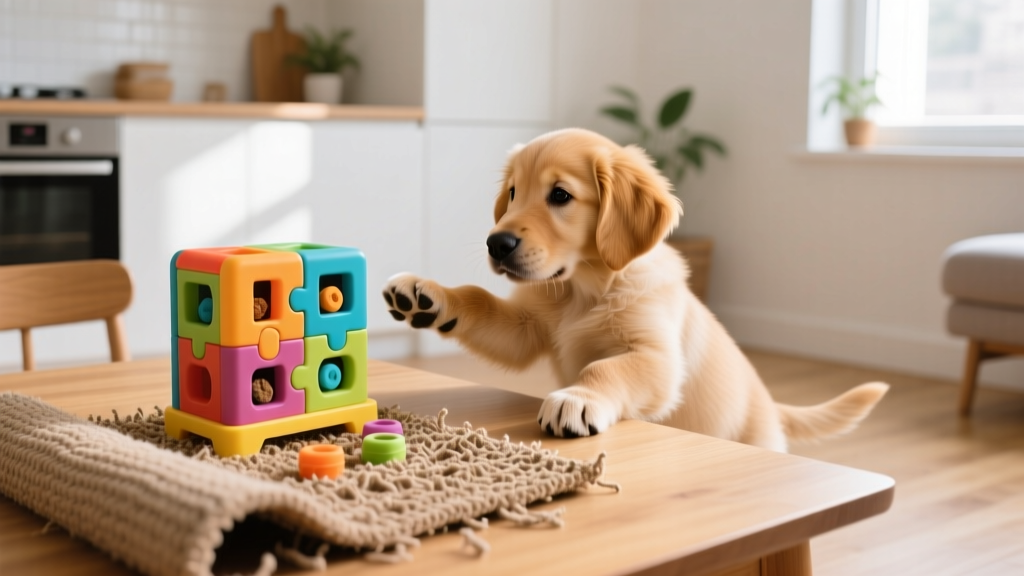
- Provide minimum 20–30 minutes of structured exercise + 15 minutes of mental enrichment (puzzle feeders, snuffle mats, training sessions) daily.
- Puppy-proof one room completely rather than trying to supervise the entire house.
- Rotate toys every 3 days to maintain novelty.
First-Year Cost Breakdown for Your Water Puppy
Budget realistically. Here's what water puppy owners typically spend in year one (2026 estimates, US averages):
| Category | Low Estimate | Typical Range | High Estimate | Notes |
|---|---|---|---|---|
| Puppy purchase/adoption | $300 (rescue) | $1,200–$2,500 (responsible breeder) | $3,500+ (show-line/import) | Adoption fees typically $200–$600 |
| Veterinary (vaccines, exams, spay/neuter) | $600 | $900–$1,400 | $2,000+ | Includes heartworm test, fecal exams, microchip |
| Food (large-breed puppy formula) | $400 | $600–$900 | $1,200+ | Premium brands $60–$90/bag (30 lb) |
| Supplies (crate, bed, leash, bowls, toys, life jacket) | $250 | $400–$700 | $1,000+ | Dog life jacket: $40–$90 (Ruffwear, Outward Hound) |
| Training (group classes + optional private sessions) | $150 | $300–$600 | $1,200+ | Group puppy class: $150–$250 for 6-week course |
| Preventive medications (heartworm, flea/tick) | $200 | $300–$500 | $600+ | Heartgard Plus ~$90/yr; NexGard ~$200/yr |
| Pet insurance (optional but recommended) | $400 | $600–$900 | $1,200+ | Varies by breed, deductible, and coverage level |
| Total First Year | $2,300 | $4,300–$7,500 | $10,700+ | Excludes emergency vet visits |
Emergency fund recommendation: Keep $1,000–$2,000 accessible for unexpected illness or injury. Common water puppy emergencies include foreign body ingestion (surgery: $2,000–$5,000), parvovirus treatment ($1,500–$5,000), and fracture repair ($2,000–$6,000). Pet insurance purchased before any conditions develop can offset these costs substantially.
Frequently Asked Questions About Water Puppies
How often should I feed my water puppy at 10 weeks old?
At 10 weeks, feed 4 meals per day, spaced approximately 4 hours apart during waking hours (e.g., 7 AM, 11 AM, 3 PM, 7 PM). For a medium water breed like a Lab, this means roughly ½ cup per meal of large-breed puppy formula. Always measure precisely—water breeds gain weight rapidly, and excess growth stresses developing joints.
When will my water puppy be fully potty trained?
Most water breed puppies achieve reliable house training between 5 and 7 months with a consistent schedule. "Reliable" means fewer than one accident per month. Some individuals, especially smaller or more easily distracted puppies, may take until 8–9 months. Males sometimes take slightly longer than females. Consistency in schedule and positive reinforcement for outdoor elimination are the strongest predictors of success.
When can my water puppy go outside and meet other dogs?
Your puppy can explore your private yard immediately. For public spaces and interactions with other dogs, follow this framework: after the second DHPP vaccine (10–12 weeks), you can attend structured puppy classes that require vaccination proof and visit homes of dogs with known vaccination status. After the final DHPP booster (16–18 weeks) plus a 2-week waiting period, your puppy is considered fully protected and can visit dog parks, beaches with other dogs, and pet-friendly stores. Avoid areas where unvaccinated dogs may have been until that immunity window closes.
How do I stop my water puppy from biting and nipping?
Redirect to appropriate chew items consistently, freeze and disengage when teeth touch skin, and ensure your puppy is getting adequate sleep (18–20 hours/day for puppies under 12 weeks). Most nipping in young puppies is fatigue-driven or teething-related, not aggression. If biting breaks skin consistently past 16 weeks despite redirection, consult a certified professional dog trainer (CPDT-KA or IAABC credentialed) for an in-person assessment. Never use physical punishment—this damages trust and can escalate to defensive aggression.
What vaccines does my water puppy need and when?
Core vaccines follow the DHPP series at 6–8, 10–12, and 14–16 weeks, with rabies at 14–16 weeks. For water breeds specifically, the Leptospirosis vaccine (2-dose series starting at 10–12 weeks) and Lyme disease vaccine (2-dose series) are strongly recommended due to their exposure to natural water bodies and tick habitats. Discuss canine influenza vaccination with your vet if your puppy will attend daycare, boarding, or group training facilities.
When should I introduce my water puppy to swimming?
Introduce shallow water (puppy can stand with head well above surface) as early as 8–10 weeks in warm, controlled conditions. Never throw a puppy into water or force them deeper than they choose to go. Use a properly fitted canine life jacket (with a handle for easy retrieval) for any water deeper than the puppy's chest. Formal swimming sessions can begin around 4–5 months once vaccination is complete and joints are more developed. Limit initial swims to 5–10 minutes—puppies tire quickly and can panic when fatigued in water.
Jonas Cole
All our authors care for dogs every day — read more of their work on the authors page.