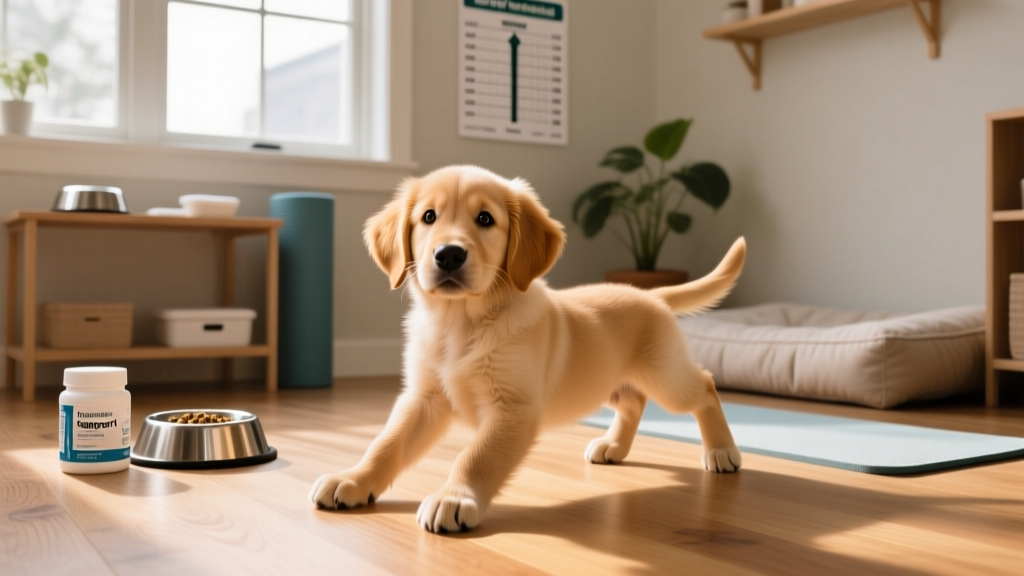
Walker Hound Puppies: The Complete First-Year Care & Training Guide
Everything you need to raise Walker Hound puppies: age milestones, feeding schedules, potty training, vaccination timelines, and first-year costs.

The Treeing Walker Coonhound is a scenthound built for endurance, speed, and an unshakable prey drive. If you're bringing home Walker Hound puppies, you're signing up for one of the most energetic, vocal, and nose-driven breeds in the hound family. Originally developed in the American South for tracking raccoons and other game, these dogs carry instincts that shape everything from how they learn to how they behave in your backyard.
This guide covers the first 12 months of your Walker Hound puppy's life with breed-specific detail — exact feeding portions, realistic potty training timelines, the critical socialization window, and the costs you should budget for. Whether you adopted from a rescue or purchased from a responsible breeder registered with the AKC, this is your roadmap.
When Should You Bring Your Walker Hound Puppy Home?
The ideal age to bring a Walker Hound puppy home is 8 to 10 weeks. Responsible breeders keep Treeing Walker Coonhound puppies with their littermates until at least 8 weeks because this is when crucial bite inhibition and canine social skills develop. Hound breeds in particular benefit from staying through week 9 or 10 — the extra time with siblings helps temper the mouthy, nippy behavior that scenthounds are prone to during play.
Bringing a puppy home before 7 weeks increases the risk of separation anxiety, poor bite inhibition, and difficulty with dog-to-dog communication later in life. If you've adopted a Walker Hound puppy from a rescue and they're coming home earlier due to circumstances, plan for extra socialization work and consult your veterinarian about an adjusted vaccination protocol.
Walker Hound Puppy Milestones: Weeks 4 Through 12 Months
Walker Hound puppies develop on a predictable timeline, but their scenthound instincts emerge earlier than many owners expect. Here's what to expect at each stage.
Weeks 4–8: Litter Life and Early Senses
At this stage, your puppy is still with the breeder or foster. Their eyes and ears are fully functional, deciduous (baby) teeth are erupting, and they're learning bite inhibition through play with siblings. The puppy's nose is already active — Walker Hound puppies as young as 5 weeks will show ground-sniffing and scent-tracking behavior. The breeder should be introducing varied surfaces (grass, gravel, tile), mild sounds, and gentle human handling.
Weeks 8–12: The Homecoming Window
This is when most Walker Hound puppies join their new families. Expect 18–20 hours of sleep per day, frequent potty breaks (every 1–2 hours), and intense curiosity. The puppy's bladder can hold for roughly 1 hour per month of age — so a 9-week-old puppy needs a break approximately every 2 hours, including overnight. Scent drive will already be visible: your puppy will follow their nose along fence lines, sniff door thresholds obsessively, and may ignore recall commands when a smell captures their attention.
Weeks 12–16: Confidence Building and Fear Periods
Around 12–14 weeks, many Walker Hound puppies enter a fear imprint period. A previously confident puppy may suddenly startle at garbage cans, refuse to walk on certain surfaces, or bark at unfamiliar people. This is normal. Do not force exposure — let the puppy observe from a distance and reward calm behavior with treats. Coordination improves significantly during this window, and you can begin short (5–10 minute) structured leash walks.
Weeks 16–24: Independence and Prey Drive Emergence
This is where the "hound" in Walker Hound becomes undeniable. Prey drive intensifies — squirrels, rabbits, and even blowing leaves may trigger a chase instinct. Recall training in unfenced areas becomes unreliable regardless of how much practice you've done. Teething peaks between 4–6 months. Your puppy's adult teeth are pushing in, and they will chew aggressively. Expect some vocalization increase; Treeing Walker Coonhounds are known for their distinctive "bay" and may begin practicing this bark at stimuli in the yard.
Months 6–12: Adolescent Challenges
Walker Hound adolescence (6–12 months) tests most owners' patience. Energy levels spike, the puppy may "forget" previously learned commands, and scent distraction reaches its peak. Males may begin marking indoors. Females typically experience their first heat cycle between 6–9 months (spay timing should be discussed with your veterinarian — many vets now recommend waiting until after the first heat for large-breed dogs to allow proper growth plate closure). Daily exercise needs increase to 45–60 minutes of structured activity.
Walker Hound Puppy Feeding Schedule by Age
Walker Hounds are a medium-to-large breed — adult males typically reach 55–70 lb (25–32 kg) and females 45–60 lb (20–27 kg). Proper nutrition during growth is critical to prevent orthopedic issues like hip dysplasia, which the breed is predisposed to.
Feed a large-breed puppy formula that meets AAFCO standards for growth. Large-breed puppy foods contain controlled calcium and phosphorus ratios (calcium should be 1.0–1.8% on a dry matter basis) to support steady bone development without rapid growth spurts.
| Age | Meals Per Day | Approximate Portion Per Meal | Total Daily Amount | Notes |
|---|---|---|---|---|
| 8–12 weeks | 4 | ¾ – 1 cup | 3 – 4 cups | Soak kibble in warm water for easier chewing |
| 12–16 weeks | 3 | 1 – 1¼ cups | 3 – 3¾ cups | Transition to dry kibble if not already |
| 4–6 months | 3 | 1¼ – 1½ cups | 3¾ – 4½ cups | Monitor body condition score; adjust if ribs not palpable |
| 6–9 months | 2 | 1½ – 2 cups | 3 – 4 cups | Reduce to 2 meals; switch to adult formula at 10–12 months |
| 9–12 months | 2 | 1¾ – 2¼ cups | 3½ – 4½ cups | Transition to adult large-breed food gradually over 7–10 days |
These are starting estimates. Your individual puppy's needs depend on their metabolism, activity level, and the caloric density of the specific food brand. Check the feeding chart on your food's packaging and use a body condition score (BCS) assessment — you should be able to feel (but not prominently see) your puppy's ribs, and they should have a visible waist when viewed from above. Consult your veterinarian if you're unsure about portion sizes.
Walker Hound Puppy Vaccination Schedule
Vaccinations protect your Walker Hound puppy from life-threatening diseases. Because puppies lose maternal antibodies at different rates, the schedule involves a series of boosters to ensure coverage. Your veterinarian may adjust timing based on local disease prevalence and your puppy's health status.
| Age | Vaccine | Type | Notes |
|---|---|---|---|
| 6–8 weeks | DHPP (1st dose) | Core | Distemper, Hepatitis (Adenovirus), Parainfluenza, Parvovirus |
| 10–12 weeks | DHPP (2nd dose) | Core | Booster; maternal antibodies may still interfere at this stage |
| 10–12 weeks | Bordetella | Non-Core | Recommended if attending puppy classes or visiting dog parks |
| 10–12 weeks | Leptospirosis (1st dose) | Non-Core | Especially relevant for hounds with outdoor/woodland exposure |
| 14–16 weeks | DHPP (3rd dose) | Core | Final puppy booster — critical dose after maternal antibodies wane |
| 14–16 weeks | Leptospirosis (2nd dose) | Non-Core | Booster for full immunity |
| 14–16 weeks | Rabies | Core (Legal) | Required by law in most US states; timing varies by jurisdiction |
| 12–16 weeks | Lyme Disease | Non-Core | Consider if you live in or travel to tick-endemic areas |
Important: Until your Walker Hound puppy has received their final DHPP booster at 14–16 weeks (plus 5–7 days for immunity to develop), avoid high-risk areas like dog parks, pet store floors, and any location where unvaccinated dogs may have been. You can safely socialize in controlled environments — carried outings, puppy classes that require vaccination proof, and playdates with fully vaccinated adult dogs.
Always consult your veterinarian to establish a vaccination protocol tailored to your puppy's specific risk factors and local disease environment. The AVMA vaccination guidelines provide a useful reference framework.
The Socialization Window: Weeks 3–14
The primary socialization period for all puppies closes between 12 and 14 weeks of age. For Walker Hound puppies, this window is especially important because the breed's strong prey drive and scent fixation can become problematic if they're not exposed to diverse stimuli early. A poorly socialized Walker Hound is more likely to develop leash reactivity, fear-based baying, and difficulty settling in new environments.
Below is a breed-specific socialization checklist. Aim to expose your puppy to as many of these as possible before 14 weeks — always pairing new experiences with high-value treats (small pieces of boiled chicken, cheese, or commercial training treats like Zuke's Mini Naturals).
Walker Hound Puppy Socialization Checklist (Weeks 8–14)
- Surfaces: Grass, gravel, mulch, wet pavement, metal grates, wooden decks, tile floors, sand
- People: Children (supervised), people wearing hats, people with beards, people in uniforms, elderly individuals, people using mobility aids
- Animals: Cats (controlled introduction), other vaccinated dogs of various sizes, livestock if accessible (at a distance)
- Sounds: Thunderstorms (play recordings at low volume, gradually increase), vacuum cleaner, doorbell, car engines, gunshots (play at very low volume — hunting breeds may encounter these), fireworks recordings
- Objects: Umbrellas opening, trash cans, bicycles, skateboards, plastic bags blowing in wind, lawn equipment
- Handling: Paw touching, ear handling, mouth opening, nail trimming practice, being lifted, wearing a harness
- Environments: Car rides, pet-friendly store parking lots (carried), outdoor café areas, friends' homes, veterinary clinic (happy visits with treats only)
- Scent Exposure: Allow supervised sniffing of diverse environments — wooded trails (carried or on leash), farm perimeters, urban sidewalks. This satisfies the breed's nose-driven nature and builds confidence.
Keep sessions short — 5 to 10 minutes maximum — and always end on a positive note. If your puppy shows fear (tucked tail, flattened ears, refusal to take treats), increase distance from the stimulus and try again at a lower intensity. Never force a frightened puppy to interact with something they find scary.
Potty Training Your Walker Hound Puppy: A Realistic Timeline
Let's set expectations clearly: most Walker Hound puppies are reliably house-trained between 4 and 6 months of age, with occasional accidents continuing until 8–9 months. Hound breeds can be slightly slower to potty train than biddable breeds like Border Collies or Golden Retrievers because their scent drive pulls their attention away from the task at hand.
The Schedule That Works
Take your puppy outside:
- Immediately upon waking (morning and after every nap)
- Within 10–15 minutes after every meal
- After vigorous play sessions
- Before and after crate time
- Every 1–2 hours during the day (8–12 weeks), extending to every 3–4 hours by 16 weeks
- Once during the night (set an alarm for 2–3 AM until the puppy can hold it through, usually around 12–14 weeks)
Walker Hound–Specific Potty Training Challenges
Problem: Your puppy gets outside and spends 10 minutes sniffing instead of eliminating.
Solution: Choose a designated potty spot and always go to the same location. The accumulated scent will trigger the behavior. Use a consistent cue word like "go potty" and reward immediately after elimination — within 2 seconds — with a high-value treat.
Problem: Your puppy sneaks off to a back room and has an accident.
Solution: This is a supervision problem, not a defiance problem. Use baby gates to limit access to one or two rooms during the first 3 months. If you can't actively watch the puppy, they should be in their crate or a puppy-proofed pen.
Problem: Your puppy eliminates outside but then has an accident 15 minutes later indoors.
Solution: Hound puppies often don't fully empty their bladder on the first trip. If this happens consistently, bring them back outside 10 minutes after the first trip until the pattern resolves.
Crate Training Progression and Time Limits
A crate is essential for a Walker Hound puppy. This breed's curiosity and powerful nose mean they will investigate — and potentially ingest — dangerous items when unsupervised. Crate training also accelerates potty training because dogs naturally avoid soiling their sleeping area.
Choose a crate sized for your puppy's adult dimensions (a 36-inch or 42-inch wire crate is typical for Walker Hounds) and use a divider panel to adjust the space as they grow. The puppy should be able to stand, turn around, and lie down comfortably — but not have enough room to eliminate in one corner and sleep in another.
| Puppy Age | Maximum Daytime Crate Time | Maximum Overnight Crate Time | Notes |
|---|---|---|---|
| 8–10 weeks | 1–2 hours | 2–3 hours (expect overnight wake-up) | Keep crate in bedroom; cover partially for security |
| 10–12 weeks | 2 hours | 3–4 hours | Begin moving crate to permanent location if desired |
| 12–16 weeks | 2–3 hours | 5–6 hours | Most puppies can sleep through the night by 14 weeks |
| 4–6 months | 3–4 hours | 7–8 hours | Provide a frozen Kong or chew before crating |
| 6–12 months | 4–5 hours | 8 hours | Do not exceed 5 hours during the day without a midday break |
Make the crate a positive space from day one. Feed meals inside it with the door open, toss treats in for the puppy to retrieve, and provide a safe chew toy (such as a Kong Classic stuffed with peanut butter and frozen). Never use the crate as punishment. If your Walker Hound puppy whines in the crate, wait for a brief moment of silence before letting them out — releasing them mid-whine teaches that vocalizing opens the door.
Teething Timeline and Relief Strategies (3–6 Months)
Walker Hound puppies begin losing their 28 deciduous teeth around 12–16 weeks, with all 42 adult teeth typically in place by 6–7 months. During this period, your puppy's gums are sore, and chewing provides relief. Without appropriate outlets, they will target baseboards, shoes, furniture legs, and electrical cords.
Safe Chew Recommendations by Stage
- 12–16 weeks (early teething): Rubber teething rings (Chilly Puppy brand), frozen washcloths soaked in low-sodium chicken broth, soft rubber toys like the Kong Puppy
- 16–24 weeks (peak chewing): Kong Classic (red, medium size) stuffed with wet food and frozen, Nylabone Puppy Chew (softer formula), bully sticks (supervised only — remove when small enough to swallow)
- 5–7 months (final teeth settling): Transition to Kong Classic (black, more durable), Yak cheese chews, carrot sticks (whole, raw carrots are safe and low-calorie)
Common Walker Hound Puppy Problems and Solutions
Every breed has its quirks. Walker Hound puppies present a specific set of challenges rooted in their scenthound genetics. Here's how to handle the most common ones using positive reinforcement methods only.
Puppy Biting and Nipping
Walker Hound puppies are mouthy — they explore the world with their mouths and use nipping during play. This peaks between 8–16 weeks.
Solution: When teeth touch skin, immediately stop all interaction — stand up, cross your arms, and look away for 10–15 seconds (a "time-out" from attention). Redirect to an appropriate chew toy. If nipping continues, end the play session entirely. Consistency from every household member is critical. Never use physical punishment, alpha rolls, or holding the mouth shut — these methods increase fear and can lead to defensive biting.
Excessive Whining and Vocalization
Treeing Walker Coonhounds are a vocal breed. Puppies may whine when crated, when they want attention, or when they hear/scent something stimulating outside. The breed's characteristic "bay" — a howling, yodeling bark — typically begins emerging between 3–6 months.
Solution: For crate whining, ensure the puppy has been exercised, has eliminated, and isn't hungry before crating. Ignore demand whining (no eye contact, no verbal response). Reward quiet behavior with attention and treats. For baying at outdoor stimuli, manage the environment — close blinds, use white noise, and provide mental enrichment (snuffle mats, frozen Kongs) to redirect the scent-drive energy.
Destructive Chewing
Beyond teething, Walker Hound puppies chew out of boredom and under-stimulation. A puppy that isn't getting enough mental and physical exercise will find its own entertainment — usually at the expense of your belongings.
Solution: Provide a minimum of 20–30 minutes of structured exercise and 15–20 minutes of mental enrichment daily (scent games, puzzle feeders, short training sessions). Rotate toys every 3–4 days to maintain novelty. Puppy-proof your home by removing tempting items from low shelves and using bitter apple spray on furniture legs if needed.
Ignoring Recall (Coming When Called)
This is the hallmark challenge of owning a scenthound. Once a Walker Hound puppy's nose locks onto a scent, their ears effectively close. This is not disobedience — it's genetics.
Solution: Practice recall indoors and in fenced areas exclusively during puppyhood. Use extremely high-value rewards (real chicken, hot dogs, cheese) that compete with environmental distractions. Never call your puppy to punish them or do something unpleasant (like a bath or nail trim) — recall must always predict good outcomes. Accept that off-leash reliability in open areas may never be fully achievable for this breed, and plan for a secure fence (minimum 5–6 feet, as Walker Hounds can climb) or long-line walks in open spaces.
First-Year Cost Breakdown for a Walker Hound Puppy
Budgeting accurately helps prevent surprises. Below is a realistic cost breakdown for the first year of Walker Hound puppy ownership, based on 2025–2026 US averages.
| Category | Items | Estimated Cost Range |
|---|---|---|
| Puppy Purchase/Adoption | Breeder ($600–$1,200) or Rescue ($200–$500) | $200 – $1,200 |
| Veterinary (Wellness) | Initial exam, vaccine series (3–4 visits), deworming, fecal tests, heartworm prevention (12 months) | $400 – $700 |
| Spay/Neuter | Typically performed at 6–12 months for large breeds | $300 – $700 |
| Food | Large-breed puppy formula, ~25–30 lb bag every 4–6 weeks | $350 – $600 |
| Supplies | Crate ($60–$120), bed, leash, harness, collar, ID tag, bowls, baby gates, toys, chews, grooming tools | $200 – $400 |
| Training | Puppy socialization class ($150–$250), basic obedience ($150–$300) | $150 – $550 |
| Preventive Medications | Flea/tick prevention (12 months), heartworm monthly | $150 – $350 |
| Microchip | Implantation and registration | $25 – $60 |
| Pet Insurance (Optional) | Monthly premiums for large-breed puppy | $400 – $700/year |
| Emergency Fund | Unexpected vet visits (ear infections, GI upset, foreign body ingestion are common in puppies) | $200 – $800 |
Total estimated first-year cost: $2,375 – $6,060 (excluding pet insurance and emergency fund). The wide range reflects choices around breeder vs. rescue, geographic veterinary cost differences, and training options.
When Can Your Walker Hound Puppy Go Outside and Meet Other Dogs?
This is one of the most common questions new hound puppy owners ask, and the answer requires balancing disease risk with socialization needs.
Controlled outdoor exposure (safe): From the day you bring your puppy home, you can carry them outside, let them explore your own fenced yard (if no unvaccinated dogs have access), and visit friends' homes with fully vaccinated dogs. Carried outings to shopping centers, parks, and outdoor cafés are excellent socialization that carry minimal disease risk.
High-risk environments (wait until fully vaccinated): Dog parks, pet store floors, rest stop dog areas, and any location with unknown dog traffic should be avoided until 5–7 days after the final DHPP booster at 14–16 weeks. Parvovirus can survive in soil for months and is especially dangerous for puppies.
Puppy classes: The AVMA and the American Veterinary Society of Animal Behavior (AVSAB) recommend that puppies begin socialization classes as early as 7–8 weeks, provided they've had at least one set of vaccines and the class requires all attendees to be vaccinated. The behavioral risk of inadequate socialization outweighs the disease risk in controlled settings.
Frequently Asked Questions
How often should I feed my Walker Hound puppy?
Feed 4 meals per day from 8–12 weeks, 3 meals per day from 12 weeks to 6 months, and 2 meals per day from 6 months onward. Use the feeding table above for portion guidance and adjust based on your puppy's body condition score.
When will my Walker Hound puppy be fully potty trained?
Expect reliable house training between 4–6 months with a consistent schedule. Some Walker Hound puppies take until 8–9 months, especially males. Occasional accidents during excitement or schedule changes are normal through the first year.
How do I stop my Walker Hound puppy from biting?
Use the "stop attention" method: when teeth touch skin, immediately withdraw all interaction for 10–15 seconds, then redirect to a chew toy. Be consistent across all family members. Never use physical punishment. Biting typically decreases significantly by 16–20 weeks as bite inhibition develops.
What size crate do I need for a Walker Hound puppy?
Purchase a 36-inch or 42-inch wire crate (sized for the adult dog) and use a divider panel to reduce the space as your puppy grows. The MidWest iCrate or Frisco crate lines are popular, affordable options in the $50–$90 range.
Are Walker Hound puppies good with children?
Yes, when properly socialized. Treeing Walker Coonhounds are generally gentle and playful with children. However, their high energy and tendency to jump can knock over small toddlers. Always supervise interactions and teach children to respect the puppy's crate and mealtime.
How much exercise does a Walker Hound puppy need?
Follow the "5 minutes per month of age" guideline for structured walks: a 3-month-old puppy gets roughly 15 minutes of leash walking per session, twice daily. Supplement with free play in a fenced yard and mental enrichment (scent games, puzzle toys). Avoid forced running or jumping until growth plates close around 12–18 months.
Marcus Aldridge
All our authors care for dogs every day — read more of their work on the authors page.