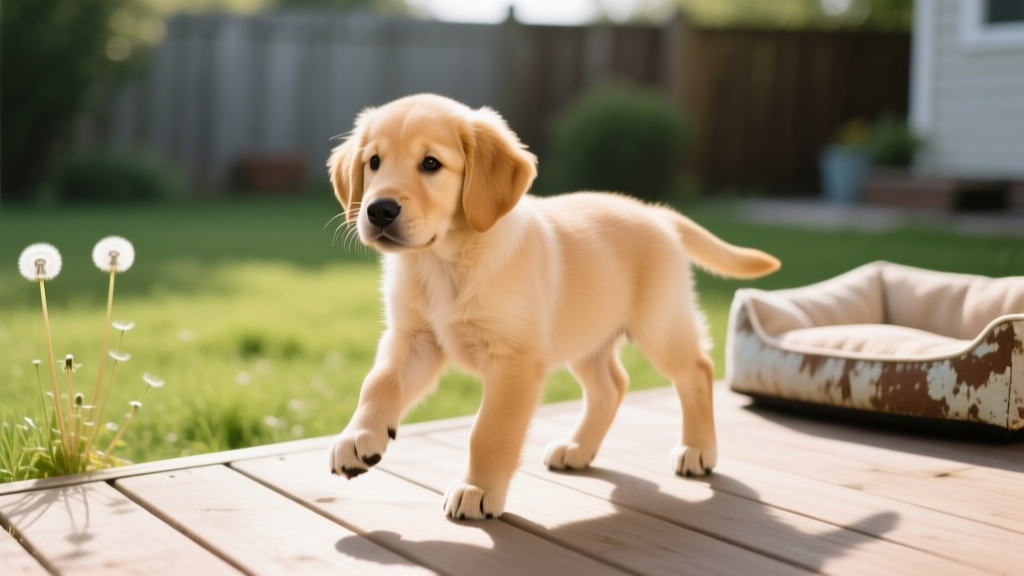
Unique Puppy Names & First-Year Care Guide
Discover unique puppy names and a complete first-year care guide covering milestones, feeding schedules, potty training, vaccines, and costs for your new pup.

Choosing Unique Puppy Names That Fit Your New Companion
Bringing a new puppy home is one of the most exciting moments in dog ownership — and one of the first decisions you'll make is what to call them. The best unique puppy names are short (one to two syllables), end in a vowel sound for easy recall, and avoid sounding like common commands. A name like "Kit" can confuse a dog learning "sit," while something like "Nox" or "Zuri" gives your pup a distinct auditory signature.
Before we get into the full first-year care roadmap, here's a curated list of unique puppy names organized by vibe, drawn from naming trends and linguistic principles that support training clarity:
Unique Puppy Names — Quick Picks
| Category | Names | Why They Work |
|---|---|---|
| Nature-Inspired | Briar, Cove, Flint, Wren, Sage, Ember, Lark | Two syllables, distinct vowel endings |
| Mythology & History | Juno, Odin, Cleo, Atlas, Freya, Rune, Sable | Strong consonant starts, easy to call |
| Food & Drink | Mochi, Chai, Biscuit, Basil, Fig, Noodle | Playful, memorable, unlikely to clash with commands |
| Short & Punchy | Zig, Nox, Lux, Pip, Boz, Kip, Dot | One syllable — ideal for recall training |
| Global & Cultural | Zuri (Swahili: beautiful), Kai (Hawaiian: sea), Mila (Slavic: gracious), Ravi (Hindi: sun) | Meaningful origins, phonetically distinct |
Once you've settled on a name, use it consistently paired with positive experiences — treats, praise, play — during the critical socialization window (weeks 3–14). According to the AKC's training guidance, most puppies learn to reliably respond to their name within 5–7 days of consistent, reward-based practice.
Puppy Milestones: Week-by-Week Development Timeline
Understanding what to expect at each stage helps you set realistic expectations and intervene early if something seems off. Here's a concrete milestone breakdown:
Age Milestone Timeline
Weeks 4–8 (Litter Stage / Breeder or Foster Home)
- Weaning begins: puppies transition from mother's milk to softened puppy kibble (gruel consistency)
- Deciduous (baby) teeth erupt — 28 teeth total by week 6
- First socialization with littermates: bite inhibition learning begins naturally
- Eyes and ears fully functional; startle reflexes normalize
- Weight check: most breeds double birth weight by week 5
Weeks 8–12 (Home Transition)
- Primary socialization window opens — peak sensitivity to new experiences
- First DHPP vaccine typically given at 6–8 weeks (booster at 10–12 weeks)
- Attention span: 5–10 minutes maximum for training sessions
- Sleep: 18–20 hours per day — enforce crate naps to prevent overtiredness
- Bladder capacity: roughly 1 hour per month of age (an 8-week pup = ~2 hours max)
Weeks 12–16 (Foundation Training)
- Second and third DHPP boosters administered
- Can begin structured positive-reinforcement training (sit, down, recall, leash walking)
- Fear imprint periods may occur around week 12 — avoid traumatic experiences
- Bite inhibition training critical: redirect nipping to appropriate chew toys
- Start handling exercises: paw touching, ear inspection, mouth opening for future grooming/vet comfort
Weeks 16–24 (Adolescence Begins)
- Rabies vaccine administered (typically 12–16 weeks, depending on local law)
- Adult teeth begin replacing baby teeth around 3.5–4 months
- Testing boundaries: regression in previously learned commands is normal
- Increased independence — recall reliability often drops temporarily
- Spay/neuter discussion with your veterinarian typically occurs in this window
Months 6–12 (Late Adolescence)
- Sexual maturity: intact males may begin marking; females enter first estrus (heat) cycle between 6–12 months depending on breed size
- Adult coat replaces puppy coat — grooming requirements may change
- Growth plates close: small breeds by ~8–10 months, large/giant breeds not until 18–24 months
- Transition to adult food: small breeds at ~10–12 months, large breeds at ~12–18 months
- Energy levels remain high — structured exercise and mental enrichment are essential
Feeding Schedule: Exact Portions by Age and Weight
Overfeeding puppies — especially large breeds — can cause developmental orthopedic diseases like hip dysplasia and hypertrophic osteodystrophy (HOD). The goal is steady, lean growth. According to the Merck Veterinary Manual, puppies require approximately twice the caloric intake per pound of body weight compared to adult dogs during their first 4 months.
The following table provides general feeding guidelines based on expected adult weight. Always check your specific food's feeding chart and adjust based on body condition score (BCS) — you should be able to feel ribs without pressing hard, and see a visible waist when viewed from above.
| Age | Meals/Day | Small Breed (under 20 lb adult) | Medium Breed (20–60 lb adult) | Large Breed (60+ lb adult) |
|---|---|---|---|---|
| 8–12 weeks | 4 | ¼–½ cup per meal | ½–¾ cup per meal | ¾–1¼ cups per meal |
| 3–6 months | 3 | ⅓–⅔ cup per meal | ¾–1 cup per meal | 1–2 cups per meal |
| 6–12 months | 2 | ½–¾ cup per meal | 1–1½ cups per meal | 1½–3 cups per meal |
Key feeding rules:
- Use food labeled "complete and balanced for growth" per AAFCO standards
- Large-breed puppies MUST eat large-breed-specific puppy formula (calcium:phosphorus ratio of 1.1:1 to 1.4:1) to reduce skeletal disease risk
- Remove uneaten food after 15–20 minutes — do not free-feed
- Treats should not exceed 10% of daily caloric intake
- Fresh water must be available at all times; expect puppies to drink ½–1 ounce per pound of body weight daily
Potty Training Timeline: Realistic Expectations and Troubleshooting
Let's address a core question directly: When will your puppy be fully potty trained? Most puppies achieve reliable house training between 4–6 months of age, though some small breeds (with proportionally smaller bladders) may take until 8–9 months. Any guide promising a fully trained puppy in 3 days is setting you up for frustration.
The bladder-holding rule of thumb: a puppy can hold it for approximately one hour per month of age, plus one. So a 3-month-old puppy has a maximum capacity of about 4 hours — but that's a ceiling, not a target. Take them out far more frequently than that.
Potty Training Log Template
Track your puppy's patterns for the first 2 weeks to identify natural rhythms. Use this structure:
| Time | Activity | Result | Reward Given | Notes |
|---|---|---|---|---|
| 6:30 AM | Wake-up carry outside | Pee + poop | Treat + verbal praise | Consistent first-of-day pattern |
| 7:15 AM | Post-breakfast (15 min after) | Pee | Treat + play | Always within 10–20 min of eating |
| 10:00 AM | Post-nap | Accident indoors | N/A — cleaned with enzymatic cleaner | Missed cue; set alarm next time |
Take your puppy outside:
- Immediately upon waking (carry them — don't let them walk)
- Within 15–20 minutes after every meal
- After every play session or nap
- Every 1–2 hours during the day for 8–12 week old puppies
- Once during the night (set an alarm for 2–3 AM for puppies under 12 weeks)
Troubleshooting common issues:
- Submissive/excitement urination: Common in puppies under 6 months. Avoid direct eye contact and crouch sideways when greeting. Do not punish — it worsens the behavior.
- Regression at 4–5 months: Often coincides with a fear period or teething discomfort. Return to higher-frequency outings temporarily.
- Accidents after being outside: Puppy may not have fully emptied. Extend outdoor time to 10–15 minutes and use a consistent cue word ("go potty").
- Always clean accidents with an enzymatic cleaner (Nature's Miracle or Rocco & Roxo) — standard household cleaners leave residual scent that attracts repeat soiling.
Socialization Window: The Critical Weeks 3–14 Checklist
The American Veterinary Medical Association (AVMA) emphasizes that the primary socialization period for puppies closes around 12–14 weeks of age. What your puppy experiences — or doesn't experience — during this window shapes their lifelong responses to the world.
This does NOT mean waiting until vaccinations are complete. The AVMA and the American Veterinary Society of Animal Behavior (AVSAB) both recommend starting socialization after the first DHPP vaccine (typically given at 6–8 weeks), while avoiding high-risk environments like dog parks until the full series is complete.
Socialization Exposure Checklist (Weeks 8–14)
Aim for positive, low-pressure exposure to each category. Your puppy should be relaxed or curious — not frozen, cowering, or trying to flee. If they show fear, increase distance and use high-value treats (boiled chicken, cheese) to build positive associations.
- Surfaces: Grass, gravel, sand, metal grates, wet pavement, hardwood floors, carpet transitions
- Sounds: Vacuum cleaner (start in another room), thunderstorm recordings at low volume, traffic, doorbell, clapping, children laughing
- People: Children (supervised), elderly individuals, people wearing hats/sunglasses/masks, delivery workers, people of varying heights and builds
- Animals: Fully vaccinated, known-temperament adult dogs (playdates, not dog parks); cats (if household has them); livestock if rural
- Objects: Umbrellas opening, bicycles passing, strollers, shopping carts, flags, plastic bags blowing
- Handling: Paw holding, ear inspection, mouth opening, nail clipping practice (touch grinder/clipper without cutting), gentle restraint
- Environments: Car rides (short trips to fun destinations), outdoor café patios, friend's houses, pet-friendly stores (carry or use stroller if not fully vaccinated)
- Veterinary visits: Schedule 2–3 "happy visits" where puppy goes to the clinic, gets treats from staff, and leaves without any procedures
Vaccination Schedule: What Your Puppy Needs and When
What vaccines does your puppy need and when? Core vaccines protect against diseases with high mortality rates in puppies. Your veterinarian will customize the schedule based on your region's disease prevalence and your puppy's risk factors, but the standard protocol follows this timeline:
| Age | Vaccine | Protection Against | Estimated Cost |
|---|---|---|---|
| 6–8 weeks | DHPP (1st dose) | Distemper, Hepatitis (Adenovirus), Parainfluenza, Parvovirus | $25–$45 |
| 10–12 weeks | DHPP (2nd dose) + Bordetella (optional) | Booster for core 4; Bordetella for kennel cough (required by most daycare/grooming facilities) | $35–$60 |
| 14–16 weeks | DHPP (3rd dose) + Rabies | Final core booster; Rabies (legally required in all US states) | $45–$75 |
| 12–16 months | DHPP + Rabies booster | 1-year boosters; subsequent rabies may be 3-year depending on vaccine type and local law | $50–$90 |
Lifestyle vaccines your vet may recommend:
- Leptospirosis: Recommended if your dog hikes, swims in natural water, or lives in an area with wildlife exposure. Typically 2-dose series starting at 12+ weeks.
- Lyme disease: For dogs in tick-endemic regions (Northeast, Upper Midwest, Pacific Coast). Given after 12 weeks.
- Canine influenza (H3N2/H3N8): For dogs in boarding, daycare, or dog-show environments.
Always consult your veterinarian to determine the right vaccine protocol for your puppy's specific lifestyle and geographic risk factors. Never administer vaccines at home — improper storage and injection technique can render vaccines ineffective or cause adverse reactions.
Teething, Crate Training, and Common Puppy Problems
Teething Timeline (3–6 Months)
Puppies have 28 deciduous teeth that begin erupting at 3–4 weeks. The transition to 42 permanent adult teeth begins around 3.5 months and is usually complete by 6–7 months. During this period, expect:
- Increased chewing on everything — shoes, furniture, hands
- Drooling and occasional blood spots on chew toys (normal)
- Temporary "puppy breath" odor
- Reluctance to eat hard kibble for a day or two when teeth are actively shedding
Safe teething relief strategies:
- Kong Classic (puppy rubber, pink/blue): Fill with softened kibble and frozen plain yogurt — provides 20–30 minutes of soothing enrichment
- Nylabone Puppy Chew (softer formula): Designed for developing teeth; avoid adult-formula Nylabones until permanent teeth are fully set
- Frozen washcloth: Wet a clean washcloth, twist into a rope, freeze for 2 hours — supervise use and discard if threads come loose
- Benebone Wishbone (puppy line): Ergonomic shape lets puppies grip with their paws
Never give: Cooked bones (splinter risk), rawhide from unverified sources (choking/contamination), ice cubes for very small breeds (tooth fracture risk), or any chew that fits entirely inside the puppy's mouth.
Crate Training Progression
A crate is your puppy's safe den — not a punishment space. Time limits are critical: exceeding a puppy's bladder capacity forces them to soil their sleeping area, which undermines both crate training and house training.
| Puppy Age | Max Crate Time (Day) | Max Crate Time (Night) | Notes |
|---|---|---|---|
| 8–10 weeks | 30–60 minutes | 2–3 hours (then potty break) | Set overnight alarm |
| 11–14 weeks | 1–2 hours | 3–4 hours | May still need one overnight break |
| 15–16 weeks | 2–3 hours | 4–5 hours | Most puppies sleep through the night now |
| 4–6 months | 3–4 hours | 6–8 hours | Transition to longer daytime freedom if reliable |
Crate training progression steps:
- Leave crate door open with treats and a stuffed Kong inside — let puppy enter and exit freely for 2–3 days
- Feed all meals inside the crate with door open, then closed for progressively longer durations after eating
- Begin closing door for 5-minute absences while you're in another room — return before puppy whines
- Gradually extend absences: 10 min → 20 min → 30 min → 1 hour over the course of 1–2 weeks
- Practice leaving the house briefly (grab keys, step out, return in 5 minutes) to desensitize departure cues
Common Puppy Problems and Solutions
Puppy biting/nipping: How do you stop it? Puppies explore the world with their mouths, and bite inhibition is learned primarily from littermates before week 8. To continue the training:
- When teeth touch skin, say "ouch" in a calm, flat tone and withdraw attention for 10–15 seconds (stand up, turn away)
- Immediately redirect to an appropriate chew toy — when puppy bites the toy, praise and engage in play
- Ensure puppy is getting adequate sleep — overtired puppies bite more (enforce crate naps every 1.5–2 hours)
- Never hold the mouth shut, alpha roll, or use physical punishment — these increase fear-based biting
Nighttime whining: Distinguish between "I need to potty" whining (high-pitched, urgent, after 2+ hours) and "I don't want to be alone" whining (intermittent, lower intensity). For the latter, place the crate near your bed initially, then gradually move it to the desired location over 1–2 weeks. A Snuggle Puppy (with heartbeat simulator) or a ticking clock wrapped in a towel can ease the transition.
Destructive chewing: Puppies under 6 months should not have unsupervised freedom in the home. Use exercise pens or baby gates to confine them to puppy-proofed areas when you can't directly supervise. Rotate chew toys every 2–3 days to maintain novelty.
First-Year Cost Breakdown: What to Budget
New puppy owners are often surprised by first-year expenses. Here's a realistic breakdown based on 2025–2026 US averages:
| Category | Low Estimate | Mid Estimate | High Estimate |
|---|---|---|---|
| Veterinary (vaccines, spay/neuter, wellness exams, fecal tests, heartworm prevention) | $500 | $900 | $1,500 |
| Food (quality puppy food, treats, supplements) | $300 | $550 | $900 |
| Supplies (crate, bed, leash/harness, bowls, gates, toys, enzymatic cleaner) | $200 | $400 | $700 |
| Training (group puppy class, optional private sessions) | $150 | $350 | $800 |
| Grooming (if applicable — breed-dependent) | $0 | $400 | $900 |
| Pet insurance (optional but strongly recommended) | $360/yr | $600/yr | $900/yr |
| TOTAL (excluding purchase/adoption fee) | $1,510 | $3,200 | $5,700 |
These figures do not include the initial cost of acquiring your puppy. Adoption fees from shelters and rescues typically range from $150–$500 (often including spay/neuter and first vaccines). Puppies from responsible breeders with health-tested parents typically range from $1,500–$4,000+ depending on breed. Both are equally valid paths to a wonderful companion.
Emergency fund recommendation: Set aside $1,000–$2,000 for unexpected veterinary emergencies. Puppies are prone to foreign body ingestion (toys, socks, sticks) that can require surgical intervention costing $2,000–$5,000+. Pet insurance purchased before any conditions develop offers the best protection — pre-existing conditions are universally excluded.
Frequently Asked Questions
When should I bring my puppy home?
The ideal age to bring a puppy home is 8–10 weeks. Puppies removed from their mother and littermates before 8 weeks miss critical bite inhibition and social signaling development. Some breeders of toy breeds prefer to keep puppies until 10–12 weeks due to their fragility and risk of hypoglycemia. Avoid breeders who offer puppies at 6 weeks or younger — this is a red flag for irresponsible practices.
How often should I feed my puppy at different ages?
Feed 8–12 week old puppies 4 meals per day, 3–6 month old puppies 3 meals per day, and 6–12 month old puppies 2 meals per day. Space meals evenly throughout the day (e.g., 7 AM, 12 PM, 5 PM, 9 PM for four meals). Consistent meal timing also helps predict potty schedules, since most puppies need to eliminate within 15–30 minutes of eating.
When can my puppy go outside and meet other dogs?
Your puppy can go on controlled outings (carried or in a stroller in low-risk areas) immediately after coming home. After the first DHPP vaccine (6–8 weeks), they can walk on your own yard and visit fully vaccinated, known-temperament dogs in private settings. Avoid dog parks, pet store floors, and high-traffic public areas until one week after the final DHPP booster (typically around 16–17 weeks of age). The risk of parvovirus exposure in uncontrolled environments is too high before full immunity develops.
How do I stop puppy biting and nipping?
Use the redirect-and-withdraw method: when teeth touch skin, calmly say "ouch," stand up, and turn away for 10–15 seconds. Then offer an appropriate chew toy. Consistency from every household member is essential — mixed signals (sometimes allowing mouthing, sometimes scolding) confuse puppies and prolong the behavior. Most puppies significantly reduce mouthing by 5–6 months as adult teeth come in, provided they've had consistent feedback. If biting is intense and persistent beyond 6 months, consult a certified professional dog trainer (CPDT-KA) or veterinary behaviorist.
When will my puppy sleep through the night?
Most puppies can sleep 6–8 hours through the night by 14–16 weeks of age, once bladder capacity and circadian rhythms mature. To accelerate this: exercise your puppy adequately during the day, remove water 1.5 hours before bedtime, take them out for a final potty right before you sleep, and keep nighttime potty breaks boring (dim lights, no play, straight back to crate).
Veterinary Disclaimer: This guide provides general puppy care information and should not replace professional veterinary advice. Always consult your veterinarian for personalized health, nutrition, and vaccination guidance tailored to your puppy's breed, size, and individual needs.
Marcus Aldridge
All our authors care for dogs every day — read more of their work on the authors page.