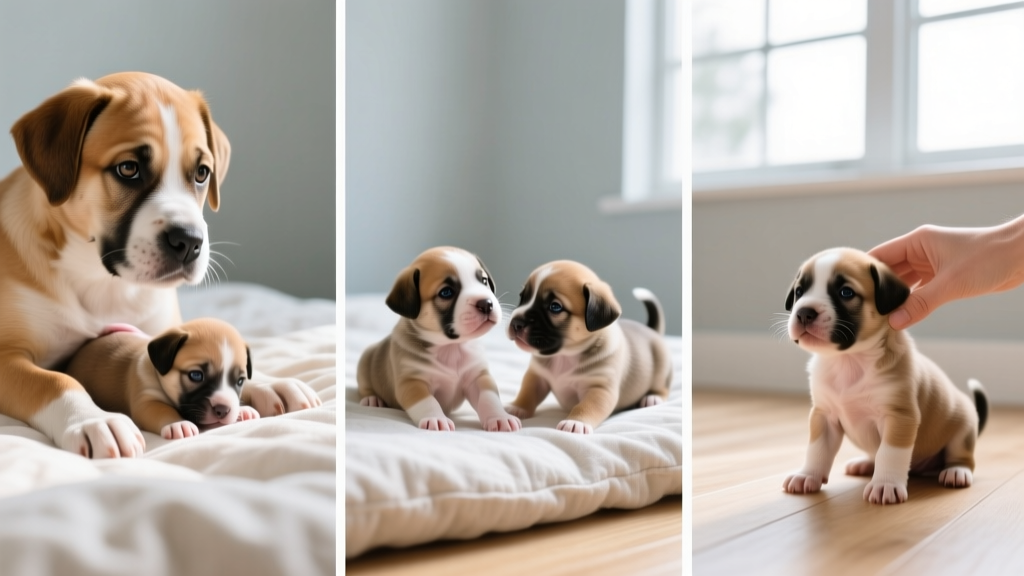
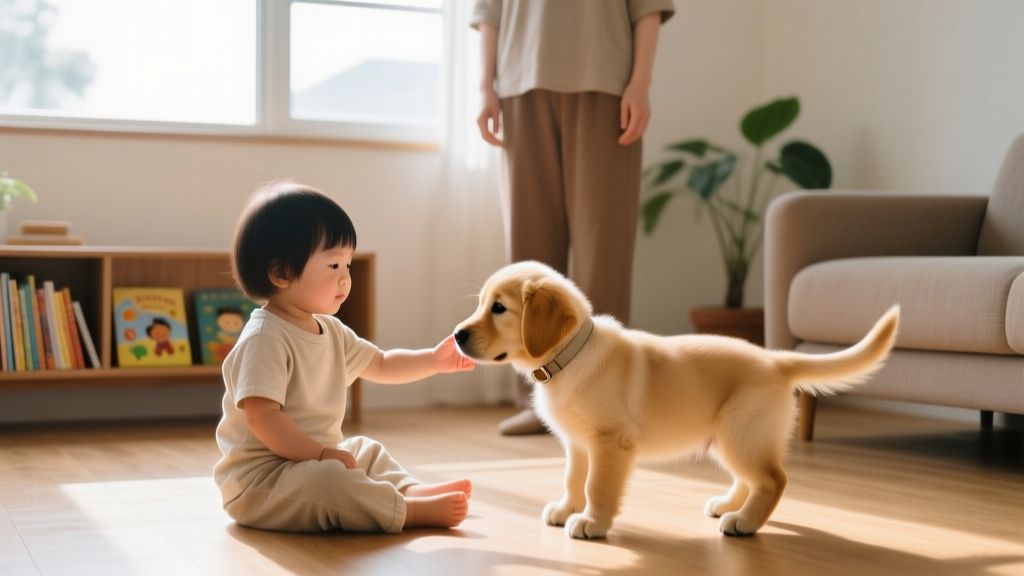
Unique Girl Puppy Names & Your Complete First-Year Puppy Care Guide
Browse unique girl puppy names plus a complete first-year care guide covering feeding, potty training, vaccines, socialization, and milestone timelines.

Finding the Perfect Name: Unique Girl Puppy Names That Match Her Personality
Naming your new puppy is one of the first real decisions you'll make together — and it sets the tone for years of calling her in from the yard, whispering it at the vet's office, and engraving it on a collar tag. While popular names like Bella, Luna, and Daisy dominate the AKC's annual lists, many owners want something with more character. Below is a curated collection of unique girl puppy names organized by vibe, so you can match the name to the dog you're actually bringing home.
Nature & Earth-Inspired
- Wren — small, alert, full of song
- Clover — lucky, sweet, grounded
- Briar — wild, resilient, beautiful
- Juniper (call her "June") — evergreen energy
- Zinnia — bold, colorful, unexpected
- Fern — quiet, shade-loving, elegant
- Sable — dark-coated sophistication
- Marlowe — literary, adventurous
Mythology & History
- Freya — Norse goddess of love and war
- Cleo (Cleopatra) — regal, commanding
- Persephone ("Percy") — underworld queen with a spring side
- Artemis — huntress, protector of wild things
- Saga — Norse goddess of storytelling
- Boudicca ("Bo") — Celtic warrior queen
- Hestia — goddess of hearth and home
- Clio — muse of history
Food & Spice-Inspired
- Saffron — rare, warm, golden
- Miso — umami sweetheart
- Cardamom ("Cardi") — exotic spice
- Pistachio ("Pista") — nutty, fun
- Churro — sweet, warm, irresistible
- Kimchi — bold, spicy personality
- Tahini — smooth, rich, Middle Eastern flair
- Biscotti ("Biscuit") — crunchy, Italian charm
Quirky & Unexpected
- Pixel — tiny, digital-age cute
- Velvet — soft, luxurious
- Typo — for the delightfully imperfect pup
- Rune — mysterious, ancient
- Comet — fast, celestial
- Fable — storybook magic
- Sonar — alert, responsive
- Echo — she'll always come back
Naming tip from the field: Dogs respond best to names with one or two syllables and hard consonant sounds (K, T, D, B). Names like "Wren," "Cleo," and "Bo" cut through background noise better than softer, multi-syllable names. If you choose a longer name like Persephone, establish a short call-name (Percy) from day one.
When Should I Bring My Puppy Home? The 8-Week Rule and Beyond
The American Kennel Club and most veterinary behaviorists agree: puppies should stay with their littermates and dam until at least 8 weeks of age. This isn't arbitrary — weeks 5 through 8 are when puppies learn bite inhibition, canine social cues, and emotional regulation from their siblings. Puppies removed before 7 weeks show significantly higher rates of fear-based aggression and separation anxiety later in life, according to research published in the Journal of Veterinary Behavior.
Some breeders of smaller breeds (Chihuahuas, Yorkshire Terriers, toy Poodles) retain puppies until 10–12 weeks because toy breeds mature more slowly and are more fragile during the transition. If your breeder suggests a later pickup, this is typically a sign of responsible practice, not a red flag.
- Set up a confined space (exercise pen or small room) with crate, water, and potty area before she arrives
- Bring a blanket or toy from the breeder that smells like her littermates
- Expect crying the first 2–3 nights — this is normal, not a sign something is wrong
- Schedule a vet wellness exam within 72 hours of pickup (many breeders require this to activate health guarantees)
- Do NOT introduce her to other household dogs on day one — let her decompress for 48–72 hours first
Puppy Feeding Schedule: Exact Portions by Age and Weight
How often should you feed your puppy at each age? The answer shifts as her digestive system matures and her growth rate changes. Below is a feeding framework based on AAFCO guidelines and standard veterinary recommendations. Always check your specific food's feeding chart — caloric density varies significantly between brands (a cup of Purina Pro Plan Puppy contains roughly 431 kcal, while a cup of Royal Canin Puppy averages about 389 kcal).
| Age | Meals/Day | Small Breed (5–15 lb est. adult) | Medium Breed (25–50 lb est. adult) | Large Breed (60–100+ lb est. adult) |
|---|---|---|---|---|
| 6–8 weeks | 3–4 | ¼–⅓ cup per meal (puppy mush/kibble softened with warm water) | ⅓–½ cup per meal | ½–¾ cup per meal (large-breed puppy formula) |
| 8–12 weeks | 3–4 | ¼–½ cup per meal | ½–¾ cup per meal | ¾–1 cup per meal |
| 3–6 months | 3 | ⅓–½ cup per meal | ¾–1 cup per meal | 1–1½ cups per meal |
| 6–12 months | 2 | ½–¾ cup per meal (transition to adult food at 9–12 mo) | 1–1¾ cups per meal (transition at 12 mo) | 2–3 cups per meal (stay on large-breed puppy until 12–18 mo) |
Key feeding rules: Use a measured cup or kitchen scale — "a handful" leads to overfeeding. Remove uneaten food after 15–20 minutes to establish meal-time routines that support potty training. Large and giant breed puppies must eat food labeled for large-breed growth (calcium capped at approximately 1.2–1.5% on a dry matter basis) to reduce the risk of developmental orthopedic diseases like hip dysplasia and osteochondrosis.
The Vaccination Timeline: What Your Puppy Needs and When
What vaccines does your puppy need and when? The American Veterinary Medical Association and the AAHA Canine Vaccination Guidelines define core and non-core vaccines. Core vaccines protect against diseases that are severe, widespread, or transmissible to humans. Your veterinarian will tailor the schedule to your puppy's risk profile and local disease prevalence.
| Age | Vaccine(s) | Type | Notes |
|---|---|---|---|
| 6–8 weeks | DHPP (Distemper, Hepatitis/Adenovirus, Parainfluenza, Parvovirus) — 1st dose | Core | Often given by breeder; verify records |
| 10–12 weeks | DHPP — 2nd dose; Bordetella (optional based on exposure risk) | Core + Non-core | Bordetella recommended if attending puppy classes or boarding |
| 14–16 weeks | DHPP — 3rd dose; Rabies (required by law in most US states) | Core | Rabies given at 12–16 weeks depending on state law |
| 12–16 months | DHPP booster; Rabies booster (1-year or 3-year depending on vaccine) | Core | First adult booster is critical — don't skip |
Non-core vaccines to discuss with your vet: Leptospirosis (especially in areas with wildlife or standing water), Lyme disease (tick-endemic regions like the Northeast and Upper Midwest), and Canine Influenza (H3N2/H3N8 — recommended in areas with outbreaks or for dogs in group settings). Your veterinarian will determine the appropriate protocol based on your puppy's lifestyle and geographic risk factors.
Until your puppy has received her final DHPP vaccine at 14–16 weeks (plus a 5–7 day window for immune response), she is vulnerable to parvovirus — a highly contagious, potentially fatal disease that persists in soil for months. During this window: carry her in public spaces, avoid dog parks and pet store floors, and only allow playdates with fully vaccinated, known-healthy adult dogs in private yards. Puppy socialization classes that require proof of vaccination and use disinfected surfaces are generally considered safe after the first DHPP dose at 6–8 weeks, per the American Veterinary Society of Animal Behavior, which emphasizes that the risk of behavioral problems from inadequate socialization outweighs disease risk when proper precautions are taken.
Age-Specific Milestones: What to Expect Week by Week
Every puppy develops on her own timeline, but these milestone windows give you a realistic framework for what's normal and what warrants a vet check.
Weeks 4–8 (Still with Breeder)
Your puppy is learning canine communication from her mother and littermates. She's transitioning from milk to solid food, developing baby teeth (28 deciduous teeth erupt between 3–6 weeks), and beginning to explore her environment. This is also when early neurological stimulation and introduction to novel surfaces (grass, gravel, tarps) should be happening. Ask your breeder what enrichment protocol they follow — programs like Puppy Culture or Avidog are strong indicators of quality early development.
Weeks 8–12 (The Homecoming Window)
This is the peak socialization period and the time when your puppy forms her strongest bonds. She'll sleep 18–20 hours a day. Expect the "fear imprint period" (approximately 8–11 weeks) — traumatic experiences during this window can create lasting phobias. Keep vet visits positive (bring high-value treats like freeze-dried liver), avoid overwhelming her with too many new people at once, and never force interactions she's hesitant about. Crate training begins now: start with 30-minute intervals during the day and overnight with the crate beside your bed.
Weeks 12–16 (Confidence Building)
Your puppy's coordination improves dramatically. She can hold her bladder longer (general rule: one hour per month of age, so a 3-month-old manages about 3 hours). Begin leash training indoors, introduce handling exercises (paw touching, ear inspection, mouth opening) paired with treats, and enroll in a force-free puppy kindergarten class. The second fear period may begin around 12 weeks — continue keeping experiences positive without coddling fearful responses (redirect with treats rather than reinforcing fear with excessive comfort).
Weeks 16–24 (The "Teenager" Phase Begins)
Testing boundaries becomes normal. Your puppy may "forget" commands she previously knew — this isn't regression, it's developmental. Maintain consistent rules and training sessions (5–10 minutes, 2–3 times daily). Baby teeth begin falling out around 12–16 weeks, with all 42 adult teeth typically in place by 6–7 months. Chewing intensity peaks during this phase. Spay surgery is commonly performed between 5–6 months for small to medium breeds; discuss optimal timing with your veterinarian, as large breeds may benefit from delayed spaying (after first heat or 12–18 months) to reduce orthopedic and cancer risks, per recent studies from UC Davis.
Months 6–12 (Adolescence)
Your puppy looks increasingly adult but her brain won't fully mature until 18–24 months (longer for giant breeds). Hormonal changes in intact dogs may trigger roaming, marking, and mounting behaviors. Continue structured socialization — adolescence is when leash reactivity and resource guarding often first appear if socialization was incomplete. Transition to adult food as appropriate for her breed size (see feeding table above). Increase exercise duration gradually: a common guideline is 5 minutes of structured exercise per month of age, twice daily (so a 6-month-old gets about 30-minute walks).
Potty Training Timeline: Realistic Expectations and Troubleshooting
When will your puppy be fully potty trained? Most puppies achieve reliable house training between 4 and 6 months of age, though some small breeds (with proportionally smaller bladders and faster metabolisms) may take until 8–10 months. Anyone promising "potty trained in 3 days" is selling something. Here's a realistic progression:
| Age | Bladder Capacity | Expected Accidents/Week | Your Job |
|---|---|---|---|
| 8–10 weeks | 30–60 minutes | 3–5 (normal) | Take out every 30–45 min when awake; after every meal, nap, and play session; use enzymatic cleaner (Nature's Miracle or Rocco & Roxie) for accidents |
| 10–14 weeks | 1–2 hours | 1–3 | Establish a consistent door/spot routine; begin adding a verbal cue ("go potty"); reward immediately with treats outside |
| 3–4 months | 2–4 hours | 0–2 | She may start signaling (going to door, whining); reinforce signaling with praise and immediate outdoor trips |
| 4–6 months | 4–6 hours | 0–1 | Most puppies are reliable with routine; maintain schedule during changes (moves, visitors, schedule shifts) |
Troubleshooting common potty training problems:
- Submissive/excitement urination (peeing when greeted): Ignore her for the first 2 minutes when you arrive home. Greet calmly at her level. Never punish — this is involuntary and worsens with scolding.
- Regression at 4–5 months: Often coincides with teething distraction or a developmental leap. Return to more frequent outdoor trips for 1–2 weeks.
- Nighttime accidents past 4 months: Remove water 2 hours before bedtime. Set a 3 AM alarm for one week to reset the pattern. If accidents persist, rule out a UTI with your vet (urinalysis costs approximately $45–$85).
- Crate soiling: The crate may be too large (she's eliminating in one corner and sleeping in another). Use a divider to size it so she can stand, turn, and lie down but not much more.
The Critical Socialization Window: Your Week 3–14 Exposure Checklist
The primary socialization window closes between 12 and 14 weeks of age. After this period, unfamiliar stimuli trigger fear responses rather than curiosity. This doesn't mean socialization stops — it means the quality and positivity of early exposure matters enormously. Here's a structured checklist to work through during your puppy's first weeks home (8–14 weeks):
Socialization Exposure Checklist
Aim for positive, brief exposures — 2–5 minutes each. Pair every new experience with high-value treats (boiled chicken, cheese, commercial training treats like Zuke's Mini Naturals). If she shows fear, increase distance and let her observe without pressure.
People (goal: 20+ different people by 14 weeks)
- ☐ Men with beards, hats, sunglasses
- ☐ Children ages 3–12 (supervised, calm interactions only)
- ☐ People in wheelchairs, using crutches or walkers
- ☐ People wearing uniforms (mail carrier, delivery driver)
- ☐ People of different ethnicities, heights, and body types
Surfaces & Environments
- ☐ Grass, gravel, sand, wet pavement, metal grates
- ☐ Car rides (start with engine off, then short drives)
- ☐ Elevators, automatic doors, revolving doors
- ☐ Stairs (carry small puppies; teach larger puppies to navigate slowly)
Sounds (play recordings at low volume, pair with treats)
- ☐ Thunderstorms, fireworks, construction noise
- ☐ Vacuum cleaner, hair dryer, blender
- ☐ Doorbells, knocking, alarms
Handling & Body Awareness
- ☐ Paw handling (prepares for nail trims)
- ☐ Ear inspection, mouth opening, tail touching
- ☐ Gentle restraint (hugging from behind for 3–5 seconds, then treat)
- ☐ Brush and comb introduction
- ☐ Wearing a harness, booties, or a Thundershirt
Other Animals
- ☐ Fully vaccinated, calm adult dogs (1-on-1 playdates)
- ☐ Cats (through a barrier initially)
- ☐ Livestock or horses if rural (at a distance, on leash)
Crate Training Progression and Teething Relief
Crate training and teething are deeply intertwined challenges between 8 weeks and 7 months. A well-trained crate becomes your puppy's safe space and your most effective management tool. Here's how to progress without creating crate anxiety:
| Age | Daytime Maximum | Overnight | Notes |
|---|---|---|---|
| 8–10 weeks | 30–45 minutes | 2–3 hours (expect one overnight potty break) | Crate beside your bed; feed meals inside with door open |
| 10–14 weeks | 1–2 hours | 3–4 hours (may still need one break) | Begin moving crate to permanent location; practice short absences from the room |
| 3–5 months | 2–3 hours | 5–6 hours | Cover crate with a light blanket if it helps her settle; provide a frozen Kong for longer crated periods |
| 5–7 months | 3–4 hours | 7–8 hours | Most puppies can sleep through the night; do not exceed 4 hours crated during the day without a potty/movement break |
Teething timeline and relief strategies (3–6 months):
Your puppy's 28 baby teeth begin loosening around 12 weeks, and all 42 adult teeth should be in place by 6–7 months. During this window, chewing is not optional — it's a biological need. Provide appropriate outlets or she'll find her own (your baseboards, shoes, and furniture).
Safe chew recommendations by stage:
- 3–4 months (early teething): Frozen washcloth soaked in low-sodium chicken broth, rubber KONG Classic (puppy size, filled with plain yogurt and frozen), Benebone Puppy Wishbone
- 4–5 months (peak chewing): Nylabone Puppy Chew (size-appropriate — discard when pieces get small enough to swallow), BullyMax Jr. bully sticks (supervised only — remove when chewed down to 3 inches), frozen carrot sticks
- 5–7 months (adult teeth settling): Transition to adult-density chews; introduce a West Paw Toppl for mental stimulation; avoid hard antlers and weight-bearing bones from large animals until adult teeth are fully set (risk of slab fractures in immature teeth)
How to stop puppy biting and nipping: Mouthing is normal puppy behavior — she's exploring with her mouth and her baby teeth are sharp. The goal is to teach bite inhibition (soft mouth), not to eliminate mouthing entirely. When teeth touch skin: say "ouch" in a calm, firm tone, withdraw attention for 10–15 seconds (stand up, turn away, or step behind a baby gate), then return and redirect to a chew toy. Consistency from every household member is essential. Never hold her mouth shut, tap her nose, or use physical punishment — these methods increase fear and can escalate to defensive biting. If biting intensifies rather than decreases by 5 months, consult a certified professional dog trainer (CPDT-KA or IAABC-credentialed) for personalized guidance.
First-Year Cost Breakdown: Budgeting for Your Puppy
New puppy owners consistently underestimate first-year costs. Here's a realistic breakdown based on 2025–2026 pricing from US veterinary clinics, pet supply retailers, and service providers:
| Category | Low Estimate | Mid-Range | High Estimate |
|---|---|---|---|
| Veterinary (wellness visits, vaccines, spay/neuter, fecal tests, heartworm prevention) | $600 | $1,200 | $2,200 |
| Food (quality AAFCO-approved puppy food) | $250 | $500 | $900 |
| Supplies (crate, bed, leash, harness, bowls, gates, toys, grooming tools) | $200 | $450 | $800 |
| Training (puppy kindergarten + basic manners, group classes) | $150 | $350 | $800 (private sessions) |
| Pet insurance (annual premium, accident + illness plan) | $360 | $600 | $960 |
| Grooming (breed-dependent; $0 for short-coated, $60–$100/session for coated breeds) | $0 | $400 | $900 |
| Miscellaneous (dog walker, boarding, chew toys, replacement items, emergency fund contribution) | $200 | $500 | $1,500 |
| TOTAL (excluding puppy purchase price) | $1,760 | $4,000 | $8,060 |
Where costs vary most: Spay/neuter pricing ranges from $150 at low-cost clinics to $600–$800 at full-service hospitals (large breeds and females cost more). Pet insurance premiums are lowest when enrolled at 8 weeks (before any pre-existing conditions develop) — companies like Trupanion, Healthy Paws, and Lemonade offer puppy-specific plans starting around $30–$50/month. Emergency veterinary visits (parvo treatment, foreign body surgery, toxin ingestion) can cost $2,000–$8,000+, which is why an emergency fund or insurance is not optional — it's essential financial planning.
Frequently Asked Questions
When should I bring my puppy home?
Between 8 and 12 weeks of age. Eight weeks is the widely accepted minimum for most breeds. Toy breeds may benefit from staying with the breeder until 10–12 weeks. Never accept a puppy younger than 7 weeks — early separation is associated with lifelong behavioral issues.
How often should I feed my puppy at 10 weeks old?
Three to four meals per day. A 10-week-old medium breed puppy typically needs ½–¾ cup of puppy food per meal. Divide her daily caloric requirement evenly across meals. Consistent feeding times produce consistent potty patterns — a critical advantage during house training.
When will my puppy be fully potty trained?
Most puppies are reliably house trained between 4 and 6 months. Small breeds may take until 8–10 months due to smaller bladder capacity. "Fully trained" means zero accidents for 30+ consecutive days. Setbacks during moves, illness, or schedule changes are normal and don't mean you're starting over.
What vaccines does my puppy need and when?
Core vaccines: DHPP at 6–8, 10–12, and 14–16 weeks, plus Rabies at 12–16 weeks. Non-core vaccines (Bordetella, Leptospirosis, Lyme, Canine Influenza) depend on your puppy's risk profile. Your veterinarian will determine the appropriate protocol — always consult your veterinarian for a vaccination plan tailored to your puppy's health status and local disease risks.
How do I stop puppy biting and nipping?
Use a consistent redirect protocol: when teeth touch skin, say "ouch" calmly, withdraw attention for 10–15 seconds, then offer a chew toy. Ensure all family members follow the same protocol. Provide 3–5 appropriate chew options at all times. Never use physical punishment. If mouthing hasn't improved by 5–6 months, work with a certified force-free trainer.
When can my puppy go outside and meet other dogs?
She can go into your private yard immediately. For public spaces, carry her or use a stroller until 7 days after her final DHPP vaccine at 14–16 weeks. Puppy socialization classes with vaccination requirements are generally safe after the first DHPP dose. One-on-one playdates with fully vaccinated adult dogs in private settings are appropriate from 8 weeks onward.
Tom Renshaw
All our authors care for dogs every day — read more of their work on the authors page.