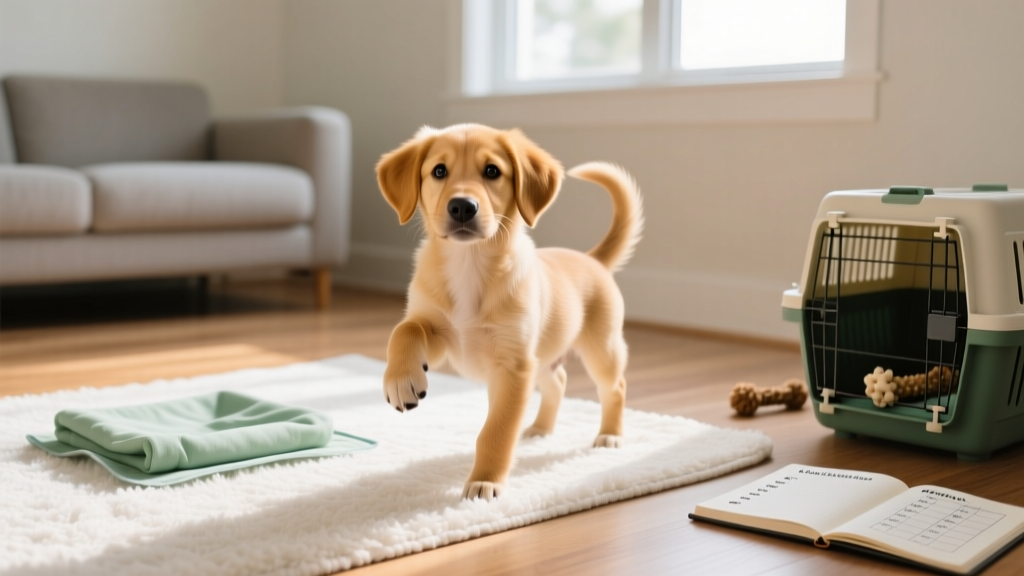
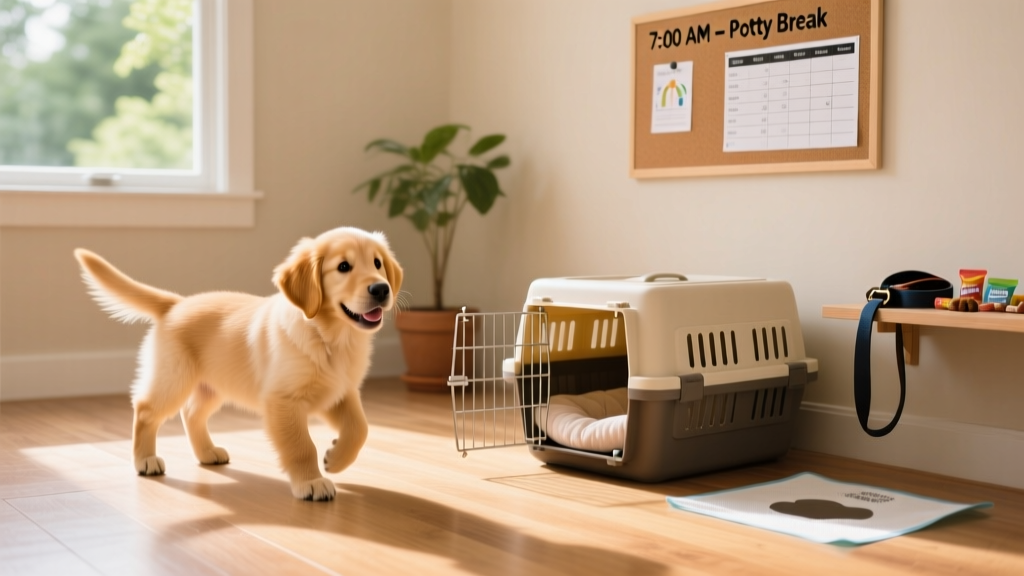
Types of Puppies: Small Breed Puppy Care Guide by Age & Milestone
Complete guide to types of puppies small breeds: age milestones, feeding schedules, potty training timelines, vaccinations, and first-year costs for tiny pups.

Small-breed puppies — think Chihuahuas, Toy Poodles, Pomeranians, Yorkshire Terriers, and similar dogs under 20 lb (9 kg) at maturity — develop on a completely different timeline than their larger cousins. They hit milestones faster, face unique health risks like hypoglycemia, and require precise portion control to avoid both underfeeding and obesity. If you're researching the types of puppies small breeds encompass and wondering how to actually raise one, this guide gives you the week-by-week roadmap.
Before we start: always consult your veterinarian for personalized health and vaccination guidance. Small breeds have specific medical considerations that vary by individual.
When Should I Bring My Small-Breed Puppy Home?
For most types of puppies, small breeds included, the ideal homecoming window is 8 to 10 weeks of age. However, many responsible breeders of toy breeds (especially Chihuahuas and Yorkshire Terriers) retain puppies until 10 to 12 weeks. The reason is physiological: tiny puppies are more vulnerable to hypoglycemia, stress-related immune suppression, and the physical trauma of an accidental fall or squeeze during the transition period.
According to the American Kennel Club, puppies separated from their litter before 8 weeks show higher rates of behavioral problems including fear-based aggression, separation anxiety, and difficulty with bite inhibition. For toy breeds under 4 lb (1.8 kg) at 8 weeks, an extra two weeks with the breeder can make a measurable difference in confidence and stability.
Small-Breed Puppy Milestones: Week by Week
Here's what to expect during each developmental window. These timelines are based on veterinary developmental science and apply across the types of puppies small breeds represent.
| Age Range | Key Milestones | What You Should Do |
|---|---|---|
| Weeks 4–8 | Eyes fully open; deciduous (baby) teeth erupting; start eating gruel/solid food; littermate play teaches bite inhibition; fear imprint period begins at week 8 | If still with breeder: ensure daily gentle human handling (minimum 15 min/day), exposure to varied surfaces, sounds, and household stimuli. Begin name recognition. |
| Weeks 8–12 | Primary socialization window peaks; bladder capacity ~1 hour per month of age; can learn sit, come, name response; sleep 18–20 hours/day | Bring home; establish routine; begin crate training; start positive-reinforcement training sessions (5 min max); schedule first vet visit within 72 hours of homecoming. |
| Weeks 12–16 | Fear imprint period (weeks 8–11) winding down; bladder control improving; adult teeth begin loosening baby teeth around week 16; attention span lengthens to 10–15 min | Expand socialization exposures; increase training complexity; begin leash walking indoors; establish consistent potty schedule. |
| Weeks 16–24 | Teething peak (3–6 months); sexual maturity approaching; testing boundaries; may regress on training; adult coat begins replacing puppy coat | Provide appropriate chew outlets; maintain training consistency; discuss spay/neuter timing with your vet (many recommend 6 months for small breeds); increase exercise gradually. |
| 6–12 Months | Most small breeds reach adult size by 10–12 months; energy stabilizes; full adult teeth in place; emotional maturity developing | Transition to adult food (around 10–12 months for small breeds); finalize obedience training; establish long-term exercise routine; schedule annual wellness exam. |
Feeding Schedule: Exact Portions by Age and Weight
Small-breed puppies have higher metabolic rates per pound than large breeds, meaning they burn calories faster and are at genuine risk of hypoglycemia (dangerously low blood sugar) if meals are skipped. The Merck Veterinary Manual recommends feeding small-breed puppies three to four times daily through at least 6 months of age.
Below is a feeding framework based on expected adult weight. Always check the specific caloric density of your chosen food — kibble ranges from 300 to 500 kcal/cup depending on the brand.
| Puppy Age | Meals per Day | Daily Portion (Expected Adult Weight 5–10 lb / 2–5 kg) | Daily Portion (Expected Adult Weight 11–20 lb / 5–9 kg) | Notes |
|---|---|---|---|---|
| 8–12 weeks | 4 | ¼ – ⅓ cup high-quality puppy kibble | ⅓ – ½ cup high-quality puppy kibble | Moisten with warm water for first week; offer meals at consistent times; never free-feed. |
| 12–16 weeks | 3–4 | ⅓ – ½ cup | ½ – ¾ cup | Transition to dry kibble if not already; monitor body condition score weekly. |
| 16–24 weeks | 3 | ½ – ⅔ cup | ¾ – 1 cup | Growth rate slows slightly; adjust if ribs become hard to feel (overfeeding) or very prominent (underfeeding). |
| 6–10 months | 2 | ½ – ⅔ cup | 1 – 1¼ cup | Begin reducing to two meals; discuss spay/neuter calorie adjustment with vet. |
| 10–12 months | 2 | Transition to adult food over 7–10 days | Transition to adult food over 7–10 days | Small breeds mature earlier than large breeds; most can switch to adult maintenance formula by 10–12 months. |
Vaccination Schedule for Small-Breed Puppies
Small-breed puppies receive the same core vaccines as larger breeds, but their tiny body mass means post-vaccine reactions (lethargy, mild fever, facial swelling) are slightly more common. The AVMA recommends discussing pre-vaccination antihistamine protocols with your vet for puppies under 5 lb (2.3 kg).
| Age | Vaccine(s) | Purpose | Notes for Small Breeds |
|---|---|---|---|
| 6–8 weeks | DHPP (Distemper, Hepatitis/Adenovirus, Parainfluenza, Parvovirus) — 1st dose | Core protection against life-threatening viral diseases | Often administered by breeder; confirm with documentation. |
| 10–12 weeks | DHPP — 2nd dose; Bordetella (optional based on lifestyle) | Booster for core immunity; kennel cough protection if attending puppy classes | Monitor for 24–48 hours post-vaccine. Mild soreness and sleepiness are normal; hives or vomiting require immediate vet contact. |
| 14–16 weeks | DHPP — 3rd dose; Rabies (required by law in most US states) | Final core puppy series booster; legal rabies protection | Rabies vaccine is typically given at 12–16 weeks depending on state law. Some vets separate DHPP and rabies by 2 weeks to reduce reaction risk in tiny dogs. |
| 12–16 months | DHPP booster; Rabies booster (1-year or 3-year depending on product) | Long-term immunity maintenance | Discuss titer testing as an alternative for subsequent boosters if your dog has had vaccine reactions. |
Non-core vaccines to discuss with your vet: Leptospirosis (recommended in many areas regardless of breed size), Lyme disease (if in a tick-endemic region), and Canine Influenza (if your dog will be boarded or attend daycare).
Socialization Window: Weeks 3–14 Checklist
The primary socialization period — when a puppy's brain is most receptive to forming positive associations with new experiences — closes between 12 and 14 weeks. For small breeds, which are genetically predisposed to fearfulness and reactivity, this window is especially critical. Miss it and you'll spend years doing counter-conditioning to overcome deficits.
Here's a structured exposure checklist. Aim for positive, brief encounters (30–90 seconds each) rather than overwhelming marathons.
People Exposures
- Men with beards, hats, sunglasses
- Children ages 4–12 (supervised, calm interactions only)
- People in uniforms (delivery drivers, medical scrubs)
- People using mobility aids (wheelchairs, crutches, walkers)
- People of different skin tones and body types
Environmental Exposures
- Various floor surfaces: tile, hardwood, gravel, grass, metal grates
- Elevator rides, automatic doors, revolving doors
- Car rides (start with 2-minute trips, build to 15 minutes)
- Umbrellas opening, vacuum cleaners, hair dryers (at a distance, paired with treats)
- Thunderstorm recordings played at low volume (increase gradually over weeks)
Animal Exposures
- Fully vaccinated, known-temperament adult dogs (one-on-one, not dog parks)
- Cats (if applicable to your household)
- Observing livestock or wildlife from a safe distance
Handling Exposures
- Paw handling (5 seconds daily, building to full paw inspection)
- Ear inspection and gentle cleaning
- Mouth opening and tooth inspection
- Being gently restrained (for vet exams and grooming)
- Nail trimming simulation (touching each toe with a blunt object, rewarding)
When Can My Puppy Go Outside and Meet Other Dogs?
This is the most common tension in puppy care: the socialization window closes around 14 weeks, but the vaccine series isn't complete until 16 weeks. Here's the evidence-based approach recommended by most veterinary behaviorists:
- Weeks 8–12 (after first DHPP): Carry your puppy in a sling or carrier to outdoor environments. Let them observe from your arms. Avoid setting them on public ground where unknown dogs have been.
- Weeks 10–14 (after second DHPP): Arrange playdates in controlled, private yards with fully vaccinated, healthy dogs you know personally. Puppy classes that require proof of first two vaccines and sanitize floors are generally considered acceptable risk by the American Veterinary Society of Animal Behavior, which explicitly states that the risk of behavioral problems from inadequate socialization exceeds the disease risk for puppies in clean, managed class environments.
- After 16 weeks (full vaccine series complete): You can safely visit dog parks, public trails, and outdoor areas. Continue to monitor interactions — small puppies are easily injured by large, exuberant dogs.
Potty Training Timeline and Troubleshooting
Small breeds are notoriously harder to potty train than larger dogs. The reasons are partly physiological (tiny bladders) and partly environmental (owners are more likely to tolerate indoor accidents in a 5-pound dog than a 70-pound dog, inadvertently reinforcing the behavior). Set realistic expectations:
| Puppy Age | Expected Bladder Hold Time | Realistic Potty Training Status |
|---|---|---|
| 8–10 weeks | 1–2 hours maximum | Learning the concept; expect 3–6 accidents per week even with diligent scheduling |
| 10–14 weeks | 2–3 hours | Beginning to signal (sniffing, circling, whining at door); accidents should decrease to 1–3 per week |
| 14–20 weeks | 3–4 hours | Reliable with a schedule; occasional regression during teething or environmental changes |
| 5–6 months | 4–6 hours | Most small-breed puppies are reliably house-trained by 5–6 months IF the owner has been consistent. Some take until 8–9 months. |
| 6–12 months | 6–8 hours (adult capacity) | Fully trained; if accidents persist beyond 7 months, consult your vet to rule out urinary tract infection or anatomical issues like an ectopic ureter. |
Potty Training Protocol for Small Breeds
- Take puppy out immediately upon waking, after every meal (within 10–15 minutes), after play sessions, and before bedtime.
- Use a consistent verbal cue ("go potty") while they eliminate. Reward with a high-value treat (small piece of boiled chicken or commercial training treat) within 2 seconds of completion.
- Supervise or confine. When you cannot watch them, they go in the crate or a puppy-proofed pen. Never give a partially-trained puppy free roam of the house.
- Clean accidents with enzymatic cleaner (brands like Nature's Miracle or Rocco & Roxie). Standard household cleaners do not break down uric acid crystals, and residual scent invites repeat accidents.
- Never punish accidents. Rubbing a puppy's nose in urine or yelling creates fear of eliminating in front of you — they'll start hiding behind furniture instead of learning to go outside.
Teething Timeline and Relief Strategies
Small-breed puppies begin losing their 28 deciduous (baby) teeth and gaining 42 adult teeth between 3 and 6 months of age. Toy breeds are more prone to retained deciduous teeth — where baby teeth don't fall out on schedule, creating crowding and dental disease risk. Your vet will check for this at each visit.
| Age | Teething Stage | Safe Relief Options |
|---|---|---|
| 3–4 months | Incisors begin loosening; increased chewing and mouthing | Frozen damp washcloth (twist, wet, freeze); KONG Classic puppy rubber toy (size XS or S); carrot sticks (supervised) |
| 4–5 months | Canines and premolars erupting; peak discomfort; possible blood on toys | Benebone puppy chew (small size); frozen blueberries; Nylabone puppy-specific chew (power chewer version NOT recommended for puppies) |
| 5–6 months | Final molars coming in; most baby teeth should be out by 6 months | Continue offering varied textures; inspect mouth weekly for retained baby teeth (double rows of teeth); schedule dental check with vet if baby canines persist past 7 months |
Avoid: Rawhide (choking and intestinal blockage risk, especially for small dogs), hard antlers or weight-bearing bones (can fracture developing teeth), and any chew toy smaller than your puppy's mouth width.
Crate Training Progression and Time Limits
Crate training is essential for small breeds — it provides a safe den, prevents destructive chewing when unsupervised, and is the backbone of potty training. But crating a puppy for too long causes distress, undermines training, and can lead to crate-soiling that's very difficult to reverse.
| Puppy Age | Maximum Crate Time (Daytime) | Overnight Expectation |
|---|---|---|
| 8–10 weeks | 1–2 hours between potty breaks | Expect 1–2 overnight wake-ups for potty; crate next to your bed to reduce anxiety |
| 10–14 weeks | 2–3 hours | 1 overnight potty break typically needed; begin moving crate to permanent location gradually |
| 14–20 weeks | 3–4 hours | Many puppies can sleep 6–7 hours overnight without a break by 16–18 weeks |
| 5–6 months | 4–5 hours | Full overnight sleep (7–8 hours) should be reliable |
Crate Training Steps
- Week 1: Leave crate door open; feed meals inside; toss high-value treats in; let puppy enter and exit freely. Never force them in.
- Week 2: Close door for 30 seconds during meals, gradually increasing to 5 minutes while you sit nearby.
- Week 3: Close door, step 5 feet away for 2–5 minutes. Return before puppy cries. Gradually increase distance and duration.
- Week 4+: Leave room for 10–15 minutes. Build to longer absences. If puppy cries, wait for 30 seconds of silence before opening (otherwise you teach crying = freedom).
Crate sizing for small breeds: The crate should be large enough for the puppy to stand, turn around, and lie down — but not so large that they can eliminate in one corner and sleep in another. Many small-breed owners use a divider panel in a wire crate (e.g., MidWest iCrate 18" or 22" models, $35–$55) and expand the space as the puppy grows.
Common Small-Breed Puppy Problems and Solutions
Puppy Biting and Nipping
Small puppies explore the world with their mouths, and those needle-sharp deciduous teeth hurt. Biting is not aggression — it's normal developmental behavior that needs redirecting.
- When teeth touch skin: Say "ouch" in a calm, firm voice. Immediately offer an appropriate chew toy. When they bite the toy, praise and reward.
- If biting continues: Stand up and withdraw attention for 15–30 seconds (turn your back or step behind a baby gate). Return and re-engage with a toy.
- Never hold the puppy's mouth shut, alpha-roll them, or use physical punishment. These methods create fear and can escalate biting into genuine defensive aggression.
- Enrichment reduces biting: A bored puppy mouths more. Provide 15–20 minutes of structured play, training, or puzzle toys (e.g., KONG stuffed with frozen peanut butter, Outward Hound Hide-A-Squirrel) daily.
Excessive Whining and Crying
Small breeds are vocal. Whining in the first 2 weeks home is usually separation distress. Distinguish between needs-based whining (potty, hunger, pain) and attention-seeking whining.
- For crate whining at night: ensure a potty break right before bed; place a warm blanket or heartbeat toy (Snuggle Puppy brand, ~$30) in the crate; keep the crate near your bed initially.
- For attention whining during the day: reward silence, not noise. Wait for 3–5 seconds of quiet before giving attention or opening the crate.
- If whining is accompanied by trembling, hiding, or refusal to eat, consult your vet — this may indicate illness or significant anxiety requiring professional intervention.
Destructive Chewing
Peak chewing coincides with teething (3–6 months). Small jaws can still destroy baseboards, shoes, and electrical cords.
- Provide 4–5 approved chew items of varying textures, rotated every few days to maintain novelty.
- Puppy-proof: use bitter apple spray (Grannick's Bitter Apple, ~$10) on furniture legs; cover electrical cords with split loom tubing; remove small objects a toy breed could swallow.
- If you catch them chewing something inappropriate: redirect calmly to an approved chew and praise enthusiastically.
First-Year Cost Breakdown for a Small-Breed Puppy
Small breeds are generally less expensive to maintain than giant breeds (less food, smaller medications), but the first year still represents a significant financial commitment. Here's a realistic budget based on 2026 pricing:
| Category | Low Estimate | Mid-Range | High Estimate | Details |
|---|---|---|---|---|
| Puppy purchase/adoption | $250 (rescue) | $1,500 (responsible breeder) | $3,500+ (show-line breeder or designer breed) | Adoption fees typically include first vaccines and spay/neuter. |
| Veterinary (first year) | $400 | $700 | $1,200 | Includes initial exam, 3 rounds of vaccines, rabies, fecal tests, heartworm test, spay/neuter ($300–$600 for small breeds). |
| Food (12 months) | $180 | $300 | $500 | Small-breed puppy formula; premium brands like Royal Canin Small Puppy or Hill's Science Diet Small Paws cost $55–$75 per 10-lb bag. |
| Supplies | $150 | $300 | $500 | Crate ($35–$55), bed ($25–$60), harness and leash ($30–$60), bowls, toys, grooming tools, enzymatic cleaner, puppy pads if using. |
| Training | $0 (DIY) | $200 (group puppy class) | $600 (private sessions) | Group classes typically $150–$250 for 6–8 week sessions. |
| Preventive medications | $120 | $250 | $400 | Monthly heartworm preventive (e.g., Heartgard Plus ~$45 for 6-month supply for dogs under 25 lb), flea/tick preventive (NexGard or Simparica ~$75–$95 for 6-month supply). |
| Total First Year | $1,100 | $3,250 | $6,700+ |
Consider pet insurance early — enrolling a puppy before any conditions are diagnosed means no pre-existing condition exclusions. Plans for small breeds average $30–$50/month for accident-and-illness coverage (companies like Trupanion, Healthy Paws, or Lemonade).
Frequently Asked Questions
How often should I feed my 10-week-old small-breed puppy?
Four meals per day, spaced roughly 4–5 hours apart during waking hours. For a puppy expected to reach 5–10 lb (2–5 kg) as an adult, this means approximately 1–1.5 tablespoons of high-quality puppy kibble per meal. Consistency matters — feed at the same times daily (e.g., 7 AM, 12 PM, 5 PM, 9 PM).
When will my small-breed puppy be fully potty trained?
Realistically, most small-breed puppies achieve reliable house training between 5 and 8 months of age — later than larger breeds. Consistency is the single biggest variable. If you're still seeing regular accidents past 8 months, consult your veterinarian to rule out medical causes before assuming it's a behavioral issue.
What vaccines does my puppy need and when?
The core schedule is DHPP at 6–8 weeks, 10–12 weeks, and 14–16 weeks, plus a rabies vaccine at 12–16 weeks (timing varies by state law). Non-core vaccines like Bordetella, Leptospirosis, and Lyme depend on your geographic area and lifestyle. Your veterinarian will customize the protocol based on local disease prevalence and your puppy's risk profile.
How do I stop my puppy from biting my hands and ankles?
Redirect every bite to an appropriate chew toy. If the puppy persists, withdraw attention for 15–30 seconds (stand up, turn away, or step behind a gate). Consistency from every household member is essential — if one person allows mouthing and another punishes it, the puppy becomes confused and the behavior persists. Expect noticeable improvement within 2–4 weeks of consistent redirection.
When should I bring my puppy home from the breeder?
Between 8 and 12 weeks for most small breeds. Toy breeds like Chihuahuas and Yorkies often benefit from staying with the breeder until 10–12 weeks due to their vulnerability to hypoglycemia and stress. Never accept a puppy younger than 8 weeks regardless of breed.
When can my puppy go outside and meet other dogs?
You can carry your puppy outdoors immediately for socialization exposure. For ground-level contact and dog-to-dog interaction, wait until at least 7 days after the second DHPP vaccine (typically around 11–13 weeks) for controlled environments like private yards and sanitized puppy classes. Full public access (dog parks, hiking trails) is safest after the complete vaccine series at 16+ weeks.
Raising a small-breed puppy requires patience, precision, and realistic expectations. Their tiny size makes them more fragile but no less capable of becoming confident, well-mannered companions when you follow a structured, science-based approach from day one.
Anouk Beaumont
All our authors care for dogs every day — read more of their work on the authors page.