Best Toys for Puppy Dogs: A Complete Development & Care Guide
Discover the best toys for puppy dogs matched to each developmental stage, plus feeding, potty training, vaccination, and socialization timelines for new owners.

The Right Toys for Puppy Dogs at Every Developmental Stage
Choosing appropriate toys for puppy dogs isn't just about keeping them entertained — it's about supporting their physical development, easing teething pain, and preventing destructive habits before they start. A 10-week-old puppy has vastly different needs than a 6-month-old adolescent, and the wrong toy at the wrong stage can mean swallowed plastic, damaged baby teeth, or missed critical learning windows.
This guide maps the best toys for puppy dogs against their exact developmental milestones, feeding requirements, vaccination schedule, and training timelines — so you know precisely what your puppy needs at every week of their first year. Whether you're bringing home a Labrador Retriever, Golden Retriever, German Shepherd, or mixed-breed rescue, these frameworks apply across most medium-to-large breed puppies (adjust portions and crate sizes for toy breeds under 20 lb / 9 kg adult weight).
Bringing Your Puppy Home: Age Milestones and What to Expect
Most responsible breeders and shelters release puppies between 8 and 10 weeks of age. The American Kennel Club recommends that puppies stay with their littermates until at least 8 weeks to learn bite inhibition and basic social cues. Here's what each developmental window looks like:
Puppy Age Milestone Timeline
Weeks 4–8 (Still with Breeder/Shelter): Puppies develop baby teeth (28 deciduous teeth), begin eating softened kibble, learn bite inhibition from siblings, and start exploring solid objects. Ideal toys: soft plush without small parts, gentle rubber teethers.
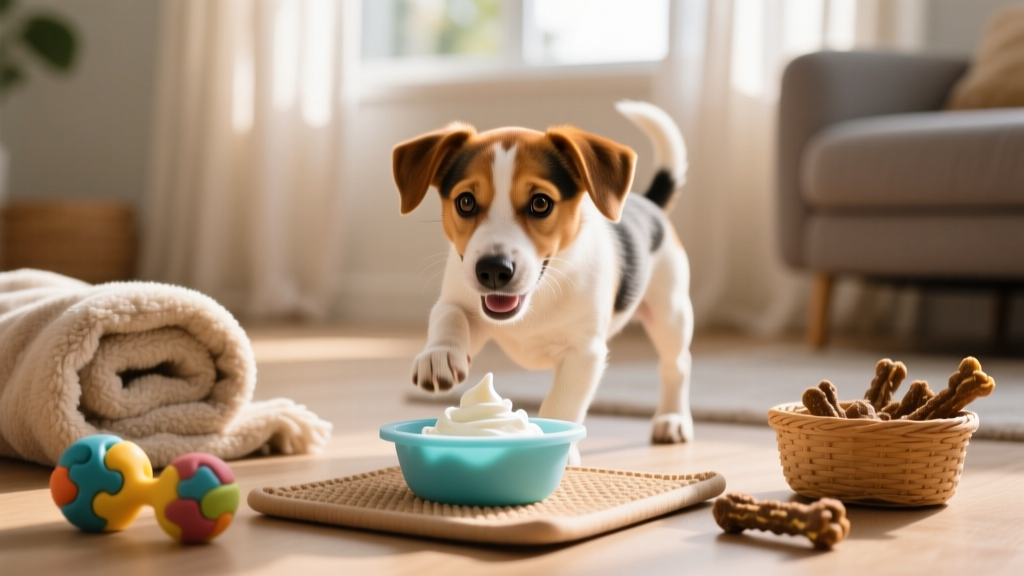
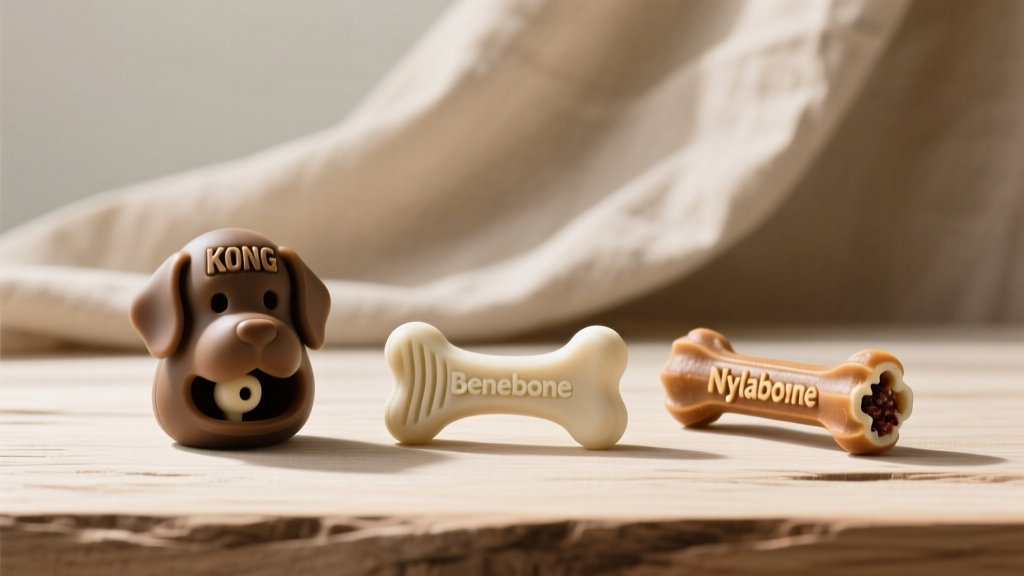
Weeks 8–12 (Home Adjustment Period): Your puppy is learning your household rules. Sleep needs are 18–20 hours per day. Attention span is 5–10 minutes max. Everything goes in their mouth. Ideal toys: KONG Puppy (rubber, stuffable), Nylabone Puppy Chew (soft flex), snuffle mats for mental enrichment.
Weeks 12–16 (Confidence Building): Puppy gains coordination and confidence. Pre-vaccination caution limits outdoor exposure. Chewing intensity increases. Ideal toys: Outward Hound Hide-a-Squirrel puzzle, West Paw Toppl (interlocking treat toy), frozen washcloth twists.
Weeks 16–24 (Teething Peak): Adult teeth erupt, pushing out baby teeth. Chewing becomes intense and persistent. Jaw strength increases significantly. Ideal toys: Benebone Wishbone (size-appropriate), frozen KONG stuffed with plain yogurt, Goughnuts MAXX for aggressive chewers.
6–12 Months (Adolescence): Energy peaks, testing boundaries, possible fear periods. Destructive chewing may resurge. Ideal toys: Chuckit! Ultra Ball for fetch, tug ropes with rules, Nina Ottosson Dog Brick puzzle (intermediate level).
Feeding Your Puppy: Schedule and Portions by Age
Overfeeding is one of the most common puppy owner mistakes and can accelerate growth in large breeds, increasing the risk of hip dysplasia and other orthopedic conditions. The AVMA recommends feeding a diet specifically formulated for puppy growth stages, with large-breed puppies requiring controlled calcium and phosphorus ratios.
Below is a general feeding framework for medium-to-large breed puppies (expected adult weight 40–80 lb / 18–36 kg). Always check your specific food's feeding chart, as caloric density varies between brands.
| Age | Meals Per Day | Portion (cups/day)* | Notes |
|---|---|---|---|
| 8–12 weeks | 4 meals | 1.5–2.5 cups | Moisten kibble with warm water; feed every 4–5 hours during waking hours |
| 12–16 weeks | 3 meals | 2–3.5 cups | Transition to dry kibble; morning, midday, early evening |
| 16–24 weeks | 3 meals | 2.5–4 cups | Monitor body condition score (BCS); adjust up/down 10% based on rib feel |
| 6–12 months | 2 meals | 3–5 cups | Transition to 2 meals at ~6 months; large breeds may stay on puppy food until 18–24 months |
*Portions assume a kibble with approximately 380–420 kcal/cup. Check your food's guaranteed analysis and adjust. Your vet will determine the ideal caloric intake based on your puppy's breed, current weight, and body condition score.
Pro tip for toy integration: Use a stuffed KONG or West Paw Toppl as one of your puppy's daily meals. This slows eating, provides mental stimulation, and teaches them that toys are rewarding — making crate time and alone time easier.
Potty Training Timeline: Realistic Expectations and Troubleshooting
Here's the honest truth: most puppies are not reliably house-trained until 5 to 6 months of age. Some breeds (particularly small breeds with tiny bladders) take until 8–10 months. Anyone promising a fully potty-trained puppy in a weekend is selling something.
The general rule is that a puppy can hold their bladder for approximately one hour per month of age, plus one. A 3-month-old puppy can hold it roughly 4 hours — during the day, while awake. Overnight capacity is slightly longer because metabolism slows during sleep.
Potty Training Log Template
Track these data points for the first 4 weeks to identify your puppy's natural patterns:
- Time of elimination (record every accident AND every success)
- Trigger event (after eating, after waking, after play, after crate release)
- Surface type (grass, gravel, pad — puppies develop surface preferences by 12 weeks)
- Signal behavior (circling, sniffing, whining, heading to door)
Typical elimination frequency by age:
- 8–10 weeks: every 1–2 hours, plus immediately after meals and naps
- 10–14 weeks: every 2–3 hours
- 14–20 weeks: every 3–4 hours
- 5–6 months: every 4–6 hours
Common troubleshooting:
- Regression at 4–5 months: Normal. Often coincides with teething distraction or a fear period. Return to more frequent outings.
- Submissive/excitement urination: Not a housetraining issue. Greet calmly, avoid looming over the puppy, take outside immediately upon arriving home.
- Accidents after being "trained": Rule out urinary tract infection with your vet — especially in female puppies.
The Critical Socialization Window (Weeks 3–14)
Behavioral science consistently shows that a puppy's primary socialization period closes between 12 and 14 weeks of age. After this window, unfamiliar stimuli are more likely to trigger fear responses rather than curiosity. The American Veterinary Medical Association emphasizes that the risk of under-socialization (leading to fear-based aggression and anxiety) far exceeds the disease risk of carefully managed early exposure.
This doesn't mean taking your unvaccinated puppy to a dog park. It means controlled, positive exposures in safe environments.
Socialization Exposure Checklist (Weeks 8–14)
Aim for positive exposure to 10+ new experiences per week. Each exposure should be paired with high-value treats (small pieces of boiled chicken, cheese, or commercial training treats under 5 kcal each).
People (aim for 10+ different people):
- ☐ Children ages 4–12 (supervised, calm interactions)
- ☐ People wearing hats, sunglasses, hoodies
- ☐ People using walkers, canes, or wheelchairs
- ☐ Tall men with deep voices
- ☐ Delivery workers in uniform
Surfaces and environments:
- ☐ Gravel, mulch, metal grates, wet grass
- ☐ Car rides (start with 5-minute trips, build to 20+)
- ☐ Elevators, automatic doors
- ☐ Vacuum cleaner and hair dryer (start at distance, pair with treats)
Objects and sounds:
- ☐ Umbrellas opening
- ☐ Thunderstorm recordings at low volume
- ☐ Plastic bags rustling
- ☐ Bicycles and skateboards passing at a distance
Other animals (after second DHPP vaccine at 10–12 weeks):
- ☐ Fully vaccinated, known-healthy adult dogs (home visits)
- ☐ Puppy kindergarten class (verify vaccination requirements)
- ☐ Cats (supervised, cat has escape route)
Toy integration for socialization: Bring a familiar chew toy (like a stuffed KONG) to every new environment. Letting your puppy chew in a novel setting builds positive associations and teaches them to self-soothe in unfamiliar places.
Vaccination Schedule: What Your Puppy Needs and When
Your veterinarian will customize this schedule based on your region's disease risk, your puppy's breed, and lifestyle factors. The following represents the standard core vaccination protocol recommended by the AKC and aligned with AAHA canine vaccination guidelines:
| Age | Vaccine | What It Protects Against | Estimated Cost |
|---|---|---|---|
| 6–8 weeks | DHPP (1st dose) | Distemper, Hepatitis (Adenovirus), Parainfluenza, Parvovirus | $20–$40 |
| 8–10 weeks | Bordetella (optional, recommended for group classes) | Kennel cough (Bordetella bronchiseptica) | $20–$35 |
| 10–12 weeks | DHPP (2nd dose) | Booster for core diseases | $20–$40 |
| 12–14 weeks | Leptospirosis, Lyme (region-dependent) | Bacterial infection from wildlife/standing water; tick-borne disease | $25–$45 each |
| 14–16 weeks | DHPP (3rd dose) + Rabies | Final core booster; Rabies (legally required in all US states) | $25–$50 (DHPP) + $15–$30 (Rabies) |
| 12–16 months | DHPP booster + Rabies booster | 1-year booster, then typically every 3 years | $40–$80 combined |
When can my puppy go outside and meet other dogs? After the second DHPP dose (10–12 weeks), controlled exposure to fully vaccinated dogs in private settings is generally safe. Public areas like dog parks should wait until 7 days after the final DHPP at 14–16 weeks. Always consult your veterinarian about local parvovirus prevalence before making outdoor decisions.
Teething Timeline and the Best Chew Toys for Relief
Puppy teething follows a predictable but often painful (for you and your furniture) timeline. Your puppy's 28 baby teeth begin erupting at 3–4 weeks and are fully in by 6–8 weeks. The real challenge starts around 12–16 weeks, when adult teeth begin pushing through the gums, and peaks between 4 and 6 months when all 42 adult teeth are erupting.
Teething signs to watch for:
- Increased chewing on everything (shoes, baseboards, your hands)
- Drooling more than usual
- Small spots of blood on toys or in water bowl (normal)
- Finding tiny teeth on the floor (most are swallowed — also normal)
- Temporary "puppy breath" odor change
- Reluctance to eat hard kibble for a day or two
Safe chew toy recommendations by teething stage:
- 12–16 weeks (early eruption): KONG Puppy (pink/blue rubber, softer formula), chilled (not frozen) damp washcloth twisted into a rope, Nylabone Puppy Flex
- 16–20 weeks (peak discomfort): Frozen KONG stuffed with plain yogurt or pumpkin purée, Benebone Puppy (softer formula), Whimzees Puppy chews
- 20–28 weeks (adult teeth settling): Transition to adult-durability toys — Goughnuts Original, West Paw Hurley, standard KONG Classic (red rubber)
Crate Training Progression and Managing Common Puppy Problems
A crate is your puppy's den — a safe space for naps, overnight sleep, and preventing unsupervised destruction. Done correctly with positive reinforcement, crate training also accelerates potty training because dogs naturally avoid soiling their sleeping area.
Crate time limits by age (while you're home and can supervise breaks):
- 8–10 weeks: 30–45 minutes maximum between potty breaks
- 10–14 weeks: 1–2 hours maximum
- 14–16 weeks: 2–3 hours maximum
- 4–6 months: 3–4 hours maximum
- 6+ months: 4–6 hours maximum (never exceed 6 hours for a crated dog during the day)
Overnight exceptions: Puppies can typically sleep 1 hour longer than their daytime limit because metabolism slows. An 8-week-old puppy may manage 4–5 hours overnight with one middle-of-night potty break. Set an alarm — don't wait for whining.
Solving common puppy problems with toys and management:
Puppy biting and nipping: This is normal exploratory behavior, not aggression. When teeth touch skin, say "ouch" in a calm voice, withdraw attention for 10–15 seconds, then redirect to an appropriate chew toy. Never physically punish or hold the mouth shut — this damages trust and can escalate to defensive biting. Consistency from every household member is critical.
Destructive chewing: Puppy-proof your home to the level of a crawling toddler. Provide 5–7 approved chew toys of varying textures (rubber, nylon, rope). Rotate toys every 3–4 days to maintain novelty. A puppy chewing your shoe has a management problem, not a behavioral problem — the shoe shouldn't have been accessible.
Crate whining: Distinguish between "I need to potty" whining (take out immediately) and "I don't want to be alone" whining (wait for 10 seconds of silence before opening the crate, then reward with a treat). Feeding meals inside the crate and providing a stuffed KONG at crate time builds positive associations.
Separation anxiety early signs: If your puppy cannot settle in the crate even when you're visible, panics when you leave the room, or shows excessive drooling and escape attempts, consult a certified positive-reinforcement trainer or veterinary behaviorist. Early intervention prevents chronic anxiety.
First-Year Cost Breakdown: What to Budget
New puppy owners consistently underestimate first-year costs. Here's a realistic breakdown for a medium-to-large breed puppy in the US in 2026:
| Category | Low Estimate | Mid Estimate | High Estimate |
|---|---|---|---|
| Veterinary (vaccines, spay/neuter, wellness exams, fecal tests, heartworm prevention) | $600 | $1,000 | $1,800 |
| Food (quality AAFCO-approved puppy kibble, treats) | $350 | $600 | $1,000 |
| Supplies (crate, bed, leash, harness, bowls, gates, toys) | $200 | $450 | $800 |
| Training (group puppy class, optional private sessions) | $150 | $400 | $1,200 |
| Pet insurance (annual premium, recommended from day one) | $400 | $600 | $900 |
| Emergency fund reserve (one ER visit average) | $0 | $500 | $2,500 |
| First-Year Total | $1,700 | $3,550 | $8,200 |
These estimates do not include the initial purchase or adoption fee ($50–$3,000+ depending on source and breed). Emergency veterinary visits for foreign body ingestion (common in puppies who swallow toy pieces) average $1,500–$4,000 for surgery.
Frequently Asked Questions About Puppy Development and Toys
When should I bring my puppy home?
Between 8 and 10 weeks of age. Puppies removed before 8 weeks miss critical bite inhibition learning from littermates and often develop more behavioral issues. If adopting from a shelter where puppies arrive at various ages, 8+ weeks is still ideal when possible.
How often should I feed my puppy at 10 weeks old?
Four meals per day, spaced roughly 4–5 hours apart during waking hours (for example: 7 AM, 12 PM, 5 PM, 9 PM). Remove food after 15–20 minutes to establish a schedule. Free-feeding leads to poor potty training predictability and makes it harder to monitor appetite changes — an early illness indicator.
When will my puppy be fully potty trained?
Most puppies achieve reliable housetraining between 5 and 7 months of age, with some small breeds taking until 8–10 months. "Reliable" means fewer than one accident per month with consistent management. If accidents persist past 7 months despite a consistent schedule, consult your vet to rule out medical causes such as ectopic ureters or urinary tract infections.
What vaccines does my puppy need and when?
The core series is DHPP (Distemper, Hepatitis, Parainfluenza, Parvovirus) given at 6–8 weeks, 10–12 weeks, and 14–16 weeks. Rabies is given at 14–16 weeks and is legally required. Bordetella, Leptospirosis, Lyme, and Canine Influenza are lifestyle-dependent vaccines your vet will recommend based on your area and activities. Always consult your veterinarian to build a customized protocol.
How do I stop puppy biting and nipping?
Redirect, don't punish. When teeth touch skin: (1) say "ouch" calmly, (2) withdraw attention for 10–15 seconds, (3) offer an appropriate chew toy, (4) praise when they chew the toy. Ensure every family member follows this protocol identically. Puppies also bite more when overtired — a cranky puppy often needs an enforced nap in their crate, not more play. Most nipping diminishes significantly by 5–6 months as adult teeth come in and bite inhibition matures.
When can my puppy go outside and meet other dogs?
Controlled exposure to fully vaccinated, known-healthy dogs in private homes can begin after the second DHPP dose (typically 10–12 weeks). Public areas with unknown dog traffic (parks, pet stores, dog parks) should wait until 7 days after the final DHPP at 14–16 weeks. Puppy socialization classes that verify vaccination status are an excellent middle ground starting at 10–12 weeks. Carrying your puppy in a sling or backpack for outdoor exposure (without ground contact) can safely begin immediately at 8 weeks.
What are the safest toys for puppy dogs who destroy everything?
For power chewers, look for toys rated for aggressive chewers: Goughnuts MAXX (with safety indicator layer that reveals red when worn through), Benebone Wishbone, and West Paw Hurley. Avoid any toy with glued-on parts, battery-operated components, or stuffing that can be ingested. Supervise all chewing and replace toys at the first sign of material breakdown. Budget approximately $15–$30 per month for toy replacement during the first year.
Remember: This guide provides general developmental frameworks. Every puppy is an individual, and breed, genetics, early environment, and health status all influence timelines. Always consult your veterinarian for personalized advice on your puppy's nutrition, vaccination schedule, and behavioral development. If you suspect your puppy has ingested a toxic substance or foreign object, contact ASPCA Animal Poison Control at (888) 426-4435 or your nearest emergency veterinary clinic immediately.
Dr. Hannah Wickes
All our authors care for dogs every day — read more of their work on the authors page.