Toy Bear Puppy Guide: Milestones, Feeding, Training & First-Year Costs
Complete toy bear puppy guide covering age milestones, feeding schedules, potty training timelines, vaccination needs, socialization, and first-year costs.

What Is a Toy Bear Puppy?
The term "toy bear puppy" doesn't refer to a single recognized breed. It's a popular descriptor used by breeders and owners for small, teddy-bear-like puppies — most commonly the Zuchon (also called Shichon or Teddy Bear dog), a Bichon Frise × Shih Tzu cross, as well as certain Poodle mixes (Cavapoo, Maltipoo) groomed in a "teddy bear cut." These dogs typically weigh 6–16 lb (2.7–7.3 kg) at maturity and stand 8–12 inches (20–30 cm) tall.
This guide covers the puppy development, care, and training specifics for these small-breed "toy bear" types. Because they share similar size, temperament, and developmental timelines, the milestones below apply whether your puppy is a Zuchon, Cavapoo, Maltipoo, or similar small designer mix.
Age-Specific Milestones for Your Toy Bear Puppy
Small-breed puppies mature faster physically than large breeds but still need structured guidance through each developmental window. Here's what to expect at every stage.
Weeks 4–8: Neonatal to Early Socialization
During this period, your toy bear puppy is still with the breeder or foster. Eyes and ears are fully open by week 4. Deciduous (baby) teeth begin erupting around week 3–4. Puppies start transitioning from mother's milk to softened puppy kibble (gruel) at week 4 and should be fully weaned by week 7–8.
What's happening developmentally: Littermate play teaches bite inhibition basics. The critical socialization window opens around week 3 and extends to approximately week 14, per the AVMA's socialization guidelines. A responsible breeder will expose puppies to household sounds, varied floor textures, gentle handling, and novel objects during this time.
Weeks 8–12: Homecoming and Bonding
This is when most toy bear puppies go to their new homes. Expect 18–22 hours of sleep per day — puppies this age need extensive rest between short bursts of activity. Attention span is roughly 5–10 minutes per training session.
Concrete expectations:
- Puppy recognizes their name within 3–7 days with consistent use
- Can learn "sit" and basic lure-reward targeting by week 10–12
- Bladder capacity is approximately 1 hour per month of age (so a 2-month-old puppy needs a potty break every 2 hours maximum)
- Fear periods may occur around 8–10 weeks — avoid overwhelming experiences like loud events or forced interactions
Weeks 12–16: Confidence Building
Your puppy becomes more adventurous and responsive. Baby teeth are fully in (28 deciduous teeth). Coordination improves noticeably. This is the ideal window for short, positive walks and expanded socialization.
Concrete expectations:
- Can hold bladder for 3–4 hours during the day
- Starts showing reliable recall response in low-distraction settings
- May begin testing boundaries — consistent rules matter now
- Second fear period may emerge around 12–14 weeks
Weeks 16–24: Teething and Adolescence Entry
Baby teeth begin loosening and falling out, replaced by 42 adult teeth. Chewing behavior intensifies. Energy levels increase. This is when many owners notice a "rebellious" phase — previously reliable cues may seem forgotten.
Concrete expectations:
- Loose teeth visible in mouth; occasional bleeding from gums is normal
- Adult teeth fully in by approximately 6 months (24 weeks)
- Can handle 20–30 minute structured walks
- May begin showing breed-specific behaviors: alert barking (Shih Tzu influence) or velcro-dog attachment (Bichon influence)
Months 6–12: Sexual Maturity and Refinement
If not yet spayed or neutered, your toy bear puppy will reach sexual maturity in this window. Small breeds often mature earlier than large breeds — females may experience their first heat cycle (estrus) as early as 6 months. Growth rate slows; most toy bear types reach near-adult weight by 9–10 months.
Concrete expectations:
- Adult coat begins replacing puppy coat (expect increased shedding and potential matting)
- Training reliability improves with continued practice
- Energy levels stabilize around 10–12 months
- Final adult weight typically 8–15 lb (3.6–6.8 kg) depending on parent breeds
Feeding Schedule: Portions by Age and Weight
Small-breed puppies have high metabolic rates and tiny stomachs. They need calorie-dense, AAFCO-approved puppy food fed in frequent, measured meals to prevent hypoglycemia — a real risk in toy breeds under 4 months.
| Age | Meals/Day | Approximate Daily Amount* | Notes |
|---|---|---|---|
| 8–12 weeks | 4 | ¼–½ cup (split across meals) | Moisten kibble with warm water; monitor for hypoglycemia |
| 12–16 weeks | 3–4 | ⅓–⅔ cup | Begin transitioning to dry kibble if preferred |
| 4–6 months | 3 | ½–¾ cup | Switch to 3 meals; increase if puppy is underweight on BCS |
| 6–9 months | 2 | ½–¾ cup | Reduce to twice daily; watch body condition score closely |
| 9–12 months | 2 | ½–⅔ cup (adult maintenance) | Begin transition to adult food around 10–12 months |
*Portions assume a high-quality small-breed puppy kibble at approximately 400–450 kcal/cup. Always check the feeding chart on your specific food brand and adjust based on your puppy's body condition score (BCS). You should be able to feel ribs without pressing hard, and see a visible waist from above.
Hypoglycemia warning for toy breeds: Puppies under 4 months, especially those under 5 lb (2.3 kg), can develop dangerously low blood sugar if meals are missed. Signs include lethargy, trembling, disorientation, and collapse. If you suspect hypoglycemia, rub a small amount of Karo syrup or honey on the puppy's gums and contact your veterinarian or emergency clinic immediately.
Vaccination Schedule for Toy Bear Puppies
Your veterinarian will tailor this schedule based on local disease prevalence and your puppy's risk factors. The following follows the AVMA vaccination guidelines and AAHA canine vaccine recommendations.
| Age | Vaccine(s) | Type | Notes |
|---|---|---|---|
| 6–8 weeks | DHPP (Distemper, Hepatitis, Parainfluenza, Parvovirus) | Core | First dose; maternal antibodies may partially interfere |
| 10–12 weeks | DHPP booster; Bordetella (optional) | Core / Non-core | Bordetella recommended if attending puppy classes or boarding |
| 14–16 weeks | DHPP final booster; Rabies | Core | Rabies required by law in most US jurisdictions; given at or after 12 weeks |
| 12–16 months | DHPP booster; Rabies booster | Core | First annual/3-year boosters per your vet's protocol |
Important: Your puppy is NOT fully protected against parvovirus and distemper until approximately 1–2 weeks after the final DHPP dose at 14–16 weeks. Avoid high-risk areas (dog parks, pet store floors, unknown dog environments) until your vet confirms full protection.
Leptospirosis and Lyme vaccines may be recommended based on your geographic area and lifestyle. Discuss these with your veterinarian at the 12-week visit.
The Socialization Window: Weeks 3–14
The American Veterinary Society of Animal Behavior (AVSAB) emphasizes that the primary socialization period for puppies closes around 12–14 weeks. Missing this window can result in lasting fear-based behaviors. The disease risk of limited socialization is generally outweighed by the behavioral risk of under-socialization, according to AVSAB's position statement on puppy socialization.
Socialization Exposure Checklist
Aim for positive, low-pressure exposure to the following before week 14. Keep sessions short (5–15 minutes) and always pair new experiences with treats and praise.
- People: Children, elderly individuals, people wearing hats/glasses/masks, tall people, people with beards, people using wheelchairs or crutches
- Surfaces: Grass, gravel, tile, metal grates, wet pavement, stairs, plastic tarps
- Sounds: Vacuum cleaner, doorbell, thunderstorms (play recordings at low volume), traffic, fireworks recordings, clapping, dropping pots
- Objects: Umbrellas opening, plastic bags rustling, bicycles, skateboards, strollers, shopping carts
- Handling: Paw touching, ear examination, mouth opening (for future tooth brushing), nail trimming practice, being held gently, wearing a harness
- Animals: Fully vaccinated, known-healthy adult dogs in controlled settings; cats in the household (supervised); never force interaction
- Environments: Car rides (short trips to pleasant destinations), outdoor café patios, friend's homes, vet clinic (happy visits with treats, no procedures)
Potty Training Timeline and Troubleshooting
Toy bear puppies are small, which means tiny bladders and faster metabolisms. Realistic potty training takes longer for small breeds than many owners expect.
Realistic Timeline
- 8–12 weeks: Expect 1–3 accidents per day. Take puppy out every 1–2 hours, immediately after meals, naps, and play sessions.
- 12–16 weeks: Accidents decrease to roughly 1 per day or every other day with consistent schedule. Puppy begins going to the door or showing pre-potty signals (sniffing, circling).
- 4–6 months: Most toy bear puppies are reliably house-trained during the day with scheduled outings every 3–4 hours. Nighttime reliability may still vary.
- 6–8 months: Daytime reliability should be solid. Some small-breed dogs take until 8–12 months for complete reliability, especially in cold or wet weather (their small size makes them more sensitive to temperature).
Troubleshooting Common Issues
Submissive/excitement urination: Common in toy breeds. Greet your puppy calmly at their level; avoid looming over them. This typically resolves with maturity and confidence building.
Refusal to go outside in bad weather: Small, low-to-the-ground dogs get cold and wet easily. Consider a waterproof puppy jacket and use a covered area. Some owners successfully litter-train or use pee pads as a weather backup — this is a valid choice for toy breeds, not a training failure.
Marking behavior (6+ months): Intact males may begin lifting legs and marking indoors. Spaying/neutering reduces but doesn't always eliminate this. Manage with supervision and interrupt-redirect-reward when you catch the behavior starting.
If accidents persist beyond 6 months with consistent training, consult your veterinarian to rule out urinary tract infections, which are more common in small breeds.
Crate Training Progression and Teething Relief
Crate training provides a safe space and supports potty training by leveraging a dog's natural instinct not to soil their sleeping area. For toy bear puppies, choose a crate sized for their expected adult weight — typically a 24-inch (61 cm) crate with a divider panel to reduce space as they grow.
Crate Time Limits by Age
| Age | Maximum Daytime Crate Time | Overnight Expectation |
|---|---|---|
| 8–10 weeks | 1–2 hours max | Expect 1–2 nighttime potty breaks |
| 10–12 weeks | 2 hours max | 1–2 nighttime potty breaks |
| 3–4 months | 3–4 hours | 1 nighttime break (or sleeping through by 4 months) |
| 4–6 months | 4–5 hours | Most sleep through the night (7–8 hours) |
| 6+ months | 5–6 hours (not a daily norm) | Full night without breaks |
Never use the crate as punishment. Build positive associations by feeding meals inside, providing stuffed Kongs or snuffle mats, and keeping the door open when you're home. If your puppy whines, wait for a brief pause in vocalization before opening the door — this teaches that quiet earns freedom, not that noise earns attention.
Teething Timeline (3–6 Months) and Safe Relief
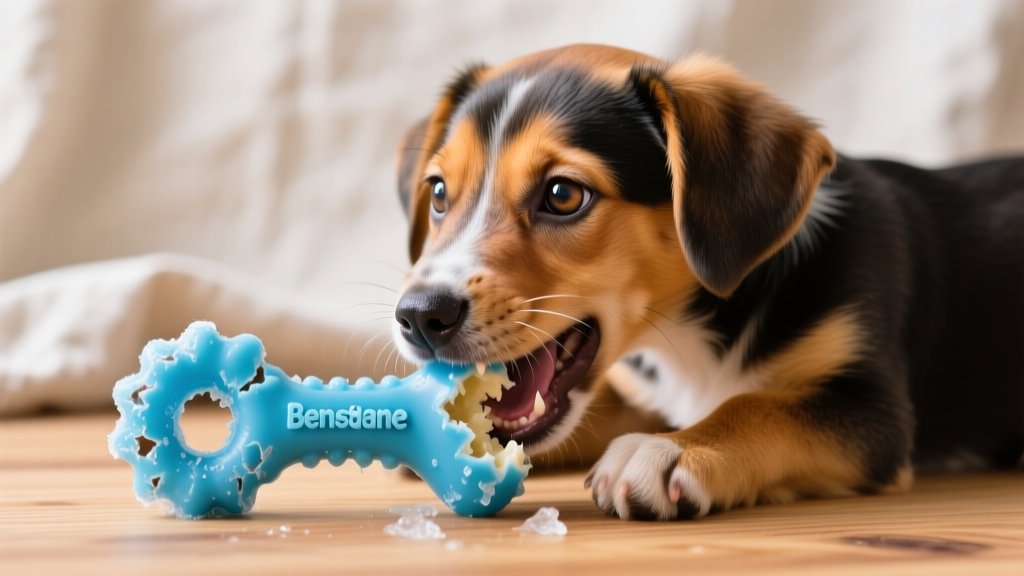
Your toy bear puppy's 28 baby teeth are replaced by 42 adult teeth between approximately 12 and 24 weeks. This is an intensely uncomfortable period, and chewing behavior will peak.
Safe chew options:
- Frozen, wet washcloths twisted into rope shape (supervise to prevent swallowing fabric)
- Rubber teething toys designed for puppies (softer than adult chew toys — brands like KONG Puppy or Nylabone Puppy)
- Frozen carrot sticks or green beans (appropriate size to prevent choking)
- Bully sticks (supervised; remove when small enough to swallow whole)
Avoid: Hard nylon bones (can fracture developing teeth), rawhide (choking and digestive blockage risk), ice cubes (too hard for puppy teeth), and any edible chew smaller than the puppy's mouth.
Common Toy Bear Puppy Problems and Solutions
Puppy Biting and Nipping
All puppies explore the world with their mouths, but toy bear puppies often get a pass because they're small — this leads to ingrained nipping habits. Address it early:
- Redirect: When teeth touch skin, say "ouch" in a calm, slightly surprised tone and immediately offer an appropriate chew toy.
- Withdraw attention: If nipping continues after 1–2 redirects, stand up and leave the play area for 15–30 seconds. Return when puppy is calm.
- Reward gentle play: When puppy licks or plays without teeth contact, mark with "yes!" and reward with treats or continued play.
- Ensure adequate exercise and enrichment: Overtired puppies bite more. An 8–12 week old puppy needs enforced naps — crate time isn't just for when you leave; it helps prevent overstimulation.
Bite inhibition typically improves significantly by 16–20 weeks if you're consistent. If biting is intense or accompanied by stiff body language and growling, consult a certified professional dog trainer (CPDT-KA) or veterinary behaviorist.
Excessive Whining and Crying
Toy bear breeds tend to be highly social and attachment-prone. Whining in the crate, when left alone, or when you're in another room is common. Solutions:
- Build alone-time gradually: Start with 30 seconds of separation, then 1 minute, then 5 minutes. Increase only when puppy is relaxed at the current duration.
- Provide a heartbeat toy or warm snuggle puppy for the first few nights to ease the transition from littermates.
- Avoid dramatic departures and arrivals. Keep comings and goings low-key to reduce separation anxiety risk.
Destructive Chewing
Peak chewing coincides with teething (3–6 months) but can persist if the puppy doesn't have adequate outlets. Puppy-proof your home: secure electrical cords, remove shoes and children's toys from floor level, and provide a rotation of 4–5 appropriate chew toys to maintain novelty.
First-Year Cost Breakdown
Budgeting accurately prevents sticker shock. The following estimates reflect 2026 US pricing for a toy bear puppy (8–15 lb adult size).
| Category | Low Estimate | Mid Estimate | High Estimate |
|---|---|---|---|
| Puppy purchase (responsible breeder) | $1,200 | $2,000 | $3,500+ |
| Adoption fee (rescue alternative) | $200 | $400 | $600 |
| Veterinary care (vaccines, wellness exams, spay/neuter) | $600 | $1,000 | $1,800 |
| Food (12 months, premium small-breed kibble) | $240 | $360 | $600 |
| Supplies (crate, harness, leash, bowls, bed, toys, grooming tools) | $200 | $400 | $700 |
| Professional grooming (every 6–8 weeks) | $420 | $600 | $900 |
| Training classes (puppy kindergarten + basic obedience) | $150 | $300 | $500 |
| Pet insurance (annual premium) | $360 | $540 | $720 |
| Emergency fund reserve (recommended) | $500 | $1,000 | $2,000 |
Total first-year range: Approximately $3,870–$11,320 depending on whether you purchase from a breeder or adopt, your geographic area, and your choices on insurance, grooming frequency, and food quality. Ongoing annual costs after the first year typically range from $1,800–$3,500.
Frequently Asked Questions
When should I bring my toy bear puppy home?
The ideal age is 8–10 weeks. Responsible breeders of small breeds sometimes keep puppies until 10–12 weeks because toy breeds are more vulnerable to hypoglycemia and stress in the early weeks. Avoid taking a puppy before 8 weeks — the additional time with the mother and littermates is critical for bite inhibition and social development.
How often should I feed my puppy at each age?
At 8–12 weeks: 4 meals per day. At 12–16 weeks: 3–4 meals. At 4–6 months: 3 meals. At 6 months onward: 2 meals per day. Never free-feed a toy breed puppy — measured meals help you monitor appetite changes (an early illness indicator) and prevent obesity.
When will my puppy be fully potty trained?
Most toy bear puppies achieve reliable daytime house training by 4–6 months with consistent scheduling. Full reliability, including overnight and in challenging weather, may take 8–12 months. Small bladders and high metabolism mean small breeds generally take longer than large breeds. Consistency — not speed — is what matters.
What vaccines does my puppy need and when?
Core vaccines include DHPP (given as a series at 6–8, 10–12, and 14–16 weeks) and Rabies (given at 14–16 weeks, then boosted per local law). Non-core vaccines like Bordetella, Leptospirosis, and Lyme are recommended based on lifestyle and geography. Your veterinarian will determine the appropriate protocol.
How do I stop puppy biting and nipping?
Use a three-step approach: redirect to an appropriate chew toy, withdraw attention briefly if nipping continues, and reward gentle play generously. Ensure your puppy gets enforced naps — overtired puppies bite more. Most toy bear puppies show significant improvement by 16–20 weeks with consistent practice. Never hit, hold the mouth shut, or use aversive methods — these damage trust and can increase fear-based aggression.
When can my puppy go outside and meet other dogs?
Your puppy can explore your own yard and low-risk environments immediately after coming home. For public areas, carry your puppy or use a stroller to expose them to sights and sounds before full vaccination. Avoid dog parks, pet store floors, and areas with unknown dogs until 1–2 weeks after the final DHPP vaccine at 14–16 weeks. Puppy socialization classes that require proof of first vaccination and sanitize their floors are generally considered safe starting at 10–12 weeks, per AVSAB recommendations. Playdates with known, fully vaccinated, healthy dogs in private yards are safe from the start.
Marcus Aldridge
All our authors care for dogs every day — read more of their work on the authors page.