Tibetan Dog Puppy Care Guide: Milestones, Feeding & Training
Complete Tibetan dog puppy guide covering age milestones, feeding schedules, potty training, vaccinations, socialization, & first-year costs for your...
Bringing Home a Tibetan Dog Puppy: What Makes This Breed Different
The Tibetan Mastiff is no ordinary puppy. Bred for centuries to guard monasteries and nomadic camps across the Himalayan plateau, these dogs carry an independent, watchful temperament that shapes every aspect of their early development. If you've committed to raising a Tibetan dog puppy, you're signing up for a rewarding but demanding journey that looks quite different from raising a Labrador or Golden Retriever.
Tibetan Mastiff puppies mature slowly — both physically and mentally. While a Border Collie might hit behavioral adulthood by 18 months, your Tibetan dog puppy won't reach full emotional maturity until 3 to 5 years of age. This extended puppyhood means your training, socialization, and management strategies need to account for a dog that thinks for itself rather than living to please you.
This guide covers every critical stage from weeks 4 through 12 months, with breed-specific timelines, exact feeding portions, vaccination schedules, and realistic cost expectations. Whether you're picking up your pup from a responsible breeder or bringing home a rescue, you'll find actionable specifics here — not generic puppy advice.
When Should You Bring Your Tibetan Dog Puppy Home?
For most breeds, 8 weeks is the standard age to bring a puppy home. For Tibetan Mastiff puppies, many experienced breeders and behaviorists recommend waiting until 10 to 12 weeks. Here's why:
- Extended litter socialization: Tibetan Mastiffs are naturally aloof and suspicious of strangers. Extra weeks with their mother and littermates teach bite inhibition, canine communication signals, and confidence that are harder to build later.
- Vaccination head start: At 10-12 weeks, your puppy will have received at least two rounds of DHPP vaccines, providing better protection during the vulnerable transition to a new home.
- Stress resilience: Giant-breed puppies experience significant physiological stress during relocation. A slightly older puppy has a more robust immune response and better emotional regulation.
If your breeder sends your Tibetan dog puppy home at 8 weeks, that's still within acceptable range — but be prepared for a more intensive socialization and health-monitoring period during weeks 8-12.
Tibetan Dog Puppy Milestones: Week by Week
Understanding what's developmentally normal at each stage prevents unnecessary panic and helps you set realistic expectations. Tibetan Mastiff puppies follow a distinct timeline compared to smaller, faster-maturing breeds.
Weeks 4–8: The Litter Phase
During this period, your puppy is still with the breeder (or should be). Key developments include:
- Deciduous (baby) teeth fully erupted by week 6
- Introduction to solid food — high-quality large-breed puppy kibble softened with warm water
- First socialization window opens: exposure to varied surfaces, sounds, and gentle handling
- Dewclaw removal (if performed) typically done at 3-5 days old; healing should be complete
- First deworming at 2 weeks, repeated at 4, 6, and 8 weeks per Merck Veterinary Manual parasite protocols
Weeks 8–12: The Homecoming Window
This is when most Tibetan dog puppies transition to their forever home. Expect:
- Sleep: 18-20 hours per day — this is normal, not a sign of illness
- Appetite fluctuations: Stress-related appetite suppression for the first 3-5 days is common
- Fear period #1: Weeks 8-11 often coincide with a developmental fear imprint period. Avoid traumatic experiences (harsh corrections, aggressive dogs, overwhelming environments)
- Weight: Expect 15-25 lb (7-11 kg) depending on lineage and sex
- House training begins: Take puppy out every 1-2 hours, always after meals, naps, and play sessions
Weeks 12–16: Building Confidence
- Fear period typically resolves; puppy becomes bolder and more exploratory
- Second DHPP booster administered
- Begin short, structured leash walks (5-10 minutes, twice daily)
- Start puppy kindergarten classes (force-free, positive reinforcement only)
- Weight should reach 30-45 lb (14-20 kg)
- Independent streak emerges — Tibetan Mastiff puppies start testing boundaries
Weeks 16–24: The Adolescent Shift
- Teething begins in earnest (see detailed section below)
- Growth rate accelerates — expect 5-8 lb (2-4 kg) gain per month
- Guarding instincts may surface: alert barking at strangers, territorial awareness
- Second fear period possible around 6 months — maintain positive exposure routines
- Weight range: 50-75 lb (23-34 kg)
- Can begin longer walks (15-20 minutes) but avoid forced running or jumping to protect developing joints
Months 6–12: The Giant Puppy Phase
- Sexual maturity approaches — discuss spay/neuter timing with your vet (many giant-breed specialists recommend waiting until 12-18 months for orthopedic health)
- Growth plates remain open; limit high-impact exercise
- Coat begins transitioning from puppy fuzz to adult double coat — heavy shedding episodes likely
- Weight at 12 months: males 75-110 lb (34-50 kg), females 65-90 lb (29-41 kg)
- Training regressions are normal — consistency and patience are essential
Feeding Your Tibetan Dog Puppy: Exact Portions and Schedule
Giant-breed puppies have unique nutritional requirements. Overfeeding accelerates growth rate and significantly increases the risk of hip dysplasia, osteochondrosis, and other developmental orthopedic diseases. The AKC recommends feeding large-breed puppy formulas specifically designed to slow growth while maintaining nutrition.
Look for an AAFCO statement confirming the food is formulated for "growth" or "all life stages" and specifically meets the nutritional needs of large-breed puppies (maximum calcium: 1.2% on a dry matter basis for large breeds).
| Age | Meals/Day | Daily Portion (cups)* | Expected Weight | Notes |
|---|---|---|---|---|
| 8–12 weeks | 3–4 | 2–3 cups | 15–25 lb / 7–11 kg | Soften kibble with warm water if needed |
| 3–4 months | 3 | 3–4 cups | 25–40 lb / 11–18 kg | Transition to dry kibble fully |
| 4–6 months | 2–3 | 4–5 cups | 40–60 lb / 18–27 kg | Monitor body condition score (BCS) weekly |
| 6–9 months | 2 | 5–6 cups | 60–85 lb / 27–39 kg | Reduce to 2 meals; watch for bloat risk |
| 9–12 months | 2 | 5–7 cups | 75–110 lb / 34–50 kg | Begin gradual transition to adult formula at 12 mo |
*Portions are approximate and based on a premium large-breed puppy kibble with ~350 kcal/cup. Always adjust based on your individual puppy's body condition score — you should be able to feel ribs without pressing hard, and see a visible waist from above. Consult your veterinarian for precise caloric needs.
Vaccination Schedule for Your Tibetan Dog Puppy
The American Veterinary Medical Association outlines core vaccination protocols that protect puppies during their most vulnerable months. Your Tibetan dog puppy needs a series of vaccines because maternal antibodies (received from the mother's colostrum) gradually wane, leaving gaps in immunity that each successive booster fills.
| Age | Vaccine | Type | Notes |
|---|---|---|---|
| 6–8 weeks | DHPP (1st dose) | Core | Distemper, Hepatitis (Adenovirus), Parainfluenza, Parvovirus. Often given by breeder. |
| 10–12 weeks | DHPP (2nd dose) + Bordetella | Core + Non-core | Bordetella (kennel cough) recommended if attending puppy classes or boarding. |
| 14–16 weeks | DHPP (3rd dose) + Rabies | Core | Rabies required by law in most US states. Final DHPP booster ensures full immunity. |
| 12–16 months | DHPP booster + Rabies booster | Core | 1-year boosters, then typically every 3 years per AAHA guidelines. |
Non-core vaccines to discuss with your vet: Leptospirosis (recommended if your puppy will encounter wildlife or standing water), Lyme disease (tick-endemic areas), and Canine Influenza (H3N2/H3N8, if in areas with documented outbreaks). Your veterinarian will tailor recommendations based on your geographic location and your puppy's lifestyle.
Socialization Window: The Critical Weeks 3–14
For Tibetan Mastiff puppies, the socialization window is arguably the most important developmental period you'll navigate. These dogs are genetically wired to be suspicious of strangers and protective of their territory. Without deliberate, positive exposure during weeks 3-14, that natural wariness can harden into fear-based aggression or extreme shyness that is very difficult to modify later.
The American Veterinary Society of Animal Behavior (AVSAB) recommends that puppies receive positive socialization experiences even before their vaccination series is complete, as the behavioral risks of inadequate socialization outweigh the disease risks in controlled environments.
Tibetan Dog Puppy Socialization Checklist
Aim for 3-5 new positive experiences per day during the socialization window. Every exposure should be paired with high-value treats (small pieces of boiled chicken, cheese, or commercial training treats) to create positive associations.
- People: Men with beards, children (supervised), people wearing hats/sunglasses/hoodies, delivery workers, people of different ethnicities and body types, people using wheelchairs or crutches
- Animals: Friendly vaccinated adult dogs (one-on-one, not dog parks), cats (if applicable), livestock if rural setting
- Surfaces: Gravel, grass, metal grates, wet pavement, wooden floors, carpet, stairs
- Sounds: Thunderstorms (play recordings at low volume), vacuum cleaners, doorbells, traffic, construction noise, fireworks recordings
- Handling: Paw touching, ear examination, mouth opening, nail clipping practice, collar/harness manipulation, being gently restrained
- Environments: Car rides, pet-friendly stores (carry puppy until fully vaccinated), outdoor seating areas, friend's homes, groomer visits (just for positive exposure, not full grooming yet)
- Objects: Umbrellas opening, plastic bags rustling, bicycles, skateboards, garbage trucks
Potty Training Your Tibetan Dog Puppy: Realistic Timeline
When will your Tibetan dog puppy be fully potty trained? Realistically, expect 4 to 6 months for reliable house training, with occasional accidents possible until 8-10 months. Giant breeds mature more slowly than small breeds, and bladder control develops on a physical timeline you cannot rush.
Tibetan Mastiffs are generally clean dogs and tend to prefer eliminating away from their sleeping area, which works in your favor for crate training. However, their large bladder capacity means they can "hold it" longer than small breeds — which sometimes leads owners to stretch bathroom breaks too far apart, resulting in accidents.
Potty Training Schedule by Age
| Age | Max Hold Time | Nighttime Breaks | Key Triggers |
|---|---|---|---|
| 8–10 weeks | 1–2 hours | Every 3–4 hours (set alarm) | Immediately after eating, waking, playing |
| 10–14 weeks | 2–3 hours | Every 4–5 hours | After meals, naps, excitement, crate release |
| 3–4 months | 3–4 hours | 1 break (around 2–3 AM) | Begin establishing consistent door/route |
| 4–6 months | 4–5 hours | Usually sleeping through | Signal training (bell on door) can begin |
| 6+ months | 6–8 hours | None needed | Reliable with consistent routine |
Troubleshooting Common Potty Training Issues
Submissive urination: Some Tibetan Mastiff puppies urinate when greeting people. This is involuntary. Ignore the puppy for the first 2-3 minutes when arriving home, greet calmly at their level, and never punish — punishment makes it worse.
Marking behavior: Intact males may begin lifting a leg and marking indoors as early as 5-6 months. Neutering reduces but doesn't always eliminate marking. Manage with supervision and interrupt-redirect to outside.
Regression at 6 months: Adolescence often brings a potty training setback. Return to a more frequent schedule temporarily. This is hormonal and developmental, not a sign your training has failed.
Crate Training Progression and Time Limits
Crate training is essential for Tibetan Mastiff puppies. These dogs grow into 100+ lb adults who can cause significant destruction if unsupervised during their chewing and teething phases. A crate also provides a safe den that satisfies their instinct to seek enclosed, secure spaces.
Invest in a crate that will accommodate your adult dog — typically 48-54 inches long for a male Tibetan Mastiff. Use a divider panel to reduce the interior space while your puppy is small (too much space encourages eliminating in one corner and sleeping in another).
| Age | Max Daytime Crate Time | Max Nighttime Crate Time | Crate Size |
|---|---|---|---|
| 8–10 weeks | 30–60 minutes | 3–4 hours (with potty break) | 48" crate with divider |
| 11–14 weeks | 1–2 hours | 4–5 hours | 48" crate with divider |
| 3–4 months | 2–3 hours | 6–7 hours | Expand divider gradually |
| 4–6 months | 3–4 hours | 7–8 hours | 48–54" full size |
| 6+ months | 4–5 hours | 8 hours | Full adult crate size |
Never use the crate as punishment. Your Tibetan Mastiff needs to view it as a sanctuary. Feed meals in the crate, provide a stuffed Kong or long-lasting chew, and cover the crate with a breathable blanket to create a den-like environment.
Teething Timeline and Relief Strategies (3–6 Months)
Tibetan dog puppies begin losing their 28 deciduous teeth around 12-16 weeks, with all 42 adult teeth typically erupted by 6-7 months. During this period, your puppy will chew — everything. This is not misbehavior; it's a physiological need driven by gum inflammation and the pressure of emerging teeth.
What to Expect During Each Teething Phase
3–4 months: Incisors loosen first. You may find tiny teeth on the floor, or your puppy may swallow them (harmless). Drooling increases. Expect mild gum bleeding — this is normal.
4–5 months: Canines and premolars erupt. This is peak chewing intensity. Your puppy will target furniture legs, shoes, baseboards, and your hands. Redirect every chewing attempt to an approved item.
5–6 months: Molars come in. Chewing intensity begins to decline. Some puppies experience temporary appetite reduction due to gum soreness.
Safe Chew Recommendations
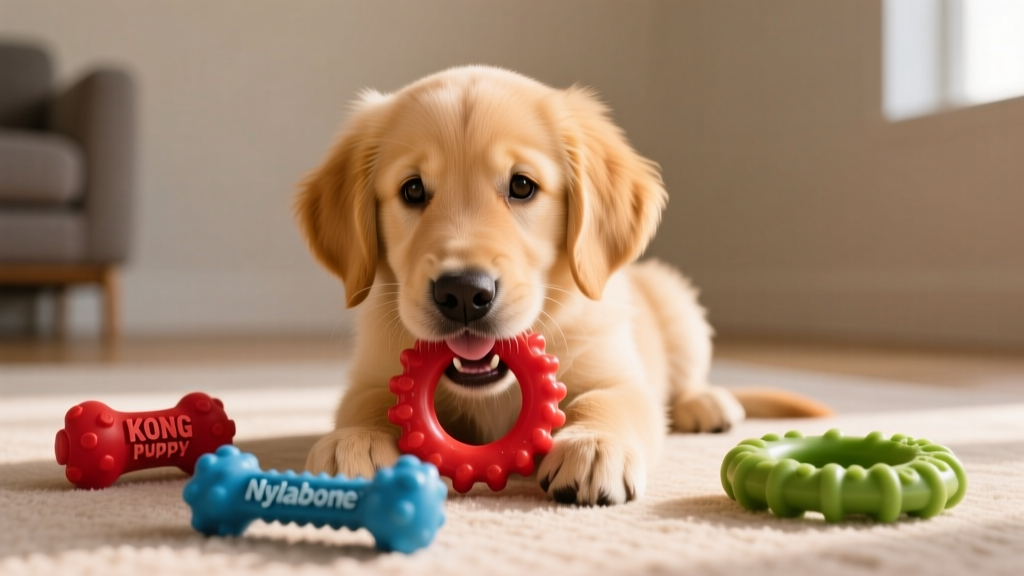
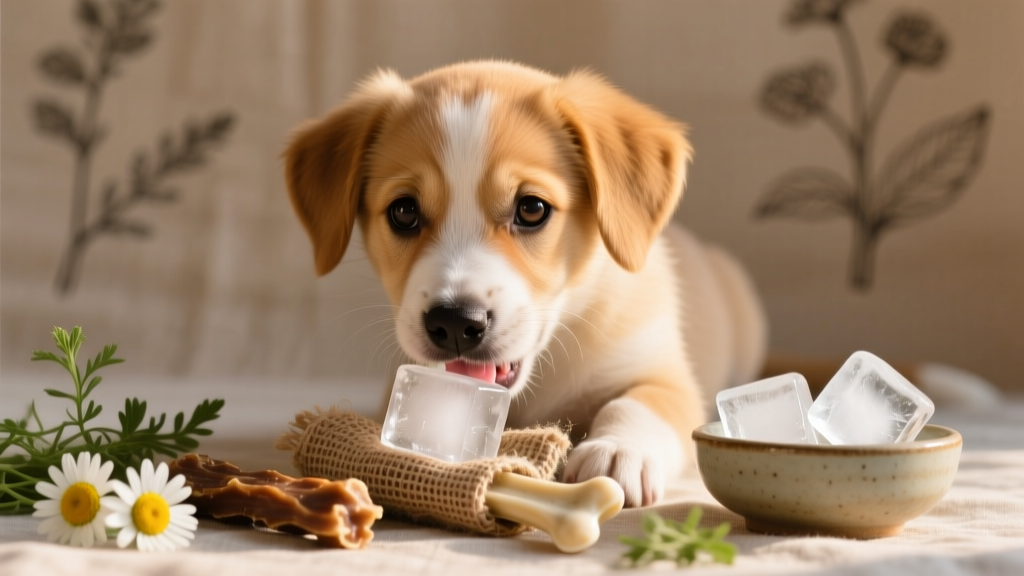
- Frozen Kong Classic (rubber, size Large or XL): Stuff with plain yogurt, mashed banana, or puppy-safe peanut butter (xylitol-free). Freeze for 4+ hours. The cold numbs gums while the rubber texture satisfies chewing urges.
- Benebone Puppy Wishbone: Nylon chew designed for puppies under 60 lb — softer than adult versions. Replace when worn down significantly.
- Frozen carrots: Whole large carrots, frozen. Excellent low-calorie option. Supervise to prevent choking on large broken pieces.
- Wet washcloth twist: Wet a clean washcloth, twist into a rope, freeze. Supervise use and discard if threads come loose.
- Nylabone Puppy Chew (Power Chew line): Textured surface helps clean teeth while soothing gums. Choose the puppy-specific formula, not adult hardness.
Common Tibetan Dog Puppy Problems and Solutions
Every breed has its characteristic puppy challenges. Tibetan Mastiff puppies present a specific set of behaviors rooted in their guarding heritage and independent temperament.
Puppy Biting and Nipping
How do you stop a Tibetan dog puppy from biting? All puppies mouth and nip, but Tibetan Mastiffs have powerful jaws even at 10 weeks old. The goal is not to eliminate mouthing entirely (it's developmentally normal) but to teach bite inhibition — the ability to control jaw pressure.
Step-by-step approach:
- When teeth touch skin, say "ouch" in a calm, firm tone and immediately withdraw attention for 10-15 seconds (stand up, turn away, or leave the room briefly).
- Return and redirect to an approved chew toy. Praise enthusiastically when puppy chews the toy.
- If biting continues, end the play session entirely. Puppies often bite more when overtired — this may signal nap time.
- Never hold the puppy's mouth shut, alpha roll, or use physical punishment. These methods damage trust and can escalate defensive biting in a breed already predisposed to wariness.
Bite inhibition training should show improvement by 16 weeks, with significant reduction by 5-6 months as adult teeth fully erupt.
Nighttime Whining in the Crate
Tibetan Mastiff puppies are vocal. Nighttime whining typically stems from three causes: needing to eliminate, loneliness/fear, or testing whether whining produces attention.
Solutions:
- Place the crate in your bedroom for the first 2-3 weeks so your puppy can hear and smell you. Gradually move it to the desired permanent location.
- If whining occurs within 2 hours of the last potty break, it's likely not elimination-related. Wait 2-3 minutes to see if the puppy self-soothes before intervening.
- Use a white noise machine or a Snuggle Puppy (a plush toy with a heartbeat simulator) to provide comfort.
- Never reward whining by letting the puppy out of the crate — this reinforces the behavior. Wait for a moment of silence before opening the door.
Destructive Chewing Beyond Teething
If your Tibetan dog puppy continues destroying household items past the teething phase, evaluate three factors:
- Exercise: Is your puppy getting adequate physical activity? Aim for 5 minutes of structured exercise per month of age, twice daily (e.g., a 4-month-old gets 20 minutes per walk).
- Mental stimulation: Puzzle feeders, snuffle mats, and training sessions tire a Tibetan Mastiff puppy more effectively than physical exercise alone.
- Management: Puppy-proof your home. Use baby gates, crate when unsupervised, and rotate chew toys to maintain novelty.
When Can Your Tibetan Dog Puppy Go Outside and Meet Other Dogs?
This is one of the most common questions new owners ask, and the answer balances disease risk against the critical need for socialization.
Controlled outdoor exposure (weeks 8-16): Your puppy can explore your own yard (if no unvaccinated dogs have access), be carried on walks in your arms or a sling, and visit the homes of friends with known-vaccinated, friendly dogs. Avoid public dog parks, pet store floors, and high-traffic dog areas until the full vaccination series is complete (typically 16-18 weeks).
Puppy classes: The AVSAB recommends starting puppy socialization classes as early as 7-8 weeks, provided all puppies in the class have received at least one DHPP dose and the facility is properly sanitized. These controlled environments are generally lower-risk than uncontrolled public spaces.
Full outdoor access (after 16-18 weeks): Once your puppy has received the final DHPP booster at 14-16 weeks plus a 2-week waiting period for full immunity, they can safely visit dog parks, hiking trails, and other public areas. However, for a Tibetan Mastiff puppy, dog parks require careful management — these dogs often don't play well in large, chaotic groups and may react defensively to unfamiliar dogs rushing toward them.
First-Year Cost Breakdown for a Tibetan Dog Puppy
Budgeting accurately prevents sticker shock. Giant-breed puppies cost significantly more than smaller breeds across every category — food, medication, supplies, and veterinary care all scale with size.
| Category | Low Estimate | Average | High Estimate | Notes |
|---|---|---|---|---|
| Puppy Purchase (Breeder) | $2,500 | $4,000 | $7,000+ | Responsible breeders with OFA health testing; adoption fees $200-$600 |
| Veterinary Care (Routine) | $800 | $1,200 | $1,800 | Vaccines, deworming, spay/neuter, microchip, wellness exams |
| Food (Large-Breed Puppy Formula) | $800 | $1,200 | $1,800 | Premium brands; giant breeds eat 4-7 cups/day by month 9 |
| Supplies (Crate, Bed, Leash, Bowls, Toys) | $400 | $700 | $1,200 | XL crate, orthopedic bed, heavy-duty toys for powerful jaws |
| Training (Puppy Classes + Private Sessions) | $300 | $600 | $1,500 | Group classes $150-$300/session block; private trainer $80-$150/hour |
| Preventive Medications | $300 | $500 | $700 | Heartworm, flea/tick prevention — dosed by weight, higher for giant breeds |
| Grooming | $200 | $400 | $800 | Professional grooming every 8-12 weeks; heavy shedding season may require more |
| Pet Insurance (Optional) | $600 | $900 | $1,200 | $50-$100/month; strongly recommended for giant breeds |
| TOTAL FIRST YEAR | $5,900 | $9,500 | $16,000+ | Excludes emergency veterinary care |
Emergency fund recommendation: Set aside an additional $2,000-$5,000 for unexpected veterinary emergencies. Giant-breed puppies are susceptible to conditions like bloat (GDV surgery: $3,000-$7,000), hip dysplasia diagnostics ($500-$1,500 for OFA radiographs), and foreign body ingestion surgery ($2,000-$5,000). Pet insurance can offset much of this, but deductibles and co-pays still apply.
Frequently Asked Questions
How often should I feed my Tibetan dog puppy at 8 weeks?
At 8 weeks old, feed your Tibetan Mastiff puppy 3-4 meals per day, totaling approximately 2-3 cups of large-breed puppy kibble daily. Divide the daily portion evenly across meals. For example, if feeding 2.5 cups total, offer roughly ⅔ cup per meal across 4 feedings. Always provide fresh water and remove uneaten food after 15-20 minutes to establish a routine.
When will my Tibetan dog puppy be fully potty trained?
Most Tibetan Mastiff puppies achieve reliable house training between 4 and 6 months of age, assuming consistent scheduling and positive reinforcement. Some individuals, particularly males, may have occasional accidents or marking behavior until 8-10 months. If your puppy is still having frequent accidents past 6 months, consult your veterinarian to rule out urinary tract infections or anatomical issues.
What vaccines does my Tibetan dog puppy need and when?
Core vaccines include DHPP (Distemper, Hepatitis/Adenovirus, Parainfluenza, Parvovirus) given at 6-8 weeks, 10-12 weeks, and 14-16 weeks, plus Rabies at 14-16 weeks. Non-core vaccines like Bordetella, Leptospirosis, and Lyme disease depend on your puppy's lifestyle and geographic location. Your veterinarian will create a customized protocol at your first wellness visit.
How do I stop my Tibetan dog puppy from biting my hands?
Redirect biting to approved chew toys every time teeth touch skin. Use the "ouch" method: say "ouch" calmly, withdraw attention for 10-15 seconds, then return with a toy. End play sessions if biting persists — overtired puppies bite more. Consistency from all family members is critical. Expect noticeable improvement by 16 weeks with daily practice.
Are Tibetan Mastiff puppies good with children?
Tibetan Mastiff puppies raised alongside respectful, supervised children can develop strong bonds. However, this breed's independent nature and guarding instincts mean they are not naturally "nanny dogs." Teach children never to disturb a sleeping puppy, pull ears or tail, or approach while the puppy is eating. Always supervise interactions. The puppy's size alone — 40+ lb by 4 months — can accidentally knock over small children during play.
Jonas Cole
All our authors care for dogs every day — read more of their work on the authors page.