Teacup Pomeranian Puppies: Week-by-Week Growth, Feeding & Training Guide
Complete guide to teacup Pomeranian puppies: age milestones, feeding portions, potty training timeline, vaccination schedule, and first-year costs for

If you're bringing home a teacup Pomeranian puppy, you're signing up for one of the most rewarding — and one of the most demanding — puppy experiences in the toy breed world. These tiny dogs, typically weighing 3 to 7 pounds (1.4 to 3.2 kg) at maturity, require meticulous attention to feeding schedules, blood sugar monitoring, and gentle socialization that larger breeds simply don't demand at the same intensity.
This guide walks you through every critical week of your teacup Pomeranian puppy's first year, with specific portions, timelines, and troubleshooting strategies drawn from veterinary toy-breed protocols and experienced breeder practices.
What Is a Teacup Pomeranian, and When Should You Bring One Home?
The term "teacup Pomeranian" is not a separate breed recognized by the American Kennel Club. It refers to Pomeranians bred to fall below the AKC breed standard weight range of 3 to 7 pounds (1.4–3.2 kg), often landing at 3 to 5 pounds (1.4–2.3 kg) as adults. Some breeders use "teacup," "miniature," or "toy" interchangeably, but the key metric is projected adult weight based on growth charts and parental size.
Age-Specific Milestones: What to Expect Week by Week
Teacup Pomeranian puppies develop on a compressed but delicate timeline. Here's what's happening at each stage and what you should be doing.
Weeks 4–8: Breeder's Domain (Pre-Adoption)
- Weight: 8 oz to 1.5 lb (225 g to 680 g)
- Development: Eyes and ears fully open, baby teeth erupting, first interest in solid food (gruel/mush), critical socialization with littermates begins
- Your role: If visiting the breeder, handle the puppy gently for short sessions (5–10 minutes). Observe that the puppy is active, has clear eyes, and shows curiosity rather than lethargy
Weeks 8–12: Transition and Bonding
- Weight: 1 to 2.5 lb (450 g to 1.1 kg)
- Development: Peak fear period (8–11 weeks) — negative experiences can create lasting phobias. Baby teeth fully in. Bladder capacity is extremely small (roughly 30–45 minutes between eliminations)
- Your role: Establish feeding routine immediately. Begin name recognition. Keep experiences positive — no harsh corrections. Limit visitors to 2–3 calm people per day to prevent overstimulation
Weeks 12–16: Confidence Building
- Weight: 1.5 to 3 lb (680 g to 1.4 kg)
- Development: Second fear period may emerge around 12 weeks. Puppy begins testing boundaries. Attention span increases to 5–10 minutes for training
- Your role: Start structured positive-reinforcement training sessions (2–3 minutes, 3–4 times daily). Begin leash introduction indoors. Increase environmental variety
Weeks 16–24: Adolescence Begins
- Weight: 2.5 to 4.5 lb (1.1 to 2 kg)
- Development: Adult teeth begin erupting (teething peak). Coat transitions from puppy fluff to adult double coat — expect an awkward "ugly duckling" phase. Energy surges followed by sudden naps
- Your role: Intensify chew management. Begin grooming desensitization (brushing, nail trims). Reinforce recall before adolescent independence kicks in
Months 6–12: Approaching Maturity
- Weight: 3 to 5 lb (1.4 to 2.3 kg) — approaching adult size by 9–10 months
- Development: Sexual maturity (spay/neuter typically recommended around 6 months per your vet's assessment). Adult coat fully developing. Behavioral patterns solidifying
- Your role: Transition to adult feeding schedule. Evaluate training gaps. Maintain socialization exposure to prevent toy-breed reactivity
Feeding Schedule: Exact Portions by Age and Weight
Hypoglycemia (dangerously low blood sugar) is the number-one nutritional emergency in teacup Pomeranian puppies under 4 months old. Their tiny livers cannot store adequate glycogen, meaning missed or delayed meals can lead to lethargy, seizures, or collapse within hours. Consistent feeding isn't just good practice — it's a medical necessity.
| Age | Meals Per Day | Portion Per Meal | Daily Total | Food Type |
|---|---|---|---|---|
| 8–10 weeks | 4 meals | 2–3 Tbsp | ¼ to ⅓ cup | Puppy kibble soaked in warm water or puppy-formulated wet food |
| 10–12 weeks | 4 meals | 3–4 Tbsp | ⅓ to ½ cup | Small-breed puppy kibble (dry or lightly moistened) |
| 3–4 months | 3–4 meals | 3–4 Tbsp | ⅓ to ½ cup | Small-breed puppy kibble, dry |
| 4–6 months | 3 meals | 4–5 Tbsp | ½ to ⅔ cup | Small-breed puppy kibble, dry |
| 6–12 months | 2–3 meals | ¼ to ⅓ cup | ½ to ¾ cup | Transition to adult small-breed formula around 9–10 months |
Choose an AAFCO-certified small-breed or toy-breed puppy formula. Kibble size matters — look for formulas with pieces under 8 mm designed for dogs under 10 pounds. Brands like Royal Canin X-Small Puppy, Hill's Science Diet Small Paws Puppy, and Purina Pro Plan Toy Breed Puppy are formulated with the higher caloric density (400–450 kcal/cup) that teacup Poms need.
Vaccination Schedule for Teacup Pomeranian Puppies
Toy breeds can be more sensitive to vaccine reactions than larger dogs. The AVMA recommends the same core vaccine protocol, but your vet may choose to space vaccines two weeks apart rather than combining multiple shots in one visit to reduce adverse reaction risk.
| Age | Vaccine | Notes |
|---|---|---|
| 6–8 weeks | DHPP (Distemper, Hepatitis, Parainfluenza, Parvovirus) — 1st dose | Often administered by breeder. Confirm records before pickup. |
| 10–12 weeks | DHPP — 2nd dose; Bordetella (optional, based on lifestyle) | Your first vet visit. Discuss spacing if puppy had a reaction to the first dose. |
| 14–16 weeks | DHPP — 3rd dose; Rabies (at or after 12 weeks, often given at 16 weeks) | Rabies is legally required. Some vets give it at a separate appointment from DHPP in toy breeds. |
| 12–16 months | DHPP booster; Rabies booster | After this, boosters typically every 1–3 years depending on local law and vet protocol. |
When can your puppy go outside or meet other dogs? Until the full DHPP series is complete (after the 14–16 week dose), avoid dog parks, pet store floors, and areas where unknown dogs have been. You can carry your puppy in a sling or stroller for environmental exposure — seeing traffic, hearing noises, meeting calm vaccinated adult dogs in controlled settings — as early as 8 weeks. This controlled exposure during the socialization window is essential.
The Socialization Window: Weeks 3–14
The Merck Veterinary Manual identifies the primary socialization period in puppies as roughly 3 to 14 weeks. For teacup Pomeranians, this window is especially consequential because toy breeds are predisposed to fear-based reactivity, excessive barking, and stranger anxiety if under-socialized.
Here's your exposure checklist — aim for positive, brief encounters across these categories before week 14:
Socialization Checklist for Teacup Pomeranian Puppies
- People: At least 10 different people — varying ages, genders, heights, skin tones, and clothing styles (hats, sunglasses, hoodies, uniforms)
- Handling: Daily gentle handling of paws, ears, mouth, tail base, and belly — 30 seconds each area, paired with treats
- Surfaces: Walk on grass, gravel, tile, carpet, wood floors, metal grates, and wet surfaces
- Sounds: Vacuum cleaner, doorbell, thunderstorm recordings (low volume), traffic, children playing, clapping — start at low volume, pair with treats
- Objects: Umbrellas opening, bags rustling, bicycles passing, strollers, skateboards
- Other animals: Supervised exposure to calm, vaccinated adult dogs (not puppies of unknown status). Cat exposure only if controlled and safe
- Environments: Car rides (5–10 minutes), outdoor patio seating, friend's homes, quiet parking lots
- Grooming tools: Soft brush near face and body, nail clippers touching nails (no cutting yet), toothbrush in mouth
Potty Training Timeline and Troubleshooting
When will your teacup Pomeranian be fully potty trained? Set realistic expectations: most teacup Pomeranian puppies achieve reliable house training between 4 and 6 months of age, though some take up to 8 months. Their bladders are physically tiny — a 2-pound puppy can hold urine for roughly 30 to 45 minutes at 8–10 weeks, increasing to about 2 hours by 4 months.
This is not a breed you can train in a weekend. Consistency over months is the only path to success.
Potty Training Progression
| Age | Outdoor Trips Per Day | Expected Hold Time | Strategy |
|---|---|---|---|
| 8–10 weeks | Every 30–45 min (12–16 trips) | 30–45 minutes | Carry outside after every meal, nap, and play session. Use a consistent cue word ("go potty"). Reward immediately with a tiny treat. |
| 10–14 weeks | Every 1–1.5 hours (8–12 trips) | 1–1.5 hours | Begin crate-assisted training. Take out immediately upon waking. Supervise 100% when not crated. |
| 3–4 months | Every 1.5–2 hours (6–8 trips) | 2–3 hours | Gradually extend interval by 15 minutes per week. Continue heavy reward schedule. |
| 4–6 months | Every 2–3 hours (5–6 trips) | 3–4 hours | Begin fading treat frequency (every other success, then random). Watch for regression during teething or stress. |
| 6–12 months | Every 3–4 hours (4–5 trips) | 4–6 hours | Establish adult routine: morning, midday, late afternoon, bedtime. Praise remains important even after reliability. |
Common troubleshooting: If your puppy has accidents despite frequent trips, rule out urinary tract infection (common in toy breeds — see your vet). Avoid punishment entirely; scolding a teacup Pom for accidents typically makes them afraid to eliminate in front of you, leading to sneaky hiding-spot accidents. Enzyme-based cleaners (Nature's Miracle, Rocco & Roxie) are essential to eliminate scent markers that draw puppies back to accident sites.
Some teacup Pom owners use indoor potty systems (Puppy Go Here litter boxes, UgoDog trays with real grass pads) as a weather backup — particularly useful in cold climates where a 3-pound puppy can become chilled in minutes outdoors.
Crate Training Progression and Time Limits
Crate training is essential for teacup Pomeranians — both for potty training support and for creating a safe den where your puppy won't be accidentally stepped on or crushed on furniture. Choose a crate sized for the puppy's adult dimensions (approximately 18" x 12" x 14" for a 4–5 lb dog) with a divider panel to limit space during puppyhood.
| Age | Maximum Crate Time (Daytime) | Overnight | Notes |
|---|---|---|---|
| 8–10 weeks | 30–45 minutes | 2–3 hours (set alarm for potty break) | Crate near your bed. Feed meals in crate with door open. |
| 10–14 weeks | 1–1.5 hours | 3–4 hours | Begin closing door during meals. Short departures from room. |
| 3–4 months | 1.5–2 hours | 4–5 hours | Practice leaving the house for 5–10 minutes. Leave a safe chew toy. |
| 4–6 months | 2–3 hours | 6–7 hours | Can begin moving crate to a separate room if puppy is settled. |
| 6–12 months | 3–4 hours | 7–8 hours | Never exceed 4 hours daytime crating without a potty break. |
Teething Timeline and Relief Strategies (3–6 Months)
Teacup Pomeranian puppies begin losing their 28 baby teeth around 12 to 16 weeks, with all 42 adult teeth typically erupted by 6 to 7 months. Toy breeds are particularly prone to retained deciduous teeth — baby teeth that don't fall out when the adult tooth emerges. This creates crowding, misalignment, and periodontal disease risk.
What to watch for: Check your puppy's mouth weekly starting at 3 months. If you see an adult tooth emerging behind or beside a baby tooth that hasn't loosened, schedule a veterinary dental check. Extraction of retained baby teeth is common in Pomeranians and typically costs $50–$150 per tooth.
Safe Teething Relief Options
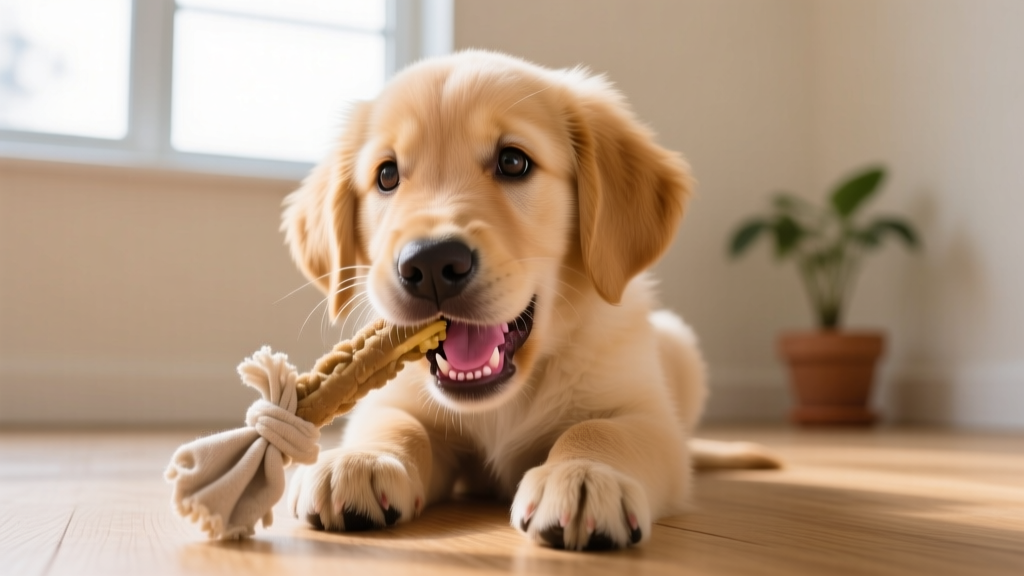
- Frozen washcloth: Wet a clean washcloth, twist into a rope, freeze for 2 hours. Supervise chewing and remove when pieces tear off
- Kong Classic (XS size): Fill with puppy-safe peanut butter (xylitol-free) or plain yogurt and freeze
- Nylabone Puppy Chew (X-Small, under 15 lb rating): Designed to be softer than adult versions
- Benebone Puppy (Tiny, under 15 lb): Z-shaped design is easy for small paws to grip
- Chilled carrot sticks: Peeled, cut to pinky-finger length — supervise to prevent choking
Avoid: Rawhide (choking and blockage risk in tiny dogs), hard nylon bones rated for larger dogs (can fracture puppy teeth), ice cubes (too hard for developing teeth), and any chew smaller than your puppy's mouth that could be swallowed whole.
Common Teacup Pomeranian Puppy Problems and Solutions
Puppy Biting and Nipping
How do you stop puppy biting? Teacup Pom puppies bite for the same reasons all puppies do — teething discomfort, play drive, and exploration. But their tiny jaws and needle-sharp baby teeth can make nipping surprisingly painful.
Use the redirection method: when teeth touch skin, say "ouch" in a calm tone (not a yell — toy breeds startle easily), immediately withdraw attention for 10–15 seconds, then offer an appropriate chew toy. When the puppy chews the toy, reward with praise and a treat. This teaches bite inhibition without fear. Never hold the puppy's mouth shut, tap their nose, or use any aversive technique — these methods damage trust and can escalate fear-based biting in sensitive toy breeds.
Excessive Whining and Crying
Teacup Pomeranians are vocal dogs, and puppies are especially prone to whining when crated, left alone, or seeking attention. Distinguish between needs-based whining (potty, hunger, pain) and attention-seeking whining.
For crate whining: ensure potty needs are met, then wait for a 3-second pause in whining before opening the crate. This teaches that quiet — not noise — opens the door. For nighttime whining, place the crate near your bed initially and gradually move it to the desired location over 2–3 weeks.
Destructive Chewing
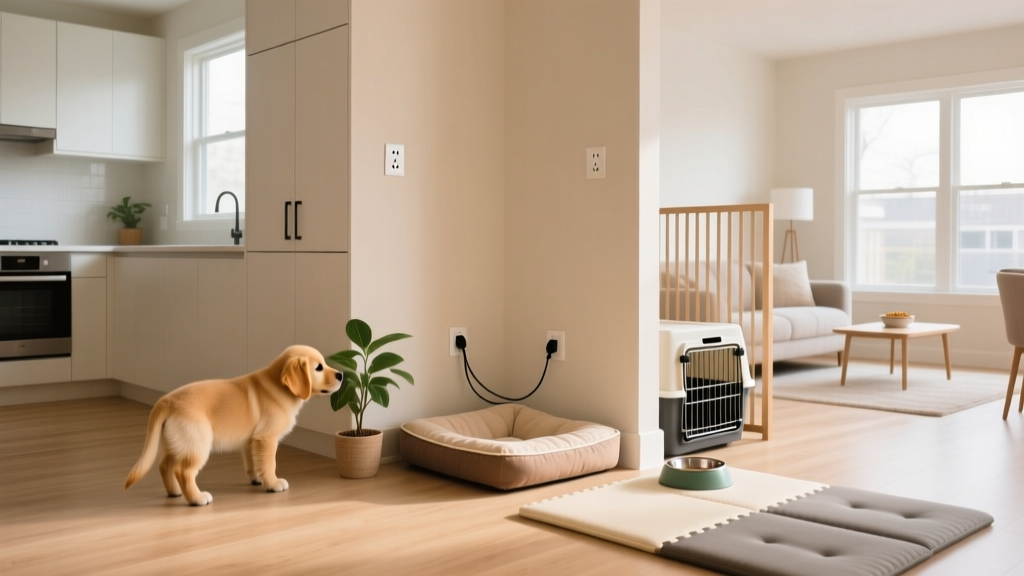
During the 3–6 month teething window, your puppy will chew everything within reach. Puppy-proof at teacup-Pom level: electrical cords behind furniture, shoes on high shelves, and small objects (coins, buttons, children's toys) that pose choking or intestinal blockage hazards. Provide 4–5 approved chew options rotated daily to maintain novelty.
First-Year Cost Breakdown for a Teacup Pomeranian
Budgeting accurately prevents financial surprises. Here's a realistic first-year cost range for a teacup Pomeranian in the United States, based on 2025–2026 pricing data.
| Category | Low Estimate | Average | High Estimate |
|---|---|---|---|
| Puppy purchase (responsible breeder) | $2,500 | $4,000 | $7,000+ |
| Initial vet visit + vaccinations (full series) | $300 | $450 | $650 |
| Spay/neuter | $300 | $500 | $800 |
| Food (12 months, premium small-breed) | $180 | $280 | $400 |
| Supplies (crate, bed, harness, bowls, gates) | $150 | $300 | $500 |
| Grooming (professional, every 6–8 weeks) | $300 | $450 | $700 |
| Preventive medications (flea/tick, heartworm) | $120 | $200 | $300 |
| Training (group puppy class, 6–8 weeks) | $100 | $200 | $400 |
| Pet insurance (annual premium) | $300 | $500 | $700 |
| Emergency fund recommendation | $500 | $1,000 | $2,000 |
| TOTAL FIRST YEAR | $4,750 | $7,880 | $13,450 |
Toy breeds like the teacup Pomeranian tend to have higher dental care costs over their lifetime and are more susceptible to tracheal collapse (always use a harness, never a collar, for leash walking). Pet insurance is strongly recommended — companies like Trupanion, Healthy Paws, and Nationwide offer plans starting around $25–$50/month for toy breeds when enrolled before 6 months of age, before any pre-existing conditions develop.
Frequently Asked Questions About Teacup Pomeranian Puppies
How often should I feed my teacup Pomeranian puppy at 10 weeks old?
At 10 weeks, feed four meals per day spaced roughly 4 hours apart during waking hours (for example: 7 AM, 11 AM, 3 PM, 7 PM). Each meal should be approximately 3 to 4 tablespoons of a high-quality small-breed puppy food. Free-feeding (leaving food out all day) is sometimes recommended for toy breeds to prevent hypoglycemia, but it makes potty training significantly harder. If you free-feed, transition to scheduled meals by 4 months.
When can my teacup Pomeranian puppy go to the dog park?
Wait until at least 2 weeks after the final DHPP vaccine (given at 14–16 weeks), which typically means around 16–18 weeks of age. Even then, dog parks carry risks for a 3-pound puppy — larger dogs can accidentally injure a teacup Pom during play. Many experienced Pom owners skip dog parks entirely and instead arrange controlled playdates with known, vaccinated, similarly sized dogs.
My puppy is shaking and won't eat — is this an emergency?
Possibly. Trembling combined with food refusal in a teacup Pomeranian puppy under 4 months old can signal hypoglycemia, which is a medical emergency. Rub a small amount of Karo syrup or honey on the puppy's gums and contact your veterinarian or the nearest emergency clinic immediately. If symptoms don't improve within 15–20 minutes, seek emergency care without delay.
Is it normal for my teacup Pom puppy to sleep 18 hours a day?
Yes. Puppies of all breeds sleep 16–20 hours per day, and toy breeds tend toward the higher end of that range. Your puppy should be bright-eyed and playful during waking periods. If lethargy persists despite adequate food intake and your puppy is difficult to rouse, consult your veterinarian to rule out hypoglycemia, infection, or a congenital condition such as a liver shunt.
Should I get pet insurance for my teacup Pomeranian?
Strongly recommended. Teacup Pomeranians are predisposed to patellar luxation (kneecap dislocation), tracheal collapse, dental disease requiring extractions, and collapsing trachea — all of which can require expensive treatment. Enrolling before 6 months ensures these conditions are covered rather than classified as pre-existing. Expect premiums of $30–$55/month for comprehensive accident-and-illness plans.
Marcus Aldridge
All our authors care for dogs every day — read more of their work on the authors page.