Tea Cups Puppies: The Complete Puppy Care Guide for Tiny Breeds
Everything you need to raise tea cups puppies — feeding schedules, potty training timelines, vaccination plans, socialization checklists, and first-year costs.

If you've decided to bring home one of those impossibly tiny tea cups puppies, congratulations — and prepare yourself. These pint-sized dogs (typically Chihuahuas, Pomeranians, Yorkshire Terriers, Maltese, or Poodle mixes bred to stay under 5 pounds) come with a unique set of challenges that standard puppy guides simply don't address. Their small size means faster metabolisms, more fragile bones, heightened vulnerability to hypoglycemia, and a potty training process that demands serious patience.
This guide walks you through every critical stage of your teacup puppy's first year, with exact numbers, realistic timelines, and breed-specific solutions. We'll cover the weeks when your puppy is most vulnerable, the feeding portions that prevent blood sugar crashes, and the socialization window that shapes their entire personality.
When Should You Bring Your Teacup Puppy Home?
For standard-breed puppies, 8 weeks is widely considered the earliest acceptable age to leave the litter. For tea cups puppies, many responsible breeders and veterinarians recommend waiting until 10 to 12 weeks. Here's why:
- Hypoglycemia risk: Teacup puppies (especially under 2 lb / 0.9 kg) have minimal fat reserves and can develop dangerously low blood sugar within hours of missing a meal. The extra weeks with the mother and littermates help stabilize their eating patterns.
- Immune development: Smaller puppies often mature more slowly immunologically. Those additional weeks allow for at least one more round of vaccinations before the stress of relocation.
- Social skills: Weeks 8–12 are critical for learning bite inhibition and canine communication from littermates. Removing a teacup puppy too early often results in heightened fear responses and excessive nipping.
If a breeder offers you a teacup puppy at 6 weeks, consider this a significant red flag. According to the American Veterinary Medical Association, early separation from the litter is associated with increased behavioral problems including separation anxiety, fear-based aggression, and difficulty with housetraining.
Teacup Puppy Milestones: Week-by-Week Development Timeline
Understanding what's normal at each stage helps you catch problems early and set realistic expectations. Teacup puppies often hit milestones slightly later than their larger counterparts.
| Age Range | Developmental Milestones | What You Should Do |
|---|---|---|
| Weeks 4–8 (at breeder) |
Eyes and ears fully functional. First baby teeth erupt. Begin weaning onto soft food. Start exploring beyond whelping box. Fear period begins around week 8. | Breeder should handle puppies daily, introduce varied textures/sounds, begin litter-box or pad training. First deworming at 2, 4, 6 weeks. |
| Weeks 8–12 (homecoming) |
Peak socialization window opens. Rapid brain development. Bladder capacity: approximately 1 hour per month of age. Teething discomfort begins. Fear imprinting period (8–11 weeks) — negative experiences can create lasting phobias. | Establish feeding schedule (4 meals/day). Begin crate training. Short, positive exposure to new surfaces, sounds, people. No dog parks yet — carry puppy for outdoor socialization. |
| Weeks 12–16 | Bladder control improves (2–3 hours). Baby teeth start loosening. Second fear period may appear around 14 weeks. Testing boundaries with nipping and barking. Growth rate begins to slow. | Transition to 3 meals/day. Introduce basic commands (sit, come, name recognition). Continue socialization with vaccinated dogs only. Puppy kindergarten classes (after final vaccine). |
| Weeks 16–24 | Adult teeth replacing baby teeth (expect chewing surge). Potty training should be mostly reliable with consistency. Adolescent energy spikes. May regress on previously learned commands. | Provide appropriate chew toys (see teething section). Maintain training consistency. Begin short leash walks (5 min per month of age). Socialization window closing — maximize positive exposures. |
| Months 6–12 | Approaching adult size (teacup breeds typically reach full size by 8–10 months). Sexual maturity — spay/neuter window. Adult coat replacing puppy coat. Energy levels begin to stabilize. | Transition to 2 meals/day. Discuss spay/neuter timing with your vet (typically 6–9 months for toy breeds). Continue reinforcement training. Annual wellness exam scheduling. |
Feeding Schedule: Exact Portions for Teacup Puppies
Teacup puppies have disproportionately high metabolic rates relative to their body size. A 2-pound puppy burns calories roughly twice as fast per pound as a 50-pound dog. This means missing even one meal can trigger hypoglycemia — a potentially life-threatening drop in blood sugar that causes lethargy, tremors, seizures, and collapse.
Feed a high-quality, AAFCO-approved small-breed puppy formula. Look for kibble sized for tiny mouths (brands like Royal Canin X-Small Puppy, Hill's Science Diet Small Paws Puppy, or Purina Pro Plan Toy Breed Puppy).
| Age | Meals Per Day | Daily Portion (Estimated) | Notes |
|---|---|---|---|
| 8–12 weeks (1–3 lb / 0.5–1.4 kg) |
4 meals (every 4 hours while awake) |
¼ to ⅓ cup dry kibble per day, divided into 4 portions (~1–1.3 Tbsp per meal) |
Moisten kibble with warm water. Keep Nutri-Cal or corn syrup on hand for hypoglycemia emergencies. Free-feed is acceptable at this age for puppies under 2 lb. |
| 12–16 weeks (2–4 lb / 0.9–1.8 kg) |
3–4 meals | ⅓ to ½ cup per day, divided | Can transition to dry kibble. Monitor body condition score — ribs should be easily felt but not visible. |
| 4–6 months (3–5 lb / 1.4–2.3 kg) |
3 meals | ½ to ⅔ cup per day, divided | Growth rate slowing. Adjust portions if puppy gains too rapidly (obesity stresses tiny joints). |
| 6–12 months (approaching adult weight) |
2 meals | ⅓ to ½ cup per day (adult maintenance), divided | Transition to adult small-breed formula around 9–12 months. Consult your vet for exact caloric needs. |
Vaccination Schedule for Teacup Puppies
Teacup puppies follow the same core vaccination protocol as larger breeds, but their tiny body mass means some veterinarians adjust the approach. A common concern is vaccine reaction risk — toy breeds are statistically more likely to experience adverse reactions, particularly to combination vaccines.
Your veterinarian will determine the exact protocol, but here's the standard timeline based on Merck Veterinary Manual guidelines:
| Age | Vaccines | Notes |
|---|---|---|
| 6–8 weeks | DHPP (Distemper, Hepatitis/Adenovirus, Parainfluenza, Parvovirus) — 1st dose | Often given by breeder. Some vets separate distemper/parvo from other components for toy breeds to reduce reaction risk. |
| 10–12 weeks | DHPP — 2nd dose Bordetella (optional, if attending puppy classes) Leptospirosis (optional, risk-based) |
Puppy still NOT fully protected. Avoid dog parks, pet store floors, and unknown dogs. Carry puppy for outdoor socialization. |
| 14–16 weeks | DHPP — 3rd (final) dose Rabies (required by law in most US states) |
Full immunity develops approximately 2 weeks after final DHPP. After this point, puppy can safely visit dog parks and meet unknown vaccinated dogs. |
| 12–16 months | DHPP booster Rabies booster (1-year or 3-year depending on local law) |
After the 1-year booster, DHPP is typically given every 3 years. Discuss titer testing as an alternative with your vet. |
Teacup-specific vaccine tips:
- Ask your vet about spacing vaccines 2–3 weeks apart rather than giving multiple shots in one visit. This reduces adverse reaction risk in dogs under 5 lb.
- Monitor your puppy closely for 24–48 hours after each vaccine. Mild lethargy and soreness are normal; facial swelling, vomiting, difficulty breathing, or collapse require immediate emergency vet care.
- Keep a written record of every vaccine with date, manufacturer, and lot number.
The Critical Socialization Window: Weeks 3–14
The primary socialization period for all puppies closes between 12 and 14 weeks of age. For tea cups puppies, this window is especially important because their small size makes them naturally more prone to fear-based behaviors. A poorly socialized teacup dog is more likely to become a fearful biter — and even a tiny dog's bite can break skin and create liability issues.
According to the AVMA, puppies need positive, controlled exposures to a wide variety of stimuli during this window. Here's your exposure checklist:
Aim for at least 2–3 new positive experiences per day. Keep sessions short (5–10 minutes). Always pair new experiences with high-value treats (small bits of boiled chicken, freeze-dried liver).
People (expose to at least 10 different people):
- ☐ Men with beards, hats, sunglasses
- ☐ Children (supervised, gentle handling only — teacup puppies are easily injured)
- ☐ People in uniforms, delivery workers
- ☐ People using canes, wheelchairs, or crutches
- ☐ People of different heights, skin tones, and body types
Surfaces and environments:
- ☐ Grass, gravel, sand, tile, carpet, metal grates
- ☐ Car rides (short trips, positive associations)
- ☐ Elevators, automatic doors
- ☐ Vacuum cleaner sounds, doorbells, thunderstorm recordings (play at low volume)
Handling exercises (daily):
- ☐ Touch paws, ears, mouth, tail gently — reward calm behavior
- ☐ Practice nail trim positions (don't actually trim yet, just hold)
- ☐ Gentle restraint practice (for vet visits)
- ☐ Toothbrush introduction (finger brush, dog-safe toothpaste)
Other animals (only fully vaccinated, known-temperament dogs):
- ☐ Supervised play with 2–3 gentle adult dogs
- ☐ Observe cats from a safe distance
- ☐ Puppy kindergarten class (after 2nd DHPP dose minimum, confirm class vaccination requirements)
When can my puppy go outside and meet other dogs? You can carry your teacup puppy outdoors immediately for socialization — just don't set them on public ground where unvaccinated dogs may have been. After the final DHPP dose at 14–16 weeks (plus 2 weeks for immunity), your puppy can safely walk in public areas and attend dog parks. However, for a 3-pound dog, dog parks carry significant injury risk from larger dogs. Structured playdates with known, gentle dogs are a safer alternative throughout your teacup's life.
Potty Training: Realistic Timelines and Troubleshooting
Let's be direct: potty training a teacup puppy is harder than training a larger breed. Their bladders are roughly the size of a tablespoon at 8 weeks old, and their metabolic rate means they process food and water faster. Here's what to actually expect:
- 8–12 weeks: Accidents every day. Take puppy out every 1–2 hours, plus immediately after eating, waking, and playing. Expect 0–2 "successes" per day on the pad or outside.
- 3–4 months: Bladder control improving. Accidents drop to a few per week if you're consistent. Puppy begins to signal (circling, sniffing, whining).
- 4–6 months: Mostly reliable with supervision. 1–2 accidents per week is still normal. Can hold for 3–4 hours during the day.
- 6–9 months: Fully reliable for most puppies. Occasional marking behavior may appear, especially in intact males.
When will my puppy be fully potty trained? Most teacup puppies achieve reliable housetraining between 5 and 8 months of age. Some take up to 12 months. This is significantly longer than larger breeds (who often master it by 4–5 months) due to the teacup's smaller bladder capacity and higher metabolism. Consistency is the single biggest factor — puppies with inconsistent schedules take 2–3 times longer.
Track these daily for the first 8 weeks to identify your puppy's natural schedule:
- Time fed: ___ : ___ AM / PM
- Time taken out: ___ : ___
- Result: Pee ☐ / Poop ☐ / Nothing ☐
- Accident location: _______________
- Accident time: ___ : ___
- What happened before accident: (playing, sleeping, eating) _______________
After 2 weeks of logging, you'll see clear patterns. Most teacup puppies need to eliminate 15–30 minutes after eating and 10–15 minutes after vigorous play.
Common potty training problems and solutions:
- Submissive/excitement urination: Common in teacup breeds. Don't greet puppy with high energy. Crouch to their level, speak softly, ignore until calm. Never punish — this worsens the problem.
- Pad dependency: If you started with pee pads (common for apartment-dwelling teacup owners), transitioning to outdoors can take 4–6 weeks. Gradually move the pad closer to the door, then outside, then remove it.
- Nighttime accidents: Set an alarm for one middle-of-night potty break until 4 months of age. Remove water 2 hours before bedtime.
Crate Training Progression and Time Limits
Crate training is essential for teacup puppies — it provides a safe space where they can't be accidentally stepped on or crushed by furniture, and it's the most effective tool for potty training. However, their tiny bladders mean strict time limits.
| Age | Maximum Crate Time (Day) | Maximum Crate Time (Night) | Crate Size Recommendation |
|---|---|---|---|
| 8–10 weeks | 1–1.5 hours | 2–3 hours (set alarm) | Extra-small (18"L x 12"W x 14"H). Use divider in larger crate to prevent soiling one corner and sleeping in another. |
| 10–14 weeks | 1.5–2 hours | 3–4 hours | Same crate. Puppy should be able to stand, turn around, and lie down comfortably — no more. |
| 3–6 months | 2–3 hours | 5–6 hours | Adjust divider as puppy grows. Final adult crate size for most teacup breeds: 18"–22" length. |
| 6–12 months | 3–4 hours | 7–8 hours | Full crate access. Add a soft bed (if puppy doesn't chew it). |
Crate training tips for teacup puppies:
- Feed meals inside the crate to build positive associations.
- Never use the crate as punishment. Your teacup's crate should feel like a den, not a jail.
- Place the crate near your bed at night so the puppy can hear and smell you — this dramatically reduces nighttime whining.
- If puppy whines after being settled and recently pottied, wait 5–10 minutes before responding. Reward silence, not noise.
Teething Timeline and Relief Strategies (3–6 Months)
Teacup puppies have 28 baby teeth that begin falling out around 12–16 weeks, replaced by 42 adult teeth by approximately 6 months. Because their mouths are so small, retained baby teeth are extremely common in toy breeds — the adult tooth erupts alongside the baby tooth, creating crowding that leads to dental disease.
What to watch for:
- Weeks 12–16: Increased chewing, mild drooling, occasional blood on toys. Baby incisors loosen first.
- Weeks 16–20: Canines and premolars shed. This is peak chewing intensity. Your puppy will want to gnaw on everything.
- Weeks 20–26: Most baby teeth should be gone. Check weekly for retained teeth (two teeth occupying the same spot). Your vet may need to extract retained baby teeth during spay/neuter surgery.
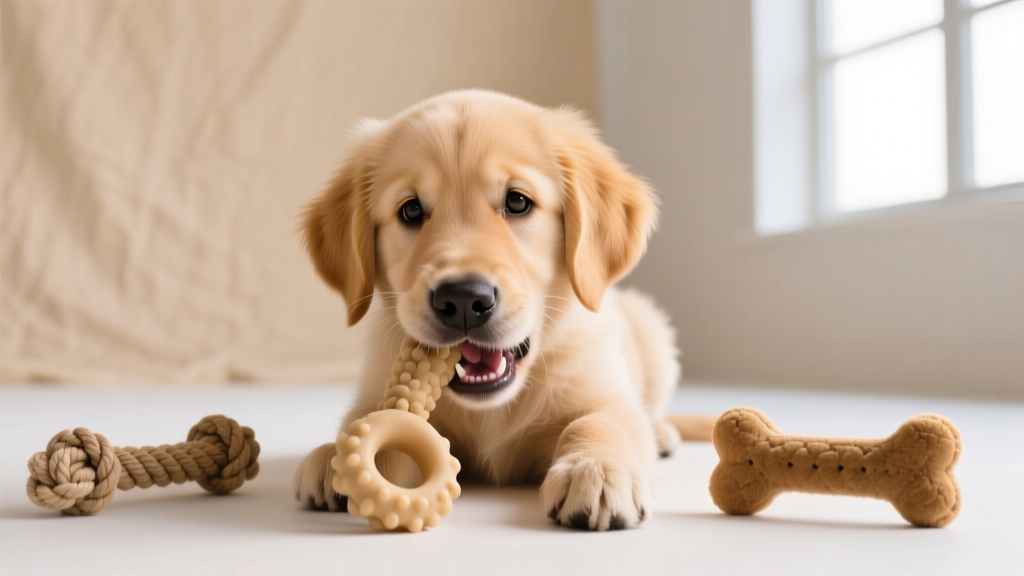
Safe chew recommendations for teacup puppies:
- KONG Puppy (XS or S): Fill with softened kibble and freeze. The cold numbs sore gums.
- Nylabone Puppy Chew (X-Small): Designed for developing teeth — softer than adult versions.
- Wet washcloth twist: Soak a clean washcloth in low-sodium chicken broth, twist into a rope, and freeze. Supervise to prevent swallowing fabric.
- Benebone Puppy (Tiny): Wishbone shape is easy for tiny paws to grip.
Common Teacup Puppy Problems and Solutions
Puppy Biting and Nipping
How do I stop puppy biting/nipping? Teacup puppies bite for the same reasons all puppies do — teething, play, and exploration. But because they're small, many owners inadvertently reinforce biting by picking the puppy up when they nip, which the puppy interprets as a fun game.
Solution (force-free, positive reinforcement method):
- When teeth touch skin, say "ouch" in a calm, neutral tone and immediately stop all interaction — stand up and look away for 10–15 seconds.
- Redirect to an appropriate chew toy. When puppy chews the toy, praise and reward with a treat.
- If biting continues, end the play session entirely. Place puppy in their crate or a puppy-safe pen for a 2-minute "time-out" (not punishment — a calm-down break).
- Ensure your puppy gets adequate sleep. Overtired puppies bite more. Teacup puppies need 18–20 hours of sleep per day at 8–12 weeks.
Expect nipping to decrease significantly by 5–6 months as adult teeth come in and bite inhibition training takes hold. If biting intensifies or breaks skin consistently after 4 months, consult a certified positive-reinforcement trainer or veterinary behaviorist.
Excessive Whining and Crying
Teacup puppies are vocal. Whining in the first 2 weeks home is normal — they've left their littermates and are adjusting. Respond to genuine distress (need to potty, stuck somewhere, ill) but avoid reinforcing attention-seeking whining by picking them up every time they vocalize.
Solution: Teach a "quiet" cue. Wait for a 3-second pause in whining, say "quiet," and reward with a treat. Gradually increase the required silence duration before rewarding.
Destructive Chewing
Small dogs can still destroy baseboards, shoes, and furniture legs. Puppy-proof one room completely rather than trying to protect the whole house. Provide 5–7 approved chew options rotated weekly to maintain novelty.
First-Year Cost Breakdown for Teacup Puppies
Teacup puppies cost less to feed than large breeds but often more in veterinary care due to their fragility and breed-specific health risks. Here's a realistic first-year budget based on 2025–2026 US averages:
| Category | Low Estimate | High Estimate | Details |
|---|---|---|---|
| Puppy purchase | $1,500 | $5,000+ | Responsible breeders charge more. Adoption from breed-specific rescue: $300–$600. Avoid pet stores and online "teacup" sellers. |
| Veterinary (wellness) | $600 | $1,200 | Initial exam, 3 rounds of vaccines, rabies, fecal tests, deworming, heartworm test, spay/neuter ($400–$800 alone). |
| Veterinary (unexpected) | $200 | $3,000+ | Hypoglycemia episodes, retained baby teeth extraction, luxating patella, tracheal collapse evaluation. Pet insurance recommended ($25–$50/month). |
| Food and treats | $180 | $400 | Premium small-breed puppy food (~$2–$4/lb). Teacup puppies eat very little, so even premium food is affordable. |
| Supplies | $200 | $500 | Crate, playpen, harness (not collar — tracheal injury risk), leash, bowls, bed, puppy pads, gates, grooming tools. |
| Training | $100 | $600 | Puppy kindergarten ($100–$200 for 6-week session). Private trainer if behavioral issues arise ($75–$150/session). |
| Total First Year | $2,780 | $10,700+ | Excludes purchase price. Emergency vet visits can push costs significantly higher. |
Money-saving tips: Invest in pet insurance early (before any conditions are documented — pre-existing conditions are excluded). Look for spay/neuter clinics through local humane societies. Buy supplies before the puppy arrives to avoid emergency premium-priced purchases.
Frequently Asked Questions
When should I bring my teacup puppy home?
Ideally between 10 and 12 weeks of age. This allows for additional immune development, one more vaccination round, and crucial littermate socialization that reduces fear-based behaviors later in life. Puppies leaving at 8 weeks can succeed, but require extra diligence with feeding schedules and socialization.
How often should I feed my teacup puppy at 8 weeks?
Four meals per day, spaced roughly 4 hours apart during waking hours. For a 1.5 lb (0.7 kg) puppy, that's approximately 1 to 1.5 tablespoons of moistened high-quality small-breed puppy kibble per meal. Always keep a glucose supplement (Nutri-Cal) accessible for hypoglycemia emergencies.
When will my teacup puppy be fully potty trained?
Most teacup puppies achieve reliable housetraining between 5 and 8 months, though some take up to 12 months. This is longer than larger breeds due to tiny bladder capacity. Consistent scheduling, frequent outings (every 1–2 hours initially), and positive reinforcement for outdoor elimination are the keys to success.
What vaccines does my teacup puppy need and when?
Core vaccines include DHPP (Distemper, Hepatitis, Parainfluenza, Parvovirus) at 6–8 weeks, 10–12 weeks, and 14–16 weeks. Rabies is given at 14–16 weeks as required by law. Optional vaccines include Bordetella and Leptospirosis based on lifestyle risk. Consult your veterinarian about spacing vaccines for toy breeds to reduce reaction risk.
How do I stop my teacup puppy from biting and nipping?
Use the redirect-and-withdraw method: when teeth touch skin, say "ouch" calmly, stop all interaction for 10–15 seconds, then offer an appropriate chew toy. Reward chewing on the toy with praise and treats. End play sessions if biting persists. Ensure your puppy gets 18–20 hours of sleep daily — overtired puppies bite more. Expect significant improvement by 5–6 months. Never use physical punishment, which increases fear-based biting.
When can my teacup puppy go outside and meet other dogs?
You can carry your puppy outdoors immediately for socialization exposures (sounds, sights, surfaces). For ground-level outdoor access and interaction with unknown dogs, wait until 2 weeks after the final DHPP vaccine — typically around 16–18 weeks of age. For teacup breeds, structured playdates with known, gentle dogs are safer than dog parks throughout their life due to injury risk from larger dogs.
Jonas Cole
All our authors care for dogs every day — read more of their work on the authors page.