Swiss Mountain Dog Puppies: Complete Week-by-Week Care Guide
Raising Swiss Mountain Dog puppies? This week-by-week guide covers feeding, potty training, vaccines, socialization, and costs for your Berner pup.

If you're bringing home one of the Swiss Mountain Dog puppies — most commonly the beloved Bernese Mountain Dog, but also including the Greater Swiss Mountain Dog, Appenzeller Sennenhund, or EntleBucher — you're signing up for one of the most rewarding puppy experiences in the canine world. These tricolor giants are gentle, eager to please, and deeply bonded to their families. But raising a large-breed puppy comes with specific nutritional, orthopedic, and socialization challenges that small-dog owners never face.
This guide walks you through every critical milestone from weeks 4 through 12 months, with exact feeding amounts, vaccine timing, crate training limits, and the socialization exposures your Swiss Mountain Dog puppy needs during their narrow developmental window. All recommendations reflect current AKC puppy care guidelines and large-breed growth research.
When Should You Bring Your Swiss Mountain Dog Puppy Home?
The ideal age to bring your puppy home is 8 to 10 weeks. Reputable Swiss Mountain Dog breeders typically keep puppies until at least 8 weeks, and many Greater Swiss Mountain Dog breeders hold puppies to 9–10 weeks because the breed matures slightly slower than average.
Here's why timing matters specifically for this breed group:
- Weeks 6–8: Critical littermate socialization period. Puppies learn bite inhibition from siblings. Removing a puppy before 8 weeks increases the risk of excessive mouthing and poor social skills.
- Week 8: First DHPP vaccine is typically administered by the breeder's vet. Your puppy will have initial immunity before entering your home.
- Weeks 8–10: The beginning of the primary socialization window. This is when puppies are most receptive to new experiences without fear responses taking hold.
Do not accept a Swiss Mountain Dog puppy younger than 8 weeks unless there is a documented medical or welfare reason. Early removal from the litter is a red flag for breeder practices and puts your puppy at a developmental disadvantage.
Age-Specific Milestone Timeline for Swiss Mountain Dog Puppies
Large-breed puppies develop on a different timeline than smaller breeds. Swiss Mountain Dog puppies grow rapidly in skeletal structure but mature slowly in joints and temperament. Here's what to expect at each stage:
| Age Range | Weight Range (Berner) | Key Milestones | What to Focus On |
|---|---|---|---|
| Weeks 4–8 | 5–15 lb / 2.3–6.8 kg | Weaning complete, first vaccines, littermate play, introduction to solid food | Bite inhibition from siblings, human handling, first deworming |
| Weeks 8–12 | 15–30 lb / 6.8–13.6 kg | Home transition, crate training begins, potty routine established, second DHPP | Socialization exposures, name recognition, handling exercises, short leash walks |
| Weeks 12–16 | 30–45 lb / 13.6–20.4 kg | Third DHPP, rabies vaccine, fear imprint period begins, teething starts | Positive-only exposures, gentle grooming routines, basic cue training (sit, down, come) |
| Weeks 16–24 | 45–65 lb / 20.4–29.5 kg | Peak teething, adolescent energy surge, growth plate vulnerability, adult teeth emerging | Chew management, continued socialization, impulse control games, controlled exercise only |
| 6–12 Months | 65–90 lb / 29.5–40.8 kg | Sexual maturity (spay/neuter window), adolescent regression in training, growth slowing | Advanced obedience, leash manners with increasing size, structured exercise increase, joint protection |
Critical orthopedic note: Swiss Mountain Dog puppies should never be forced into repetitive high-impact exercise (running on pavement, jumping off furniture, long hikes) until growth plates close — typically between 14 and 18 months for Bernese Mountain Dogs. The Merck Veterinary Manual documents how excessive early exercise contributes to osteochondrosis and hip dysplasia in large breeds.
Feeding Schedule: Exact Portions for Your Growing Puppy
Swiss Mountain Dog puppies require large-breed-specific puppy food that meets AAFCO guidelines for large-breed growth. The calcium-to-phosphorus ratio must fall between 1.1:1 and 1.4:1, and calcium content should not exceed 1.5% on a dry matter basis. Excess calcium in large-breed puppies is directly linked to developmental orthopedic disease.
| Age | Meals Per Day | Cups Per Day (Total) | Calories Per Day | Food Type |
|---|---|---|---|---|
| 8–12 weeks | 3–4 | 2–3 cups | 600–900 kcal | Large-breed puppy kibble (moistened if needed) |
| 12–16 weeks | 3 | 3–4 cups | 900–1,200 kcal | Large-breed puppy kibble (dry) |
| 16–24 weeks | 3 | 4–5 cups | 1,200–1,600 kcal | Large-breed puppy kibble |
| 6–9 months | 2 | 4.5–6 cups | 1,500–1,900 kcal | Large-breed puppy kibble |
| 9–12 months | 2 | 5–6.5 cups | 1,700–2,100 kcal | Transition to large-breed adult formula |
How often should I feed my puppy at each age? At 8–12 weeks, feed 3–4 small meals daily to prevent hypoglycemia and reduce bloat risk. From 12 weeks to 6 months, three meals work well. At 6 months, transition to two meals per day — and maintain two meals for life, as this feeding pattern is associated with lower gastric dilatation-volvulus (GDV/bloat) risk in deep-chested breeds like the Bernese Mountain Dog.
Recommended large-breed puppy foods: Purina Pro Plan Large Breed Puppy, Royal Canin Giant Puppy, or Hill's Science Diet Large Breed Puppy. Look for the AAFCO statement specifying "growth" or "all life stages" with the large-breed growth designation. Expect to spend $60–$90 per 30-lb bag.
Vaccination Schedule: What Your Puppy Needs and When
Swiss Mountain Dog puppies follow the standard core vaccination protocol, but their large body mass does not change vaccine dosing — all puppies receive the same volume regardless of breed size. Here is the AVMA-recommended schedule:
| Age | Vaccines | Notes | Estimated Cost |
|---|---|---|---|
| 6–8 weeks | DHPP (Distemper, Hepatitis/Adenovirus, Parainfluenza, Parvovirus) — 1st dose | Usually given by breeder. Deworming (pyrantel) also administered. | $25–$45 |
| 10–12 weeks | DHPP — 2nd dose; Bordetella (optional based on lifestyle) | Your first vet visit. Fecal parasite exam recommended. Begin heartworm prevention. | $75–$120 (exam + vaccine) |
| 14–16 weeks | DHPP — 3rd (final puppy) dose; Rabies (required by law) | Leptospira (Leptospirosis) vaccine recommended for outdoor dogs. Lyme vaccine if in tick-endemic area. | $85–$150 |
| 12 months | DHPP booster; Rabies booster (1-year or 3-year depending on local law) | Annual wellness exam. Discuss titer testing for future DHPP boosters. | $100–$180 |
When can my puppy go outside and meet other dogs? Your Swiss Mountain Dog puppy should not walk in public areas (parks, pet stores, sidewalks with heavy dog traffic) until 7 days after their final DHPP at 14–16 weeks — roughly 17 weeks of age. However, controlled socialization with known, fully vaccinated dogs in private yards is safe and encouraged starting at 8 weeks. Carry your puppy for outdoor exposure to sights and sounds immediately upon bringing them home.
The Socialization Window: Weeks 3–14 Exposure Checklist
The primary socialization period for puppies closes between 12 and 14 weeks of age. For Swiss Mountain Dog puppies — a breed that can develop shyness or wariness without adequate early exposure — this window is non-negotiable. The goal is not to overwhelm but to provide positive, low-pressure exposures to novel stimuli.
Socialization Checklist: Aim for 5–10 Positive Exposures Per Week
- ☐ Different floor surfaces: tile, hardwood, gravel, metal grates, wet grass
- ☐ People wearing hats, sunglasses, hoodies, uniforms, bulky coats
- ☐ Children (supervised, calm interactions — teach children to let the puppy approach)
- ☐ Other vaccinated, temperament-tested adult dogs (avoid dog parks until fully vaccinated)
- ☐ Car rides (start with 5 minutes, engine off, then short drives)
- ☐ Veterinary clinic visits ("happy visits" — walk in, get treats, leave without procedures)
- ☐ Grooming tools: brush, nail clippers (touch paws daily from week 8)
- ☐ Sounds: vacuum, thunderstorm recordings (low volume), doorbells, traffic
- ☐ Handling exercises: ear inspection, mouth opening, tail touching, belly rubs from strangers
- ☐ Umbrellas opening, plastic bags rustling, bicycles passing
- ☐ Different environments: friend's house, outdoor café patio (carried), hardware store (if allowed)
- ☐ Being alone: practice 5–15 minute separations in crate starting week 9
How to handle the fear imprint period (weeks 8–11): During this sensitive phase, a single traumatic experience can create a lasting fear. If your puppy shows fear (cowering, trembling, tail tucking), do not force the exposure. Create distance from the stimulus, offer high-value treats (boiled chicken, cheese), and let the puppy observe from a safe distance. Forcing a fearful puppy to "face their fears" creates deeper phobias, not confidence.
Potty Training Timeline and Troubleshooting
When will my puppy be fully potty trained? Most Swiss Mountain Dog puppies achieve reliable house training between 4 and 6 months of age, with occasional accidents possible until 8–9 months. Large-breed puppies have greater bladder capacity than toy breeds, which works in your favor — but their rapid growth spurts can temporarily disrupt routines.
| Time | Activity | Went Outside? | Result | Notes |
|---|---|---|---|---|
| 6:30 AM | Wake up → outside immediately | Yes | Pee + poop | Reward with treat + "go potty" cue |
| 7:00 AM | After breakfast (15 min wait) | Yes | Pee | Poop came on second trip at 7:20 |
| 9:00 AM | After play session | Yes | Pee | |
| ... | After nap, after crate, before bed | Log every outing for pattern recognition |
Key rules for Swiss Mountain Dog puppies:
- Take outside every 1–2 hours during the first 4 weeks home, plus immediately after eating, drinking, playing, waking, or crate release.
- Use a consistent verbal cue ("go potty" or "do your business") said as the puppy eliminates, then reward with a treat within 2 seconds of finishing.
- Nighttime schedule: At 8–10 weeks, expect 1–2 nighttime bathroom breaks (set alarms for 1 AM and 4 AM). By 14 weeks, most can hold 5–6 hours overnight.
- Accident response: If you catch them mid-accident, clap once to interrupt, carry outside immediately. If you find an accident after the fact, clean with enzymatic cleaner (Nature's Miracle or Rocco & Roxie, $12–$18) — never punish, as the puppy cannot connect past actions with present consequences.
Teething, Crate Training, and Common Puppy Problems
Teething Timeline (3–6 Months)
Swiss Mountain Dog puppies begin losing deciduous (baby) teeth around 12–16 weeks, with all 42 adult teeth typically erupted by 6–7 months. During peak teething (14–24 weeks), expect increased chewing, drooling, and occasional blood on toys.
Safe chew recommendations by age:
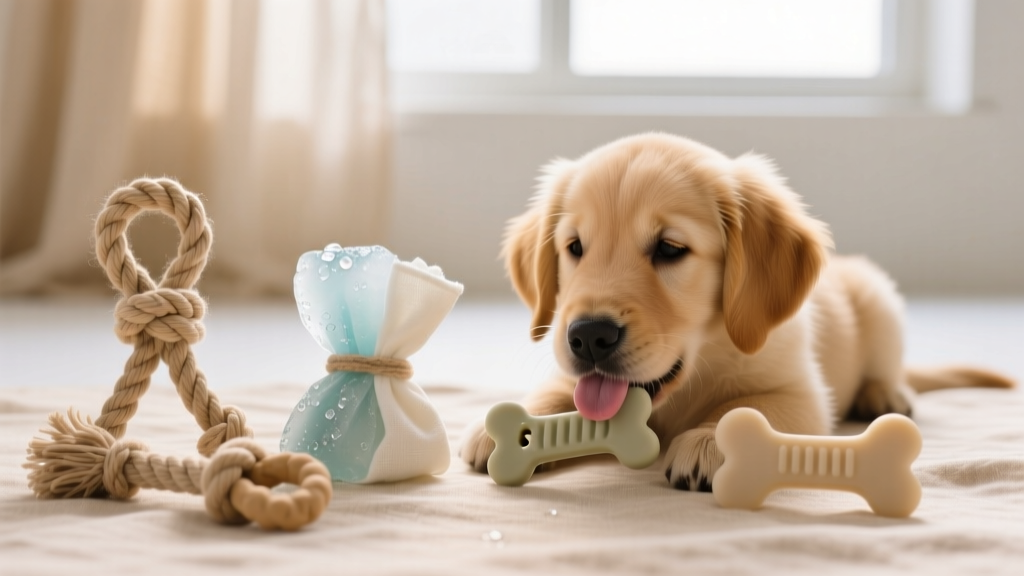
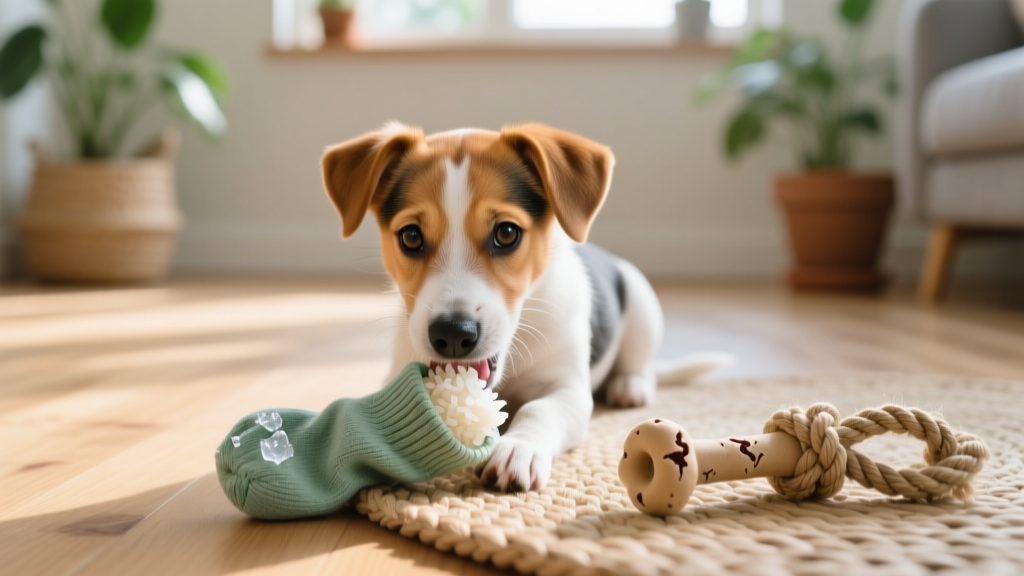
- 8–12 weeks: Soft rubber toys (Kong Puppy, $8–$12), frozen washcloths twisted into ropes, Nylabone Puppy Chew
- 12–24 weeks: Kong Classic (red, medium, $12–$15) stuffed with moistened kibble and frozen, Benebone Wishbone (medium), bully sticks (supervised, 6-inch, $4–$6 each)
- 6+ months: Kong Extreme (black, large, $15–$18), antler alternatives (avoid real antlers — fracture risk for large-breed jaws), Goughnuts Maxx 50 Ring ($25–$30)
Avoid: Rawhide (choking and blockage risk), cooked bones (splintering), ice cubes for large breeds (tooth fracture risk), and any chew small enough to be swallowed whole.
Crate Training Progression
Swiss Mountain Dogs generally accept crate training well because they den naturally. Use a 48-inch wire crate with a divider panel — start with a smaller space and expand as the puppy grows.
| Age | Max Crate Time (Daytime) | Overnight | Notes |
|---|---|---|---|
| 8–10 weeks | 30–60 minutes | 3–4 hours (then potty break) | Feed meals in crate. Cover with blanket for den feel. |
| 11–14 weeks | 1–2 hours | 4–5 hours | Practice leaving room for 5-minute intervals. |
| 15–20 weeks | 2–3 hours | 6–7 hours | Stuffed Kong in crate builds positive association. |
| 5–6 months | 3–4 hours | 7–8 hours | Never exceed 4 hours daytime crating for puppies under 6 months. |
How to Stop Puppy Biting and Nipping
Swiss Mountain Dog puppies were historically herding and draft dogs, which means mouthing and nipping are genetically influenced behaviors. Expect moderate-to-high mouthing from 8–20 weeks.
Force-free protocol:
- Redirect immediately: When teeth touch skin, say "oops" in a neutral tone, withdraw attention for 3–5 seconds, then offer an appropriate chew toy.
- Teach "gentle": Hold a treat in a closed fist. When the puppy licks instead of biting, say "gentle" and open your hand. Practice daily for 5 minutes.
- Time-outs: If biting persists after 3 redirects, calmly place the puppy in their crate or a playpen for 30–60 seconds to reset. This is not punishment — it's a calm-down break.
- Provide adequate chewing outlets: A puppy with appropriate chews available bites people less. Rotate 4–5 chew toys weekly to maintain novelty.
- Manage excitement levels: Swiss Mountain Dog puppies bite most when overstimulated. If play escalates to hard biting, end the session and enforce a nap. Puppies need 18–20 hours of sleep per day at 8–12 weeks.
Whining in the crate: Distinguish between protest whining (ignore; it extinguishes in 3–7 nights if you don't reward it) and potty whining (respond immediately). At 8–10 weeks, most crying in the first 48 hours home is separation distress — place the crate near your bed initially and gradually move it to the desired location over 1–2 weeks.
First-Year Cost Breakdown
Budgeting for a Swiss Mountain Dog puppy requires planning for both expected costs and the higher-than-average expenses that come with giant breeds. Here is a realistic first-year budget based on 2026 pricing:
| Category | Low Estimate | Mid Estimate | High Estimate |
|---|---|---|---|
| Puppy Purchase (responsible breeder) | $2,500 | $3,500 | $5,000 |
| Veterinary Care (vaccines, spay/neuter, wellness exams, heartworm/flea prevention) | $800 | $1,400 | $2,200 |
| Food (large-breed puppy formula, 12 months) | $600 | $900 | $1,400 |
| Supplies (crate, bed, leash, harness, bowls, grooming tools, chews, enzymatic cleaner) | $300 | $500 | $800 |
| Training (group puppy class + private sessions if needed) | $200 | $500 | $1,200 |
| Pet Insurance (monthly premium, 12 months) | $480 | $720 | $1,080 |
| Emergency Fund (recommended reserve) | $500 | $1,000 | $2,000 |
| Total First Year | $5,380 | $8,520 | $13,680 |
Cost-saving tips: Enroll in pet insurance at 8 weeks (before any conditions are documented — pre-existing condition exclusions are universal). Trupanion, Healthy Paws, and Fetch are popular options ranging $40–$90/month for a Bernese Mountain Dog puppy. Swiss Mountain Dogs are predisposed to hip dysplasia, elbow dysplasia, and certain cancers — conditions where insurance provides significant financial protection.
Frequently Asked Questions
Are Swiss Mountain Dog puppies good for first-time owners?
Bernese Mountain Dogs can work for committed first-time owners who are prepared for the size, exercise needs, and shorter lifespan (7–10 years). Greater Swiss Mountain Dogs tend to be more independent and may challenge inexperienced handlers. All Swiss breeds require consistent, positive-reinforcement training and early socialization — if you cannot commit to structured puppy classes and daily training sessions for the first year, consider waiting.
How much exercise does a Swiss Mountain Dog puppy need?
Follow the "5 minutes per month of age" rule for structured walks: a 4-month-old gets approximately 20 minutes of leash walking per day, split into two sessions. Free play in a fenced yard is unlimited. Avoid jogging, biking, or repetitive fetch on hard surfaces until 14–18 months when growth plates close.
When should I spay or neuter my Swiss Mountain Dog puppy?
Current veterinary research, including studies referenced by the AKC, suggests delaying spay/neuter for giant breeds until 12–18 months to allow full skeletal and hormonal development. Early spay/neuter (before 6 months) in large breeds is associated with increased risk of hip dysplasia, cranial cruciate ligament tears, and certain cancers. Discuss timing with your veterinarian based on your individual puppy.
My puppy is eating their own stool — is this normal?
Coprophagia (stool eating) is common in puppies and usually resolves by 6–9 months. For Swiss Mountain Dog puppies, ensure you're feeding adequate portions (underfeeding can trigger this behavior), pick up stool immediately after elimination, and consider adding a commercial deterrent like For-Bid ($12–$16) to their food. Consult your vet if it persists beyond 9 months.
What if my puppy ingests something toxic?
Keep the ASPCA Animal Poison Control hotline: (888) 426-4435 saved in your phone (24/7, consultation fee applies). Common household toxins for puppies include chocolate, xylitol (sugar-free gum, peanut butter), grapes/raisins, onions, and rodenticide. For any suspected ingestion, call immediately — do not wait for symptoms to appear.
Robin Maitland
All our authors care for dogs every day — read more of their work on the authors page.