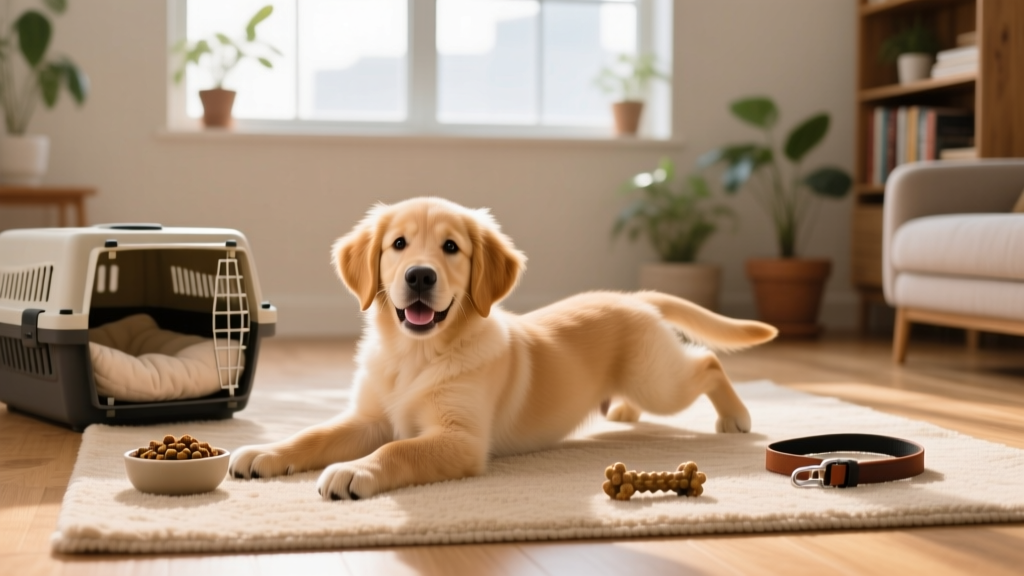
Staffordshire Puppies: Complete Week-by-Week Care Guide
Raise confident Staffordshire puppies with this week-by-week guide covering feeding schedules, potty training, vaccinations, socialization, and first-year costs.

Staffordshire Bull Terriers are stocky, affectionate, and endlessly entertaining companions — but raising a Staffordshire puppy requires preparation that goes well beyond stocking up on kibble. These muscular little dogs mature at their own pace, and their combination of high energy, powerful jaws, and deep loyalty means that the habits you build in the first six months will shape the next decade of your life together.
This guide walks you through every critical stage — from the day you bring your Staffordshire puppy home through the end of the first year — with specific numbers, timelines, and troubleshooting strategies drawn from veterinary and breed-specialist guidance.
When to Bring Your Staffordshire Puppy Home
Responsible Staffordshire Bull Terrier breeders keep puppies with their littermates and dam until 8 to 10 weeks of age. The American Kennel Club and the AKC's puppy transition guidance both note that the weeks between 6 and 8 are crucial for bite inhibition learning — something a puppy can only practice with siblings, not humans.
A Staffordshire puppy removed before 8 weeks is more likely to develop hard-biting habits, resource guarding, and separation distress. If a breeder offers you a puppy at 5 or 6 weeks, treat that as a red flag.
Age-Specific Milestones: What to Expect Week by Week
Weeks 4–8 (Still With the Breeder)
- Physical: Puppy is weaning onto solid food; baby teeth fully erupted (28 deciduous teeth); weight typically 5–10 lb (2.3–4.5 kg).
- Behavioral: Littermate play teaches bite inhibition; fear imprint period begins around week 8 — negative experiences during this window can create lasting phobias.
- Your role: If visiting the litter, handle the puppy gently for short sessions (5–10 minutes). Avoid loud noises or rough handling during the week-8 fear period.
Weeks 8–12 (Home Transition)
- Physical: Weight 10–15 lb (4.5–6.8 kg); sleeping 18–20 hours per day; coordination improving rapidly.
- Behavioral: Bonding intensely with new family; may cry or pace at night; beginning to understand name recognition and basic food motivation.
- Key tasks: Establish a consistent daily routine; begin crate training; schedule first veterinary wellness visit within 48 hours of pickup.
Weeks 12–16 (Foundation Training)
- Physical: Weight 15–22 lb (6.8–10 kg); adult teeth beginning to push in around week 14–16; bladder control improving.
- Behavioral: Critical socialization window closes around week 14–16 — this is the last easy window for exposure to novel stimuli. Puppy can learn sit, down, touch, and recall foundations.
- Key tasks: Enroll in a positive-reinforcement puppy kindergarten class; complete second and third DHPP vaccinations.
Weeks 16–24 (The "Teenage" Onset)
- Physical: Weight 22–32 lb (10–14.5 kg); adult teeth fully in by 6 months; chewing intensity peaks; growth rate begins to slow.
- Behavioral: Independence surges; recall may deteriorate; leash reactivity to other dogs can emerge if socialization was incomplete. Staffords are particularly prone to same-sex dog reactivity as they mature.
- Key tasks: Continue structured socialization; spay/neuter discussion with your vet (many recommend 6–9 months for Staffords to allow growth plate closure); begin impulse-control exercises.
Months 6–12 (Adolescent Consolidation)
- Physical: Approaching adult weight of 24–38 lb (11–17 kg) per the AKC Staffordshire Bull Terrier breed standard; males typically 28–38 lb, females 24–34 lb. Height reaching 14–16 inches at the shoulder.
- Behavioral: Energy remains very high; testing boundaries; may regress on potty training or leash manners around 8–10 months. Consistency from owners is critical.
- Key tasks: Transition to adult food around 10–12 months; complete a basic obedience course if not already done; establish a sustainable exercise routine (30–45 minutes of structured activity daily).
Staffordshire Puppy Feeding Schedule
Staffordshire Bull Terriers are compact, muscular dogs that gain weight quickly if overfed. Maintaining a lean body condition score (BCS of 4–5 out of 9) during puppyhood reduces the risk of joint stress on their stocky frames.
| Age | Meals Per Day | Daily Amount (High-Quality Puppy Kibble) | Notes |
|---|---|---|---|
| 8–12 weeks | 3–4 meals | ¾ to 1 cup total (split across meals) | Soften kibble with warm water if puppy struggles to chew |
| 12–16 weeks | 3 meals | 1 to 1¼ cups total | Switch to dry kibble to support teething |
| 4–6 months | 3 meals | 1¼ to 1½ cups total | Monitor BCS; reduce by 10% if ribs become hard to feel |
| 6–10 months | 2 meals | 1½ to 2 cups total | Drop the midday meal gradually over one week |
| 10–12 months | 2 meals | 1½ to 2¼ cups total (transition to adult formula) | Mix puppy and adult food 75/25 → 50/50 → 25/75 over 7–10 days |
Choose a kibble that carries the AAFCO statement for "growth" or "all life stages" and lists a named animal protein (chicken, lamb, salmon) as the first ingredient. For Staffordshire puppies specifically, look for formulas with DHA (docosahexaenoic acid) for brain development and calcium-phosphorus ratios between 1.1:1 and 1.4:1 to support healthy bone growth without rapid overgrowth.
Potty Training Your Staffordshire Puppy: Realistic Timeline
Staffordshire Bull Terriers are generally eager to please, which helps with house training — but their small puppy bladders and high water intake mean accidents are inevitable in the early weeks. Here is a realistic timeline:
- 8–12 weeks: Expect an accident every 1–3 days. Take puppy outside every 30–60 minutes during active hours, immediately after meals, naps, and play sessions.
- 12–16 weeks: Accidents drop to 1–2 per week if schedule is consistent. Puppy begins to signal (circling, sniffing, heading to the door).
- 4–6 months: Most Staffordshire puppies are reliably house trained during the day. Nighttime control may still require one late-night bathroom break.
- 6–8 months: Fully reliable for most puppies. If accidents persist past 6 months, consult your vet to rule out urinary tract infection or anatomical issues.
- Submissive/excitement urination: Common in Staffords under 6 months. Greet your puppy calmly at the door; avoid leaning over them. Take them outside immediately upon your arrival.
- Crate soiling: If the puppy soils the crate, the crate may be too large (they can eliminate in one corner and sleep in another). Use a divider panel. Also ensure you're not exceeding maximum crate time (see crate training section below).
- Regression at 6–9 months: Hormonal changes around sexual maturity can cause marking behavior. Spaying/neutering and consistent re-training usually resolve this within 2–4 weeks.
Critical Socialization Window: Weeks 3–14
The American Veterinary Medical Association (AVMA) identifies the primary socialization period in puppies as closing between 12 and 14 weeks of age. For Staffordshire Bull Terriers — a breed that can develop dog selectiveness or reactivity as adults — this window is especially important.
Before the window closes, aim to give your puppy positive, low-pressure exposure to the following:
Important vaccination caveat: Your puppy will not be fully vaccinated until approximately 16 weeks. During the socialization window, avoid dog parks, pet store floors, and areas with unknown dog traffic. Carry your puppy in public spaces, use a stroller or sling, and arrange play dates only with known, fully vaccinated dogs in private yards.
Vaccination Schedule for Staffordshire Puppies
Your veterinarian will tailor the protocol to your area's disease risk, but the core puppy vaccination schedule follows AVMA-recommended guidelines:
| Age | Vaccines | Notes |
|---|---|---|
| 6–8 weeks | DHPP (Distemper, Hepatitis/Adenovirus, Parainfluenza, Parvovirus) — Dose 1 | Often administered by the breeder; request records |
| 10–12 weeks | DHPP — Dose 2; Bordetella (optional, recommended if attending puppy class) | Bordetella can be given intranasally or by injection |
| 14–16 weeks | DHPP — Dose 3; Rabies (required by law in all US states) | Rabies is typically given at 12–16 weeks depending on state law |
| 12–16 months | DHPP booster; Rabies booster (1-year or 3-year depending on product) | First adult wellness exam; discuss titer testing as future alternative |
Leptospirosis and Lyme vaccines are considered non-core and are recommended based on your geographic risk. If you live in an area with wildlife exposure or tick prevalence, discuss these with your veterinarian at the 12-week visit.
Teething Timeline and Relief Strategies
Staffordshire puppies have exceptionally strong jaws even as babies, and their teething phase can be intense. Here is what to expect:
- 3–4 weeks: Deciduous (baby) teeth erupt — 28 total.
- 12–16 weeks: Baby teeth begin loosening; adult incisors push through first. You may find tiny teeth on the floor or in chew toys.
- 4–6 months: Peak teething discomfort. Adult canines and premolars erupt. Chewing behavior intensifies significantly.
- 6–7 months: All 42 adult teeth should be fully erupted. If baby teeth remain (retained deciduous teeth), your vet should extract them during spay/neuter to prevent crowding and dental disease.
Safe chew recommendations for teething Staffordshire puppies:
- KONG Classic (puppy rubber, pink/blue): Fill with soaked kibble and freeze for 2–4 hours. The cold numbs sore gums while the rubber texture satisfies the chewing urge. Size Small for puppies under 15 lb, Medium for 15–30 lb.
- Benebone Puppy Wishbone: Nylon chew infused with bacon or chicken flavor. The wishbone shape allows the puppy to grip with front paws — important for Staffords who like to hold and chew.
- Frozen washcloth: Soak a clean washcloth in water (or low-sodium chicken broth), twist into a rope, and freeze. Supervise use and discard if threads begin to fray.
- Yak milk chews (Himalayan Dog Chews, puppy size): Hard, long-lasting, and digestible. Soak in warm water for 5 minutes before giving to younger puppies to soften slightly.
Avoid: Rawhide (choking and blockage risk), cooked bones (splinter hazard), hard antlers (can fracture puppy teeth), and any chew toy smaller than the puppy's mouth.
Crate Training Progression and Time Limits
Staffordshire Bull Terriers tend to bond closely with their people and can develop separation-related distress if crating is introduced too abruptly. A gradual, positive-association approach works best.
| Puppy Age | Maximum Continuous Crate Time | Training Focus |
|---|---|---|
| 8–10 weeks | 30–60 minutes (daytime); 2–3 hours (overnight with one potty break) | Feed all meals in crate with door open; toss treats inside; nap in crate near family |
| 10–14 weeks | 1–2 hours (daytime); 3–4 hours (overnight) | Begin closing door during meals; short departures (1–5 minutes) while puppy is relaxed |
| 14–16 weeks | 2–3 hours (daytime); 5–6 hours (overnight) | Practice leaving the room; give a frozen KONG upon crating to build positive association |
| 4–6 months | 3–4 hours (daytime); 7–8 hours (overnight) | Gradually increase alone time; never use crate as punishment |
| 6–12 months | 4–5 hours (daytime); 8 hours (overnight) | Begin transitioning to free-roam if puppy is reliably house trained and non-destructive |
A 24-inch or 30-inch wire crate with a divider panel is ideal for a growing Staffordshire puppy. The crate should be large enough for the puppy to stand up, turn around, and lie down — but not so large that they can eliminate in one end and sleep in the other.
Common Staffordshire Puppy Problems and Solutions
Puppy Biting and Nipping
Staffordshire puppies are mouthy by nature — they explore the world with their jaws, and their breed heritage means they have a strong natural grip drive. Biting peaks between 8 and 16 weeks.
What to do:
- When teeth touch skin, let out a calm "oops" or yelp, then redirect to an appropriate chew toy. Reward the puppy for chewing the toy.
- If biting escalates (puppy becomes more excited after yelping), use a time-out: calmly place the puppy in a playpen or behind a baby gate for 30–60 seconds. This teaches that biting ends play — not that biting gets attention.
- Provide structured bite-inhibition exercises: offer a treat in a closed fist, and only open your hand when the puppy licks or noses gently rather than biting.
What NOT to do: Never hold the puppy's mouth shut, alpha-roll, or use physical punishment. These methods increase fear and aggression and are counterproductive with a strong-jawed breed.
Destructive Chewing
Staffordshire puppies can demolish furniture legs, baseboards, and shoes with surprising efficiency. Management is more effective than correction:
- Puppy-proof all accessible areas: use bitter apple spray on furniture legs, keep shoes in closed closets, and use baby gates to restrict access.
- Provide 4–6 appropriate chew options of varying textures (rubber, nylon, edible) and rotate them every 2–3 days to maintain novelty.
- Ensure adequate physical exercise (at least two 15–20 minute structured play sessions daily for puppies under 6 months) and mental stimulation (food puzzles, snuffle mats, short training sessions).
Whining and Vocalization
Staffordshire puppies are communicative. Whining in the crate during the first 1–2 weeks is normal as they adjust. To reduce it:
- Place the crate in your bedroom for the first 2–3 weeks so the puppy can hear and smell you.
- Wait for a brief pause in whining (even 3–5 seconds of silence) before opening the crate or providing attention. This prevents reinforcing the vocalization.
- Ensure all physical needs are met before crating: potty break, exercise session, and a meal or chew toy.
First-Year Cost Breakdown for a Staffordshire Puppy
Staffordshire Bull Terriers are relatively low-maintenance in terms of grooming (short coat, minimal shedding), but their veterinary and training costs in the first year are significant. Here is a realistic budget based on 2026 US pricing:
| Expense Category | Estimated Cost (Low–High) | Details |
|---|---|---|
| Puppy purchase/adoption | $1,500–$3,500 (breeder) / $200–$500 (rescue) | Reputable AKC-registered breeders health-test parents for L2-HGA, HC, and PPVL |
| Veterinary (first year) | $600–$1,200 | Wellness visits (3–4x), DHPP series, rabies, Bordetella, fecal tests, heartworm prevention, spay/neuter ($300–$600) |
| Food | $350–$600 | Quality puppy food transitioning to adult formula; approximately 1 bag (15 lb) per month |
| Supplies | $250–$500 | Crate ($50–$80), leash/harness ($30–$60), bowls, chew toys, puppy gates, grooming tools, bed |
| Training | $200–$600 | Puppy kindergarten ($150–$250 for 6-week course), basic obedience ($150–$300) |
| Pet insurance | $360–$720/year | $30–$60/month for accident-and-illness plan; enroll at 8 weeks to avoid pre-existing condition exclusions |
| Preventive medications | $200–$400 | Monthly heartworm (e.g., Heartgard Plus, Interceptor Plus) and flea/tick prevention (e.g., NexGard, Bravecto) |
| Total First Year | $3,460–$7,520 | Excluding puppy purchase; add $1,500–$3,500 for breeder puppy |
Staffordshire Bull Terriers are generally healthy dogs, but breed-specific conditions to budget for include hereditary cataracts (HC), L-2-hydroxyglutaric aciduria (L2-HGA), and persistent pupillary membranes. Reputable breeders should provide OFA or equivalent health clearances for both parents.
When Can My Staffordshire Puppy Go Outside and Meet Other Dogs?
This is one of the most common questions new Staffordshire puppy owners ask, and the answer requires balancing disease risk against the critical socialization window.
Safe from day one (carried or stroller): You can carry your puppy outside immediately for exposure to sights, sounds, and surfaces. Place them on a blanket in your yard, carry them through your neighborhood, and let them observe the world from your arms or a pet stroller.
Safe after second DHPP (approximately 12 weeks): Your puppy can walk on your own property and in low-traffic areas where you know the vaccination status of resident dogs. Structured puppy classes that require proof of at least one DHPP dose and a negative fecal test are generally considered safe — the Merck Veterinary Manual notes that the behavioral benefits of early socialization classes outweigh the minimal disease risk in controlled environments.
Safe after full vaccination (approximately 16–18 weeks): Your puppy can walk in public parks, visit dog-friendly stores, and interact with unknown dogs after the full DHPP series is complete and at least 5–7 days have passed since the final dose.
Avoid entirely until 16+ weeks: Dog parks, communal dog areas at apartment complexes, and any location with high concentrations of unknown, potentially unvaccinated dogs. Parvovirus can survive in soil for months and is a leading killer of unvaccinated puppies.
Frequently Asked Questions
How often should I feed my Staffordshire puppy at 10 weeks old?
At 10 weeks, feed 3 to 4 meals per day. Divide approximately ¾ to 1 cup of high-quality puppy kibble across those meals. Consistent meal timing (e.g., 7 AM, 12 PM, 5 PM, and optionally 9 PM) helps regulate digestion and makes potty training more predictable — puppies typically need to eliminate 15–30 minutes after eating.
When will my Staffordshire puppy be fully potty trained?
Most Staffordshire Bull Terrier puppies achieve reliable daytime house training between 4 and 6 months of age, assuming a consistent schedule and positive reinforcement approach. Nighttime reliability typically follows within 2–4 weeks. If your puppy is still having frequent accidents past 6 months, consult your veterinarian to rule out medical causes such as a urinary tract infection or ectopic ureter.
How do I stop my Staffordshire puppy from biting my hands and ankles?
Redirect every bite to an appropriate chew toy and reward the puppy for chewing it. If biting persists or intensifies, implement a brief time-out (30–60 seconds behind a baby gate) to teach that biting ends interaction. Ensure the puppy is getting adequate sleep — overtired puppies bite more, and Staffords under 4 months need 18–20 hours of sleep per day. Consistency across all family members is essential; mixed signals will prolong the biting phase.
Are Staffordshire Bull Terriers good with children?
Well-bred, properly socialized Staffordshire Bull Terriers are known for their gentleness and patience with children — the breed was historically nicknamed the "nanny dog" in England. However, no dog of any breed should be left unsupervised with young children. Teach children to respect the puppy's crate and sleep space, and never allow a child to ride, pull, or corner the puppy. Supervised, positive interactions from 8 weeks onward build a strong, safe bond.
Do Staffordshire puppies need special health testing?
Yes. The Staffordshire Bull Terrier breed has several hereditary conditions that responsible breeders screen for: L-2-hydroxyglutaric aciduria (L2-HGA), a metabolic disorder causing seizures and behavioral changes; hereditary cataracts (HC), which can cause blindness; and persistent hyperplastic primary vitreous/persistent pupillary membranes (PHPV/PPM), eye conditions that affect vision. Ask your breeder for DNA test results and veterinary ophthalmologist clearances for both parents.
Raising a Staffordshire puppy is a rewarding investment of time, patience, and resources. Their intelligence, loyalty, and athleticism make them extraordinary companions — and the foundation you build during these first 12 months will support a healthy, well-adjusted adult dog for years to come. When in doubt about any health, behavioral, or nutritional decision, consult your veterinarian for guidance tailored to your individual puppy.
Anouk Beaumont
All our authors care for dogs every day — read more of their work on the authors page.