Staffordshire Bull Terrier Puppy: Week-by-Week Care,
Complete Staffordshire Bull Terrier puppy guide covering feeding schedules, potty training timelines, vaccination charts, socialization checklists, and first-year costs.
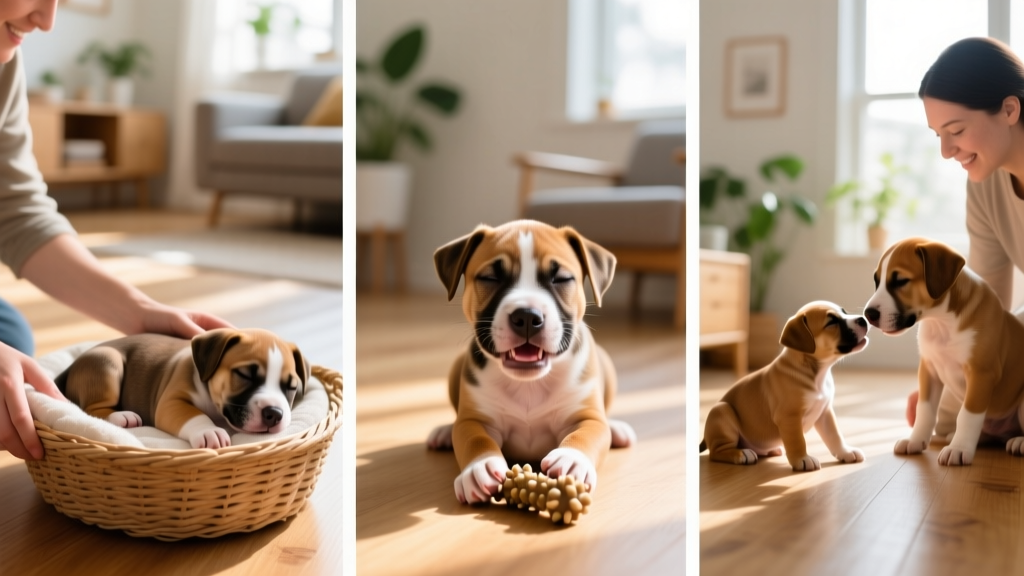
Bringing Home Your Staffordshire Bull Terrier Puppy: What to Expect
The Staffordshire Bull Terrier — affectionately called the "nanny dog" in their native England for their devotion to children — is a muscular, tenacious, and deeply affectionate breed. But raising a Staffordshire Bull Terrier puppy requires preparation that goes beyond generic puppy advice. These dogs mature slowly (filling out mentally and physically until 18–24 months), possess extraordinary jaw strength even as juveniles, and carry breed-specific health risks that influence your early care decisions.
This guide walks you through every developmental stage from weeks 4 through 12 months, with exact feeding portions, vaccination timing, potty training benchmarks, and realistic cost expectations. Whether you're picking up your puppy from a responsible breeder or bringing home a rescue, you'll have a concrete roadmap tailored to this breed.
When Should I Bring My Staffordshire Bull Terrier Puppy Home?
The ideal age to bring a Staffordshire Bull Terrier puppy home is 8 to 10 weeks. Reputable breeders registered with the American Kennel Club will not release puppies before 8 weeks — and many Staffy breeders prefer 10 weeks for this breed specifically.
Here's why the extra two weeks matter for Staffords: between weeks 8 and 10, puppies learn critical bite inhibition from their littermates. Staffordshire Bull Terriers have a naturally strong grip and high play drive. Puppies removed too early (before 8 weeks) tend to develop harder mouth habits that are significantly more difficult to correct later. The litter environment teaches them that biting too hard ends play — a lesson no human can replicate as effectively.
Before pickup day, prepare:
- A wire crate (30-inch for growth, with a divider panel) — Staffords are strong enough to collapse flimsy fabric crates by 4–5 months
- Enzymatic cleaner (Nature's Miracle or Rocco & Roxie) for inevitable potty accidents
- Heavy-duty rubber chew toys (KONG Classic, size Medium, and West Paw Zisc)
- A 4–6 foot flat leash and martingale collar (Staffords have thick necks relative to their heads; standard buckle collars can slip)
- Puppy-proofing supplies: outlet covers, bitter apple spray for baseboards, baby gates
Staffordshire Bull Terrier Puppy Milestones: Week by Week
Understanding what's developmentally normal at each stage prevents unnecessary panic and helps you set realistic expectations. Staffordshire Bull Terriers follow standard canine developmental windows, but their physical strength and determination mean some milestones — especially crate training and bite inhibition — require extra patience.
Weeks 4–8 (At the Breeder)
Your puppy is still with their mother and littermates. During this period, they transition from milk to gruel to soft kibble, begin exploring their environment, and learn foundational social skills. The breeder should be introducing novel textures (grass, tile, carpet), gentle handling exercises, and initial dewclaw removal if applicable. What to ask your breeder: Request documentation of the dam and sire's health clearances — specifically L-2-HGA and HC (hereditary cataracts) DNA test results, which are recommended by the AKC for this breed.
Weeks 8–12 (The Adjustment Period)
This is the primary fear imprint period. Your puppy is forming lasting associations with new experiences. Expect:
- 1–3 nights of crying in the crate (place the crate near your bed; cover with a breathable blanket)
- Loose stools for 3–5 days as gut flora adjusts to new food and environment
- 16–20 hours of sleep per day (this is normal — puppies process enormous amounts of stimulation)
- Exploratory mouthing of everything, including your hands, clothing, and furniture
Weight checkpoint: A typical Staffy puppy weighs 8–12 lb (3.6–5.4 kg) at 8 weeks and should gain roughly 1–1.5 lb per week during this phase.
Weeks 12–16 (Confidence Building)
Your puppy is becoming bolder. The second fear period may emerge around 12–14 weeks, where previously confident puppies suddenly startle at familiar objects. Don't force interactions — let them approach at their own pace while offering high-value treats (freeze-dried liver or boiled chicken). Begin structured training sessions of 3–5 minutes, twice daily, focusing on sit, name recognition, and recall.
Weeks 16–24 (The Teenage Phase Begins)
This is where Staffordshire Bull Terrier owners often feel blindsided. Your previously compliant puppy starts testing boundaries, "forgetting" commands, and showing early signs of dog selectiveness or same-sex aggression (a known breed tendency, particularly in males). This is normal and manageable — not a sign of a flawed dog. Increase structured mental enrichment (snuffle mats, frozen KONGs, scent work) and maintain consistent rules.
6–12 Months (Physical Maturation)
Your Staffy will reach near-adult height by 9–10 months but will continue filling out in chest and muscle mass until 18–24 months. Energy levels remain very high. Many owners report a second surge in chewing behavior around 7–8 months as the last adult teeth fully seat. Continue positive reinforcement training and consider enrolling in a group obedience class to maintain socialization skills.
Feeding Schedule: Exact Portions by Age and Weight
Staffordshire Bull Terriers are prone to both obesity (which stresses their joints) and food sensitivities (particularly to chicken, beef, and wheat in some lines). Feed a AAFCO-approved large-breed puppy formula until 12 months to support controlled growth and reduce hip dysplasia risk.
| Age | Expected Weight | Meals Per Day | Daily Amount (Dry Kibble) |
|---|---|---|---|
| 8–12 weeks | 8–15 lb / 3.6–6.8 kg | 3 meals | ¾–1 cup (split into 3) |
| 3–4 months | 15–22 lb / 6.8–10 kg | 3 meals | 1–1½ cups (split into 3) |
| 4–6 months | 22–30 lb / 10–13.6 kg | 2 meals | 1½–2 cups (split into 2) |
| 6–9 months | 30–38 lb / 13.6–17.2 kg | 2 meals | 2–2½ cups (split into 2) |
| 9–12 months | 35–45 lb / 15.9–20.4 kg | 2 meals | 2–2½ cups (split into 2) |
Calorie context: A growing Staffy puppy needs approximately 55–65 calories per pound of expected adult weight daily. An adult Staffy at 30 lb (13.6 kg) maintenance requires roughly 800–950 calories/day; a puppy building tissue needs more per pound but should never be free-fed. Overfeeding accelerates growth plates closing improperly, increasing hip and elbow dysplasia risk.
Transitioning foods: When switching from breeder food to your chosen brand, mix over 7–10 days: 75% old / 25% new (days 1–3), 50/50 (days 4–6), 25% old / 75% new (days 7–8), then 100% new. Staffords are notorious for loose stools during abrupt food changes.
Vaccination Schedule: What, When, and Why
Your Staffordshire Bull Terrier puppy's vaccination timeline follows the AVMA core vaccination guidelines, with timing adjusted based on your veterinarian's assessment of local disease risk. Never skip or delay vaccines — parvovirus is nearly 100% fatal in unvaccinated puppies and is present in most environments.
| Age | Vaccines Administered | Notes | Estimated Cost |
|---|---|---|---|
| 6–8 weeks | DHPP (1st dose) — Distemper, Hepatitis (Adenovirus-2), Parainfluenza, Parvovirus | Usually given by breeder; request records | $25–$40 |
| 10–12 weeks | DHPP (2nd dose) + Bordetella (optional, recommended if attending puppy classes) | Maternal antibodies waning; puppy now building own immunity | $40–$65 |
| 14–16 weeks | DHPP (3rd/final puppy dose) + Rabies (required by law in all US states) | This dose is critical — given after maternal antibodies have fully cleared | $55–$85 |
| 12–16 months | DHPP booster + Rabies booster (1-year or 3-year, per local law) | After this, boosters typically every 3 years for core vaccines | $50–$80 |
Leptospirosis and Lyme: These are non-core vaccines your vet may recommend based on geography. If you live in the Northeast, upper Midwest, or Pacific Northwest — or if your Staffy will spend time hiking or in wooded areas — discuss adding Leptospirosis (2-dose series starting at 12 weeks) and Lyme (2-dose series). Staffords are active, curious dogs who will investigate puddles and underbrush.
Deworming: Expect your vet to administer pyrantel pamoate at each puppy visit (typically 3 rounds, 2 weeks apart) and perform a fecal float to check for giardia, coccidia, and whipworms. Total deworming cost: $15–$30 per round.
The Socialization Window: Your Puppy's Critical Weeks 3–14
The primary socialization period closes between 12 and 16 weeks. After this window, unfamiliar stimuli trigger fear rather than curiosity. For Staffordshire Bull Terriers — a breed that can develop dog selectiveness and strong territorial instincts — this window is arguably the most important investment you'll make in your dog's lifelong temperament.
The balancing act: Your puppy is not fully vaccinated until 16 weeks, but the socialization window closes around 14 weeks. The AVMA and the American Veterinary Society of Animal Behavior both recommend controlled socialization during this overlap period — meaning exposure in safe, managed environments rather than avoiding the world entirely.
Potty Training Your Staffy Puppy: Timeline and Troubleshooting
When will my Staffordshire Bull Terrier puppy be fully potty trained? Realistically, expect reliable house training between 4 and 6 months — though some Staffies take up to 8 months due to their slow maturation. "Reliable" means fewer than 1 accident per month with a consistent routine. This is not a breed you can pad-train in a weekend.
The schedule that works for Staffords:
- 8–12 weeks: Take outside every 45–60 minutes during waking hours, immediately after every meal, after every nap, and after every play session. Yes, this means 12–15 trips outside per day.
- 3–4 months: Extend to every 90 minutes. Begin using a consistent verbal cue ("go potty") that you say while they're eliminating, then reward with a high-value treat within 2 seconds of finishing.
- 4–6 months: Extend to every 2 hours. Your puppy should start signaling (going to the door, whining, circling) — but don't rely on this yet. Maintain the schedule.
- 6+ months: Every 3–4 hours during the day. Overnight, most Staffies can hold 6–8 hours by 5 months.
Record: (1) Time of outing, (2) Whether they eliminated (Y/N), (3) Type (urine/stool/both), (4) Accident location and time if applicable, (5) What happened 15 minutes before the accident (playing? sleeping? drinking?). Patterns emerge within 5–7 days that reveal your puppy's natural rhythm.
Staffordshire-specific troubleshooting:
- Submissive/excitement urination: Common in Staffy puppies when greeting. Don't scold — it makes it worse. Greet calmly outside, crouch sideways (not looming over), and ignore for the first 30 seconds of arriving home.
- Marking behavior (males): Can begin as early as 4–5 months. Interrupt immediately with a neutral "oops" and redirect outside. Neutering before 6 months reduces but does not eliminate marking in predisposed individuals.
- "I won't go outside" refusal: Some Staffy puppies dislike rain or cold. Use a covered area, and keep outings brief but consistent. Never punish — you'll create an association between eliminating and being scolded.
Crate Training, Teething, and Managing Puppy Problems
Crate Training Progression
Staffordshire Bull Terriers are den-oriented and typically adapt to crates well — but their strength means you need a heavy-duty wire crate (MidWest iCrate or ProSelect Empire for determined chewers). Never use a soft-sided crate unsupervised with this breed.
| Age | Max Crate Time (Daytime) | Max Crate Time (Overnight) | Notes |
|---|---|---|---|
| 8–10 weeks | 1–1.5 hours | 3–4 hours | Set overnight alarm for potty break |
| 11–14 weeks | 2 hours | 5 hours | Feed meals in crate to build positive association |
| 3–4 months | 2.5–3 hours | 6 hours | Begin leaving room while crated (short absences) |
| 4–6 months | 3–4 hours | 7–8 hours | Can begin leaving house for brief periods |
| 6+ months | 4–5 hours | 8 hours | Never exceed 5 hours crated during the day without a midday break |
Teething Timeline and Relief
Staffordshire Bull Terrier puppies begin losing baby teeth around 12–16 weeks, with the full set of 42 adult teeth typically erupted by 6–7 months. During this period, your puppy will chew relentlessly — and with a Staffy's jaw strength (estimated at 200–300 PSI even in juveniles), inappropriate chewing can destroy furniture, baseboards, and shoes rapidly.
Safe chew rotation (freeze and rotate daily):
- KONG Classic (Medium, then Large by 5 months) stuffed with peanut butter and frozen — provides 20–40 minutes of engagement
- West Paw Zisc (frozen, with broth soaked into the ridges)
- Nylabone Power Chew (Dura Chew texture, sized appropriately — discard when worn down to a small piece)
- Carrots and frozen banana slices (low calorie, natural, but supervise to prevent choking)
- Bully sticks (6-inch, supervised only — remove when less than 3 inches remain to prevent swallowing whole)
Avoid: Rawhide (choking and intestinal blockage risk), cooked bones (splintering), antlers (tooth fractures — Staffords have the bite force to crack them), and any chew toy your puppy can destroy and ingest within 15 minutes.
Stopping Puppy Biting and Nipping
Staffordshire Bull Terrier puppies are mouthy. This is not aggression — it's breed-typical exploration combined with a strong prey drive and powerful jaw musculature. However, it must be managed consistently from day one.
The redirect method (force-free, positive reinforcement only):
- When puppy teeth touch skin, say "oops" in a calm, neutral tone (not a yell — high-pitched yelps can escalate arousal in Staffies).
- Immediately offer an appropriate chew toy.
- When they bite the toy instead, praise calmly and engage in a brief tug game (reward for correct choice).
- If they continue to bite skin after the redirect, stand up, fold your arms, and disengage for 15–30 seconds (time-out from attention, not physical isolation).
- Resume interaction and repeat as needed.
Consistency is everything. Every family member must follow the same protocol. Allowing "gentle mouthing" sometimes and correcting it other times confuses the puppy and prolongs the behavior. Most Staffies show significant bite inhibition improvement within 3–4 weeks of consistent redirection.
What NOT to do: Never hold the muzzle shut, perform alpha rolls, use shock or prong collars, or physically punish a puppy. These methods increase fear and can trigger defensive aggression — particularly damaging with a powerful breed like the Staffy. The American Veterinary Society of Animal Behavior explicitly recommends against dominance-based training methods.
When Can My Puppy Go Outside and Meet Other Dogs?
This question sits at the intersection of disease risk and behavioral development. Here's the practical framework:
- Immediately (8+ weeks): Carry your puppy outside in your arms, in a sling, or in a stroller. Let them observe traffic, people, other dogs at a distance, and novel environments without paws touching public ground.
- Your own yard: If no unknown dogs have access to your yard, your puppy can walk on your grass immediately. This is your primary potty training and exploration zone.
- After 2nd DHPP (10–12 weeks): You can begin attending puppy kindergarten classes in facilities that require proof of vaccination for all attendees. One-on-one playdates with known, vaccinated dogs in private yards are appropriate.
- 1 week after 3rd DHPP (approximately 17 weeks): Public walks, dog-friendly patios, and supervised group play are now safe. Dog parks remain risky due to unknown vaccination status and disease exposure — many behaviorists recommend avoiding them entirely for Staffies due to the breed's potential for dog selectiveness.
First-Year Cost Breakdown: Budgeting for Your Staffy Puppy
Staffordshire Bull Terriers are mid-range in cost compared to other breeds, but their strength, energy, and potential health needs mean you shouldn't cut corners on essentials.
| Category | Low Estimate | Mid-Range | High Estimate |
|---|---|---|---|
| Puppy Purchase (from responsible breeder) | $1,500 | $2,500 | $4,000 |
| Veterinary Care (vaccines, deworming, spay/neuter, wellness exams) | $600 | $900 | $1,400 |
| Food (quality kibble, treats, supplements) | $400 | $600 | $900 |
| Supplies (crate, bed, leash, collar, toys, grooming, bowls) | $250 | $400 | $650 |
| Training (puppy class + basic obedience) | $200 | $400 | $800 |
| Pet Insurance (annual premium, accident + illness) | $350 | $550 | $750 |
| Emergency Fund Reserve (recommended) | $500 | $1,000 | $2,000 |
| Total First Year | $3,800 | $6,350 | $10,500 |
Breed-specific health costs to budget for: Staffordshire Bull Terriers have a higher-than-average incidence of L-2-hydroxyglutaric aciduria (L-2-HGA), hereditary cataracts (HC), and posterior polar subcapsular cataracts (PPSC). DNA testing through the breeder should identify carriers, but if your puppy develops neurological symptoms (seizures, tremors, behavioral changes) or vision changes, diagnostic workups (MRI, ophthalmologic exam) can cost $1,500–$4,000. Pet insurance is strongly recommended for this breed — enroll before any symptoms appear to avoid pre-existing condition exclusions.
Adoption alternative: Staffordshire Bull Terriers and Staffy mixes are common in shelters. Adoption fees typically range from $150–$400 and often include initial vaccines, spay/neuter, and microchip. Organizations like the Staffordshire Bull Terrier Club of America Rescue network foster and evaluate dogs before placement.
Frequently Asked Questions
How often should I feed my Staffordshire Bull Terrier puppy at 10 weeks?
Three meals per day, evenly spaced (e.g., 7 AM, 12 PM, 5 PM). At 10 weeks, feed approximately ¼ to ⅓ cup of high-quality large-breed puppy kibble per meal (¾ to 1 cup total daily). Adjust based on body condition score — you should be able to feel but not see ribs, and there should be a visible waist when viewed from above.
Is it normal for my Staffy puppy to chew through toys in minutes?
Yes — this is breed-typical. Staffordshire Bull Terriers have among the strongest bite forces relative to body size of any breed. Budget for durable toys (KONG Extreme, Goughnuts, West Paw) and rotate them daily. If your puppy destroys a toy in under 15 minutes, size up or switch to a harder material. Never leave your puppy unsupervised with any toy they can fragment and swallow.
My puppy whines in the crate at night. Should I let them out?
If they've been crated for less than 2 hours and were recently fed/watered/played with, they likely need a potty break. Take them outside on leash, wait up to 5 minutes, then return them to the crate with minimal interaction (no play, no extended cuddling). If they've already eliminated, the whining is protest — wait for 30 seconds of silence before acknowledging them. Never open the crate while they're actively whining, as this reinforces the behavior.
When will my Staffy puppy calm down?
Staffordshire Bull Terriers are high-energy dogs that typically don't reach a "calm" baseline until 2–3 years of age. The puppy phase (0–12 months) is the most intense, but expect sustained energy and playfulness well into adulthood. Daily exercise (minimum 45–60 minutes for puppies over 6 months, split into shorter sessions to protect growing joints) and structured mental enrichment are non-negotiable for this breed.
Are Staffordshire Bull Terriers good with children?
Historically, yes — the breed earned the "nanny dog" nickname in England for their patience and devotion to children. However, no dog of any breed should be left unsupervised with young children. Teach children to respect the puppy's crate and sleep space, never to approach during meals, and to recognize signs of stress (lip licking, whale eye, turning away). Supervised, structured interactions build a lifelong bond.
Should I be aware of breed-specific legislation (BSL) for Staffords?
Yes. While the Staffordshire Bull Terrier is a distinct breed from the American Pit Bull Terrier, many jurisdictions with BSL do not differentiate between breeds and ban or restrict dogs based on appearance. Before moving, renting, or purchasing homeowners insurance, check your local municipal codes and your HOA rules. Renters should confirm breed acceptance with landlords in writing. The AKC and AVMA both oppose BSL as ineffective and recommend breed-neutral dangerous dog laws instead.
• Your local emergency veterinary clinic (search "24-hour emergency vet near me" and save the address and phone number)
• ASPCA Animal Poison Control: (888) 426-4435 (24/7, consultation fee applies)
• Pet Poison Helpline: (855) 764-7661
• Your regular veterinarian's after-hours protocol (many clinics forward calls to an on-call vet)
Robin Maitland
All our authors care for dogs every day — read more of their work on the authors page.