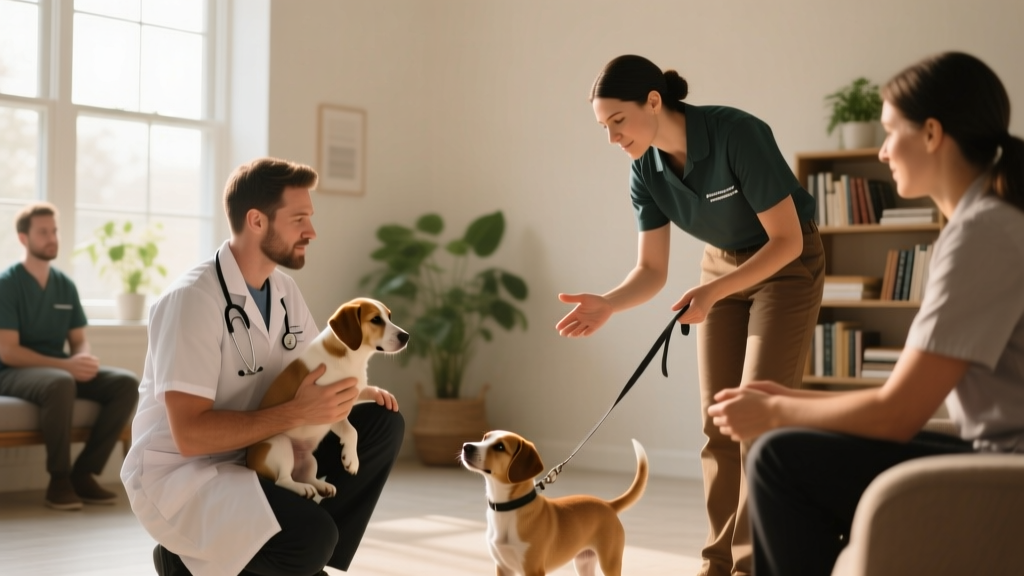
Socialising Puppy: Breed-Specific Guide for Golden
A detailed guide to socialising puppy Golden Retrievers, covering milestones, feeding, potty training, vaccination schedules, and first-year costs.

The Critical Window: Why Socialising Puppy Golden Retrievers Early Matters
If you've just brought home a Golden Retriever puppy — or you're preparing to — you're entering one of the most important developmental phases of your dog's life. The primary socialization window for puppies runs from approximately 3 to 14 weeks of age, according to the American Veterinary Medical Association. During this period, your Golden's brain is uniquely primed to form positive associations with new people, animals, environments, sounds, and surfaces. Miss this window, and behavioral rehabilitation becomes significantly harder — though not impossible.
Golden Retrievers are naturally sociable dogs, which gives you a head start. But "naturally friendly" doesn't mean "automatically well-adjusted." Without deliberate, structured exposure during those early weeks, even the most genetically sound Golden can develop fear-based reactivity, separation anxiety, or over-excitability that persists into adulthood.
This guide walks you through every stage of your Golden Retriever puppy's first year — from the breeder's whelping box through adolescence — with specific timelines, feeding schedules, training frameworks, and realistic cost expectations. We'll also address the questions I hear most often from new Golden owners in my years working with puppy parents.
Responsible Golden Retriever breeders typically release puppies between 8 and 10 weeks of age. The AKC recommends that puppies remain with their littermates and dam until at least 8 weeks to learn bite inhibition and basic canine social skills. Some breeders of larger breeds like Goldens prefer to hold until 10 weeks for additional socialization work. Either timeframe is appropriate — avoid breeders offering puppies younger than 8 weeks.
Age-Specific Milestones: What to Expect Week by Week
Golden Retriever puppies develop rapidly, and knowing what's normal at each stage helps you distinguish between typical puppy behavior and genuine concerns that warrant a veterinary visit.
Weeks 4–8 (At the Breeder)
During this period, your puppy is still with their litter. Eyes and ears are fully functional. They're learning critical bite inhibition from siblings — when a puppy bites too hard, littermates yelp and stop playing. This is also when the breeder should be introducing novel surfaces (tarps, wobble boards), household sounds, and gentle handling exercises. Weight at 8 weeks typically ranges from 10–15 lb (4.5–6.8 kg).
Weeks 8–12 (Home Transition)
This is your primary bonding and socialization window. Expect frequent napping (18–20 hours/day is normal), clumsy coordination, and intense mouthing behavior. Your puppy will test boundaries and may show a brief fear period around 8–10 weeks where previously confident puppies suddenly startle easily. Keep experiences positive — never force interactions. Weight reaches approximately 18–25 lb (8–11 kg) by week 12.
Weeks 12–16 (Growing Confidence)
Teething begins in earnest. Baby teeth start loosening, and chewing intensity increases dramatically. Your Golden will become more adventurous and may start testing recall by ignoring their name. This is when foundational training (sit, down, stay, recall) should become a daily 5–10 minute practice. Expect weight around 28–38 lb (13–17 kg).
Weeks 16–24 (Adolescence Begins)
Adult teeth are fully in by 6 months. Your Golden enters early adolescence — characterized by increased independence, selective hearing, and potential regression in previously learned behaviors. Spay/neuter is typically performed between 6–9 months for Golden Retrievers (discuss timing with your veterinarian, as some orthopedic specialists recommend waiting until growth plates close around 12–18 months for large breeds). Weight ranges from 38–55 lb (17–25 kg).
Months 6–12 (Full Adolescence)
Your Golden will look increasingly adult but behave very much like a teenager. Energy levels peak, and without adequate physical and mental exercise, destructive behaviors escalate. Males may begin marking; females typically experience their first estrus cycle between 6–12 months if intact. By 12 months, most Golden Retrievers weigh 50–65 lb (23–29 kg), though they won't reach full adult weight (55–75 lb / 25–34 kg for males, 55–65 lb / 25–29 kg for females) until 18–24 months.
Feeding Schedule: Exact Portions by Age and Weight
Golden Retrievers are prone to rapid growth-related orthopedic issues, including hip dysplasia and elbow dysplasia. Research published in the Journal of the American Veterinary Medical Association has shown that overfeeding during puppyhood increases the risk of developmental orthopedic disease. The goal is steady, controlled growth — not maximum growth.
Feed a large-breed puppy formula that meets AAFCO guidelines for growth (look for the statement: "This food is formulated to meet the nutritional levels established by the AAFCO Dog Food Nutrient Profiles for growth, including growth of large-size dogs"). Large-breed puppy formulas contain controlled calcium (1.0–1.8% on a dry matter basis) and phosphorus to support proper bone development.
| Age | Meals per Day | Approximate Daily Amount | Notes |
|---|---|---|---|
| 8–12 weeks | 3–4 meals | 1.5–2.5 cups (divided) | Soften kibble with warm water if needed; monitor body condition score |
| 12–16 weeks | 3 meals | 2–3 cups (divided) | Transition to dry kibble; adjust based on weekly weigh-ins |
| 4–6 months | 2–3 meals | 2.5–3.5 cups (divided) | You should feel ribs easily without seeing them; visible waist from above |
| 6–12 months | 2 meals | 3–4 cups (divided) | Transition to adult formula around 12 months; reduce calories if BCS exceeds 5/9 |
How often should I feed my puppy? At 8–12 weeks, feed 3–4 meals daily to maintain stable blood sugar. Drop to 3 meals at 12 weeks, and transition to 2 meals by 6 months. These portions assume a standard large-breed puppy kibble with approximately 350–400 kcal/cup. Always adjust based on your individual puppy's body condition score (BCS) — you should be able to feel ribs without pressing hard, and your puppy should have a visible waist tuck when viewed from above.
Socialization Window (Weeks 3–14): Your Golden Retriever Exposure Checklist
Golden Retrievers were bred to work cooperatively with humans, which gives them a genetic predisposition toward sociability. But genetics alone don't produce a well-adjusted adult dog — deliberate exposure during the critical socialization period does. The American Kennel Club recommends structured socialization starting as early as your breeder can safely manage and continuing through at least 14 weeks.
The key principle: positive associations matter more than quantity of exposure. One terrifying experience with a loud child can outweigh ten gentle introductions. Always let your puppy approach new stimuli at their own pace, pair novel experiences with high-value treats (boiled chicken, cheese, commercial training treats), and watch for stress signals: tucked tail, lip licking, yawning, whale eye, or attempting to retreat.
Socialization Checklist for Golden Retriever Puppies
- People (aim for 50+ positive encounters by 14 weeks): Children of various ages, men with facial hair, people wearing hats/sunglasses/hoodies, people using mobility aids (wheelchairs, crutches, canes), people of different ethnicities and body types, uniformed workers (postal carriers, delivery drivers)
- Dogs: Puppies of similar vaccination status (structured puppy classes), calm adult dogs known to be dog-friendly, dogs of various sizes and breeds, dogs with cropped ears or docked tails (different silhouettes)
- Surfaces: Gravel, sand, wet grass, metal grates, tarps, wobble boards, stairs (carpeted and bare), slippery floors (tile, hardwood)
- Sounds: Vacuum cleaner, blender, doorbell, thunderstorm recordings (played softly, paired with treats), car horns, children shouting, fireworks recordings (low volume), hair dryer
- Handling: Paw handling, ear examination, mouth opening, nail trimming practice, gentle restraint, being lifted onto a table (simulate vet exam), wearing a harness and collar
- Environments: Car rides (short, positive — not just vet visits), pet-friendly stores, outdoor seating areas, parking lots, quiet trails, friend's homes, groomer's lobby (just to visit, not for a full groom at this age)
When can my puppy go outside and meet other dogs? This is one of the most common questions I hear, and the answer requires balancing disease risk with developmental necessity. The AVMA and the American Veterinary Society of Animal Behavior (AVSAB) recommend that puppies begin socialization classes one week after their first DHPP vaccine (typically given at 6–8 weeks), which means structured socialization can begin around 7–9 weeks. Avoid high-risk areas like dog parks, pet store floors, and unknown dog feces until your puppy has completed their full vaccination series (typically 16 weeks). Controlled environments — puppy classes that require proof of vaccination, playdates with known healthy dogs in private yards, and carrying your puppy through public spaces — are appropriate during the partial-vaccination period.
Vaccination Schedule: What Your Golden Retriever Puppy Needs and When
Your veterinarian will customize a vaccination protocol based on your region's disease prevalence, your puppy's lifestyle, and the vaccine manufacturer's guidelines. The following represents the standard core and non-core vaccination schedule for Golden Retriever puppies in the United States, as outlined in the Merck Veterinary Manual.
| Age | Vaccine | Type | Notes |
|---|---|---|---|
| 6–8 weeks | DHPP (1st dose) | Core | Protects against distemper, hepatitis (adenovirus-2), parainfluenza, and parvovirus |
| 10–12 weeks | DHPP (2nd dose) | Core | Booster required; immunity not complete until series finished |
| 10–12 weeks | Bordetella | Non-core | Recommended if attending puppy classes, boarding, or grooming facilities |
| 10–12 weeks | Leptospirosis (1st dose) | Non-core | Recommended for dogs with outdoor/wildlife exposure; discuss with your vet |
| 14–16 weeks | DHPP (3rd dose) | Core | Final puppy booster; some vets add a 4th dose at 18–20 weeks for high-risk areas |
| 14–16 weeks | Rabies | Core (legally required) | Timing varies by state law; typically given at 12–16 weeks |
| 14–16 weeks | Leptospirosis (2nd dose) | Non-core | Booster 2–4 weeks after first dose |
| 12 months | DHPP booster | Core | Then every 3 years per AAHA guidelines |
| 12 months | Rabies booster | Core | Then every 1–3 years depending on local law and vaccine type |
What vaccines does my puppy need? The core vaccines — DHPP and rabies — are non-negotiable. Parvovirus is particularly dangerous to Golden Retriever puppies and is highly contagious, surviving in soil for months to years. Non-core vaccines (bordetella, leptospirosis, Lyme, canine influenza) depend on your puppy's exposure risk. Discuss your specific situation with your veterinarian — a puppy who will attend daycare in an urban environment has a different risk profile than one living on rural acreage.
Potty Training Timeline: Realistic Expectations for Golden Retrievers
When will my puppy be fully potty trained? Most Golden Retriever puppies achieve reliable house training between 4 and 6 months of age, though some take up to 8 months. "Reliable" means fewer than one accident per month with consistent management. This timeline assumes you're following a structured protocol — puppies left to figure it out on their own take significantly longer and develop harder-to-break habits.
Golden Retrievers are generally eager to please and pick up potty routines faster than some independent breeds, but their small bladders and high water intake (they're big drinkers) mean frequent trips outside are essential in the early months.
Potty Training Schedule by Age
| Age | Maximum Bladder Hold Time | Outdoor Trips per Day | Expectation |
|---|---|---|---|
| 8–10 weeks | 1–1.5 hours | 12–15 | Accidents are normal; reward heavily for outdoor elimination |
| 10–14 weeks | 2 hours | 10–12 | Beginning to signal (circling, sniffing); accidents still expected weekly |
| 14–20 weeks | 3–4 hours | 8–10 | Most puppies develop a preference for substrate (grass vs. gravel) |
| 5–6 months | 4–6 hours | 6–8 | Reliable with consistent schedule; occasional regression during growth spurts |
| 6–12 months | 6–8 hours (adult) | 4–6 | Fully reliable; intact males may begin leg-lifting and marking |
Potty Training Troubleshooting
Frequent accidents despite schedule: Rule out a urinary tract infection with your veterinarian — UTIs are common in puppies and make training impossible until treated. Also verify you're using an enzymatic cleaner (not ammonia-based products) on accident sites, as residual odor triggers repeat soiling.
Substrate confusion: If your puppy was raised on pee pads, transitioning to outdoor elimination takes extra patience. Place a pad on the grass initially, then gradually reduce its size over 1–2 weeks until your puppy is eliminating directly on grass.
Nighttime accidents: Set an alarm for one overnight potty break (around 2–3 AM) for puppies under 14 weeks. Remove water 2 hours before bedtime. Place the crate near your bedroom so you can hear stirring.
Crate Training Progression and Teething Relief
Golden Retrievers adapt well to crate training when introduced properly. The crate should be a positive retreat — never a punishment space. Use a wire crate (42-inch size for adult Goldens, with a divider panel to adjust space as your puppy grows) or a plastic airline crate depending on your preference.
Crate Time Limits by Age
- 8–10 weeks: Maximum 30–60 minutes during the day; overnight with one potty break
- 10–14 weeks: Maximum 1–2 hours during the day; overnight with one potty break
- 14–16 weeks: Maximum 2–3 hours during the day; overnight 6–7 hours possible
- 4–6 months: Maximum 3–4 hours during the day; overnight 8 hours typically achievable
- 6+ months: Maximum 4–5 hours during the day; a well-exercised Golden can sleep through the night without issue
Exceeding these limits regularly leads to distress, learned helplessness, or soiling the crate — which undermines both crate training and potty training simultaneously.
Teething Timeline and Relief Strategies (3–6 Months)
Golden Retriever puppies begin losing their 28 deciduous (baby) teeth around 12–16 weeks, with all 42 adult teeth typically erupted by 6–7 months. During this period, chewing intensity peaks and your puppy will seek relief on whatever is available — your furniture, shoes, hands, or baseboards.
Safe chew recommendations:
- Frozen Kong Classic (size Medium for puppies under 30 lb, Large for 30+ lb): Stuff with plain yogurt mixed with mashed banana or pumpkin puree, freeze overnight
- Benebone Wishbone or Nylabone DuraChew: Choose puppy-specific formulations that are slightly softer than adult versions
- Frozen carrot sticks: Low-calorie, safe, and provide cold relief for inflamed gums
- Wet washcloth twist: Soak a clean washcloth in water, twist into a rope, freeze — supervise to prevent ingestion of fabric
Avoid: Rawhide (choking and intestinal blockage risk), cooked bones (splinter hazard), antlers (tooth fracture risk — Goldens are powerful chewers), and any chew toy small enough to swallow whole.
Common Golden Retriever Puppy Problems and Solutions
Puppy Biting and Nipping
How do I stop puppy biting? Golden Retriever puppies are mouthy — this breed was literally developed to carry waterfowl, so oral fixation is deeply embedded in their genetics. Mouthing is normal; uncontrolled biting that breaks skin is not. Here's a force-free protocol:
- Redirect: When teeth touch skin, immediately offer an appropriate chew toy. Praise enthusiastically when they bite the toy instead.
- Withdraw attention: If redirecting doesn't work, stand up, cross your arms, and be still for 10–15 seconds. No eye contact, no talking. Resume interaction only when all four paws are on the floor and the mouth is quiet.
- Time-outs: For persistent hard biting, calmly place your puppy in their crate or a puppy-proofed pen for 30–60 seconds to decompress. This is not punishment — it's a reset.
- Ensure adequate exercise: An under-exercised Golden puppy will mouth more. At 8–12 weeks, 15–20 minutes of structured play twice daily is appropriate. Follow the "5 minutes per month of age" rule for leash walks (10 minutes at 2 months, 15 minutes at 3 months).
Whining and Vocalization
Golden puppies are vocal. Crate whining is common in the first 1–2 weeks home. Distinguish between distress whining (high-pitched, frantic — may indicate need to eliminate) and protest whining (intermittent, lower intensity). For protest whining, wait for 3–5 seconds of silence before opening the crate or offering attention — rewarding silence rather than noise.
Destructive Chewing
Peak chewing occurs between 4–7 months, coinciding with teething and increasing jaw strength. Puppy-proof your home by removing accessible items, provide 5–7 appropriate chew options rotated weekly to maintain novelty, and ensure your Golden receives adequate mental stimulation (food puzzles, training sessions, sniff walks). A mentally tired puppy chews less than a physically tired one.
First-Year Cost Breakdown: Budgeting for Your Golden Retriever
Golden Retrievers are a large breed with specific health predispositions, which affects your first-year budget. Here's a realistic cost breakdown based on 2026 pricing in the United States:
| Category | Low Estimate | Mid Estimate | High Estimate |
|---|---|---|---|
| Puppy purchase (responsible breeder) | $2,000 | $3,000 | $4,500 |
| Adoption/rescue (alternative) | $300 | $500 | $800 |
| Veterinary care (vaccines, spay/neuter, wellness) | $800 | $1,200 | $1,800 |
| Food (large-breed puppy formula, 12 months) | $600 | $900 | $1,400 |
| Supplies (crate, bed, leash, harness, bowls, gates) | $300 | $500 | $800 |
| Training (puppy class + basic obedience) | $200 | $400 | $800 |
| Pet insurance (annual premium) | $500 | $700 | $1,100 |
| Grooming (professional, quarterly) | $200 | $400 | $600 |
| Preventives (heartworm, flea/tick, monthly) | $200 | $350 | $500 |
| Total (breeder puppy, mid-range) | Approximately $7,500–$11,000 | ||
Pet insurance is strongly recommended for Golden Retrievers. This breed has elevated risk for hip dysplasia (estimated 20% prevalence per the Orthopedic Foundation for Animals), elbow dysplasia, certain cancers (hemangiosarcoma, lymphoma), and cardiac conditions. Early enrollment — before any conditions are documented — ensures coverage for hereditary and congenital conditions. Compare providers like Trupanion, Healthy Paws, and Nationwide, focusing on annual payout limits, reimbursement percentages, and whether hereditary conditions are covered without waiting-period exclusions.
Frequently Asked Questions
When should I bring my Golden Retriever puppy home?
Between 8 and 10 weeks of age. Puppies younger than 8 weeks have not received adequate socialization from littermates and dam. Some breeders of large breeds prefer holding to 10 weeks for additional developmental work. Both timeframes are appropriate when the breeder has been actively socializing the litter.
How often should I feed my Golden puppy at 10 weeks?
Three to four meals per day, totaling approximately 1.5–2.5 cups of large-breed puppy formula. Divide the daily amount equally across meals. Monitor body condition weekly — you should feel ribs easily without seeing them prominently.
When will my Golden Retriever be fully potty trained?
Most Goldens achieve reliable house training between 4 and 6 months with consistent management. Some individuals take up to 8 months. If accidents persist beyond 6 months despite a structured protocol, consult your veterinarian to rule out medical causes (UTI, diabetes, congenital kidney issues).
What vaccines does my Golden puppy need and when?
Core vaccines include DHPP (given at 6–8, 10–12, and 14–16 weeks) and rabies (14–16 weeks). Non-core vaccines your veterinarian may recommend based on lifestyle include bordetella, leptospirosis, Lyme disease, and canine influenza. Always consult your veterinarian for a protocol tailored to your region and your puppy's risk factors.
How do I stop my Golden Retriever puppy from biting?
Use a force-free protocol: redirect to appropriate chew toys, withdraw attention for 10–15 seconds when teeth touch skin, and use brief crate time-outs (30–60 seconds) for persistent hard biting. Never hit, yell at, or hold your puppy's mouth shut — these methods increase fear and can escalate biting. Ensure adequate physical exercise and mental stimulation. Biting typically decreases significantly by 5–6 months as adult teeth erupt and impulse control improves.
When can my Golden puppy go outside and meet other dogs?
Structured socialization in controlled environments (puppy classes requiring vaccination proof, playdates with known healthy dogs) can begin one week after the first DHPP vaccine, typically around 7–9 weeks. Avoid high-risk areas — dog parks, pet store floors, areas with unknown dog feces — until the full DHPP series is complete (typically 16 weeks). Carry your puppy through public spaces during the partial-vaccination period to provide environmental exposure without disease risk.
Robin Maitland
All our authors care for dogs every day — read more of their work on the authors page.