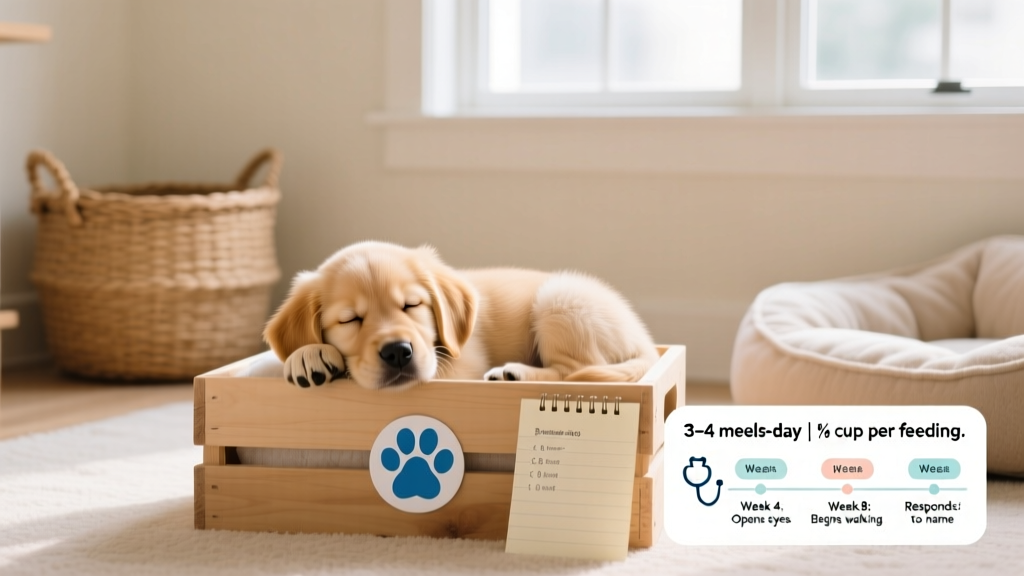
Signs of Parvo for Puppies
Learn the critical signs of parvo for puppies, plus a complete week-by-week puppy care guide covering vaccines, feeding, potty training, and socialization milestones.

If you've just brought home a new puppy or are preparing to, you've likely heard warnings about parvovirus — and for good reason. Canine parvovirus (CPV-2) is one of the most dangerous infectious diseases affecting young dogs, with a mortality rate of up to 91% in untreated cases, according to the Merck Veterinary Manual. The good news? With prompt veterinary intervention, survival rates climb to 80-95%.
Recognizing the signs of parvo for puppies early can literally save your dog's life. But parvo awareness is just one piece of responsible puppy ownership. This guide walks you through parvo detection alongside a complete developmental timeline — from feeding schedules and vaccination windows to potty training expectations and socialization milestones — so you can navigate your puppy's first year with confidence.
Recognizing the Signs of Parvo for Puppies: What Every Owner Must Know
Canine parvovirus attacks rapidly dividing cells, primarily in the intestinal lining and bone marrow. Puppies between 6 weeks and 6 months are most vulnerable, especially those who are unvaccinated or only partially vaccinated. The virus is extremely hardy — it can survive in soil for over a year and resists many common household disinfectants.
The Parvo Symptom Progression Timeline
Understanding how parvo symptoms develop helps you catch the disease in its earliest, most treatable stage:
| Timeframe | Symptoms | Severity |
|---|---|---|
| Days 3-7 post-exposure | Lethargy, loss of appetite, low-grade fever (103-104°F / 39.4-40°C) | Early — often mistaken for mild illness |
| Days 7-10 | Vomiting, severe diarrhea (often bloody with a distinctive foul odor), dehydration | Critical — emergency veterinary care required |
| Days 10-14 | Severe dehydration, hypothermia, septic shock, potential death without treatment | Life-threatening — survival depends on aggressive intervention |
- Bloody diarrhea with a metallic or rotten smell
- Repeated vomiting (more than 2-3 times in an hour)
- Extreme lethargy — puppy won't respond to name or treats
- Refusal to eat or drink for more than 12 hours
- Sunken eyes, tacky gums, or skin that doesn't snap back when gently pinched (dehydration signs)
- Fever above 104°F (40°C) or temperature below 99°F (37.2°C)
How Parvo Is Diagnosed
Your veterinarian will typically perform an in-clinic fecal antigen test (ELISA), which delivers results in about 10-15 minutes. These tests have a sensitivity of approximately 80-90%, meaning false negatives can occur early in infection. If clinical signs strongly suggest parvo despite a negative snap test, your vet may recommend:
- CBC (Complete Blood Count): Parvo causes a dramatic drop in white blood cells, particularly lymphocytes and neutrophils. Expect to pay $80-$150 for this panel.
- PCR Testing: More sensitive than ELISA, sent to an external lab, results in 1-3 days. Cost: $100-$200.
- Chemistry Panel: Assesses organ function and electrolyte imbalances from dehydration. Cost: $120-$250.
Parvo Treatment Costs and Prognosis
Hospitalization for parvo treatment typically runs 5-7 days and costs between $1,500 and $5,000+ depending on your region, the severity of infection, and whether your puppy requires blood transfusions or plasma therapy. Outpatient protocols (subcutaneous fluids, anti-nausea injections, and antibiotics at home) cost $500-$1,500 but carry lower survival rates than full hospitalization.
According to the American Veterinary Medical Association (AVMA), puppies who survive the first 3-4 days of treatment have an excellent prognosis for full recovery.
When to Bring Your Puppy Home and the First Critical Weeks
Responsible breeders and rescue organizations keep puppies with their littermates and dam until at least 8 weeks of age. This isn't arbitrary — weeks 6-8 are a crucial socialization period where puppies learn bite inhibition, canine body language, and confidence through sibling play.
Bringing a puppy home before 8 weeks increases the risk of behavioral issues including separation anxiety, resource guarding, and difficulty reading other dogs' social signals later in life. Some breeders of smaller or more anxious breeds (think Chihuahuas, Italian Greyhounds, or Cavalier King Charles Spaniels) prefer to keep puppies until 10-12 weeks for additional developmental stability.
First 72 Hours Home: The Decompression Period
Your puppy has just left everything familiar. Expect:
- Loose stools from stress (not necessarily illness — but monitor closely for parvo signs above)
- Whining or crying the first 1-3 nights, especially in the crate
- Sleeping 18-20 hours per day — this is normal
- Reduced appetite for the first 24-48 hours
- Following you room to room (seeking security)
Keep your puppy's world small during this period. One room, one potty spot, minimal visitors. Introduce the crate with meals and treats, never as punishment. A Snuggle Puppy toy with a heartbeat simulator ($25-$40) can ease the transition from littermates.
Complete Puppy Vaccination Schedule: Parvo Protection and Beyond
Vaccination is your puppy's primary defense against parvovirus and other life-threatening diseases. The World Small Animal Veterinary Association (WSAVA) guidelines, widely adopted by US veterinarians, recommend the following core vaccination schedule:
| Age | Vaccines Administered | Diseases Covered | Estimated Cost |
|---|---|---|---|
| 6-8 weeks | DHPP (Distemper, Hepatitis/Adenovirus, Parainfluenza, Parvovirus) — Dose 1 | Core diseases including parvo | $25-$50 |
| 10-12 weeks | DHPP — Dose 2; Bordetella (optional, recommended for socialization classes) | Boosters core immunity; kennel cough | $35-$65 |
| 14-16 weeks | DHPP — Dose 3; Rabies (required by law in most states) | Final core booster; rabies | $40-$80 |
| 12-16 months | DHPP booster; Rabies booster | Adult immunity establishment | $50-$90 |
Why multiple DHPP doses? Maternal antibodies from the dam's colostrum protect puppies initially but also block vaccine response. These antibodies wane unpredictably between 6-16 weeks. The series ensures at least one dose lands after maternal antibodies drop but before the puppy is exposed to disease.
Critical parvo prevention note: Until your puppy has received their final DHPP dose at 14-16 weeks AND two weeks have passed (so approximately 16-18 weeks of age), avoid high-risk environments: dog parks, pet store floors, areas where unknown dogs defecate, and unvaccinated dog contact. Carry your puppy in a sling or backpack for outdoor socialization during this vulnerable window.
Feeding Your Puppy: Age-Specific Portions and Schedules
Puppies need significantly more calories per pound than adult dogs — their metabolisms are running at full speed to fuel growth, immune development, and constant activity. Feed a food that carries the AAFCO statement confirming it meets nutritional profiles for growth or all life stages.
| Age | Meals Per Day | Daily Amount (Small Breed 10-25 lb adult) | Daily Amount (Medium Breed 25-50 lb adult) | Daily Amount (Large Breed 50-100 lb adult) |
|---|---|---|---|---|
| 8-12 weeks | 4 meals | ¾ - 1 cup | 1 - 1½ cups | 1½ - 2½ cups |
| 12-16 weeks | 3-4 meals | ¾ - 1¼ cups | 1¼ - 2 cups | 2 - 3½ cups |
| 4-6 months | 3 meals | 1 - 1½ cups | 2 - 3 cups | 3 - 5 cups |
| 6-12 months | 2 meals | 1 - 1½ cups | 2 - 3½ cups | 3½ - 5½ cups |
Important for large/giant breeds: Feed a food specifically formulated for large breed puppies. These formulas maintain calcium-to-phosphorus ratios between 1.1:1 and 1.4:1 and limit caloric density to prevent rapid growth that contributes to hip dysplasia and osteochondrosis. Brands like Purina Pro Plan Large Breed Puppy, Royal Canin Giant Puppy, and Hill's Science Diet Large Breed Puppy all meet these criteria.
Transitioning foods: If switching from the breeder's food, mix 75% old food with 25% new food for days 1-3, then 50/50 for days 4-5, then 25/75 for days 6-7. Abrupt transitions cause gastrointestinal upset that can mimic early parvo signs — another reason to switch gradually.
Potty Training Timeline: Realistic Expectations by Age
Forget the "potty trained in 3 days" promises. Bladder control develops physically as puppies mature, and most puppies cannot reliably hold their bladder for extended periods until 4-6 months of age. Here's what to actually expect:
| Age | Max Daytime Hold | Expected Accidents/Week | Training Focus |
|---|---|---|---|
| 8-10 weeks | 30-45 minutes | Daily (normal) | Establish routine, reward outdoor elimination |
| 10-14 weeks | 1-2 hours | 3-5 per week | Introduce verbal cue, begin crate association |
| 3-4 months | 2-3 hours | 1-3 per week | Puppy signals door, consistent location use |
| 4-6 months | 3-4 hours | 0-2 per week | Reliability building, reducing treat frequency |
| 6-12 months | 4-6+ hours | Rare | Full reliability (regression possible during adolescence) |
Troubleshooting common setbacks:
- Regression at 4-5 months: Often coincides with teething discomfort or a fear period. Return to higher-frequency outdoor trips for 1-2 weeks.
- Submissive/excitement urination: Common in puppies under 1 year. Greet calmly, avoid looming over the puppy, take them outside immediately upon coming home.
- Marking behavior (leg-lifting): Typically begins around 6-9 months in males. Neuter timing can influence this but is not a guarantee. Manage with supervision and interrupt-redirect.
The Socialization Window (Weeks 3-14): Your Puppy's Critical Development Period
Behavioral science has established that puppies have a primary socialization window between approximately 3 and 14 weeks of age. During this period, positive exposures to novel stimuli become normalized. After this window closes, unfamiliar things trigger fear responses rather than curiosity. This is why early, structured socialization is non-negotiable — and why the parvo risk must be carefully managed, not used as a reason to keep puppies isolated.
The AVMA supports controlled socialization for partially vaccinated puppies in low-risk environments. Here's your exposure checklist:
People (aim for 50+ positive encounters):
- Children of various ages (supervised, calm interactions)
- People wearing hats, sunglasses, hoodies, masks
- People using wheelchairs, crutches, canes, walkers
- People of different heights, builds, skin tones
- People carrying bags, umbrellas, or packages
Surfaces and environments:
- Grass, gravel, sand, wet pavement, metal grates
- Elevators, automatic doors, stairs (carried up/down until joints mature)
- Car rides (short trips, 5-10 minutes, building to longer)
- Veterinary clinic waiting room (carry in, treats, positive association)
Sounds (pair each with treats):
- Vacuum cleaners, blenders, doorbells, thunder (use recordings at low volume)
- Traffic, sirens, construction noise, fireworks recordings
- Other dogs barking (controlled distance)
Other animals (only with fully vaccinated, known-healthy dogs):
- Puppy kindergarten classes (require proof of at least 1-2 DHPP doses)
- Playdates with vaccinated adult dogs known for gentle play
- Observing dogs from a distance (carried or in arms at parks)
Safe socialization during parvo vulnerability: Carry your puppy in public spaces. Host puppy playdates at your home with known-vaccinated dogs. Attend structured puppy classes that require vaccination proof and sanitize floors between sessions. Avoid dog parks, pet store floors, and rest stop dog areas until 2 weeks past the final DHPP dose.
Age-Specific Milestones: What to Expect Week by Week
Weeks 4-8 (Still with Breeder/Rescue)
If you're evaluating a puppy during this period, here's what should be happening:
- Teeth erupting (incisors and canines visible by week 6)
- Transitioning from mother's milk to softened puppy food (weeks 4-6)
- First DHPP vaccine at 6-8 weeks
- First deworming treatments (typically pyrantel pamoate at 2, 4, 6, and 8 weeks)
- Littermate play teaching bite inhibition — yelping siblings teach puppies to soften their mouths
- Introduction to crate-like spaces and basic handling (paw touching, ear inspection)
Weeks 8-12 (Coming Home)
- Weight gain of approximately 5 oz per day for medium breeds (weigh daily at the same time to monitor)
- 4 meals per day on a consistent schedule
- Crate training introduction — 1-2 hour maximum sessions during the day
- Potty breaks every 30-60 minutes when awake
- Second DHPP vaccine at 10-12 weeks
- Begin name recognition training and "sit" with food lure
- First fear period (8-11 weeks) — avoid traumatic experiences; negative events during this window can create lasting phobias
Weeks 12-16
- Transition to 3 meals per day around 12-14 weeks
- Increased confidence and exploration — puppy should be approaching novel objects willingly
- Final DHPP dose and rabies vaccine at 14-16 weeks
- Longer crate tolerance: 2-3 hours during the day, 5-6 hours overnight
- Begin leash walking practice in low-distraction areas (yard, quiet street)
- Teething discomfort begins — increased chewing and mouthing
Weeks 16-24 (4-6 Months)
- Transition to 2 meals per day around 16 weeks
- Peak teething: adult teeth pushing out baby teeth (find small teeth around the house — this is normal)
- Second fear period (6-14 months, can hit anytime in this range) — sudden fear of previously familiar things
- Spay/neuter typically performed during this window (consult your vet on optimal timing for your breed size)
- Adolescent boundary-testing begins — recall may temporarily decline
- Exercise increase: 5 minutes of structured walking per month of age, twice daily (e.g., 20-minute walks at 4 months)
6-12 Months (Adolescence)
- Approaching adult size — small breeds reach full height by 8-10 months; large breeds continue growing to 18-24 months
- Transition from puppy food to adult food (small breeds at 9-12 months, medium at 12 months, large at 12-18 months)
- Sexual maturity — intact males may begin marking; intact females experience first heat cycle (6-12 months depending on breed size)
- Energy levels peak — this is when many dogs are surrendered due to unmet exercise needs
- Training consolidation — skills learned in puppyhood either solidify or deteriorate without continued practice
Crate Training Progression: Building Comfort Step by Step
Crate training serves multiple purposes: potty training aid (dogs avoid soiling their sleeping space), safe confinement when unsupervised, and anxiety reduction through a predictable den. But time limits matter — over-crating causes distress and undermines the training.
| Puppy Age | Max Daytime Crate Time | Max Overnight Crate Time | Notes |
|---|---|---|---|
| 8-10 weeks | 30-60 minutes | 3-4 hours (set alarm) | Expect crying; reward quiet moments |
| 10-14 weeks | 1-2 hours | 4-5 hours | Begin feeding meals in crate |
| 3-4 months | 2-3 hours | 6-7 hours | Puppy should enter willingly for treats |
| 4-6 months | 3-4 hours | 7-8 hours | Can remove divider in crate for full space |
| 6+ months | 4-5 hours | 8 hours | Never exceed 5 hours daytime crating regularly |
Crate training steps (positive reinforcement only):
- Place high-value treats (freeze-dried liver, small cheese pieces) inside with the door open. Let puppy enter and exit freely for 2-3 days.
- Feed all meals in the crate with the door open, then gradually closed during meals.
- Give a stuffed Kong or chew toy in the crate. Close the door for 5 minutes while you sit nearby.
- Gradually increase duration and distance. Leave the room for 1 minute, then 5, then 15.
- Never use the crate as punishment. Never release a puppy that is actively barking or whining (wait for 3-5 seconds of quiet first).
Teething Timeline and Safe Relief Strategies
Puppies have 28 deciduous (baby) teeth that erupt between 3-6 weeks of age. These are replaced by 42 permanent teeth in a predictable sequence:
- 12-16 weeks: Incisors begin loosening and falling out
- 16-20 weeks: Canine teeth (fangs) shed — you may find these in bedding or carpet
- 20-24 weeks: Premolars and molars erupt
- 6-7 months: All 42 adult teeth should be in place (veterinarians check for retained baby teeth at spay/neuter)
Safe chew options for teething relief:
- Kong Classic (puppy rubber, pink/blue): Stuff with wet puppy food and freeze for 2-4 hours. The cold numbs sore gums. Sizes: Small ($12-$15) for dogs under 20 lb, Medium ($14-$18) for 15-35 lb.
- Nylabone Puppy Chew (softer formula): Designed for developing teeth — harder adult Nylabones can fracture puppy teeth. Replace when worn down to the knuckle. $6-$10.
- Frozen washcloth: Wet a clean washcloth, twist into a rope, freeze. Supervise to prevent swallowing fabric pieces. Free.
- Benebone Puppy (softer material): Wishbone or Maplestick shape, puppy-specific formula. $13-$18.
AVOID these during teething: Rawhide (choking and intestinal blockage risk), antlers or hooves (too hard — can fracture developing teeth), cooked bones of any kind (splintering hazard), and any chew toy harder than your thumbnail (press your nail into it — if it doesn't give slightly, it's too hard for puppy teeth).
Common Puppy Problems: Breed-Stage Solutions
Puppy Biting and Nipping
All puppies mouth — it's how they explore the world and relieve teething discomfort. But teaching bite inhibition (a soft mouth) is essential before 16 weeks. Strategies:
- Redirect to appropriate chew: When puppy mouths your hand, say "oops" calmly, withdraw your hand, and offer a toy. Reward chewing the toy with praise.
- Reverse time-out: If biting continues after redirection, stand up and leave the play area for 15-30 seconds. This teaches that biting ends fun interaction.
- Never physically punish: Hitting, holding the mouth shut, or alpha-rolling increases fear and aggression. The AVMA and the American College of Veterinary Behaviorists oppose aversive training methods.
Excessive Whining and Crying
Distinguish between needs-based whining (potty, hunger, pain) and attention-seeking whining:
- Rule out physical needs first — take outside, check water, assess for illness signs (including parvo symptoms listed above)
- For crate whining at night: ensure adequate daytime exercise, provide a chew toy, use white noise to mask outside sounds
- For attention whining: do not reward with eye contact, talking, or touching. Wait for 3-5 seconds of quiet, then reward
Destructive Chewing
Puppies chew to explore, relieve teething pain, and burn energy. Management is key:
- Puppy-proof your home: shoes in closets, cords behind furniture, remote controls in drawers
- Provide 4-6 appropriate chew toys in rotation (novelty maintains interest)
- Ensure adequate physical exercise and mental stimulation (sniffing walks, food puzzles, training sessions)
- Use a bitter apple spray ($8-$12) on furniture legs as a deterrent, but pair with appropriate alternatives — deterrents alone don't teach what TO chew
First-Year Cost Breakdown: Budgeting for Your Puppy
New puppy owners are often surprised by the true first-year cost of responsible dog ownership. Here's a realistic breakdown based on 2026 US pricing:
| Category | Low Estimate | Medium Estimate | High Estimate | Notes |
|---|---|---|---|---|
| Puppy acquisition | $0-$300 (rescue) | $1,000-$2,500 | $3,000-$5,000+ | Responsible breeder pricing varies by breed |
| Veterinary (wellness) | $400 | $650 | $1,000 | Vaccines, deworming, spay/neuter, microchip |
| Food (12 months) | $350 | $600 | $1,000 | Depends heavily on breed size and food quality |
| Supplies (initial) | $200 | $400 | $700 | Crate, bed, bowls, leash, harness, toys, gates |
| Training | $0 (self-taught) | $200-$400 | $800-$1,500 | Puppy class to board-and-train programs |
| Pet insurance (annual) | $300 | $500 | $800 | Enroll before pre-existing conditions develop |
| Preventive medications | $150 | $300 | $500 | Heartworm, flea/tick year-round prevention |
| Total First Year | $1,800-$2,100 | $3,650-$5,350 | $7,800-$10,500 | Does not include emergency vet visits |
Emergency fund recommendation: Set aside $1,000-$2,000 specifically for unexpected veterinary costs. Puppies are prone to foreign body ingestion (toys, socks, rocks), parvo treatment ($1,500-$5,000), and trauma. Pet insurance can offset these costs significantly — but you must enroll before any condition develops.
Frequently Asked Questions About Puppy Health and Parvo
When should I bring my puppy home?
At 8 weeks minimum. Puppies need weeks 6-8 with littermates for bite inhibition learning and social development. Some breeders of toy breeds or anxious temperaments keep puppies to 10-12 weeks. Never accept a puppy younger than 7 weeks — this is illegal in many US states and produces dogs with significant behavioral deficits.
How often should I feed my puppy?
8-12 weeks: 4 meals daily. 12-16 weeks: 3-4 meals daily. 4-6 months: 3 meals daily. 6+ months: 2 meals daily. Space meals evenly throughout waking hours. Free-feeding (leaving food out all day) is not recommended — it makes potty training harder and masks appetite changes that signal illness like parvo.
When will my puppy be fully potty trained?
Most puppies achieve reliable house training between 4-6 months of age, though some (especially small breeds with tiny bladders) may take until 8-12 months. "Reliable" means fewer than 1-2 accidents per month. Consistency in schedule, supervision, and positive reinforcement for outdoor elimination are the strongest predictors of faster training.
What vaccines does my puppy need and when?
Core vaccines: DHPP (Distemper, Hepatitis, Parainfluenza, Parvovirus) at 6-8 weeks, 10-12 weeks, and 14-16 weeks. Rabies at 14-16 weeks (legally required). Non-core vaccines your vet may recommend based on lifestyle: Bordetella (kennel cough), Leptospirosis, Lyme disease, and Canine Influenza. The DHPP series is critical for parvo protection — do not skip or delay doses.
How do I stop puppy biting and nipping?
Redirect to appropriate chew toys, use reverse time-outs (leaving play for 15-30 seconds when bitten), and ensure adequate physical and mental exercise. Puppy biting typically peaks at 12-16 weeks during teething and diminishes significantly by 5-6 months with consistent redirection. Never use physical punishment — it damages trust and can escalate to fear-based aggression.
When can my puppy go outside and meet other dogs?
Your puppy can go outside in controlled, low-risk environments (your yard, carried in public) immediately. For contact with other dogs: wait until at least 2 weeks after the second DHPP dose (approximately 12-14 weeks) for structured playdates with known-vaccinated dogs. Dog parks and uncontrolled environments should wait until 2 weeks after the final DHPP at 14-16 weeks (approximately 16-18 weeks total). Balance parvo risk with the critical socialization window — isolation is not the answer, but managed exposure is.
Can my puppy get parvo even after vaccination?
Yes, though it's uncommon after the full series. Puppies can be infected during the vaccination window if maternal antibodies block vaccine response but have already waned enough to leave the puppy unprotected. This is why the multi-dose series exists. After the complete DHPP series (3 doses through 16 weeks) plus a 2-week waiting period, protection is estimated at 95%+ according to the American Kennel Club. Annual or 3-year boosters maintain immunity throughout adulthood.
How long does parvo last in the environment?
Parvovirus can survive in soil for 1-5 years, on indoor surfaces for 2+ months, and resists freezing temperatures and many common disinfectants. The only reliably effective household disinfectant against parvo is a bleach solution (1 part bleach to 30 parts water) with 10 minutes of contact time. If your home has been contaminated, consult your veterinarian before bringing a new unvaccinated puppy into the environment.
Beth Carrasco
All our authors care for dogs every day — read more of their work on the authors page.