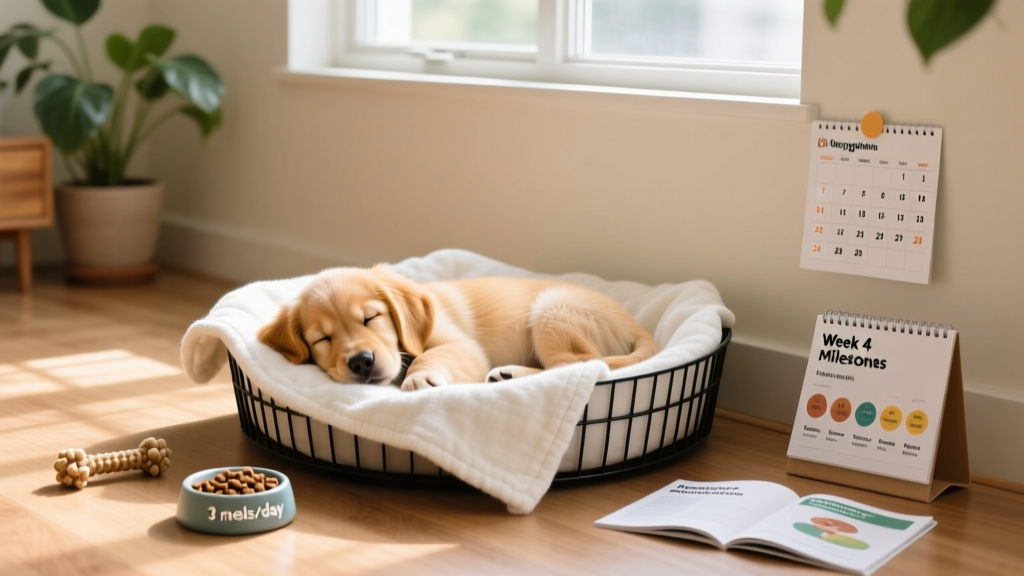
Siberian Husky Puppy: Week-by-Week Care, Feeding & Training Guide
Complete Siberian Husky puppy guide covering feeding schedules, vaccination timelines, potty training, socialization windows, and first-year costs with

Bringing Home a Siberian Husky Puppy: What Makes This Breed Different
Siberian Husky puppies are not Labrador puppies in a different coat. They arrive in your home with a genetic blueprint shaped by centuries of sled-pulling endurance work in subarctic conditions. That heritage produces a puppy that is extraordinarily vocal, fiercely independent, driven to run, and equipped with a prey drive that can surprise first-time owners. Understanding these breed-specific traits from day one will save you months of frustration.
This guide walks you through every developmental stage of your Siberian Husky puppy's first year — from the moment you pick them up at 8 weeks through adolescence — with concrete feeding portions, vaccination dates, training timelines, and the real costs you should budget for in 2026.
The optimal window is 8 to 10 weeks of age. Reputable breeders keep Husky litters together until at least 8 weeks because the weeks 6–8 period is critical for bite inhibition learning from littermates. Bringing a puppy home before 8 weeks increases the risk of behavioral problems including excessive mouthing and poor social skills. Some breeders of working-line Huskies prefer to hold puppies until 10 weeks to complete early socialization protocols. Never accept a puppy younger than 7 weeks — this violates best practices outlined by the American Kennel Club and many state animal welfare laws.
Siberian Husky Puppy Development Milestones
Each developmental window carries specific expectations and action items. Here is what to expect at every stage of your Husky puppy's first year.
| Age Range | Weight (Approx.) | Key Milestones | Your Action Items |
|---|---|---|---|
| 4–8 weeks | 5–10 lb / 2.3–4.5 kg | Weaning onto solid food; learning bite inhibition from littermates; first socialization period begins; eyes and ears fully functional | If still with breeder: confirm early neurological stimulation (ENS) protocol is being followed; schedule first vet visit for pickup week |
| 8–12 weeks | 10–18 lb / 4.5–8.2 kg | Fear imprint period (8–11 weeks); rapid bonding; bladder control ~1 hour per month of age; chewing intensifies | Begin crate training; start positive reinforcement name recognition; avoid traumatic experiences during fear period; first DHPP vaccine |
| 12–16 weeks | 18–28 lb / 8.2–12.7 kg | Socialization window closing (ends ~14 weeks); baby teeth start loosening; can hold bladder 3–4 hours; testing boundaries | Intensify socialization exposures; enroll in puppy kindergarten; begin leash training; second DHPP booster |
| 16–24 weeks | 25–40 lb / 11.3–18.1 kg | Peak teething discomfort; adult teeth erupting; flight instinct emerges; recall becomes unreliable; may attempt escapes | Provide appropriate chew outlets; reinforce recall with high-value treats; never leave unsupervised in unfenced areas; rabies vaccine |
| 6–12 months | 35–55 lb / 15.9–24.9 kg | Sexual maturity (females may enter first heat at 6–8 months); adolescent rebellion peak; energy levels surge; pack hierarchy testing | Discuss spay/neuter timing with your vet (12–18 months recommended for Huskies to allow growth plate closure); increase structured exercise; advanced obedience classes |
Feeding Schedule and Portions for Your Siberian Husky Puppy
Huskies are somewhat unusual among medium-large breeds: they tend to be relatively efficient eaters and are less prone to the ravenous food obsession you see in Labradors or Beagles. However, they are at risk for gastric dilatation-volvulus (bloat), so meal frequency and feeding practices matter.
Choose a large-breed puppy formula that meets AAFCO nutritional standards for growth. Look for a product with DHA for brain development and controlled calcium-phosphorus ratios (1.1:1 to 1.4:1) to support proper skeletal growth without promoting rapid weight gain.
| Puppy Age | Meals Per Day | Daily Amount (Dry Kibble) | Notes |
|---|---|---|---|
| 8–12 weeks | 3–4 meals | 1.5–2 cups total/day | Soften kibble with warm water for first 2 weeks home; feed ½ cup per meal at 3 meals |
| 12–16 weeks | 3 meals | 2–2.5 cups total/day | Transition to dry kibble; monitor body condition score (BCS) weekly — ribs should be easily felt but not visible |
| 4–6 months | 2–3 meals | 2.5–3.5 cups total/day | Drop to 2 meals at 6 months; increase if growth spurts occur (your vet tracks this) |
| 6–12 months | 2 meals | 2.5–4 cups total/day | Transition to adult formula at 12 months; males typically eat more than females |
How often should I feed my Siberian Husky puppy? At 8–12 weeks, feed 3 to 4 small meals daily. At 3–6 months, reduce to 3 meals. By 6 months, transition to 2 meals per day, which you will maintain into adulthood. Free-feeding (leaving food out all day) is not recommended for Huskies — it makes potty training significantly harder and can lead to picky eating habits that this breed is already prone to developing.
Vaccination Schedule: What Your Husky Puppy Needs and When
Your puppy's vaccination timeline is not optional — it is a carefully calibrated series designed to bridge the gap between maternal antibody protection (which wanes between 6–16 weeks) and your puppy's own immune response. Missing or delaying a booster can leave dangerous immunity gaps.
| Age | Vaccine | What It Protects Against | Estimated Cost |
|---|---|---|---|
| 6–8 weeks | DHPP (1st dose) | Distemper, Hepatitis (Adenovirus-2), Parainfluenza, Parvovirus | $25–$45 (often given by breeder) |
| 10–12 weeks | DHPP (2nd dose) + Bordetella | Same as above (booster) + Kennel Cough | $40–$70 |
| 14–16 weeks | DHPP (3rd dose) + Rabies | Final core booster + Rabies (legally required in most US states) | $50–$90 |
| 12–16 weeks (optional) | Leptospirosis (2-dose series, 2–4 weeks apart) | Leptospirosis — a zoonotic bacterial infection transmitted through wildlife urine in standing water | $30–$50 per dose |
What vaccines does my Siberian Husky puppy need and when? The core vaccines are DHPP (a combination covering distemper, hepatitis, parainfluenza, and parvovirus) given at 6–8, 10–12, and 14–16 weeks, plus a rabies vaccine at 14–16 weeks. Your veterinarian may also recommend Bordetella (especially if you plan to attend puppy classes), Leptospirosis (if you live near water or wildlife), and Lyme disease vaccine (in tick-endemic regions). Always consult your veterinarian to customize the schedule for your area and lifestyle.
When can my puppy go outside and meet other dogs? Your puppy can explore your own yard immediately (assuming no unvaccinated dogs have been there). However, avoid public areas — parks, pet stores, sidewalks with heavy dog traffic — until 7 days after the final DHPP booster at 16 weeks, per AVMA vaccination guidelines. For controlled socialization during the critical window (weeks 8–14), carry your puppy to new environments, arrange playdates with fully vaccinated adult dogs you know, and attend puppy classes that require proof of vaccination for all attendees.
The Socialization Window: Your Husky Puppy's Most Critical 12 Weeks
The primary socialization period for puppies closes between 12 and 14 weeks of age. After this window, unfamiliar stimuli trigger fear responses rather than curiosity. For Siberian Huskies — a breed already predisposed to wariness of strangers and high prey drive — this window is especially important. Missing it can result in a dog that is reactive on leash, aggressive toward small animals, or fearful in new environments.
Between weeks 3 and 14, your goal is to expose your puppy to as many novel but positive experiences as possible. Every exposure should be paired with treats and praise so your puppy forms positive associations.
- People: Children (supervised), elderly individuals, people wearing hats/sunglasses/helmets, people in wheelchairs, people with facial hair, people of different ethnicities and heights
- Animals: Fully vaccinated adult dogs (various sizes), cats (controlled introduction), livestock if accessible (Huskies have strong prey drive — early positive exposure matters)
- Surfaces: Gravel, metal grates, wet grass, sand, slippery floors, stairs, wobble boards
- Sounds: Vacuum cleaner, thunderstorm recordings (play at low volume, gradually increase), traffic, doorbells, clapping, sirens, fireworks recordings
- Handling: Paw touching, ear examination, mouth opening, nail trimming practice, being held in different positions, gentle restraint
- Environments: Car rides, pet-friendly stores (after vaccination series), outdoor café patios, friends' homes, different neighborhoods
- Objects: Umbrellas opening, plastic bags rustling, bicycles passing, skateboards, garbage trucks, balloons
Aim for 5–10 new positive exposures per day during the peak window (8–14 weeks). Watch your puppy's body language — if they freeze, tuck their tail, or try to retreat, increase distance from the stimulus and let them observe from farther away while offering high-value treats. Never force a frightened puppy closer to something that scares them.
Potty Training Your Siberian Husky Puppy: Timeline and Troubleshooting
When will my Siberian Husky puppy be fully potty trained? Realistically, expect consistent reliability between 4 and 6 months of age, with occasional accidents through 8–10 months. Husky puppies are physically capable of bladder control at roughly 1 hour per month of age — so a 3-month-old puppy can hold it for about 3 hours maximum. Some Huskies learn quickly because they are naturally clean dogs that prefer to eliminate away from their sleeping area. Others are easily distracted outdoors and forget why they went outside.
| Age | Max Bladder Hold Time | Outdoor Trips Per Day | Expected Accident Frequency |
|---|---|---|---|
| 8–10 weeks | 1–2 hours | 12–15 trips | Multiple daily accidents are normal |
| 10–14 weeks | 2–3 hours | 8–12 trips | 1–2 accidents per week with consistency |
| 14–20 weeks | 3–4 hours | 6–8 trips | Rare accidents if schedule is maintained |
| 5–7 months | 5–7 hours | 4–6 trips | Should be reliable; regressions possible during stress |
Potty training protocol:
- Take your puppy outside immediately after waking, after every meal, after play sessions, and after crate time.
- Use a consistent verbal cue ("go potty" or "do your business") while they are eliminating, then reward with a treat within 2 seconds of finishing.
- Supervise 100% of indoor time — use baby gates, exercise pens, or a leash tethered to you. If you cannot supervise, the puppy goes in the crate.
- Clean accidents with an enzymatic cleaner (Nature's Miracle or Rocco & Roxia) to eliminate odor markers. Standard household cleaners do not break down uric acid crystals.
- Never punish accidents after the fact. Your puppy cannot connect a past event to your reaction. If you catch them mid-accident, interrupt calmly ("oops!") and carry them outside immediately.
Troubleshooting common Husky potty problems: If your puppy eliminates in the crate, the crate may be too large (they can soil one corner and sleep in the other). If they refuse to go outside, check for environmental distractions — Huskies are easily overwhelmed by new stimuli and may need a quieter potty spot. Submissive urination during greetings is common in young Huskies and typically resolves by 6–8 months; greet your puppy calmly and avoid leaning over them.
Crate Training Progression and Time Limits
A crate is not a punishment tool — it is a den substitute that leverages your Husky's natural instinct to keep their sleeping space clean. Proper crate training also protects your puppy from household hazards (electrical cords, toxic plants, small objects) when you cannot supervise directly.
Maximum crate time by age:
- 8–10 weeks: 1–2 hours maximum (except overnight, where 3–4 hours is acceptable with a middle-of-night potty break)
- 10–14 weeks: 2–3 hours during the day
- 14–18 weeks: 3–4 hours during the day
- 4–6 months: 4–5 hours during the day
- 6+ months: Up to 6 hours during the day (never exceed 8 hours total for any dog)
Progression steps:
- Week 1: Leave the crate door open, place treats and meals inside, let puppy enter voluntarily.
- Week 2: Close the door for 1–5 minute intervals while you sit nearby. Reward quiet behavior.
- Week 3: Close the door and step out of the room for 5–10 minutes. Return before puppy becomes distressed.
- Week 4: Extend absences to 20–30 minutes. Begin leaving the house briefly.
Husky-specific crate challenge: Huskies are vocal dogs, and your puppy will likely howl, whine, or "talk" in the crate, especially during the first two weeks. This is normal breed behavior, not necessarily distress. Learn to distinguish protest vocalization (loud but intermittent, with pauses to listen for your response) from genuine panic (continuous frantic scratching, panting, drooling, attempts to escape). For protest vocalization, wait for a brief pause in noise before opening the crate — this teaches that quiet, not noise, opens the door. For genuine panic, reduce the time increment and go back a step in the progression.
Teething Timeline and Safe Chew Recommendations
Your Siberian Husky puppy will begin losing baby teeth around 12–16 weeks, with the process completing by 6–7 months. Peak teething discomfort occurs between 3 and 5 months. During this period, your puppy will chew everything — baseboards, shoes, furniture legs, your hands — to relieve gum pressure. This is not misbehavior; it is a physiological need.
Teething relief strategies:
- Frozen washcloths: Soak a clean washcloth in water, twist it into a rope shape, freeze for 2 hours, and let your puppy chew under supervision. The cold numbs inflamed gums. Discard once threads begin to unravel.
- Kong Classic (puppy rubber, pink/blue): Stuff with a mixture of plain yogurt and mashed banana, then freeze. The rubber is soft enough for puppy teeth but durable enough for Husky jaw strength. Sizes: Small for 8–16 weeks, Medium for 4–6 months.
- Benebone Wishbone (puppy formula): The angled shape allows puppies to grip with their paws. Choose the puppy-specific version, which uses softer nylon.
- Nylabone Puppy Chew Keys: Textured surfaces massage gums. Replace when nubs are worn smooth.
Common Siberian Husky Puppy Problems and Solutions
How do I stop puppy biting and nipping? Husky puppies are notoriously mouthy — more so than many breeds — because sled dogs historically used their mouths extensively in work and play. Biting peaks between 8 and 16 weeks.
- The redirect method: When puppy teeth touch skin, say "ouch" in a calm tone, immediately withdraw attention for 10–15 seconds (stand up, turn away, or step behind a baby gate), then return and offer an appropriate chew toy. This mimics how littermates teach bite inhibition — a puppy that bites too hard gets ignored.
- Never use physical punishment. Holding the mouth shut, alpha rolls, or tapping the nose escalate biting behavior and damage trust. The American Veterinary Society of Animal Behavior explicitly recommends against dominance-based training methods.
- Provide adequate exercise. A tired Husky puppy bites less. At 8–12 weeks, 15–20 minutes of structured play 3 times daily reduces mouthing. Increase by 5 minutes per month of age.
Excessive howling and vocalization: Huskies are among the most vocal dog breeds. Your puppy will howl when left alone, "talk" during play, and may scream during baths or nail trims. This is genetic, not a training failure. Manage it by ensuring adequate physical and mental exercise, providing puzzle feeders when you leave, and never reinforcing demand vocalization (if howling gets attention, it will increase).
Destructive chewing and escape attempts: Huskies are notorious escape artists. Even at 4–5 months, puppies will test fence boundaries, dig under barriers, and jump low gates. Solutions include: puppy-proofing with exercise pens that have secured tops, never leaving your puppy unsupervised in a yard (even a fenced one), and providing daily mental stimulation through training sessions, snuffle mats, and frozen food puzzles to reduce boredom-driven destruction.
First-Year Cost Breakdown for a Siberian Husky Puppy
Budgeting accurately for a Husky puppy prevents sticker shock and ensures you can provide consistent care. These ranges reflect 2026 US pricing and vary by region.
| Category | Low Estimate | Mid Estimate | High Estimate |
|---|---|---|---|
| Puppy purchase (responsible breeder) | $1,200 | $1,800 | $3,000+ |
| Puppy vaccination series (DHPP × 3, rabies, bordetella) | $150 | $225 | $350 |
| Spay/neuter surgery (12–18 months) | $300 | $500 | $800 |
| Monthly food (large-breed puppy formula, 12 months) | $480 ($40/mo) | $720 ($60/mo) | $960 ($80/mo) |
| Flea/tick/heartworm prevention (yearly) | $180 | $300 | $420 |
| Supplies (crate, leash, harness, bowls, bed, chew toys, gates) | $200 | $350 | $600 |
| Training classes (puppy kindergarten + basic obedience) | $150 | $300 | $600 |
| Pet insurance (optional, annual premium) | $360 | $600 | $900 |
| TOTAL FIRST YEAR (excluding puppy purchase) | $1,820 | $3,000 | $4,630 |
Emergency veterinary visits are not included in these estimates. A single emergency visit for foreign body ingestion (common in puppies) can cost $2,000–$5,000. An emergency fund of $500–$1,000 or pet insurance enrollment from day one is strongly recommended.
Frequently Asked Questions About Siberian Husky Puppies
When should I bring my Siberian Husky puppy home?
Between 8 and 10 weeks of age. Puppies removed from their litter before 8 weeks miss critical bite inhibition and social development lessons from siblings. A responsible breeder will not release a puppy earlier than 8 weeks.
How often should I feed my puppy at 10 weeks old?
Three to four meals per day, totaling approximately 1.5–2 cups of large-breed puppy kibble. Divide evenly across meals. Feed at consistent times (e.g., 7 AM, 12 PM, 5 PM, and optionally 9 PM) to support predictable potty schedules.
When will my Siberian Husky puppy be fully potty trained?
Most Husky puppies achieve reliable house training between 4 and 6 months of age with consistent scheduling and supervision. Some individuals take up to 8–10 months, especially if the owner works long hours and cannot maintain a frequent outdoor schedule. Crate training accelerates the process significantly.
What vaccines does my puppy need and when?
Core vaccines: DHPP at 6–8 weeks, 10–12 weeks, and 14–16 weeks, plus rabies at 14–16 weeks. Non-core vaccines your vet may recommend based on your region: Bordetella, Leptospirosis, Lyme disease, and canine influenza. Always consult your veterinarian for a customized vaccination plan.
How do I stop my Siberian Husky puppy from biting my hands?
Use the redirect method: when teeth touch skin, say "ouch" calmly, withdraw attention for 10–15 seconds, then return with an appropriate chew toy. Consistency from every family member is essential. Provide 3–4 structured play sessions daily to reduce excess energy that fuels mouthing. Never use physical punishment, which worsens the behavior.
When can my puppy go to the dog park or meet unfamiliar dogs?
Wait until 7 days after the final DHPP booster at 14–16 weeks (approximately 17 weeks of age) before visiting public dog parks. Before that, socialize in controlled settings: carry your puppy to public places, arrange playdates with known vaccinated dogs, and attend puppy classes that verify vaccination status for all participants.
Should I spay/neuter my Husky puppy at 6 months?
Current veterinary research, referenced by the Merck Veterinary Manual, suggests that delaying spay/neuter until skeletal maturity (12–18 months for medium-large breeds like Huskies) may reduce the risk of certain orthopedic conditions including hip dysplasia and cranial cruciate ligament tears. Discuss the timing with your veterinarian based on your individual dog's health and lifestyle.
Dr. Hannah Wickes
All our authors care for dogs every day — read more of their work on the authors page.