Shorkie Puppy Care Guide: Milestones, Feeding, and Training
Complete Shorkie puppy guide covering age milestones, feeding schedules, potty training timelines, vaccination needs, and first-year costs for this Shih Tzu–Yorkie mix.

The Shorkie — a cross between a Shih Tzu and a Yorkshire Terrier — is a small, spirited companion dog that typically weighs between 7 and 15 pounds at maturity. Their puppies are tiny, often weighing under 2 pounds when you bring them home, which makes every care decision more critical than with larger breeds. Hypoglycemia, fragile tracheas, and rapid dehydration mean you cannot treat a Shorkie puppy like a scaled-down Labrador.
This guide walks through exactly what to expect from your Shorkie puppy at every developmental stage, with breed-specific feeding portions, a realistic potty training timeline, and the socialization window you absolutely cannot afford to miss.
Weight: 7–15 lb (3.2–6.8 kg) | Height: 6–9 in (15–23 cm) | Lifespan: 12–16 years
Coat: Long, silky to slightly wavy; low-shedding but high-maintenance grooming
Energy: Moderate — 30–45 minutes of activity daily
Family fit: Excellent with gentle older children; fragile around toddlers
When Should I Bring My Shorkie Puppy Home?
The earliest responsible age to bring a Shorkie puppy home is 8 weeks, though many reputable breeders of toy breeds prefer to keep puppies until 10–12 weeks. This is not a red flag — toy breed puppies are more vulnerable to hypoglycemia and stress-related illness, and the extra weeks with the litter help stabilize their blood sugar regulation and immune function.
If a breeder offers you a Shorkie puppy at 6 weeks, walk away. Puppies removed from their litter before 7 weeks show higher rates of fear-based aggression and separation anxiety later in life, according to research published in Applied Animal Behaviour Science. For a breed already prone to alert barking and wariness of strangers, early separation compounds behavioral risks significantly.
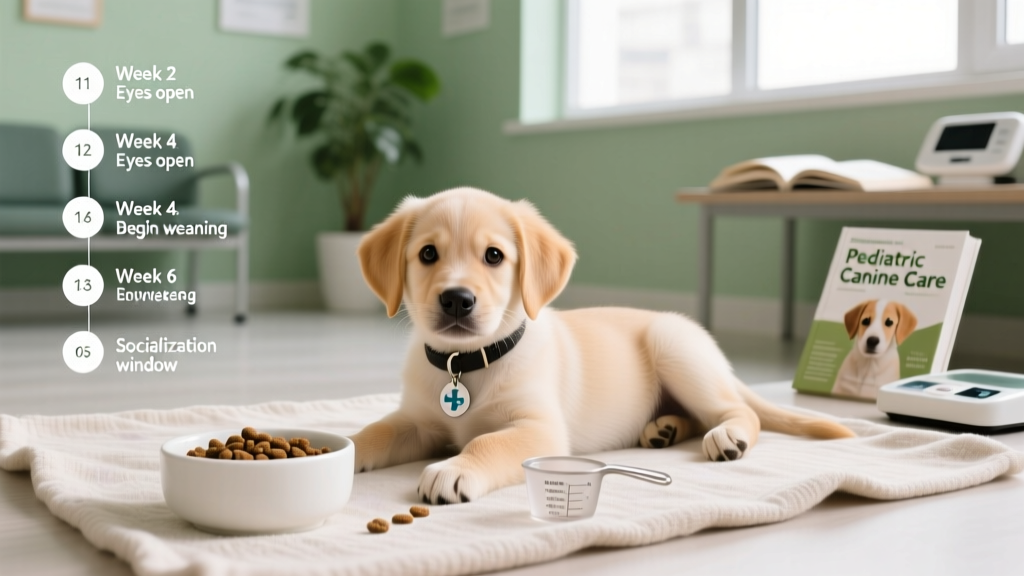
Shorkie Puppy Milestones: Week-by-Week Development
Understanding what your Shorkie is capable of at each stage prevents frustration and sets realistic expectations. A 10-week-old Shorkie simply does not have the bladder control or cognitive maturity of a 16-week-old, no matter how clever they seem.
| Age Range | Weight Range | Key Milestones & Expectations |
|---|---|---|
| 4–8 weeks | 0.75–1.5 lb (0.3–0.7 kg) | Eyes and ears fully open by week 4. Deciduous teeth erupting. Learning bite inhibition from littermates. First solid food (gruel). First deworming at 2, 4, 6 weeks. Still with breeder — not yet ready for home. |
| 8–12 weeks | 1.5–3 lb (0.7–1.4 kg) | Prime bonding period. Bladder capacity ~1 hour per month of age (so 2–3 hours max). Fear imprinting period begins at week 8 — negative experiences can create lasting phobias. First DHPP vaccine if not already given. Can learn name recognition and "sit" with food luring. |
| 12–16 weeks | 3–5 lb (1.4–2.3 kg) | Bladder control improving to 3–4 hours. Socialization window closing — urgent exposure needed. Second and third DHPP boosters. Can begin short leash walks (5 minutes per month of age rule). May start showing Yorkie-side independence and stubbornness during training. |
| 16–24 weeks | 5–8 lb (2.3–3.6 kg) | Teething intensifies — expect chewing surges. Rabies vaccine given at 16 weeks. Can hold bladder 4–6 hours. Ready for puppy kindergarten classes. Adult coat begins replacing puppy fuzz. Fear periods may cause temporary regression in confidence. |
| 6–12 months | 7–15 lb (3.2–6.8 kg) | Approaching adult size by 9–10 months. Sexual maturity — discuss spay/neuter timing with your vet (current consensus: 6–9 months for toy breeds per AVMA guidelines). Adolescent testing of boundaries. Full adult coat texture established. Energy stabilizes. |
Shorkie Puppy Feeding Schedule: Exact Portions by Age
Toy breed puppies have exceptionally high metabolic rates relative to their size, and Shorkies are no exception. A 2-pound Shorkie puppy burns calories roughly twice as fast per pound as a 60-pound Labrador puppy. This makes them prone to hypoglycemia (dangerously low blood sugar) if meals are skipped or spaced too far apart.
Feed a kibble specifically formulated for toy breed puppies — these contain higher caloric density and appropriately sized pieces. Look for an AAFCO statement confirming the food meets nutritional requirements for growth. Brands like Royal Canin X-Small Puppy, Hill's Science Diet Toy Puppy, or Purina Pro Plan Toy Breed Puppy are formulated for this size class.
| Puppy Age | Estimated Weight | Meals Per Day | Total Daily Kibble | Per-Meal Portion |
|---|---|---|---|---|
| 8–12 weeks | 1.5–3 lb | 4 meals | ¼–⅓ cup/day | ~1–1.3 Tbsp per meal |
| 12–16 weeks | 3–5 lb | 3–4 meals | ⅓–½ cup/day | ~1.5–2 Tbsp per meal |
| 4–6 months | 5–8 lb | 3 meals | ½–¾ cup/day | ~2.5–4 Tbsp per meal |
| 6–12 months | 8–15 lb | 2 meals | ½–1 cup/day | ¼–½ cup per meal |
How often should I feed my Shorkie puppy at 10 weeks? Four times daily, spaced roughly 4 hours apart during waking hours — for example, 7 AM, 11 AM, 3 PM, and 7 PM. Remove uneaten food after 15–20 minutes to establish a routine and monitor appetite changes, which are often the first sign of illness in toy breeds.
Vaccination Schedule for Your Shorkie Puppy
Shorkie puppies follow the standard core vaccination protocol recommended by the American Animal Hospital Association (AAHA), but their small size means your vet may adjust injection volumes or split vaccine appointments to reduce the risk of adverse reactions — a documented concern in toy breeds, particularly those under 5 kg.
| Age | Vaccine | Notes |
|---|---|---|
| 6–8 weeks | DHPP (Distemper, Hepatitis, Parainfluenza, Parvovirus) — 1st dose | Often administered by the breeder before pickup. Ask for documentation. Bordetella (kennel cough) may also be given intranasally if puppy class is planned. |
| 10–12 weeks | DHPP — 2nd dose; Leptospirosis (optional, lifestyle-dependent) | Your vet may recommend separating DHPP and Leptospirosis by 2 weeks in toy breeds to reduce inflammatory response. Lyme vaccine considered if in endemic area. |
| 14–16 weeks | DHPP — 3rd (final puppy) dose; Rabies | Rabies is legally required in all US states. DHPP series is not considered complete until this final dose. Maternal antibodies have typically waned by this point, making this the most critical booster. |
| 12–16 months | DHPP booster; Rabies booster | After this, DHPP is typically boosted every 3 years. Rabies intervals vary by state law (1-year vs. 3-year protocols). |
What vaccines does my Shorkie puppy need and when? The core series is DHPP at 6–8, 10–12, and 14–16 weeks, plus Rabies at 14–16 weeks. Bordetella, Leptospirosis, Lyme, and Canine Influenza are lifestyle-dependent non-core vaccines — discuss your specific exposure risks with your veterinarian. Typical cost for the full puppy vaccine series runs $150–$300 depending on your region and whether you use a general practice or low-cost clinic.
The Socialization Window: Weeks 3–14 (Do Not Skip This)
The American Veterinary Society of Animal Behavior (AVSAB) identifies the primary socialization period as 3 to 14 weeks — a window that closes before your puppy has completed their vaccine series. This creates a tension many new owners feel: you want to protect your Shorkie from disease, but isolation during this window causes more behavioral damage than the statistical risk of parvo exposure in controlled settings.
The AVSAB position statement on puppy socialization explicitly recommends that puppies begin socialization before full vaccination, provided exposures are managed safely. Here is your Shorkie-specific exposure checklist:
Potty Training Your Shorkie: A Realistic Timeline
Let's address this directly: Shorkie puppies take longer to potty train than larger breeds. This is not a reflection of intelligence — it is physiology. A 3-pound puppy has a bladder the size of a grape, and their metabolic processing speed means they fill that bladder frequently. Many Shorkie owners do not achieve reliable house training until 5–7 months of age, and some take up to 9 months.
When will my Shorkie puppy be fully potty trained? Expect the following progression if you are consistent:
- 8–12 weeks: Accidents every 1–2 hours. You are managing, not training. Take puppy out within 5 minutes of waking, eating, drinking, and playing.
- 12–16 weeks: Beginning to signal (sniffing, circling, whining at door). Still expect 1–3 accidents per week.
- 16–24 weeks: Bladder capacity reaches 4–5 hours. Accident frequency drops to 1–2 per week if schedule is maintained.
- 6–9 months: Most Shorkies are reliably house trained with rare setbacks during excitement or routine changes.
- Use a consistent verbal cue — say "go potty" the moment they begin to eliminate, then reward immediately with a treat after they finish. Shorkies respond well to verbal markers.
- Consider an indoor grass pad or litter box — for a dog that will weigh 10 lb as an adult, indoor elimination options are practical, especially in apartments or during extreme weather. Many Shorkie owners successfully train dual indoor/outdoor habits.
- Never punish accidents. Toy breeds are sensitive — yelling or rubbing their nose in it creates fear-based hiding behavior, where the puppy learns to eliminate behind furniture instead of in front of you.
- Crate between outings. Dogs instinctively avoid soiling their sleeping area. Use the crate as a management tool, not punishment.
Crate Training Progression and Time Limits
Select a crate sized for your Shorkie's expected adult weight — typically an 18-inch or 22-inch crate (such as the MidWest iCrate 18" or 22"). If you buy a larger crate, use the included divider to reduce the space. Too much room lets the puppy soil one end and sleep in the other, defeating the purpose.
| Puppy Age | Max Crate Time (Day) | Max Crate Time (Night) | Notes |
|---|---|---|---|
| 8–10 weeks | 30–60 minutes | 2–3 hours (set alarm) | Expect whining. Place crate near your bed for the first 2 weeks. |
| 10–14 weeks | 1–2 hours | 3–4 hours | Gradually move crate to permanent location if desired. |
| 14–18 weeks | 2–3 hours | 5–6 hours | Most puppies can sleep through the night by this stage. |
| 4–6 months | 3–4 hours | 7–8 hours | Provide a safe chew toy (e.g., Kong Classic XS stuffed with frozen yogurt) for longer crating. |
Teething Timeline and Relief Strategies (3–6 Months)
Shorkie puppies begin losing their 28 deciduous (baby) teeth around 12–16 weeks, with the process typically completing by 6–7 months. Because Shorkies inherit the brachycephalic-to-mesocephalic skull structure of the Shih Tzu parent, they are at elevated risk for retained deciduous teeth — where baby teeth fail to fall out as adult teeth erupt, creating double rows that trap food and accelerate periodontal disease.
Check your puppy's mouth weekly starting at 4 months. If you see adult teeth erupting behind or beside baby teeth that are not loose, consult your veterinarian. Extraction of retained teeth during spay/neuter surgery is common and cost-effective (typically $50–$150 per tooth if done concurrently with another procedure).
Safe teething relief options for a Shorkie puppy:
- Kong Puppy (XS or Small) — stuff with wet puppy food and freeze. The rubber is soft enough for developing teeth. ($8–$12)
- Benebone Puppy (Tiny) — nylon chew designed for puppies under 15 lb. Replace when worn down significantly. ($12–$15)
- Frozen washcloth — wet a clean washcloth, twist into a rope, freeze for 2 hours. Supervise use and remove if pieces tear off.
- Whimzees Puppy Dental Chews (XS) — vegetable-based, digestible. Suitable from 4 months. ($10–$14 for a bag)
- Rawhide chews — choking and intestinal blockage risk in dogs under 10 lb
- Antlers, hooves, or nylon bones rated for "power chewers" — can fracture puppy teeth
- Ice cubes — too hard for puppy teeth; use crushed ice or frozen broth instead
- Any chew small enough to swallow whole — if it fits inside a toilet paper tube, it's a choking hazard for a Shorkie
Common Shorkie Puppy Problems and Solutions
Puppy Biting and Nipping
How do I stop my Shorkie puppy from biting? Mouthing is normal puppy behavior that peaks between 8–16 weeks and gradually diminishes with consistent training. Shorkies, inheriting terrier drive from the Yorkshire Terrier side, may be more persistent mouthers than pure Shih Tzu puppies.
Use the redirect-and-reward method: when teeth touch skin, say "ouch" in a calm, medium-pitch voice (not a high shriek, which can excite terrier-types further), withdraw attention for 5–10 seconds, then offer an appropriate chew toy. Reward with praise when they chew the toy instead. This is a force-free, positive reinforcement approach — never hold a puppy's mouth shut, use bitter sprays on hands, or employ any aversive technique. These methods increase fear and can trigger defensive biting.
Excessive Whining and Crying
Shorkies are companion-bred dogs that form intense bonds quickly. Whining in the crate, especially at night during the first 2–3 weeks home, is expected. Strategies that work:
- A Snuggle Puppy heartbeat toy ($25–$35) simulates littermate warmth and pulse
- Covering the crate with a breathable blanket reduces visual stimulation
- A worn t-shirt with your scent placed in the crate provides comfort
- Do not release the puppy from the crate while they are whining — wait for 5 seconds of silence, then open the door. Otherwise, you reinforce that whining = freedom.
Chewing on Household Items
Shorkie puppies explore the world with their mouths, and their small size means they can access spaces larger puppies cannot — behind couches, under beds, inside bathroom cabinets. Puppy-proof at floor level: secure electrical cords with cord covers, remove small objects from low shelves, and use baby gates to restrict access to unsupervised rooms. Provide 4–5 rotating chew toys so novelty is maintained. Rotate toys every 3–4 days to keep them interesting.
When Can My Shorkie Puppy Go Outside and Meet Other Dogs?
Your Shorkie puppy can go outside in controlled, low-risk environments immediately after coming home — this means being carried in your arms, placed in a stroller, or set on a clean blanket in your own fenced yard. What you must avoid until 1 week after the final DHPP vaccine (typically around 17 weeks of age) are:
- Dog parks (highest parvo risk environment)
- Pet store floors (high canine traffic, unknown vaccination status)
- Public sidewalks where unknown dogs have eliminated
- Unvaccinated or unknown-status dogs in uncontrolled settings
Puppy kindergarten classes that require proof of first DHPP vaccination are generally considered safe by the AVSAB and should begin as early as 8–10 weeks. Look for classes taught by certified trainers (CPDT-KA or KPA-CTP credentials) that use positive reinforcement methods and maintain sanitized facilities.
For leash walks on public sidewalks, wait until 1 week post-final vaccine. When you do begin, use a harness — not a collar — to protect your Shorkie's delicate trachea. Toy breeds are predisposed to tracheal collapse, and collar pressure on the neck accelerates this condition. A front-clip harness like the Blue-9 Balance (XXS, fits dogs 5–12 lb, ~$35) or the Ruffwear Hi & Light (XXS, ~$40) distributes pressure across the chest.
First-Year Cost Breakdown for a Shorkie Puppy
Budgeting accurately prevents the financial stress that leads to surrendered dogs. Here is a realistic first-year cost breakdown based on 2025–2026 US pricing:
| Category | Items | Cost Range |
|---|---|---|
| Veterinary Care | Initial exam, 3 DHPP doses, rabies, fecal tests, deworming, heartworm test/preventive, spay/neuter | $800–$1,500 |
| Food & Treats | Toy breed puppy kibble, training treats, dental chews, food storage | $250–$450 |
| Supplies | Crate, harness, leash, bed, bowls, grooming tools (slicker brush, comb, nail clippers), puppy pads, enzymatic cleaner, chew toys | $200–$400 |
| Grooming | Professional grooming every 6–8 weeks (Shorkies typically need regular clipping) | $350–$600/year |
| Training | Puppy kindergarten (6–8 week course), optional private sessions | $150–$400 |
| Preventive Medications | Monthly heartworm preventive (e.g., Heartgard Plus for dogs up to 25 lb), flea/tick preventive (e.g., NexGard or Bravecto) | $200–$350 |
| Pet Insurance (optional but recommended) | Accident + illness plan for toy breed puppy (e.g., Trupanion, Healthy Paws, Lemonade) | $300–$600/year |
Frequently Asked Questions
Are Shorkie puppies hypoallergenic?
No dog is truly hypoallergenic, but Shorkies inherit low-shedding coats from both parent breeds, making them a reasonable choice for people with mild dog allergies. However, most allergic reactions are triggered by dander and saliva proteins, not hair itself. Spend time with a Shorkie before committing to assess your personal sensitivity.
How big will my Shorkie puppy get?
Most Shorkies reach 7–15 lb (3.2–6.8 kg) and 6–9 inches tall at the shoulder as adults. A rough estimate: double their weight at 12 weeks. A 3-pound 12-week-old will likely mature to around 6–8 lb. Growth is typically complete by 9–10 months, earlier than larger breeds.
Do Shorkie puppies bark a lot?
Both parent breeds are vocal — Yorkshire Terriers were bred to alert, and Shih Tzus are known watchdogs. Expect your Shorkie puppy to develop alert barking by 4–6 months. Early training with positive reinforcement (rewarding quiet behavior, teaching a "quiet" cue) prevents this from becoming excessive. Never use bark collars or shock devices — these are aversive and damage the trust bond with a sensitive toy breed.
When should I start grooming my Shorkie puppy?
Begin brushing daily from the day you bring them home to establish the habit. Use a soft slicker brush and a metal comb — Shorkie coats mat easily, especially behind the ears and under the legs. Schedule the first professional grooming appointment at 12–16 weeks, after the second DHPP vaccine. The first groom should be a brief, positive "puppy intro" session — a bath, light trim, and nail clip — not a full breed cut.
Can Shorkie puppies be left alone?
Shorkies are companion dogs that develop separation distress more readily than independent breeds. Puppies under 4 months should not be left alone for more than 2 hours. Gradually build alone-time tolerance by leaving for 5 minutes, then 10, then 20, always returning before the puppy becomes distressed. Adult Shorkies can typically handle 4–6 hours alone, but many owners of this breed arrange midday visits or use doggy daycare for longer absences.
This guide provides general developmental benchmarks for Shorkie puppies, but individual puppies vary significantly. Always consult your veterinarian for personalized advice on nutrition, vaccination timing, parasite prevention, and behavioral concerns specific to your puppy. If you suspect your puppy has ingested something toxic, contact the ASPCA Animal Poison Control Center at (888) 426-4435 (24/7, consultation fee applies) or the Pet Poison Helpline at (855) 764-7661 immediately.
Tom Renshaw
All our authors care for dogs every day — read more of their work on the authors page.