Shiba Dog Puppy Guide: Milestones, Feeding, Training & First-Year Costs
Complete shiba dog puppy guide covering age milestones, feeding schedules, potty training timelines, vaccination plans, and first-year cost breakdowns.

Raising a Shiba Inu puppy is unlike raising almost any other breed. Shibas are famously independent, fastidiously clean, and stubbornly intelligent — traits that make them charming companions but uniquely challenging during puppyhood. If you've just brought home a shiba dog puppy (or you're preparing to), this guide maps every critical developmental stage from 4 weeks through 12 months, with breed-specific expectations, exact feeding portions, and realistic timelines that account for the Shiba's strong-willed temperament.
When Should You Bring Your Shiba Dog Puppy Home?
The ideal window to bring a Shiba Inu puppy home is between 8 and 10 weeks of age. While some breeders release puppies at 8 weeks, many reputable Shiba Inu breeders prefer to keep puppies until 10 weeks. This extra two weeks allows the breeder to complete early socialization, begin crate familiarity, and ensure the puppy has received its first round of vaccinations.
Bringing a Shiba puppy home before 8 weeks is strongly discouraged. During weeks 6–8, puppies learn critical bite inhibition and social cues from littermates. Shibas removed too early often develop harder mouth habits and struggle with dog-to-dog communication later in life. According to the American Kennel Club, the 7-to-9-week window is when puppies are most receptive to forming bonds with new human families.
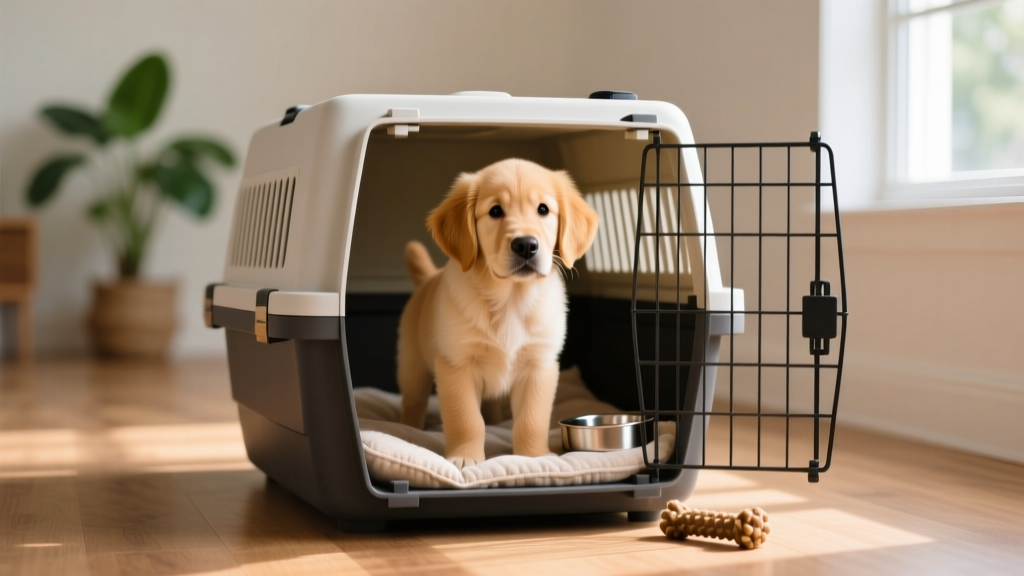
Before pickup day, prepare a designated puppy area with a crate (a 24-inch crate works for Shiba puppies; you'll upgrade to a 30-inch as they grow), washable bedding, enzymatic cleaner for accidents, and a pen or gated space. Shibas are escape artists from day one — ensure any play area has no gaps wider than three inches.
Shiba Puppy Age Milestones: What to Expect Week by Week
Shiba Inu puppies develop rapidly, but their independent nature means behavioral milestones don't always align with physical ones. Here's what to expect at each stage:
Weeks 4–8: Litter Life and Early Learning
- Physical: Eyes and ears fully functional; baby teeth fully erupted (28 deciduous teeth); weight typically 2–4 lb (0.9–1.8 kg)
- Behavioral: Learning bite inhibition from siblings; beginning to explore solid food; startle response to loud noises develops
- Breed-specific: Shiba puppies begin displaying the classic "Shiba scream" when overstimulated; early signs of independence (wandering from litter) may appear
- Your role: If still with breeder, ensure puppy is handled daily by multiple people; begin name recognition if you're visiting
Weeks 8–12: Home Transition and Fear Period
- Physical: Weight reaches 5–8 lb (2.3–3.6 kg); rapid growth phase; sleep needs are 18–20 hours per day
- Behavioral: First fear period peaks around 8–11 weeks — traumatic experiences during this window can create lasting phobias. Keep vet visits positive with high-value treats (boiled chicken, freeze-dried liver)
- Breed-specific: Shibas at this age are deceptively compliant. Don't mistake their quiet observation for obedience — they're cataloging boundaries
- Your role: Establish a consistent routine for feeding, potty breaks, and crate time. Begin short (5-minute) training sessions using positive reinforcement
Weeks 12–16: Growing Confidence and Testing Limits
- Physical: Weight reaches 8–12 lb (3.6–5.4 kg); adult coat begins replacing puppy fuzz; coordination improves dramatically
- Behavioral: Second fear period may begin around 14–16 weeks; puppy starts asserting independence (ignoring recall, refusing to enter crate)
- Breed-specific: The Shiba "stubborn streak" emerges. Your puppy may suddenly refuse commands they previously knew. This is normal developmental testing, not regression
- Your role: Maintain consistency without force. Use high-value rewards (real meat, cheese bits) to compete with environmental distractions. Never punish a Shiba — they hold grudges and will lose trust
Weeks 16–24: Adolescence Begins
- Physical: Weight reaches 12–17 lb (5.4–7.7 kg); teething intensifies; adult teeth begin erupting around 16 weeks
- Behavioral: Increased chewing, mouthing, and exploratory destruction; attention span remains short (10–15 minutes max per session)
- Breed-specific: Shibas may begin resource guarding toys or food during this stage. Address immediately with trade-up games (offer something better, never grab items away)
- Your role: Provide structured chew outlets (frozen Kong toys stuffed with peanut butter, Nylabone Power Chew in appropriate size); enroll in a positive-reinforcement puppy class if not already done
Months 6–12: The Teenage Shiba
- Physical: Reaches 80–90% of adult weight by 8 months; males: 18–23 lb (8.2–10.4 kg), females: 15–18 lb (6.8–8.2 kg) by 12 months; spay/neuter typically performed between 6–9 months
- Behavioral: Peak independence; recall becomes unreliable (Shibas are notorious for ignoring recall in distracting environments); same-sex aggression may emerge
- Breed-specific: The "Shiba shimmy" (full-body shake-off after handling) and selective hearing are hallmark adolescent behaviors. This breed matures slowly — expect puppy-like behavior until 18–24 months
- Your role: Continue training with patience. Use long-line leash (15–30 ft) for outdoor recall practice in safe areas. Never let an adolescent Shiba off-leash in unfenced areas — their prey drive and independence make them a flight risk
Shiba Puppy Feeding Schedule: Exact Portions by Age
Shiba Inu puppies need a high-quality, AAFCO-approved puppy food formulated for small-to-medium breeds. Look for a guaranteed analysis showing minimum 22% protein and 8% fat for growth. Avoid large-breed puppy formulas — Shibas don't need the reduced calcium-phosphorus ratios designed for giant breeds.
Feed measured portions rather than free-feeding. Shibas are prone to obesity in adulthood, and establishing portion control early prevents lifelong overeating habits.
| Age | Meals Per Day | Total Daily Amount (Dry Kibble) | Estimated Puppy Weight |
|---|---|---|---|
| 8–12 weeks | 4 meals | ¾ – 1 cup (split into 4) | 5–8 lb (2.3–3.6 kg) |
| 3–4 months | 3 meals | 1 – 1¼ cups (split into 3) | 8–12 lb (3.6–5.4 kg) |
| 5–6 months | 3 meals | 1¼ – 1½ cups (split into 3) | 12–16 lb (5.4–7.3 kg) |
| 7–9 months | 2 meals | 1½ – 1¾ cups (split into 2) | 16–20 lb (7.3–9.1 kg) |
| 10–12 months | 2 meals | 1½ – 2 cups (split into 2) | 17–23 lb (7.7–10.4 kg) |
Transitioning to adult food: Switch to an adult maintenance formula around 10–12 months. Transition over 7–10 days by mixing increasing amounts of adult food with decreasing puppy food (25% adult / 75% puppy on days 1–3, 50/50 on days 4–6, 75% adult / 25% puppy on days 7–9, then 100% adult).
Water: Fresh water should be available at all times. A Shiba puppy typically drinks ½ to 1 ounce of water per pound of body weight daily. Remove water 2 hours before bedtime to aid potty training.
Potty Training Your Shiba Puppy: Realistic Timeline and Troubleshooting
Here's the good news: Shibas are naturally clean dogs. They instinctively avoid soiling their sleeping area, which gives you a head start on house training. The realistic timeline for reliable potty training is 4 to 6 months, with most Shiba puppies showing strong consistency by 16–20 weeks if you follow a structured schedule.
When will my puppy be fully potty trained? Expect occasional accidents until around 6 months. Full bladder control develops gradually — a puppy can typically "hold it" for roughly one hour per month of age (a 3-month-old can hold for about 3 hours, a 4-month-old for about 4 hours). Overnight control usually develops faster than daytime control because of reduced activity.
- Immediately upon waking — carry puppy directly outside (don't let them walk — they'll get distracted)
- 15–20 minutes after each meal — consistent post-meal timing trains their digestive rhythm
- After play sessions — excitement stimulates bladder activity
- After crate release — even short crate sessions
- Before bedtime — last trip out should be quiet and boring (no play)
- Every 1–2 hours during the day for puppies under 4 months
Use a specific cue word ("go potty" or "hurry up") while they eliminate. Reward immediately with a treat after they finish — not when they come back inside.
Shiba-specific troubleshooting:
- Submissive/excited urination: Common in young Shibas when greeting. Don't scold — ignore the puppy for 2–3 minutes after entering, then greet calmly at their level.
- Rain refusal: Many Shibas despise wet weather and will refuse to potty outside in rain. Use a covered area, an umbrella, or a large patio umbrella over their potty spot. Some owners successfully train Shibas to use indoor pee pads for rainy days — this is a personal choice, but be consistent.
- Marking behavior (males): Can begin as early as 4–5 months. Neuter reduces but doesn't always eliminate marking. Interrupt with a neutral "oops" and redirect outside.
Vaccination Schedule for Your Shiba Dog Puppy
Your Shiba puppy's vaccination schedule follows the standard core protocol recommended by the American Veterinary Medical Association (AVMA). Exact timing may vary by veterinarian and regional disease risk, but the following framework is typical:
| Age | Vaccines Administered | Notes |
|---|---|---|
| 6–8 weeks | DHPP (Distemper, Hepatitis/Adenovirus, Parainfluenza, Parvovirus) — 1st dose | Often given by breeder before puppy goes home. Ask for records. |
| 10–12 weeks | DHPP — 2nd dose; Bordetella (optional, recommended if attending puppy classes) | Puppy is NOT fully protected yet. Avoid dog parks and high-traffic dog areas. |
| 14–16 weeks | DHPP — 3rd dose; Rabies (required by law in most US states) | Some vets add Leptospirosis based on regional risk. Full protection achieved 1–2 weeks after final DHPP. |
| 12–16 months | DHPP booster; Rabies booster (1-year or 3-year depending on local law) | After this, DHPP boosters are typically every 3 years. Discuss titer testing as an alternative with your vet. |
When can my puppy go outside and meet other dogs? After the final DHPP dose at 14–16 weeks, wait an additional 1–2 weeks for full immunity. That means your Shiba puppy can safely visit dog parks, attend group classes, and interact with unknown dogs around 16–18 weeks of age. Before that, socialization should occur in controlled environments with known, fully vaccinated dogs only.
Non-core vaccines to discuss with your vet: Leptospirosis (common in areas with wildlife/standing water), Lyme disease (tick-endemic regions), and Canine Influenza (H3N2/H3N8, recommended in boarding/daycare situations). The Merck Veterinary Manual provides detailed guidance on non-core vaccine considerations.
Socialization Window: The Critical 3–14 Week Period
The primary socialization window for puppies closes between 12 and 14 weeks of age. For Shibas — a breed prone to wariness with strangers and reactivity with other dogs — maximizing this window is arguably the single most important thing you can do for your puppy's long-term behavioral health.
During weeks 3–14, a puppy's brain is uniquely primed to accept new experiences without fear. After this window, unfamiliar stimuli trigger caution rather than curiosity. The AKC recommends exposing puppies to at least 100 different people, places, sounds, and surfaces during this period.
Shiba-specific socialization priority: Shibas have a genetic predisposition toward same-sex dog aggression and stranger wariness. Prioritize positive experiences with dogs of the same sex as your puppy, and ensure every stranger interaction ends with a treat. The goal isn't to make your Shiba love everyone — it's to make them neutral and calm in the presence of novelty.
Teething Timeline and Relief Strategies
Shiba puppies go through two teething phases that can make them mouthy, irritable, and destructive:
- Baby teeth eruption: 3–6 weeks (usually complete before puppy comes home)
- Adult teeth eruption: 3–6 months (the challenging phase)
At around 12–16 weeks, your Shiba puppy's 28 baby teeth begin loosening as 42 adult teeth push through. You may find tiny teeth on the floor or in bedding — this is normal. Some puppies swallow them, which is harmless. By 6–7 months, all adult teeth should be fully erupted. If any baby teeth remain after 7 months (retained deciduous teeth), your vet should extract them during spay/neuter surgery to prevent dental crowding.
Safe chew recommendations for teething Shiba puppies:
- Frozen Kong Classic (size Small): Stuff with plain yogurt and blueberries, freeze overnight. The cold numbs sore gums.
- Nylabone Puppy Chew (Small breed size): Designed for teething puppies; softer than adult versions. Replace when worn down to the knuckle.
- Wet washcloth trick: Wet a clean washcloth, twist into a rope shape, freeze for 2 hours. Supervise chewing and discard if fabric tears.
- Benebone Wishbone (Small): Durable nylon chew with ergonomic shape. Avoid for aggressive chewers who may fracture teeth.
Avoid: Rawhide (choking and intestinal blockage risk), cooked bones (splinter hazard), ice cubes (can crack developing teeth in small breeds), and any chew toy smaller than your puppy's mouth.
Crate Training Progression and Time Limits
Shibas generally adapt well to crates because of their den instinct and natural cleanliness. However, they are not a breed that tolerates confinement without protest — expect vocal complaints (including the dramatic Shiba scream) during the first 1–2 weeks.
Crate size: Start with a 24-inch crate for an 8-week-old Shiba puppy. The puppy should be able to stand up, turn around, and lie down comfortably, but not have enough room to eliminate in one corner and sleep in another. Upgrade to a 30-inch crate around 5–6 months (or use a divider panel in a 30-inch crate from the start).
| Puppy Age | Maximum Daytime Crate Time | Maximum Overnight Crate Time | Notes |
|---|---|---|---|
| 8–10 weeks | 1–2 hours | 3–4 hours (expect 1–2 nighttime potty breaks) | Keep crate in your bedroom at night for reassurance |
| 11–14 weeks | 2–3 hours | 4–5 hours | Begin moving crate to permanent location if desired |
| 15–16 weeks | 3–4 hours | 5–6 hours | Many Shibas sleep through the night by this age |
| 4–6 months | 4–5 hours | 7–8 hours | Never exceed 5 hours daytime crating for puppies under 6 months |
| 6–12 months | 5–6 hours | 8 hours | Provide exercise before and after crating; consider midday dog walker |
Crate training tips for Shibas:
- Feed meals inside the crate with the door open for the first week to build positive association
- Use a snuggle puppy toy (with heartbeat simulator) during the first few nights to reduce anxiety
- Never use the crate as punishment — Shibas have excellent memories and will develop crate aversion
- Cover the crate with a light blanket at night to create a den-like atmosphere
- If your Shiba screams in the crate, wait for a brief pause in vocalization before releasing — releasing mid-scream reinforces the behavior
Common Shiba Puppy Problems and Solutions
How do I stop puppy biting and nipping? Shiba puppies are mouthy. Their sharp deciduous teeth can make play sessions painful. Here's a force-free approach:
- Redirect: When puppy teeth touch skin, say "ouch" in a calm voice, stand up, and immediately offer an appropriate chew toy. Praise enthusiastically when they chew the toy.
- Time-out method: If redirection fails after 2–3 attempts, calmly leave the play area for 30–60 seconds. Return and resume play. This teaches that biting ends fun — not through punishment, but through natural consequences.
- Consistency: Every family member must follow the same protocol. Mixed signals (allowing mouthing sometimes, scolding other times) confuse Shibas and prolong the behavior.
- Timeline: Nipping typically decreases significantly by 5–6 months as adult teeth erupt and bite inhibition improves. Some residual mouthing may continue until 8–10 months.
Excessive whining and the Shiba scream: Shibas are vocal dogs. The "Shiba scream" — a high-pitched, dramatic vocalization — is triggered by frustration, overstimulation, or protest. Solutions:
- Ensure physical and mental exercise needs are met (20–30 minutes of structured activity for puppies under 6 months)
- Don't reward screaming with attention. Wait for silence, then engage
- Provide a frozen Kong or lick mat to soothe anxiety-driven vocalization
- Rule out pain — sudden screaming during handling may indicate injury or sensitivity
Destructive chewing: Peak chewing occurs between 4–7 months. Manage the environment by puppy-proofing accessible areas, providing 4–5 appropriate chew options rotated weekly to maintain novelty, and using bitter apple spray on furniture legs (test on a hidden area first to check for surface damage).
First-Year Cost Breakdown for a Shiba Dog Puppy
Budgeting for a Shiba puppy's first year requires accounting for both predictable expenses and a buffer for unexpected veterinary needs. Here's a realistic breakdown based on 2025–2026 US pricing:
| Category | Estimated Cost Range | Details |
|---|---|---|
| Puppy Purchase / Adoption | $1,500 – $3,500 (breeder) / $200 – $600 (rescue) | AKC-registered Shiba Inu from health-tested parents. Rescue fees vary by organization. |
| Veterinary Care (First Year) | $600 – $1,200 | Includes initial exam, 3 DHPP rounds, rabies, Bordetella, fecal tests, deworming, spay/neuter ($300–$600) |
| Food (12 Months) | $400 – $700 | Premium puppy food ($50–$80/bag, 25 lb) transitioning to adult formula |
| Supplies & Gear | $300 – $500 | Crate ($60–$100), harness, leash, bowls, bed, toys, grooming tools, enzymatic cleaner, puppy pen |
| Training Classes | $200 – $500 | Puppy socialization class ($100–$200) + basic obedience ($150–$300). Group classes recommended for Shiba socialization. |
| Preventive Medications | $200 – $400 | Monthly flea/tick prevention ($10–$20/month), heartworm prevention ($8–$15/month) |
| Pet Insurance (Optional) | $350 – $600/year | Varies by plan, deductible, and coverage. Enrolling as a puppy avoids pre-existing condition exclusions. |
| Emergency Fund Buffer | $200 – $500 | For unexpected illness, foreign body ingestion, or ear infections (common in Shibas) |
| TOTAL FIRST YEAR (excluding puppy cost) | $2,250 – $4,400 | Varies by region, vet pricing, and unexpected health events |
Money-saving tips: Buy supplies in advance during sales (Chewy and Amazon frequently run 20–30% off first-order promotions). Consider pet insurance — enrolling a Shiba puppy at 8 weeks typically costs $30–$50/month and can save thousands if your dog develops hip dysplasia, allergies, or requires emergency surgery. The ASPCA estimates average emergency vet visits cost $500–$2,000 depending on severity.
Frequently Asked Questions About Shiba Dog Puppies
How often should I feed my Shiba puppy at 8 weeks old?
Feed four meals per day, spaced roughly 4–5 hours apart during waking hours. A typical schedule: 7 AM, 12 PM, 4 PM, and 7 PM. Each meal should be approximately ¼ cup of high-quality puppy kibble. Adjust portions based on body condition — you should be able to feel (but not prominently see) your puppy's ribs.
When will my Shiba puppy be fully potty trained?
Most Shiba puppies achieve reliable potty habits between 4 and 6 months of age, provided you maintain a consistent schedule. Some individuals may take up to 8 months. Shibas have a natural cleanliness instinct that works in your favor, but their independent streak means they may "choose" when to comply. Consistency and patience are essential.
Are Shiba Inu puppies good for first-time dog owners?
Shibas are generally not recommended as a first breed. Their independence, stubbornness, and sensitivity to heavy-handed training make them better suited for owners with prior dog experience. That said, a committed first-time owner who invests in professional positive-reinforcement training and thoroughly researches the breed can absolutely succeed with a Shiba.
How much exercise does a Shiba puppy need?
Follow the "5 minutes per month of age" rule: a 3-month-old Shiba puppy needs about 15 minutes of structured exercise twice daily. This includes leash walks, training sessions, and controlled play. Avoid forced running or jumping on hard surfaces until growth plates close (around 12–14 months). Mental stimulation (puzzle toys, scent games, training) tires a Shiba puppy more effectively than physical exercise alone.
What should I do if my Shiba puppy ate something toxic?
Contact the ASPCA Animal Poison Control Center immediately at (888) 426-4435 (available 24/7, consultation fee applies) or the Pet Poison Helpline at (855) 764-7661. Common household toxins for puppies include chocolate, xylitol (found in sugar-free gum), grapes/raisins, onions, and certain houseplants (lilies, sago palm). Have the product packaging ready to share with the poison control specialist.
When can my Shiba puppy meet other dogs at a dog park?
Wait until at least 1–2 weeks after the final DHPP vaccination (typically given at 14–16 weeks), meaning dog park visits are safe around 16–18 weeks of age. Before that, arrange playdates with known, fully vaccinated dogs in private yards. Early positive dog-to-dog interactions are critical for Shiba puppies given the breed's predisposition to dog aggression.
Jonas Cole
All our authors care for dogs every day — read more of their work on the authors page.