Sheltie Puppies: The Complete Week-by-Week Care Guide
Everything you need to raise sheltie puppies — week-by-week milestones, feeding schedules, vaccination timelines, socialization checklists, and first-year costs.
The Shetland Sheepdog — or "Sheltie" — is a small but mighty herding breed known for intelligence, loyalty, and a luxurious double coat. If you're bringing home sheltie puppies or preparing for one, you're in for a rewarding experience. Shelties rank among the most trainable breeds (the AKC breed standard describes them as "alert, gentle, and willing to please"), but their sensitivity and herding instincts require a thoughtful, breed-specific approach during puppyhood.
This guide covers every critical stage from 4 weeks through 12 months, with exact feeding portions, vaccination windows, socialization milestones, and realistic cost expectations. Whether you're a first-time Sheltie owner or adding to a multi-dog household, you'll find actionable, breed-specific guidance here — not generic puppy advice.
When to Bring Your Sheltie Puppy Home
Responsible Sheltie breeders typically release puppies between 8 and 10 weeks of age. While some states legally allow sales at 8 weeks, many reputable Sheltie breeders prefer to keep puppies until 10 weeks. Here's why:
- Weeks 8–10 with littermates teach bite inhibition, canine body language, and social confidence — critical for a breed prone to shyness if under-socialized.
- Shelties mature slightly slower than some toy breeds; the extra two weeks with the breeder often produce a more emotionally stable puppy.
- A good breeder will have started early neurological stimulation (ENS) and introduced crate basics before release.
Sheltie Puppy Milestones: Week by Week
Sheltie puppies develop rapidly in their first six months. Understanding what's normal at each stage helps you set realistic expectations and catch problems early.
Weeks 4–8: The Litter Phase (Still with Breeder)
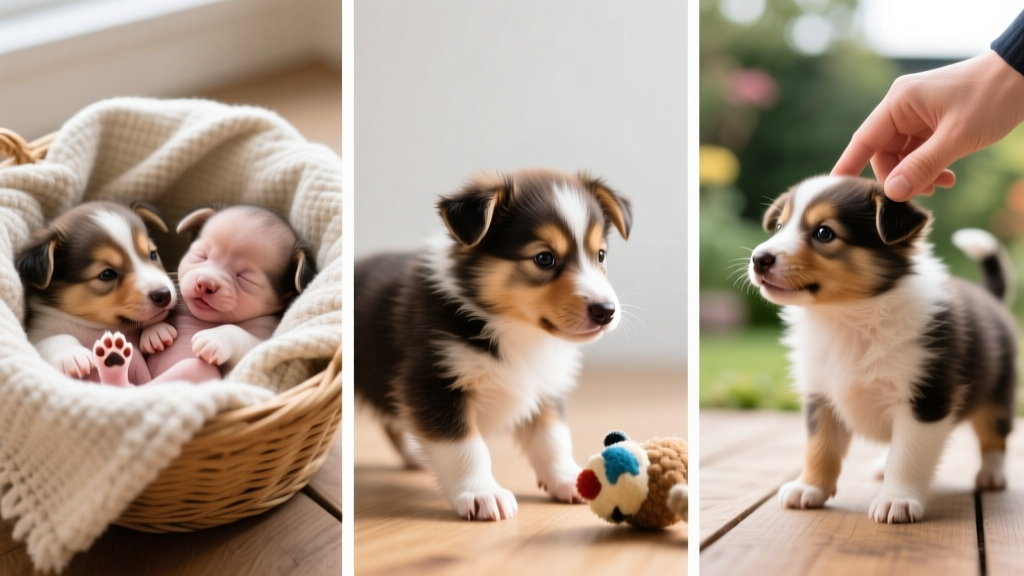
During this period, your Sheltie puppy is learning from their mother and littermates. Teeth begin erupting (incisors first around week 4), solid food is introduced as a gruel, and early socialization with humans begins. A responsible breeder exposes puppies to household sounds — vacuum cleaners, doorbells, TV noise — during this sensitive window. Shelties have acute hearing, and early sound desensitization prevents the noise sensitivity the breed is known for.
Weeks 8–12: The Homecoming Window
This is your bonding and foundation-building phase. Expect:
- Sleep: 18–20 hours per day. Sheltie puppies tire quickly despite bursts of energy.
- Attention span: 3–5 minutes per training session. Keep it short and positive.
- Fear periods: A notable fear imprint period occurs around 8–10 weeks. Avoid overwhelming experiences (loud events, rough handling by children) during this window — negative experiences can create lifelong phobias in this sensitive breed.
- Herding instinct emergence: You may notice your puppy nipping at ankles or chasing feet. This is normal breed behavior, not aggression — redirect to appropriate toys immediately.
Weeks 12–16: Growing Confidence
Your Sheltie puppy becomes more exploratory and responsive to training. Key developments:
- Bladder control improves (can hold for roughly 3–4 hours during the day).
- Second fear period may appear around 12 weeks — continue positive, low-pressure exposures.
- Teething discomfort increases; chewing on furniture and shoes escalates.
- Basic commands (sit, come, name recognition) become reliable with daily 5-minute sessions.
Weeks 16–24: The Adolescent Transition
This is where many Sheltie owners report a "regression" in training. Your puppy is testing boundaries and may seem to forget previously learned commands. Stay consistent — this is developmental, not defiance. The second coat (adult coat) begins growing in, and grooming needs increase significantly. Spay/neuter is typically performed during this window (your vet will advise based on individual development).
Months 6–12: Approaching Maturity
Shelties reach near-adult size by 10–12 months but continue filling out until about 18 months. Training can become more advanced (off-leash recall in safe areas, agility introductions). The breed's intelligence means they need ongoing mental stimulation — puzzle feeders, scent work, and trick training prevent boredom-related behaviors like excessive barking.
Feeding Schedule for Sheltie Puppies
Shelties are small-to-medium dogs with an adult weight range of 14–20 lb (6.4–9.1 kg) per the AKC standard. Overfeeding during puppyhood stresses developing joints and contributes to obesity — a growing problem in the breed. Use the schedule below as a starting point and adjust based on body condition score (BCS). You should be able to feel ribs without pressing hard, with a visible waist when viewed from above.
| Age | Meals/Day | Total Daily Amount (Dry Kibble) | Notes |
|---|---|---|---|
| 8–12 weeks | 4 meals | ½ – ¾ cup | Moisten kibble with warm water for first 1–2 weeks home |
| 3–6 months | 3 meals | ¾ – 1 cup | Transition to dry kibble; monitor for rapid growth spurts |
| 6–12 months | 2 meals | 1 – 1¼ cups | Reduce to adult portions at 12 months; avoid grain-free diets unless vet-directed |
Choose a puppy food that meets AAFCO standards for growth and lists a named animal protein (chicken, lamb, salmon) as the first ingredient. For Shelties specifically, look for formulas with DHA (docosahexaenoic acid) for brain development and controlled calcium/phosphorus ratios. Brands like Purina Pro Plan Puppy, Royal Canin Small Puppy, and Hill's Science Diet Puppy Small Bites are commonly recommended by veterinarians.
Vaccination Schedule for Sheltie Puppies
Your Sheltie puppy receives maternal antibodies from colostrum, but these wane between 6 and 16 weeks, creating a vulnerability window. The core vaccination protocol below follows guidelines from the American Veterinary Medical Association (AVMA) and the AAHA Canine Vaccination Guidelines. Your vet may adjust timing based on local disease prevalence.
| Age | Vaccines Administered | Notes |
|---|---|---|
| 6–8 weeks | DHPP (Distemper, Hepatitis, Parainfluenza, Parvovirus) — Dose 1 | Often given by breeder; verify documentation |
| 10–12 weeks | DHPP — Dose 2; Bordetella (optional, lifestyle-dependent) | Bordetella recommended if attending puppy classes or boarding |
| 14–16 weeks | DHPP — Dose 3 (final puppy booster); Rabies (per state law, typically 12–16 weeks) | Full immunity not achieved until 1–2 weeks after final DHPP booster |
| 12–16 months | DHPP booster; Rabies booster | Transition to 3-year core vaccine intervals per AAHA guidelines |
Leptospirosis and Lyme vaccines are considered non-core (lifestyle-dependent). If you live in an area with tick exposure or standing water where wildlife urinates, discuss these with your veterinarian. Shelties that hike or visit dog parks benefit from broader protection.
The Critical Socialization Window (Weeks 3–14)
Shelties are genetically predisposed to wariness of strangers and sensitivity to environmental stimuli. The primary socialization period (weeks 3–14) is your single most important window for shaping a confident, well-adjusted adult dog. According to veterinary behaviorist Dr. Ian Dunbar's research, puppies that encounter fewer than 100 unique people before 14 weeks are significantly more likely to develop fear-based reactivity later in life.
For a Sheltie — a breed already prone to reserve with strangers — this window is non-negotiable. Here's a breed-specific socialization checklist:
Sheltie Puppy Socialization Checklist
- People (aim for 50+ unique encounters by week 14): Men with beards, children ages 3–12 (supervised), people wearing hats/sunglasses/hoodies, people using wheelchairs or crutches, delivery drivers, people of different ethnicities and heights
- Surfaces: Grass, gravel, metal grates, wet pavement, slippery tile, wooden stairs, elevated grooming tables
- Sounds (start at low volume, pair with treats): Thunderstorm recordings, fireworks audio, vacuum cleaner, blender, doorbell, car horns, barking dogs on TV
- Handling exercises: Paw touching, ear examination, mouth opening, nail clipping simulation, collar grabbing, belly rubbing by strangers
- Other animals: Fully vaccinated adult dogs (known health status), cats (if household has them), livestock if accessible (appeals to herding instinct in controlled way)
- Environments: Pet-friendly store parking lots, outdoor café areas, car rides (short, positive), grooming salon visits (just to say hello, no full groom yet)
When can your Sheltie puppy go outside and meet other dogs? Until the final DHPP booster at 14–16 weeks, avoid high-risk areas like dog parks and pet store floors where parvovirus may be present. However, you CAN carry your puppy in a sling or stroller to expose them to the world. Socialization classes that require proof of at least one DHPP vaccine (given 7+ days prior) are considered safe by the American Veterinary Society of Animal Behavior (AVSAB), which recommends starting structured socialization as early as 7–8 weeks.
Potty Training Your Sheltie Puppy: A Realistic Timeline
Shelties are intelligent and generally pick up house-training faster than some breeds, but "fully trained" means 4–6 months for most Sheltie puppies, not 3 days. Here's what the progression actually looks like:
| Age | Bladder Hold Time (Daytime) | Accident Frequency | What to Expect |
|---|---|---|---|
| 8–12 weeks | 1–2 hours | Multiple daily | Take out every 1–2 hours, after every meal, nap, and play session |
| 3–4 months | 2–3 hours | 1–2 per week | Puppy begins going to the door or signaling; reward heavily |
| 4–6 months | 3–4 hours | Rare (1–2 per month) | Reliable with routine; may regress during fear periods or routine changes |
| 6+ months | 4–6 hours | Very rare | Considered "trained" — occasional accidents still normal during excitement |
Sheltie-specific potty training tips:
- Shelties are sensitive to scolding. Never rub their nose in accidents or yell — this creates fear-based hiding behavior (peeing behind furniture). Use enzymatic cleaner (Nature's Miracle or Rocco & Roxie) to eliminate odor traces.
- Designate a single outdoor potty spot. Shelties thrive on routine and will learn to go to the same area consistently.
- Use a verbal cue like "go potty" while they're eliminating, then reward immediately after finishing with a high-value treat (small piece of boiled chicken or a Zuke's Mini Naturals treat).
- Expect "submissive urination" when greeting — this is common in young Shelties. Keep greetings calm and low-key; don't lean over the puppy.
Crate Training Progression for Sheltie Puppies
Shelties generally accept crates well because the breed has a natural den-seeking tendency. However, their sensitivity means forced crating or using the crate as punishment will backfire. Follow this progression:
- Week 1 home (8–9 weeks): Crate in your bedroom. Door open during the day with meals and treats inside. Close door for 10–15 minute intervals while you're in the room. Nighttime: expect 1–2 wake-ups for potty breaks. Maximum overnight stretch: 3–4 hours.
- Weeks 2–4 (9–12 weeks): Increase closed-door time to 30–45 minutes during the day. Begin short absences from the room (5–10 minutes). Nighttime hold extends to 4–5 hours. Maximum daytime crating: 2 hours at a stretch.
- Months 3–4 (12–16 weeks): Daytime crating up to 2–3 hours. Puppy should enter crate willingly for treats and naps. If whining persists beyond the first 5–10 minutes, evaluate: is the puppy tired, bored, or anxious? Address the root cause rather than ignoring distress.
- Months 4–6 (16–24 weeks): Up to 4 hours daytime crating is acceptable. Transition crate to a common area if desired. Begin leaving crate door open during supervised free time so the puppy chooses to rest inside.
Teething Timeline and Relief Strategies
Sheltie puppies begin losing their 28 deciduous (baby) teeth around 3–4 months, with the process completing by approximately 6–7 months when all 42 adult teeth are in. During this period, expect increased chewing, drooling, mild gum bleeding, and temporary reluctance to eat hard kibble.
Safe chew options for teething Shelties:
- KONG Puppy (pink/blue rubber): Fill with plain yogurt and freeze — provides cold relief and mental stimulation. Size Small fits Sheltie puppies perfectly.
- Benebone Puppy Wishbone: Nylon chew with bacon flavor infused; softer than adult versions to protect developing teeth.
- Frozen carrot sticks: Peel and freeze large carrot pieces. Supervise to prevent choking on broken pieces.
- Wet washcloth twist: Soak a clean washcloth in water (or low-sodium chicken broth), twist into a rope, and freeze. Supervised use only — discard if fraying.
Avoid: Hard antlers, cooked bones (splinter risk), rawhide (choking and digestive blockage risk), and any chew smaller than the puppy's mouth. If you notice a retained baby tooth (adult tooth erupting alongside a baby tooth that hasn't fallen out), mention it at your next vet visit — Shelties occasionally need retained deciduous teeth extracted.
Common Sheltie Puppy Problems and Solutions
Nipping and Ankle Herding
This is the number one complaint from new Sheltie owners. Shelties are herding dogs — nipping at moving feet and ankles is hardwired breed behavior, not misbehavior. Solutions:
- Redirect immediately: When teeth touch skin, say "oops" in a neutral tone and offer a chew toy. Reward chewing the toy enthusiastically.
- Time-outs: If nipping continues after 2–3 redirects, calmly place the puppy in a pen or crate for 30–60 seconds. This teaches that biting ends play — not that biting gets attention.
- Manage the environment: During the peak nipping phase (8–16 weeks), wear closed-toe shoes indoors and avoid running near the puppy, which triggers the chase/herding instinct.
- Never use physical punishment: Alpha rolls, muzzle grabbing, or shock collars damage the Sheltie's trust and can create fear-based aggression — the opposite of your goal.
Excessive Barking
Shelties are vocal dogs — they bark at doorbells, passing dogs, leaves blowing across the yard. This is normal, but it intensifies if rewarded with attention. Teach a "quiet" cue by saying "quiet" calmly when barking starts, waiting for a 2-second pause, then marking and rewarding the silence. Over weeks, extend the required silence duration. Consistency matters: if barking sometimes gets a reaction and sometimes doesn't, the behavior strengthens (intermittent reinforcement).
Separation Anxiety and Whining
Shelties form intense bonds and are prone to separation distress. Start building independence early:
- Practice short departures (30 seconds to 5 minutes) daily from week 1.
- Never make departures or arrivals dramatic — keep them boring.
- Provide a food-stuffed KONG or lick mat when you leave to create a positive association.
- If whining in the crate persists beyond 15–20 minutes consistently, consult a certified professional dog trainer (CPDT-KA or IAABC credentialed) — pushing through prolonged distress can worsen anxiety.
First-Year Cost Breakdown for a Sheltie Puppy
Budgeting accurately prevents surprises. Below is a realistic first-year cost range for a Sheltie puppy in the United States, based on 2025–2026 veterinary pricing data and average consumer costs.
| Category | Estimated Cost Range | Details |
|---|---|---|
| Puppy purchase (responsible breeder) | $1,200 – $2,500 | AKC-registered, health-tested parents (OFA hips, eyes, MDR1 gene test). Adoption from Sheltie rescue: $300–$600 |
| Veterinary care (vaccines, exams, spay/neuter) | $600 – $1,200 | 3–4 puppy visits, fecal tests, heartworm test, spay/neuter surgery ($350–$700 depending on clinic and region) |
| Food (puppy formula, 12 months) | $300 – $500 | Premium kibble at $55–$75 per 30-lb bag; Sheltie puppy eats roughly 1 bag per 2–3 months |
| Supplies (crate, bed, leash, bowls, grooming tools) | $250 – $500 | Includes slicker brush, undercoat rake, nail clippers — essential for the double coat |
| Training (group classes, optional private sessions) | $200 – $600 | Puppy socialization class ($150–$250 for 6 weeks) + basic manners class |
| Preventive medications (heartworm, flea/tick) | $200 – $400 | Monthly heartworm (Heartgard, Interceptor) + flea/tick (NexGard, Simparica Trio) |
| Pet insurance (optional but recommended) | $350 – $600 | Monthly premiums $30–$50 for accident/illness coverage; enroll before first symptoms for pre-existing condition coverage |
| Total first year | $3,100 – $6,300+ | Excluding emergency vet visits ($1,000–$5,000+ per incident); insurance mitigates this risk |
Frequently Asked Questions About Sheltie Puppies
How often should I feed my Sheltie puppy at each age?
At 8–12 weeks, feed 4 meals per day totaling ½–¾ cup of high-quality puppy kibble. At 3–6 months, reduce to 3 meals per day totaling ¾–1 cup. At 6–12 months, transition to 2 meals per day totaling 1–1¼ cups. Always split the daily total evenly across meals rather than feeding one large meal.
When will my Sheltie puppy be fully potty trained?
Most Sheltie puppies achieve reliable house-training between 4 and 6 months with consistent scheduling. Some individuals may take up to 8 months. Males sometimes take slightly longer than females. If accidents increase after a period of success, rule out a urinary tract infection with your veterinarian before assuming it's behavioral.
What vaccines does my Sheltie puppy need and when?
Core vaccines include DHPP (Distemper, Hepatitis, Parainfluenza, Parvovirus) given at 6–8, 10–12, and 14–16 weeks, with a booster at 12–16 months. Rabies is required by law, typically given between 12–16 weeks depending on your state. Bordetella (kennel cough), Leptospirosis, and Lyme are lifestyle-dependent — discuss with your veterinarian based on your puppy's exposure risk.
How do I stop my Sheltie puppy from biting and nipping?
Redirect every nip to an appropriate chew toy and reward toy chewing enthusiastically. If nipping continues, implement a calm 30–60 second time-out in a pen. Consistency from all household members is critical — if one person allows mouthing and another scolds, the puppy becomes confused and the behavior persists. Expect improvement within 3–4 weeks of consistent redirection. Never use physical punishment with this sensitive breed.
When can my Sheltie puppy go outside and meet other dogs?
You can carry your puppy outdoors immediately for socialization exposure (in a sling or stroller), but avoid areas with unknown dog traffic (dog parks, pet store floors) until 1–2 weeks after the final DHPP booster at 14–16 weeks. Structured puppy socialization classes that require proof of at least one DHPP vaccine are safe and strongly recommended starting at 8–10 weeks per AVSAB guidelines.
Should I be concerned about the MDR1 gene mutation in Shelties?
Yes. Approximately 15% of Shelties carry the MDR1 (ABCB1) gene mutation, which causes severe adverse reactions to certain medications including ivermectin (found in some heartworm preventives at high doses), loperamide (Imodium), and certain chemotherapy drugs. Ask your breeder if the parents were MDR1-tested. If unknown, request a DNA test from your veterinarian (Wisdom Panel or Embark breed+health kit, approximately $80–$200). This information is critical before any medication is prescribed.
Marcus Aldridge
All our authors care for dogs every day — read more of their work on the authors page.