Shar Pei Puppy Care Guide: Milestones, Feeding & Training Timeline
Complete Shar Pei puppy guide covering age milestones, feeding portions, vaccination schedule, potty training, socialization, and first-year costs.

The Shar Pei is unlike any other breed you've raised before. Those iconic wrinkles, the blue-black tongue, and an independent streak that rivals a cat mean standard puppy advice won't cut it. Shar Pei puppies require breed-specific strategies for socialization, skin care, and training that account for their natural aloofness with strangers and their susceptibility to skin and eye conditions.
This guide walks you through every critical stage from 8 weeks to 12 months, with exact feeding portions, vaccine timelines, and real-world troubleshooting for the behaviors Shar Pei owners actually face. If you're bringing home a Shar Pei puppy — or already have one on your couch — here's everything you need mapped out week by week.
When Should You Bring Your Shar Pei Puppy Home?
The optimal window to bring a Shar Pei puppy home is between 8 and 10 weeks of age. While some breeders release puppies at 8 weeks, many reputable Shar Pei breeders prefer to hold puppies until 10 weeks. There's a practical reason: Shar Pei puppies go through an intense "ugly duckling" phase around 8–12 weeks where their facial wrinkles fold tightly over their eyes. A responsible breeder monitors this to ensure entropion (inward-rolling eyelids) isn't developing before releasing the puppy to you.
Bringing your puppy home before 8 weeks is strongly discouraged. The AVMA recommends puppies remain with their littermates through at least week 7 to learn bite inhibition and basic canine social skills — skills your Shar Pei will desperately need given the breed's natural wariness of unfamiliar dogs.
- Releasing puppies before 8 weeks
- No OFA hip scores or CERF eye clearances on parent dogs
- No mention of mucinosis or familial Shar Pei fever testing
- Puppies kept in outdoor pens without climate control (Shar Peis are heat-sensitive)
- Unwillingness to provide a written health guarantee covering entropion for at least 12 months
Shar Pei Puppy Milestones: Week by Week
Shar Pei development doesn't follow the same timeline as a Labrador or Golden Retriever. This breed matures more slowly, both physically and emotionally, and their socialization window demands extra intentionality.
| Age Range | Developmental Stage | What to Expect | Your Priorities |
|---|---|---|---|
| Weeks 4–8 (at breeder) | Primary socialization with littermates; weaning onto solid food; first deworming | Puppies begin to show individual temperaments; wrinkle density becomes apparent; eyes should be evaluated for entropion signs | Visit the breeder at week 6–7 if possible; observe puppy interacting with littermates; request health records for parents |
| Weeks 8–12 (home transition) | Critical bonding period; peak of socialization receptivity; first vet visit and DHPP vaccine | Puppy may be clingy and whine at night; appetite may dip during first 3–5 days home; wrinkle care begins immediately | Establish feeding and potty routines day one; begin handling exercises (touching paws, ears, wrinkles); start crate training with short sessions |
| Weeks 12–16 (confidence building) | Fear imprint period begins around week 12; second and third DHPP vaccines; teething starts | Puppy may suddenly become wary of things they previously ignored; chewing intensifies; some puppies develop mild skin irritation in wrinkle folds | Expose to novel surfaces, sounds, and calm strangers daily; rotate chew toys; clean wrinkle folds 2–3 times per week with vet-recommended wipes |
| Weeks 16–24 (independence phase) | Rabies vaccine given; spay/neuter discussion with vet; adolescent independence emerges | Your previously compliant puppy may start ignoring recall commands; guarding instincts may surface toward strangers or food; teething peaks around months 4–5 | Enroll in a positive-reinforcement puppy class; practice "leave it" and "drop it" daily; increase structured exercise to 30–40 minutes per day (split into two sessions) |
| Months 6–12 (adolescence) | Adult teeth fully in; growth rate slows; hormonal changes if not yet spayed/neutered | Shar Pei may test boundaries more assertively; some develop same-sex dog reactivity; adult coat texture emerges; skin folds may require more maintenance | Continue training consistency; maintain socialization exposures; transition to adult food around month 10–12 (consult your veterinarian for timing); finalize annual vaccine boosters |
Feeding Your Shar Pei Puppy: Portions and Schedule
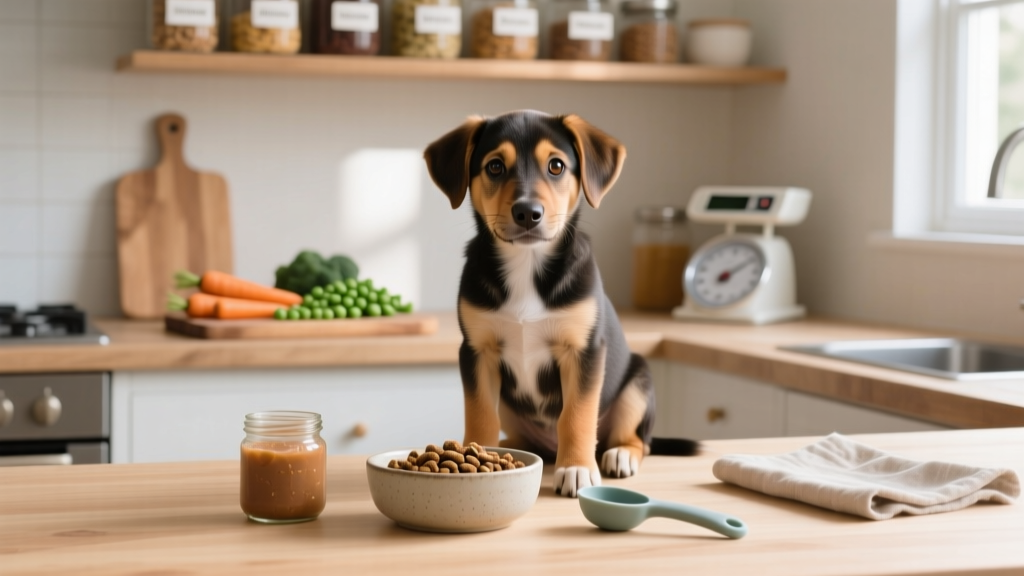
Shar Pei puppies have sensitive digestive systems and are prone to food allergies — particularly to chicken, beef, and corn. Most Shar Pei breeders and dermatologists recommend starting puppies on a limited-ingredient or novel-protein formula from day one to reduce the risk of allergic skin flare-ups, which can be devastating for a wrinkled breed.
Look for an AAFCO statement confirming "complete and balanced" nutrition for growth, with a named protein source (salmon, lamb, or duck are common starter choices for this breed) and a guaranteed analysis showing minimum 22% protein and 8% fat for puppy maintenance.
| Puppy Age | Expected Weight Range | Daily Food Amount | Meals Per Day | Notes |
|---|---|---|---|---|
| 8–12 weeks | 8–15 lb (3.6–6.8 kg) | 1 to 1½ cups | 3 meals (every 6–8 hours) | Soften kibble with warm water for first 2 weeks if puppy struggles with hard food |
| 12–16 weeks | 15–22 lb (6.8–10 kg) | 1½ to 2 cups | 3 meals | Begin transitioning to dry kibble fully; monitor stool consistency |
| 4–6 months | 22–35 lb (10–15.9 kg) | 2 to 2½ cups | 2 meals (morning/evening) | Drop the midday meal gradually over 3–4 days |
| 6–9 months | 35–45 lb (15.9–20.4 kg) | 2½ to 3 cups | 2 meals | Growth rate slows; adjust portions based on body condition score (BCS), not age alone |
| 9–12 months | 40–55 lb (18.1–24.9 kg) | 2½ to 3½ cups | 2 meals | Discuss adult food transition with your vet; some Shar Peis benefit from staying on puppy formula until 12 months |
Important feeding notes: Shar Peis are prone to bloat (gastric dilatation-volvulus), though less so than deep-chested giant breeds. Still, use a slow-feeder bowl, avoid exercise for 30 minutes before and after meals, and never free-feed. If your puppy consistently leaves food or has loose stools, consult your veterinarian — food intolerance is one of the most common issues in Shar Pei puppies and often requires a prescription hydrolyzed-protein diet to diagnose.
Vaccination Schedule for Your Shar Pei Puppy
Shar Pei puppies follow the standard AKC-recommended core vaccine protocol, but there's one breed-specific consideration: Shar Peis have a higher incidence of vaccine reactions than many breeds. Mild reactions (lethargy, facial swelling, hives) can occur within 1–4 hours of injection. Discuss pre-medicating with diphenhydramine (Benadryl) at 1 mg per pound of body weight with your veterinarian before each vaccine visit.
| Age | Vaccine(s) | Purpose | Cost Range |
|---|---|---|---|
| 6–8 weeks | DHPP (1st dose) — Distemper, Hepatitis (Adenovirus-2), Parainfluenza, Parvovirus | Core protection; often given by breeder before you bring puppy home | $20–$40 (if not included in breeder package) |
| 10–12 weeks | DHPP (2nd dose) + Bordetella (optional) | Booster to build adequate immunity; Bordetella recommended if attending puppy classes | $25–$50 |
| 14–16 weeks | DHPP (3rd dose) + Rabies | Final core puppy series; Rabies required by law in all US states | $35–$65 |
| 12–16 months | DHPP booster + Rabies booster (1-year or 3-year depending on local law) | First annual/booster round to maintain immunity | $40–$75 |
- Leptospirosis: Recommended if you live in areas with wildlife exposure or hike frequently
- Lyme disease: Recommended in tick-endemic regions (Northeast, Upper Midwest, Pacific Coast)
- Canine influenza (H3N2/H3N8): Recommended if your puppy will attend daycare, boarding, or dog shows
Your veterinarian will determine which non-core vaccines are appropriate based on your puppy's lifestyle and local disease prevalence.
Socialization Window: The Shar Pei's Make-or-Break Period
This is the single most important section of this guide. The Shar Pei's primary socialization window closes around 14 weeks of age. After this point, the breed's natural suspicion of strangers and unfamiliar dogs becomes significantly harder to modify. A poorly socialized Shar Pei is not just shy — they can become fear-aggressive, and their powerful jaws make this a serious liability.
Between weeks 3 and 14, your puppy's brain is primed to accept new experiences as "normal." Every positive exposure during this window permanently expands what your dog considers safe. The goal is not to overwhelm but to provide brief, positive, controlled exposures to as many categories of stimuli as possible.
- ☐ Meet at least 10 different calm strangers (vary age, gender, ethnicity, clothing — hats, sunglasses, hoodies)
- ☐ Encounter 5+ other vaccinated, calm adult dogs in controlled settings
- ☐ Walk on 5+ different surfaces (grass, gravel, tile, metal grate, wet pavement)
- ☐ Hear household sounds: vacuum, blender, doorbell, thunderstorm audio (start at low volume)
- ☐ Experience car rides (start with 5-minute drives, build to 20 minutes)
- ☐ Visit the vet clinic for a "happy visit" — no vaccines, just treats and handling
- ☐ Be groomed: gentle brushing, nail clipping simulation, ear cleaning, wrinkle wiping
- ☐ Encounter children (supervised, calm children ages 5+ only)
- ☐ See umbrellas opening, bicycles passing, joggers, skateboards
- ☐ Practice being alone in crate for 10–30 minutes without distress
- ☐ Accept handling of paws, mouth, tail, and belly by familiar humans
Pair every exposure with high-value treats (freeze-dried liver, small cheese pieces). If your puppy shows fear, increase distance and let them observe without forcing interaction. Force-free exposure builds confidence; forced exposure builds fear.
When can your puppy go outside and meet other dogs? Your Shar Pei puppy can explore your own yard immediately. For public areas (parks, pet stores, sidewalks), wait until 7 days after the second DHPP vaccine (typically around 12–13 weeks). Controlled playdates with known, fully vaccinated adult dogs are safe from week 8 onward and strongly recommended. Avoid dog parks entirely until the full DHPP series is complete at 16 weeks and your puppy has had adequate socialization foundations.
Potty Training Your Shar Pei Puppy: Realistic Timeline
Shar Pei puppies are moderately easy to house-train compared to some toy breeds, but they're not as naturally fastidious as a Greyhound or Shiba Inu. Expect 4 to 6 months of consistent training before your puppy is reliably house-trained with occasional accidents still possible until 8–9 months.
The key with Shar Peis is routine and patience. They respond poorly to punishment — scolding a Shar Pei puppy for an accident will not teach them where to go; it will teach them to hide from you when they need to eliminate, which makes training harder.
Week-by-week potty expectations:
- 8–10 weeks: Take puppy out every 1–2 hours, including overnight. Expect 2–3 accidents per day. This is normal.
- 10–14 weeks: Extend intervals to every 2–3 hours. Puppy should begin going to the door or whining when they need out. Accidents drop to 1–2 per day if you're consistent.
- 14–20 weeks: Puppy can hold for 3–4 hours during the day. Overnight holding improves to 5–6 hours. Accidents should be rare (1–2 per week).
- 5–7 months: Puppy should signal clearly and hold for 4–5 hours. Full reliability typically emerges around month 6–7.
Troubleshooting common issues:
- Puppy pees inside 5 minutes after coming back in: They didn't fully empty their bladder outside. Go back out and wait 5 more minutes. Reward heavily when they finish.
- Puppy only pees on pads, won't go outside: Remove pads gradually. Place a pad near the door, then outside on the grass, then remove it entirely over 5–7 days.
- Regression at 4–6 months: This is normal and often coincides with teething distraction or hormonal changes. Return to a stricter schedule for 2 weeks.
Crate Training Progression and Teething Relief
A crate is essential for your Shar Pei puppy's safety and potty training success. This breed is a curious chewer, and an unsupervised Shar Pei puppy will find and destroy things — including items that could cause intestinal blockages requiring $3,000–$7,000 emergency surgery.
Crate time limits by age:
- 8–10 weeks: Maximum 1–2 hours during the day; take out every 1–2 hours overnight
- 10–14 weeks: Maximum 2–3 hours during the day; 4–5 hours overnight
- 4–6 months: Maximum 3–4 hours during the day; 6–7 hours overnight
- 6–12 months: Maximum 4–5 hours during the day; 8 hours overnight
Choose a crate sized for your Shar Pei's expected adult weight (45–60 lb / 20.4–27.2 kg). A 36-inch wire crate with a divider panel works well — adjust the divider as your puppy grows so they have room to stand, turn, and lie down but not enough to eliminate in one corner and sleep in another.
Teething timeline and relief: Shar Pei puppies begin losing baby teeth around 3–4 months, with adult teeth fully in by 6 months. During this window, chewing is intense and non-negotiable. Provide:
- Frozen washcloths: Soak a clean washcloth in water, twist, freeze for 2 hours. The cold numbs sore gums. Supervise to prevent swallowing fabric.
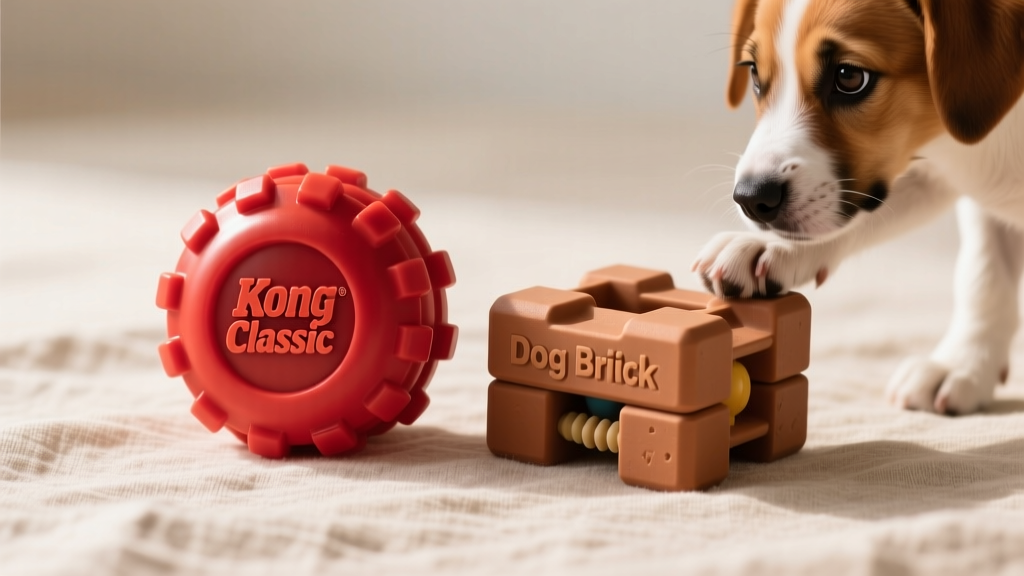
- Kong Classic (puppy rubber, pink/blue): Fill with plain yogurt or canned pumpkin and freeze. The rubber is soft enough for puppy teeth but durable enough for a Shar Pei's jaw strength.
- Benebone Puppy Wishbone: Nylon chew designed for puppies under 30 lb. Replace when it becomes small enough to swallow.
- Carrots (whole, frozen): A safe, edible chew option. Most puppies gnaw them down slowly. Supervise to prevent choking on large pieces.
Avoid: Rawhide (choking and blockage risk), cooked bones (splintering), antlers (too hard — can fracture puppy teeth), and any chew toy smaller than your puppy's mouth.
Common Shar Pei Puppy Problems and Solutions
Every breed has its puppy-phase quirks. Here are the ones Shar Pei owners encounter most often, with breed-specific context.
Puppy Biting and Nipping
Shar Pei puppies bite — hard. Their loose, wrinkled skin means littermates tolerate rougher play than other breeds, so your puppy arrives with a higher bite-force threshold than a Retriever puppy would. When they nip your hands, they genuinely don't understand why you're upset.
What works: The moment teeth touch skin, say "ouch" in a sharp, high-pitched tone and immediately withdraw attention for 15–20 seconds (stand up, turn away, or step behind a baby gate). Return and redirect to an appropriate chew toy. Consistency from every family member is critical — if one person allows mouthing, the puppy won't learn the rule. Expect 3–6 weeks of consistent practice before biting diminishes significantly.
Nighttime Whining in the Crate
Shar Pei puppies are velcro dogs with their families and often vocalize distress when isolated. Expect 1–3 weeks of nighttime whining.
What works: Place the crate in your bedroom for the first 2–3 weeks so the puppy can hear and smell you. Cover the crate with a light blanket to reduce visual stimulation. If whining occurs after the puppy has recently eliminated and isn't in distress, wait 5–10 minutes before intervening — most puppies self-soothe within this window. Never let the puppy out while actively whining, as this reinforces the behavior.
Destructive Chewing
Shar Pei puppies chew with determination. Their strong jaws mean they can destroy toys and furniture faster than many breeds of similar size.
What works: Puppy-proof every room before bringing your dog home — this means securing electrical cords with cord covers, removing shoes and remote controls from floor level, and using bitter apple spray on furniture legs. Provide a rotation of 5–7 appropriate chew toys, swapping them every 2–3 days to maintain novelty. When you catch the puppy chewing something inappropriate, redirect to an approved toy and reward enthusiastically.
Skin Fold Irritation
This is the most breed-specific puppy problem you'll face. Shar Pei puppies with heavy wrinkling can develop intertrigo (skin fold dermatitis) as early as 10–12 weeks if folds aren't kept clean and dry. Signs include redness, odor, and discharge in the facial folds.
What works: Clean facial wrinkles 2–3 times per week using vet-recommended chlorhexidine wipes (such as Dechloro Chlorhexidine wipes or MalAcetic wipes). Gently lift each fold, wipe inside, and dry thoroughly with a soft cloth. Never leave moisture trapped in folds. If you notice persistent redness or a yeasty smell, consult your veterinarian — topical antifungal or antibiotic creams may be needed.
First-Year Cost Breakdown for a Shar Pei Puppy
Budgeting accurately prevents surprises. Shar Pei puppies carry higher-than-average first-year costs due to their skin care needs, potential eye surgery, and breed-specific veterinary screening.
| Category | Low Estimate | Mid Estimate | High Estimate | Notes |
|---|---|---|---|---|
| Puppy purchase (responsible breeder) | $1,200 | $2,000 | $3,500 | Pet-quality vs. show-quality; rescue adoption fees typically $200–$500 |
| Initial vet visit + vaccines (full series) | $200 | $350 | $500 | Includes 3 DHPP doses, rabies, fecal test, heartworm test |
| Spay/neuter | $300 | $500 | $800 | Varies by clinic and region; low-cost clinics available in many areas |
| Food (12 months, premium limited-ingredient) | $480 | $650 | $900 | Brands like Royal Canin, Purina Pro Plan, or Hill's Science Diet |
| Flea/tick + heartworm prevention | $200 | $350 | $500 | Year-round prevention recommended; Simparica Trio, NexGard, or similar |
| Supplies (crate, bed, bowls, leash, collar, toys) | $200 | $350 | $600 | Invest in a quality crate and orthopedic bed early |
| Training (group puppy class + private sessions) | $150 | $400 | $800 | Shar Peis benefit from at least one private session for breed-specific socialization coaching |
| Wrinkle care supplies (wipes, cleansers) | $60 | $100 | $180 | Ongoing cost throughout the dog's life |
| Emergency/illness fund | $0 | $500 | $2,000+ | Entropion surgery: $1,000–$3,000 per eye; skin infections: $150–$400 per visit |
| Total First Year | $2,790 | $5,200 | $9,780+ |
Pet insurance is worth serious consideration for a Shar Pei. Breeds with high rates of skin conditions, eye surgery, and familial Shar Pei fever (an autoinflammatory condition affecting an estimated 23% of Shar Peis) generate veterinary bills that quickly exceed annual premiums. Expect to pay $50–$90 per month for an accident-and-illness policy with a $500 deductible for a puppy enrolled before 6 months of age.
Frequently Asked Questions
How often should I feed my Shar Pei puppy at 8 weeks?
Feed three meals per day, spaced approximately 6–8 hours apart (e.g., 7 AM, 1 PM, 7 PM). Total daily amount should be approximately 1 to 1¼ cups of high-quality puppy food, divided equally across the three meals. Adjust based on your puppy's body condition — you should be able to feel (but not prominently see) their ribs.
When will my Shar Pei puppy be fully potty trained?
Most Shar Pei puppies achieve reliable house training between 5 and 7 months of age with consistent scheduling and positive reinforcement. Some individuals take up to 9 months. Males may take slightly longer than females. If your puppy is still having frequent accidents past 7 months despite consistent training, consult your veterinarian to rule out urinary tract infections or anatomical issues.
How do I stop my Shar Pei puppy from biting?
Use a consistent three-step approach: (1) Vocalize with a sharp "ouch" the instant teeth contact skin. (2) Withdraw all attention for 15–20 seconds — stand up, turn away, or leave the room briefly. (3) Return and redirect the puppy to an appropriate chew toy, rewarding enthusiastically when they chew it. Every person in the household must follow this protocol identically. Biting typically decreases significantly within 3–6 weeks of consistent practice. Never use physical punishment, alpha rolls, or muzzle-holding — these damage trust and can increase fear-based aggression in this sensitive breed.
Can I bathe my Shar Pei puppy?
Yes, but limit full baths to once every 4–6 weeks unless medically necessary. Shar Pei skin is prone to dryness and irritation, and over-bathing strips natural oils. Use a gentle, oatmeal-based or veterinary-recommended shampoo (such as Douxo S3 Calm or Earthbath Oatmeal & Aloe). Between baths, use waterless foam cleanser or wipe wrinkles individually. Always dry skin folds thoroughly after any bath or water exposure.
What health tests should my Shar Pei puppy's parents have?
According to the Orthopedic Foundation for Animals (OFA) and the Shar Pei breed health guidelines, responsible breeders should provide: OFA hip evaluation (fair or better), OFA elbow evaluation, CERF/OFA eye examination (updated annually), and a DNA test for primary lens luxation. Some breeders also test for mucinosis markers. Request written documentation of all clearances before committing to a puppy.
- Puppy won't eat for more than 12 hours (puppies can become hypoglycemic quickly)
- Vomiting or diarrhea lasting more than 24 hours, or containing blood
- Eyelid rolling inward (entropion) causing squinting, tearing, or pawing at eyes
- Facial swelling, hives, or difficulty breathing after vaccination
- Sudden fever above 103.5°F (39.7°C) — may indicate familial Shar Pei fever
- Lethargy lasting more than 24 hours or inability to stand
If you suspect your puppy has ingested something toxic, call the ASPCA Animal Poison Control Center at (888) 426-4435 (available 24/7, consultation fee applies) or the Pet Poison Helpline at (855) 764-7661.
Raising a Shar Pei puppy is a commitment that rewards you with one of the most loyal, dignified, and uniquely affectionate companions in the dog world. Their aloofness with strangers makes the bond they form with their family even more meaningful. Stick to the timelines above, prioritize socialization during that narrow 8–14 week window, and don't skip the wrinkle care — your future self (and your vet) will thank you.
Beth Carrasco
All our authors care for dogs every day — read more of their work on the authors page.