Samoyed Puppy Price & First-Year Costs: Complete 2026 Buyer's Guide
What's the real samoyed puppy price in 2026? Break down purchase costs, first-year expenses, milestones, feeding, and training essentials for Samoyed puppies.

What Determines the Samoyed Puppy Price in 2026?
If you've been searching for a Samoyed puppy, you've probably noticed the price range is wide — anywhere from $1,500 to $6,500 or more. Understanding what drives those numbers helps you budget realistically and avoid overpaying (or falling for a puppy mill scam disguised as a bargain).
Based on current market data from AKC-registered breeders and regional listings, here's what you can expect:
| Source | Price Range (2026) | What's Typically Included |
|---|---|---|
| AKC-registered responsible breeder | $2,500 – $4,500 | Health testing (OFA hips, eyes, cardiac), first vaccines, microchip, contract with take-back clause |
| Show/preservation breeder (champion lines) | $4,000 – $6,500+ | All above plus show potential evaluation, pedigree documentation, co-ownership options |
| Backyard breeder / online marketplace | $800 – $2,000 | Often minimal health testing, no contract, higher risk of genetic issues |
| Samoyed rescue / breed-specific rescue | $300 – $600 (adoption fee) | Spay/neuter, vaccines, vet check; typically adult dogs, puppies rare |
Key cost drivers: Geographic region (West Coast and Northeast breeders tend to charge more), coat color (pure white commands a premium over biscuit or cream), health testing depth (OFA-certified parents vs. "vet checked"), and whether the puppy is sold on limited or full registration.
Samoyed Puppy Milestones: Week by Week, Month by Month
Samoyeds mature slowly compared to many breeds. Don't expect the calm, steady companion at 6 months — this breed typically doesn't fully settle until 2–3 years of age. Here's what to expect at each stage:
Weeks 4–8: The Breeder's Domain
Your puppy is still with their litter during this period. A good breeder introduces solid food (gruel transitioning to kibble), begins early neurological stimulation, exposes puppies to household sounds, and starts individual handling. You should receive weekly photo/video updates. Do not bring a Samoyed puppy home before 8 weeks. Many preservation breeders keep puppies until 10–12 weeks to ensure proper socialization within the litter.
Weeks 8–12: Homecoming and Adjustment
Expect 2–3 days of adjustment behavior: whining at night, reluctance to eat, clinginess, and frequent potty accidents. Your Samoyed puppy will sleep 18–20 hours per day in short bursts. This is the prime bonding window — spend time on the floor at their level, hand-feed meals, and keep interactions calm. Limit visitors to 2–3 people per day to avoid overwhelming them.
Weeks 12–16: Confidence Building
Your Samoyed will start showing their characteristic "smile" and vocal personality. Expect increased exploration, mouthing behavior, and testing boundaries. This is when leash introduction, name recognition, and basic "sit" training should begin in short 3–5 minute sessions. Energy comes in intense 15–20 minute bursts followed by crashes.
Weeks 16–24: The Adolescent Shift
The "cute puppy" phase fades. Your Samoyed will become more independent, selectively deaf to commands, and increasingly mouthy as adult teeth come in. Coat transitions from puppy fluff to a slightly coarser texture. Separation anxiety risk is high in this breed — begin structured alone-time practice now. Expect 45–60 minute daily exercise needs split across 2–3 sessions.
6–12 Months: Teenage Samoyed
Full adult coat begins growing in (the famous "Sammy fluff" won't fully develop until 18–24 months). Hormonal changes in intact dogs drive roaming and marking behavior. Training regression is normal — revisit basics with patience. Males typically reach 40–55 lb / 18–25 kg; females 35–45 lb / 16–20 kg by 12 months, though they'll fill out until age 2.
Feeding Your Samoyed Puppy: Portions, Frequency, and Food Selection
Samoyeds have a tendency toward food sensitivities and skin allergies, which makes food selection critical from day one. Choose an AAFCO-certified large-breed puppy formula — the calcium-to-phosphorus ratio matters for their joint development.
| Age | Meals Per Day | Estimated Daily Portion | Notes |
|---|---|---|---|
| 8–12 weeks | 4 meals | 1.0 – 1.5 cups total (split evenly) | Soften kibble with warm water for first 2 weeks if transitioning |
| 3–4 months | 3 meals | 1.5 – 2.0 cups total | Switch to dry kibble; monitor stool consistency |
| 5–6 months | 3 meals → 2 meals | 2.0 – 2.5 cups total | Transition to twice daily at 6 months |
| 7–12 months | 2 meals | 2.5 – 3.5 cups total | Adjust based on body condition score (BCS 4-5/9 ideal) |
Recommended brands for Samoyed puppies (2026): Purina Pro Plan Large Breed Puppy (sensitive skin formula), Royal Canin Large Puppy, or Hill's Science Diet Large Breed Puppy. Budget $55–$80/month for quality puppy food.
Samoyeds are prone to zoonotic concerns with raw diets due to Salmonella shedding risk, and their sensitive skin often reacts to novel proteins in homemade diets. Unless you're working with a board-certified veterinary nutritionist, stick with a commercially prepared, AAFCO-tested kibble during puppyhood.
Vaccination Schedule and When Your Samoyed Can Go Outside
Samoyed puppies follow the standard core vaccination protocol, but their thick double coat can make injection-site reactions harder to spot. Check the scruff area daily for 48 hours after each vaccine round.
| Age | Vaccines Administered | Outdoor Access Level |
|---|---|---|
| 6–8 weeks | DHPP (distemper, hepatitis, parainfluenza, parvovirus) — 1st dose | Carry-only in public; backyard OK if fully fenced and no unknown dogs have been there |
| 10–12 weeks | DHPP — 2nd dose; Bordetella (optional, recommended for puppy classes) | Low-risk outdoor exposure: quiet sidewalks, known-healthy dog friends in private yards |
| 14–16 weeks | DHPP — 3rd dose; Rabies (required by law in most states) | Full outdoor access after 1 week post-final DHPP; dog parks still risky until 5 months |
| 12 months | DHPP booster; Rabies booster (1-year or 3-year per local law) | Full access; begin annual wellness protocol |
When can your puppy meet other dogs? After the second DHPP at 10–12 weeks, controlled playdates with fully vaccinated, known-healthy adult dogs in private settings are beneficial. Avoid dog parks, pet store floors, and high-traffic areas until 1 week after the 16-week final DHPP. Parvovirus survives in soil for months and is a genuine threat to unvaccinated puppies.
The Socialization Window: Weeks 3–14 (Don't Miss This)
The American Veterinary Society of Animal Behavior identifies weeks 3–14 as the critical socialization period. For Samoyeds — a breed that can develop wariness of strangers and reactivity if under-socialized — this window is non-negotiable. Miss it, and you're playing catch-up for years.
Work through this checklist between weeks 8–14 (after bringing your puppy home):
- People: Meet at least 15–20 different people including children, elderly individuals, people wearing hats/sunglasses/uniforms, tall men, and people using mobility aids
- Surfaces: Walk on grass, gravel, wet pavement, metal grates, carpet, tile, and hardwood
- Sounds: Vacuum cleaner, doorbell, thunder (play recordings at low volume), traffic, children screaming, clapping, pots and pans
- Handling: Paw handling, ear inspection, mouth opening, nail clipping practice, being held on back, collar grabs — pair every touch with treats
- Environments: Car rides (start with 5-minute trips), outdoor seating areas, hardware stores (check pet policies), friend's houses, vet clinic (happy visits only — no procedures)
- Other animals: Supervised exposure to cats, calm adult dogs, and (from a safe distance) livestock or horses if accessible
Target: 3–5 new positive experiences per day during weeks 8–14. If your puppy shows fear (cowering, tail tucking, freezing), increase distance from the stimulus and use high-value treats (boiled chicken, cheese) to build positive associations. Never force exposure.
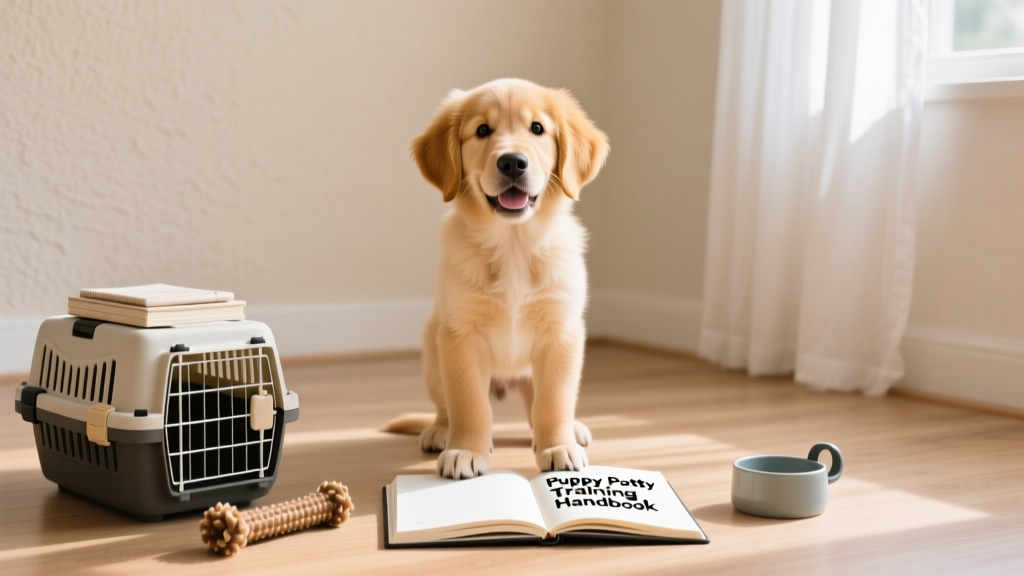
Potty Training Your Samoyed: Realistic Timeline and Methods
Samoyeds are intelligent but can be stubborn. Expect potty training to take 4–6 months for reliable consistency, with occasional accidents through 8–10 months. Any source claiming "potty train in 3 days" is setting you up for frustration.
The protocol that works:
- Take puppy outside within 5 minutes of: waking up, eating, drinking, playing, or crate release
- Use a consistent verbal cue ("go potty") while they eliminate
- Reward immediately with a high-value treat + verbal praise the moment they finish — not after they come back inside
- Supervise 100% when loose indoors (umbilical cord method: leash attached to your belt)
- Crate when you cannot supervise — Samoyeds generally keep their sleeping area clean
| Puppy Age | Maximum Crate Time | Expected Potty Breaks (24 hrs) | Accident Frequency |
|---|---|---|---|
| 8–10 weeks | 1–2 hours | 12–15 trips outside | Multiple daily accidents are normal |
| 10–14 weeks | 2–3 hours | 8–12 trips outside | 1–2 accidents per week with consistency |
| 4–6 months | 3–4 hours | 6–8 trips outside | Rare if schedule maintained; regression possible during teething |
| 6–10 months | 4–5 hours | 4–6 trips outside | Mostly reliable; mark territory if intact male |
Troubleshooting: If accidents increase suddenly, rule out urinary tract infection (common in Samoyed puppies) with a vet visit. For persistent house-soiling, return to 8-week-level supervision for 2 weeks — it's almost always a management issue, not defiance.
Teething, Biting, and the Samoyed Mouth Phase
Samoyeds are a vocal, mouthy breed by nature — they were bred to herd reindeer and pull sleds, which means using their mouths is deeply ingrained. Puppy biting peaks between 12–16 weeks and again during the teething phase at 3–6 months when adult teeth replace baby teeth.
Teething timeline:
- 3–4 weeks: Deciduous (baby) teeth erupt
- 12–16 weeks: Incisors begin falling out; expect increased mouthing
- 4–5 months: Canines and premolars shed; peak chewing destruction phase
- 6–7 months: All 42 adult teeth should be in; if baby teeth remain, consult your vet about extraction
How to stop puppy biting (force-free methods only):
- When teeth touch skin, say "ouch" in a calm voice and immediately stop interaction for 10–15 seconds (negative punishment — removing attention)
- Redirect to an appropriate chew toy every time; reward chewing the toy with praise
- Provide 4–5 approved chews rotated daily: Kong Classic (frozen with peanut butter), Nylabone Puppy Chew, bully sticks (supervised only), frozen carrot sticks, West Paw Zisc
- If biting escalates to hard biting that breaks skin, implement a structured timeout: calmly place puppy in a playpen for 30–60 seconds, then release and redirect
Never hold a puppy's mouth shut, alpha roll, or use bitter sprays on your hands. These methods damage trust and can increase fear-based biting. Consult a certified professional dog trainer (CPDT-KA) if biting doesn't improve by 5 months.
First-Year Cost Breakdown: Beyond the Samoyed Puppy Price
The purchase price is just the beginning. Here's a realistic first-year budget based on 2026 veterinary and supply costs:
| Category | Estimated Cost | Details |
|---|---|---|
| Puppy purchase (responsible breeder) | $2,500 – $4,500 | One-time |
| Veterinary care (first year) | $800 – $1,500 | 3 vaccine rounds, spay/neuter ($400–$700), fecal tests, heartworm prevention, wellness exams |
| Food (12 months) | $600 – $960 | $50–$80/month for quality large-breed puppy food transitioning to adult formula at 12 months |
| Supplies (initial) | $400 – $700 | Crate ($80–$150), playpen, leash/harness, grooming tools (slicker brush, undercoat rake, high-velocity dryer $100–$200), bowls, toys, baby gates |
| Grooming | $300 – $600 | Professional bath/brush every 8–12 weeks at $75–$150 per session; daily home brushing is non-negotiable |
| Training | $200 – $500 | Group puppy class ($150–$250 for 6-week course); private sessions if needed ($75–$125/session) |
| Pet insurance | $480 – $720 | $40–$60/month; enroll at 8 weeks before any pre-existing conditions are documented |
| Emergency fund | $500 – $2,000 | Set aside for unexpected illness; Samoyeds are prone to puppyhood GI issues |
Total first-year cost: $5,780 – $11,480 depending on puppy source, your region, and unexpected health events. Annual costs after year one typically settle to $2,500 – $4,000.
Samoyed Puppy Frequently Asked Questions
When should I bring my Samoyed puppy home?
No earlier than 8 weeks, and many experienced Samoyed breeders prefer keeping puppies until 10–12 weeks. This extra time with littermates teaches bite inhibition and social skills that no human can replicate. If a breeder offers a 6-week-old puppy, walk away — this is a significant welfare and behavioral red flag.
How often should I feed my puppy at each age?
Four meals daily from 8–12 weeks, three meals from 3–6 months, and two meals from 6 months onward. Split daily portions evenly across meals. Never free-feed a Samoyed puppy — they tend to overeat and rapid growth increases hip dysplasia risk.
When will my Samoyed be fully potty trained?
Most Samoyeds achieve reliable house training between 5–7 months with consistent scheduling. Some individuals, especially females, may be reliable by 4 months. Intact males may mark indoors through adolescence even after being "trained." Spaying/neutering at your vet's recommended age often resolves this.
What vaccines does my Samoyed puppy need and when?
DHPP at 6–8 weeks, 10–12 weeks, and 14–16 weeks. Rabies at 14–16 weeks (legally required). Bordetella is recommended if attending group puppy classes. Your veterinarian will determine the exact protocol based on local disease prevalence and your puppy's health status.
How do I stop my Samoyed puppy from biting and nipping?
Withdraw attention immediately when teeth contact skin, redirect to appropriate chew toys, and provide frozen enrichment items (stuffed Kongs, frozen washcloths) during peak teething weeks. Consistency from every household member is essential — mixed signals extend the biting phase. If hard biting persists past 5 months, consult a certified force-free trainer.
When can my puppy go outside and meet other dogs?
After the second DHPP vaccine (typically 10–12 weeks), controlled exposure to fully vaccinated dogs in clean, private environments is safe and beneficial for socialization. Avoid dog parks, pet stores, and high-traffic public areas until one week after the final 16-week DHPP dose. Carry your puppy in a sling or backpack for early outdoor socialization in risky areas — visual and auditory exposure still counts even without ground contact.
Marcus Aldridge
All our authors care for dogs every day — read more of their work on the authors page.