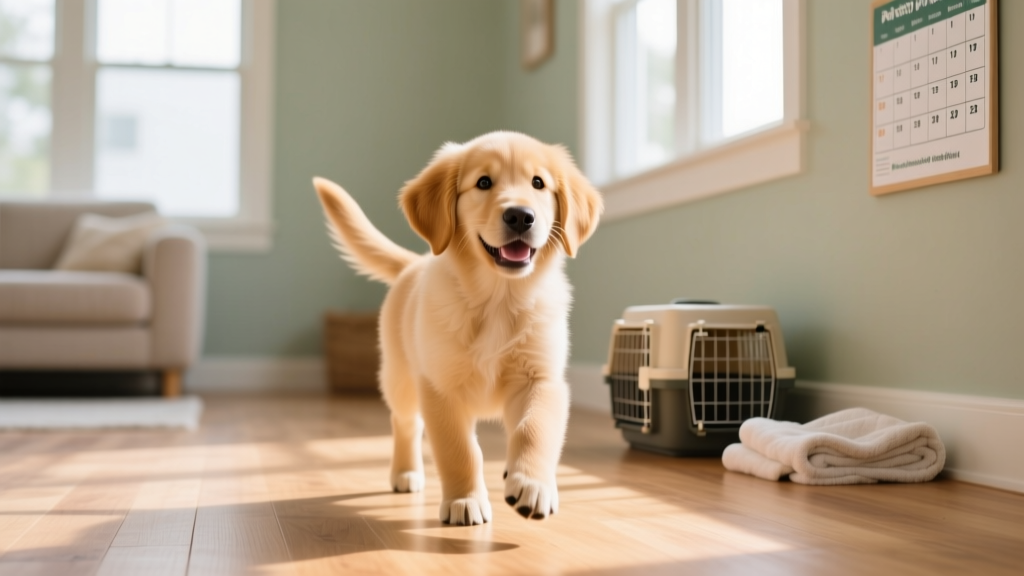
Purina Pro Plan Large Breed Puppy: Complete Feeding & Care Guide
Complete guide to raising a large breed puppy on Purina Pro Plan Large Breed Puppy food — feeding schedules, milestones, training timelines, and first-year costs.

Why Nutrition Matters More for Large Breed Puppies
Large breed puppies — those expected to reach 50 lb (23 kg) or more at maturity — have fundamentally different nutritional needs than their smaller counterparts. Their bones and joints must support significantly more mass over a longer growth period, typically 18–24 months before reaching full skeletal maturity. This extended growth window means every meal directly impacts their orthopedic health for life.
Purina Pro Plan Large Breed Puppy is specifically formulated to address these needs. The formula contains controlled calcium and phosphorus levels (calcium at approximately 1.2% on a dry matter basis) to prevent the rapid bone growth that leads to developmental orthopedic diseases like hip dysplasia, osteochondrosis, and hypertrophic osteodystrophy (HOD). The protein content sits at 28% minimum, with fat at 13% minimum — deliberately moderate to support steady growth without excessive caloric intake that accelerates skeletal problems.
According to the American Kennel Club, large breed puppy foods should maintain a calcium-to-phosphorus ratio between 1.1:1 and 1.4:1. Purina Pro Plan Large Breed Puppy meets this standard, and the formula includes DHA from omega-rich fish oil for brain and vision development, plus live probiotics for digestive support.
Before adjusting your puppy's diet or making health decisions, always consult your veterinarian — individual needs vary based on breed, activity level, and body condition score (BCS).
Age-Specific Milestones: What to Expect Month by Month
Weeks 4–8: The Transition Period
Your puppy is transitioning from mother's milk to solid food. If you're working with a breeder, they should have already started the weaning process. Expect:
- Teeth fully erupted (28 deciduous teeth)
- Weight gain of approximately 2–4 oz (57–113 g) per day depending on breed
- Beginning of litter-mate social play and bite inhibition learning
- Sleep needs: 18–20 hours per day
Weeks 8–12: The Homecoming Window
This is when most large breed puppies go to their new homes. Key developments:
- First DHPP vaccine due at 6–8 weeks; booster at 10–12 weeks
- Primary socialization fear period begins around week 8–10
- Bladder capacity: approximately 1 hour per month of age (so ~2 hours max)
- Attention span: 5–10 minutes for training sessions
- Expected weight at 12 weeks: roughly 25–30% of adult weight for most large breeds
Weeks 12–16: Building Foundations
- Second fear period may emerge around 12–14 weeks
- Deciduous teeth begin loosening (incisors first)
- Puppy can hold bladder approximately 3–4 hours during the day
- Basic commands (sit, come, name recognition) should show reliable response with treats
- Growth rate remains rapid — expect 2–5 lb (0.9–2.3 kg) gain per week depending on breed
Weeks 16–24: The Adolescent Transition
- Adult teeth erupting — expect chewing intensity to peak
- Spay/neuter window: most veterinarians recommend 6 months for large breeds to allow growth plate closure
- Energy levels increase significantly; exercise capacity grows
- Leash walking endurance: 5 minutes per month of age, twice daily (so ~25–30 minutes at 5–6 months)
- May begin testing boundaries — regression in previously learned commands is normal
Months 6–12: Approaching Maturity
- Growth rate slows; puppy reaches approximately 75% of adult height by 6 months
- Sexual maturity: intact females may experience first estrus cycle between 6–12 months
- Transition from puppy to adult food typically occurs between 12–24 months for large breeds
- Training focus shifts to reliability and proofing commands in distracting environments
Feeding Schedule: Purina Pro Plan Large Breed Puppy Portions
Overfeeding is the single most common nutritional mistake with large breed puppies. Excess calories accelerate growth rate, which directly increases the risk of developmental orthopedic disease. The goal is lean, steady growth — your puppy's ribs should be easily felt but not visible, with a defined waist when viewed from above.
The following table is based on the feeding guidelines printed on Purina Pro Plan Large Breed Puppy packaging, adjusted for expected adult weight categories. These are starting points — your veterinarian may recommend adjustments based on your puppy's body condition score.
| Expected Adult Weight | Age 6–12 Weeks | Age 3–4 Months | Age 4–6 Months | Age 6–12 Months |
|---|---|---|---|---|
| 50–70 lb (23–32 kg) | 1½ – 2¼ cups/day (3 meals) | 2 – 3 cups/day (3 meals) | 2¾ – 4 cups/day (2 meals) | 3 – 4½ cups/day (2 meals) |
| 70–90 lb (32–41 kg) | 2 – 3 cups/day (3 meals) | 2¾ – 4 cups/day (3 meals) | 3¾ – 5 cups/day (2 meals) | 4 – 5¾ cups/day (2 meals) |
| 90–120 lb (41–54 kg) | 2¾ – 3¾ cups/day (3 meals) | 3¾ – 5 cups/day (3 meals) | 5 – 6½ cups/day (2 meals) | 5½ – 7 cups/day (2 meals) |
| 120+ lb (54+ kg) | 3½ – 5 cups/day (3 meals) | 4¾ – 6 cups/day (3 meals) | 6 – 8 cups/day (2 meals) | 7 – 9 cups/day (2 meals) |
Feeding frequency transitions:
- 8–12 weeks: 3 meals per day, spaced roughly 6–8 hours apart
- 3–6 months: Transition to 2 meals per day (morning and evening)
- 6+ months: Maintain 2 meals per day through adulthood
Pro tip: Use a standard 8 oz measuring cup — don't estimate with random kitchen containers. A 2024 Purina feeding study found that 67% of dog owners overestimate portion accuracy when using non-standard scoops. Invest in a $5 kitchen scale for the first few months to calibrate your eye.
Water: Fresh water should be available at all times. Remove water 2 hours before bedtime during potty training to reduce overnight accidents.
Potty Training Timeline: Realistic Expectations
Large breed puppies don't potty train overnight — and anyone promising a 3-day method is setting you up for frustration. Here's what actually happens:
| Age | Bladder Capacity | Expected Accident Frequency | Training Focus |
|---|---|---|---|
| 8–10 weeks | 1–2 hours | 3–5 accidents/day is normal | Establish routine: outside after every meal, nap, and play session |
| 10–14 weeks | 2–3 hours | 1–2 accidents/day | Introduce verbal cue ("go potty"); reward immediately with treats outside |
| 3–4 months | 3–4 hours | 0–1 accidents/day | Puppy begins signaling (going to door, whining); reinforce communication |
| 4–6 months | 4–6 hours | 0–3 accidents/week | Nighttime reliability typically achieved; reduce supervision slightly |
| 6–12 months | 6–8+ hours | Rare (excitement/submission only) | Full reliability expected by 6–9 months for most large breeds |
Troubleshooting common setbacks:
- Regression at 4–5 months: Often coincides with teething discomfort or a developmental fear period. Return to tighter supervision for 1–2 weeks.
- Submissive urination when greeting: This is not a potty training failure — it's a communication behavior. Ignore the puppy for the first 30 seconds of greetings, avoid direct eye contact, and greet at their level.
- Nighttime accidents after initial success: Rule out urinary tract infection with your vet if accidents suddenly increase. Also consider whether evening water intake or meal timing shifted.
The golden rule: Take your puppy outside within 5–15 minutes after eating, drinking, waking from a nap, or finishing a play session. Use the same door and same spot each time. The scent of previous elimination acts as a natural prompt.
Socialization Window: Weeks 3–14
The primary socialization period — roughly weeks 3 through 14 — is the single most influential window in your puppy's behavioral development. According to the American Veterinary Medical Association, puppies who don't receive adequate positive exposure during this period are significantly more likely to develop fear-based behaviors, reactivity, and anxiety later in life.
For large breed puppies, socialization carries extra weight. A fearful 80 lb dog is exponentially harder to manage than a fearful 15 lb dog. Early positive experiences build the confidence your dog needs to navigate the world calmly at full size.
Critical safety note: Until your puppy has completed their full DHPP vaccination series (typically around 16 weeks), avoid high-traffic dog areas like dog parks and pet store floors. The Merck Veterinary Manual recommends controlled socialization in low-risk environments — carry your puppy, invite vaccinated dogs to your home, and attend structured puppy classes that require proof of vaccination.
Vaccination Schedule for Large Breed Puppies
Your veterinarian will customize this schedule based on your area's disease risk, your puppy's health status, and maternal antibody levels. The following represents the standard core vaccination protocol recommended by the AAHA (American Animal Hospital Association):
| Age | Vaccine | Notes |
|---|---|---|
| 6–8 weeks | DHPP (Distemper, Hepatitis/Adenovirus, Parainfluenza, Parvovirus) — 1st dose | Often administered by breeder or rescue before pickup |
| 10–12 weeks | DHPP — 2nd dose; Bordetella (optional, recommended if attending puppy classes) | Maternal antibodies begin declining; this booster is critical |
| 14–16 weeks | DHPP — 3rd dose; Rabies (required by law in most US states) | Final puppy DHPP; maternal antibodies should be fully cleared by this point |
| 12–16 months | DHPP booster; Rabies booster | First adult boosters; subsequent intervals vary (typically 1–3 years depending on vaccine type and local law) |
Lifestyle vaccines to discuss with your vet:
- Leptospirosis: Recommended if you live in areas with wildlife exposure or frequent standing water
- Lyme disease: Recommended in tick-endemic regions (Northeast, Upper Midwest, Pacific Coast)
- Canine influenza (H3N2/H3N8): Recommended for dogs who will board, attend daycare, or frequent dog parks
Typical vaccination costs: $75–$150 per visit for core vaccines, $150–$300 for the complete puppy series. Rabies vaccine alone typically costs $15–$35.
Teething Timeline and Relief Strategies
Large breed puppies go through two distinct teething phases, and understanding the timeline helps you prepare rather than react:
- 3–4 weeks: Deciduous (baby) teeth erupt — 28 total
- 3–4 months: Baby incisors begin loosening; you may find tiny teeth on the floor
- 4–5 months: Canine teeth (fangs) and premolars shed — peak chewing intensity
- 5–7 months: All 42 adult teeth should be fully erupted; retained baby teeth require veterinary extraction
Safe chew recommendations by stage:
- 3–4 months (early teething): Frozen washcloths soaked in low-sodium chicken broth, rubber Kong toys stuffed with Purina Pro Plan puppy food mixed with water and frozen, Nylabone puppy-specific chews (softer formulation)
- 4–6 months (peak chewing): Benebone puppy chews, West Paw Zogoflex toys, carrot sticks (frozen for extra relief), bully sticks (supervised only — remove when small enough to swallow)
- 6+ months (adult teeth settling): Transition to adult-weight-appropriate chew toys; avoid weight-bearing bones from large animals (cow femurs) which can fracture carnassial teeth
What NOT to give: Rawhide (choking and intestinal blockage risk), ice cubes (can crack teeth), cooked bones (splinter hazard), tennis balls (the abrasive felt wears down teeth over time — use rubber balls instead).
Crate Training Progression and Time Limits
A crate is not a punishment space — it's your puppy's den, a potty training tool, and a safety measure when you can't supervise. But time limits matter, especially for growing large breed puppies who need movement for proper joint development.
| Age | Maximum Daytime Crate Time | Maximum Nighttime Crate Time |
|---|---|---|
| 8–10 weeks | 1–2 hours | 3–4 hours (expect 1 overnight potty break) |
| 10–14 weeks | 2–3 hours | 4–5 hours |
| 3–4 months | 3–4 hours | 5–6 hours |
| 4–6 months | 4–5 hours | 6–8 hours |
| 6+ months | 5–6 hours | 8 hours |
Crate training progression:
- Days 1–3: Leave crate door open, feed meals inside, toss high-value treats in. Puppy enters voluntarily.
- Days 4–7: Close door for 5–10 minutes while you sit nearby. Reward calm behavior.
- Week 2: Close door, leave room for 10–15 minutes. Return before puppy shows distress.
- Week 3–4: Extend absences to 30–60 minutes. Begin crating for short overnight stretches.
- Month 2+: Gradually extend to age-appropriate maximums. Always exercise and potty your puppy before crating.
Crate size for large breeds: Purchase a 42-inch or 48-inch crate with a divider panel. The crate should allow your puppy to stand, turn around, and lie down — but not so large that they can eliminate in one corner and sleep in another. Adjust the divider monthly as your puppy grows.
Common Puppy Problems and Solutions
Puppy Biting and Nipping
Why it happens: Puppies explore the world with their mouths, and large breed puppies have powerful jaws even at 10 weeks. Bite inhibition — learning to control jaw pressure — is normally learned from littermates between weeks 4–8. Your job is to continue that education.
Solution:
- When teeth touch skin, let out a brief high-pitched "ouch" and withdraw attention for 10–15 seconds (turn away or step behind a baby gate)
- Immediately redirect to an appropriate chew toy and reward chewing with praise
- Never hold the puppy's mouth shut, shake them, or use physical punishment — these methods increase fear and can escalate biting
- If biting intensifies when puppy is overtired, enforce a nap (crate with a chew toy); puppies need 16–18 hours of sleep and often bite more when exhausted
Whining in the Crate
Why it happens: Separation distress, need to eliminate, or learned behavior (whining = you open the door).
Solution:
- Ensure puppy has been exercised and has eliminated before crating
- Cover the crate with a breathable blanket to reduce visual stimulation
- Place a worn t-shirt with your scent in the crate
- If whining occurs outside expected potty times, wait for 3–5 seconds of silence before opening — never reward active whining
- Use white noise or calm music to mask household sounds that trigger alertness
Destructive Chewing
Why it happens: Teething discomfort (3–6 months), boredom, insufficient exercise, or anxiety.
Solution:
- Puppy-proof your home: remove shoes, cords, remote controls, and toxic plants from puppy-level
- Provide 5–7 appropriate chew toys and rotate them every 3 days to maintain novelty
- Increase physical exercise and mental enrichment (snuffle mats, food puzzles, frozen Kongs)
- Use bitter apple spray on furniture legs as a deterrent — but pair with positive redirection, not just punishment of the wrong behavior
First-Year Cost Breakdown for a Large Breed Puppy
Large breed puppies cost more to raise than small breeds — more food, larger supplies, and higher medication doses (many preventives are weight-based). Here's a realistic first-year budget based on 2026 pricing:
| Category | Low Estimate | High Estimate | Notes |
|---|---|---|---|
| Puppy food (Purina Pro Plan Large Breed Puppy) | $480 | $720 | Approximately 4–6 bags (34 lb) over 12 months; price ~$60–$75 per bag |
| Veterinary care (wellness visits, vaccines, fecal tests) | $500 | $900 | 3–4 puppy visits + spay/neuter ($300–$600 for large breeds) |
| Heartworm/flea/tick prevention | $200 | $400 | Weight-based pricing; large breed doses cost more (e.g., NexGard, Simparica Trio) |
| Supplies (crate, bed, leash, harness, bowls, toys) | $250 | $500 | 42–48" crate: $60–$120; orthopedic bed: $60–$150 |
| Training classes (puppy socialization + basic obedience) | $200 | $500 | Group classes: $150–$300 per 6-week session; private sessions: $75–$150/hour |
| Pet insurance (optional but recommended) | $480 | $900 | $40–$75/month for large breed puppy; covers accidents, illnesses, some hereditary conditions |
| Emergency fund buffer | $300 | $1,500 | Foreign body ingestion, GI upset, ear infections — common puppy emergencies |
| Total estimated first year | $2,410 | $5,420 | Excludes initial puppy purchase/adoption fee |
Money-saving tip: Buy Purina Pro Plan Large Breed Puppy in the 34 lb bag rather than the 6 lb or 18 lb options — the per-pound cost drops significantly. Store in an airtight container to maintain freshness. Check for manufacturer coupons on the Purina website and retailer auto-ship discounts (Chewy, Amazon) that typically save 5–10%.
Frequently Asked Questions
When should I bring my puppy home?
The ideal age to bring a large breed puppy home is 8–10 weeks. Puppies should remain with their mother and littermates until at least 8 weeks for critical social development — bite inhibition, canine communication skills, and emotional regulation are all learned during weeks 6–8. Some breeders of giant breeds (Great Danes, Mastiffs) prefer to keep puppies until 10–12 weeks to ensure adequate socialization within the litter. Avoid taking a puppy home before 7 weeks under any circumstances.
How often should I feed my puppy at each age?
From 8–12 weeks, feed 3 meals per day spaced roughly 6–8 hours apart (e.g., 7 AM, 1 PM, 7 PM). At 3 months, you can begin transitioning to 2 meals per day by gradually shifting the midday meal's portion into the morning and evening meals over 5–7 days. Maintain 2 meals per day through adulthood. Free-feeding (leaving food out all day) is strongly discouraged for large breeds — it makes monitoring intake impossible and increases obesity risk.
When will my puppy be fully potty trained?
Most large breed puppies achieve reliable daytime potty habits by 4–6 months and full reliability (including overnight) by 6–9 months. Some individuals, particularly males, may take up to 12 months for complete consistency. "Reliable" means fewer than 1–2 accidents per month. If accidents persist beyond 6 months or suddenly increase, consult your veterinarian to rule out urinary tract infection, diabetes, or other medical causes.
What vaccines does my puppy need and when?
Core vaccines include DHPP (Distemper, Hepatitis, Parainfluenza, Parvovirus) given as a series at 6–8 weeks, 10–12 weeks, and 14–16 weeks, plus Rabies at 14–16 weeks (timing varies by state law). Lifestyle vaccines like Bordetella, Leptospirosis, Lyme, and Canine Influenza are added based on your area's risk profile and your dog's anticipated activities. Your veterinarian will tailor the protocol — never skip or delay core vaccines, as parvovirus is frequently fatal in unvaccinated puppies.
How do I stop puppy biting and nipping?
Use the redirect-and-withdraw method: when teeth touch skin, say "ouch" in a calm but clear tone, withdraw attention for 10–15 seconds, then return and offer an appropriate chew toy. Reward chewing the toy with praise. Consistency from all household members is essential — mixed signals prolong the behavior. Most large breed puppies show significant improvement by 5–6 months as adult teeth fully erupt and teething discomfort resolves. If biting is aggressive (growling, lunging, not releasing), consult a certified professional dog trainer (CPDT-KA or IAABC-certified) immediately.
When can my puppy go outside and meet other dogs?
Your puppy can explore your own yard immediately after coming home (assuming no parvo risk from previous unvaccinated dogs on the property). For public spaces and other dogs, follow this timeline: after the second DHPP at 10–12 weeks, controlled interactions with known, vaccinated dogs in low-risk environments (private yards, structured puppy classes) are safe. After the final DHPP at 14–16 weeks (plus 1–2 weeks for immune response), your puppy can safely visit dog parks, hiking trails, and other high-traffic areas. The socialization window closes around 14 weeks, so balancing disease risk with behavioral development is critical — the AVMA and the American Veterinary Society of Animal Behavior both recommend beginning socialization before the vaccine series is complete, in controlled settings.
Disclaimer: This guide provides general information for educational purposes. Always consult your veterinarian for personalized advice regarding your puppy's nutrition, health, vaccination schedule, and development. If you suspect your puppy has ingested a toxic substance, contact the ASPCA Animal Poison Control Center at (888) 426-4435 (24/7, consultation fee applies) immediately.
Tom Renshaw
All our authors care for dogs every day — read more of their work on the authors page.