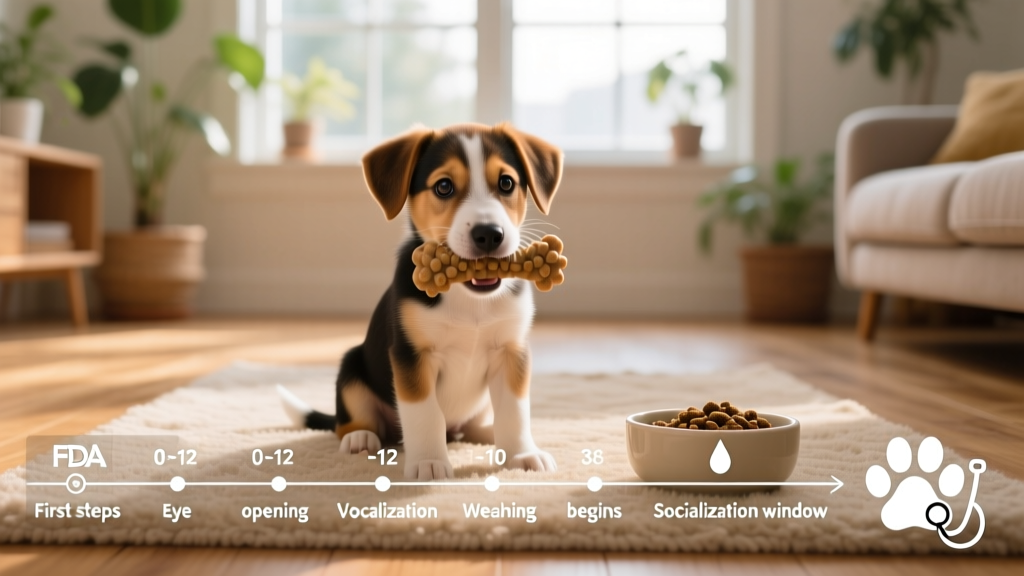
Puppy Wiener Dog Care Guide: Milestones, Feeding, and Training
Complete puppy wiener dog guide covering age milestones, feeding schedules, potty training timelines, vaccinations, and first-year costs for Dachshund owners.

The Dachshund — affectionately known as the wiener dog — is one of the most recognizable breeds in the United States. But raising a puppy wiener dog comes with challenges that generic puppy guides simply don't address. Their elongated spines make them uniquely vulnerable to intervertebral disc disease (IVDD), their stubborn streak requires patient, positive-reinforcement training, and their tiny bladders demand a potty schedule most owners underestimate.
This guide walks you through every critical stage of your Dachshund puppy's first year with exact timelines, portion sizes, vaccine schedules, and cost breakdowns — all calibrated specifically to the breed's needs.
When Should I Bring My Dachshund Puppy Home?
The optimal age to bring a Dachshund puppy home is 8 to 10 weeks. While some breeders release puppies at 8 weeks, many reputable Dachshund breeders prefer to hold until 10 weeks. Here's why: Dachshund puppies are small (often 2–4 lb at 8 weeks), and the extra two weeks with their littermates helps them develop bite inhibition and social confidence that's harder to teach later.
- Confirm the breeder has completed the puppy's first DHPP vaccine (typically given at 6–8 weeks)
- Request written health records including deworming dates (Dachshunds are prone to roundworms and hookworms)
- Verify the breeder screens parent dogs for IVDD risk factors, patellar luxation, and progressive retinal atrophy (PRA) — per OFA breed-specific recommendations
- Ask for a take-back clause in the purchase contract (responsible breeders always include this)
Dachshund Puppy Milestones: Weeks 4 Through 12 Months
Dachshund puppies develop on a slightly compressed timeline compared to larger breeds. They reach physical maturity around 10–12 months, but mental maturity (that famous stubbornness settling into reliability) often takes until 18–24 months.
| Age Range | Weight (Miniature) | Weight (Standard) | Key Milestones |
|---|---|---|---|
| 4–8 weeks | 1.5–3 lb | 3–5 lb | Weaning complete, first socialization with littermates, deciduous teeth erupting, breeder introduces crate |
| 8–12 weeks | 2.5–5 lb | 4–7 lb | First vet visit, DHPP booster, start potty training, socialization window opens wide, bonding period with new family |
| 12–16 weeks | 4–7 lb | 6–10 lb | Final DHPP vaccine, rabies vaccine, socialization window closing, increased independence, start basic obedience |
| 16–24 weeks (4–6 months) | 6–9 lb | 10–18 lb | Teething begins, adult teeth replacing baby teeth, fear period possible (8–10 months), spay/neuter discussion with vet |
| 6–12 months | 8–11 lb (adult) | 16–32 lb (adult) | Approaching full height, sexual maturity if intact, transition to adult food around 10–12 months, adolescent stubbornness peaks |
Feeding Schedule: Exact Portions for Your Puppy Wiener Dog
Dachshunds are prone to obesity, which directly worsens spinal stress and IVDD risk. According to the Merck Veterinary Manual, maintaining lean body condition from puppyhood is one of the most impactful preventive measures you can take.
Feed a high-quality, AAFCO-approved puppy formula (look for "complete and balanced for growth" on the label). Small-breed puppy formulas are ideal because they have appropriately sized kibble and calibrated calorie density.
| Age | Meals Per Day | Miniature (cups/day) | Standard (cups/day) |
|---|---|---|---|
| 8–12 weeks | 4 meals | ¼ – ⅓ cup total | ⅓ – ½ cup total |
| 12–16 weeks | 3 meals | ⅓ – ½ cup total | ½ – ¾ cup total |
| 4–6 months | 3 meals | ½ – ⅔ cup total | ¾ – 1 cup total |
| 6–10 months | 2 meals | ⅔ – ¾ cup total | 1 – 1¼ cups total |
| 10–12 months | 2 meals | Transition to adult food: ⅔ – ¾ cup | Transition to adult food: 1 – 1½ cups |
Potty Training Timeline: Realistic Expectations for Dachshunds
Dachshund puppies are notoriously harder to potty train than many breeds. Their small bladders, combined with a strong-willed temperament, mean most owners should expect 4 to 6 months before reliable house training — not the "3 days" some online guides promise.
Here's a realistic progression:
- 8–12 weeks: Accidents every 1–2 hours. Take puppy outside every 30–45 minutes during active periods, immediately after meals, naps, and play sessions. Expect 3–6 accidents per day.
- 12–16 weeks: Bladder capacity increases. Puppy can hold for 1.5–2 hours during the day. Accidents drop to 1–3 per day if you're consistent.
- 4–6 months: Puppy signals (sniffing, circling, heading to the door) become more reliable. Accidents drop to a few per week.
- 6–9 months: Most Dachshunds are reliably house-trained during the day. Nighttime reliability may take longer.
Track these data points daily in a notebook or phone app:
- Time puppy went outside
- Whether they eliminated (yes/no)
- Type (urine, stool, or both)
- Time and location of any indoor accident
- What happened right before the accident (playing, sleeping, eating)
Troubleshooting common issues:
- Rain refusal: Dachshunds are short-legged and hate wet grass. Place a covered potty area or use indoor puppy pads as a backup during bad weather. Transition gradually back to outdoors.
- Submissive urination: Common in young Dachshunds when greeted enthusiastically. Keep greetings calm, crouch to their level, and avoid direct eye contact until the behavior fades (usually by 6–8 months).
- Marking behavior: Intact males may begin lifting a leg and marking as early as 5–6 months. Discuss spay/neuter timing with your veterinarian.
Vaccination Schedule for Your Puppy Wiener Dog
Your Dachshund puppy's immune system is still developing, making a strict vaccination timeline essential. The American Veterinary Medical Association (AVMA) recommends core vaccines for all puppies, with timing based on maternal antibody decline.
| Age | Vaccines | Notes |
|---|---|---|
| 6–8 weeks | DHPP (Distemper, Hepatitis/Adenovirus, Parainfluenza, Parvovirus) | First dose — typically given by breeder before pickup. Fecal test for parasites also recommended. |
| 10–12 weeks | DHPP booster + Bordetella (optional but recommended) | Bordetella protects against kennel cough — essential if attending puppy classes or boarding. Leptospirosis may be recommended based on regional risk. |
| 14–16 weeks | DHPP final booster + Rabies | Rabies vaccine is legally required in most U.S. states. Puppy is considered fully protected 1–2 weeks after final DHPP booster. |
| 12 months | DHPP booster + Rabies booster | After this, vaccines transition to 1-year or 3-year intervals depending on the product and local law. |
Mild lethargy and soreness at the injection site are normal for 24–48 hours. Contact your vet immediately if you observe:
- Facial swelling or hives
- Vomiting or diarrhea lasting more than 12 hours
- Difficulty breathing
- Collapse or extreme weakness
Socialization Window: Weeks 3–14 Checklist
The primary socialization period for puppies closes around 14 weeks. According to the American Kennel Club, experiences during this window shape your Dachshund's lifelong confidence and reactivity levels. Dachshunds, bred to hunt badgers independently, already carry a genetic tendency toward wariness of strangers and novel stimuli — making early socialization especially critical.
Socialization Checklist for Your Puppy Wiener Dog:
- ☐ Meet at least 10 different people (varying ages, heights, ethnicities, wearing hats/glasses/coats)
- ☐ Encounter 5+ other vaccinated, friendly dogs in controlled settings
- ☐ Experience 3 different floor surfaces (tile, carpet, gravel, grass)
- ☐ Hear common household sounds: vacuum, doorbell, blender, thunder (use recorded sounds at low volume)
- ☐ Ride in a car at least 5 times (short trips, not just vet visits)
- ☐ Be handled: paws touched, ears examined, mouth opened, tail gently lifted
- ☐ Visit 3 public locations: pet-friendly store, outdoor café patio, park bench
- ☐ Experience being alone in a crate for increasing intervals (start at 5 minutes, build to 30)
- ☐ Attend at least one structured puppy socialization class (after second DHPP at 10–12 weeks)
Important safety note: Until your puppy has received their final DHPP booster at 14–16 weeks, avoid high-traffic dog areas like dog parks, pet store floors, and unvaccinated dog playdates. Carry your puppy in public spaces or use a stroller. The risk of parvovirus exposure outweighs the socialization benefit in uncontrolled environments.
Crate Training Progression and Time Limits
Crate training protects your Dachshund puppy from household hazards and supports potty training. However, their small bladders mean strict time limits are non-negotiable.
| Age | Max Crate Time (Daytime) | Max Crate Time (Night) | Crate Size Recommendation |
|---|---|---|---|
| 8–10 weeks | 30–45 minutes | 2–3 hours (expect nighttime potty breaks) | Small wire or plastic crate, 18–22 inches — use divider panel |
| 10–14 weeks | 1–1.5 hours | 3–4 hours | Same crate with divider gradually opened |
| 3–4 months | 1.5–2 hours | 4–5 hours | 24-inch crate for miniatures, 30-inch for standards |
| 5–6 months | 2–3 hours | 6–7 hours | Final adult crate size |
| 6+ months | 3–4 hours | 7–8 hours | — |
Progression steps:
- Days 1–3: Leave crate door open. Feed meals inside. Toss treats in. Never force the puppy inside.
- Days 4–7: Close door for 1–2 minutes while you sit nearby. Gradually extend to 5 minutes.
- Week 2: Close door and step away for 5–10 minutes. Return before puppy whines (if possible).
- Weeks 3–4: Extend absences to 20–30 minutes. Begin leaving the room.
- Month 2+: Build to age-appropriate maximums listed above.
Spine protection note: Place the crate on the floor — never on a raised surface where a puppy could fall. Dachshund puppies should not be allowed to jump on and off furniture until at least 12 months when growth plates close. Use ramps for couch/bed access.
Teething Timeline and Safe Chew Recommendations
Dachshund puppies begin losing deciduous (baby) teeth around 3 to 4 months, with the process completing by approximately 6 months. During this period, your puppy will chew relentlessly to relieve gum discomfort.
Teething phases:
- 3–4 months: Incisors (front teeth) loosen first. You may find tiny teeth in bedding or toys.
- 4–5 months: Canines and premolars erupt. This is peak chewing intensity. Expect destroyed shoes, baseboard damage, and nipping during play.
- 5–6 months: Molars come in. Chewing behavior begins to decrease as adult teeth settle.
Safe chew recommendations for Dachshund puppies:
- Kong Classic (XS or Small): Fill with softened kibble mixed with plain pumpkin puree and freeze for 30 minutes. The cold soothes gums.
- Nylabone Puppy Chew ( Petite/Small): Specifically the puppy-formulated softer version — not the adult power chew.
- Frozen washcloth: Wet a clean washcloth, twist into a rope, freeze for 2 hours. Supervise to prevent ingestion of fabric.
- Bully sticks (thin, 4-inch): Supervise closely. Remove when small enough to be a choking hazard. Limit to 10 minutes per session due to calorie density.
- Rawhide — choking and intestinal blockage risk, especially for small breeds
- Antlers and hooves — too hard, can fracture puppy teeth
- Cooked bones of any kind — splinter and cause GI perforation
- Any chew smaller than the puppy's mouth — choking hazard
Common Puppy Problems: Biting, Whining, and Chewing Solutions
How Do I Stop Puppy Biting and Nipping?
Dachshund puppies were bred to grab and hold prey, so mouthing behavior is genetically reinforced. Expect nipping to peak between 8 and 16 weeks. Use these force-free methods:
- Redirect: When puppy mouths your hand, immediately offer an appropriate chew toy. Praise enthusiastically when they take the toy.
- Withdraw attention: If nipping continues, stand up, cross your arms, and ignore the puppy for 15–20 seconds. Resume play only when they're calm.
- Yelp technique: A high-pitched "ouch" or yelp can mimic littermate feedback. Use once — if it escalates excitement (common in Dachshunds), switch to the withdrawal method.
- Enforced naps: Overtired puppies bite more. If nipping intensifies, place puppy in crate with a chew toy for a 30-minute nap. Most nipping episodes correlate with fatigue.
Whining in the Crate
Nighttime whining is nearly universal in the first 2–3 weeks. Strategies:
- Place the crate in your bedroom initially — proximity reduces separation anxiety
- Cover the crate with a breathable blanket to create a den-like feel
- Use a Snuggle Puppy (heartbeat toy) for the first week
- Take puppy out for a potty break at a set time (e.g., 2 AM) before they wake whining — then gradually push this time later
- Do NOT let puppy out of the crate while whining (unless it's a potty emergency) — this reinforces whining as an exit strategy
Destructive Chewing
Dachshund puppies chew at two peak periods: teething (3–6 months) and adolescence (7–10 months). Management is more effective than correction:
- Puppy-proof one room or use an exercise pen — remove shoes, cords, remote controls, children's toys
- Rotate 4–5 approved chew toys every 2–3 days to maintain novelty
- Apply bitter apple spray to baseboards and furniture legs (test on a small area first)
- Ensure adequate physical exercise (15–20 minute walks, 2x daily) and mental stimulation (snuffle mats, food puzzles)
When Can My Puppy Go Outside and Meet Other Dogs?
This is one of the most common questions new Dachshund owners ask, and the answer requires balancing disease risk with socialization needs.
Safe outdoor exposure (8–14 weeks, before full vaccination):
- Carry your puppy on walks in low-traffic neighborhoods
- Visit friends' homes where dogs are known to be fully vaccinated
- Sit on a blanket in your own yard (low parvovirus risk in private, fenced areas)
- Attend structured puppy classes that require proof of at least two DHPP doses (per AVMA guidelines)
Full outdoor access (after 16-week final DHPP + 1–2 weeks):
- Dog parks (though many trainers recommend waiting until 6 months for size safety)
- Public hiking trails
- Beach outings
- Unsupervised yard time
First-Year Cost Breakdown for a Dachshund Puppy
Budgeting accurately prevents surprises. These ranges reflect 2026 U.S. averages and vary by region.
| Category | Low Estimate | Mid Estimate | High Estimate |
|---|---|---|---|
| Puppy purchase (responsible breeder) | $1,500 | $2,500 | $4,000+ |
| Adoption/rescue (alternative) | $200 | $400 | $600 |
| First-year veterinary care (vaccines, exams, fecal tests, spay/neuter) | $600 | $900 | $1,400 |
| Food (puppy formula, 10 months) | $200 | $350 | $500 |
| Supplies (crate, bed, leash, harness, bowls, gates, toys, chews) | $250 | $450 | $700 |
| Training (group puppy class + basic obedience) | $150 | $300 | $600 |
| Pet insurance (annual premium) | $360 | $600 | $900 |
| Total first year (breeder purchase) | $3,060 | $5,100 | $8,100 |
Emergency fund recommendation: Dachshunds have a 1 in 4 lifetime risk of IVDD. Surgical treatment for a single disc herniation costs $3,000–$8,000. Set aside an emergency fund or enroll in pet insurance that covers hereditary conditions before your puppy's first birthday.
Frequently Asked Questions
How often should I feed my Dachshund puppy at 10 weeks old?
At 10 weeks, feed 4 meals per day spaced roughly 4 hours apart during waking hours (e.g., 7 AM, 11 AM, 3 PM, 7 PM). Each meal for a miniature Dachshund is approximately 1–1.5 tablespoons of puppy kibble. Always provide fresh water, but remove the water bowl 2 hours before bedtime to reduce overnight accidents.
When will my Dachshund puppy be fully potty trained?
Most Dachshund puppies achieve reliable daytime house training between 5 and 7 months of age. Nighttime reliability may take until 8–9 months. Consistency is the single biggest factor — puppies whose owners maintain a strict schedule with logged outings train faster. If your puppy is still having daily accidents past 6 months, consult your veterinarian to rule out urinary tract infections or anatomical issues.
What vaccines does my puppy wiener dog need and when?
Core vaccines include DHPP (given at 6–8, 10–12, and 14–16 weeks) and Rabies (at 14–16 weeks). Non-core vaccines your vet may recommend based on lifestyle include Bordetella (kennel cough), Leptospirosis, and Lyme disease. Always discuss your puppy's specific risk factors with your veterinarian.
Are Dachshund puppies good with children?
Dachshunds can be wonderful family dogs, but their long spines make them fragile. Young children must be taught to support the puppy's chest and hindquarters when picking them up and to never allow the puppy to jump off laps or furniture. Supervise all interactions between children under 8 and a Dachshund puppy.
Should I get pet insurance for my Dachshund puppy?
Strongly recommended. Dachshunds are predisposed to IVDD, which often requires $3,000–$8,000 in surgical treatment. Enrolling while your puppy is young and before any spinal symptoms appear ensures that hereditary conditions are covered. Look for policies that specifically include hereditary and congenital conditions without breed-specific exclusions.
Beth Carrasco
All our authors care for dogs every day — read more of their work on the authors page.