Your Puppy Wellness Exam Guide: Week-by-Week Health & Care Milestones
Complete puppy wellness exam guide covering vaccination schedules, feeding portions, potty training timelines, and socialization checklists from 4 weeks to 12 months.

Why Your Puppy Wellness Exam Schedule Matters More Than You Think
That first trip to the vet with your new puppy isn't just a formality — it's the foundation of their entire health trajectory. A puppy wellness exam is a comprehensive veterinary assessment that tracks growth, screens for congenital issues, establishes vaccination protocols, and gives you a personalized care roadmap. According to the American Veterinary Medical Association (AVMA), puppies should see a veterinarian within the first week of coming home, with follow-up visits every 3-4 weeks until approximately 16 weeks of age.
But wellness care extends far beyond the exam room. What you do at home between visits — feeding schedules, socialization exposure, potty training consistency, teething management — determines whether your puppy develops into a healthy, well-adjusted adult dog. This guide maps every critical milestone from weeks 4 through 12 months with concrete numbers, timelines, and troubleshooting strategies.
Age-Specific Milestones: What to Expect at Every Stage
Understanding developmental windows helps you set realistic expectations and catch problems early. Here's what your puppy wellness exam will track at each stage:
Weeks 4–8: The Neonatal Transition
During this period, puppies are typically still with their breeder or foster. Key developments include:
- Sensory: Eyes fully open (10-14 days), hearing develops (weeks 2-3), startle reflex to loud noises appears
- Mobility: Walking steadily by week 4, running and playing by week 6
- Social: Littermate play teaches bite inhibition foundations; human handling should begin at 3+ weeks
- Nutrition: Weaning from mother's milk to gruel (weeks 3-4), transitioning to soft kibble (weeks 5-7)
- Health: First deworming at 2 weeks, repeated every 2 weeks; first DHPP vaccine at 6-8 weeks
- Weight gain: Expect puppies to double birth weight by 1-2 weeks and gain 5-10% of body weight daily
Weeks 8–12: The Homecoming Window
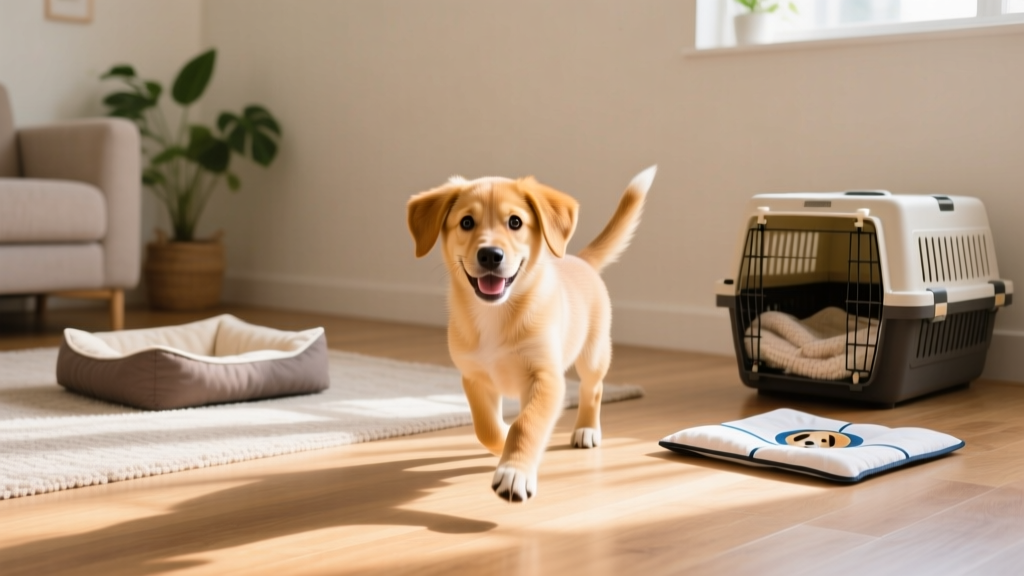
This is when most puppies join their permanent families. Your first puppy wellness exam should happen within 48-72 hours of bringing your puppy home.
- Fear period: Weeks 8-11 is a recognized fear imprint period — negative experiences can create lasting phobias
- Sleep: Puppies sleep 18-20 hours per day; enforce crate naps to prevent overtiredness (a major cause of biting)
- Bladder capacity: Roughly 1 hour per month of age (an 8-week puppy can hold it ~2 hours maximum)
- Teething: Deciduous (baby) teeth are fully in — 28 sharp needle teeth
- Attention span: 2-5 minutes per training session maximum
Weeks 12–16: Building Foundations
- Second fear period: May emerge around weeks 12-14; patience and positive reinforcement are critical
- Vaccination boosters: DHPP booster and often rabies vaccine administered
- Bladder control: Extends to 3-4 hours; potty training patterns should be establishing
- Teething: Baby teeth begin loosening around 12-14 weeks as adult teeth start erupting
- Socialization urgency: The primary socialization window closes around 14-16 weeks
Weeks 16–24 (4–6 Months): The Adolescent Shift
- Teething peak: Adult teeth fully in by 6-7 months; intense chewing behavior is normal
- Spay/neuter window: Most veterinarians recommend between 4-6 months for small/medium breeds, 6-12+ months for large/giant breeds — consult your veterinarian for breed-appropriate timing
- Testing boundaries: Selective hearing, increased independence, regression in training are all normal
- Growth plates: Still open in most breeds; avoid forced exercise (jogging, repetitive jumping) to protect developing joints
- Bladder: Most puppies can hold 5-6 hours by 5 months
Months 6–12: Approaching Adulthood
- Sexual maturity: Intact males may begin marking; females may enter first estrus cycle (as early as 6 months in small breeds, 12-24 months in giant breeds)
- Social maturity: Begins around 12-18 months in small breeds, 24-36 months in large breeds
- Training: Can handle longer sessions (10-15 minutes); impulse control exercises become possible
- Nutrition transition: Small breeds may switch to adult food at 9-12 months; large breeds typically stay on puppy formula until 12-18 months
Your Puppy Wellness Exam Vaccination Schedule
Vaccination protocols are one of the most important components of every puppy wellness exam. Your veterinarian will tailor the schedule based on regional disease prevalence, breed risk factors, and lifestyle. The following represents the AAHA-recommended core vaccination framework:
| Age | Vaccines Administered | Type | Notes |
|---|---|---|---|
| 6–8 weeks | DHPP (Distemper, Hepatitis/Adenovirus, Parainfluenza, Parvovirus) | Core | Often given by breeder; maternal antibodies may interfere |
| 8–10 weeks | DHPP booster + Bordetella (optional, based on exposure risk) | Core + Non-core | Bordetella recommended if attending puppy classes or boarding |
| 10–12 weeks | DHPP booster + Leptospirosis (optional, region-dependent) | Core + Non-core | Leptospirosis recommended in areas with wildlife/water exposure |
| 12–14 weeks | DHPP booster + Rabies (required by law in most states) | Core + Legal | Rabies timing varies by state law — some require 12 weeks, others 16 |
| 14–16 weeks | DHPP final booster (critical — this dose overcomes maternal antibody interference) | Core | According to the Merck Veterinary Manual, the 14-16 week DHPP is the most critical dose |
| 12–16 months | DHPP booster + Rabies booster + any non-core boosters | Core | First annual boosters; DHPP may move to 3-year intervals after this |
Your puppy is not fully protected until approximately 1-2 weeks after the final DHPP booster at 14-16 weeks. However, the socialization window closes around 14-16 weeks too, creating a dilemma. The AVMA and the American Veterinary Society of Animal Behavior (AVSAB) recommend controlled socialization in low-risk environments (private yards, homes of vaccinated dogs, structured puppy classes with vaccination requirements) starting after the first DHPP at 6-8 weeks. Avoid high-risk areas like dog parks, pet store floors, and unknown dog feces until fully vaccinated.
Feeding Schedule: Exact Portions by Age and Weight
Feeding guidelines on kibble bags are starting points, not prescriptions. Your puppy wellness exam will include a body condition score (BCS) assessment to calibrate portions. Use this framework as a baseline and adjust based on your vet's recommendations:
| Age | Meals Per Day | Estimated Daily Amount (Small Breed 10-25 lb adult) | Estimated Daily Amount (Medium Breed 26-55 lb adult) | Estimated Daily Amount (Large Breed 56-100 lb adult) |
|---|---|---|---|---|
| 6–8 weeks | 4 meals | ¼–½ cup | ½–¾ cup | ¾–1¼ cups |
| 8–12 weeks | 4 meals | ⅓–⅔ cup | ¾–1 cup | 1–2 cups |
| 3–6 months | 3 meals | ½–1 cup | 1–1¾ cups | 2–3½ cups |
| 6–12 months | 2 meals | ¾–1¼ cups | 1½–2½ cups | 3–5 cups |
How often should I feed my puppy? The general rule: four meals daily until 12 weeks, three meals until 6 months, then two meals for life. Free-feeding (leaving food out constantly) is not recommended — it makes potty training unpredictable and masks appetite changes that signal illness.
Choosing the right food: Look for the AAFCO statement confirming the food is formulated for "growth" or "all life stages." Large breed puppies specifically need food labeled for "large breed growth" — these formulas restrict calcium and phosphorus to protect developing joints. Brands like Purina Pro Plan Puppy, Royal Canin Puppy, and Hill's Science Diet Puppy all meet AAFCO growth requirements and are widely recommended by veterinarians.
Potty Training Timeline: Realistic Expectations and Troubleshooting
When will my puppy be fully potty trained? Most puppies achieve reliable house training between 4-6 months of age, though small breeds (with proportionally smaller bladders) may take until 8-10 months. "Reliable" means fewer than one accident per month. Here's a realistic progression:
- 8–10 weeks: Take puppy out every 1-2 hours, immediately after meals, after naps, and after play sessions. Expect 2-4 accidents per week.
- 10–14 weeks: Bladder control extends to 2-3 hours. Puppy may start going to the door or showing pre-elimination behaviors (circling, sniffing). Accidents drop to 1-2 per week.
- 3–4 months: 3-4 hour holding capacity. Puppy may begin signaling (whining, sitting by door). Accidents become rare if schedule is consistent.
- 4–6 months: 4-6 hour holding. Most puppies can sleep through the night (7-8 hours) without a potty break by 4 months.
- 6+ months: Full bladder maturity. Occasional accidents may still occur during excitement, illness, or routine changes.
If your puppy is having frequent accidents despite a consistent schedule:
• Rule out urinary tract infection (UTI) at your next puppy wellness exam — UTIs are common in puppies and cause frequent, urgent urination
• Enzymatic cleaner is non-negotiable (Nature's Miracle or Rocco & Roxie); ammonia-based cleaners attract puppies back to the same spot
• Reduce freedom — tether puppy to you with a leash indoors or use an exercise pen when you can't provide 100% supervision
• Track timing: if accidents cluster 20-30 minutes after meals, add an immediate post-meal potty trip
The Critical Socialization Window: Weeks 3–14
The primary socialization period — when a puppy's brain is most receptive to forming positive associations with new experiences — runs from approximately 3 to 14 weeks of age. According to the American Veterinary Society of Animal Behavior, inadequate socialization during this window is a leading behavioral cause of relinquishment and euthanasia in dogs under 3 years old.
When should I bring my puppy home? The consensus among veterinary behaviorists is 8-10 weeks. Before 8 weeks, puppies benefit from littermate play (bite inhibition learning). After 10 weeks, you lose precious socialization time in the new environment. Breeders who keep puppies past 10 weeks should be actively socializing them — ask for documentation.
Socialization Exposure Checklist
Aim for 2-3 novel positive experiences per day during the socialization window. Quality over quantity — a single traumatic experience can outweigh dozens of positive ones.
| Category | Specific Exposures | Goal | ✓ |
|---|---|---|---|
| People | Men with beards, people wearing hats/sunglasses, children (supervised), people in wheelchairs, people of various heights/builds, delivery workers | Calm greeting or neutral response | ☐ |
| Surfaces | Gravel, grass, wet pavement, metal grates, plastic tarps, slippery floors, stairs (carpeted first) | Confident walking without hesitation | ☐ |
| Sounds | Vacuum cleaner, doorbell, thunderstorms (play recordings at low volume), traffic, construction noise, fireworks recordings | Startle-recovery within seconds, not prolonged fear | ☐ |
| Handling | Paw touching, ear examination, mouth opening, tail touching, nail clipping simulation, being lifted, collar/harness grabbing | Relaxed acceptance (critical for vet visits and grooming) | ☐ |
| Other Animals | Vaccinated adult dogs (playdates), cats (controlled), livestock if rural (distance viewing OK) | Appropriate greeting, not over-arousal or fear | ☐ |
| Environments | Car rides, vet clinic (happy visits with treats only), outdoor café patios, parking lots, friend's houses | Settling in new places, not constant alertness | ☐ |
Teething Timeline and Relief Strategies
Puppies have 28 deciduous teeth that begin erupting at 3-4 weeks and are fully in by 6-8 weeks. The transition to 42 adult teeth follows this timeline:
- 3–4 months: Incisors (front teeth) begin loosening and falling out. You may find tiny teeth in bedding or toys.
- 4–5 months: Canines (fangs) and premolars erupt. This is peak discomfort — expect increased chewing, drooling, and sometimes blood-tinged saliva (normal in small amounts).
- 5–6 months: Molars come in. All 42 adult teeth should be present by 6-7 months.
- Retained baby teeth: Common in small breeds (Yorkies, Chihuahuas, Pomeranians). If a baby tooth hasn't fallen out within 2 weeks of the adult tooth erupting, mention it at your puppy wellness exam — extraction may be needed to prevent crowding and dental disease.
Safe teething relief options:
- Kong Classic (rubber, stuffable) — freeze with a mixture of plain yogurt and mashed banana for extended relief
- Nylabone Puppy Chew (specifically the puppy formula, softer than adult versions)
- Frozen washcloth — wet a clean washcloth, twist into a rope, freeze for 2 hours, supervise use
- Benebone Puppy (softer rubber designed for developing teeth)
- West Paw Zogoflex Toppl — interlocking treat toy that can be frozen
• Rawhide (choking and intestinal blockage risk — if ingested in large pieces, call your vet or ASPCA Animal Poison Control at (888) 426-4435)
• Antlers and weight-bearing bones from large animals (too hard — can fracture developing teeth; the rule of thumb: if you can't indent it with your thumbnail, it's too hard for a puppy)
• Ice cubes (some vets recommend them, but they can crack teeth — use crushed ice or frozen broth cubes instead)
• Any toy small enough to swallow whole
Crate Training Progression and Time Limits
A crate is your puppy's den, not a punishment space. Proper crate training supports potty training (dogs instinctively avoid soiling their sleeping area), prevents destructive behavior when unsupervised, and provides a safe retreat. Here's a progressive approach:
Maximum Crate Time by Age
| Puppy Age | Maximum Daytime Crate Duration | Maximum Nighttime Duration | Notes |
|---|---|---|---|
| 8–10 weeks | 1–2 hours | 3–4 hours (with one potty break) | Set alarm for mid-night potty trip |
| 10–14 weeks | 2–3 hours | 5–6 hours | May still need one overnight break |
| 3–4 months | 3–4 hours | 6–7 hours | Most puppies sleep through the night now |
| 4–6 months | 4–5 hours | 7–8 hours | Transition to exercise pen for longer daytime absences |
| 6+ months | 5–6 hours | 8 hours | No dog should be crated more than 6-8 hours total in 24 hours |
Crate training steps (force-free method):
- Week 1: Leave crate door open in a common area. Toss high-value treats (freeze-dried liver, small cheese pieces) inside. Feed meals near, then inside the crate. Never force the puppy in.
- Week 2: Close door for 1-5 minutes while puppy eats a stuffed Kong inside. Stay in the room. Gradually increase duration.
- Week 3: Step out of the room for 1-5 minutes while puppy is crated with a chew. Return before puppy shows distress. Gradually extend absences.
- Week 4+: Puppy should enter crate voluntarily and settle. If whining occurs, wait for 3-5 seconds of silence before opening (to avoid reinforcing vocalization). If whining persists beyond 10-15 minutes, reassess — puppy may need a potty break or the duration increased too quickly.
Common Puppy Problems and Solutions
Puppy Biting and Nipping
How do I stop puppy biting? Puppy biting is developmentally normal — they explore the world with their mouths and have 28 needle-sharp teeth with zero impulse control. It peaks between 8-16 weeks and gradually diminishes with consistent management:
- Redirect: When teeth touch skin, immediately offer an appropriate chew toy. Praise enthusiastically when they bite the toy instead.
- Time-out protocol: If redirecting fails after 2 attempts, calmly stand up and leave the play area for 15-30 seconds (or place puppy in exercise pen for 1-2 minutes). This teaches that biting ends fun — not through punishment, but through natural consequence.
- Enforced naps: Overtired puppies bite more. A puppy awake for more than 1.5-2 hours needs a crate nap. This single intervention often reduces biting by 50% or more.
- Avoid: Yelling, muzzle grabbing, holding the mouth shut, or any physical punishment. These methods increase fear and can escalate biting into defensive aggression.
Whining and Crying (Especially at Night)
Nighttime whining is expected for the first 1-3 weeks. Strategies that work:
- Place crate in your bedroom initially (puppies are social animals; isolation triggers distress vocalization)
- Use a Snuggle Puppy (warmth + heartbeat simulator) or a warm water bottle wrapped in a towel
- Take puppy out for a boring, leashed potty trip if whining occurs after 3+ hours — keep lights low, no play, return immediately to crate
- If potty isn't needed and puppy has been awake recently, wait for a brief pause in whining before settling — do not reward continuous vocalization with attention
Destructive Chewing
Chewing peaks during teething (3-6 months) but is a lifelong behavior. Management strategy:
- Puppy-proof every room before granting access: shoes behind closed doors, electrical cords covered with cord concealers, toxic plants removed (check the ASPCA toxic plant list)
- Provide 5-8 appropriate chew options rotated daily to maintain novelty
- Supervise or confine — there is no middle ground for puppies under 6 months
First-Year Cost Breakdown
Budgeting realistically prevents surrender. Here's what the first year of puppy ownership typically costs in the US (2026 estimates):
| Category | Low Estimate | Medium Estimate | High Estimate | Details |
|---|---|---|---|---|
| Veterinary (wellness) | $400 | $700 | $1,200 | 4-5 puppy wellness exams, vaccinations, fecal tests, deworming, heartworm prevention |
| Spay/Neuter | $200 | $500 | $900 | Varies significantly by size, sex, and region; laparoscopic spay costs more |
| Food | $300 | $600 | $1,200 | Small vs. large breed, store brand vs. premium/fresh food |
| Supplies | $250 | $500 | $800 | Crate, bed, leash/harness, bowls, toys, gates, grooming tools, enzymatic cleaner |
| Training | $100 | $400 | $1,500 | Group puppy class ($100-250) vs. private sessions ($100-200/session) |
| Pet Insurance (annual) | $350 | $600 | $900 | Enrolling at 8 weeks locks in lowest premiums; pre-existing conditions excluded |
| Emergency Fund | $0 | $500 | $3,000+ | Puppies eat things they shouldn't, get injured, develop infections — budget for the unexpected |
| TOTAL FIRST YEAR | $1,600 | $3,800 | $9,500+ | Excludes purchase/adoption price |
Frequently Asked Questions About Puppy Wellness Exams
What happens during a puppy wellness exam?
A typical puppy wellness exam lasts 20-40 minutes and includes: full physical examination (eyes, ears, mouth, heart, lungs, abdomen, skin, coat, joints, neurological reflexes), weight tracking, body condition scoring, vaccination administration, fecal parasite testing, heartworm prevention counseling, nutrition assessment, and behavioral guidance. Your vet will also discuss spay/neuter timing, microchipping, and parasite prevention.
How much does a puppy wellness exam cost?
Individual puppy wellness exams typically cost $50-$100 for the office visit plus $20-$45 per vaccine administered. Many veterinary clinics offer puppy wellness packages that bundle 3-4 visits, all vaccinations, deworming, fecal tests, and sometimes spay/neuter for $400-$900 total. Ask your clinic about package pricing — it often saves 15-25% compared to individual visits.
Should I get pet insurance before the first wellness exam?
Yes, ideally. Enrolling in pet insurance (Trupanion, Healthy Paws, or Lemonade are popular options) before your puppy's first vet visit ensures no conditions are classified as "pre-existing" and therefore excluded. Most policies have a 14-day waiting period for illnesses, so enroll the day you commit to a puppy. Wellness exam add-ons are available for $10-$25/month and can cover routine preventive care.
How do I know if my puppy is sick between wellness exams?
Red flags that warrant an immediate vet call (not waiting for the next scheduled exam):
- Vomiting or diarrhea lasting more than 24 hours (or any blood in vomit/stool)
- Refusing food for more than 12 hours (puppies can develop hypoglycemia quickly)
- Lethargy lasting more than a few hours beyond normal nap time
- Difficulty breathing, persistent coughing, or pale/blue gums
- Bloated or distended abdomen
- Seizures or collapse
- Inability to urinate or straining without production
Do I need to continue wellness exams after the puppy series?
Absolutely. After the puppy vaccination series concludes around 16 weeks, schedule a wellness exam at 6 months (often combined with spay/neuter pre-surgical bloodwork), then annually for adult dogs. Senior dogs (typically 7+ years, earlier for large breeds) benefit from twice-yearly exams with bloodwork to catch kidney disease, thyroid issues, and other conditions early.
Marcus Aldridge
All our authors care for dogs every day — read more of their work on the authors page.