Puppy Safe Peanut Butter: A Complete Feeding & Care Guide by Age
Learn when and how to feed puppy safe peanut butter, plus age-specific milestones, feeding schedules, vaccination timelines, and first-year cost breakdowns.

When Can Puppies Have Peanut Butter? The Age-Specific Answer
Peanut butter ranks among the most popular training treats and enrichment foods for dogs, but puppies have different digestive capabilities and nutritional needs than adults. The short answer: most puppies can safely eat small amounts of peanut butter starting around 8–10 weeks of age, once they are fully weaned and eating solid puppy food consistently. However, "puppy safe peanut butter" isn't just about age — it's about choosing the right product, serving the right portion, and integrating it into a broader feeding and care plan that supports healthy growth.
Peanut butter is safe for puppies 8+ weeks old when it contains only peanuts (and optionally salt). You must avoid any brand containing xylitol (also labeled as birch sugar), which is highly toxic to dogs even in tiny amounts. Always check the ingredient label before every purchase — manufacturers occasionally reformulate. If you suspect xylitol ingestion, call the ASPCA Animal Poison Control Center at (888) 426-4435 immediately (a consultation fee applies).
This guide walks you through exactly how to use puppy safe peanut butter as part of a structured feeding plan, while covering every major milestone your puppy will hit from 4 weeks through 12 months — including vaccinations, potty training, socialization, teething, and crate training. We'll use the Labrador Retriever as our reference breed (one of the most common breeds where owners search for peanut butter guidance due to their food-motivated temperament), with notes on adjusting for smaller or larger breeds.
Puppy Feeding Schedule: Portions, Frequency, and Where Peanut Butter Fits
A structured feeding schedule prevents overfeeding (a major risk for large-breed puppies prone to orthopedic issues) and supports predictable potty training. Below is a feeding framework for a Labrador-sized puppy (expected adult weight 55–70 lb / 25–32 kg). Adjust portions down by roughly 40–50% for small breeds (under 20 lb / 9 kg adult) and up by 20–30% for giant breeds.
| Age | Meals Per Day | Daily Kibble Total (cups) | Per-Meal Portion | Peanut Butter Allowance |
|---|---|---|---|---|
| 4–8 weeks | Free-feed or 4x/day (gruel/weaning) | N/A — nursing/weaning | N/A | None — too young |
| 8–12 weeks | 4x/day | 1.5–2 cups | ~0.5 cup | ¼ tsp max, 1–2x/week |
| 12–16 weeks | 3x/day | 2–2.5 cups | ~0.75 cup | ½ tsp max, 2–3x/week |
| 16–24 weeks | 3x/day | 2.5–3.5 cups | ~1 cup | ½–1 tsp, 2–3x/week |
| 6–12 months | 2x/day | 3–4 cups | 1.5–2 cups | 1 tsp, up to daily |
Calorie context: One teaspoon of standard peanut butter contains approximately 31 calories. For an 8–12 week-old Labrador puppy consuming roughly 400–500 calories daily, even a teaspoon represents 6–8% of their daily caloric intake. Treats (including peanut butter) should never exceed 10% of total daily calories, per the American Kennel Club. This is why portion control matters — peanut butter is calorie-dense.
Choosing a Puppy Safe Peanut Butter
Not all peanut butter is created equal. Here's what to look for:
- Ideal ingredients: Peanuts only, or peanuts and salt. Brands like Smucker's Natural, Teddie, or Crazy Richard's fit this profile.
- Avoid: Xylitol/birch sugar (toxic), added sugar (unnecessary), palm oil (controversial but not toxic), chocolate-flavored varieties (chocolate is toxic to dogs).
- Texture: Smooth/creamy is safer for young puppies. Crunchy varieties can be introduced after 16 weeks when adult teeth begin emerging, but monitor for choking.
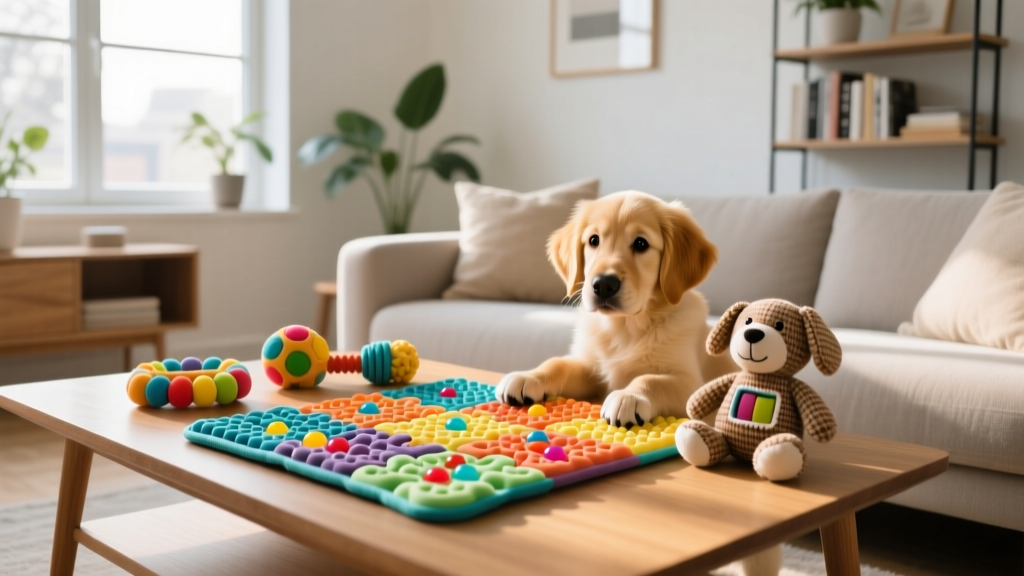
- Serving method: Use a lick mat (like the Hyper Pet IQ Mat or LickiMat Soother), stuff inside a Kong Classic (puppy size for 8–16 weeks, medium for 6+ months), or offer from a spoon for training rewards.
Age-Specific Milestones: What to Expect Week by Week
Every puppy develops on a predictable timeline. Knowing what's normal at each stage reduces anxiety and helps you intervene early if something seems off. Always consult your veterinarian if your puppy misses a developmental milestone by more than 1–2 weeks.
Weeks 4–8: The Weaning and Litter Period
During this window, puppies transition from mother's milk to solid food. By week 6, most puppies are eating gruel (kibble soaked in warm water or puppy milk replacer). By week 8, they should be fully weaned. This is also when puppies learn bite inhibition from littermates — a critical social skill. No peanut butter during this stage; their digestive systems are still developing, and their nutritional needs are best met with a complete-and-balanced puppy food bearing an AAFCO statement for growth.
Weeks 8–12: Homecoming and Bonding
This is when most puppies join their new families. Expect frequent naps (18–20 hours of sleep per day is normal), clumsy coordination, and intense curiosity. Puppies at this age have a bladder capacity of roughly 1 hour per month of age — so a 2-month-old puppy needs potty breaks every 2 hours, including overnight. You can introduce tiny amounts (¼ teaspoon) of puppy safe peanut butter as a Kong stuffing to encourage crate comfort.
Weeks 12–16: Rapid Growth and Learning
Your puppy is now absorbing information at a remarkable rate. This is the ideal window to establish name recognition, basic cues (sit, come, touch), and handling exercises (paw touching, ear inspection, mouth opening). Peanut butter becomes a high-value reward for these training sessions — a small dab on a spoon works well for luring positions.
Weeks 16–24: Adolescence Begins
Energy levels increase, attention spans fluctuate, and your puppy may "forget" previously learned cues. This is normal developmental regression, not a training failure. Maintain consistency. Peanut butter stuffed toys become essential for mental stimulation during this high-energy phase — freeze a peanut-butter-stuffed Kong for 2–4 hours to extend engagement time.
Months 6–12: Maturing Toward Adulthood
Your puppy approaches physical maturity. Large breeds like Labradors won't reach full adult size until 18–24 months, but they'll look mostly grown by 12 months. Transition from puppy food to adult food typically happens around 12 months for medium/large breeds (earlier for small breeds — around 9–10 months). Peanut butter portions can increase to 1 teaspoon daily as a treat or enrichment tool.
Vaccination Schedule: Protecting Your Puppy at Every Stage
Vaccinations follow a specific timeline based on maternal antibody decline. Puppies receive maternal antibodies through colostrum (first milk), which gradually wane between 6–16 weeks. Vaccines are given in a series to ensure immunity "catches" once maternal antibodies drop below protective levels. Your veterinarian will tailor this schedule to your puppy's risk profile and local disease prevalence.
| Age | Vaccine(s) | Notes |
|---|---|---|
| 6–8 weeks | DHPP (Distemper, Hepatitis/Adenovirus, Parainfluenza, Parvovirus) — 1st dose | Often given by breeder/rescue before pickup |
| 10–12 weeks | DHPP — 2nd dose; Bordetella (optional, recommended if attending group classes) | Maternal antibodies declining; immunity building |
| 14–16 weeks | DHPP — 3rd (final puppy) dose; Rabies (required by law in most US states) | Final puppy dose ensures protection after maternal antibodies fully wane |
| 12–16 months | DHPP booster; Rabies booster | Establishes long-term immunity; subsequent boosters every 1–3 years per local law |
Non-core vaccines your veterinarian may recommend based on lifestyle: Leptospirosis (if hiking or near standing water), Lyme disease (tick-endemic regions), and Canine Influenza (H3N2/H3N8 — if boarding or in outbreak areas). The American Veterinary Medical Association provides detailed vaccination guidelines that your vet will reference.
Cost range: Expect to pay $75–$150 per vaccine visit (typically 3–4 visits in the first year), totaling $225–$600 for the puppy vaccine series. Many clinics offer puppy wellness packages bundling these for $200–$400.
The Socialization Window: Weeks 3–14 (Don't Miss It)
The primary socialization period — when puppies are most receptive to new experiences without fear — closes around 12–14 weeks of age. This is arguably the most time-sensitive aspect of puppy raising. According to the Merck Veterinary Manual, puppies inadequately socialized during this window are significantly more likely to develop fear-based behavioral problems later in life.
Here's a structured exposure checklist. Aim for positive, brief encounters — never force your puppy into a situation that causes visible stress (cowering, tail tucking, freezing). Use puppy safe peanut butter on a lick mat during novel exposures to create positive associations.
Socialization Checklist (Weeks 8–14)
- Surfaces: Grass, gravel, tile, carpet, metal grates, wet pavement, stairs (carry small puppies up/down until 12 weeks to protect joints)
- Sounds: Vacuum cleaner, doorbell, thunderstorm recordings (play at low volume, pair with treats), traffic noise, children playing, fireworks recordings
- People: Men with beards, people wearing hats/sunglasses, children (supervised), people in wheelchairs, people carrying umbrellas, delivery workers
- Animals: Fully vaccinated, friendly adult dogs (avoid dog parks until vaccine series is complete), cats (if household has them), livestock if rural
- Handling: Paw touching, nail trimming practice, ear inspection, mouth opening, being held gently, wearing a harness, car rides
- Environments: Pet-friendly stores, outdoor café patios, parking lots, friends' homes, grooming tables, veterinary clinic (happy visits with treats only)
- Objects: Bicycles, skateboards, strollers, plastic bags blowing in wind, automatic doors
Critical note on outdoor exposure before full vaccination: The AVMA and the American Veterinary Society of Animal Behavior (AVSAB) recommend that puppies begin socialization outings before completing their full vaccine series, provided they avoid high-risk areas (dog parks, areas with unknown dog feces) and interact only with known, vaccinated dogs. The behavioral risk of under-socialization often outweighs the disease risk when managed carefully.
Potty Training Timeline: Realistic Expectations and Troubleshooting
Potty training is not a single event — it's a gradual process that typically takes 4–6 months for reliable results, with some puppies (especially small breeds with tiny bladders) taking up to 12 months for full reliability. Anyone promising a potty-trained puppy in 3 days is selling you frustration.
| Age | Bladder Capacity | Expected Accidents/Week | Outing Frequency |
|---|---|---|---|
| 8–10 weeks | ~2 hours max | 3–5 per week is normal | Every 1–2 hours + after meals/naps/play |
| 10–14 weeks | ~3 hours | 1–3 per week | Every 2–3 hours + key trigger times |
| 14–20 weeks | ~4 hours | 0–2 per week | Every 3–4 hours |
| 5–8 months | ~5–6 hours | 0–1 per week | Every 4–5 hours during day |
| 8–12 months | ~8 hours (adult capacity) | Rare (regression possible during adolescence) | 3–4 outings/day is typical |
Troubleshooting Common Potty Training Problems
Submissive/excitement urination: Common in puppies under 6 months. Don't punish — it's involuntary. Greet calmly, take puppy outside immediately upon arriving home, and avoid direct eye contact during greetings until the behavior diminishes.
Regression at 6–8 months: Adolescent hormones and increased independence can cause setbacks. Return to more frequent outings and higher-value rewards (peanut butter on a spoon works well as a "jackpot" reward for outdoor elimination).
Small breeds and cold weather: Chihuahuas, Yorkies, and other tiny breeds often refuse to eliminate outdoors in cold or wet weather. Consider an indoor potty area (real grass patch like Fresh Patch or DoggieLawn) as a backup, and use a puppy coat for outdoor trips.
Teething Timeline: Relief Strategies and Safe Chews
Puppies have 28 deciduous (baby) teeth that begin erupting around 3–4 weeks and are fully in by 6–8 weeks. These are replaced by 42 permanent teeth in a process that typically runs from 3–6 months of age. During this window, puppies chew relentlessly — not out of spite, but because their gums are genuinely uncomfortable.
Teething Phases
- 3–4 months: Incisors begin loosening. You may find tiny teeth on the floor or in toys (many puppies swallow them — this is harmless).
- 4–5 months: Canines and premolars shift. Bleeding gums are normal. Chewing intensity peaks.
- 5–6 months: Molars erupt. Most baby teeth should be gone by 6 months. If baby teeth persist alongside adult teeth (common in small breeds), your vet may need to extract them during spay/neuter surgery.
Safe Chew Recommendations by Age
- 8–16 weeks: Frozen washcloths (wet, twisted, frozen), rubber puppy teething rings (Kong Puppy, Nylabone Puppy), chilled carrot sticks. Avoid hard nylon or antlers — baby teeth can fracture.
- 4–6 months: Transition to medium-firm rubber toys (Kong Classic, West Paw Toppl). Frozen peanut butter stuffed inside a Kong provides both teething relief and enrichment — the cold numbs sore gums while the puppy safe peanut butter keeps them engaged for 15–30 minutes.
- 6+ months: Introduce longer-lasting chews like bully sticks (supervise to prevent choking on small pieces), yak cheese chews, or dental chews approved by the Veterinary Oral Health Council (VOHC). Never give cooked bones (they splinter) or rawhide from unknown sources.
Crate Training Progression: Building Comfort Step by Step
A crate is your puppy's den — a safe space for rest, not punishment. Done correctly, crate training supports potty training (dogs naturally avoid soiling their sleeping area), prevents destructive behavior when unsupervised, and reduces separation anxiety. The key is gradual progression with positive associations.
Time Limits by Age
A general guideline: puppies can hold their bladder for approximately their age in months plus one hour during the day. Overnight, they can typically hold slightly longer because they're sleeping. Never exceed these limits:
- 8–10 weeks: 1–2 hours maximum (set overnight alarms for potty breaks)
- 10–14 weeks: 2–3 hours maximum
- 14–16 weeks: 3–4 hours maximum
- 4–6 months: 4–5 hours maximum during the day
- 6+ months: Up to 6–8 hours overnight (not during the day — dogs need movement and stimulation)
Using Peanut Butter in Crate Training
Peanut butter is one of the most effective crate training tools available. Here's how to use it at each stage:
- Introduction (Day 1–3): Place a lick mat with a thin smear of puppy safe peanut butter at the back of the open crate. Let puppy enter voluntarily to lick. No door closing yet.
- Door practice (Day 4–7): Close the door while puppy is licking the mat. Open it before they finish. Gradually extend closed time by 30-second increments.
- Short absences (Week 2): Give a frozen peanut butter Kong, close the crate, and leave the room for 5–10 minutes. Return before the Kong is empty.
- Extended time (Week 3+): Build up to 30-minute absences during the day. The frozen Kong provides 20–30 minutes of engagement, bridging the gap until your puppy settles into sleep.
Common Puppy Problems and Solutions
Puppy Biting and Nipping
Mouthing is normal puppy behavior — they explore the world with their mouths, and teething intensifies the urge. However, it must be redirected, not punished. Here's a force-free approach:
- Redirect: When teeth touch skin, say "ouch" in a calm voice, withdraw attention for 10–15 seconds, then offer an appropriate chew toy. Reward chewing the toy with praise.
- Time-outs: If biting persists after 2–3 redirects, calmly place puppy in their crate or a playpen for 30–60 seconds to reset. This isn't punishment — it's a chance to calm down.
- Consistency: Every family member must follow the same protocol. Mixed messages (allowing mouthing sometimes but not others) extend the problem.
- Enrichment: Puppies bite more when bored or overtired. Ensure adequate physical exercise (5 minutes per month of age, twice daily — so 20 minutes for a 4-month-old) and mental stimulation (training sessions, food puzzles, sniffy walks).
Most puppies significantly reduce mouthing by 5–6 months as adult teeth come in and impulse control improves. If biting is hard enough to break skin consistently past 16 weeks, consult a certified professional dog trainer (CPDT-KA) or veterinary behaviorist.
Whining and Crying (Especially at Night)
Nighttime whining during the first 1–2 weeks home is normal — your puppy has been separated from their litter and mother. Place the crate near your bed initially so they can hear and smell you. A Snuggle Puppy (with heartbeat simulator) can ease the transition. If whining occurs after the puppy has been outside and settled, wait 5–10 minutes before responding to avoid reinforcing the behavior. If it persists, take them out (they may need to eliminate), then return to the crate without play or extended interaction.
Destructive Chewing
Puppies chew to explore, relieve teething discomfort, and burn energy. Management is the solution: puppy-proof your home (remove shoes, cords, and small objects from floor level), provide 5–7 rotating chew toys of varying textures, and use peanut butter-stuffed enrichment toys during times when chewing typically peaks (early morning, late afternoon, and after exercise).
First-Year Cost Breakdown: Budgeting for Your Puppy
New puppy owners frequently underestimate first-year costs. Here's a realistic breakdown for a medium-to-large breed puppy (Labrador-sized) in the United States as of 2026. Small breeds will be 20–30% less on food and medication; giant breeds will be 20–30% more.
| Category | Low Estimate | Mid-Range | High Estimate | Notes |
|---|---|---|---|---|
| Puppy purchase/adoption | $200 (rescue) | $1,500 (responsible breeder) | $3,500+ (show/preserve lines) | Reputable breeders health-test parents; avoid puppy mills |
| Veterinary (vaccines, exams) | $400 | $700 | $1,200 | Includes spay/neuter ($200–$600 depending on size/clinic) |
| Food (puppy formula) | $300 | $500 | $800 | AAFCO-certified puppy food; premium brands cost more |
| Treats (incl. peanut butter) | $50 | $100 | $180 | Peanut butter, training treats, dental chews |
| Supplies (crate, bed, leash, etc.) | $150 | $300 | $500 | One-time purchases; crate, harness, bowls, toys, grooming tools |
| Preventive medications | $200 | $400 | $600 | Heartworm, flea/tick prevention — year-round in most US regions |
| Training (group classes) | $100 | $250 | $600 | Puppy kindergarten ($100–$200 for 6 weeks); private sessions cost more |
| Pet insurance (optional) | $300 | $500 | $800 | $25–$65/month; enroll early before pre-existing conditions develop |
| Emergency fund buffer | $0 | $300 | $1,500+ | Puppies eat things they shouldn't; GI obstruction surgery can cost $3,000–$7,000 |
| Total | $1,700 | $4,550 | $9,680+ |
Budget tip: Pet insurance enrolled at 8–10 weeks (before any conditions are documented) typically costs $30–$50/month for comprehensive coverage with a $250–$500 deductible. Over the dog's lifetime, this often pays for itself — a single emergency visit for a swallowed object can exceed $5,000.
Frequently Asked Questions
When should I bring my puppy home?
The ideal age to bring a puppy home is 8–10 weeks. Puppies should remain with their mother and littermates until at least 8 weeks for proper social development. Some breeders of smaller or more sensitive breeds (like German Shepherds or toy breeds) prefer to keep puppies until 10–12 weeks. Avoid any breeder offering puppies younger than 7 weeks — this is a red flag for irresponsible practices and can lead to behavioral issues.
How often should I feed my puppy at each age?
Feed 4 meals per day from 8–12 weeks, 3 meals per day from 12–16 weeks through 6 months, and 2 meals per day from 6 months onward. Consistent meal timing (same hours each day) supports digestive regularity and makes potty training more predictable. Free-feeding (leaving food out all day) is not recommended for most puppies — it makes monitoring appetite (an early illness indicator) difficult and can contribute to rapid growth in large breeds.
When will my puppy be fully potty trained?
Most puppies achieve reliable house training between 4–6 months of age, meaning fewer than one accident per month. Full reliability (zero accidents for 3+ consecutive months) often takes until 8–12 months. Small breeds may take longer due to smaller bladder capacity. Consistency in schedule, high-value rewards for outdoor elimination, and thorough cleaning of indoor accidents with enzymatic cleaners (like Nature's Miracle) are the three most important factors.
What vaccines does my puppy need and when?
Core vaccines include DHPP (given at 6–8, 10–12, and 14–16 weeks) and Rabies (given at 14–16 weeks, required by law). Non-core vaccines like Bordetella, Leptospirosis, and Lyme are recommended based on your puppy's lifestyle and local disease prevalence. Your veterinarian will design a protocol specific to your puppy — always follow their guidance rather than online schedules, as regional disease risk varies significantly.
How do I stop puppy biting and nipping?
Use a consistent redirect protocol: when teeth touch skin, say "ouch" calmly, withdraw attention for 10–15 seconds, then offer an appropriate chew toy. Ensure your puppy gets adequate exercise (5 minutes per month of age, twice daily) and mental enrichment. Frozen peanut butter Kongs and teething toys satisfy the chewing urge productively. Never use physical punishment, alpha rolls, or shock collars — these damage trust and can escalate aggression. Most puppies outgrow intense mouthing by 5–6 months.
When can my puppy go outside and meet other dogs?
Your puppy can begin controlled outdoor socialization immediately after coming home (typically 8 weeks), but with important precautions: carry them in public areas, allow interaction only with known, fully vaccinated dogs, and avoid dog parks, pet store floors, and areas with unknown dog traffic until the DHPP series is complete (usually around 16–18 weeks). Your backyard is safe if no unknown dogs have access. Puppy kindergarten classes (which require proof of at least one DHPP dose and a negative fecal test) are generally considered safe and are strongly recommended during the socialization window.
Beth Carrasco
All our authors care for dogs every day — read more of their work on the authors page.