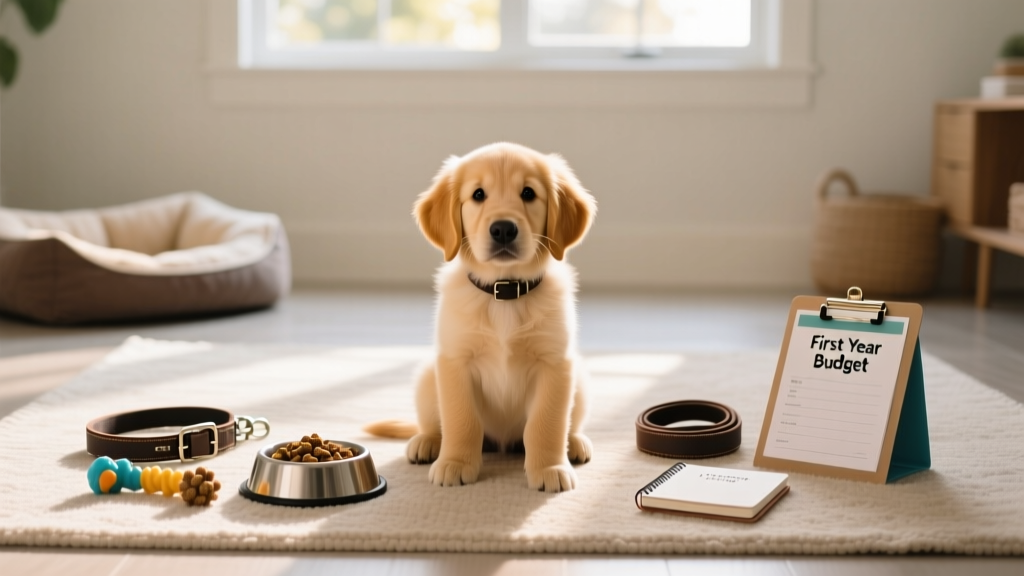
Puppy Rabies Vaccine Guide
Complete guide to the puppy rabies vaccine schedule, age milestones, feeding, potty training, socialization, and first-year costs for new puppy owners.

Why the Puppy Rabies Vaccine Anchors Your First-Year Plan
Every new puppy owner faces a whirlwind of decisions in those first months — what to feed, when to socialize, how to stop the biting. But one milestone quietly governs much of your puppy's first-year timeline: the rabies vaccine. Understanding when and why your puppy receives their rabies vaccination helps you map out everything from safe outdoor exploration to dog park visits and boarding requirements.
The rabies vaccine is a core vaccine mandated by law in virtually every U.S. state. According to the American Veterinary Medical Association (AVMA), rabies remains a fatal zoonotic disease — meaning it can transmit from animals to humans — making vaccination both a legal and public health imperative. Most jurisdictions require the first rabies vaccine between 12 and 16 weeks of age, with a booster one year later.
This guide walks you through every critical puppy milestone from weeks 4 through 12 months, with the rabies vaccine timeline woven into each stage. Whether you're bringing home a Labrador Retriever, a French Bulldog, or a mixed-breed rescue, these frameworks apply — though we'll note breed-specific variations where they matter.
When Should I Bring My Puppy Home?
The ideal age to bring a puppy home is 8 weeks. The American Kennel Club (AKC) and most veterinary behaviorists agree that puppies benefit from staying with their mother and littermates through at least 7 to 8 weeks. During this period, they learn bite inhibition, social cues, and basic canine communication skills that are nearly impossible to replicate in a human household.
Some breeders of smaller breeds — particularly toy breeds like Chihuahuas, Yorkshire Terriers, and Pomeranians — may keep puppies until 10 to 12 weeks due to their fragility and slower physical development. Conversely, rescue organizations may place puppies as early as 6 weeks if the litter has been orphaned or the environment is unsafe.
Bringing your puppy home at 8 weeks positions you perfectly within the critical socialization window (weeks 3 through approximately 14), giving you roughly 6 weeks of prime developmental time to expose your puppy to new experiences safely.
Age-Specific Milestone Timeline: Weeks 4 Through 12 Months
Weeks 4–8 (Still with Breeder or Foster)
- Weight gain: Puppies typically double their birth weight by week 5 and triple it by week 8. A Labrador puppy born at 1 lb (0.45 kg) should weigh approximately 8–10 lb (3.6–4.5 kg) by week 8.
- Sensory development: Eyes and ears fully functional by week 4. Startle responses to loud sounds emerge.
- Social skills: Littermate play teaches bite inhibition. Puppies separated before week 7 often show higher rates of fear-based aggression and resource guarding later in life.
- First deworming: Typically administered at weeks 2, 4, 6, and 8 by the breeder or rescue.
Weeks 8–12 (Home Transition & First Vet Visit)
- First veterinary exam: Schedule within 48–72 hours of bringing your puppy home. Expect a full physical, fecal parasite test ($45–$75), and first DHPP (distemper, hepatitis, parainfluenza, parvovirus) vaccine if not already given.
- Sleep needs: 18–20 hours per day. Puppies this age cannot stay awake for more than 1–2 hours between naps.
- Bladder capacity: Approximately 1 hour per month of age — so a 2-month-old puppy can hold it for roughly 2 hours maximum.
- Exploration style: Everything goes in the mouth. This is normal developmental behavior, not misbehavior.
Weeks 12–16 (Vaccination Core Period & Rabies Vaccine Window)
- Rabies vaccine eligibility: Most states permit the first rabies vaccine at 12 weeks; many veterinarians recommend waiting until 14–16 weeks to reduce the chance of vaccine reaction overlap with DHPP boosters.
- DHPP booster: Third round typically given at 14–16 weeks.
- Fear imprint periods: Weeks 8–11 and again around week 16 are recognized fear periods. Traumatic experiences during these windows can create lasting phobias. Keep vet visits positive with high-value treats (boiled chicken, freeze-dried liver).
- Teething begins: Deciduous (baby) teeth start loosening around week 12, with adult incisors emerging by week 16.
Weeks 16–24 (Adolescence Approaching)
- Full vaccination status: After the final DHPP booster at 14–16 weeks and the rabies vaccine, your puppy is considered fully vaccinated. This is when safe, unrestricted outdoor exploration begins.
- Spay/neuter window: Many veterinarians recommend gonadectomy between 16 and 24 weeks for small to medium breeds. Large and giant breeds (Great Danes, German Shepherds, Golden Retrievers) may benefit from delayed spay/neuter at 12–18 months to allow proper joint development — consult your veterinarian for breed-specific timing.
- Energy surge: Expect increased independence, selective hearing, and testing of boundaries. This is normal adolescent behavior, not regression.
Months 6–12 (Adolescent Consolidation)
- Adult teeth: All 42 adult teeth should be in by month 7. Retained baby teeth (common in small breeds like Pomeranians and Shih Tzus) may require veterinary extraction.
- Growth plateau: Small breeds reach adult size by 9–12 months; large breeds continue growing until 18–24 months.
- Rabies booster scheduling: The first rabies booster is due one year after the initial vaccine. Mark your calendar now.
- Training maturity: Impulse control improves significantly after month 9 with consistent positive reinforcement training.
Puppy Vaccination Schedule: DHPP, Rabies, and Optional Vaccines
The vaccination timeline below reflects the current guidelines from the AVMA and the American Animal Hospital Association (AAHA) canine vaccination guidelines. Your veterinarian may adjust based on regional disease prevalence and your puppy's individual risk factors.
| Age | Vaccine | Type | Estimated Cost |
|---|---|---|---|
| 6–8 weeks | DHPP (1st dose) | Core | $25–$45 |
| 8–10 weeks | Bordetella (optional, recommended for boarding/daycare) | Non-core | $20–$40 |
| 10–12 weeks | DHPP (2nd dose) | Core | $25–$45 |
| 12–14 weeks | Leptospirosis, Lyme (risk-dependent) | Non-core | $25–$50 each |
| 14–16 weeks | DHPP (3rd dose) + Rabies vaccine (1st dose) | Core | $30–$60 (DHPP) + $20–$40 (rabies) |
| 12 months | DHPP booster + Rabies booster (1-year) | Core | $50–$90 combined |
When Can My Puppy Go Outside and Meet Other Dogs?
This is the question that creates the most tension for new owners. The socialization window closes around 14 weeks, but full vaccination isn't complete until 16 weeks. Here's the evidence-based approach:
- Weeks 8–12: Carry your puppy in public spaces (parks, outdoor cafés, pet-friendly stores) to expose them to sights and sounds. Avoid areas with unknown dog feces or heavy dog traffic.
- Weeks 8–14: Arrange playdates with fully vaccinated, healthy dogs whose vaccination status you can verify. Puppy kindergarten classes that require proof of at least one DHPP dose and a clean fecal test are generally considered safe by veterinary behaviorists.
- After week 16 (full vaccination): Dog parks, hiking trails, and unrestricted outdoor play become safe. However, dog parks carry behavioral risks (poorly socialized dogs, overwhelming environments) — introduce gradually.
Feeding Schedule: Portions by Age and Weight
Feeding frequency decreases as your puppy matures, while portion sizes increase. The table below provides general guidelines based on expected adult weight. Always check the feeding chart on your specific food brand — caloric density varies significantly between formulas (puppy kibble ranges from 350 to 500 kcal/cup depending on the brand and formulation).
| Puppy Age | Meals/Day | Small Breed (10–25 lb adult) | Medium Breed (26–60 lb adult) | Large Breed (61–100+ lb adult) |
|---|---|---|---|---|
| 8–12 weeks | 4 meals | ¼–½ cup per meal | ½–¾ cup per meal | ¾–1¼ cups per meal |
| 12–16 weeks | 3 meals | ⅓–⅔ cup per meal | ¾–1 cup per meal | 1–1¾ cups per meal |
| 4–6 months | 3 meals | ½–¾ cup per meal | 1–1½ cups per meal | 1½–2½ cups per meal |
| 6–12 months | 2 meals | ½–1 cup per meal | 1½–2 cups per meal | 2–3½ cups per meal |
Critical note for large-breed puppies: Use a food specifically labeled for large-breed growth (AAFCO statement: "This food is formulated for growth of large-size dogs, 70 lb or more as an adult"). These formulas maintain a calcium-to-phosphorus ratio between 1.1:1 and 1.4:1, which reduces the risk of developmental orthopedic diseases like hip dysplasia and osteochondrosis. Never supplement a complete-and-balanced large-breed puppy food with calcium — excess calcium is more dangerous than deficiency.
Potty Training Timeline: Realistic Expectations and Troubleshooting
Forget "potty trained in 3 days" promises. Bladder control develops physiologically over months, not days. Here's what the timeline actually looks like:
- 8–10 weeks: Accidents every 1–2 hours if not taken out. Your job is management — take puppy out after every nap, meal, play session, and crate release. Expect 1–3 accidents per day even with good management.
- 10–14 weeks: Puppy begins to show pre-elimination signals (circling, sniffing, moving toward the door). Accidents drop to 2–4 per week with consistent schedule.
- 14–20 weeks: Most puppies can hold it for 3–4 hours during the day. Nighttime bladder control improves — many puppies sleep 6–7 hours without a potty break by 16 weeks.
- 4–6 months: Reliable indoors with a consistent schedule, but still needs reminders. "Self-training" does not exist at this age.
- 6–9 months: Functionally house-trained for most breeds. Small breeds (under 15 lb / 6.8 kg) may take longer due to smaller bladder capacity and higher metabolic rates.
- Time taken outside: ___
- Eliminated? (Y/N) ___
- Type (urination/defecation/both) ___
- Reward given? ___
- Accident? Time: ___ Location: ___ What happened before: ___
Tracking patterns reveals your puppy's natural rhythm. Most puppies defecate within 15–30 minutes after eating and urinate within 10–15 minutes after drinking.
Troubleshooting Common Potty Problems
Submissive urination (common in weeks 8–20): Puppy leaks when greeted, scolded, or excited. This is involuntary — not a training failure. Solution: greet calmly at puppy's level, avoid direct eye contact during greetings, take outside immediately after arriving home.
Regression at 6–9 months: Adolescent hormones and increased territory-marking behavior can cause previously reliable puppies to have accidents. Reinforce the schedule, increase outdoor potty frequency, and rule out urinary tract infections with your veterinarian if accidents are sudden and frequent.
Crate soiling: If your puppy soils the crate, the crate may be too large (use a divider to limit space to standing + turning room), the puppy was left too long, or the puppy has a medical issue. Never use the crate as punishment.
The Socialization Window: Weeks 3–14 Exposure Checklist
The American Veterinary Society of Animal Behavior (AVSAB) states that the primary socialization period for puppies begins at approximately 3 weeks and extends to 12–14 weeks. During this window, puppies form lasting impressions about what is safe and what is threatening. Inadequate socialization during this period is the leading behavioral reason dogs are surrendered to shelters.
Below is a structured exposure checklist. Aim for positive, brief exposures — 2 to 5 minutes each — not overwhelming marathons. Pair every new experience with treats and praise.
Teething Timeline: Months 3–6 Relief Strategies
Puppy teething is one of the most physically uncomfortable developmental stages, and it drives much of the destructive chewing behavior that frustrates owners. Understanding the timeline helps you prepare.
- Weeks 3–6: 28 deciduous (baby) teeth erupt.
- Weeks 12–16: Baby incisors loosen and fall out. You may find tiny teeth on the floor or notice your puppy swallowing them (harmless).
- Months 4–5: Adult premolars and canines erupt. This is peak chewing intensity. Gums are inflamed, sore, and itchy.
- Months 5–7: All 42 adult teeth should be fully erupted. By month 7, any retained baby teeth should be evaluated by your veterinarian for extraction.
Safe Chew Recommendations
- Kong Classic (red rubber, sizes XS–L depending on breed): Stuff with plain pumpkin purée mixed with kibble and freeze for 2–4 hours. The cold provides gum relief while the frozen filling extends engagement to 15–30 minutes.
- Benebone Wishbone (nylon, bacon-flavored): Durable for aggressive chewers; the wishbone shape allows paw-grip. Replace when wear grooves exceed ¼ inch deep.
- Frozen carrots (large, whole): A cheap, edible option. Supervise to prevent choking on large pieces. Best for puppies 12 weeks and older.
- Wet washcloth (frozen): Soak a clean washcloth in water, twist into a rope, freeze, and offer under supervision. Discard if fabric begins to shred.
Crate Training Progression: Time Limits by Age
A crate is one of the most effective tools for potty training, safety, and creating a secure den for your puppy — but only when used correctly. Maximum crate time is dictated by bladder capacity and developmental needs.
| Puppy Age | Max Crate Time (Daytime) | Max Crate Time (Nighttime) | Notes |
|---|---|---|---|
| 8–10 weeks | 30–60 minutes | 2–3 hours (set alarm) | Crate beside your bed; expect nighttime whining |
| 10–14 weeks | 1–2 hours | 3–4 hours | Begin moving crate to permanent location |
| 14–16 weeks | 2–3 hours | 5–6 hours | Most puppies sleep through the night by now |
| 4–6 months | 3–4 hours | 7–8 hours | Introduce exercise pen for longer daytime absences |
Crate training progression steps:
- Days 1–3: Leave crate door open, toss high-value treats inside, feed meals near and then inside the crate. No closing.
- Days 4–7: Close door for 1–5 minutes while you remain in sight. Open before puppy fusses.
- Week 2: Close door, step out of sight for 1–5 minutes. Return and reward quiet behavior.
- Weeks 3–4: Extend absences to 15–30 minutes. Begin using a departure cue ("I'll be back") consistently.
- Month 2+: Gradually increase to age-appropriate maximums. Never use the crate as punishment.
Common Puppy Problems: Breed-Stage Specific Solutions
Puppy Biting and Nipping
Mouthing is normal puppy behavior — puppies explore the world with their mouths and are still learning bite inhibition. However, it must be managed proactively.
What works (positive reinforcement):
- Redirect: When puppy mouths your hand, immediately offer an appropriate chew toy. Reward chewing the toy with verbal praise.
- Reverse time-out: If biting continues after redirect, stand up, cross your arms, and turn away for 10–15 seconds. This removes the social attention the puppy is seeking. Return and re-engage calmly.
- Satisfy the need: Puppies bite more when overtired, overstimulated, or under-exercised. Ensure adequate nap time (puppies need enforced naps in the crate every 1–2 hours) and appropriate physical and mental exercise.
What doesn't work (and can cause harm):
- Holding the mouth shut, tapping the nose, or alpha rolls — these increase fear and can trigger defensive aggression
- Biting back or yelping loudly (yelping works for some puppies but escalates arousal in others)
- Punishment after the fact — dogs cannot connect punishment to a behavior that occurred even seconds ago
Nighttime Whining in the Crate
Distinguish between two types of whining: I need to potty (take out immediately, keep it boring, return to crate) versus I want attention (wait for 3–5 seconds of silence, then reward with calm verbal praise through the crate). If you respond to attention-seeking whining, you reinforce it. If you ignore potty whining, you create crate-soiling and anxiety.
Destructive Chewing
Puppies chew for three reasons: teething discomfort, boredom, and anxiety. Management is the solution — puppy-proof your home by removing accessible items (shoes, cords, remote controls), provide 5–7 approved chew options rotated every 2–3 days to maintain novelty, and ensure 30–60 minutes of structured exercise and 15–20 minutes of mental enrichment (food puzzles, snuffle mats, training sessions) daily.
First-Year Cost Breakdown: Budgeting for Your Puppy
New puppy owners consistently underestimate first-year costs. Below is a realistic breakdown based on 2026 veterinary pricing data across U.S. markets. Costs vary significantly by region — urban areas (New York, San Francisco, Seattle) trend 30–50% higher than rural areas.
| Category | Low Estimate | Medium Estimate | High Estimate |
|---|---|---|---|
| Veterinary (exams, vaccines, fecal tests, heartworm test) | $400 | $650 | $1,100 |
| Spay/neuter | $200 (low-cost clinic) | $450 | $800+ (large breed, specialty) |
| Food (puppy formula, 12 months) | $250 | $500 | $900+ |
| Preventive medications (heartworm, flea/tick — 12 months) | $150 | $300 | $500 |
| Supplies (crate, bed, leash, harness, bowls, gates, toys, chews) | $200 | $400 | $700 |
| Training (group classes, 2–3 sessions of 6 weeks each) | $150 | $350 | $800+ (private sessions) |
| Microchip + registration | $25 | $50 | $75 |
| Pet insurance (annual premium, optional) | $300 | $550 | $900 |
| TOTAL FIRST YEAR | $1,675 | $3,250 | $5,775+ |
This does not include the puppy purchase or adoption fee ($0–$3,500+ depending on source and breed), emergency veterinary care ($500–$5,000+ per incident), or grooming for breeds that require professional grooming every 6–8 weeks ($50–$120 per session for breeds like Poodles, Shih Tzus, and Doodles).
Frequently Asked Questions
Is the puppy rabies vaccine required by law?
Yes, in nearly every U.S. state and municipality. Rabies vaccination is legally mandated because rabies is a fatal zoonotic disease. Requirements vary by jurisdiction — some areas require annual boosters while others accept 3-year vaccines after the initial 1-year booster. Check your local animal control regulations for specific requirements. Failure to vaccinate can result in fines and, if your unvaccinated dog bites someone, mandatory quarantine or euthanasia for testing.
Can my puppy have a reaction to the rabies vaccine?
Vaccine reactions occur in a small percentage of dogs. Mild reactions (lethargy, mild fever, soreness at injection site) typically resolve within 24–48 hours. Severe reactions — facial swelling, hives, vomiting, difficulty breathing — are rare but require immediate veterinary attention. Small-breed dogs (under 20 lb / 9 kg) have a slightly higher rate of vaccine reactions. Your veterinarian may recommend splitting vaccine administration (DHPP and rabies given 2–3 weeks apart) for small breeds to reduce risk. Always monitor your puppy at the clinic for 15–20 minutes after vaccination.
How often should I feed my 10-week-old puppy?
At 10 weeks, feed 4 meals per day spaced approximately 4 hours apart during waking hours. A typical schedule: 7:00 AM, 11:00 AM, 3:00 PM, and 7:00 PM. Remove uneaten food after 15–20 minutes to establish a routine and prevent free-feeding, which makes potty training harder (predictable input = predictable output).
When will my puppy be fully potty trained?
Most puppies are functionally house-trained by 6 months with consistent management. Full reliability — including overnight control and no accidents when routine is disrupted — typically develops between 9 and 12 months. Small breeds may take 2–3 months longer due to smaller bladder capacity. If your puppy is having frequent accidents despite consistent scheduling, consult your veterinarian to rule out urinary tract infections, diabetes, or other medical causes.
How do I stop puppy biting and nipping?
Use a redirect-and-withdraw strategy: when your puppy mouths your skin, immediately offer an appropriate chew toy and praise chewing the toy. If biting continues, stand up and withdraw attention for 10–15 seconds (reverse time-out). Ensure your puppy is getting adequate sleep (18–20 hours/day at 8–12 weeks), sufficient physical exercise, and mental enrichment. Never use physical punishment — it damages trust and can escalate to fear-based aggression. Biting typically decreases significantly by 5–6 months as adult teeth come in and impulse control develops.
When can my puppy go to the dog park?
After completing the full vaccination series (final DHPP at 14–16 weeks plus rabies vaccine), typically around 16–17 weeks of age. However, dog parks carry behavioral risks. Before visiting, ensure your puppy has had positive play experiences with known, vaccinated dogs. Start with off-peak hours when fewer dogs are present, keep initial visits to 15–20 minutes, and leave immediately if your puppy shows fear (tucked tail, cowering, hiding behind you) or if other dogs are playing too roughly.
Dr. Hannah Wickes
All our authors care for dogs every day — read more of their work on the authors page.