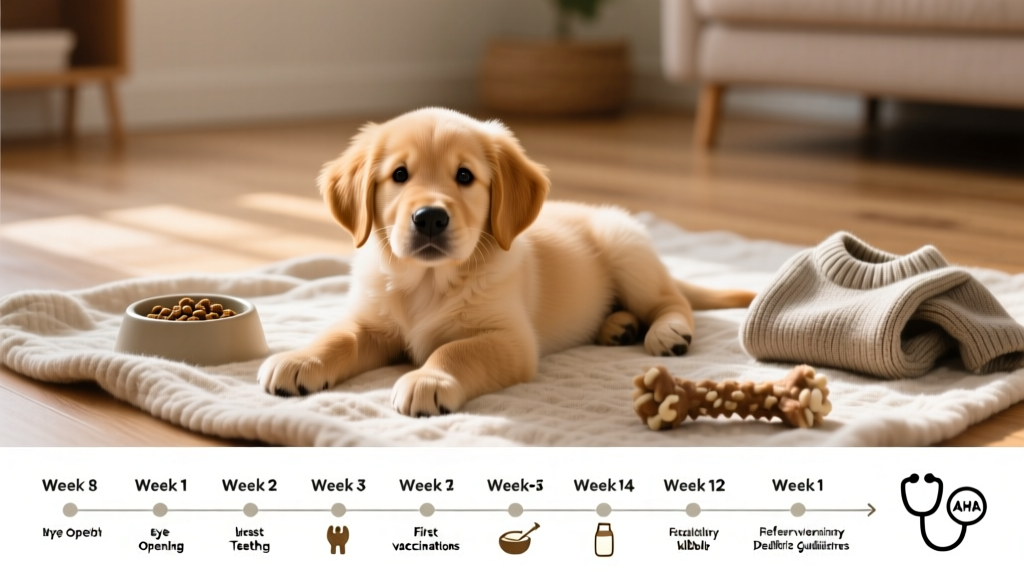
Puppy Pyometra Risk & Prevention: Intact Female Puppy Care Guide
Everything you need to know about puppy pyometra risk, intact female puppy care milestones, feeding, vaccination, potty training, and first-year costs.

Understanding Pyometra Risk in Young Intact Female Puppies
If you've chosen to keep your female puppy intact — whether for future breeding plans, personal preference, or your veterinarian's recommendation around early spay risks in certain breeds — understanding pyometra is one of the most important things you can do for her long-term health. Pyometra is a life-threatening uterine infection that primarily affects unspayed female dogs, and while it's most common in dogs over 6 years old, the hormonal groundwork begins with her very first heat cycle.
According to the Merck Veterinary Manual, pyometra occurs in approximately 23-24% of intact female dogs before age 10. While true pyometra in puppies under 6 months is extraordinarily rare, juvenile pyometra has been documented in dogs as young as 4 months following their first estrus cycle — particularly in early-maturing small breeds like Chihuahuas, Yorkshire Terriers, and Pomeranians.
This guide covers everything you need to raise a healthy intact female puppy from 8 weeks through her first year, with specific attention to reproductive health monitoring, heat cycle recognition, and pyometra warning signs. Always consult your veterinarian for personalized guidance on your dog's reproductive health and spay timing.
Age-Specific Milestones: Weeks 4 Through 12 Months
Raising an intact female puppy follows the same developmental arc as any puppy, with additional reproductive milestones to track. Here's what to expect at each stage.
Weeks 4–8: Neonatal to Transitional (Still With Breeder)
Weight: Breed-dependent, typically 1–5 lb / 0.5–2.3 kg
Key developments: Eyes and ears fully open, deciduous teeth erupting, first socialization with littermates, introduction to solid food (gruel/kibble soaked in warm water).
Reproductive note: External vulva is small and unremarkable. No hormonal activity. Responsible breeders will begin documenting individual puppy weights daily.
Weeks 8–12: Home Transition & Bonding
Weight: Gaining 5–10% body weight weekly; exact range breed-dependent
Key developments: Primary socialization window opens, first DHPP vaccine, crate training begins, name recognition, bite inhibition learning from human family.
Reproductive note: Begin a reproductive health journal. Photograph her vulva monthly for baseline comparison — this helps identify abnormal swelling during future heat cycles.
Weeks 12–16: Rapid Growth & Second Vaccines
Weight: Approximately 30–40% of projected adult weight
Key developments: Second DHPP booster, expanded socialization outings (carried or in stroller before full vaccination), basic cue training (sit, down, recall), potty training solidifying.
Reproductive note: Some early-maturing small breeds may show subtle vulvar changes as early as 4 months. Monitor for any discharge — clear/mucoid is normal; pus-like or bloody in a pre-pubertal puppy requires a vet visit.
Weeks 16–24: Adolescence & Possible First Heat
Weight: 50–75% of projected adult weight
Key developments: Final puppy vaccines completed, rabies vaccination, spay/neuter decision window (if not keeping intact), teething phase, increased independence, testing boundaries.
Reproductive note: This is the critical pyometra-awareness window for intact females. Small breeds (under 20 lb / 9 kg) can experience their first estrus cycle as early as 4–6 months. Signs include vulvar swelling, bloody vaginal discharge, increased urination, and male dog interest. Mark the start date — pyometra risk peaks 4–8 weeks after heat ends.
Months 6–12: Sexual Maturity & First Post-Heat Monitoring
Weight: Approaching adult weight; growth plates closing (larger breeds continue to 18–24 months)
Key developments: Full adult vaccination series complete, adult food transition (breed-size appropriate), advanced training, social maturity beginning.
Reproductive note: If she has had her first heat, you are now in active pyometra monitoring mode for 8 weeks post-heat. Track appetite, water intake, energy level, and any vaginal discharge. Large/giant breeds may not cycle until 12–24 months.
Feeding Schedule: Exact Portions by Age and Weight
Intact female puppies have the same nutritional requirements as any growing puppy — AAFCO-compliant growth or all-life-stages food is essential. The table below provides general guidelines; your specific food's caloric density (kcal/cup) and your puppy's body condition score (BCS) should drive final portions. Aim for a BCS of 4–5/9 throughout growth.
| Age | Meals/Day | Small Breed (10–25 lb adult) | Medium Breed (25–55 lb adult) | Large Breed (55–90 lb adult) |
|---|---|---|---|---|
| 8–12 weeks | 4 | ¼–½ cup/meal | ½–¾ cup/meal | ¾–1¼ cup/meal |
| 12–16 weeks | 3 | ⅓–⅔ cup/meal | ¾–1 cup/meal | 1–1¾ cup/meal |
| 4–6 months | 3 | ½–¾ cup/meal | 1–1½ cup/meal | 1½–2½ cup/meal |
| 6–9 months | 2 | ¾–1 cup/meal | 1½–2 cup/meal | 2½–3½ cup/meal |
| 9–12 months | 2 | Transition to adult food | Transition to adult food | Continue puppy/large breed growth formula |
During heat cycles (if first estrus occurs in the first year): Appetite may fluctuate. Some intact females eat 10–15% less during proestrus (bloody discharge phase) and rebound during diestrus. Don't force-feed, but monitor weight weekly. Ensure constant access to fresh water — increased thirst during heat is normal, but excessive drinking (polydipsia) after heat ends is a pyometra red flag.
Potty Training Timeline: Realistic Expectations for Intact Females
Female puppies often potty train slightly faster than males — typically achieving reliable house training between 4–6 months. However, intact females present a unique challenge: heat cycle marking behavior. Even a fully house-trained young dog may begin leaving small urine spots indoors during estrus to signal reproductive availability to males.
| Age | Bladder Capacity | Outing Frequency | What to Expect |
|---|---|---|---|
| 8–10 weeks | ~20 minutes | Every 30–60 min + after meals/naps | Frequent accidents normal; supervise 100% of the time |
| 10–14 weeks | ~45 minutes | Every 60–90 min | Beginning to signal (sniffing, circling); reward heavily |
| 3–4 months | ~1–2 hours | Every 2 hours + overnight 1x | Accidents decrease; crate aids bladder control |
| 4–6 months | ~3–4 hours | Every 3–4 hours | Reliable with routine; possible regression during first heat |
| 6–12 months | ~5–8 hours | Every 4–6 hours | Fully trained; monitor for heat-related marking |
Troubleshooting heat-related regression: If your previously house-trained puppy begins urinating indoors during or after a heat cycle, don't punish — this is hormonally driven. Increase outing frequency to every 2 hours during the 2–3 week heat period, use enzymatic cleaner (Nature's Miracle or Rocco & Roxie) on any indoor spots, and consider a belly band or dog diaper indoors. If indoor urination persists more than 2 weeks after heat ends, or if urine is foul-smelling or contains pus, see your vet — this could signal a urinary tract infection or early pyometra.
Vaccination Schedule & When Your Puppy Can Go Outside
Your intact female puppy follows the same core vaccination schedule as any puppy. The American Veterinary Medical Association (AVMA) recommends the following core vaccine timeline, with adjustments based on local disease prevalence and your vet's assessment.
| Age | Vaccine | Protection Against | Outdoor Access |
|---|---|---|---|
| 6–8 weeks | DHPP (1st) | Distemper, Hepatitis (Adenovirus), Parainfluenza, Parvovirus | Carry only; no public ground contact |
| 10–12 weeks | DHPP (2nd) + Bordetella (optional) | Boosted core immunity + kennel cough | Low-risk areas only (private yards, vaccinated friends' homes) |
| 14–16 weeks | DHPP (3rd) + Rabies | Full core immunity + rabies (legally required) | Full outdoor access 1 week after final DHPP |
| 12–16 months | DHPP booster + Rabies booster | Long-term immunity | Full access |
When can your puppy meet other dogs? Socialization with known, fully vaccinated dogs can begin after the first DHPP at 6–8 weeks. Avoid dog parks, pet stores, and public trails until 1 week after the final 14–16 week DHPP. For intact females, this timing is doubly important: parvovirus is devastating at any age, and you also want to prevent accidental exposure to intact males once she matures.
Leptospirosis note: If you live in an area with wildlife exposure or standing water, ask your vet about the Leptospirosis vaccine (given at 12+ weeks, 2-dose series). Lepto is zoonotic (transmissible to humans) and can cause severe kidney/liver damage.
Socialization Window (Weeks 3–14): The Critical Exposure Checklist
The AKC identifies weeks 3–14 as the primary socialization period — a finite window when puppies form lasting impressions about what is safe and normal. Missing this window can result in lifelong fear responses. For intact females, socialization is especially important because heat cycles can make dogs more anxious and reactive; a well-socialized dog handles hormonal stress better.
✅ Socialization Exposure Checklist
People (minimum 10 different types): Children, elderly, people in hats/sunglasses, uniforms, wheelchairs, tall/short, different ethnicities, people carrying bags/umbrellas
Surfaces: Grass, gravel, metal grates, wet pavement, sand, carpet, tile, stairs, wobble boards
Sounds: Vacuum, thunder (play recordings at low volume), fireworks, doorbells, car horns, clippers, hair dryers, children screaming
Handling: Paw touching, ear inspection, mouth opening, tail handling, belly rubbing, nail clipping practice, being held/restrained gently
Environments: Car rides, vet clinic (happy visits only), pet-friendly stores, outdoor seating areas, friends' houses, elevators
Animals: Fully vaccinated adult dogs (calm, puppy-tolerant), cats (if applicable), livestock (if rural)
Intact-female specific: Practice wearing a dog diaper/belly band briefly so it's not novel during her first heat. Handle her rear end and tail area frequently so hygiene care during heat cycles is stress-free.
Aim for 5–10 new positive exposures per day during the socialization window. Pair every novel experience with high-value treats (freeze-dried liver, small cheese pieces). If she shows fear, don't force — retreat to a comfortable distance and let her observe, rewarding calm behavior.
Teething Timeline (3–6 Months) & Crate Training Progression
Puppy teething follows a predictable schedule regardless of sex, but intact females who experience early heat (4–6 months) may have overlapping discomfort from teething and hormonal changes, making them extra mouthy and irritable.
Teething milestones:
- 3–4 weeks: Deciduous (baby) incisors erupt
- 4–6 weeks: Deciduous canines and premolars erupt (28 baby teeth total)
- 12–16 weeks: Baby incisors begin falling out; adult incisors emerge
- 4–5 months: Adult canines and premolars erupt; peak chewing phase
- 5–6 months: Adult molars emerge; all 42 adult teeth should be in by 7 months
Safe chew recommendations by age:
- 8–16 weeks: Frozen wet washcloths (twisted and soaked in low-sodium chicken broth), Kong Puppy (rubber, size-appropriate), Nylabone Puppy Chew (soft formula)
- 4–6 months: Kong Classic (red, medium), Benebone Wishbone (size-appropriate), frozen carrot sticks, bully sticks (supervised only — remove when small enough to choke on)
- Avoid: Rawhide (choking/intestinal blockage risk), antlers (tooth fracture risk), cooked bones (splintering), ice cubes (tooth fracture in aggressive chewers)
Crate training progression:
| Age | Max Crate Time (Daytime) | Overnight | Notes |
|---|---|---|---|
| 8–10 weeks | 30–60 min | 3–4 hours (set alarm) | Crate beside your bed; whining is normal |
| 10–14 weeks | 1–2 hours | 4–5 hours | Feed meals in crate; begin short departures |
| 3–4 months | 2–3 hours | 5–6 hours | Move crate to permanent location if desired |
| 4–6 months | 3–4 hours | 6–8 hours | During heat: may prefer crate with door open for comfort |
| 6–12 months | 4–5 hours | 8 hours | Never exceed 5 hours daytime crating for a puppy |
Common Puppy Problems: Biting, Whining & Heat-Cycle Challenges
Puppy biting/nipping: All puppies mouth, but intact females may show increased nipping during hormonal surges. Use the redirection method: when teeth touch skin, say "ouch" in a calm voice, withdraw attention for 10–15 seconds, then redirect to an appropriate chew toy. Reward soft-mouth behavior with treats. Never use physical punishment — this increases fear-based biting. If biting persists past 5 months or breaks skin consistently, consult a certified positive-reinforcement trainer (CPDT-KA or IAABC certified).
Whining in the crate: Distinguish between protest whining (stops within 10–15 minutes) and distress whining (escalating, panicked). For protest whining, wait for 3 seconds of silence before releasing. For distress, reassess — she may need to eliminate, may be too hot/cold, or the crate may be in an isolating location. During her first heat, she may whine more due to hormonal discomfort; a Snuggle Puppy (heartbeat toy) or Adaptil pheromone spray in the crate can help.
Destructive chewing: Peak chewing occurs at 4–6 months during adult tooth eruption. Puppy-proof your home: use bitter apple spray (Grannick's) on baseboards, provide 5–8 appropriate chew options rotated weekly, and never leave her unsupervised with access to shoes, cords, or furniture. During heat, some females become nesters — shredding bedding or blankets. Switch to a chew-proof Kuranda bed or a tightly woven fleece blanket during this period.
- Vaginal discharge that is pus-colored (yellow/green/cream) or foul-smelling — especially 4–8 weeks after heat
- Excessive water consumption (more than 100 mL/kg/day)
- Lethargy or refusal to eat lasting more than 24 hours
- Distended or painful abdomen
- Vomiting or diarrhea combined with any of the above
- Fever above 103°F (39.4°C)
Open-cervix pyometra (with visible discharge) and closed-cervix pyometra (no discharge, more dangerous) are both surgical emergencies. Treatment is emergency ovariohysterectomy (spay) with IV antibiotics. Survival rate with prompt surgery is 90–95%; without treatment, pyometra is fatal. Estimated emergency surgery cost: $1,500–$5,000+ depending on severity and region.
First-Year Cost Breakdown: Budgeting for an Intact Female Puppy
Keeping a female puppy intact changes the cost profile compared to a spayed puppy. You save on spay surgery upfront but invest more in reproductive monitoring, heat-cycle supplies, and potential emergency care. Here's a realistic 2026 budget.
| Category | Low Estimate | Mid Estimate | High Estimate |
|---|---|---|---|
| Puppy purchase/adoption | $300 (rescue) | $1,500 (responsible breeder) | $3,500+ (show/preserve lines) |
| Veterinary (vaccines, exams, heartworm/flea prevention) | $400 | $650 | $900 |
| Reproductive monitoring (post-heat exams, progesterone tests if breeding planned) | $0 | $150 | $400 |
| Food (high-quality puppy formula, AAFCO growth-rated) | $300 | $500 | $800 |
| Supplies (crate, bed, bowls, leash/harness, toys, chews, diapers for heat) | $200 | $400 | $700 |
| Training (group classes, positive reinforcement) | $100 | $250 | $600 (private sessions) |
| Pet insurance (optional but strongly recommended for intact females) | $360/yr | $600/yr | $900/yr |
| Emergency fund (pyometra surgery, bloat, foreign body) | $0 (if insured) | $1,000 (set aside) | $3,000 (set aside) |
| TOTAL FIRST YEAR | $1,660 | $5,050 | $10,800 |
Insurance note for intact females: Many pet insurance providers (Trupanion, Healthy Paws, Nationwide) cover pyometra surgery if the policy is active before diagnosis. However, some policies exclude reproductive conditions — read the fine print. A policy with reproductive illness coverage typically costs $50–$75/month for a puppy. This is strongly recommended if you plan to keep her intact, as emergency pyometra surgery averages $2,500–$5,000.
Frequently Asked Questions
When should I bring my puppy home?
The optimal age is 8–10 weeks. Puppies removed before 8 weeks miss critical littermate socialization (bite inhibition, canine communication). Some breeders of toy breeds keep puppies until 10–12 weeks due to hypoglycemia risk and fragility. Never bring home a puppy younger than 7 weeks unless you are an experienced foster/rescue handler working with a veterinarian.
How often should I feed my puppy at each age?
8–12 weeks: 4 meals/day. 12–16 weeks: 3 meals/day. 4–6 months: 3 meals/day (or transition to 2 if she's eating well). 6+ months: 2 meals/day. During heat cycles, she may prefer smaller, more frequent meals — offer 3 smaller portions if she's picking at food. Always feed an AAFCO growth-rated or all-life-stages formula.
When will my puppy be fully potty trained?
Most female puppies achieve reliable house training by 4–6 months with consistent scheduling. "Reliable" means fewer than 1 accident per month with a regular outing routine. Small breeds may take 1–2 months longer due to smaller bladder capacity. If your puppy is having frequent accidents past 6 months, rule out medical causes (UTI, ectopic ureter) with your vet before assuming it's a training issue.
What vaccines does my puppy need and when?
Core vaccines: DHPP at 6–8 weeks, 10–12 weeks, and 14–16 weeks, plus Rabies at 14–16 weeks. Non-core (lifestyle-dependent): Bordetella (10–12 weeks if attending classes/boarding), Leptospirosis (12+ weeks, 2-dose series), Lyme disease (12+ weeks in tick-endemic areas). Your vet will tailor the schedule to your region and risk factors.
How do I stop puppy biting and nipping?
Use redirection and withdrawal of attention — not punishment. When teeth contact skin: (1) Say "ouch" calmly, (2) Stand up and turn away for 10–15 seconds, (3) Return and offer a chew toy, (4) Reward gentle play with praise and treats. Ensure she gets 2+ hours of active play/training daily — overtired puppies bite more. If biting intensifies during heat, provide extra frozen chews and consider a brief "puppy nap" in her crate with a Kong stuffed with frozen peanut butter.
When can my puppy go outside and meet other dogs?
Controlled outdoor exposure (carried, stroller, private yards) can begin immediately. Ground-level public access should wait until 1 week after the final DHPP at 14–16 weeks. Socialization with known, vaccinated dogs is safe after the first DHPP at 6–8 weeks. Avoid dog parks until 6+ months — they carry disease risk and can be overwhelming. For intact females, dog parks become risky once she matures, as intact males can detect estrus pheromones from significant distances.
Can puppies get pyometra?
True pyometra in puppies under 6 months is extremely rare but documented, particularly in early-maturing small breeds experiencing their first heat cycle at 4–5 months. The vast majority of pyometra cases occur in dogs over 6 years old after repeated heat cycles without pregnancy. However, any intact female who has cycled is at non-zero risk. The most effective prevention is spaying — if you choose to keep her intact, commit to lifelong heat-cycle tracking, post-heat monitoring, and having an emergency vet fund or insurance that covers reproductive emergencies.
This article provides educational guidance and does not replace professional veterinary advice. Always consult your veterinarian for decisions about your dog's reproductive health, vaccination schedule, and individual care needs.
Tom Renshaw
All our authors care for dogs every day — read more of their work on the authors page.