Puppy of Dog: The Complete First-Year Care Guide for New Owners
Everything you need to raise a healthy puppy of dog — age milestones, feeding schedules, vaccination timelines, potty training, and first-year costs.

Bringing a new puppy home is one of the most exciting moments in a dog owner's life — and one of the most overwhelming. Whether you've adopted a mixed-breed rescue or purchased from a responsible breeder, the first twelve months of your puppy of dog's life will shape their health, behavior, and bond with you for years to come.
This guide walks you through every critical stage — from the moment you bring your puppy home through adolescence — with specific timelines, feeding portions, vaccination schedules, and real cost expectations for 2026. Consider this your roadmap for the first year.
When Should I Bring My Puppy Home?
The ideal age to bring a puppy home is 8 weeks old. The American Veterinary Medical Association (AVMA) notes that puppies benefit from staying with their mother and littermates through at least 7–8 weeks, which allows critical early socialization and bite-inhibition learning to occur naturally.
Some small breeds (Chihuahuas, Yorkshire Terriers, Toy Poodles) may benefit from staying until 10–12 weeks due to vulnerability to hypoglycemia and slower physical development. Larger breeds typically transition well at 8 weeks.
Age-Specific Puppy Milestones: What to Expect Month by Month
Every puppy develops at their own pace, but these milestones give you a reliable framework for what's typical. Use this timeline to gauge whether your puppy of dog is on track.
Weeks 4–8 (Before You Bring Them Home)
- Physical: Baby teeth fully erupted; able to eat moistened kibble; weight doubles from birth weight
- Behavioral: Learning bite inhibition from littermates; beginning to play-bow and initiate social play; startle reflex to loud sounds
- Sensory: Full vision and hearing established; beginning to explore environment beyond whelping box
- What the breeder/rescue should be doing: Introducing varied textures (grass, tile, carpet), novel sounds (vacuum, doorbell recordings), and gentle handling of paws, ears, and mouth
Weeks 8–12 (The Adjustment Period)
- Physical: Rapid growth phase; sleeping 18–20 hours per day; coordination improving daily
- Behavioral: Peak fear imprint period (8–11 weeks) — negative experiences during this window can create lasting phobias; bonding intensely with primary caregiver
- Cognitive: Capable of learning name recognition, basic "sit," and crate entry; attention span is 2–5 minutes maximum
- Owner priority: Establish routine, begin positive-reinforcement training with high-value treats (small bits of boiled chicken or commercial training treats like Zuke's Mini Naturals), and keep all new experiences positive
Weeks 12–16 (Building Confidence)
- Physical: Growth rate begins to slow slightly; bladder control improving; adult coat starting to replace puppy fuzz
- Behavioral: Fear imprint period ending; curiosity and boldness increasing; testing boundaries with playful defiance
- Cognitive: Able to hold "sit" and "down" for 5–10 seconds; beginning to generalize commands across different rooms
- Owner priority: Enroll in a positive-reinforcement puppy kindergarten class; practice handling exercises for future grooming and vet visits
Weeks 16–24 (The Adolescent Shift)
- Physical: Second fear period may emerge around 16–20 weeks; teething begins around 12–16 weeks and continues through 6 months; reaching 60–75% of adult weight
- Behavioral: Independent streak emerges; may seem to "forget" previously learned commands; increased interest in environmental stimuli over owner attention
- Cognitive: Capable of learning more complex behaviors ("leave it," "wait," loose-leash walking foundations); impulse control still very immature
- Owner priority: Maintain consistent training sessions (5–10 minutes, 2–3 times daily); avoid punishment-based methods which damage trust during this sensitive period
Months 6–12 (Adolescence)
- Physical: Sexual maturity approaching or reached (discuss spay/neuter timing with your vet — current evidence from the AKC suggests breed-dependent timing); near adult height by 9–12 months for most breeds; filling out in chest and muscle
- Behavioral: Testing social hierarchies with other dogs; possible reactivity emergence; energy levels at lifetime peak
- Cognitive: Full command vocabulary of 15–30 cues possible with consistent training; impulse control improving but unreliable in high-distraction environments
- Owner priority: Continue structured socialization; consider intermediate obedience or sport foundations (agility, nosework); increase physical and mental exercise
Feeding Schedule: Exact Portions by Age and Weight
Proper nutrition during the first year is non-negotiable. Puppies need AAFCO-formulated growth diets with specific calcium-to-phosphorus ratios (1.1:1 to 1.4:1 for large breeds). Here's a feeding framework based on projected adult weight.
| Age | Meals Per Day | Small Breed (under 20 lb adult) | Medium Breed (20–50 lb adult) | Large Breed (50–90 lb adult) | Giant Breed (90+ lb adult) |
|---|---|---|---|---|---|
| 8–12 weeks | 4 | ¼–½ cup/day total | ½–1 cup/day total | 1–2 cups/day total | 2–3 cups/day total |
| 3–6 months | 3 | ½–¾ cup/day total | 1–1¾ cups/day total | 2–3½ cups/day total | 3–5 cups/day total |
| 6–12 months | 2 | ½–1 cup/day total | 1¾–2½ cups/day total | 3–4½ cups/day total | 5–7 cups/day total |
Important: These are starting points. Adjust based on your puppy's body condition score (BCS). You should be able to feel ribs without pressing hard, and see a visible waist tuck from above. Overfeeding large and giant breeds increases the risk of developmental orthopedic diseases like hip dysplasia and osteochondrosis.
Recommended brands that meet WSAVA (World Small Animal Veterinary Association) guidelines include Purina Pro Plan Puppy, Royal Canin Puppy (breed-size specific formulas), and Hill's Science Diet Puppy. Always transition foods over 7–10 days to avoid gastrointestinal upset.
Vaccination Schedule: What Your Puppy Needs and When
The Merck Veterinary Manual outlines core and non-core vaccines based on your puppy's risk profile. Your veterinarian will customize this schedule to your region and lifestyle, but here is the standard framework:
| Age | Vaccine | Type | Notes |
|---|---|---|---|
| 6–8 weeks | DHPP (Distemper, Hepatitis/Adenovirus, Parainfluenza, Parvovirus) — 1st dose | Core | Often given by breeder/rescue before pickup |
| 8–10 weeks | Bordetella (Kennel Cough); DHPP — 2nd dose | Non-core / Core | Required by most puppy class facilities and groomers |
| 10–12 weeks | DHPP — 3rd dose; Leptospirosis (1st dose, if recommended) | Core / Non-core | Lepto recommended in areas with wildlife exposure or urban rat populations |
| 12–14 weeks | Leptospirosis (2nd dose); Lyme disease (1st dose, if in endemic area) | Non-core | Lyme recommended in Northeast, Upper Midwest, and Pacific Northwest US |
| 14–16 weeks | DHPP — final dose; Rabies | Core | Final DHPP must be given at or after 16 weeks to ensure maternal antibodies don't interfere; Rabies required by law in all US states |
| 16–18 weeks | Canine Influenza (H3N2/H3N8, 1st dose); Lyme (2nd dose) | Non-core | Influenza recommended for dogs in boarding, daycare, or dog-show environments |
Cost expectation: Initial puppy vaccine series typically costs $200–$450 total, depending on your region and which non-core vaccines your vet recommends. Many clinics offer puppy vaccine packages that bundle these at a discount.
The Critical Socialization Window: Weeks 3–14
Research published in the Journal of the American Veterinary Medical Association confirms that the primary socialization period for puppies closes around 12–14 weeks. Puppies that don't receive adequate positive exposure during this window are significantly more likely to develop fear-based behavioral problems — the leading cause of euthanasia in dogs under 3 years old.
Here's your exposure checklist. The goal is positive, low-pressure encounters — never force interaction. Let your puppy approach at their own pace and pair every new experience with treats and praise.
Potty Training Timeline: Realistic Expectations
Let's set the record straight: most puppies are not reliably house-trained until 4–6 months of age, and some small breeds may take until 8–10 months due to smaller bladder capacity. Any program claiming to potty train a puppy in 3 days is setting you up for frustration.
The general rule for bladder control: a puppy can hold their bladder for approximately one hour per month of age, plus one. So a 3-month-old puppy can hold for roughly 4 hours — but that's a maximum, not a target.
| Age | Max Bladder Hold | Outdoor Trips Per Day | Accident Expectation |
|---|---|---|---|
| 8–10 weeks | 30–45 minutes | 12–15 | Multiple daily — completely normal |
| 10–12 weeks | 1–2 hours | 10–12 | 1–2 per day if on schedule |
| 3–4 months | 2–4 hours | 8–10 | Occasional — regression during growth spurts is normal |
| 4–6 months | 4–6 hours | 6–8 | Rare if routine maintained |
| 6–12 months | 6–8 hours | 4–6 | Should be reliable; mark/spay behavior may cause indoor accidents in intact dogs |
Troubleshooting common setbacks:
- Regression after seeming "trained": Often coincides with a fear period or environmental change. Return to basics — increase trip frequency and reward heavily.
- Submissive/excitement urination: Common in puppies under 6 months. Don't punish — greet calmly outdoors, avoid direct eye contact during greetings, and build confidence through training.
- Nighttime accidents: Set a midnight alarm for puppies under 12 weeks. Remove water 2 hours before bedtime. Crate near your bedroom so you can hear whining.
- UTIs: If your puppy suddenly has frequent accidents, straining, or blood in urine, consult your veterinarian — urinary tract infections are common and require antibiotics.
Crate Training Progression and Safe Time Limits
A crate is not a punishment — it's a den. When introduced properly using positive reinforcement, most puppies learn to view their crate as a safe retreat. Use treats, stuffed Kongs, and meals served inside the crate to build positive associations.
Follow these maximum crating durations to prevent distress and accidents:
- 8–10 weeks: 30–45 minutes maximum while you're home; overnight, expect 2–3 wake-ups for potty breaks
- 10–12 weeks: 1–2 hours maximum during the day; 3–4 hours overnight with one potty break
- 3–4 months: 2–3 hours during the day; 5–6 hours overnight (may still need one break)
- 4–6 months: 3–4 hours during the day; 7–8 hours overnight is often achievable
- 6+ months: 4–6 hours during the day; full overnight without breaks for most dogs
Never crate a puppy longer than their bladder can hold. Forcing a puppy to soil their crate damages the natural instinct to keep their sleeping area clean, which undermines both crate training and house training simultaneously.
Teething Timeline and Relief Strategies
Puppies have 28 deciduous (baby) teeth that begin erupting at 3–4 weeks and are fully in by 6–8 weeks. Starting around 12–16 weeks, these teeth begin falling out as 42 permanent teeth push through. The teething process typically continues through 6 months of age, though some dogs retain baby teeth (especially small breeds) that may require veterinary extraction.
Signs your puppy is teething:
- Increased chewing and mouthing of everything
- Drooling more than usual
- Small spots of blood on toys or in water bowl (normal in small amounts)
- Reluctance to eat hard kibble temporarily
- Finding baby teeth on the floor or in bedding (many puppies swallow them — this is harmless)
Safe teething relief options:
- Frozen washcloth: Wet a clean washcloth, twist into a rope, freeze for 2 hours, and let your puppy chew under supervision. Discard when frayed.
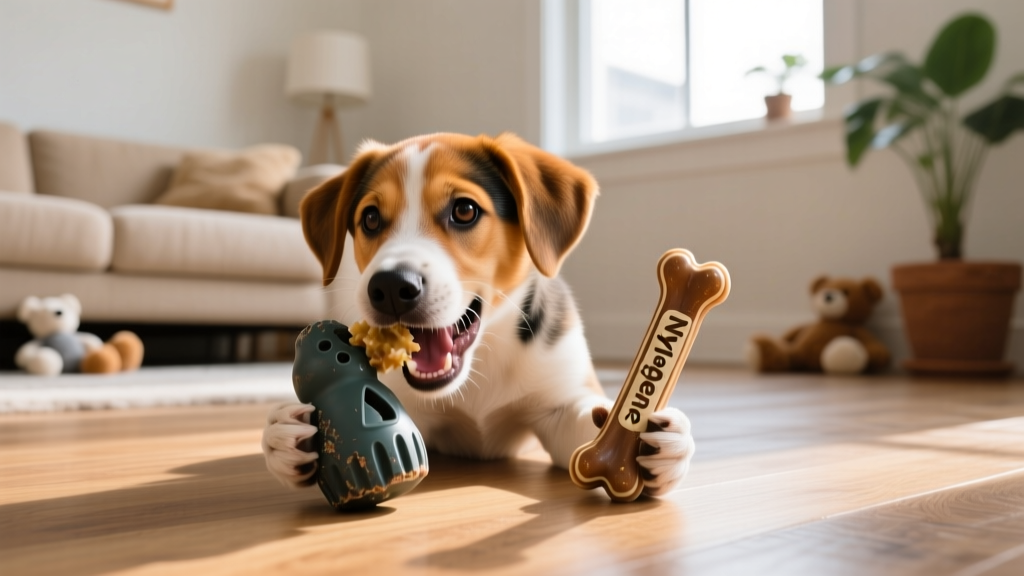
- Kong Classic Puppy (pink/blue rubber): Stuff with plain yogurt mixed with a small amount of xylitol-free peanut butter and freeze. The softer puppy-specific rubber is gentler on developing teeth.
- Benebone Puppy or Nylabone Puppy Chew: Designed with softer material for developing teeth; replace once significant wear appears.
- Carrots (frozen whole): A low-calorie, edible option that provides satisfying resistance. Supervise to prevent choking on large pieces.
Common Puppy Problems and Solutions
Puppy Biting and Nipping
Every puppy mouths and nips — it's how they explore the world and play. But teaching bite inhibition is essential. Here's the force-free protocol:
- Redirect: When teeth touch skin, say "oops" calmly and immediately offer an appropriate chew toy. Praise when they bite the toy.
- Withdraw attention: If redirecting fails, stand up, fold your arms, and ignore for 15–20 seconds. Resume play only when all four paws are on the floor.
- Time-outs: For persistent hard biting, calmly place puppy in a playpen or crate for 30–60 seconds to decompress (this is not punishment — it's a reset), then release and try again.
- Ensure adequate exercise and enrichment: Overtired and under-stimulated puppies bite more. Puppies need 18–20 hours of sleep; enforce naps in the crate if your puppy becomes a "land shark" in the evening.
Most puppies show significant improvement in bite inhibition by 5–6 months as adult teeth settle and impulse control matures.
Excessive Whining and Crying
Whining in the first 1–2 weeks home is normal adjustment behavior. Respond to whining in the crate by taking your puppy out to potty (keep it boring — no play, just business), then return to crate. If they whine after recently eliminating, wait for a brief pause in vocalization before releasing — this teaches that quiet earns freedom, not noise.
Destructive Chewing
Puppies chew to explore, relieve teething discomfort, and burn energy. Management is key: puppy-proof your home by removing shoes, cords, and remote controls from reach. Provide 5–7 appropriate chew options of varying textures and rotate them every few days to maintain novelty. Supervise closely or confine to a puppy-safe area when you can't watch directly.
Jumping on People
Teach an incompatible behavior: a dog that is sitting cannot be jumping. Ask visitors to ignore jumping entirely (no eye contact, no pushing away — that's still attention) and reward four-on-the-floor or sitting with treats and calm petting. Consistency from every person who interacts with your puppy is critical.
First-Year Cost Breakdown: What to Budget
New puppy owners often underestimate the first-year investment. Here's a realistic breakdown based on 2026 US pricing:
| Category | Low Estimate | Mid Estimate | High Estimate |
|---|---|---|---|
| Puppy acquisition (adoption fee or breeder price) | $250 (rescue) | $1,500 | $3,500+ |
| Veterinary care (vaccines, spay/neuter, wellness exams, fecal tests, heartworm prevention) | $600 | $1,200 | $2,000 |
| Food (quality puppy food for 12 months) | $300 | $600 | $1,000 |
| Supplies (crate, bed, leash, harness, bowls, toys, chews, gates, enzymatic cleaner) | $200 | $450 | $800 |
| Training (puppy kindergarten + intermediate class) | $150 | $400 | $800 |
| Pet insurance (annual premium, recommended while young and healthy) | $360 | $600 | $900 |
| Grooming (breed-dependent — low for short coats, high for Poodles/Doodles) | $0 (home grooming) | $400 | $1,200 |
| Emergency fund (puppies eat things they shouldn't — set aside for unexpected vet visits) | $250 | $500 | $1,500 |
| TOTAL First Year | $2,110 | $5,650 | $11,500+ |
Pet insurance is especially valuable during puppyhood because young dogs are the most likely to ingest foreign objects, suffer injuries from clumsy play, or develop congenital conditions. Enrolling before any conditions are diagnosed ensures pre-existing condition exclusions don't limit your coverage later. Companies like Trupanion, Healthy Paws, and Lemonade offer puppy-specific plans starting around $30–$75/month depending on breed, zip code, and deductible choice.
Frequently Asked Questions
How often should I feed my puppy at each age?
From 8–12 weeks: 4 meals per day. From 3–6 months: 3 meals per day. From 6–12 months: 2 meals per day. Transition gradually over 3–5 days when reducing meal frequency by shifting portions to the remaining meals.
When will my puppy be fully potty trained?
Most puppies achieve reliable house training between 4–6 months, though small breeds and some individuals may take until 8–10 months. Consistency in schedule, supervision, and positive reinforcement for outdoor elimination are the strongest predictors of faster training.
How do I stop my puppy from biting and nipping?
Use redirection to appropriate chew toys, withdraw attention briefly when teeth touch skin, enforce adequate nap schedules (overtired puppies bite more), and provide sufficient mental enrichment through puzzle feeders and short training sessions. Never hit, hold the mouth shut, or use alpha rolls — these methods increase fear and aggression. Bite inhibition typically improves significantly by 5–6 months with consistent, patient training.
What vaccines does my puppy need and when?
Core vaccines include DHPP (given as a series at 6–8, 10–12, and 14–16 weeks) and Rabies (at 14–16 weeks). Non-core vaccines like Bordetella, Leptospirosis, Lyme, and Canine Influenza are recommended based on your puppy's lifestyle and geographic risk. Consult your veterinarian to build a customized protocol.
When can my puppy go outside and meet other dogs?
You can carry your puppy in public spaces (parks, outdoor cafés, friends' homes) immediately for socialization purposes. However, avoid placing them on ground where unknown dogs have been and avoid dog parks until 5–7 days after the final DHPP vaccine at 14–16 weeks. Controlled playdates with known, vaccinated dogs are safe at any age.
Should I spay or neuter my puppy, and when?
Current veterinary research suggests that optimal spay/neuter timing varies significantly by breed and size. Small breeds may be safely altered at 6 months, while large and giant breeds may benefit from waiting until 12–18 months to allow growth plates to close, potentially reducing the risk of orthopedic issues and certain cancers. Discuss timing with your veterinarian based on your specific puppy's breed, size, and health profile.
Raising a puppy of dog through their first year is demanding but profoundly rewarding. Stick to the milestones, maintain patience during the inevitable setbacks, and invest in preventive veterinary care and positive-reinforcement training early. The foundation you build in these first twelve months will give you a confident, well-adjusted companion for the next decade and beyond.
Priya Sutaria
All our authors care for dogs every day — read more of their work on the authors page.