Popular Names of Puppy Breeds: A First-Year Care & Training Guide
Choosing from popular names of puppy breeds? This complete first-year guide covers milestones, feeding, vaccines, potty training, and costs for new puppy parents.

Bringing home a new puppy is one of the most exciting decisions you'll make — and one of the most overwhelming. Whether you've been browsing popular names of puppy breeds like Labrador Retrievers, Golden Retrievers, German Shepherds, or French Bulldogs, the real work begins the moment those paws cross your threshold. This guide gives you a week-by-week roadmap for your puppy's first year, grounded in veterinary science and real-world experience from multi-dog households.
Every recommendation below assumes a medium-to-large breed puppy (40–70 lb / 18–32 kg adult weight). Small and giant breeds have modified timelines — always consult your veterinarian for breed-specific adjustments.
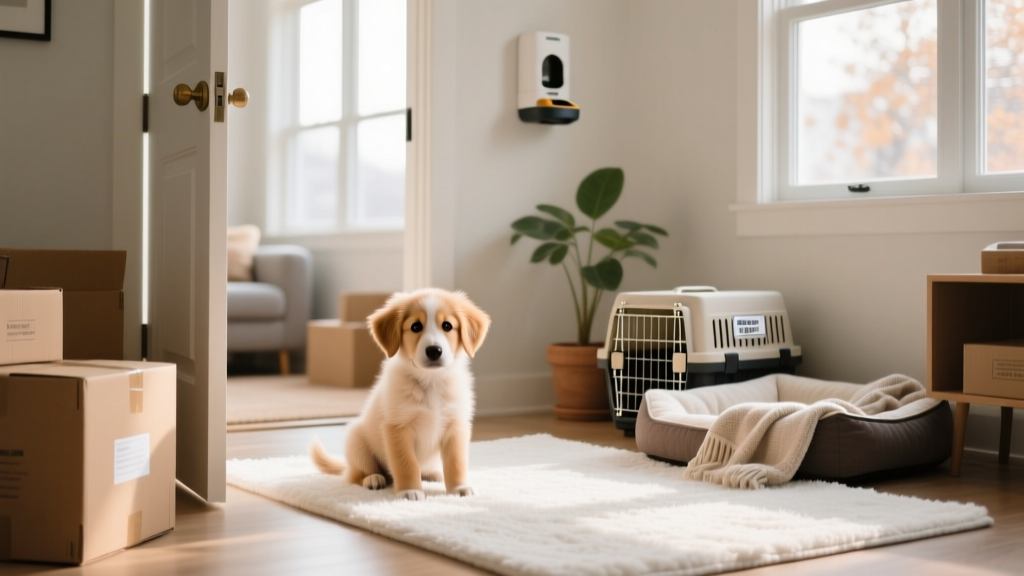
When Should I Bring My Puppy Home?
The American Kennel Club and the American Veterinary Medical Association both recommend that puppies stay with their littermates and dam until at least 8 weeks of age. For toy and small breeds, many responsible breeders wait until 10–12 weeks due to the risk of hypoglycemia and the need for additional socialization within the litter.
- Large/Giant breeds (Labrador, German Shepherd, Great Dane): 8–10 weeks
- Medium breeds (Beagle, Cocker Spaniel, Australian Shepherd): 8–10 weeks
- Small/Toy breeds (Chihuahua, Pomeranian, Yorkshire Terrier): 10–12 weeks
Before pickup, request documentation: dewclaw removal status (if applicable), first deworming (typically at 2, 4, and 6 weeks), and any initial vaccinations administered by the breeder's veterinarian.
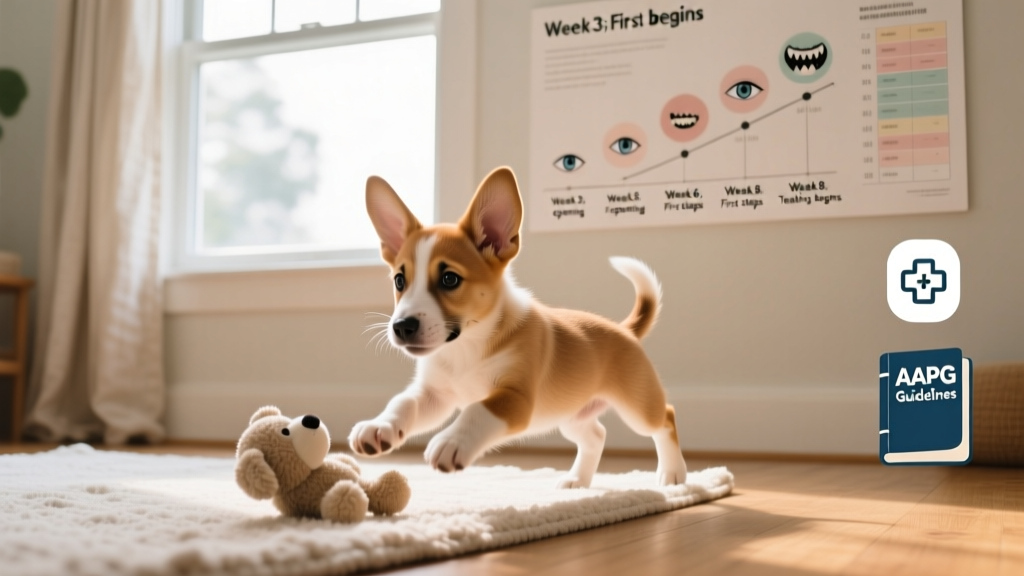
Age-Specific Milestones: What to Expect Week by Week
Puppy development follows predictable stages. Understanding them prevents frustration — your puppy isn't being difficult; they're growing.
| Age Range | Developmental Stage | What to Expect |
|---|---|---|
| 4–8 weeks | Socialization Period (with litter) | Learning bite inhibition from siblings, exploring solid food, developing motor coordination. Should not be separated from litter. |
| 8–12 weeks | Human Bonding / Fear Imprint Period | Peak learning window. Forms strong human attachments. Fear imprint period (8–11 weeks) means traumatic experiences can have lasting effects. Keep introductions positive. |
| 12–16 weeks | Independence Testing | Starts testing boundaries. May seem to "forget" training. Bladder control improving. Teething discomfort begins. |
| 16–24 weeks | Juvenile / Active Teething | Baby teeth fall out, adult teeth erupt. Destructive chewing peaks. Energy surges. May regress in potty training. |
| 6–12 months | Adolescence / Sexual Maturity | Hormonal changes if intact. Second fear period (6–14 months). Increased independence, possible leash reactivity emergence. Spay/neuter typically recommended. |
Feeding Schedule: Exact Portions by Age and Weight
Puppies need significantly more calories per pound than adult dogs — their growing bodies demand it. The Merck Veterinary Manual outlines that puppies require approximately twice the caloric intake of adult dogs of the same weight until about 6 months of age.
| Puppy Age | Meals Per Day | Portion Guide (Large Breed Kibble, ~400 kcal/cup) | Notes |
|---|---|---|---|
| 8–12 weeks | 4 meals/day | ¾–1¼ cups/day total (split into 4 feedings) | Use puppy-specific formula. Large breeds: choose large-breed puppy kibble to control growth rate. |
| 12–16 weeks | 3 meals/day | 1¼–2 cups/day total (split into 3 feedings) | Transition to 3 meals around 12 weeks. Adjust based on body condition score (BCS). |
| 16–24 weeks | 3 meals/day | 2–3 cups/day total (split into 3 feedings) | Growth slows slightly. Monitor for excessive weight gain — ribs should be palpable but not visible. |
| 6–12 months | 2 meals/day | 2½–4 cups/day total (split into 2 feedings) | Transition to 2 meals around 6 months. Begin transitioning to adult food at 10–12 months (large breeds: 12–18 months). |
How to calculate your specific puppy's needs: Check the feeding chart on your kibble bag (AAFCO-compliant brands list portions by expected adult weight), then adjust based on your puppy's BCS. A puppy at ideal weight has an observable waist when viewed from above and ribs you can feel without pressing hard.
Vaccination Schedule: Core and Non-Core Vaccines
Vaccination protects your puppy from life-threatening diseases. The AVMA recommends core vaccines for all puppies regardless of lifestyle. Your veterinarian will tailor the schedule based on regional disease prevalence and your puppy's risk factors.
| Age | Vaccines Administered | Type | Estimated Cost |
|---|---|---|---|
| 6–8 weeks | DHPP (Distemper, Hepatitis/Adenovirus, Parainfluenza, Parvovirus) — 1st dose | Core | $20–$40 |
| 10–12 weeks | DHPP — 2nd dose; Bordetella (intranasal or injectable); Leptospirosis (if recommended) | Core + Non-Core | $40–$75 |
| 14–16 weeks | DHPP — 3rd dose; Rabies (required by law); Leptospirosis booster (if started) | Core + Non-Core | $50–$90 |
| 12–16 months | DHPP booster; Rabies booster; Bordetella booster (if lifestyle requires) | Core + Non-Core | $60–$110 |
Important: Maternal antibodies interfere with vaccine effectiveness in young puppies, which is why boosters are given every 2–4 weeks until 16 weeks. A single DHPP shot at 8 weeks does NOT provide full immunity. Until the full series is complete, avoid high-traffic dog areas (dog parks, pet store floors, unvaccinated dog playgroups).
The Critical Socialization Window (Weeks 3–14)
The primary socialization period — when puppies are most receptive to new experiences without fear — closes between 12 and 14 weeks. After this window, unfamiliar stimuli are more likely to trigger fear responses. This timeline is non-negotiable and cannot be fully recovered later.
- ✅ At least 10 different people (varying ages, genders, ethnicities, wearing hats/glasses/uniforms)
- ✅ 5+ different surfaces (grass, gravel, tile, metal grates, wet pavement)
- ✅ Household sounds (vacuum, doorbell, blender, thunder recordings at low volume)
- ✅ Car rides (short, positive — destination doesn't have to be the vet)
- ✅ Handling exercises: paw touching, ear inspection, mouth opening, nail clipping simulation
- ✅ 3–5 well-socialized, fully vaccinated adult dogs (controlled, supervised play)
- ✅ Children (supervised, calm interactions — never leave puppy unattended with young children)
- ✅ Different environments: outdoor café patio, parking lot, friend's house, elevator
- ✅ Umbrellas opening, backpacks, bicycles, skateboards (at a distance, paired with treats)
Pair every new experience with high-value treats (boiled chicken, cheese). If your puppy shows fear, increase distance and reduce intensity — never force exposure.
Potty Training Timeline: Realistic Expectations
Here's the truth no one tells first-time puppy parents: most puppies are not reliably house-trained until 5–6 months of age, and some breeds (particularly small breeds with tiny bladders) take up to 9–12 months. Any program promising full training in days is misleading you.
The bladder capacity rule: A puppy can typically hold their bladder for roughly one hour per month of age, plus one. A 3-month-old puppy can hold for approximately 4 hours — overnight, possibly slightly longer while sleeping, but never during active daytime hours.
| Age | Outdoor Trips Per Day | Max Hold Time (Daytime) | Accidents Expected |
|---|---|---|---|
| 8–10 weeks | Every 1–2 hours (8–12 trips/day) | 1–2 hours | Frequent — daily accidents are normal |
| 10–14 weeks | Every 2–3 hours (6–8 trips/day) | 2–3 hours | 2–4 per week typical |
| 14–20 weeks | Every 3–4 hours (5–6 trips/day) | 3–4 hours | 1–2 per week if consistent |
| 5–6 months | Every 4–6 hours (4–5 trips/day) | 5–6 hours | Rare — mostly due to excitement or schedule disruption |
Troubleshooting common setbacks: If accidents increase after initial progress, rule out urinary tract infection (UTI) with your vet — UTIs are common in puppies and cause urgency. Other causes include inconsistent schedules, insufficient outdoor reward (treat immediately, not after coming back inside), and overly large crate spaces that allow the puppy to soil one corner and sleep in another.
Crate Training Progression and Time Limits
A crate is a management tool, not a storage unit. Maximum crate time during the day should follow the same bladder capacity guideline: one hour per month of age, plus one. Overnight, puppies can typically hold slightly longer because they're sleeping.
| Age | Max Daytime Crate Time | Max Overnight Crate Time | Crate Size Guidance |
|---|---|---|---|
| 8–10 weeks | 1–2 hours | 3–4 hours (expect nighttime potty breaks) | Use divider in full-size crate; only enough room to stand, turn, lie down |
| 10–14 weeks | 2–3 hours | 5–6 hours | Expand divider slightly as puppy grows |
| 14–20 weeks | 3–4 hours | 7–8 hours | Full crate size appropriate once potty training is reliable |
| 6–12 months | 4–6 hours max | 8 hours | Full adult crate size; begin transitioning to free-roam if reliable |
Build positive crate association: feed meals inside the crate with the door open, provide stuffed Kongs or long-lasting chews (bully sticks, yak cheese chews) only in the crate, and never use the crate as punishment. If your puppy whines, wait for a 3-second pause in vocalization before opening — opening during whining reinforces the behavior.
Teething Timeline and Relief Strategies (3–6 Months)
Puppies have 28 deciduous (baby) teeth that begin erupting at 3–4 weeks and are fully in by 6–8 weeks. Starting around 12–16 weeks, these teeth are pushed out by 42 permanent adult teeth. The process typically completes by 6–7 months.
Signs your puppy is teething: increased chewing on inappropriate objects, drooling, mild gum bleeding (pink-tinged chew toys are normal), decreased appetite for hard kibble, and occasional fussiness.
- Frozen washcloth: Wet a clean washcloth, twist into a rope, freeze for 2 hours. Supervise use — remove if pieces tear off.
- Kong Classic (red rubber, puppy size): Stuff with plain yogurt and banana, freeze overnight. The cold soothes inflamed gums.
- Benebone Puppy Wishbone: Nylon chew designed for puppies under 40 lb. Replace when worn down significantly.
- Carrot sticks (large, whole): Cold, crunchy, low-calorie. Supervise to prevent choking on broken pieces.
- Nylabone Puppy Chew (softer formula): Designed for developing teeth — do not use adult-power Nylabones on puppies under 6 months.
Avoid: ice cubes (can fracture teeth), rawhide (choking and blockage risk), cooked bones (splinter hazard), and any chew toy harder than your puppy's teeth (the "fingernail test" — if you can't indent it with your thumbnail, it's too hard).
Common Puppy Problems: Biting, Whining, and Chewing
How to Stop Puppy Biting and Nipping
Puppy biting is normal — they explore the world with their mouths and haven't learned human skin is off-limits. The goal is bite inhibition, not eliminating all mouthing (which is developmentally appropriate until 4–5 months).
Protocol:
- When teeth touch skin, say "oops" or "ouch" in a calm, neutral tone — not a dramatic yelp (which can excite some puppies further).
- Immediately withdraw attention: stand up, turn away, or step behind a baby gate for 10–15 seconds.
- Return and redirect to an appropriate chew toy. Reward enthusiastically when they chew the toy.
- If biting escalates (overstimulation), the puppy likely needs a nap. Overtired puppies bite more. Enforce a crate nap — most puppies under 4 months need 18–20 hours of sleep per day.
What doesn't work: holding the muzzle shut, alpha rolls, spraying bitter substances on hands, or yelling. These methods damage trust and can create fear-based aggression. Positive reinforcement and consistent redirection build bite inhibition far more reliably.
Nighttime Whining
Nighttime whining in the first 1–2 weeks home is expected — your puppy has never slept alone. Place the crate in your bedroom initially, then gradually move it to the desired permanent location over 2–3 weeks. A Snuggle Puppy (heat pack and heartbeat simulator, approximately $35–$45) can ease the transition. Ensure the puppy has been taken out to potty right before bed and hasn't had water for 1–2 hours before sleep.
Destructive Chewing
Puppies chew to explore, relieve teething pain, and expend energy. Management is the solution: puppy-proof your home (shoes in closets, electrical cords behind furniture, use bitter apple spray on baseboards if needed), provide 8–10 appropriate chew options rotated weekly to maintain novelty, and ensure adequate physical exercise and mental stimulation (snuffle mats, frozen Kongs, training sessions of 5–10 minutes).
When Can My Puppy Go Outside and Meet Other Dogs?
This question creates tension between two needs: disease protection and socialization. The AVMA and the American Veterinary Society of Animal Behavior (AVSAB) both state that the risk of under-socialization outweighs the risk of disease exposure when precautions are taken.
Safe before full vaccination (8–16 weeks):
- Carry your puppy through public spaces (parks, outdoor shopping areas) — no paws on ground where unknown dogs have been
- Invite fully vaccinated, healthy dogs to your home for supervised play
- Attend puppy socialization classes that require proof of at least one DHPP vaccine and maintain sanitized facilities
- Walk on your own property if it hasn't been accessed by unknown dogs
After full vaccination (1–2 weeks post-16-week DHPP):
- Dog parks (though many trainers recommend avoiding these due to unpredictable dog interactions)
- Public walking trails and beaches
- Grooming salons
- Boarding and daycare facilities
First-Year Cost Breakdown
Budgeting realistically prevents surrender — financial stress is a leading cause of pet relinquishment. Below are 2026 estimates for a medium-to-large breed puppy in the United States.
| Category | Low Estimate | Mid-Range | High Estimate |
|---|---|---|---|
| Puppy purchase (breeder) or adoption fee | $300 (rescue) | $1,500 | $4,000+ |
| Veterinary (vaccines, spay/neuter, wellness exams, heartworm test, fecal exams) | $600 | $1,000 | $1,800 |
| Food (puppy formula, 12 months) | $400 | $700 | $1,200 |
| Supplies (crate, bed, leash, harness, bowls, toys, chews, puppy pads, baby gates) | $250 | $500 | $900 |
| Training (group puppy class + basic obedience) | $150 | $400 | $1,200 (private sessions) |
| Preventive medications (heartworm, flea/tick — 12 months) | $200 | $400 | $600 |
| Pet insurance (optional, annual premium) | $350 | $600 | $900 |
| TOTAL (excluding purchase/adoption) | $1,950 | $3,600 | $6,600 |
Emergency fund recommendation: Set aside $500–$1,000 for unexpected illnesses. Puppies commonly ingest foreign objects, develop gastrointestinal infections, or suffer injuries from play. Pet insurance enrolled before any conditions arise will cover pre-existing condition exclusions — enroll early.
Frequently Asked Questions
How often should I feed my puppy at 8 weeks?
At 8 weeks, feed 4 meals per day, spaced approximately 4–5 hours apart during waking hours. Example schedule: 7 AM, 11:30 AM, 4 PM, 7:30 PM. Remove the food bowl after 15–20 minutes to establish mealtime routine rather than free-feeding.
When will my puppy be fully potty trained?
Most puppies achieve reliable house training between 5 and 6 months. Small breeds may take 9–12 months due to smaller bladder capacity. Consistency in schedule, immediate outdoor rewards, and crate management are the three most impactful factors. If your puppy is 6+ months with frequent accidents, consult your veterinarian to rule out medical causes.
What vaccines does my puppy need and when?
Core vaccines: DHPP series at 6–8, 10–12, and 14–16 weeks, with a booster at 12–16 months. Rabies at 14–16 weeks (legally required). Non-core vaccines your vet may recommend: Bordetella (kennel cough), Leptospirosis, Lyme disease, and Canine Influenza — based on your region and lifestyle.
How do I stop puppy biting and nipping?
Use consistent redirection: when teeth contact skin, calmly say "ouch," withdraw attention for 10–15 seconds, then return and offer an appropriate chew toy. Reward chewing the toy enthusiastically. Ensure your puppy is getting 18–20 hours of sleep per day — overtired puppies bite more. Never use physical punishment, which creates fear and damages the human-dog bond.
When can my puppy go outside and meet other dogs?
Controlled socialization can begin immediately: carry your puppy in public, invite vaccinated dogs to your home, and attend sanitized puppy classes. Full access to dog parks, trails, and grooming facilities should wait until 1–2 weeks after the final DHPP booster at 14–16 weeks. The socialization window (3–14 weeks) is critical — don't wait in isolation until vaccination is complete.
Should I choose a popular puppy breed name or something unique?
When browsing names of puppy breeds online, you'll see trending names like Luna, Bella, Max, and Charlie dominate AKC registration data. Choose a name that's 1–2 syllables, ends in a vowel sound (easier for dogs to distinguish from commands), and that you won't mind calling loudly in public. Your puppy will respond to any consistent name — pick one that fits your dog's personality after you've spent a few days together.
Aaron Whyte
All our authors care for dogs every day — read more of their work on the authors page.