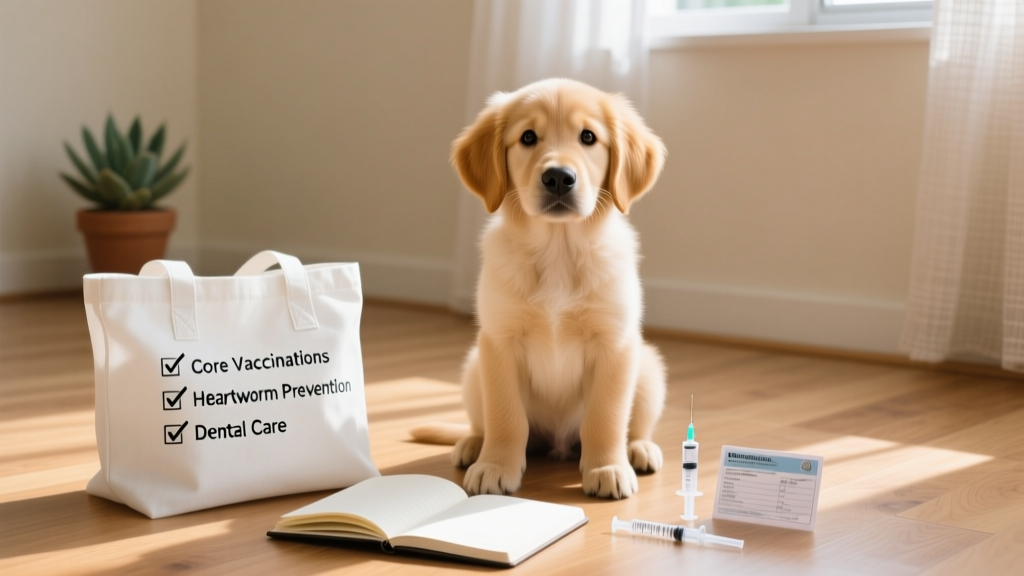
Puppy Influenza Prevention: A Complete Care Guide for Your New Puppy
Protect your new puppy from canine influenza with this complete guide covering vaccination schedules, symptoms, socialization safety, and first-year care milestones.

Understanding Puppy Influenza: Why Your Young Dog Is at Risk
Canine influenza (dog flu) is a highly contagious respiratory infection caused primarily by two strains: H3N8 and H3N2. While adult dogs with mature immune systems often recover with supportive care, puppies face significantly higher risk due to their developing immune systems and incomplete vaccination status. According to the Merck Veterinary Manual, canine influenza can progress to pneumonia in young, elderly, or immunocompromised dogs — making prevention a critical part of your puppy's first-year care plan.
Puppy influenza isn't a separate disease from adult canine flu — it's the same virus hitting a more vulnerable population. Puppies under 16 weeks are especially susceptible because their maternal antibodies are waning while their vaccine series is still incomplete. This "immunity gap" is the single most dangerous window for respiratory infections in young dogs.
If your puppy shows any of these symptoms, contact your veterinarian or emergency clinic right away:
- Persistent cough lasting more than 48 hours
- Nasal discharge that is thick, yellow, or green
- Temperature above 103.5°F (39.7°C) — normal puppy temperature is 100-102.5°F (37.8-39.2°C)
- Lethargy or refusal to eat for more than 12 hours
- Labored breathing, wheezing, or rapid respiratory rate (over 40 breaths/minute at rest)
- Blue-tinged gums (cyanosis — indicates oxygen deprivation)
Puppy Influenza Vaccination Schedule: Building Protection Week by Week
The canine influenza vaccine is considered a "non-core" or "lifestyle" vaccine by the AVMA, meaning your veterinarian will recommend it based on your puppy's exposure risk. If you live in an area with known outbreaks, attend puppy classes, visit dog parks, use boarding facilities, or participate in group training, vaccination is strongly recommended.
The CIV (canine influenza virus) vaccine requires an initial dose followed by a booster 2-4 weeks later. Protection is not considered adequate until approximately 2 weeks after the second dose. This means most puppies won't have full influenza protection until around 14-16 weeks of age at the earliest.
| Age | Core Vaccines | Influenza Vaccine (CIV) | Other Lifestyle Vaccines |
|---|---|---|---|
| 6-8 weeks | DHPP (Distemper, Hepatitis, Parainfluenza, Parvovirus) — Dose 1 | Not yet administered | Bordetella (optional, intranasal) |
| 10-12 weeks | DHPP — Dose 2 | CIV Dose 1 (H3N2/H3N8 bivalent) | Bordetella booster, Leptospirosis Dose 1 |
| 14-16 weeks | DHPP — Dose 3 | CIV Dose 2 (booster, 2-4 weeks after Dose 1) | Leptospirosis Dose 2, Lyme (if endemic area) |
| 12-16 months | DHPP booster, Rabies (at 12-16 weeks per local law, then 1-year booster) | CIV annual booster | All lifestyle vaccine boosters |
Cost expectation: The bivalent canine influenza vaccine typically costs $35-$55 per dose at a general practice veterinary clinic, meaning the initial two-dose series runs $70-$110. Annual boosters cost $35-$55. Many puppy vaccine packages (typically $150-$300 for the full series) may or may not include CIV — ask your vet specifically.
Always consult your veterinarian to determine the best vaccination protocol for your puppy based on local disease prevalence and your dog's lifestyle.
Age-Specific Puppy Milestones: What to Expect from 4 Weeks to 12 Months
Raising a puppy while protecting them from respiratory infections like canine influenza requires understanding what's developmentally appropriate at each stage. Here's your milestone roadmap:
Weeks 4-8: The Neonatal-to-Weaning Transition
During this period, puppies are still with their breeder or rescue organization. Maternal antibodies from colostrum provide partial protection against diseases, but this protection is unpredictable and waning. Puppies are learning bite inhibition from littermates, beginning to eat solid food (gruel/kibble softened with warm water), and developing basic motor skills. Do not bring a puppy home before 8 weeks — early separation is linked to increased behavioral problems including fear, aggression, and anxiety, according to research published in the Journal of Veterinary Behavior.
Weeks 8-12: The Homecoming and Bonding Phase
This is when most puppies join their new families. Expect significant adjustment: crying at night, frequent potty accidents (every 1-2 hours), and rapid bonding. Your puppy's brain is highly receptive to new experiences, but their immune system is at its most vulnerable. This is the peak of the immunity gap — maternal antibodies are dropping, and vaccine protection is still building. Limit exposure to unknown dogs and high-traffic dog areas during this window.
Weeks 12-16: Expanding Horizons
Your puppy is becoming more coordinated, playful, and curious. The second and third DHPP vaccines are administered, and the CIV booster is given. By 2 weeks after the CIV booster (around 14-16 weeks), your puppy begins developing meaningful influenza protection. Teething discomfort may begin as adult teeth start developing beneath the gums. Crate training should be well-established by now, with your puppy tolerating 2-3 hours of confinement during the day.
Weeks 16-24: The "Teenage" Testing Phase
Energy levels surge, attention spans fluctuate, and your puppy may "forget" previously learned commands. This is normal developmental regression, not failure. Continue positive reinforcement training consistently. The socialization window is closing (it effectively ends around 14-16 weeks for the critical period, but continued exposure through 6 months remains valuable). Spay/neuter surgery is typically scheduled around 5-6 months for most breeds.
Months 6-12: Adolescent Maturation
Your puppy is approaching physical maturity (though large breeds won't fully mature until 18-24 months). Adult teeth should be fully in by 7 months. Energy remains high but begins to stabilize. Training should shift toward reliability and proofing commands in distracting environments. Annual vaccine boosters will be scheduled around 12 months.
Feeding Schedule: Exact Portions by Age and Weight
Proper nutrition supports immune development — a well-nourished puppy is better equipped to fight off infections including canine influenza. Feed a commercially prepared, AAFCO-approved puppy food (look for the statement: "formulated to meet the nutritional levels established by the AAFCO Dog Food Nutrient Profiles for growth").
| Age | Meals Per Day | Estimated Daily Amount (for 20 lb / 9 kg expected adult weight) | Estimated Daily Amount (for 50 lb / 23 kg expected adult weight) | Notes |
|---|---|---|---|---|
| 8-12 weeks | 4 meals | 1 to 1¼ cups/day (¼ to ⅓ cup per meal) | 1¾ to 2 cups/day (⅓ to ½ cup per meal) | Moisten kibble with warm water for easier chewing |
| 12-16 weeks | 3 meals | 1¼ to 1½ cups/day (~½ cup per meal) | 2 to 2½ cups/day (~¾ cup per meal) | Transition to dry kibble; monitor body condition score |
| 16-24 weeks | 3 meals | 1½ to 1¾ cups/day (~½ to ⅔ cup per meal) | 2½ to 3 cups/day (~⅔ to 1 cup per meal) | Reduce to 2 meals/day at ~6 months |
| 6-9 months | 2 meals | 1¾ to 2 cups/day (~¾ to 1 cup per meal) | 3 to 3½ cups/day (1½ to 1¾ cups per meal) | Growth rate begins to slow; adjust to maintain lean BCS (4-5/9) |
| 9-12 months | 2 meals | 1¾ to 2 cups/day (transition to adult food) | 3 to 4 cups/day (may still need puppy formula for large breeds) | Small/medium breeds transition to adult food; large breeds continue puppy food until 12-18 months |
Important: These are baseline estimates. Your puppy's exact caloric needs depend on breed, activity level, metabolism, and the specific food's caloric density (check the kcal/cup on the label). Use body condition scoring — you should feel ribs without pressing hard, and see a visible waist from above. Adjust portions 10-15% up or down based on your puppy's BCS every 2 weeks.
Socialization Window (Weeks 3-14): Safe Exposure During the Immunity Gap
The primary socialization period for puppies occurs between approximately 3 and 14 weeks of age. This is when puppies are most receptive to novel experiences, and positive exposures during this window have lifelong effects on temperament and confidence. However, this window directly overlaps with the period of highest vulnerability to infections like canine influenza and parvovirus.
The solution is not to avoid socialization — it's to socialize safely. The AKC and the American Veterinary Society of Animal Behavior (AVSAB) both recommend structured, controlled socialization beginning before the vaccine series is complete, because the behavioral risks of under-socialization (fear, aggression, relinquishment) statistically outweigh the disease risks when proper precautions are taken.
- ☐ Carry your puppy in a sling or stroller through busy shopping areas (no ground contact where unknown dogs walk)
- ☐ Invite fully-vaccinated, healthy adult dogs to your home for supervised play (verify vaccine status with owners)
- ☐ Enroll in a puppy kindergarten class that requires proof of at least one DHPP vaccine and a negative fecal test
- ☐ Expose puppy to 10+ different surfaces: grass, gravel, tile, carpet, metal grates, wet pavement
- ☐ Introduce 15+ different people: children, elderly, people wearing hats/sunglasses/uniforms, people using mobility aids
- ☐ Play recorded sounds at low volume: thunderstorms, fireworks, vacuum cleaners, doorbells, traffic
- ☐ Practice handling exercises daily: touch paws, ears, mouth, tail; gently restrain for 5-10 seconds
- ☐ Visit the vet clinic for "happy visits" — no procedures, just treats and praise on the scale and exam table
- ☐ Ride in the car for 5-10 minute trips ending at fun destinations
- ☐ Watch other dogs from a safe distance (across a parking lot, behind a fence) without direct contact
AVOID during immunity gap: Dog parks, pet store floors, communal water bowls, nose-to-nose contact with dogs of unknown vaccine status, and boarding facilities without verified CIV vaccination requirements.
Potty Training Timeline: Realistic Expectations and Troubleshooting
Forget "potty trained in 3 days" promises. Reliable house training takes weeks to months, and most puppies are not fully reliable until 5-6 months of age. Some small breeds (which have smaller bladders and faster metabolisms) may take until 8-10 months. Here's what to realistically expect:
| Age | Bladder Capacity | Expected Outing Frequency | Accident Expectation | Milestone |
|---|---|---|---|---|
| 8-10 weeks | 30-45 minutes | Every 30-60 min + after every meal, nap, and play session | Multiple accidents daily — this is normal | Learning that outdoors = potty place |
| 10-14 weeks | 1-2 hours | Every 60-90 min during active hours | 1-3 accidents per week if supervised well | Beginning to show "signals" (circling, sniffing, heading to door) |
| 14-20 weeks | 2-3 hours | Every 90-120 min; can hold 4-5 hours overnight | Rare accidents if routine is consistent | Actively going to door or using bell to signal |
| 5-6 months | 4-5 hours | Every 3-4 hours during day | Occasional accident if routine disrupted | Most puppies are "mostly reliable" by this age |
| 8-12 months | 6-8 hours (adult capacity) | 3-5 outings per day | Should be fully reliable; if not, consult vet to rule out UTI or other medical causes | Full reliability achieved |
The rule of thumb: A puppy can hold their bladder for approximately their age in months plus one hour. A 3-month-old puppy can hold it for roughly 4 hours — but only under calm, resting conditions. Active puppies need more frequent breaks.
Potty training troubleshooting:
- Regression after a move or schedule change: Return to 8-week-level supervision for 1-2 weeks. Tether puppy to you with a leash indoors. Reward heavily for outdoor successes.
- Submissive/excitement urination: This is not a house training failure — it's an involuntary response. Greet your puppy calmly, outside if possible, and avoid direct eye contact during greetings. Most puppies outgrow this by 12 months.
- Marking behavior (small amounts on vertical surfaces): More common in intact males after 5-6 months. Spay/neuter reduces but doesn't always eliminate this. Supervise closely and interrupt with a neutral "let's go outside" redirect.
- Nighttime accidents after sleeping through: Remove water 2 hours before bedtime. Take puppy out immediately before you sleep and immediately when you wake. If accidents persist past 5 months, ask your vet to check for a urinary tract infection.
Crate Training Progression and Teething Relief (3-6 Months)
Crate training and teething management overlap significantly during the 3-6 month period, and both are essential for protecting your puppy (and your belongings) during this developmental stage.
Crate Training Time Limits by Age
The crate should be a positive retreat — never a punishment. Size it so your puppy can stand, turn around, and lie down comfortably, but not so large that they can eliminate in one corner and sleep in another (use a divider panel for large-breed puppies in oversized crates).
- 8-10 weeks: 30-45 minutes maximum during the day; overnight, expect 2-3 wake-ups for potty breaks
- 10-14 weeks: 1-2 hours during the day; overnight, 3-4 hour stretches are achievable
- 14-16 weeks: 2-3 hours during the day; overnight, many puppies sleep 5-6 hours
- 4-6 months: 3-4 hours during the day; overnight, 6-8 hours is typical
- 6+ months: 4-5 hours maximum during the day (dogs should not be crated for 8-hour workdays without a midday break); overnight, full-night sleep is standard
Teething Timeline and Relief Strategies
Puppies have 28 deciduous (baby) teeth that begin erupting at 3-4 weeks and are fully in by 6-8 weeks. The 42 permanent teeth begin erupting around 12-16 weeks, with the process typically complete by 6-7 months. The most intense chewing discomfort occurs between 3 and 6 months.
Safe chew recommendations for teething puppies:
- Frozen KONG Classic (appropriate size): Stuff with plain pumpkin puree, plain yogurt, or soaked kibble, then freeze for 4+ hours. The cold numbs sore gums.
- Nylabone Puppy Chew (softer formula): Designed for developing teeth; replace when worn down to the size of a choking hazard.
- Wet washcloth twist: Wet a clean washcloth, twist into a rope shape, freeze, and supervise your puppy chewing on it. Discard if threads come loose.
- Benebone Wishbone (puppy formula): The angled shape allows puppies to grip with their paws while chewing.
- Rawhide (choking and intestinal blockage risk; chemically processed)
- Antlers and weight-bearing bones (tooth fractures — puppy teeth are more brittle than adult teeth)
- Hard nylon bones rated for adult power chewers (too hard for developing teeth)
- Any chew small enough to be swallowed whole
- Tennis balls (the felt is abrasive and wears down teeth over time)
If your puppy swallows a foreign object or you suspect an intestinal blockage (vomiting, loss of appetite, no bowel movements, abdominal pain), contact your vet or the ASPCA Animal Poison Control hotline at (888) 426-4435 (24/7, consultation fee applies).
Common Puppy Problems: Biting, Whining, and Chewing Solutions
These behaviors are developmentally normal but need consistent management using positive reinforcement methods.
Puppy Biting and Nipping
Puppies explore the world with their mouths, and bite inhibition is learned through feedback. Here's a proven protocol:
- Redirect: When teeth touch skin, immediately offer an appropriate chew toy. Praise enthusiastically when they chew the toy instead.
- Time-out method: If redirecting doesn't work, the moment teeth contact skin, say "too bad" in a calm, neutral tone, and leave the room for 10-15 seconds (or step over a baby gate). Return and resume play. This teaches that biting = fun ends.
- Manage arousal levels: Most biting escalates when puppies are overstimulated or overtired. If your puppy is in a "biting frenzy," they likely need a nap. Guide them to their crate with a chew toy for a 30-60 minute rest.
- Never: Hold the mouth shut, alpha roll, yell, or physically punish. These methods increase fear and can escalate to defensive aggression.
Whining and Crying (Especially at Night)
Nighttime whining in the first 2-3 weeks home is normal — your puppy has never been alone. Strategies:
- Place the crate in your bedroom for the first 2-4 weeks so your puppy can hear and smell you
- Use a Snuggle Puppy (a plush toy with a warming pack and simulated heartbeat) in the crate
- Cover the crate with a breathable blanket to create a den-like environment
- Take puppy out for a boring, no-play potty break if whining occurs after 2+ hours (keep lights dim, no interaction, straight back to crate)
- If whining continues after a potty break and you've ruled out illness, wait for a brief pause in the noise before opening the crate — this prevents reinforcing the crying behavior
Destructive Chewing
Puppies chew to explore, to relieve teething pain, and to burn energy. Management is more effective than correction:
- Puppy-proof your home: use bitter apple spray on furniture legs, keep shoes in closed closets, use cord protectors on electrical wires
- Provide 5-8 appropriate chew toys and rotate them every 2-3 days to maintain novelty
- Ensure adequate physical exercise (age-appropriate: 5 minutes per month of age, twice daily, as a general guideline) and mental stimulation (sniff games, puzzle feeders, training sessions)
- Supervise or confine: if you can't watch your puppy, they should be in their crate or a puppy-proofed pen
First-Year Cost Breakdown: Budgeting for Your Puppy's Care
Raising a puppy involves significant first-year expenses. Being prepared financially reduces stress and ensures you don't delay necessary veterinary care — including influenza vaccination and treatment if your puppy becomes ill.
| Category | Low Estimate | Mid Estimate | High Estimate | Notes |
|---|---|---|---|---|
| Puppy purchase/adoption | $150 (rescue/shelter) | $1,500 (responsible breeder) | $3,500+ (specialty/rare breeds) | Adoption fees typically include initial vaccines and spay/neuter |
| Veterinary (vaccines, exams, spay/neuter) | $500 | $800 | $1,200 | Includes full vaccine series ($200-$400), spay/neuter ($200-$600), microchip ($25-$50), fecal tests ($30-$50 each) |
| Canine influenza vaccine series + booster | $70 | $90 | $130 | Two initial doses + first annual booster |
| Food (12 months, quality puppy formula) | $300 | $500 | $800 | Varies significantly by expected adult size; large breeds cost more |
| Supplies (crate, bed, leash, collar, bowls, toys, gates) | $200 | $400 | $700 | Crate: $40-$120; baby gates: $30-$80 each; toy budget: $100-$200/year |
| Training (group classes + optional private sessions) | $150 (1 group class series) | $400 (puppy kindergarten + basic obedience) | $1,000+ (private trainer for behavioral issues) | Group classes: $150-$250 per 6-week course |
| Pet insurance (annual premium) | $350 | $550 | $800 | Enroll at 8 weeks for best rates; pre-existing conditions excluded |
| Flea/tick/heartworm prevention (12 months) | $150 | $250 | $400 | Simparica Trio, NexGard, Heartgard, etc. — varies by weight |
| Emergency fund (recommended) | $500 | $1,000 | $2,000+ | Canine influenza with pneumonia can cost $1,500-$3,000+ in emergency treatment |
| Total Estimated First Year | $2,370 | $5,490 | $10,530+ |
Canine influenza treatment costs deserve special mention. Mild cases managed with outpatient supportive care (cough suppressants, antibiotics for secondary bacterial infection, fluids) typically cost $200-$500. However, puppies who develop secondary pneumonia may require hospitalization, oxygen therapy, IV fluids, and intensive monitoring — costs that can reach $1,500-$4,000 or more. Pet insurance, particularly when enrolled before any symptoms appear, can reimburse 70-90% of these costs depending on your plan.
When Can Your Puppy Go Outside and Meet Other Dogs?
This is one of the most common questions new puppy owners ask, and the answer balances disease risk against the critical need for socialization.
Safe from 8 weeks (with precautions):
- Your own fenced yard (if no unknown dogs have access)
- Carried outings in public spaces (puppy in arms, sling, or stroller)
- Playdates in your home with fully vaccinated, healthy adult dogs
- Puppy kindergarten classes that verify vaccine status of all attendees
Safer after full vaccination (approximately 16-18 weeks, 2 weeks after final puppy vaccines):
- Dog parks (though these always carry some risk — assess your local park's culture and cleanliness)
- Group hikes with unknown dogs
- Boarding facilities and doggy daycare (ensure all facilities require CIV vaccination)
- Grooming salons (many require proof of vaccination including Bordetella and CIV)
The key principle: controlled exposure during the immunity gap, then gradual expansion of freedom as vaccine protection builds. Never let your puppy interact nose-to-nose with dogs whose vaccination status you cannot verify.
Frequently Asked Questions About Puppy Influenza and Early Care
When should I bring my puppy home?
The consensus among veterinary behaviorists is 8 weeks minimum, with some breeders of larger or slower-maturing breeds preferring 10-12 weeks. Puppies removed from their litter before 8 weeks miss critical lessons in bite inhibition and canine social communication that are difficult to replicate in a human home.
How often should I feed my puppy at 10 weeks?
At 10 weeks, feed 4 meals per day, spaced approximately 4-5 hours apart during waking hours. For a puppy expected to reach 30 lb (14 kg) as an adult, this means roughly ¼ to ⅓ cup of high-quality puppy kibble per meal, moistened with warm water. Adjust based on your puppy's body condition score and the caloric density listed on your food's label.
When will my puppy be fully potty trained?
Most puppies achieve reliable house training between 5 and 6 months of age, though small breeds may take until 8-10 months due to smaller bladder capacity. "Fully trained" means fewer than one accident per month under normal conditions. Consistency, supervision, and positive reinforcement are the determining factors — not the puppy's intelligence or breed.
What vaccines does my puppy need and when?
Core vaccines (recommended for all puppies): DHPP at 6-8, 10-12, and 14-16 weeks, with a booster at 12-16 months; Rabies at 12-16 weeks (timing varies by local law), with a 1-year booster. Lifestyle vaccines based on risk assessment: Canine Influenza (CIV bivalent) at 10-12 weeks with a booster at 14-16 weeks; Bordetella starting at 6-8 weeks; Leptospirosis starting at 10-12 weeks. Your veterinarian will tailor the protocol to your area and your puppy's lifestyle.
How do I stop puppy biting and nipping?
Use the redirect-and-timeout method: when teeth touch skin, immediately offer a chew toy; if biting continues, calmly leave the area for 10-15 seconds. Manage overstimulation by ensuring your puppy gets adequate naps (puppies need 18-20 hours of sleep per day). Never use physical punishment. Most puppies significantly reduce mouthing by 5-6 months as adult teeth come in and they learn appropriate play behavior through consistent feedback.
Can my puppy catch the flu from me or can I catch it from my puppy?
No. Canine influenza viruses (H3N8 and H3N2) are species-specific and are not transmissible to humans. Similarly, human influenza strains do not infect dogs. However, canine influenza is highly contagious between dogs — if one dog in your household is diagnosed, isolate them from other dogs for at least 21 days and wash your hands thoroughly between handling sick and healthy dogs to avoid fomite transmission.
How do I know if my puppy has canine influenza versus kennel cough?
The symptoms overlap significantly — both cause coughing, nasal discharge, and lethargy. Canine influenza tends to cause higher fevers (103-106°F / 39.4-41.1°C) and more severe systemic illness, while kennel cough (Bordetella bronchiseptica) often presents as a distinctive "honking" cough with the dog otherwise acting relatively normal. Only your veterinarian can definitively diagnose the cause through PCR testing of nasal or pharyngeal swabs. Because treatment differs and both can progress to pneumonia in puppies, seek veterinary evaluation for any persistent cough.
Tom Renshaw
All our authors care for dogs every day — read more of their work on the authors page.